Wildlife-friendly planning
How to design a pollinator and butterfly garden for the whole growing season
The short answer
A useful pollinator garden provides more than summer flowers. Plan overlapping bloom times, host plants for young insects, undisturbed shelter, and a safe water source. Choose plants that match your region and the bed's actual sun and moisture.
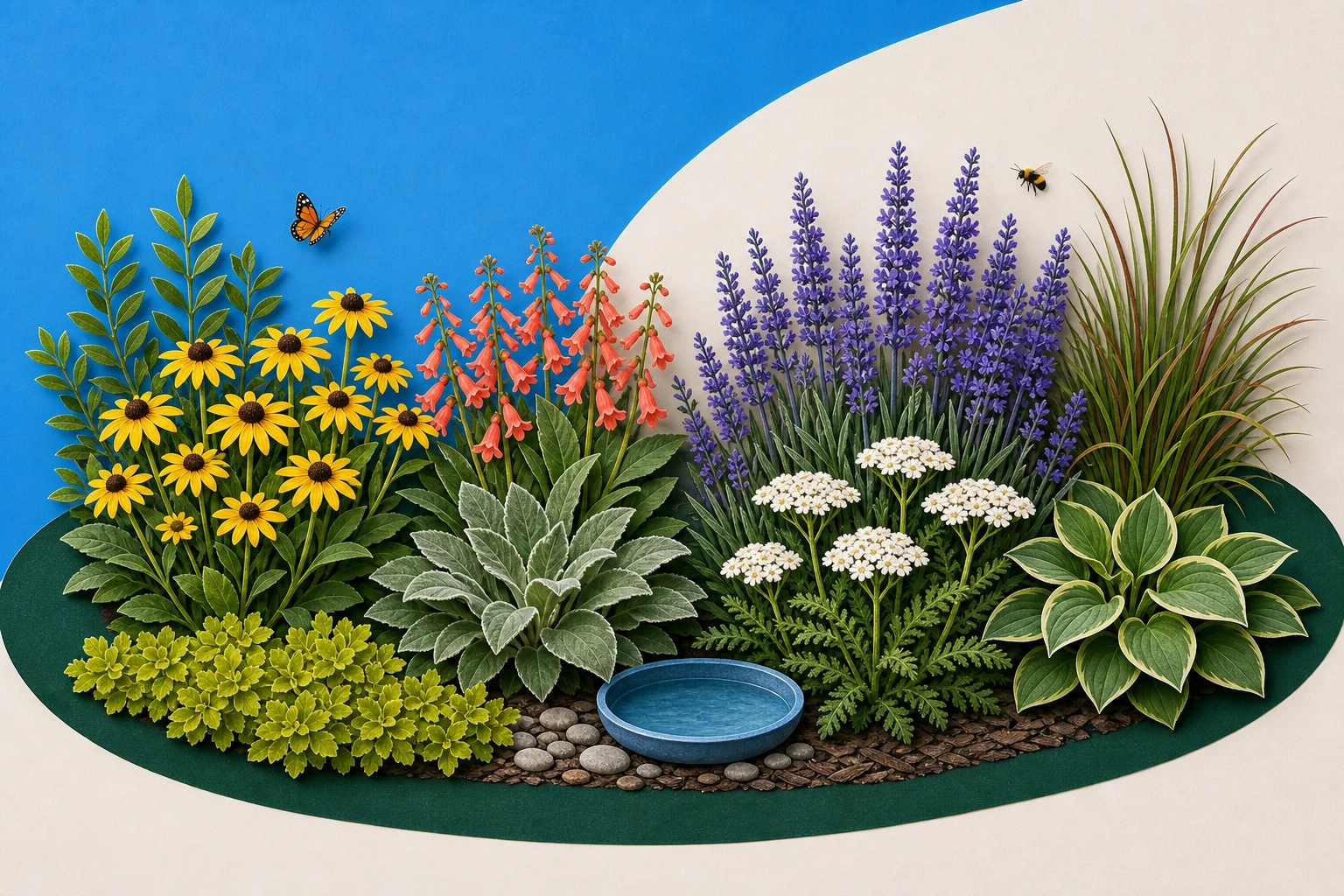
Design habitat, not a summer flower display
Pollinators need food, shelter, water, and places to complete their life cycles. A bed can look colorful in July and still provide little in early spring, late fall, or winter, so list what is available before and after peak bloom.1
Add host plants that feed young insects and decide which stems, leaves, soil patches, or woody material can remain less disturbed. Because native status and insect relationships are regional, build the actual list with a local extension program, native-plant society, botanical garden, or responsible nursery.
Give the bed four habitat jobs
Choose a visible place for each job before filling the bed with species. One plant may serve more than one job.
The garden should still provide something useful when its most colorful flowers are not open.
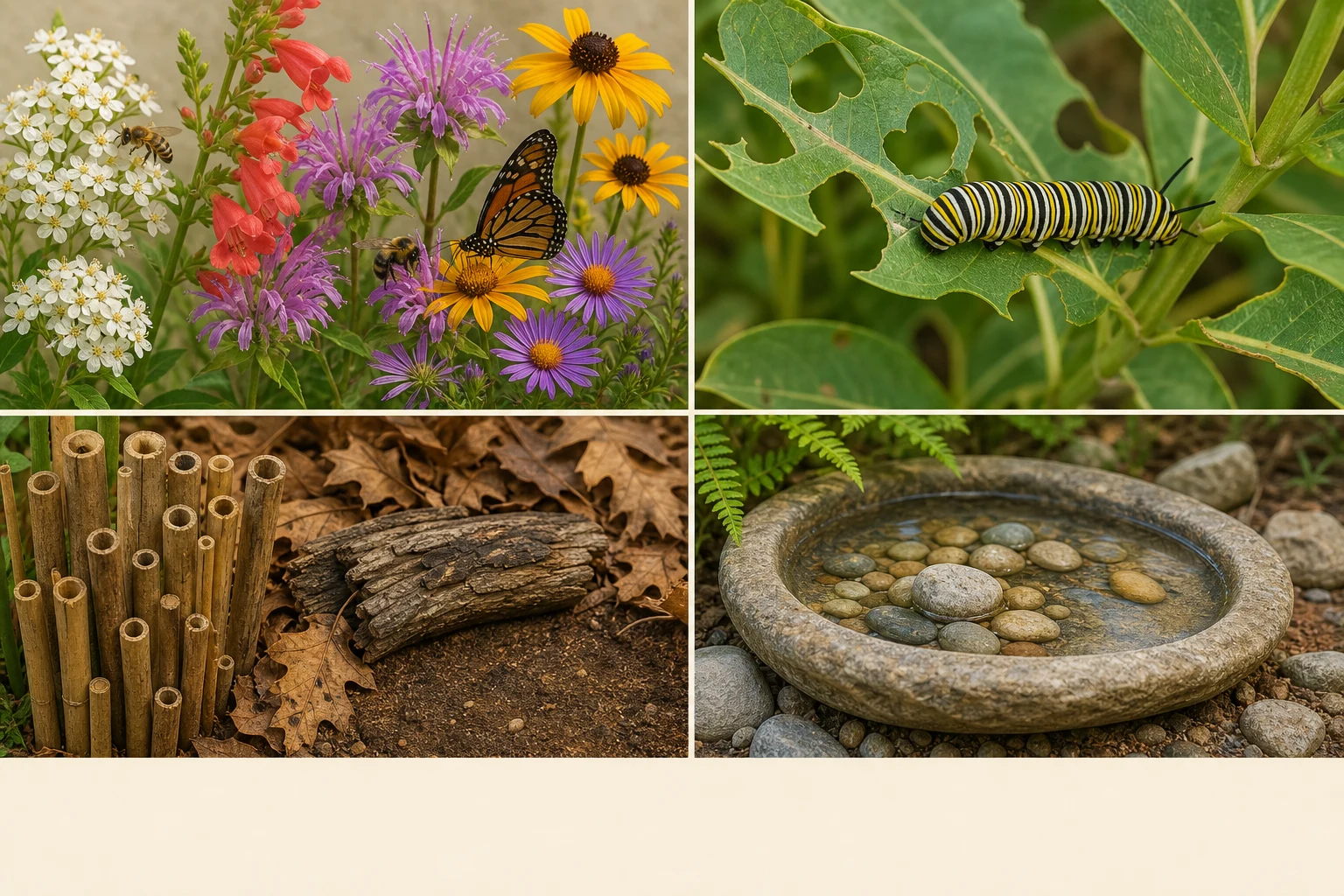
Food across seasons
Overlap bloom periods and flower shapes, including early and late sources.
Host plants
Choose regional plants for young insects, and expect some leaves to be eaten.
Shelter and nesting
Keep an appropriate part less disturbed with stems, leaves, bare soil, or woody material.
Safe water
Use a shallow dish with landing stones and refresh it frequently.
Sources: University of Maryland Extension
Plan a bloom sequence before choosing colors
Use this as a role chart. Replace the examples with plants suited to your local region and exact site.
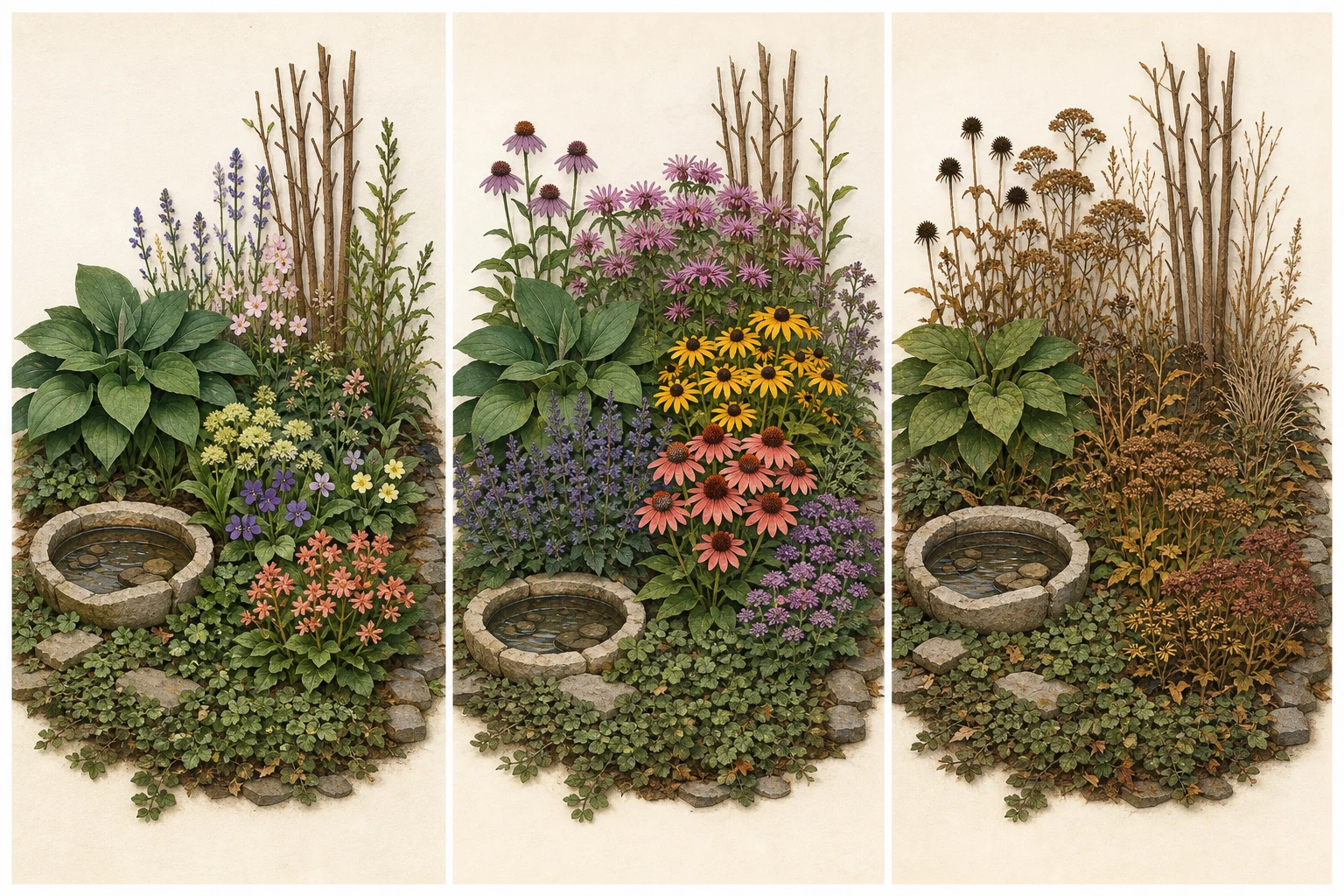
- 1. Early bloom
- 2. Summer bloom
- 3. Late bloom + seed
Early season
Flowering shrubs, trees, bulbs, and early perennials that open before the main summer bed.
What to check: Confirm local value and avoid treating a decorative early flower as automatically useful to native pollinators.
Middle season
Repeated masses of several flower shapes rather than a scattered collection of single plants.
What to check: Many popular summer flowers share the same bloom window. Check the actual overlap on a calendar.
Late season
Asters, goldenrods, and other locally suitable late bloomers that extend food after summer peaks.
What to check: Mature height and spread can be larger than the spring pot suggests. Place tall plants before they shade shorter sun lovers.
Winter structure
Standing stems, seed heads, leaf litter, and durable foliage where local conditions allow.
What to check: Balance habitat with fire guidance, pests, paths, and the level of visible order your front yard requires.
Sources: University of Maryland Extension
A compact pollinator starter bed
This Mid-Atlantic-flavored example demonstrates roles. It is not a national prescription. Ask a local source for regional substitutes.
A sunny bed with room for overlapping bloom groups
The bed is visible from a path and can keep some stems through winter. The soil drains without staying wet after rain.
See the plan notes
An early-to-middle bloom group
Use a repeated regional species such as golden alexanders or another local early source that fits the moisture and light.
A repeated summer nectar mass
Repeat one or two locally suitable species such as bee balm, mountain mint, or black-eyed Susan rather than adding unrelated singles.
A late-bloom group
Add a locally appropriate aster or goldenrod role so the bed does not stop feeding insects when summer flowers fade.
One host-plant group and one shelter zone
Choose a host plant for a local insect, then keep a small section of stems, leaves, or soil less disturbed.
The bloom calendar and habitat jobs are the design. Flower color is the layer you choose after those needs are covered.
Check the local fit before buying
A plant can attract insects and still be wrong for your region, site, or maintenance plan. Use three gates.
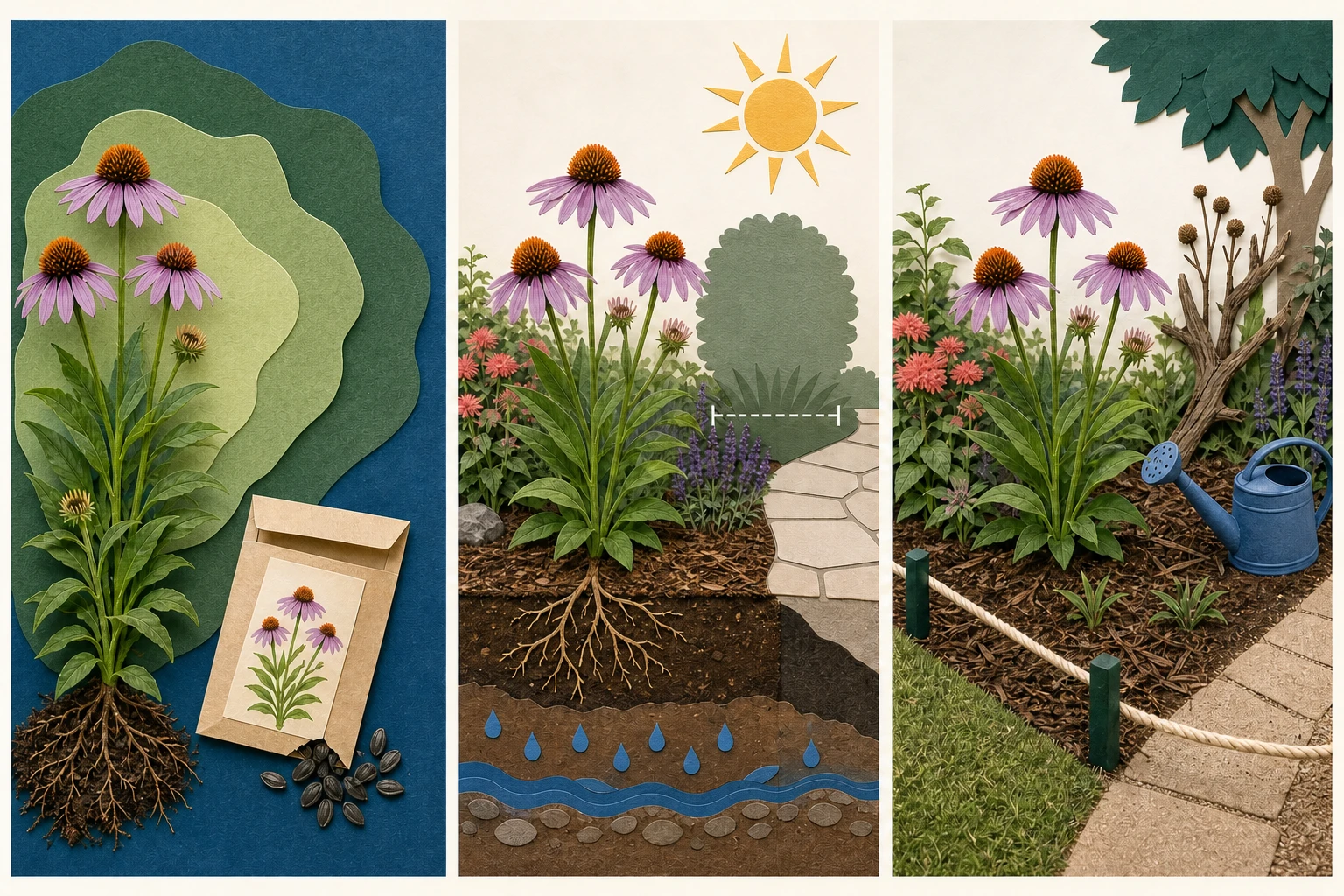
1
Regional identity
Confirm native claims for your region and check current local invasive guidance.
2
Site and habitat role
Match light, soil moisture, and mature size, then identify the local insects that use the plant for nectar, pollen, or as a host.
3
Safe care
Avoid broad pesticide use, follow labels when treatment is necessary, and keep any water source shallow and fresh.
A shorter local list with clear bloom and habitat roles is more useful than a long national list of pollinator-friendly plants.
Frequently asked questions
How many plants do I need for a pollinator garden?
The count depends on bed area and mature spacing. Begin with several repeated groups that cover early, middle, and late bloom plus host plants and shelter, then calculate each group separately.
How do I make a butterfly garden plan?
Plan for the butterfly's whole life cycle: locally appropriate host plants for caterpillars, overlapping nectar flowers for adults, shelter from wind and disturbance, and a safe shallow water source. Verify which butterflies live in your region and which exact host plants they use before buying.
Do all pollinator plants need to be native?
Native plants can provide important local relationships, especially as host plants, but the useful answer is regional. Ask local extension or conservation sources which plants best support pollinators in your area and site.
Should I leave pollinator plants standing in winter?
Standing stems and leaves can provide habitat. Balance that benefit with local fire guidance, disease concerns, paths, visibility, and the maintenance expectations for the site.
Can Gardenful plan a pollinator garden?
Gardenful can create a planting-led visual direction and plant list from your yard photo, preferences, and site details. Verify native status, host relationships, invasive status, and local availability with regional sources.
 Gardenful
Plan the habitat roles before the flower colors.
Use your yard photo and site details to explore a planting direction, then check every host plant, bloom period, and native claim with a local source.
Gardenful for iPhone
Download the app free and start with a photo of your yard.

Sources
Maryland examples illustrate the habitat framework, not a national plant list. Use local institutional sources for the final palette.
- [1]Pollinator Gardens
University of Maryland Extensionhttps://extension.umd.edu/resource/pollinator-gardens
- [2]Landscape Designs with Native Plants
University of Maryland Extensionhttps://extension.umd.edu/resource/landscape-designs-native-plants
- [3]Watering Tips
US EPA WaterSensehttps://www.epa.gov/watersense/watering-tips