Gardenful field guide
No-grass front yard ideas that still feel like a garden
The short answer
Removing lawn works only when the replacement still handles movement, drainage, planting, and everyday use. Keep a clear route from the sidewalk or driveway to the front door. Use the remaining areas for planting, , drainage, or a useful landing, then choose materials for each use.
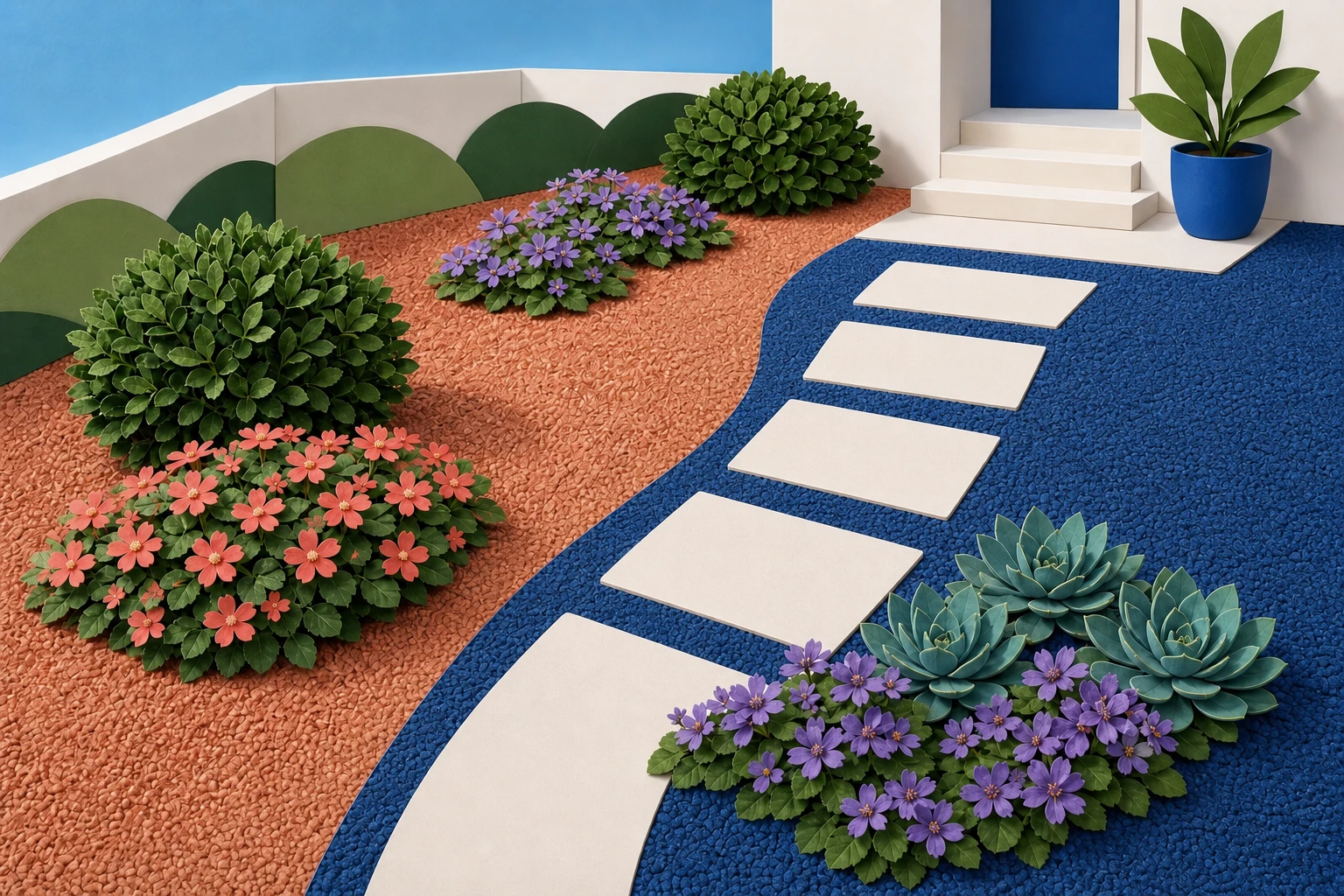
Replace the four functions of the lawn
Lawn covers the soil, leaves open space, and makes the route through a yard easy to see. A no-lawn plan still needs to make the yard usable before you add decorative details.
Before choosing plants, draw the main path from the sidewalk or driveway to the front door. Then decide what each remaining area needs to do.
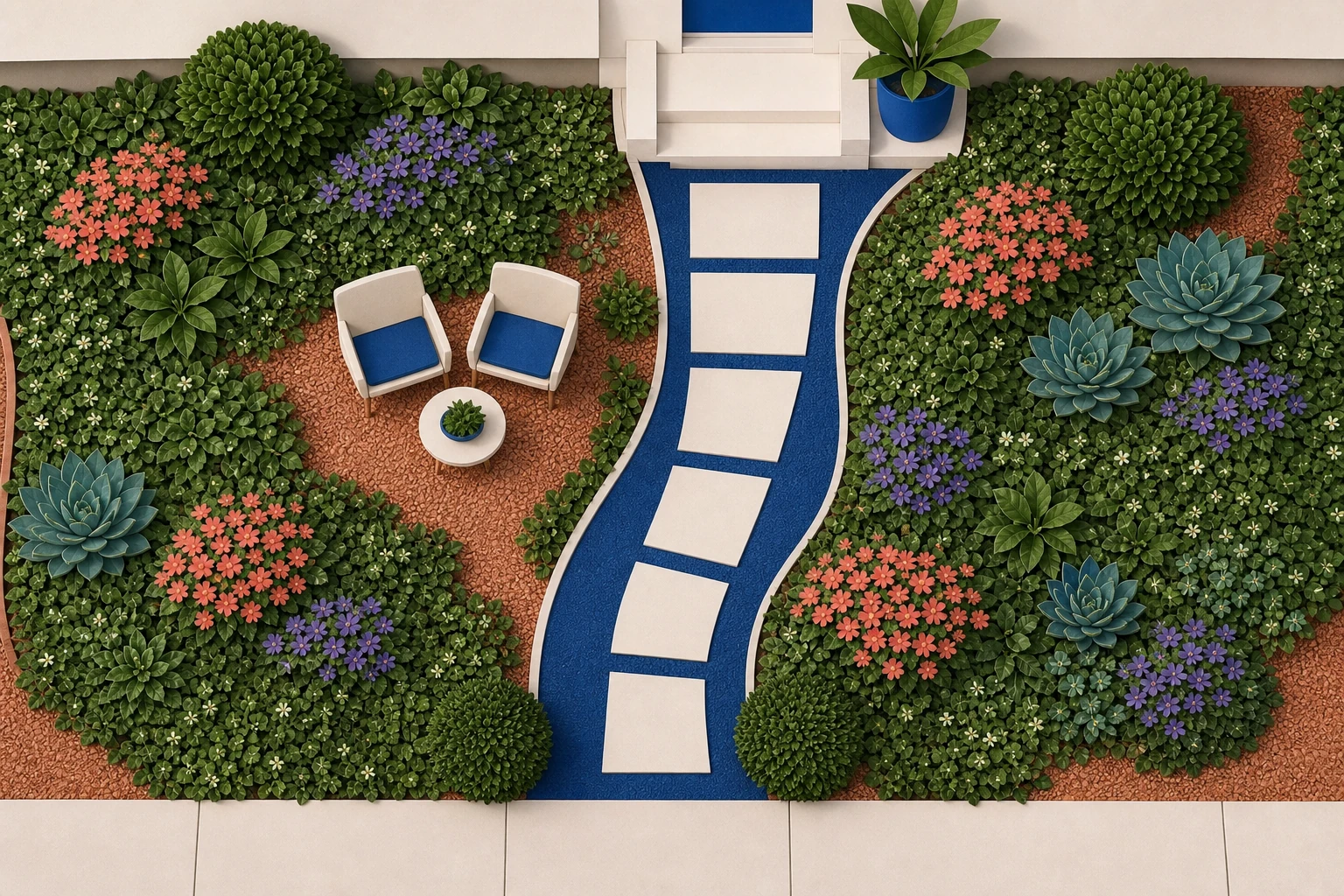
- 1
Provide a clear walking route
Use a stable, obvious route from the sidewalk or driveway to the front door.
- 2
Keep soil covered
Use plants or mulch so open areas do not sit bare.
- 3
Use enough plants to fill the bed
Repeat enough broadleaf plants for the yard to feel connected.
- 4
Leave room around existing features
Leave room around tree roots, walls, utilities, and drainage paths.
If no grass also means no grass-like foliage, decide that now. Build the palette from broadleaf groundcovers, flowers, suitable ferns, compact shrubs, and climate-appropriate rosette plants.
Sources: University of Florida IFAS Extension
Choose your ground surfaces
Compare living groundcover, mulch, gravel, , and conventional paving by the job each surface needs to do. Most yards need only two or three.
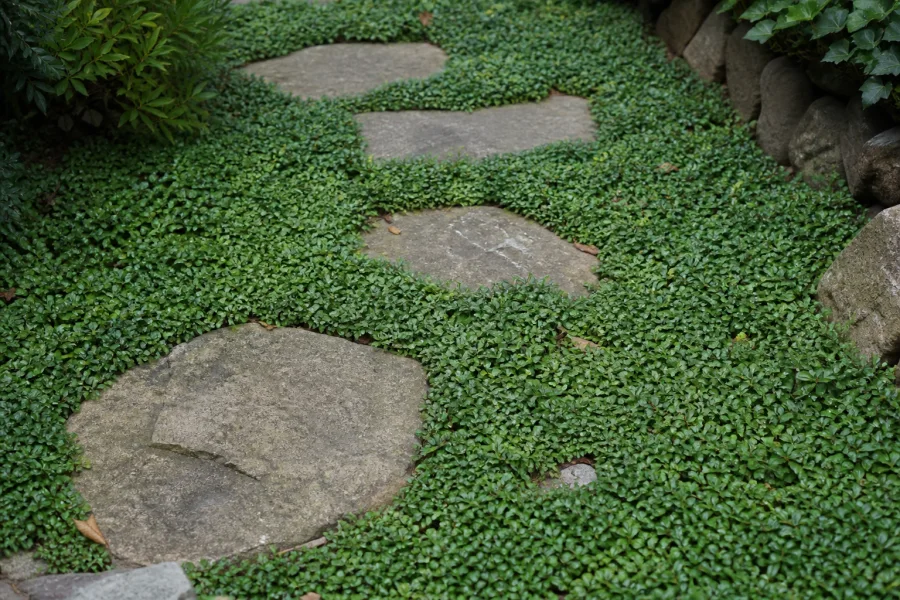
Living groundcover
Works best: Planted areas that should feel soft and green.
Plan for: Water and weed it while the plants fill in.
What to checkHide details
Confirm traffic tolerance and local behavior before using it between occasional steps.
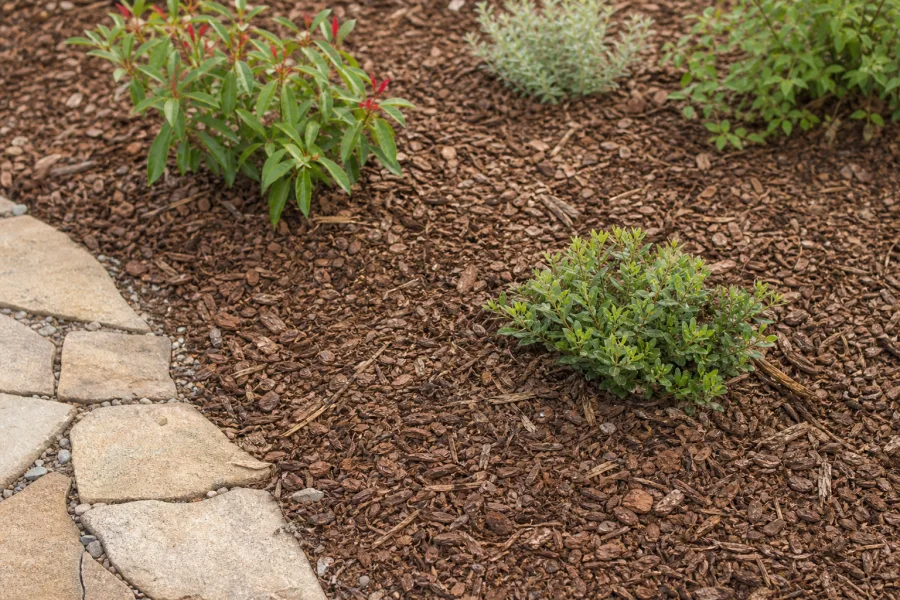
Wood or organic mulch
Works best: Beds and temporary cover between young plants.
Plan for: It breaks down and needs topping up.
What to checkHide details
Keep mulch away from trunks, stems, siding, vents, and locally required fire-clearance areas.
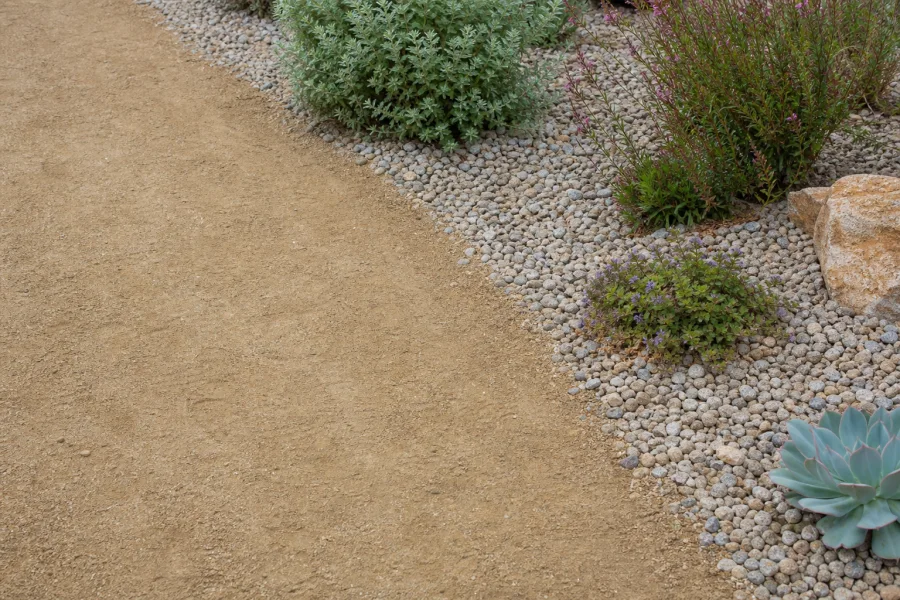
Gravel or decomposed stone
Works best: A secondary path or a specific drainage job.
Plan for: It shifts, traps debris, and can get hot.
What to checkHide details
Decomposed stone is rock crushed into fine particles that compact more firmly than loose gravel. Either material can be uncomfortable underfoot, and landscape fabric does not keep it weed-free forever.
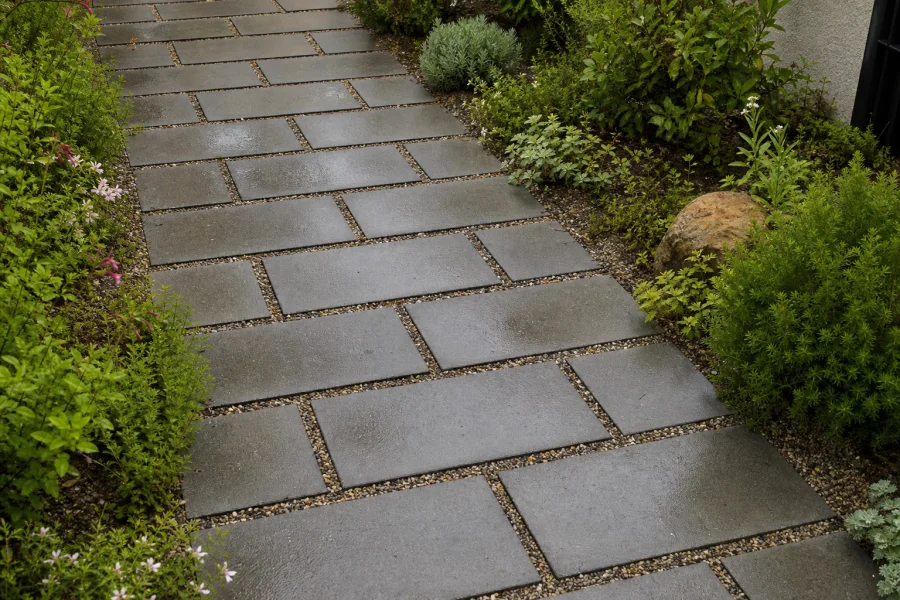
Permeable paving
Works best: A stable walk or landing where infiltration is suitable.
Plan for: The base, slope, and edging determine how it performs.
What to checkHide details
Use it only where slope, soil, and local construction details allow water to infiltrate safely.
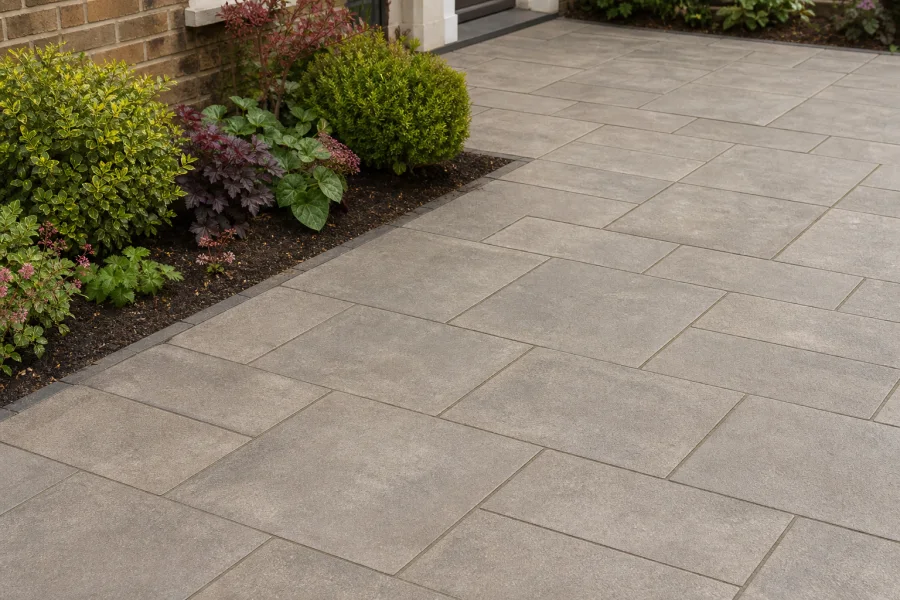
Conventional paving
Works best: The busiest route when a firm surface matters most.
Plan for: It increases hard surface and runoff.
What to checkHide details
Check permits, ground slope, drainage, utilities, and how water will move around the house.
One main paving choice plus planting and mulch usually looks more finished than four competing textures.
Sources: US EPA WaterSense, Colorado State University Extension, University of California Statewide IPM Program
Pick the layout before the plants
First decide how you will use the yard and where people need to walk. Choose plants only after the layout is clear.
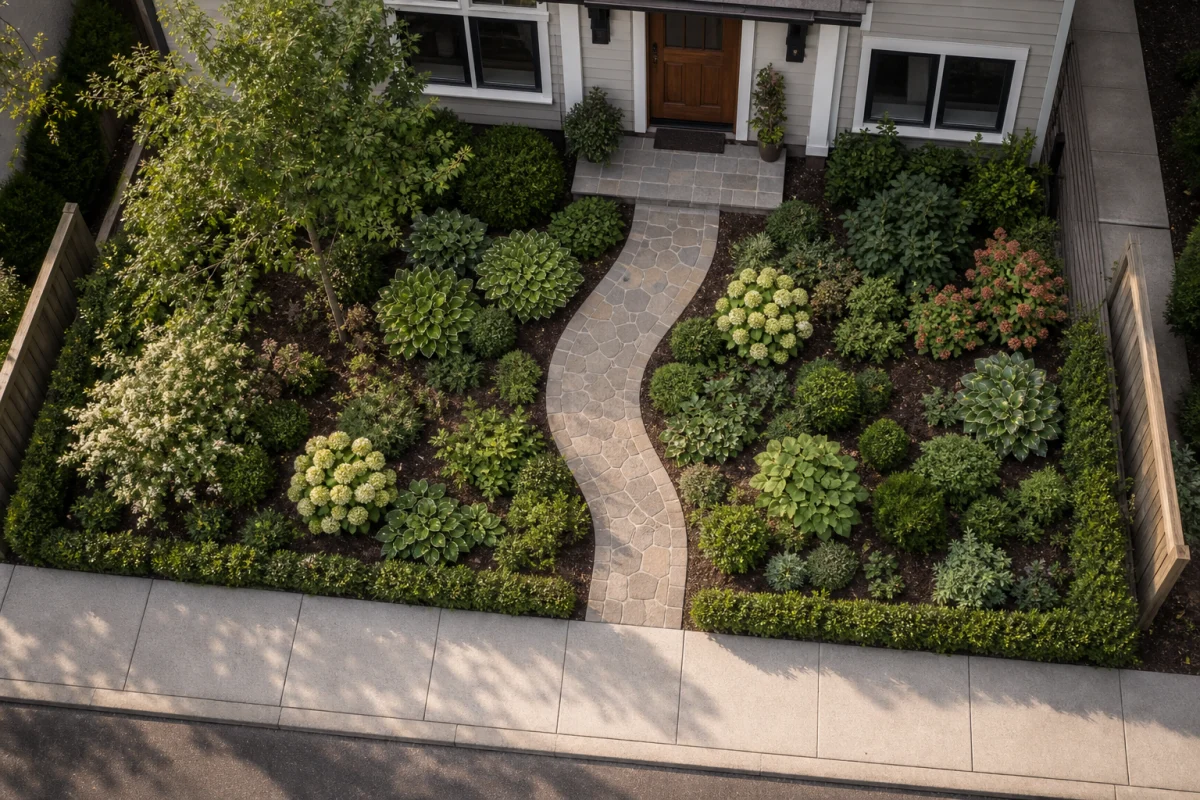
A path through a garden
Your front yard is mainly an arrival space.
One direct route through two broad planting masses.
See the planting directionHide planting direction
Keep the path edge low and move taller plants away from sight lines.
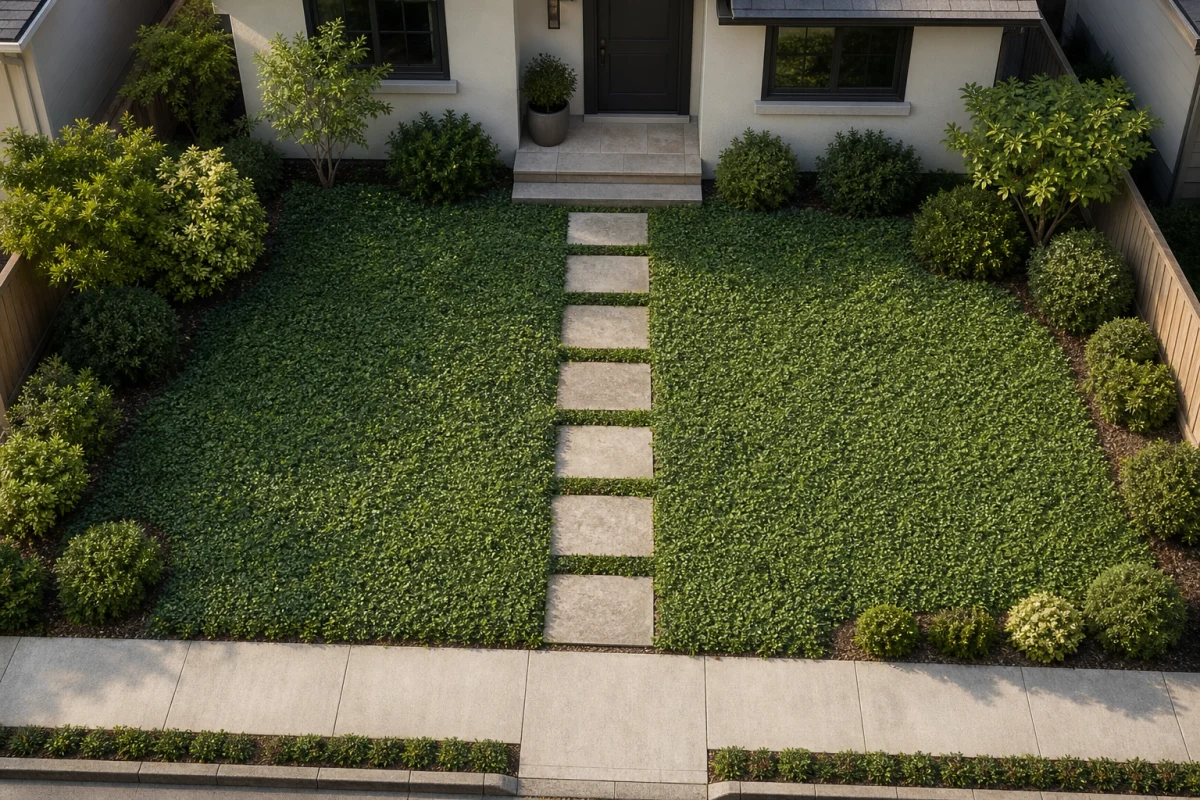
A planted carpet
You want a soft view and need only occasional access.
Living coverage fills the yard, with stable steps only where needed.
See the planting directionHide planting direction
Investigate locally suitable groundcovers such as wild ginger, creeping phlox, low sedum, or frogfruit.
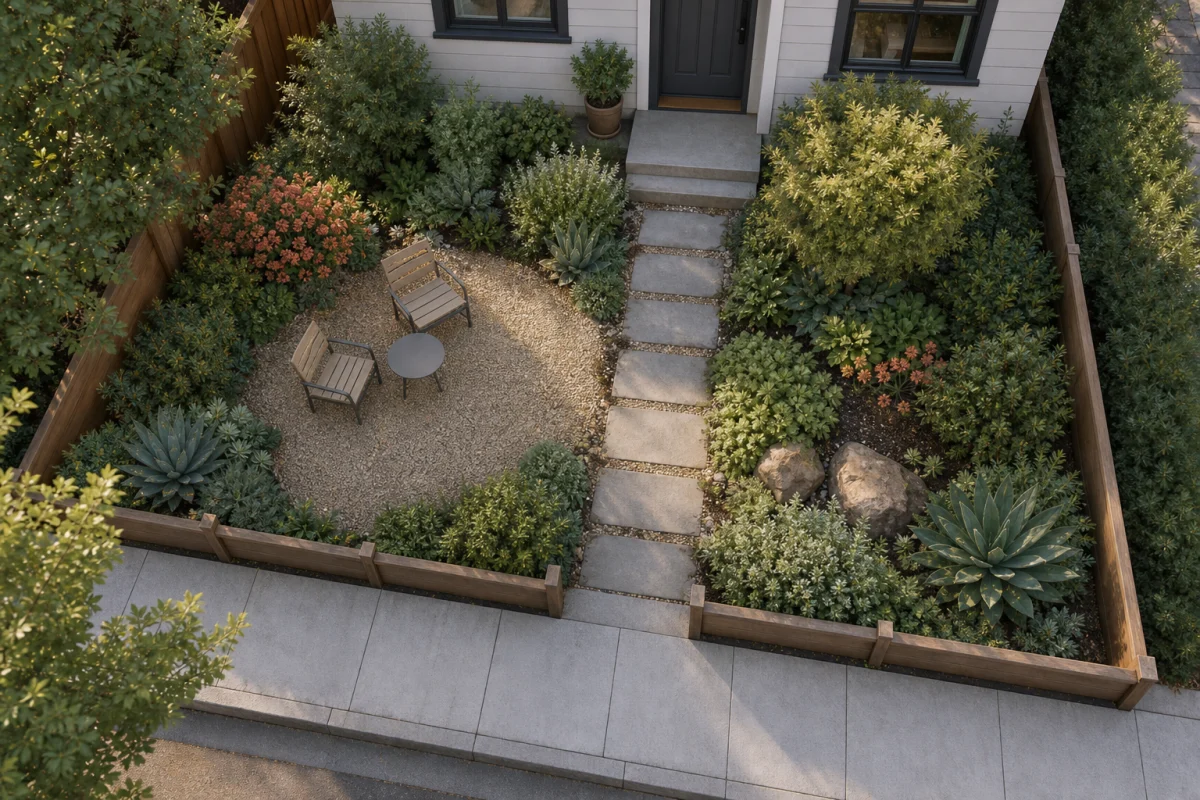
A small front courtyard
You will actually use a small sitting place near the door.
One useful landing connects directly to the main walk.
See the planting directionHide planting direction
Wrap the landing in planting. Skip it if you will not actually use the space.
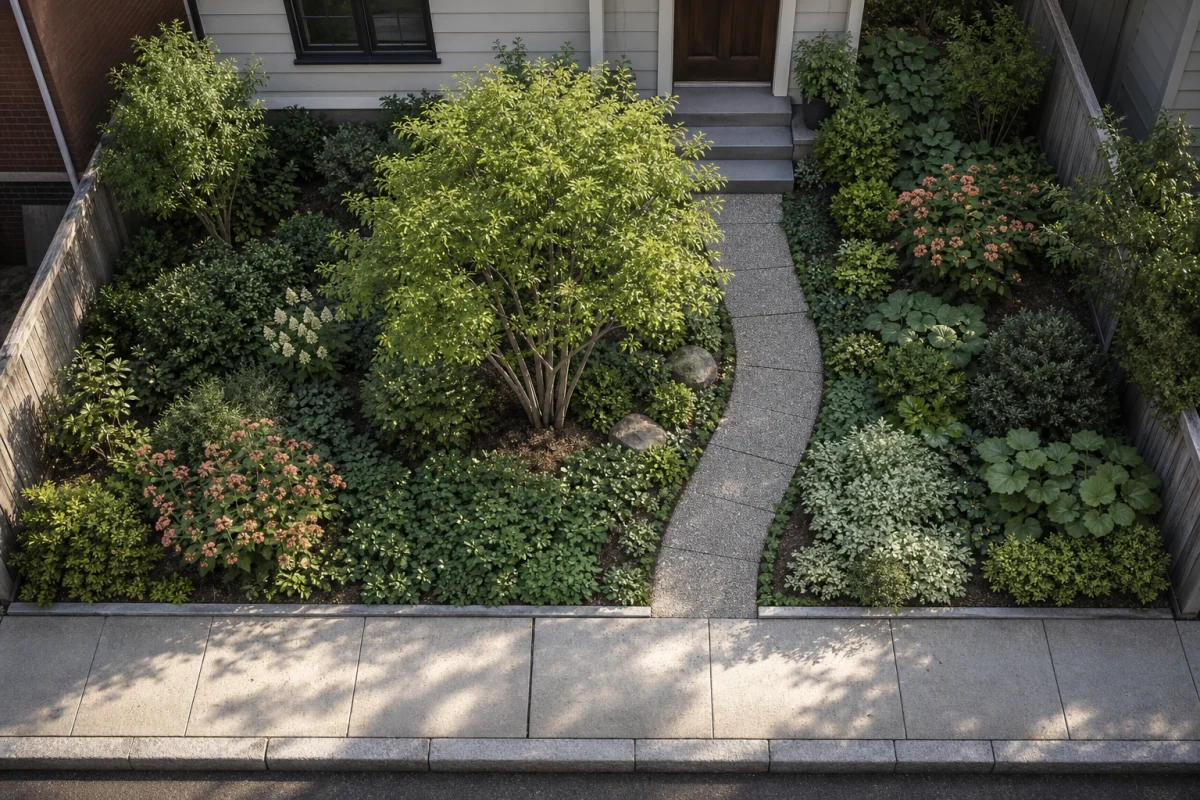
A layout built around an existing tree
An existing mature tree must set the plan.
The route bends outside the protected root area.
See the planting directionHide planting direction
Place the path and new plants around the tree's roots, shade, and water needs.
For a no-grass-like-foliage palette, exclude ornamental grasses and sedges from the brief before generating the layout.
Plan a small no-lawn yard
This 18-by-14-foot example makes four layout decisions.
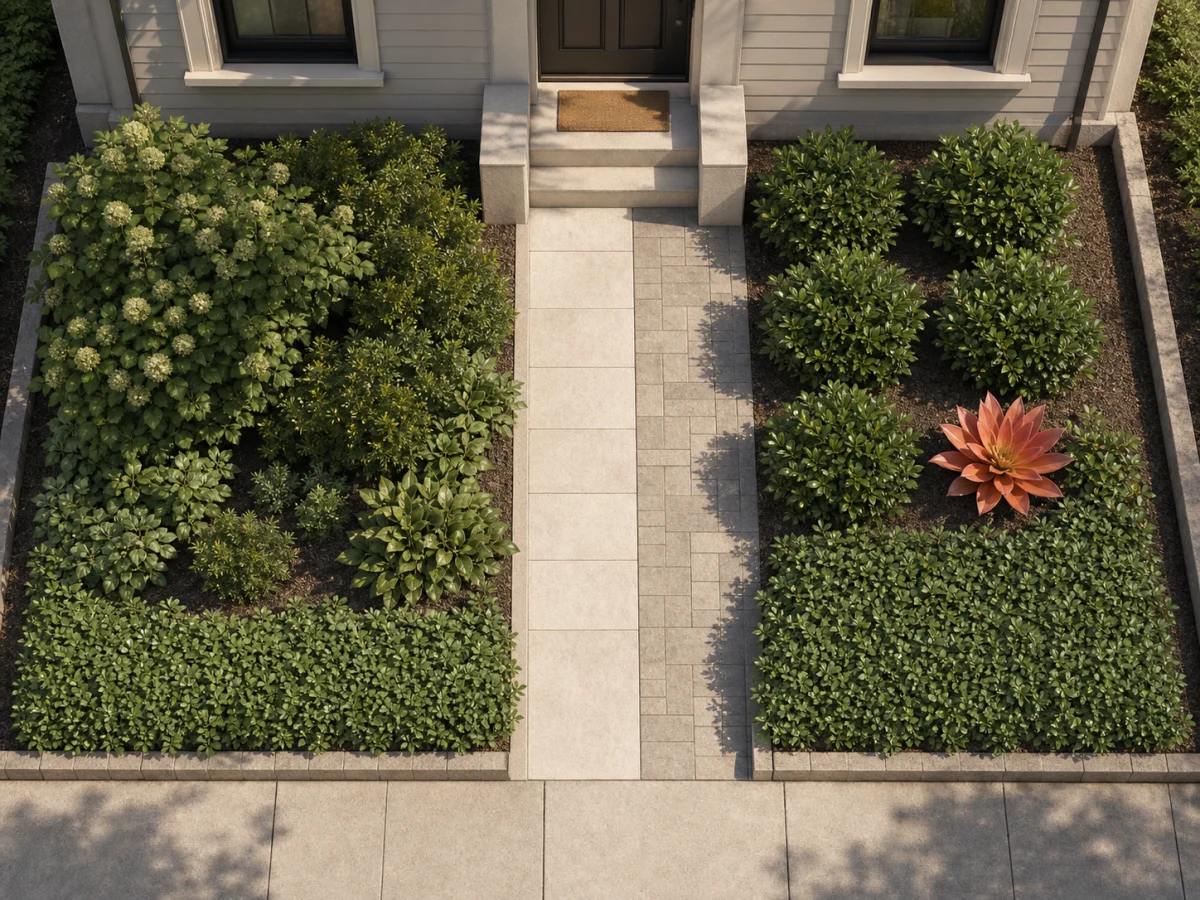
Compact sidewalk-to-stoop yard
- Site
- Compact frontage between sidewalk and house
- Use
- Arrival, not play
- Keep
- The existing walk
- 1
Widen the main path with a parallel paver band
Add a parallel paver band so the route to the door is easy to see and wide enough to use comfortably.
- 2
Create one large plant group and one smaller group
Frame the walk with one large group and a smaller repeat.
- 3
Plant a low groundcover along the front edge
Run one low broadleaf groundcover across the front edge.
- 4
Add one distinctive plant inside the bed
Place one suitable rosette inside the bed, away from feet.
From the sidewalk, the route should be the first thing you understand. The plants should frame it, not block it.
Check drainage, access, and upkeep
Use three checkpoints. Each one prevents a different kind of problem.
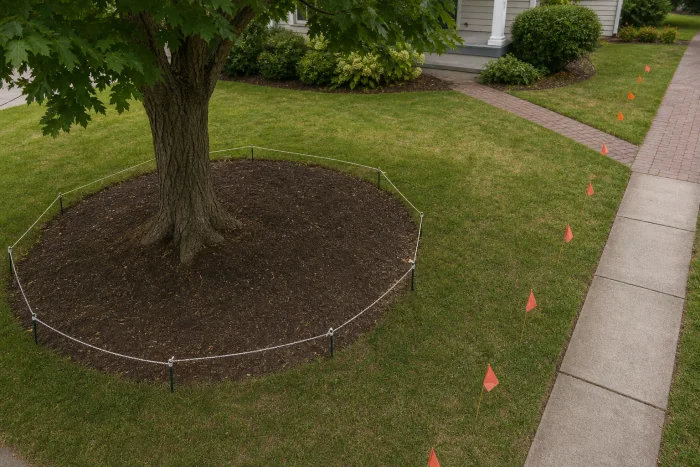
Before lawn removal
Avoid surprises and protect what will stay.
Map the constraints. Locate utilities and check local rules, rebates, and permits.
Protect mature trees. Mark important roots and plan for trees that depended on lawn irrigation.
Choose the removal method. Match it to the grass, season, slope, and timeline.
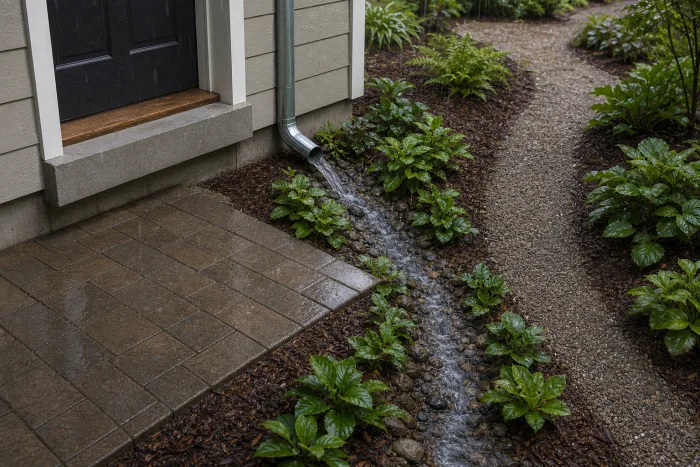
Before surfaces arrive
Keep loose material and runoff away from the house.
Keep the house clear. Keep soil, mulch, and gravel below siding, vents, and thresholds.
Trace the water. Send roof and path runoff away from the foundation and neighbors.
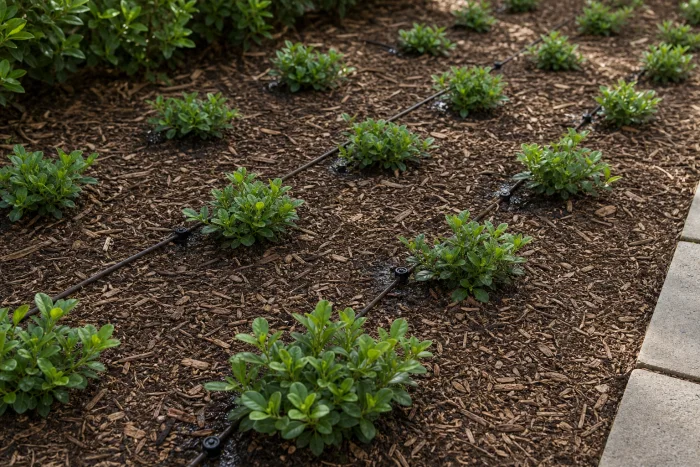
While plants establish
Help living coverage close the gaps before weeds do.
Water the living coverage. New groundcovers need regular care before they close the gaps.
Keep bare soil covered. Weed open areas and renew mulch while plants spread.
No lawn does not have to mean no softness. Broad leaves, low flowers, rounded shrubs, and planted shade can feel cooler and more welcoming than wall-to-wall rock.
Frequently asked questions
Does no-grass landscaping also exclude ornamental grasses?
Not always. Most no-grass searches mean no turf lawn, so many examples still use ornamental grasses or sedges. If you want no grass-like foliage, state that explicitly and use broadleaf groundcovers, flowers, ferns, shrubs, and suitable rosette forms instead.
Is gravel a low-maintenance replacement for the whole lawn?
It removes mowing, but it still collects debris, moves at edges, heats in sun, and develops weeds over time. Gravel works best when it has a defined route or design purpose and is balanced with enough living planting.
Can groundcover handle people walking on it?
Some groundcovers tolerate occasional light steps, but few replace a daily front walk. Use stable paving for frequent traffic and choose a regionally suitable groundcover for the areas that are truly planted.
 Gardenful
See what could replace the lawn before you remove it.
Use a yard photo to test the route, living coverage, and material balance, then verify drainage, tree care, and local plant fit.
Gardenful for iPhone
Download the app free and start with a photo of your yard.

Sources(5)
- [1]Landscaping Tips
US EPA WaterSensehttps://www.epa.gov/watersense/landscaping-tips
- [2]Xeriscaping: Retrofit Your Yard
Colorado State University Extensionhttps://extension.colostate.edu/resource/xeriscaping-retrofit-your-yard/
- [3]Landscape Design and Water Quality
University of California Statewide IPM Programhttps://ipm.ucanr.edu/home-and-landscape/landscape-design-water-quality/
- [4]Landscape Design with Plants: Creating Outdoor Rooms
University of Florida IFAS Extensionhttps://ask.ifas.ufl.edu/publication/EP449
- [5]The Florida Yards & Neighborhoods Handbook: Right Plant, Right Place
University of Florida IFAS Extensionhttps://ask.ifas.ufl.edu/publication/EP416