Shade garden planning
Shade front yard landscaping ideas for the light and moisture you actually have
The short answer
Shade is not one condition. First record how many hours of direct light reach the bed, then check whether tree roots or eaves also make the soil dry. Build the design around foliage form and repeated ground coverage, with flowers as a seasonal layer.
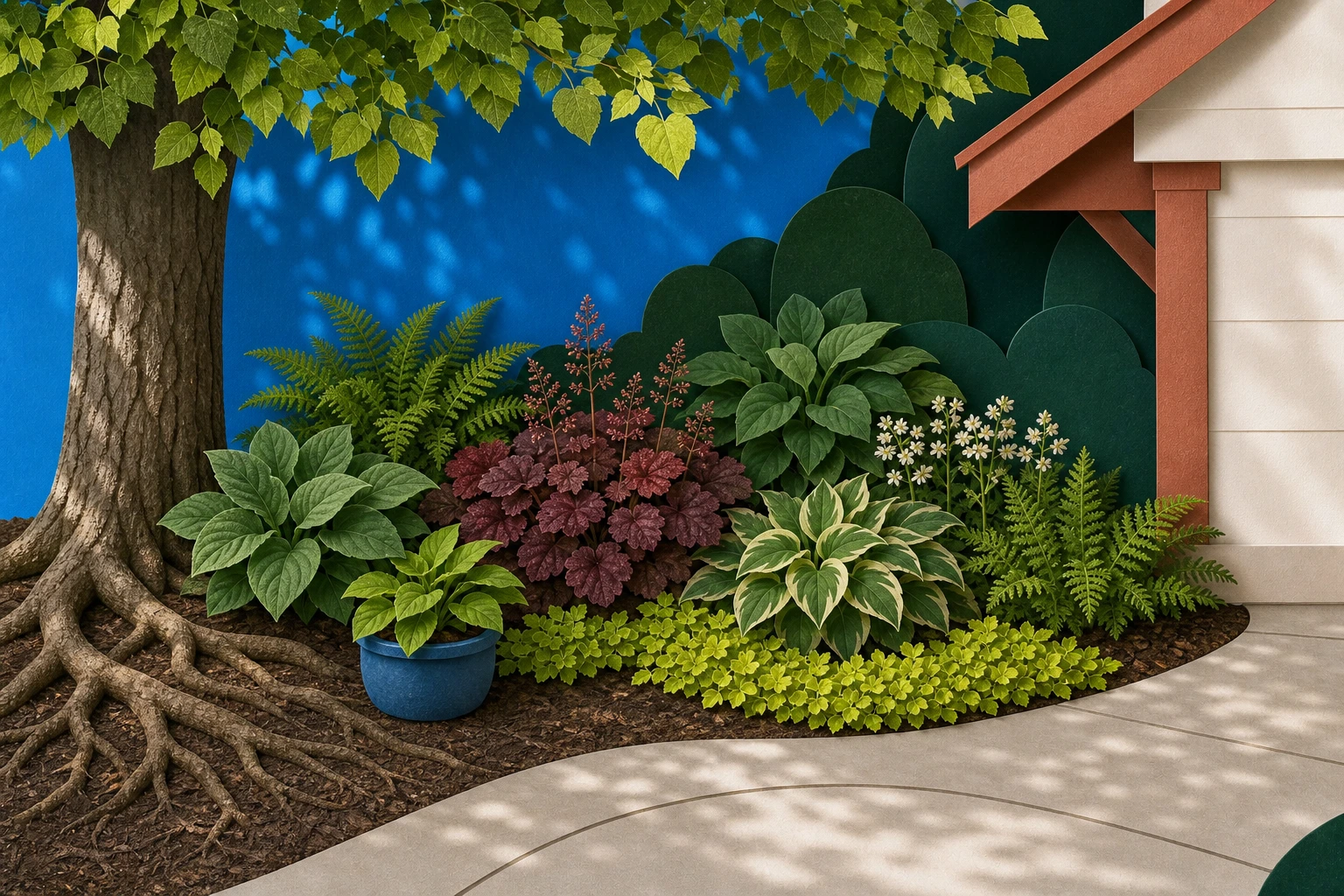
Measure shade and moisture separately
Dappled shade under an open canopy is different from deep shade beside a north wall. Part shade may still receive intense afternoon sun, while an eave can keep soil dry even when the rest of the yard is wet.1
Observe the bed at several times of day and after rain. Mark surface roots, wet and dry pockets, and areas where the house blocks sun or rainfall; a stressed shade plant may be reacting to any of those conditions, not asking for fertilizer.
Name the shade type before choosing plants
Use the closest description, then confirm the exact plant's local hardiness, light range, moisture needs, and mature size.
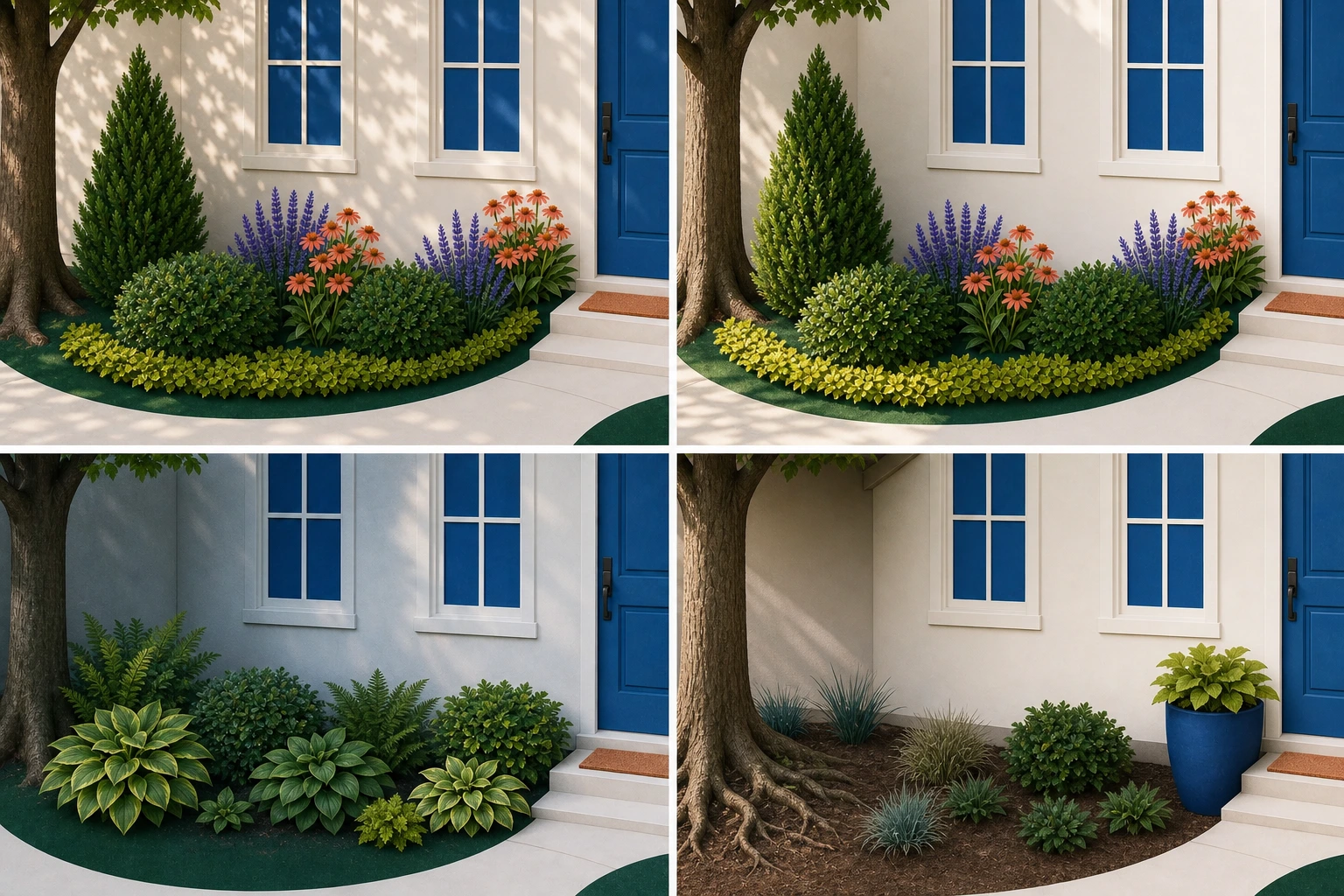
Dappled shade
- What it looks like
- Moving patches of filtered light beneath an open tree canopy.
- Planning response
- Observe seasonal changes as the canopy opens and closes. Protect roots and avoid changing the soil depth around the tree.
Part shade
- What it looks like
- Roughly three to six hours of direct light, with intensity that depends on time of day.
- Planning response
- Morning and afternoon sun are not equivalent. A plant that accepts morning light may scorch in a hot western exposure.
Full or deep shade
- What it looks like
- Less than three hours of direct light or almost no direct sun.
- Planning response
- Use foliage, form, and texture as the main design. Expect fewer heavy-flowering options.
Dry shade
- What it looks like
- Shade under roots or eaves where the soil receives little rain or faces heavy competition.
- Planning response
- Choose plants that tolerate both conditions, water during establishment, and consider containers where digging would harm roots.
Sources: University of Minnesota Extension
Build the shade palette around foliage
Flowers may be brief or limited. Let leaf size, shape, color, and repetition hold the design for the rest of the year.
Set broad and fine foliage against each other
Use one compact shrub or bold perennial for weight, then repeat one finer locally suitable form for contrast.
Let one foliage color carry the light
Repeat one chartreuse, silver, burgundy, or variegated note instead of collecting unrelated leaf colors.
Concentrate flowers in the brighter pockets
Repeat one or two flowering plants in connected groups rather than scattering them through deep shade.
Treat roots as a no-dig boundary
Keep the root flare visible and ask qualified local help before cutting roots, burying them, or changing grade.
A worked bed under a tree and house eave
This example uses roles instead of a national plant list because shade plants and native status vary widely by region.
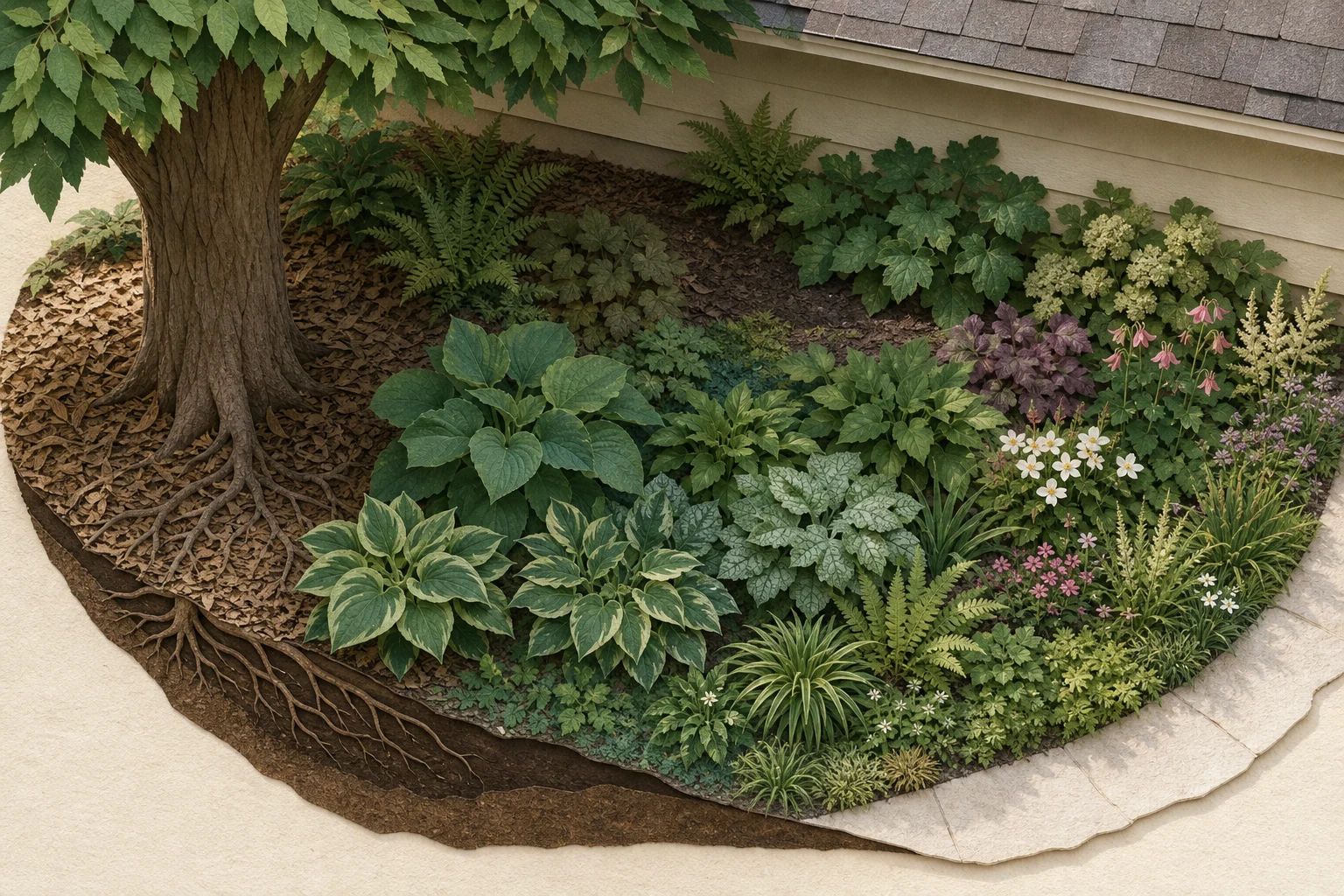
Dappled shade with a dry back edge and a brighter path edge
A mature tree occupies the left side. An eave reduces rainfall at the back of the bed, while the front edge receives occasional morning sun.
See the plan notes
Keep a no-dig zone around major roots
Use mulch carefully or place one container where excavation would damage the visible root system.
Repeat broad foliage through the middle
Place them in the moister middle zone, adjusted for local species and mature spread.
Use a fine-textured front layer
Choose a locally suitable plant that can handle the brighter edge without spreading into the walk.
Concentrate seasonal flowers in brighter pockets
Concentrate the flowers in the brightest pockets and let foliage connect the groups when bloom ends.
If the back of the bed stays dry, do not copy a moist woodland palette. Treat dry shade as its own site condition.
Record one week of shade before shopping
Three observations turn one vague shady bed into a small map you can actually shop from.
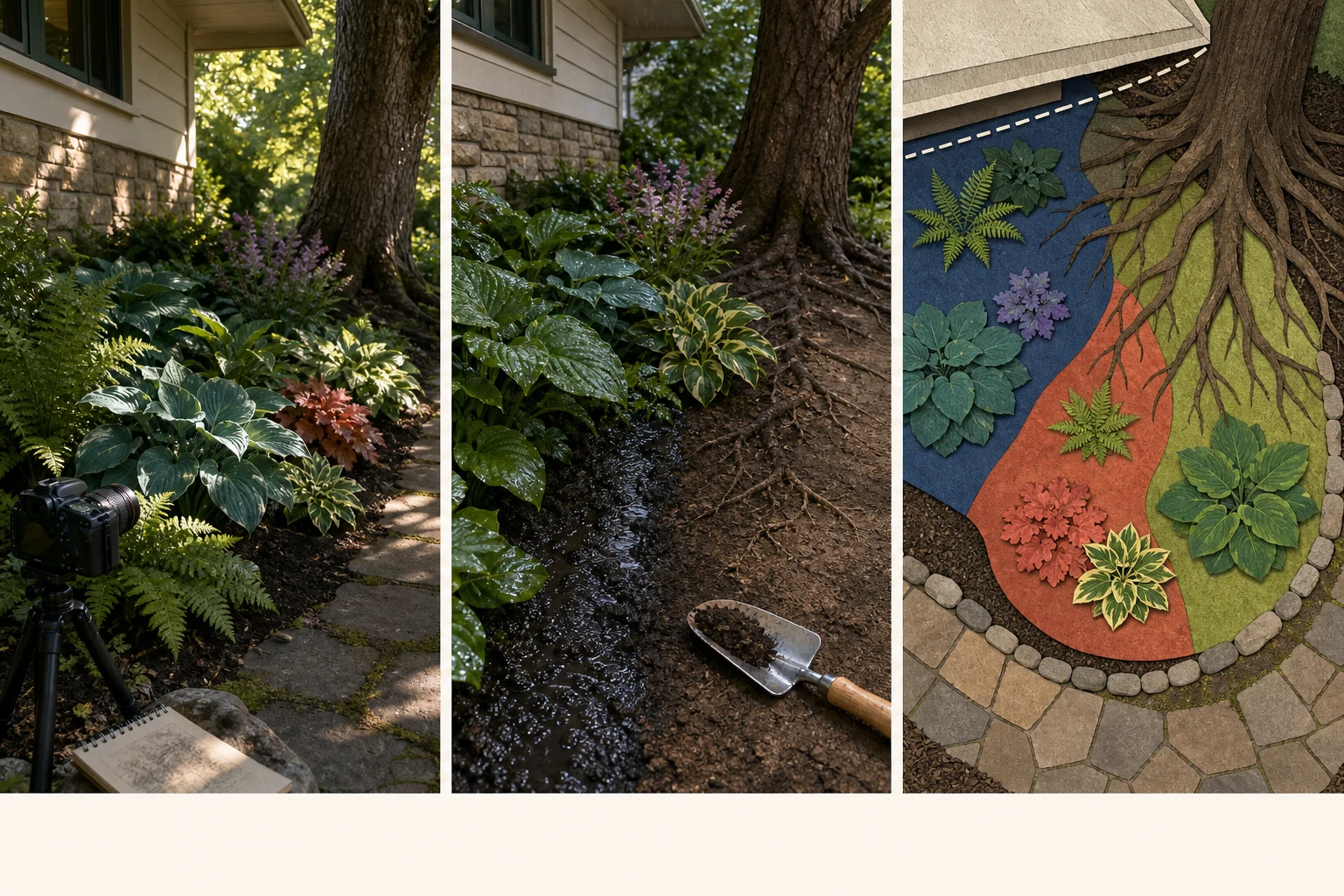
1
On a clear day
Photograph the bed in the morning, at midday, and in late afternoon; note where direct sun lands and for how long.
2
After rain, then after dry weather
Check moisture about two inches below the surface both times so eaves, roots, and slow-draining pockets become visible.
3
On one simple map
Mark roots, eaves, downspouts, vents, paths, and utility access, then measure mature plant space at the front, middle, and back.
The best shade plan starts with a light-and-moisture map, not a list titled plants that grow in shade.
Frequently asked questions
What is the difference between part shade and full shade?
Part shade often means roughly three to six hours of direct light. Full shade receives less, while deep shade receives almost none. Light intensity and time of day still matter.
Why is the soil dry under a shade tree?
The canopy can intercept rain and the established root system competes for moisture. Eaves and foundations can create similar dry areas beside a house.
Can I add soil over exposed tree roots?
Avoid changing grade or burying the root flare without qualified local guidance. Added soil and deep mulch can harm roots and the base of the tree.
Can Gardenful account for a shaded yard?
Gardenful asks for site details such as sun exposure when creating a design direction. You should still observe seasonal light, moisture, roots, and local plant fit before purchasing.
 Gardenful
Photograph the shade and record what the camera misses.
Use the tree, eave, roots, and bed shape as the visual starting point. Add a week of light and moisture notes before choosing the final plants.
Gardenful for iPhone
Download the app free and start with a photo of your yard.

Sources
The Minnesota examples explain shade conditions. Choose final plants from sources appropriate to your climate and region.
- [1]Gardening in the Shade
University of Minnesota Extensionhttps://extension.umn.edu/gardening-minnesota/gardening-shade
- [2]Right Plant, Right Place
University of Florida IFAS Extensionhttps://ask.ifas.ufl.edu/publication/EP416
- [3]Watering Tips
US EPA WaterSensehttps://www.epa.gov/watersense/watering-tips