Front yard priorities
Front yard curb appeal ideas that make the entrance easier to read
The short answer
Curb appeal is clearest when the house looks welcoming and the way in is easy to understand. Start with the route to the front door. Make the entrance visible, remove or relocate plants that hide it, repeat a small palette across the facade, and protect the paths, windows, driveway, and maintenance access people use every day.
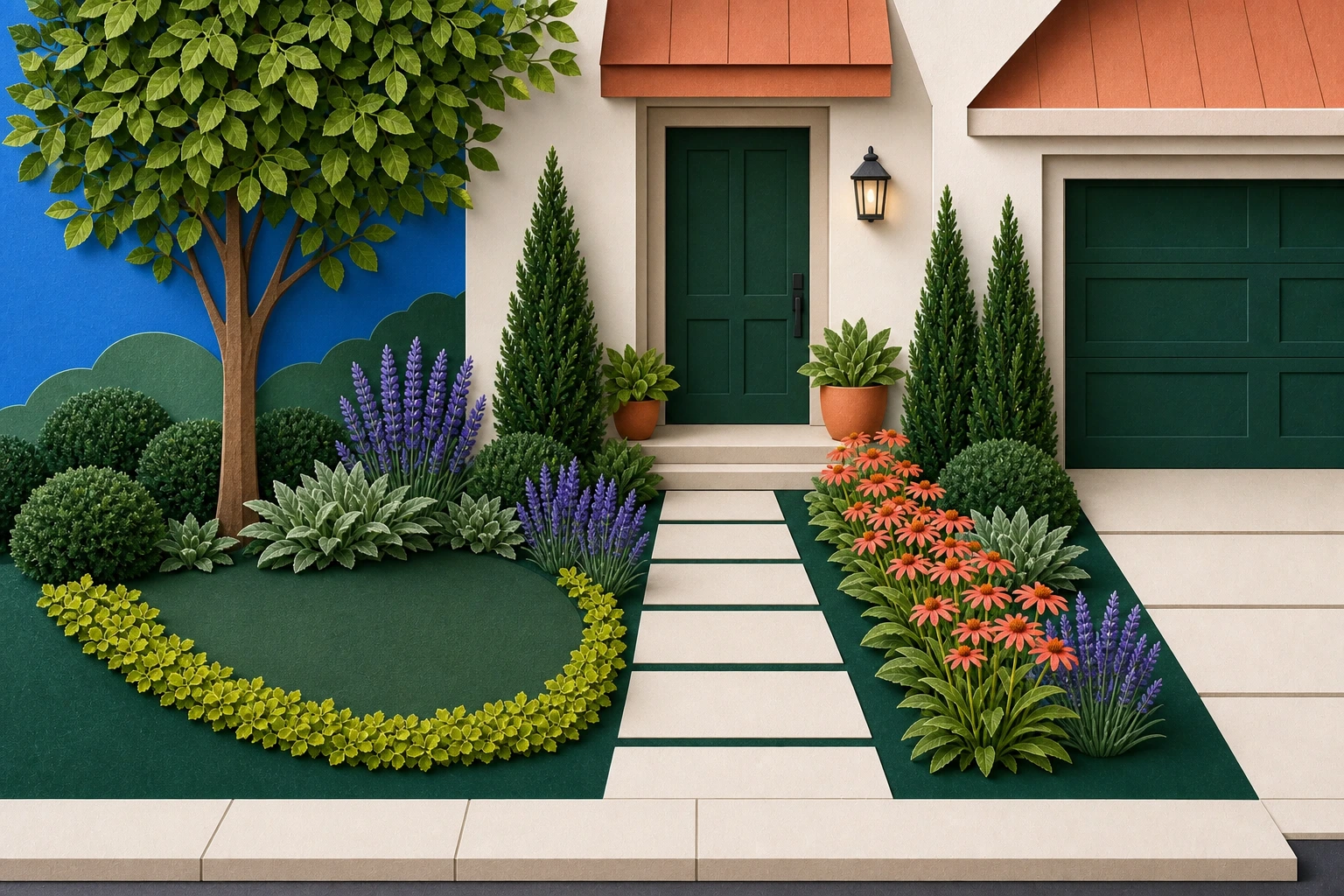
Make the front door the easiest thing to find
Front-yard planting can focus attention on an entrance through plant placement, a small tree, a groundcover, or another clear focal element. The goal is not to decorate every wall. It is to help the arrival route make sense.1
Stand at the curb and look for the first place your eye stops. If it is an oversized hedge, a utility box, or the garage instead of the entrance, decide whether pruning, removal, relocation, or a stronger entry frame would change the hierarchy.
Do not solve a hidden door by adding more unrelated color. A repeated mass along the path often guides the eye more effectively than several specimen plants placed around the yard.
Check the entrance from the places people actually see it
Review the same entrance from the places where residents, guests, and drivers actually see it.
A successful curb-facing plan should preserve the route and house details from more than one camera angle.
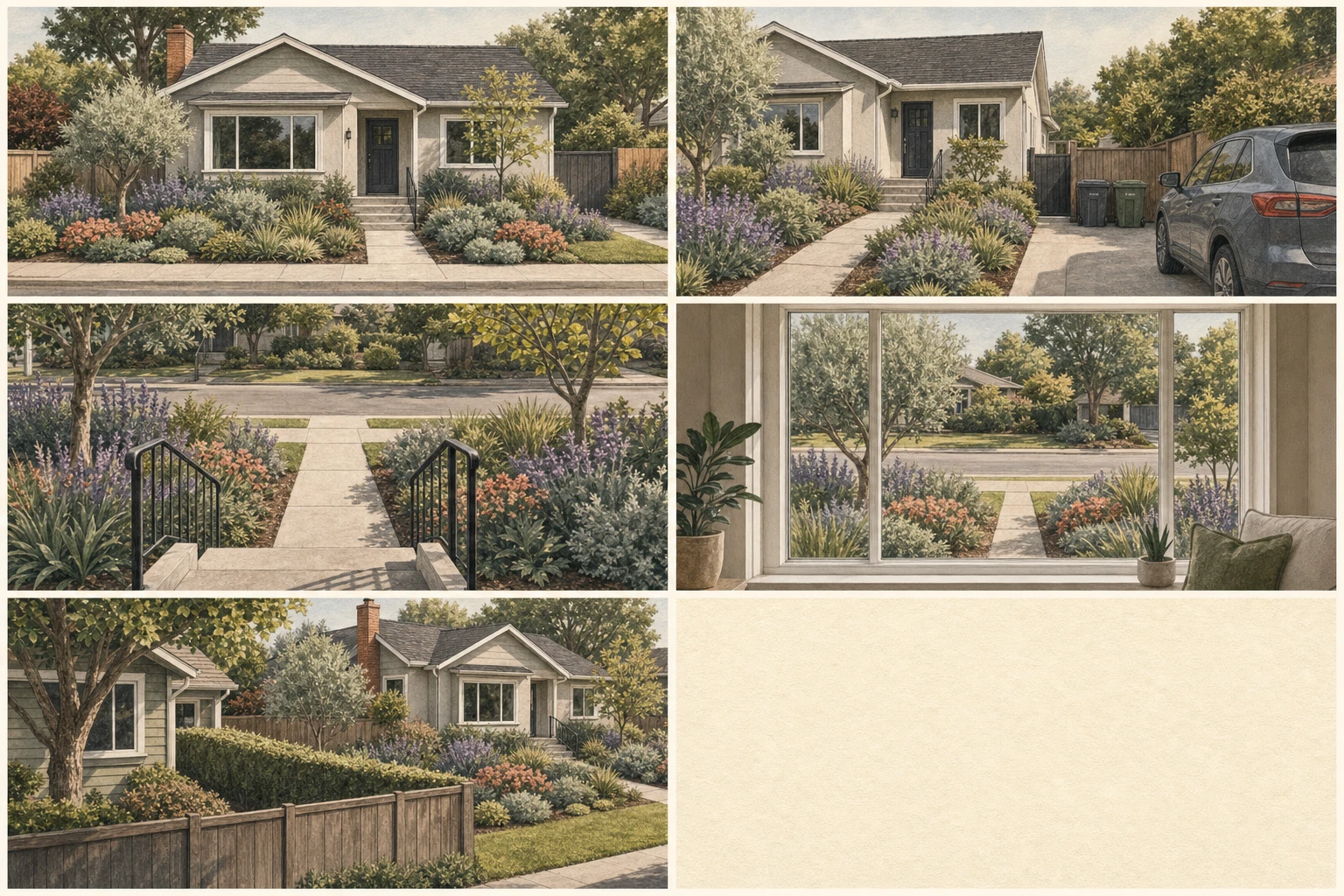
From the curb
Check whether the door, path, and one main plant mass are easy to identify at a glance.
From the driveway
Protect car doors, bins, and the walk from parking to the entry. Keep thorny or spreading plants away from the route.
From the front step
Look back at path width, handrails, lighting, and whether wet foliage will lean into the arrival space.
From inside the windows
Check mature plant height and whether the new layout blocks useful views or daylight.
From next door
Confirm boundaries, shared sightlines, utilities, and whether a mature plant will cross the property edge.
Make the highest-impact changes first
Curb appeal improves faster when the first project fixes hierarchy and access before adding small details.
- 1
Open the route
Cut back or relocate plants that narrow the path, cover steps, hide lighting, or obscure the door.
- 2
Make the entry easy to read
Clean the landing, make house numbers legible, check that entry lighting works, and repair one conspicuous piece of hardware or edging before buying decorative plants.
- 3
Correct the scale
Replace plants that cannot fit below windows or beside the house at mature size without constant shearing.
- 4
Repeat one structure plant
Use a compact evergreen or durable foliage form in two or three places to connect separate parts of the facade.
- 5
Repeat flowers along the route
Place a repeated flower or foliage accent along the arrival direction rather than around every bed edge.
- 6
Finish surfaces and edges
Repair the visible bed line, refresh an appropriate mulch, and keep soil and materials away from siding and access points.
A weekend priority plan for a flat front yard
This sequence improves legibility without pretending an entire landscape can be installed or established in two days.
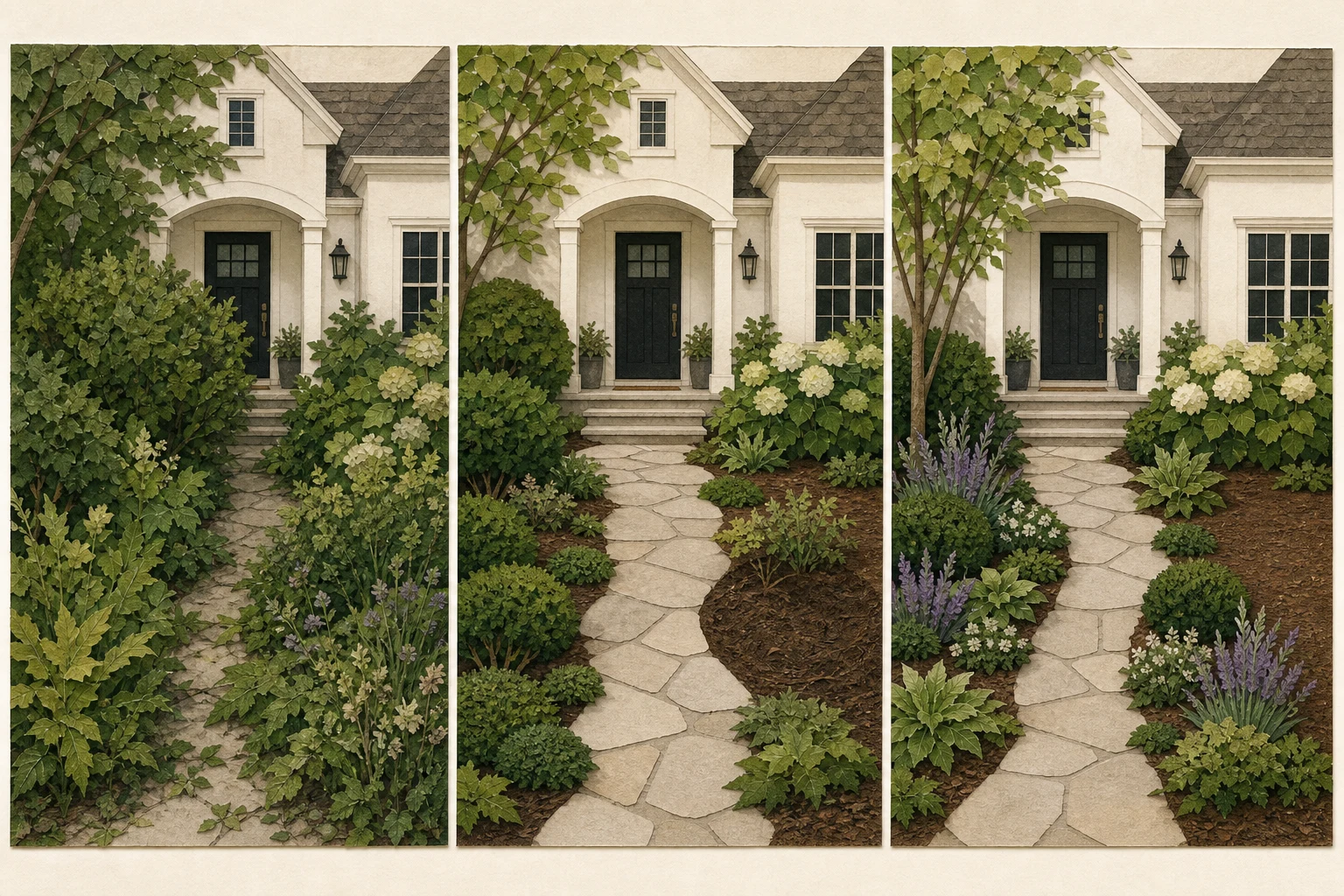
- 1. Reveal the route
- 2. Remove conflicts
- 3. Finish one zone
One hidden path, two oversized shrubs, and several empty bed gaps
The homeowner wants a cleaner first impression but is not ready to replace the driveway, path, irrigation, or mature tree.
- 1
Measure and clear the path
Restore the usable width and make sure lights, steps, and the door are visible. Avoid cutting large roots or changing grade.
- 2
Mark plants that cannot fit
Compare mature size with windows and wall access. Plan removal or relocation safely rather than shearing everything smaller.
- 3
Set one repeated plant direction
Choose the structure and flowering roles for the future bed, even if only one section will be planted now.
- 4
Finish one visible edge
Complete the bed section nearest the entry instead of spreading a few new plants across every gap.
A finished entry zone usually reads better than an unfinished collection of changes distributed across the whole frontage.
Test the curb-to-door view before planting
Take one photo from the curb and another from the driveway arrival. In Gardenful, select the bed or frontage you want to change while keeping the door, windows, path, and unselected house visible.
Judge the result by preservation and hierarchy first. The same entrance should remain recognizable, the route should stay practical, and the plant masses should support rather than hide it. Then verify every plant and quantity locally.
Frequently asked questions
What landscaping adds the most curb appeal first?
Make the entrance and route clear, correct plants that are badly out of scale, and repeat one small plant palette. Those changes usually improve the whole facade more than scattered decorative additions.
Should front yard beds be symmetrical?
They can share repeated plants without matching every position. Real driveways, windows, paths, and property edges often make balanced asymmetry more practical than exact mirroring.
How can I improve curb appeal on a small budget?
Prioritize clearing the route, correcting one overgrown area, finishing one visible bed edge, and setting a repeatable plant direction. Do not spread a small budget across many unrelated purchases.
Can Gardenful show curb appeal ideas on my house?
Gardenful can start from a photo of your yard and redesign a selected area while preserving the unselected parts. Use the result as visual planning guidance and verify final plants and site details locally.
 Gardenful
Test the view people see before they reach the door.
Start with a curb-facing photo, select the bed or frontage you want to change, and compare planting directions without losing the entrance and daily routes.
Gardenful for iPhone
Download the app free and start with a photo of your yard.

Sources
These sources support the design process. Property rules, utilities, tree work, and final plant suitability still require local verification.
- [1]
- [2]Landscape Design: Ten Important Things to Consider
University of Florida IFAS Extensionhttps://ask.ifas.ufl.edu/publication/ep375
- [3]Right Plant, Right Place
University of Florida IFAS Extensionhttps://ask.ifas.ufl.edu/publication/EP416