Region-aware planting
Native garden design that looks intentional and fits the site
The short answer
A native garden starts with plants that belong to your region and match the bed's actual light, moisture, soil, and space. Organize those plants into repeated layers, plan bloom and habitat across seasons, and leave room for establishment and change.
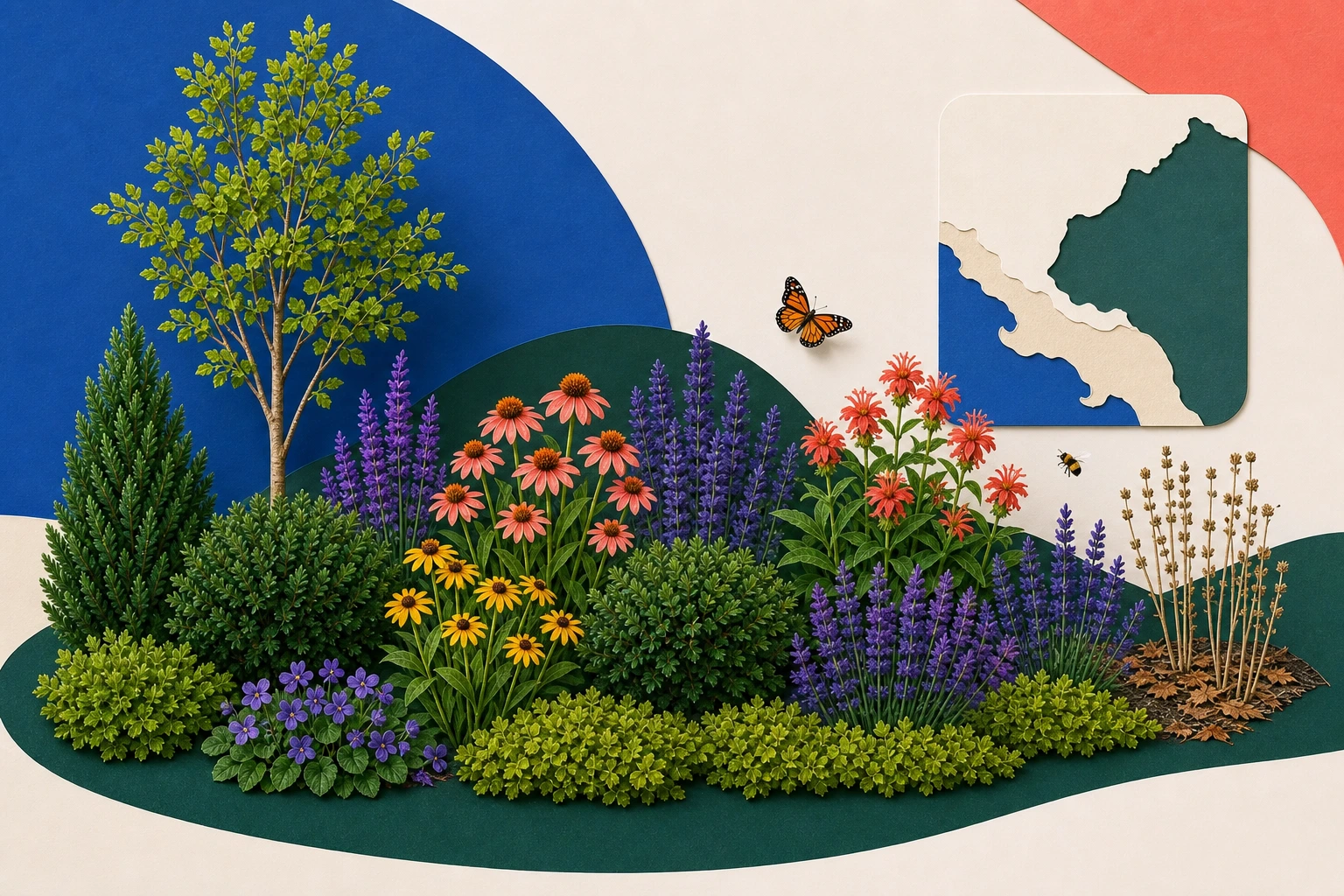
Treat native as a relationship to place, not a garden style
A plant can be native somewhere in the United States and still be a poor fit for your county, soil, or moisture pattern.
Start with a regional source, then narrow the list by the site's light, drainage, soil, mature space, and surrounding plant community. Local ecotype guidance can matter for restoration goals, but availability and the right level of specificity vary by project.4,2
Decide what the garden needs to do beyond being native. It may need to frame an entrance, cover soil, support local insects, tolerate dry shade, screen a view, or hold a slope. Those jobs create the design.
Avoid buying one of every native plant that catches your eye. Repeated groups make the planting easier to read, while a ground layer and seasonal structure keep the bed from depending on peak summer flowers.
Match the plant community to the site
The same native list should not be used for hot gravel, ordinary garden soil, and dry shade under a tree.
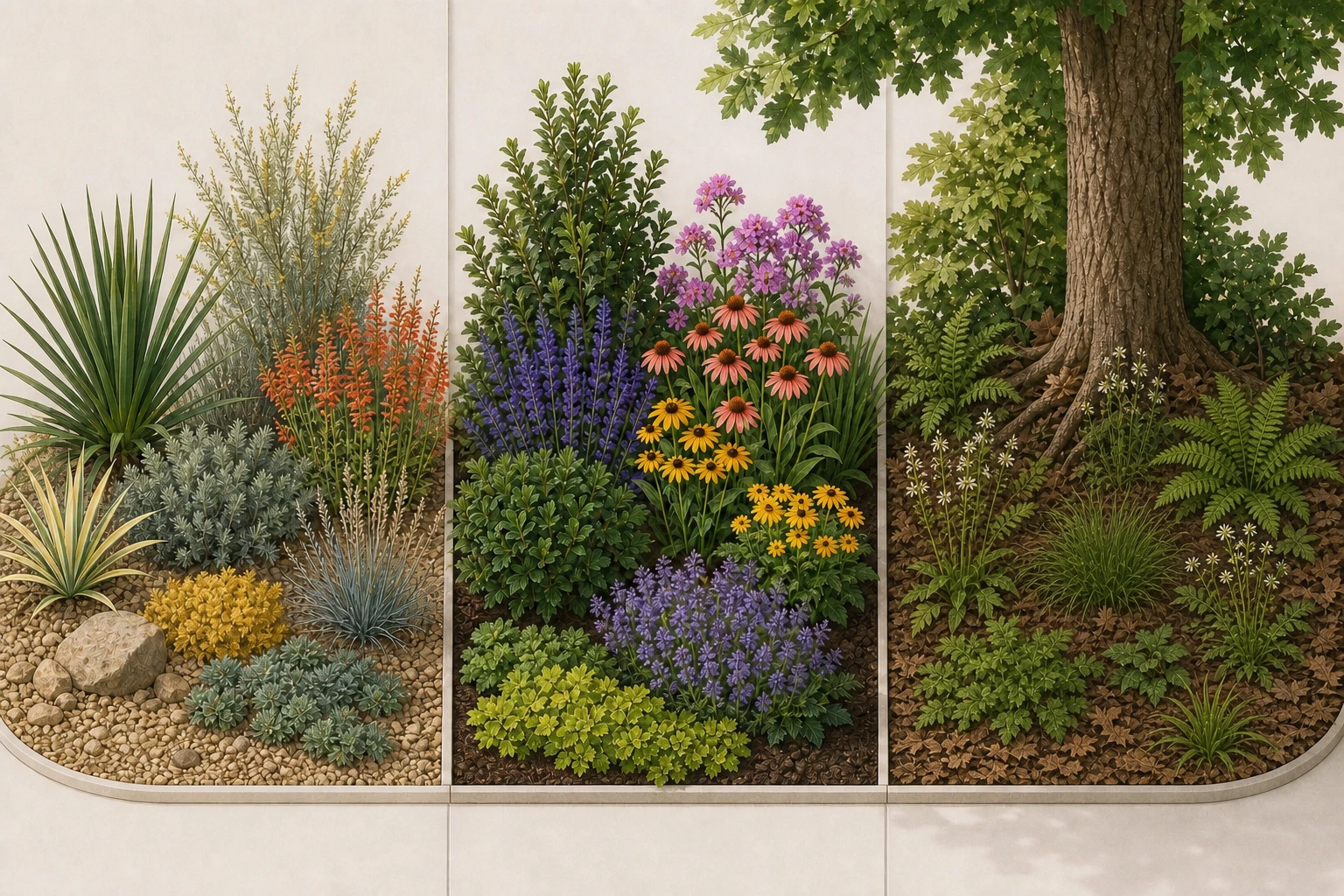
Hot, dry, full sun
- Build around
- Deep-rooted grasses, drought-adapted flowers, low coverage, and enough open mineral or organic surface for the chosen community.
- Check locally
- Establishment water, reflected heat, soil depth, fire guidance, and whether gravel raises root-zone temperature.
Sunny with ordinary moisture
- Build around
- Repeated flowering masses, grasses or sedges, one shrub layer, and a ground layer that closes the soil over time.
- Check locally
- How quickly each plant spreads, which species will dominate, and whether drainage changes after heavy rain.
Woodland or tree shade
- Build around
- Ferns, sedge-like texture, spring flowers, shrubs, leaf litter, and plants adapted to root competition.
- Check locally
- Dry shade, major roots, canopy changes, eaves, and whether digging or irrigation could harm the tree.
Sources: Bureau of Land Management
Build four layers that stay readable
The layers can overlap, but each one should have a visible job across more than one season.
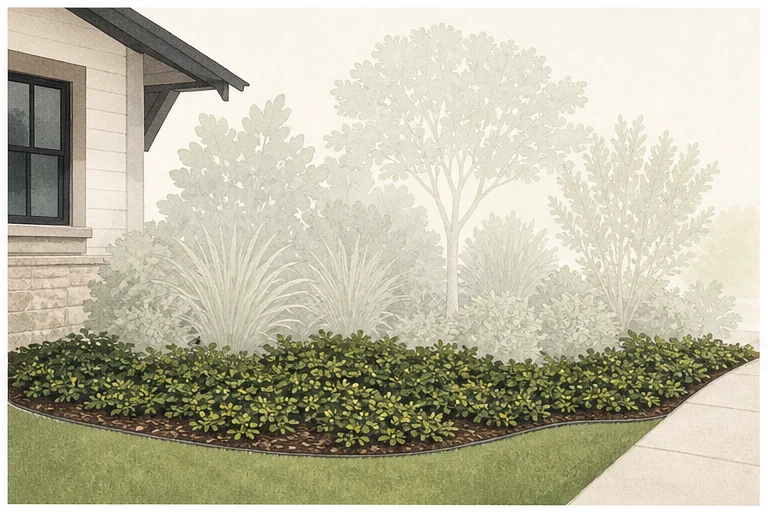
Ground layer
Use repeated low plants, leaf litter, or another locally appropriate cover to protect soil and reduce open weed space.
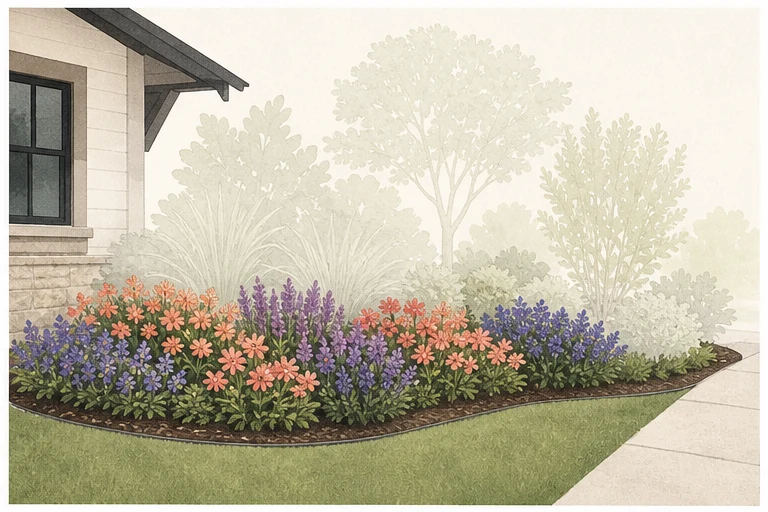
Seasonal flower layer
Plan early, middle, and late bloom in connected groups. Do not rely on one midsummer peak.
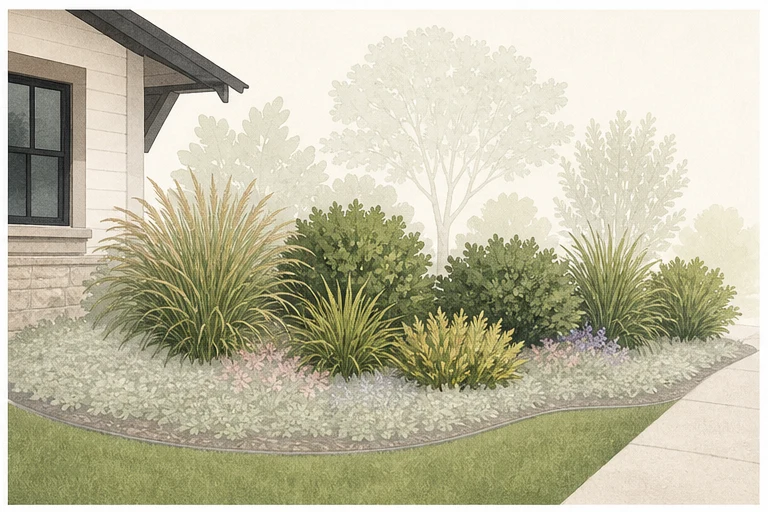
Grass, sedge, or shrub structure
Use durable forms that hold the bed when flowers fade and provide shelter or seed where appropriate.
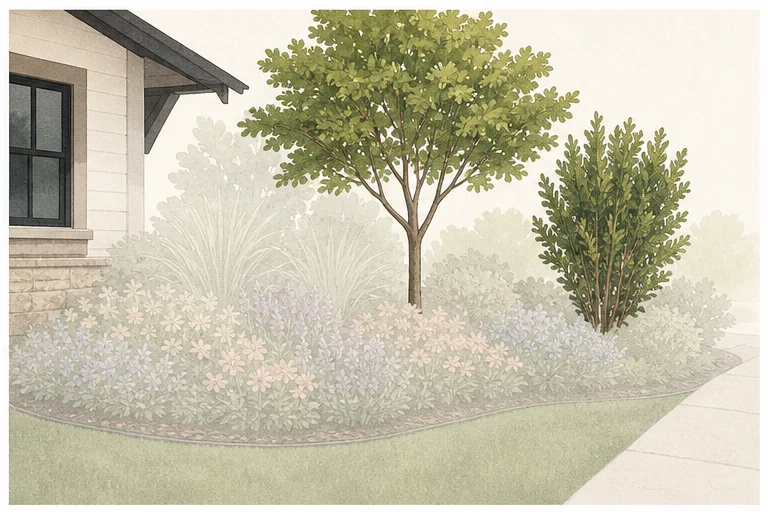
Small tree or tall shrub layer
Add it only when the mature canopy, roots, utilities, roof, and property edge have enough room.
A front-yard native bed can look orderly without removing its habitat value. Repeat the dominant masses, keep the route clear, and decide where stems and leaves can remain through winter.
Draft a sunny native bed by plant role
This Mid-Atlantic-flavored example demonstrates roles, not a national prescription. Confirm every species and source locally.
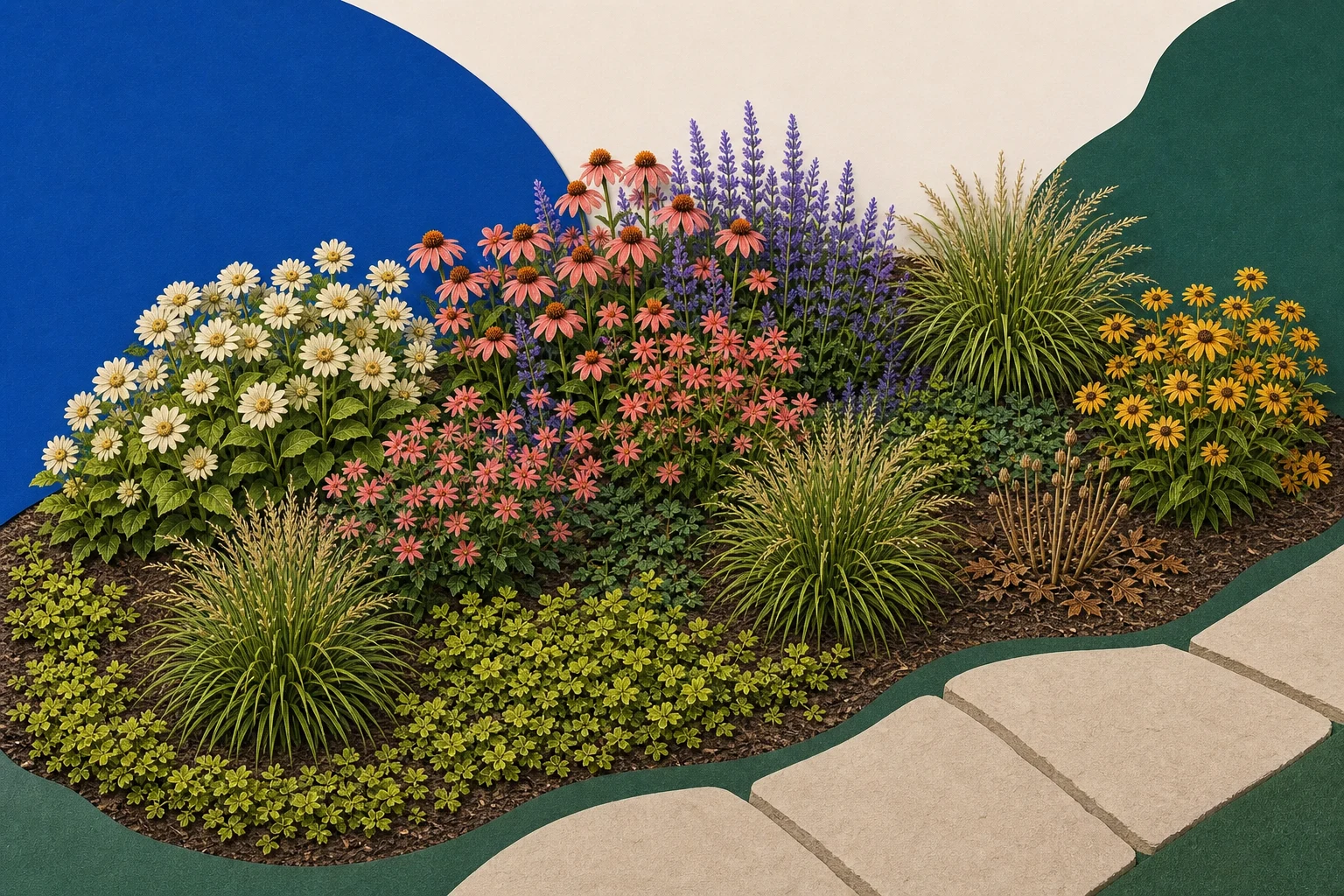
Six or more hours of sun with ordinary drainage
The bed is visible from a path and needs a low edge, a long flowering season, and winter structure without blocking the entrance.
See the plan notes
Repeat a grass or sedge structure
Use a locally native structural grass or sedge in a repeated triangle, with mature spread and local fire guidance checked first.
Add an early-to-middle bloom group
Use a repeated regional species such as golden alexanders or another local plant that fits the site's moisture and light.
Connect the bed with summer flower drifts
Choose one or two regional species such as mountain mint, bee balm, or black-eyed Susan, then check spreading behavior.
Finish with late bloom and a ground layer
Use a locally suitable aster or goldenrod role, plus low coverage that does not overwhelm the young planting.
The local plant list may change completely, but the seasonal and structural jobs should remain visible in the final plan.
Verify the local plant list
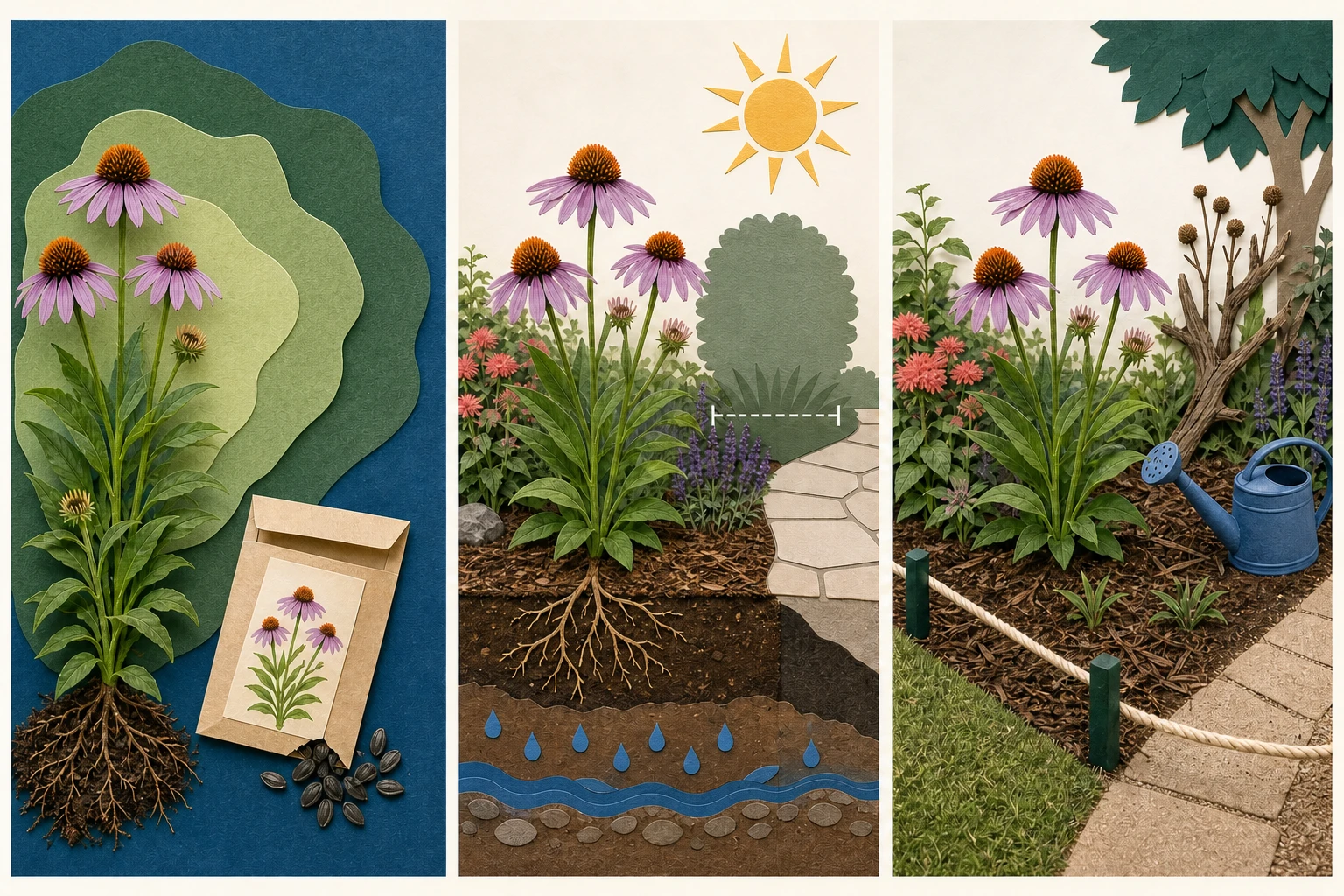
Run each candidate through three gates. If it fails one, it is not ready for the shopping list.
1
Is it actually local?
Verify the regional native range, the seed or plant source, and any local invasive, restricted, or conservation guidance.
2
Will it fit this bed?
Match its light, soil moisture, drainage, mature size, and spreading behavior to the space you measured.
3
Can this yard support it?
Plan establishment water, weed control, and protection, then decide where habitat can remain without blocking routes or conflicting with local fire guidance.
Keep only the plants that pass all three gates. A shorter verified list is more useful than a long national roundup.
Frequently asked questions
Does native mean the plant will grow anywhere locally?
No. A regional native plant still needs the right light, moisture, soil, mature space, and establishment care for the exact site.
Can a native front yard look neat?
Yes. Repeat the main plant masses, keep paths and bed edges clear, use a consistent ground layer, and decide where winter stems and leaf litter can remain.
Should every plant in the yard be native?
That is a project choice, not a requirement of this guide. Start by replacing high-impact roles with regionally appropriate native plants and avoid invasive species.
Where should I get a native plant list?
Use a regional extension program, native-plant society, public garden, conservation agency, or responsible local nursery. National lists are too broad for final buying decisions.
 Gardenful
Turn a regional plant palette into a yard-specific direction.
Start with your yard photo in Gardenful, then verify the suggested roles and plant choices with a local native-plant source.
Gardenful for iPhone
Download the app free and start with a photo of your yard.

Sources(4)
- [1]
- [2]
- [3]
- [4]