Gardenful field guide
Clay soil landscaping ideas that work with the site
The short answer
Clay soil can drain slowly, compact easily, and still become hard when dry; each problem needs a different response. Do not try to fix it by mixing in a little sand. First test where water stands and whether the soil is compacted. Avoid working wet clay, keep foot traffic on paths, add organic matter according to a soil test and local guidance, mulch the surface, and choose plants that tolerate the site's actual wet and dry cycle.
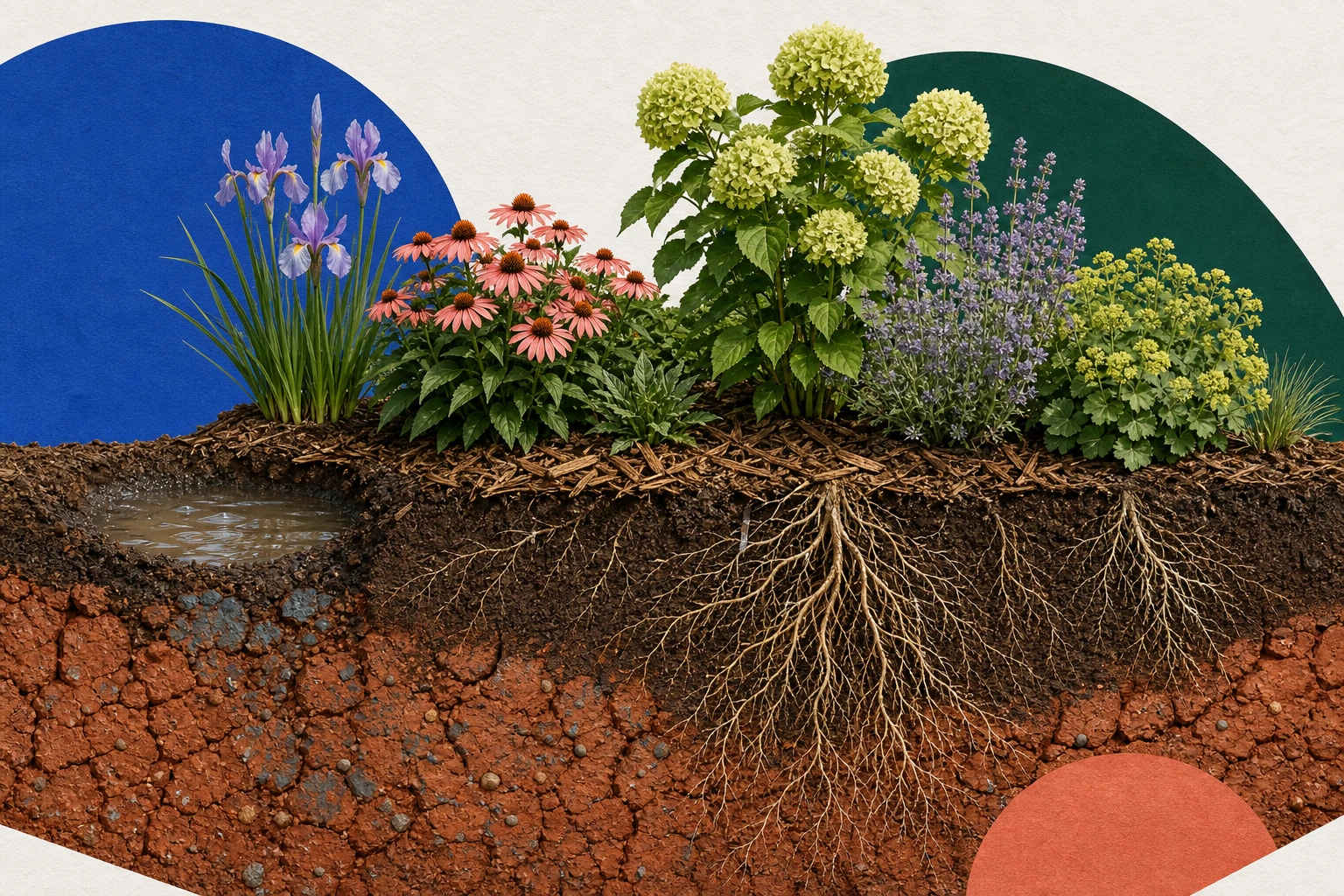
Clay is a soil texture, not a single diagnosis
The same clay bed can be sticky in spring, cracked in summer, and compacted near the path. Each condition calls for a different response.
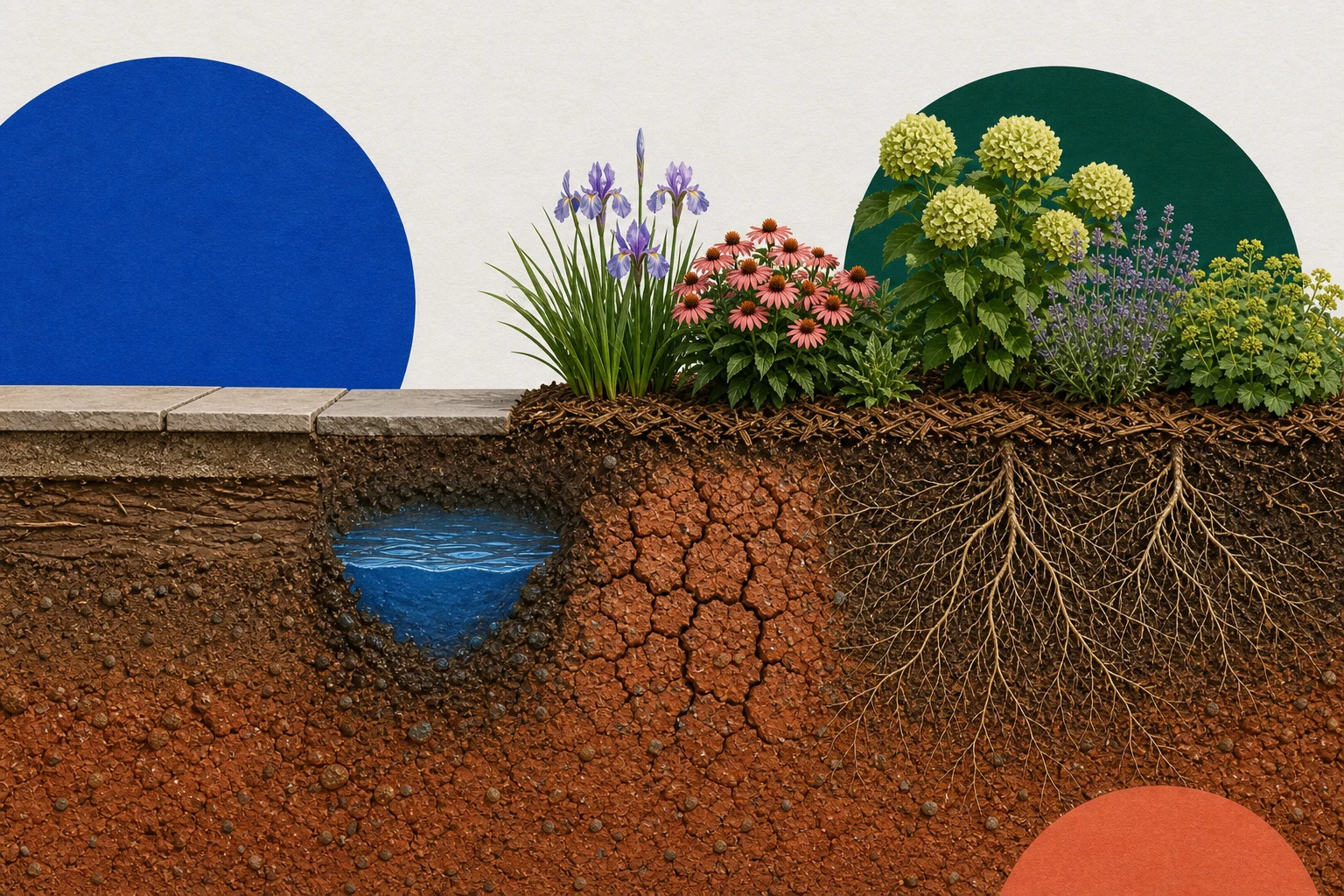
Dig small observation holes in representative areas after normal rain. Look for saturated soil, hard construction layers, glazed shovel surfaces, and shallow roots. Wait for workable moisture: wet clay smears and compacts, while very dry clay breaks into hard clods.
Illinois Extension warns that modest amounts of sand do not turn clay into balanced loam and can create a concrete-like structure. Organic matter can improve structure; choosing plants that tolerate clay is another valid response.1
Match the response to the moisture pattern
Do not apply one amendment recipe across every part of the yard.
Compacted but not waterlogged
Reduce traffic, work only at suitable moisture, top-dress with appropriate organic matter, and keep the surface mulched.
Seasonally wet pocket
Choose moisture-tolerant plants or move the bed. Do not assume a few bags of amendment will correct a larger drainage pattern.
Dry, cracking summer clay
Use surface mulch, water deeply during establishment, and choose plants that tolerate both winter moisture and summer drying where that cycle occurs.
Suspected construction or drainage problem
Get local assessment before planting. Buried debris, severe compaction, grading, and water entering structures are not solved by a plant list.
Clay-tolerant does not mean every clay-tolerant plant fits every climate. Verify region, pH, light, winter wet, and summer moisture.
A compacted clay bed beside the front walk
This example turns one compacted front bed into a simple layered planting without promising a drainage fix.
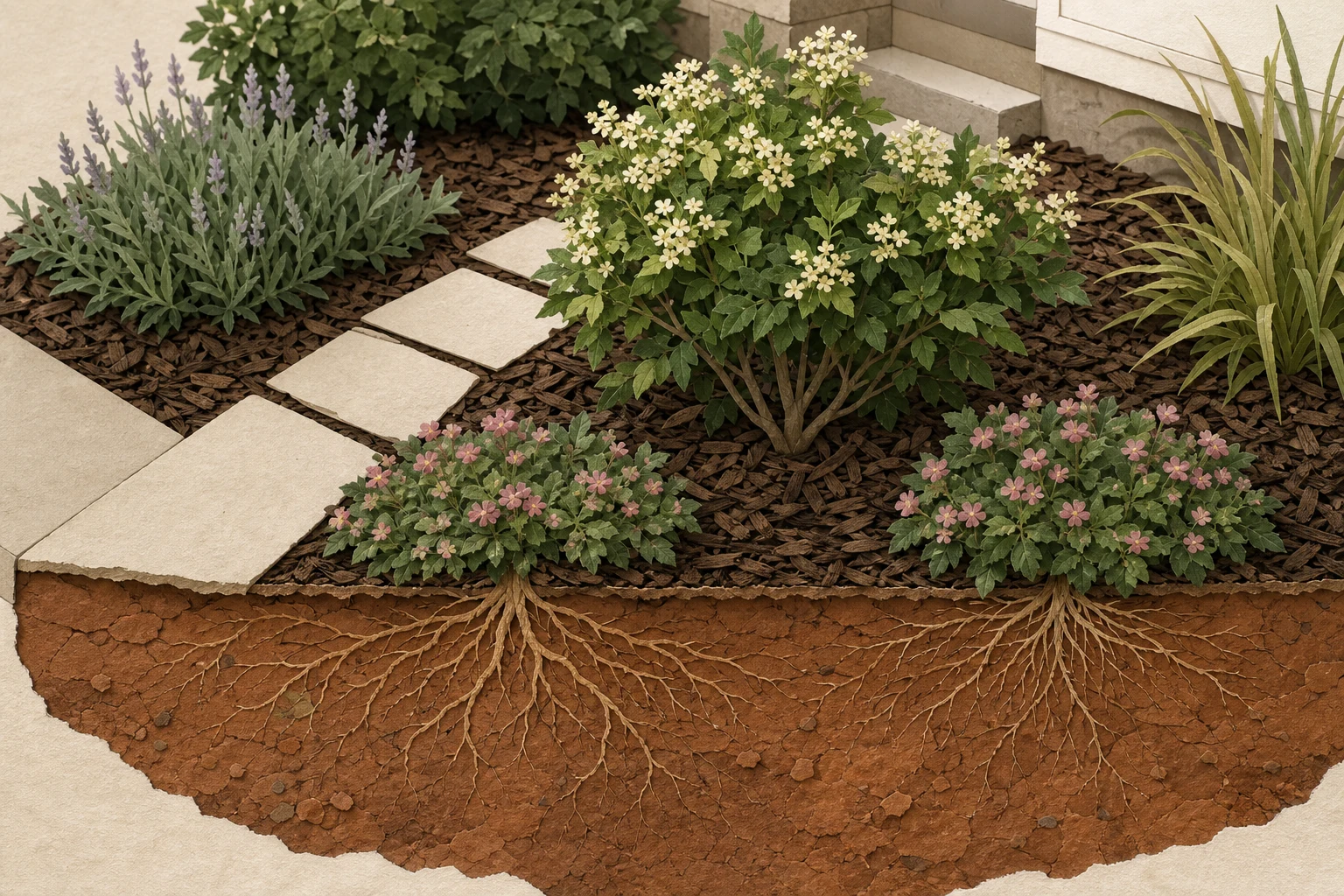
Protect the surface and choose by tolerance
The bed drains slowly after spring rain but does not stay flooded. It receives six hours of sun and dries hard in midsummer.
- 1
Create one defined access edge
Keep future feet and tools on one defined side instead of stepping through the root zone.
- 2
Choose one clay-tolerant structure role
Find a locally recommended shrub or robust perennial that fits the mature space and the wet-dry cycle.
- 3
Repeat two lower plant roles
Use broad masses rather than isolated amended holes. Verify every candidate with regional extension guidance.
- 4
Mulch and observe for a year
Maintain an appropriate organic surface layer, water during establishment, and note where plants or water reveal a different condition.
The plan does not need to turn clay into another soil. It needs plants and maintenance that fit the clay you have.
Before you amend or plant
A soil test and a few observations prevent expensive guesses.
Test before amending: Submit a sample through a local extension or accredited lab and follow its guidance.
Observe more than one wet moment: Check drainage in several locations and seasons.
Protect wet clay from compaction: Do not till, dig, or walk heavily on it while wet.
Skip the casual sand fix: Do not add sand without soil-specific professional guidance.
Match plants to the whole cycle: Check winter wet, summer dry, pH, light, and mature space.
Escalate structural water problems: Grading, foundation water, buried debris, and persistent saturation need qualified local help.
Soil improvement is gradual. A first-year planting plan should leave room to observe and adjust.
Frequently asked questions
Should I add sand to clay soil?
Not as a casual home amendment. Illinois Extension warns that small amounts of sand can create a concrete-like structure. Use a soil test, appropriate organic matter, surface mulch, reduced compaction, or clay-tolerant plants instead.
What plants grow in clay soil?
Many plants tolerate clay, but the useful list is regional and depends on whether the clay stays wet, dries hard, is acidic or alkaline, and receives sun or shade. Start with your local extension plant lists.
Can I improve clay soil in one season?
You can protect the structure, reduce traffic, mulch, and add recommended organic matter, but broad soil improvement is gradual. Persistent saturation or grading problems need separate diagnosis.
Can Gardenful test my soil?
No. Gardenful can help organize a planting direction from your yard photo and inputs. Use a local extension or accredited lab for soil testing and local amendment advice.
 Gardenful
Design for the soil you have.
Photograph the bed, record the wet and dry pattern, and build a plant-role plan you can verify against local soil guidance.
Gardenful for iPhone
Download the app free and start with a photo of your yard.

Sources(3)
- [1]
- [2]Preparing Lawn Soil and Site
University of Illinois Extensionhttps://extension.illinois.edu/lawns/preparing-lawn-soil-and-site
- [3]Right Plant, Right Place
University of Florida IFAS Extensionhttps://ask.ifas.ufl.edu/publication/EP416