Phased front yard planning
Front yard landscaping on a budget: finish one useful zone first
The short answer
A limited landscaping budget goes farther when it completes one useful area instead of scattering small purchases across the yard. Spend first on a clear route, healthy plants worth keeping, measured beds, and one finished area near the entrance. Use younger plants at mature spacing, cover future beds, and expand a repeated palette in phases.
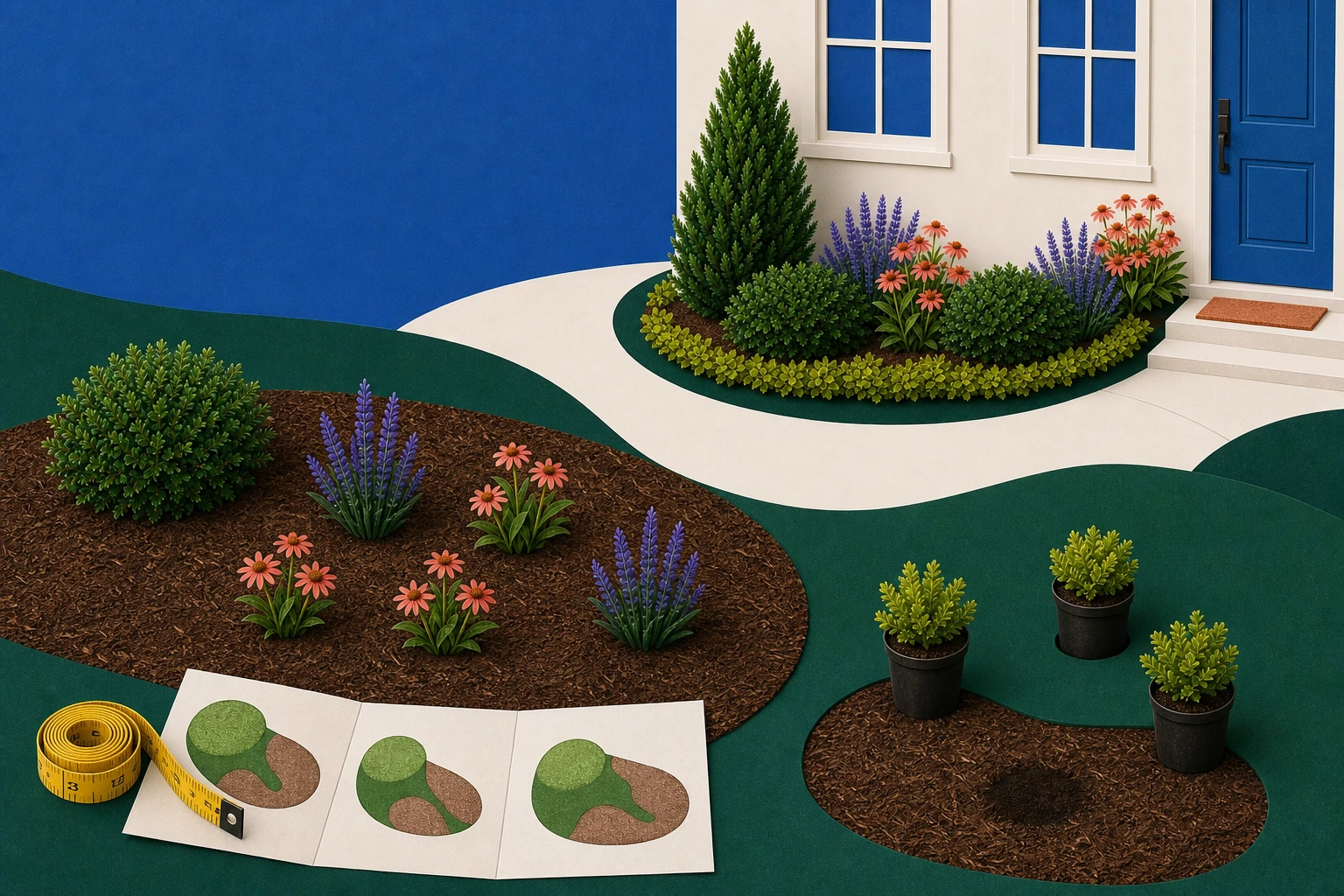
Use the budget to set the project order
The cheapest plant is still expensive when it blocks a path, outgrows the window, or has to be replaced.
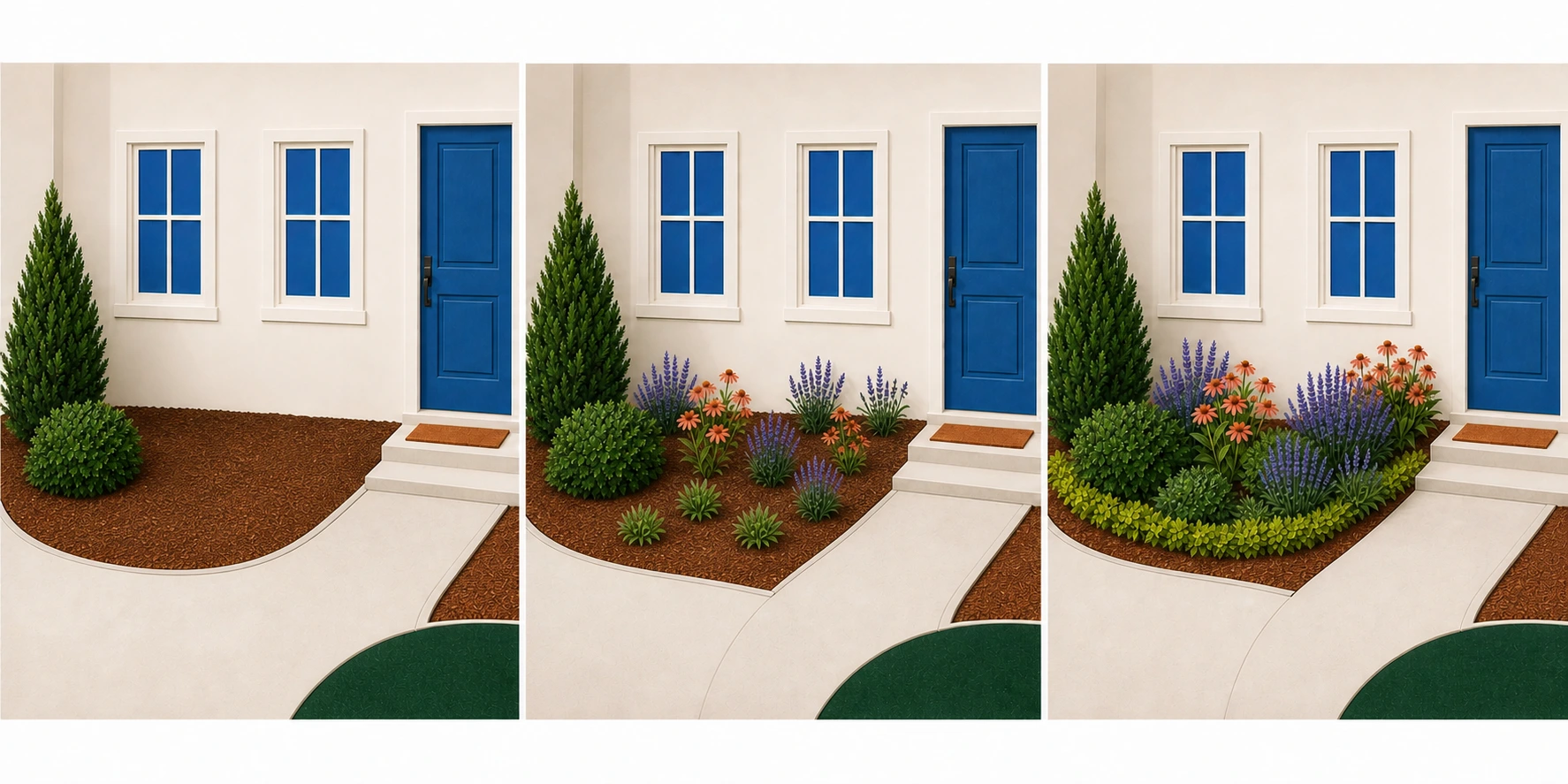
- 1. Keep + clear
- 2. Finish one zone
- 3. Repeat later
Walk the yard before shopping. Mark healthy plants to keep, plants that may be moved safely, access problems to fix, and work that needs a qualified professional. Do not remove mature trees, change grade, or redirect drainage simply to make a small planting budget go farther.
Site analysis is a cost-control step because it exposes light, drainage, roots, utilities, and existing features before money is committed to the wrong location.1
Choose the first zone by daily visibility and usefulness. For many homes, that is the path and bed beside the front door. Complete that area instead of distributing a few new plants across every empty gap.
Sort every task into three decisions
This order keeps decorative purchases from hiding access, safety, or site problems.
Keep
Retain healthy trees, useful shrubs, sound paths, and plants that already fit the light and mature space.
Repair or remove conflicts
Restore access and correct simple bed problems; get qualified help for large roots, trees, slopes, drainage, utilities, or structures.
Plant
Finish one measured zone with a short repeated palette, then protect the unplanted phases with appropriate soil cover.
Know which savings help and which create another project
The useful question is not only what costs less today. Separate plant price from removal, labor, delivery, soil preparation, irrigation changes, and establishment care, then ask what still fits after the plants grow.
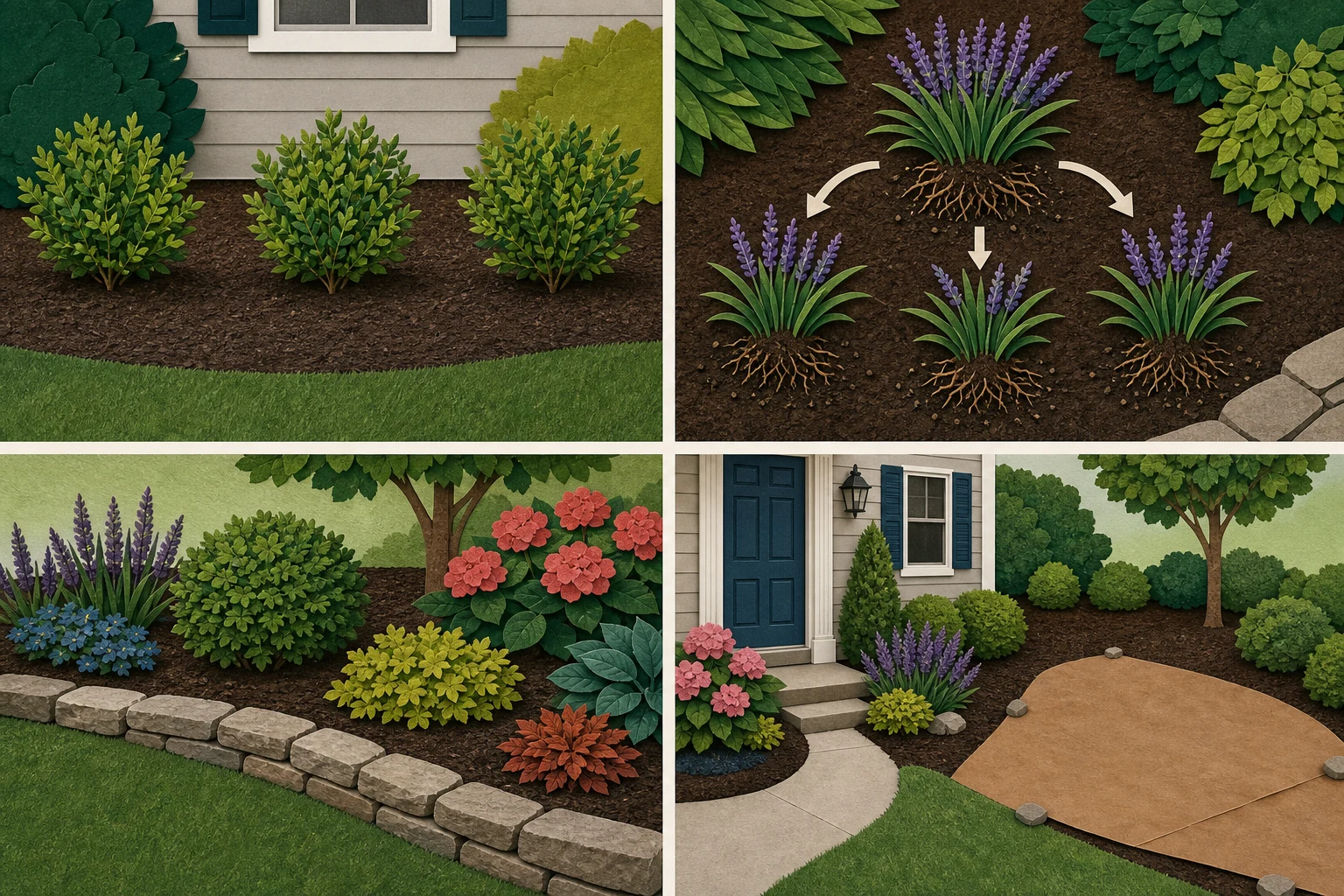
Younger plants
Save when healthy local plants keep their mature spacing and get an establishment plan. Buying extras to hide first-season gaps creates later crowding.
Divide suitable perennials
Save when the plant is healthy, the species divides well, and the timing is right. Taprooted or disturbance-sensitive plants are not free inventory.
Reuse what belongs
Keep a sound plant, stone, or edge when it belongs in the final plan. Moving mature roots, heavy stone, or drainage material may cost more than replacement.
Complete one zone
Finish the main route or view and set a palette later phases can repeat. One bargain in every bed leaves every zone unfinished.
Division works only for suitable plants at the right time; the Iowa State Extension guidance in the sources explains the basic limits.
Phase a foundation bed from the entry outward
This example avoids exact prices because labor, plant size, materials, and local markets vary. It shows where to place the first effort.
One front door, two windows, and several empty gaps
The path is sound. One healthy corner shrub can stay, while two oversized shrubs below the windows need a separate removal plan.
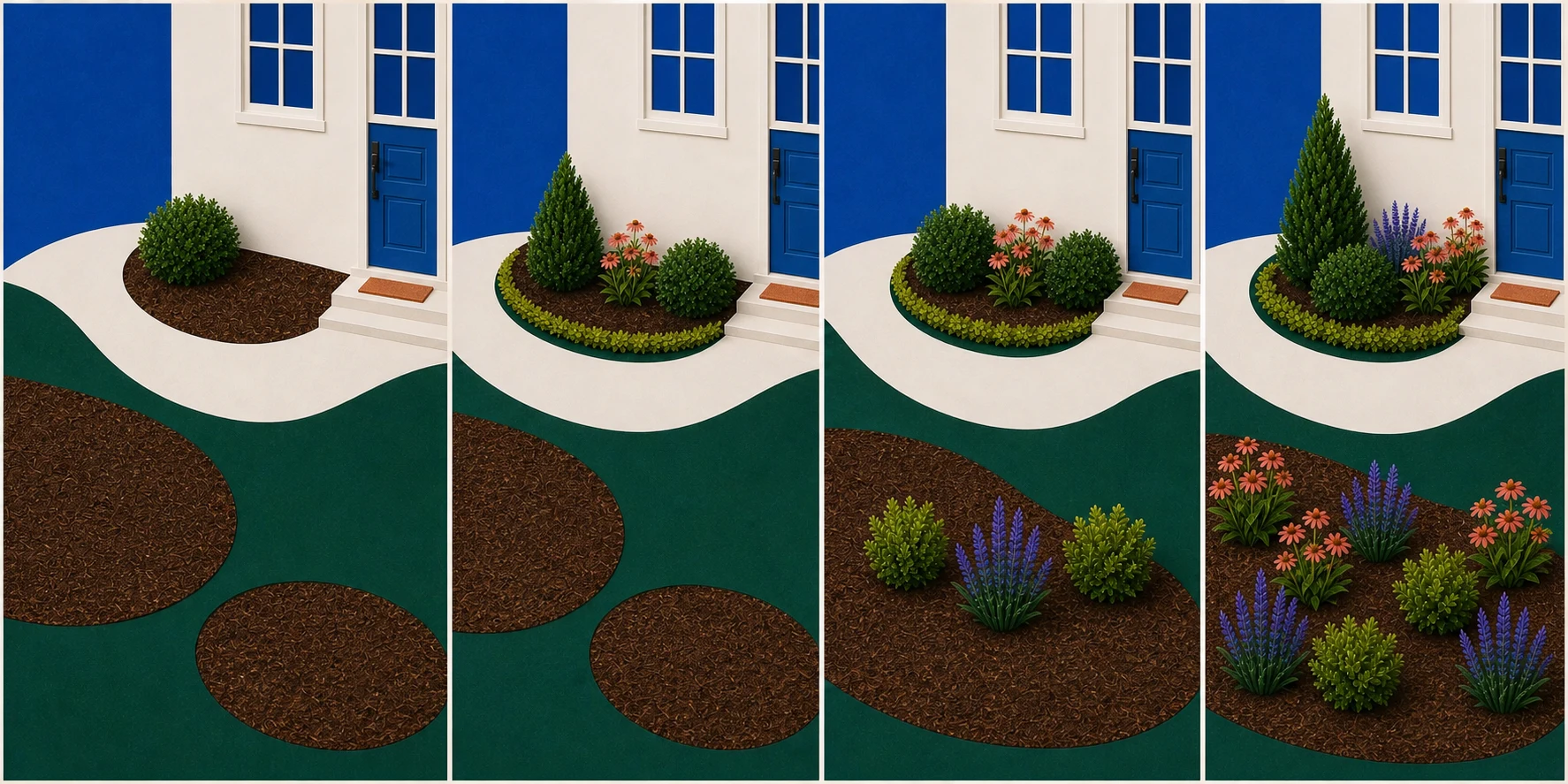
1
First phase: measure and clear the entry
Restore the path width, mark utilities, keep the healthy corner plant, and cover future bed sections appropriately.
2
Second phase: finish the door-side bed
Add two compact structure plants, one repeated flowering group, and a low edge only where it supports the route.
3
Third phase: repeat across the windows
Extend the same structure and flowering roles after the oversized plants are handled and the first zone has been reviewed through a season.
4
Later phase: fill from the established plan
Divide only suitable healthy perennials, replace losses with the same roles, and avoid adding new plant types without a clear need.
A complete entrance and a measured future plan create more value than a cart of unrelated bargains spread across the yard.
Check the plan before spending
Before checkout, make sure the first phase is complete on paper as well as in the cart.
- 1
Preserve and measure
Show what remains, confirm hidden constraints, and mark the mature space for every plant in the first finished zone.
- 2
Price the complete phase
Include removal, soil, mulch, irrigation, delivery, tools, and any professional work in addition to the plants.
- 3
Buy by fit and keep the record
Choose healthy, locally suitable plants; protect the areas that wait; and keep labels, receipts, sources, and substitution rules with the plan.
Delay a plant purchase when the bed measurement, drainage, utility location, or mature size is still unknown.
Frequently asked questions
Where should I spend a small front-yard budget first?
Start with access, healthy plants worth keeping, site problems, and one visible zone near the entrance. A complete small area is easier to maintain and repeat.
Are smaller plants always the cheapest choice?
They can lower the first purchase, but only when they are healthy, correctly spaced, and supported through establishment. Extra plants bought for instant fullness can create later removal work.
Can I divide existing perennials to save money?
Some healthy perennials divide well and can provide repeated plants. Others have deep or sensitive roots. Check the exact species and timing before digging.
Should I buy clearance plants?
Only when the plant is healthy, correctly identified, locally suitable, and already has a role and measured space in the plan. A discount does not correct poor fit.
 Gardenful
Preview the first finished zone before you buy for the whole yard.
Use Gardenful to focus on the area that matters now, review the plant roles and quantities, and keep later phases tied to the same direction.
Gardenful for iPhone
Download the app free and start with a photo of your yard.

Sources(4)
- [1]
- [2]
- [3]
- [4]Right Plant, Right Place
University of Florida IFAS Extensionhttps://ask.ifas.ufl.edu/publication/EP416