Gardenful field guide
Dog-friendly garden design for paths, play, and safer planting
The short answer
A dog-friendly garden works with the routes and habits your dog already has. Preserve the path your dog runs, give digging and toileting deliberate places, protect new beds, provide shade and water, and secure gates and garden products. Check every plant against a veterinary toxicity source. Non-toxic does not mean edible, and any plant material can still cause stomach upset.
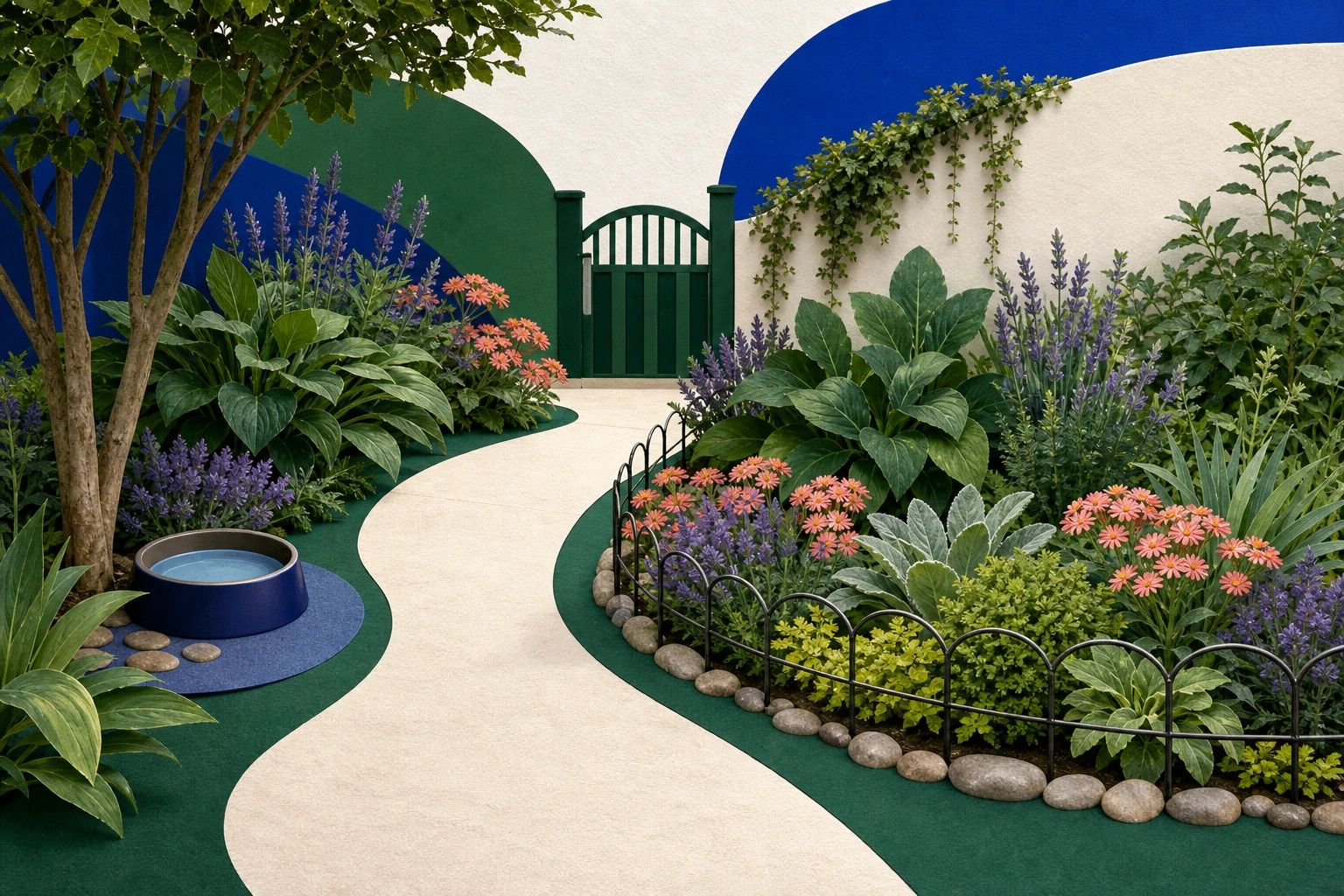
Watch the yard before you redesign it
The worn track beside the fence is useful information. It shows where your dog wants to move.
Watch for several days before moving a bed or path. Note where your dog accelerates, turns, patrols, digs, toilets, and rests. A layout that blocks those habits usually creates a trampled bed, a muddy shortcut, or damage in a different corner.
Plant toxicity is only one part of safety. The ASPCA also warns about bulbs, cocoa mulch, fertilizers, pesticides, rodenticides, slug bait, and moldy birdseed. Spines, hot paving, sharp leaves, and escape gaps require attention too.1
Give five common behaviors a deliberate place
A durable dog garden is a circulation and cleanup plan with planting around it.
Keep the patrol route continuous, move fragile planting away from fast corners, and make rest, digging, and toileting easy to find and maintain.
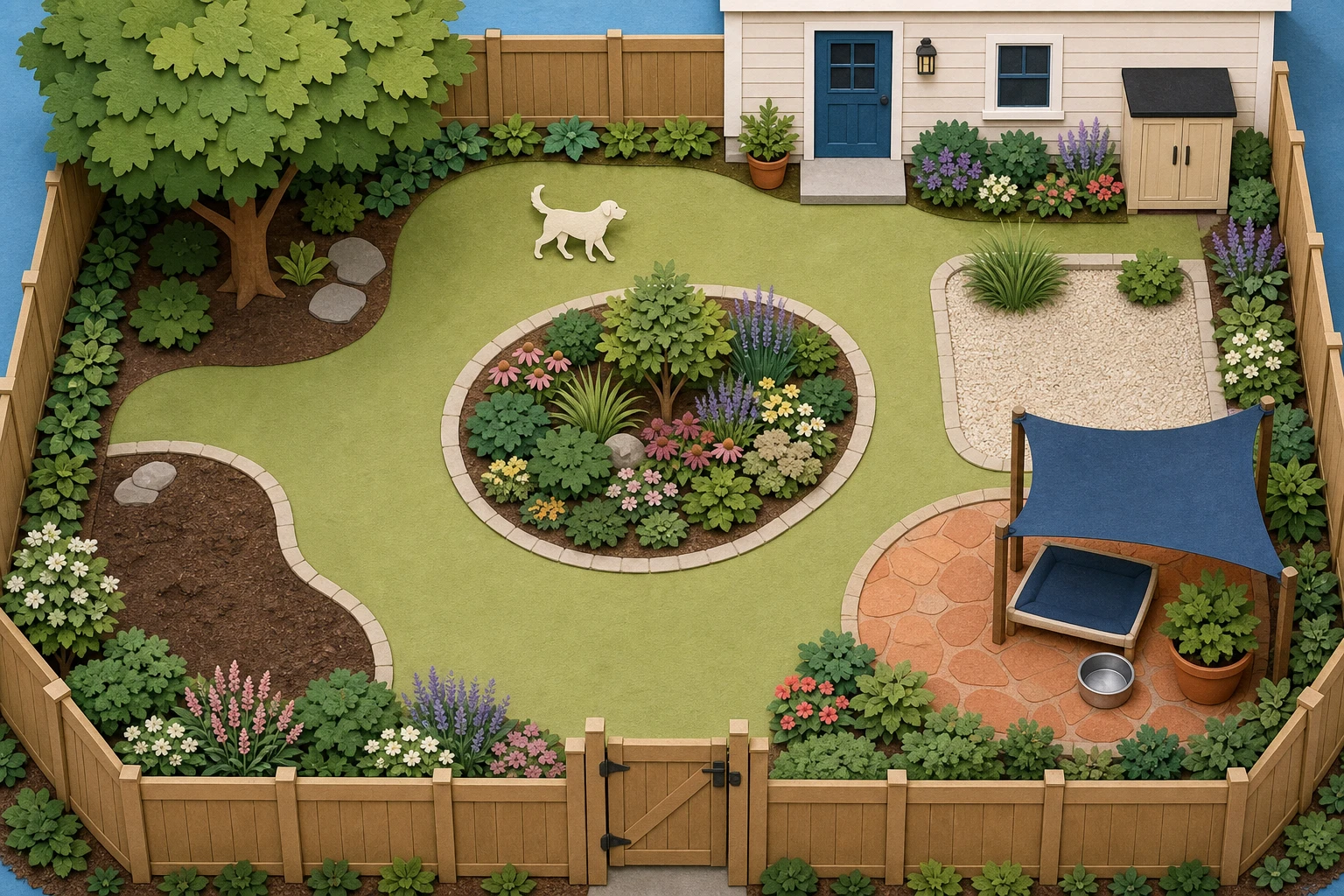
- 1
Patrol and running route
Works with established movement
Keep the route your dog already follows open and use a firm, paw-comfortable surface suited to the local climate. Curve beds away from fast corners rather than narrowing the path.
- 2
Permitted digging or enrichment
Gives the behavior a better outlet
If digging is persistent, offer one loose, easy-to-reset pocket away from roots, irrigation, utilities, and treated soil. A designated area supports training but does not guarantee the dog will use it.
- 3
Toileting and cleanup area
Contains the most frequent cleanup
Observe where the dog already toilets, then keep that area drainable, easy to reach, and simple to clean. Do not direct waste or rinse water into a storm drain.
- 4
Shade, water, and rest
Creates a comfortable home base
Keep a dry resting surface, reliable shade, and fresh water near the house. Check paw-contact surfaces during the hottest part of the day.
- 5
Protected planting
Keeps planting out of the conflict zone
Keep a central or edge bed outside the busiest route. Use a visible barrier or broad non-spiky edge while plants establish, and verify every exact plant before purchase.
The illustration teaches layout, not plant identity or safety. A dog-friendly yard still needs training and supervision. If you suspect ingestion or poisoning, contact a veterinarian or animal poison control rather than using a garden guide to diagnose it.
Sources: Royal Horticultural Society
Plan for wear and cleanup before adding flowers
This example keeps the established patrol route while concentrating the tasks that happen every day.
Keep the route, shorten the maintenance
A dog patrols two fence lines, digs in newly worked soil, rests near the back door, and uses the same corner for toileting.
See the plan notes
Keep the existing perimeter route clear
Keep the busiest two sides open and surface them with a locally appropriate, paw-comfortable material.
Make the toileting corner easy to reach
Keep a direct cleanup route and choose a surface that is locally appropriate, drainable, and comfortable underfoot.
Offer one resettable digging pocket
Place loose untreated material away from the planting bed, tree roots, fence foundations, and utilities, then reinforce its use through training.
Protect one generous planting bed
Avoid narrow planting peninsulas that invite shortcuts. Choose a few broad plant roles only after checking toxicity, physical hazards, mature size, and local fit.
Design around the behavior you have. Training and supervision help, but the physical layout should not fight the animal every day.
Run this check on every plant and product
Use the nursery label, not a vague common name, and repeat the check when a new pet enters the household.
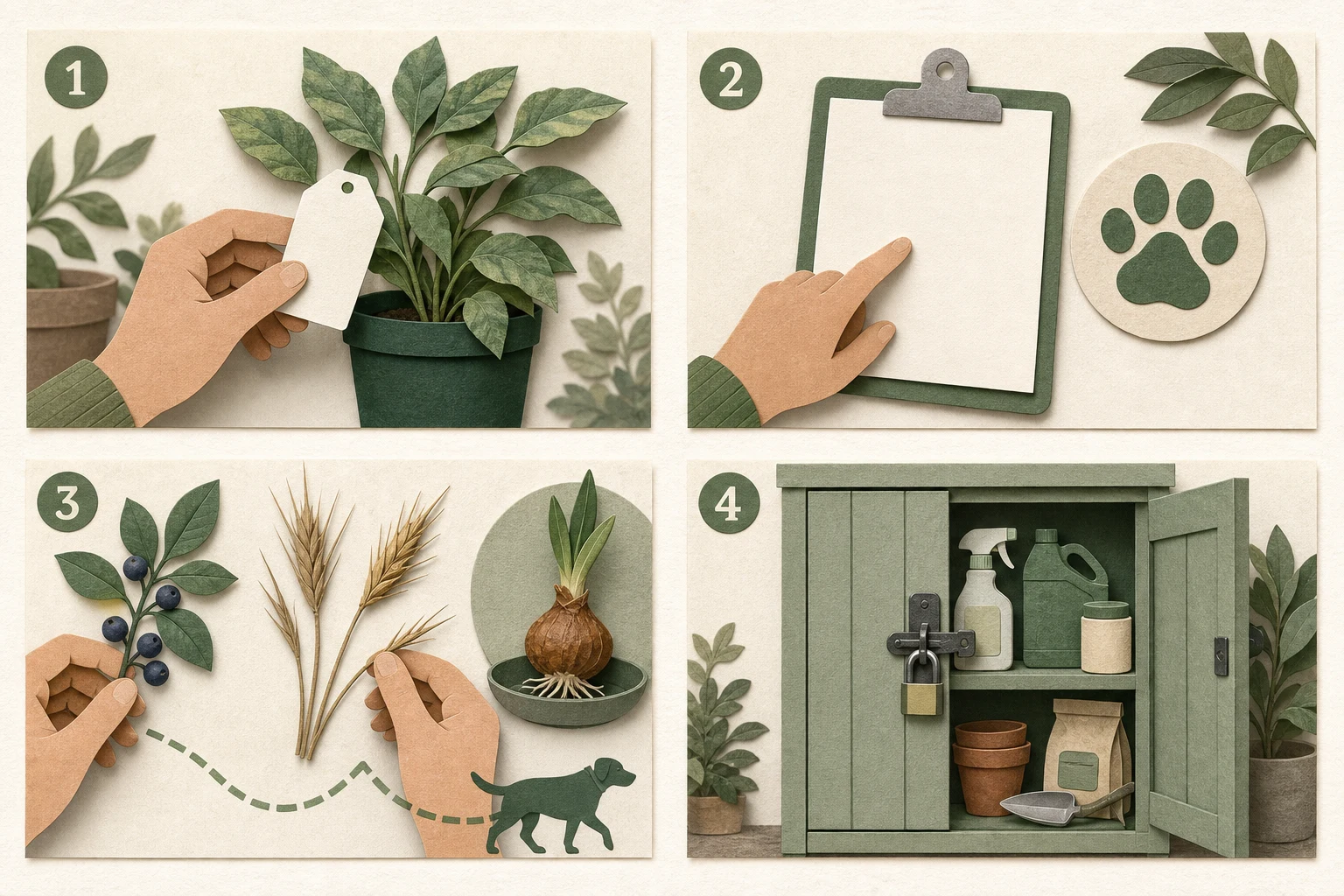
1
Identify the exact plant
Record the botanical name and variety from the label.
2
Verify the plant for this pet and site
Use the ASPCA or another veterinarian-approved source for the correct species of pet, then confirm local light, soil, water, mature space, and invasive guidance.
3
Inspect physical hazards
Look for sharp points, irritating sap, awns, tempting berries, and high-risk bulbs.
4
Secure products and labels
Store garden products safely and keep the labels for emergency reference.
Do not use this guide as emergency advice. Contact a veterinarian or poison-control service if an animal may have eaten something harmful.
Frequently asked questions
What plants are safe for dogs?
Use a veterinary toxicity database for the exact botanical name. Some asters, sunflowers, sages, and other plants appear on ASPCA non-toxic lists, but regional suitability and the exact species still need checking.
Does non-toxic mean my pet can eat the plant?
No. The ASPCA notes that any plant material can cause vomiting or digestive upset. Non-toxic means the plant is not expected to cause the systemic or severe effects associated with listed toxic plants.
What garden products should dog owners watch?
Cocoa mulch, fertilizers, pesticides, rodenticides, slug bait, compost, bulbs, and moldy birdseed can all create risk. Store products securely, follow labels, and keep pets out of treated areas as directed.
Can Gardenful guarantee a dog-safe plant list?
No. Gardenful can help organize a planting direction, but toxicity must be verified for the exact plant and pet with a veterinary source before purchase.
What about designing for cats or other pets?
Cats, rabbits, tortoises, and other animals use outdoor space differently and need species-specific containment, supervision, planting, and veterinary guidance. This guide's route, digging, toileting, and wear advice is written for dogs.
 Gardenful
Plan the garden around the route your dog already uses.
Photograph the patrol path, digging and toileting areas, resting zone, gate, and planting, then test a direction before checking every plant and product locally.
Gardenful for iPhone
Download the app free and start with a photo of your yard.

Sources(4)
- [1]
- [2]Toxic and Non-Toxic Plants
ASPCA Animal Poison Control Centerhttps://www.aspca.org/pet-care/aspca-poison-control/toxic-and-non-toxic-plants
- [3]Right Plant, Right Place
University of Florida IFAS Extensionhttps://ask.ifas.ufl.edu/publication/EP416
- [4]