Gardenful field guide
Privacy landscaping ideas that do not feel like a wall
The short answer
Privacy planting works by blocking a specific sightline, not by filling an entire boundary with the tallest hedge. Stand where you want privacy and mark the exact view that bothers you. Then overlap plants at that sightline using a mostly evergreen backbone, a second layer of shrubs or small trees, and lower planting that closes gaps. A mixed screen is usually more resilient and natural-looking than one tightly packed row of a single plant.
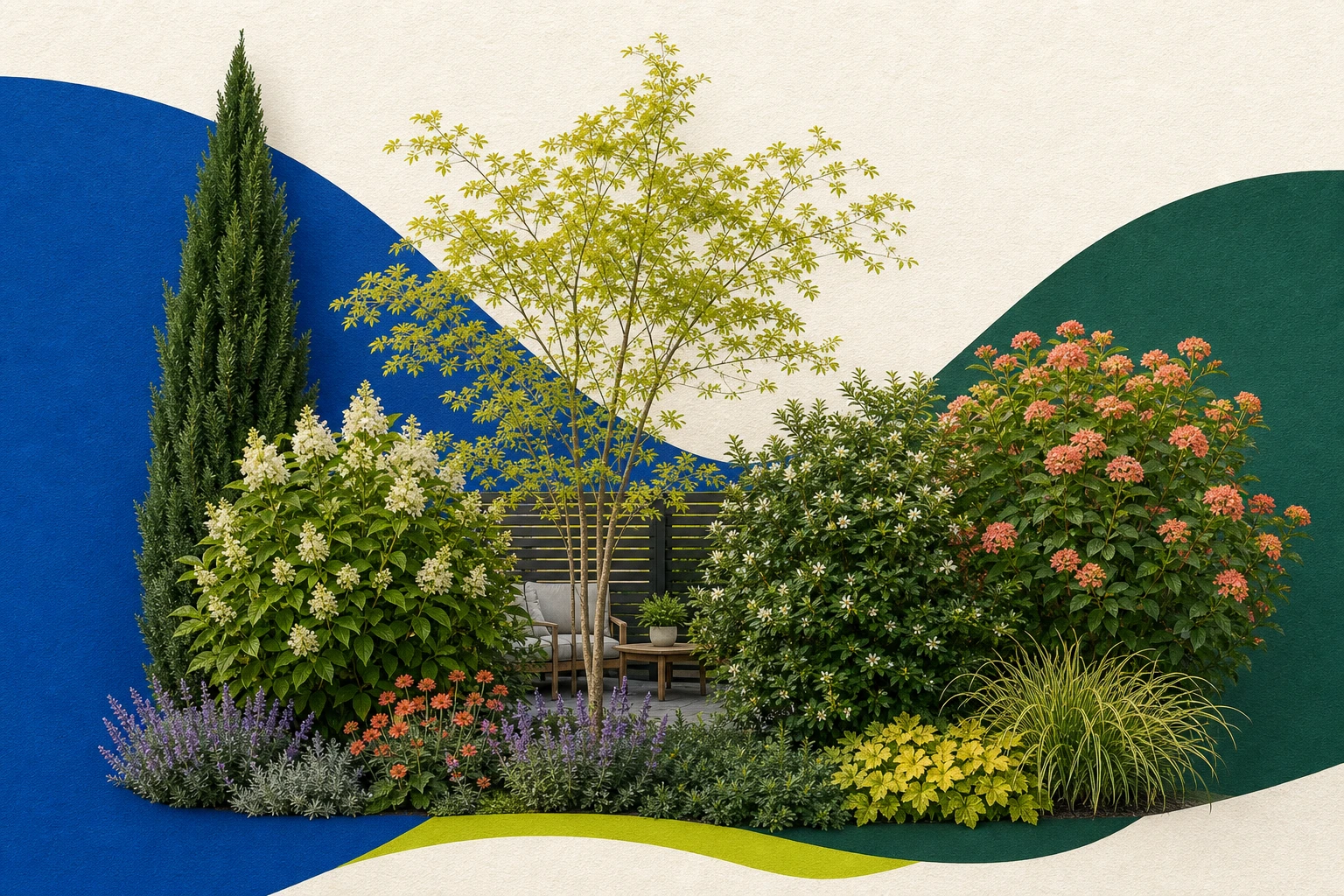
Design for the sightline, not the property line
A privacy problem has a viewer, a target, and a season. Measure those before choosing a plant.
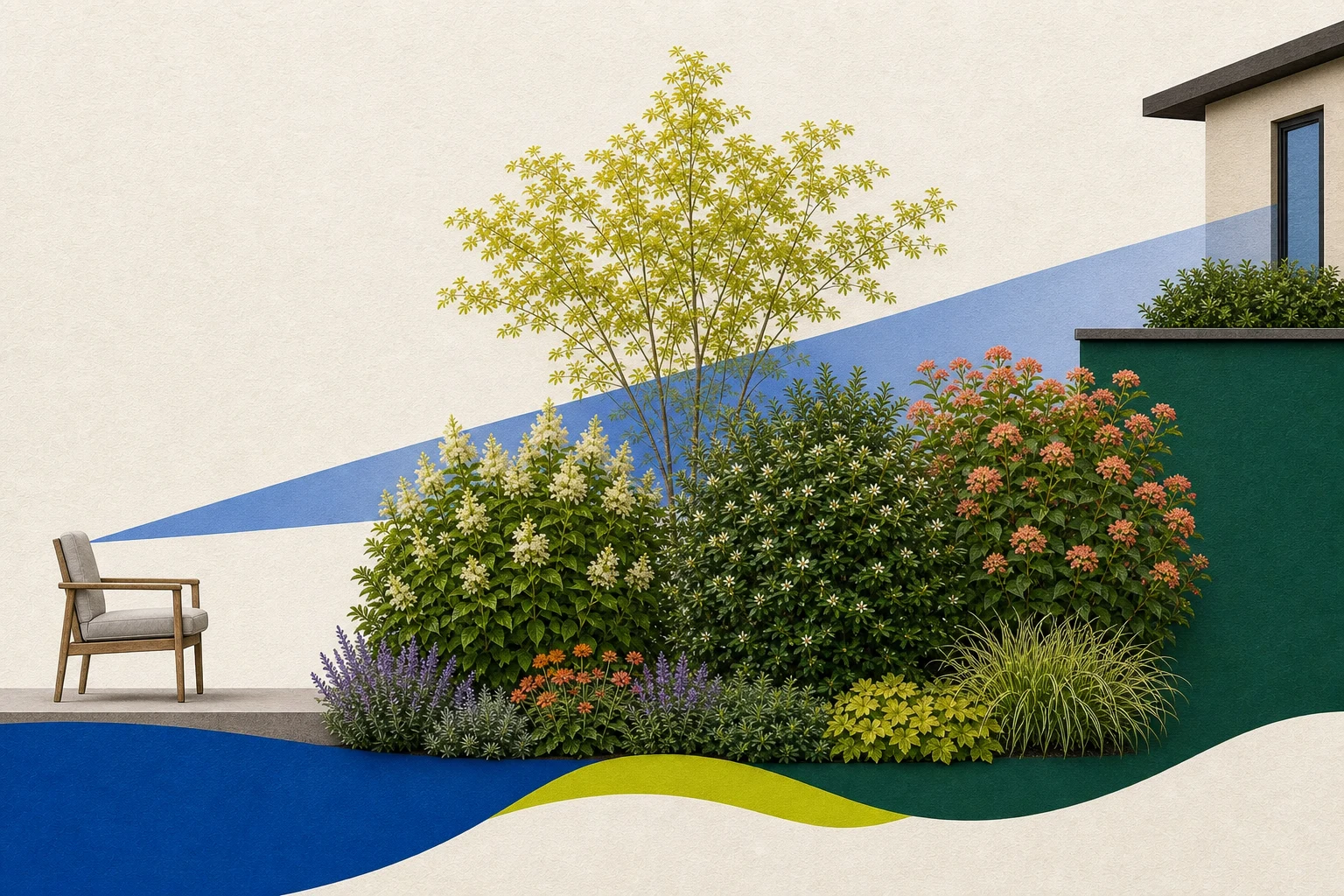
Sit in the chair, stand at the sink, or pause on the path where you feel exposed. Mark the view you want to hide and whether it matters all year. A patio may need evergreen coverage at eye level; an upper window may need a small tree canopy.
Measure the available depth as seriously as the height. Plants squeezed below their mature width need repeated pruning, expose bare lower branches, and push into paths or neighboring property. Plant selection starts with depth, light, soil moisture, and mature size.3
Choose the screen that fits your available depth
The best layout changes with the width of the planting strip and the height of the view.
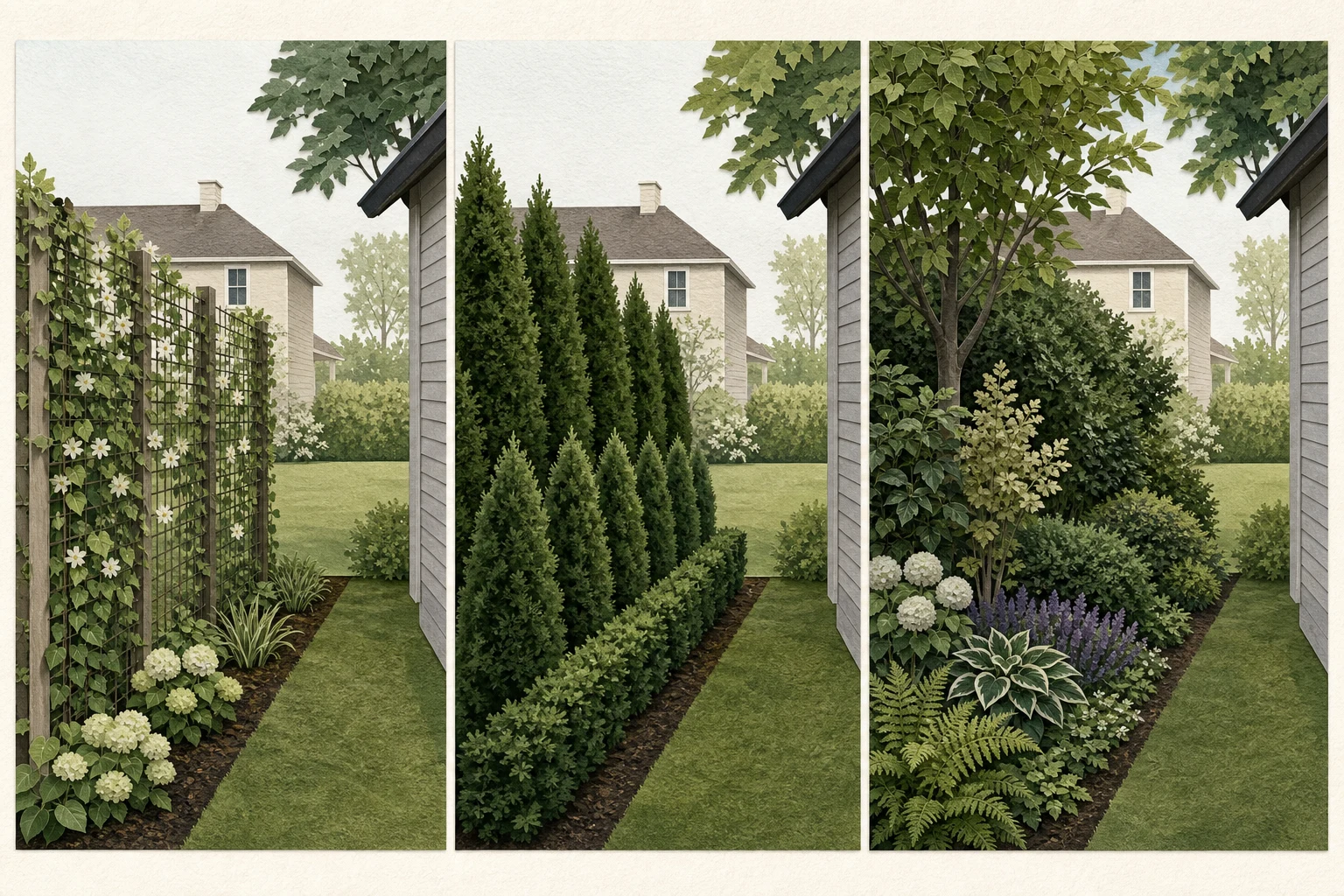
Narrow screen
- How it works
- A trellis or fence carries the height while a vine or clipped plant softens it. Use when the bed is too shallow for broad shrubs.
- Watch for
- Confirm rules, access, support strength, and whether the vine is locally invasive or damaging.
Staggered evergreen screen
- How it works
- Two offset rows overlap more quickly than one straight row and keep small gaps from lining up.
- Watch for
- It still needs enough depth for mature spread and access between property lines and trunks.
Layered mixed border
- How it works
- A few taller anchors, mid-height evergreen shrubs, and lower plants create privacy plus a real garden.
- Watch for
- The initial plan takes more thought, and seasonal plants cannot be counted as year-round coverage.
A layered privacy screen with room to mature
This example solves one neighboring patio view in a bed deep enough for two staggered planting layers.
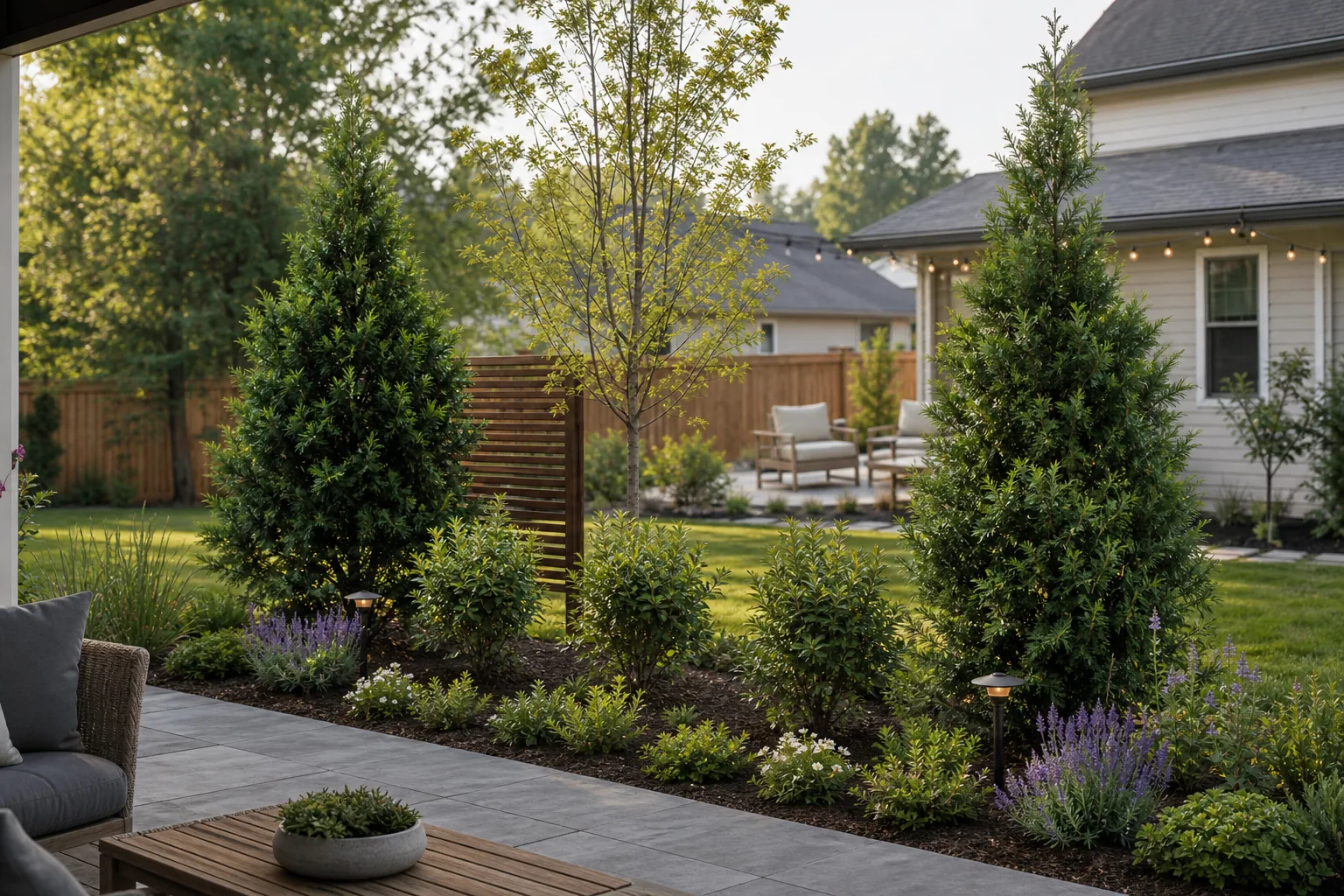
Block one seated sightline
The view matters year-round at roughly 5 to 8 feet high. The bed has afternoon sun and space for two staggered layers.
See the plan notes
Place two evergreen anchors
Choose locally suitable plants with mature spreads that fit the bed. Offset them so their future outlines overlap without touching the property line.
Add one airy small tree
Set a deciduous tree between the anchors to interrupt the upper view and add shade without making the whole boundary feel solid.
Close the lower gap
Repeat three mid-height shrubs across the front layer, then use low flowering plants at the visible edge.
Plan the waiting period
Use a temporary screen if immediate privacy matters. Do not buy oversized plants or crowd the final spacing to imitate maturity on day one.
Draw the plants at mature width. The screen should overlap in the view while each plant still has room to become itself.
Build the screen structure before choosing plants
Use the view, available depth, season, desired opacity, and pruning tolerance to choose a narrow, staggered, or layered screen structure.
Choose a screen structure
1 of 3
The planner recommends a layout archetype, not a species. Use the best-plants guide to compare plant roles, then verify exact varieties, mature dimensions, utilities, and local rules.
Sources: Clemson Cooperative Extension, Common Ground Alliance
Check these constraints before buying screen plants
A privacy planting sits near boundaries, services, and neighbors, so the site check matters as much as the palette.
Utilities before digging: Use 811 or the appropriate local service to locate underground lines.
Boundary and height rules: Confirm the property line, fence rules, easements, and restrictions.
Mature plant behavior: Check height, width, roots, litter, growth habit, and pruning needs.
Real site pressure: Verify light, drainage, winter exposure, deer pressure, and local invasive status.
Long-term access: Leave room on your side for fence repair, utilities, and maintenance.
A screen is successful when it blocks the view and remains maintainable after the plants mature.
Frequently asked questions
What is the fastest way to add privacy with landscaping?
Use a temporary screen or trellis for immediate coverage, then give permanent plants their mature spacing. Crowding fast-growing trees may look full sooner but usually creates more pruning, disease pressure, and replacement later.
Is a mixed privacy screen better than one hedge?
Often, yes. A mixed screen can combine evergreen coverage, seasonal height, and lower gap-closing plants. It is also less likely to fail all at once if one species develops a problem.
How far apart should privacy plants be?
Use the expected mature spread of the exact plant, not the container width or a generic hedge rule. Space plants so their mature outlines overlap in the sightline without forcing trunks and roots into an undersized strip.
Can Gardenful design a privacy screen?
Gardenful can help you visualize a planting direction on your yard photo and organize plants by role and quantity. Verify final species, mature size, utilities, and boundary rules locally before planting.
 Gardenful
Test the sightline before you buy the screen.
Photograph the boundary, mark the area you can plant, and compare a layered planting direction on the yard you actually use.
Gardenful for iPhone
Download the app free and start with a photo of your yard.

Sources(4)
- [1]Mixed Screens
Clemson Cooperative Extensionhttps://hgic.clemson.edu/factsheet/mixed-screens/
- [2]
- [3]Right Plant, Right Place
University of Florida IFAS Extensionhttps://ask.ifas.ufl.edu/publication/EP416
- [4]811 Before You Dig
Common Ground Alliancehttps://call811.com/Before-You-Dig