Backyard planning in stages
Backyard landscaping on a budget: finish one useful area first
The short answer
Budget backyard landscaping works best when the layout is complete but installation happens in stages. Keep healthy, useful features; solve unsafe access and known water problems first; then finish one area you will use regularly. Save by making the first area smaller, repeating materials and plants, and buying for mature spacing—not by skipping site preparation or scattering bargain plants around the yard.
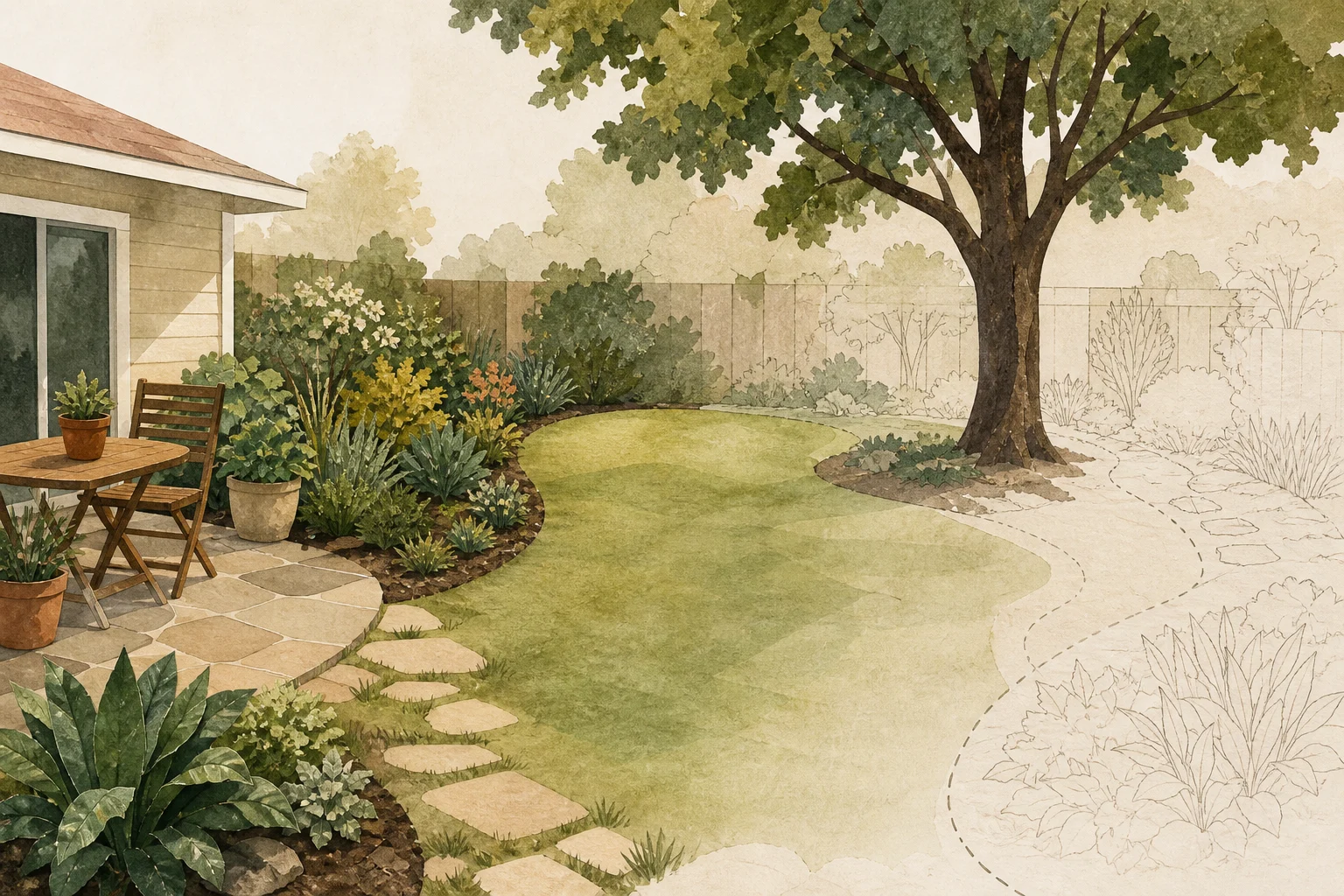
Draw the whole backyard layout before buying the first area
A budget does not need to solve the whole backyard at once. Draw the full layout first so the first finished area has somewhere to go, then price only the work that makes that area usable.
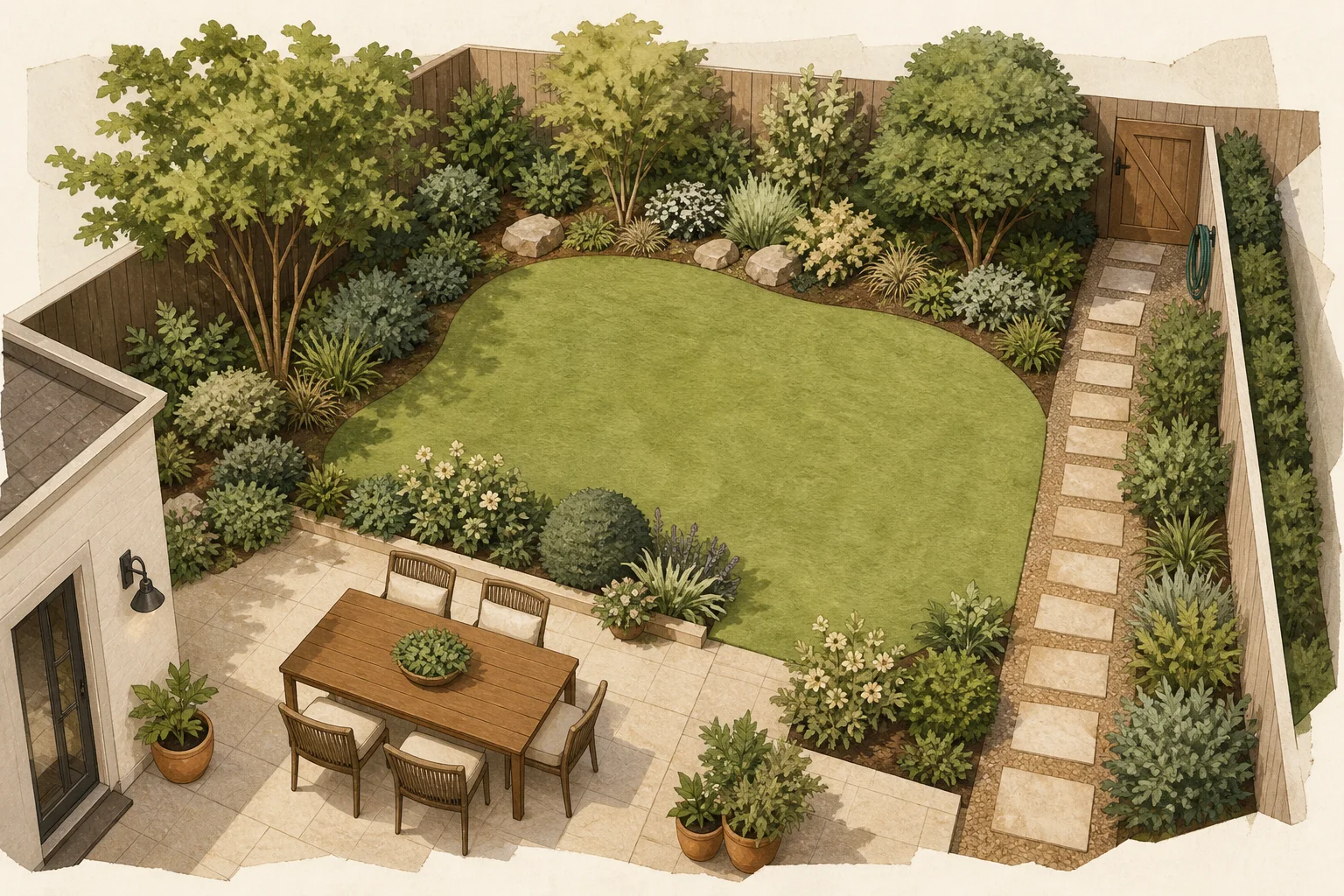
Record the main use, route from the house to the gate or hose, existing features worth keeping, planting zones, and future areas before making the first purchase. A complete layout lets you delay a lower-priority area without losing the logic of the whole yard.1,2
Put access, known water problems, and the main use ahead of decorative extras. If a patio, grade, retaining wall, drainage path, utility, or structure will change later, settle that work before planting beside it.2,3
The first area can be small. It should still have a clear edge, a usable route, a coherent plant role, and a maintenance plan.
Price a complete area, not its most visible item
A cheap surface or plant can become an expensive project after removal, delivery, preparation, installation, and establishment are included.
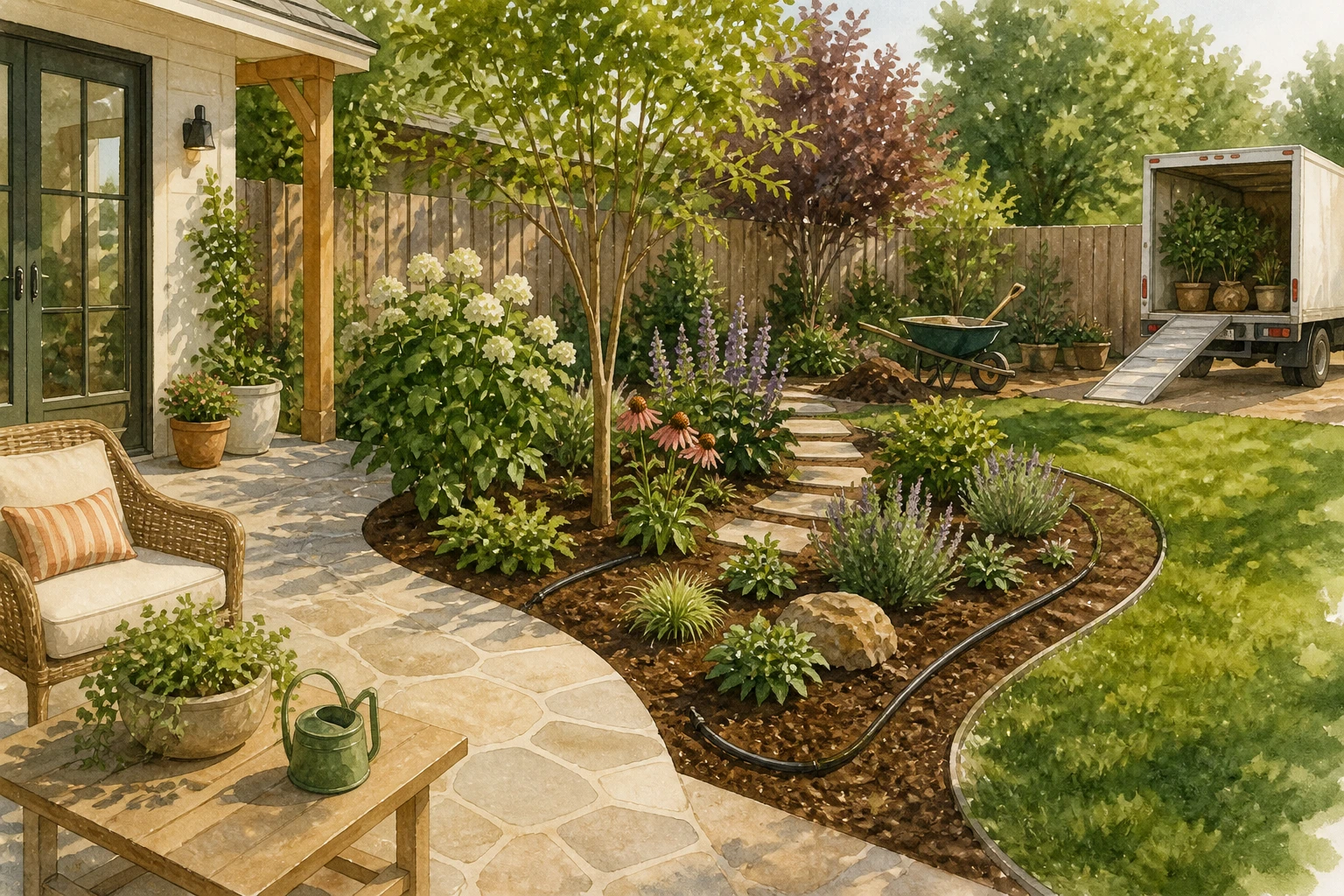
Removal and preparation
Include demolition, disposal, soil preparation, bed shaping, compaction, and any tree or root protection the work needs.
Access and base work
Include routes, edges, delivery, stable bases, drainage decisions, and the equipment needed to make the area usable.
Plants and water
Include plants, mulch, irrigation changes, establishment water, replacements, and substitutions when the planned variety is unavailable.
First-season care
Include watering, weeding, staking, pruning, cleanup, and the time needed before the new planting is established.
National price ranges would create false precision. Use the categories to request local estimates and compare complete areas.
Sources: Mississippi State University Extension, US EPA WaterSense
Choose savings that shrink the first area, not its quality
A smaller finished area is usually easier to live with than a whole yard full of unfinished compromises.
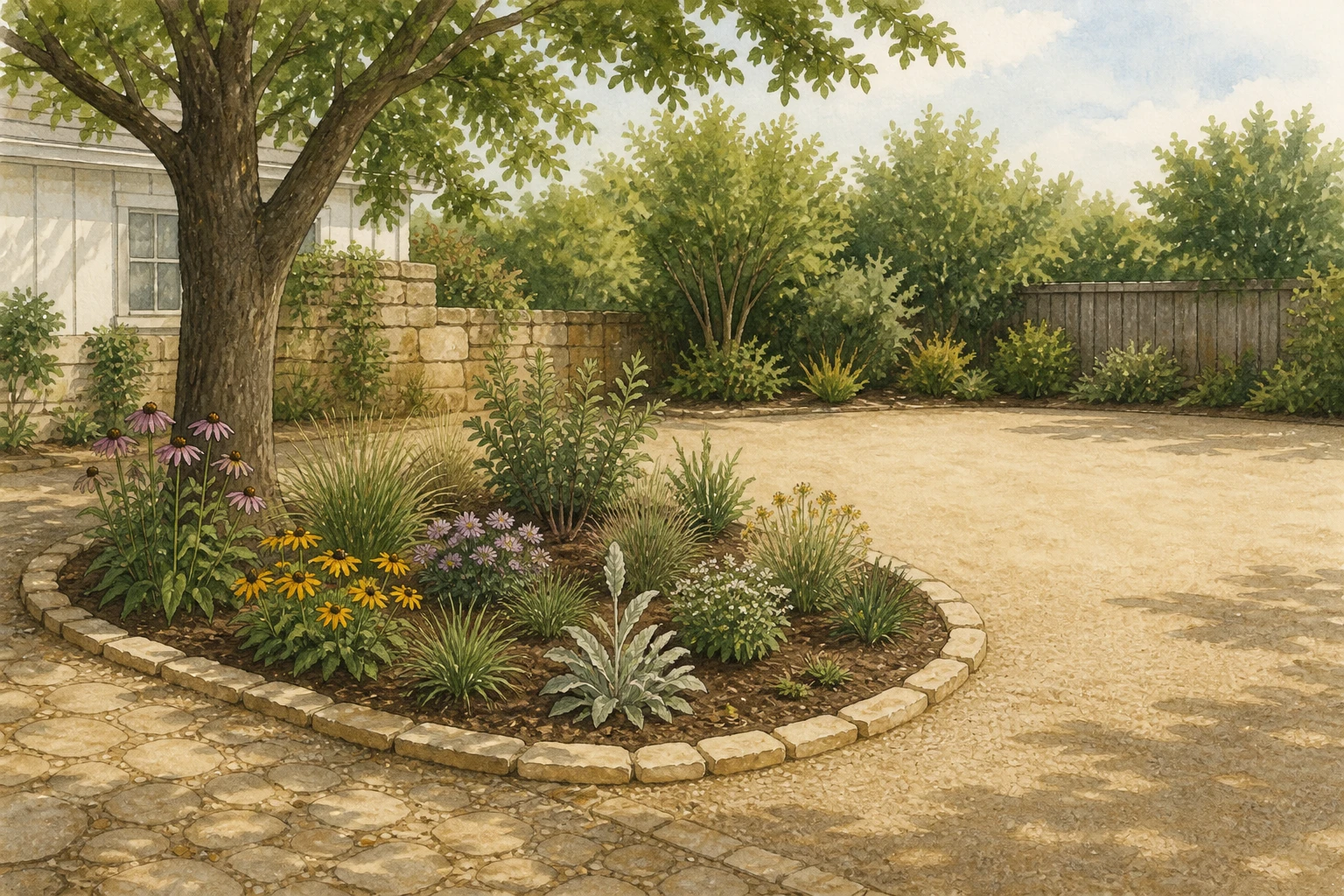
Keep a sound patio, path, fence, tree, or shrub
Why it helps: Preserving useful work and mature structure
Do not replace it with: Do not keep a feature that creates a known safety, drainage, or access conflict.
Complete one connected area
Why it helps: Making the first area look intentional and usable
Do not replace it with: Do not scatter a few plants into every future area.
Buy younger healthy plants at mature spacing
Why it helps: Lowering the first purchase without changing the layout
Do not replace it with: Do not crowd plants to hide first-season gaps.
Repeat a short palette
Why it helps: Reducing substitutions, editing, and maintenance
Do not replace it with: Do not fill the cart with unrelated clearance plants.
Defer optional accents
Why it helps: Protecting access, planting, and site preparation
Do not replace it with: Do not defer work that prevents safe drainage or stable access.
Install a backyard in stages without losing the final layout
This example keeps dining, open space, service access, and a future planted edge connected.
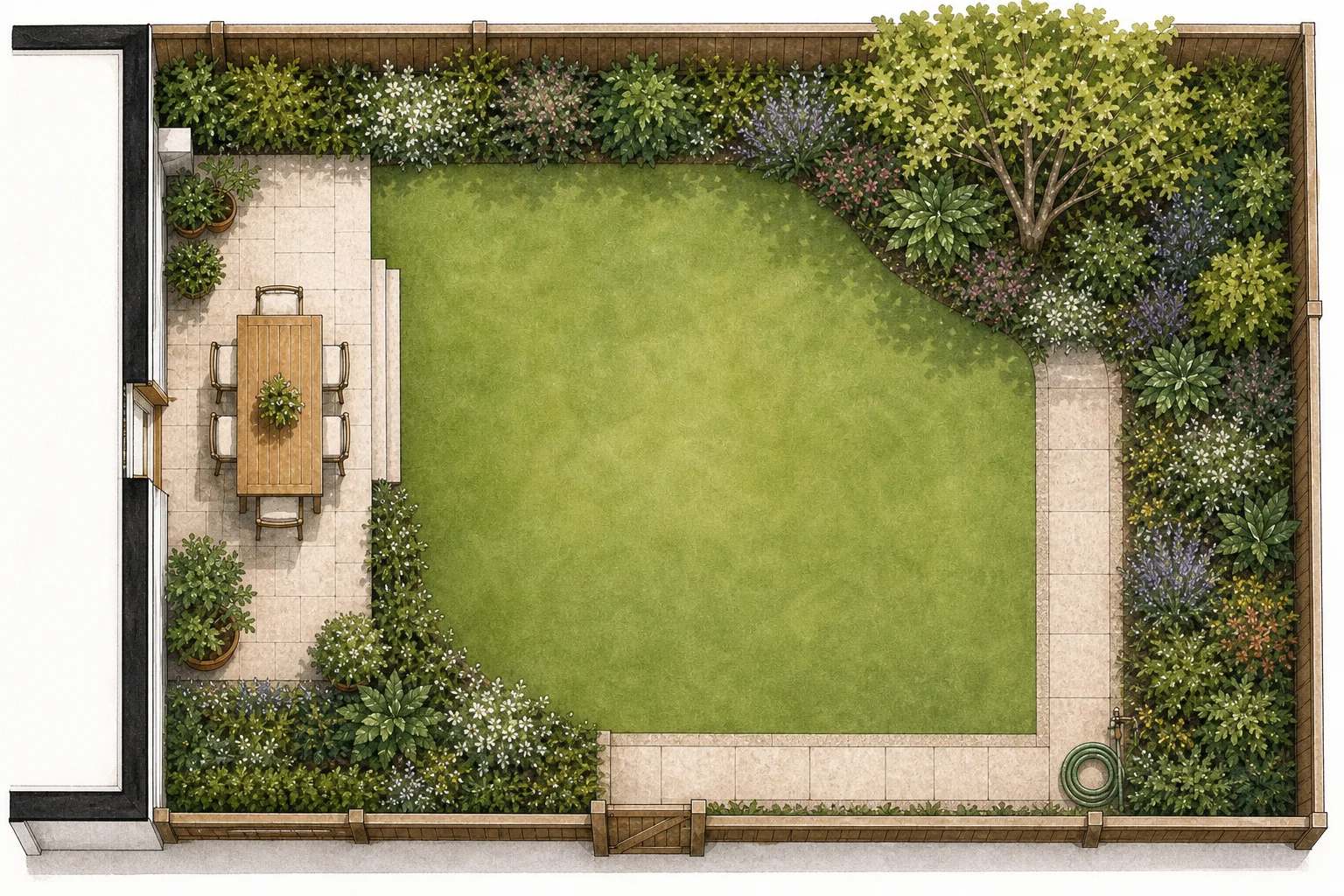
A small patio, open middle, gate, and underplanted boundary
The household wants a better place to eat, a flexible center, and a more finished view from the house. The hose and gate must remain easy to reach.
- 1
Stage one: make access dependable
Preserve the patio, complete the firm route to the gate and hose, and resolve any known base, grade, or drainage conflict before planting.
- 2
Stage two: finish one planted boundary
Prepare one connected bed with a structure role, repeated lower groups, mulch, and enough space for mature growth.
- 3
Stage three: extend the pattern
Repeat the same plant and material roles around the next view or seat rather than starting a new style in every corner.
- 4
Defer optional details
Add secondary seating, seasonal accents, lighting, or expanded paving only after the first zones work through real use.
Each stage should function on its own and leave the next stage easier—not force the homeowner to undo finished work.
Check the plan before spending
Use this short audit before ordering materials or plants.
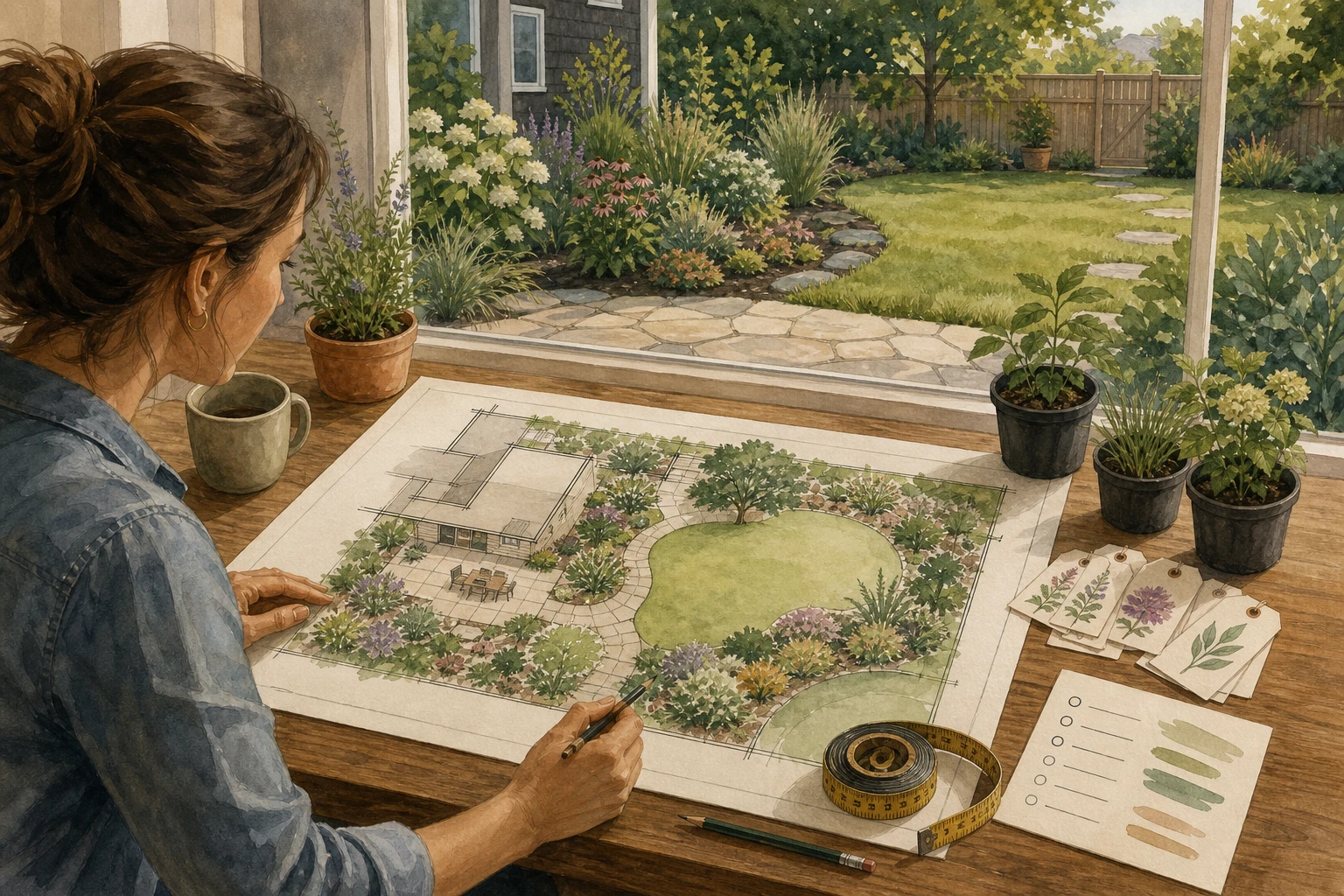
Every item has a role: The plant, surface, edge, or feature belongs to a measured location in the final plan.
The stage works alone: A route remains open, the main use is possible, and the unfinished edge does not create a hazard or maintenance trap.
Mature space is reserved: The exact plant or a substitute has a known mature width, height, light, water, and climate fit.
The handoff is clear: Drainage, grading, retaining walls, utilities, structures, tree hazards, and permits are assigned to qualified local help.
Gardenful can support a planting direction and list. It does not supply prices, contractor bids, material quantities, drainage plans, grading advice, permits, or construction documents.
Frequently asked questions
What is the cheapest way to start landscaping a backyard?
Keep useful existing features, make one dependable route clear, and finish one connected planting area from a complete plan. A smaller finished area is usually more useful than unrelated bargain purchases spread across the yard.
Should I buy plants or build the patio first?
Settle access, dimensions, grade, drainage, and other construction decisions before planting beside them. Later work can damage or displace plants and change their usable space.
Can backyard landscaping be completed in stages?
Yes. Draw the complete layout first, then install stages that function and look intentional on their own while preserving access to future work.
Are smaller plants always the best budget choice?
No. Younger healthy plants can lower the first purchase when they are suited to the site and spaced for mature growth. Compare their establishment needs and the time the first area can remain open.
When should I hire a professional?
Bring in qualified local help for uncertain drainage or grading, retaining walls, structural work, utilities, hazardous trees, significant demolition, or permit-sensitive projects.
 Gardenful
Finish the part of the backyard you will use first.
Choose a bounded area, compare the planting direction on your photo, and keep the future work tied to the same plan.
Gardenful for iPhone
Download the app free and start with a photo of your yard.

Sources(4)
Costs vary by region, access, material, labor, and site conditions. These sources support the planning sequence and checks, not a national price estimate.
- [1]Home Landscape Design
Mississippi State University Extensionhttps://extension.msstate.edu/publications/home-landscape-design
- [2]Landscape Design: Ten Important Things to Consider
University of Florida IFAS Extensionhttps://ask.ifas.ufl.edu/publication/EP375
- [3]Design Strategies for a Sustainable Home Landscape
University of Florida IFAS Extensionhttps://ask.ifas.ufl.edu/publication/EP374
- [4]Watering Tips
US EPA WaterSensehttps://www.epa.gov/watersense/watering-tips