Gardenful field guide
How to design a bird-friendly garden
The short answer
A bird-friendly garden is habitat made from connected layers of shelter, food, and clean water. Keep healthy trees and shrubs, then fill gaps with native plants suited to your region, from low ground cover to taller shrubs and canopy. Connect the planted areas so birds can move between them, but keep one clear path and bed edge so the yard is easy for people to use too.
Start with the habitat job
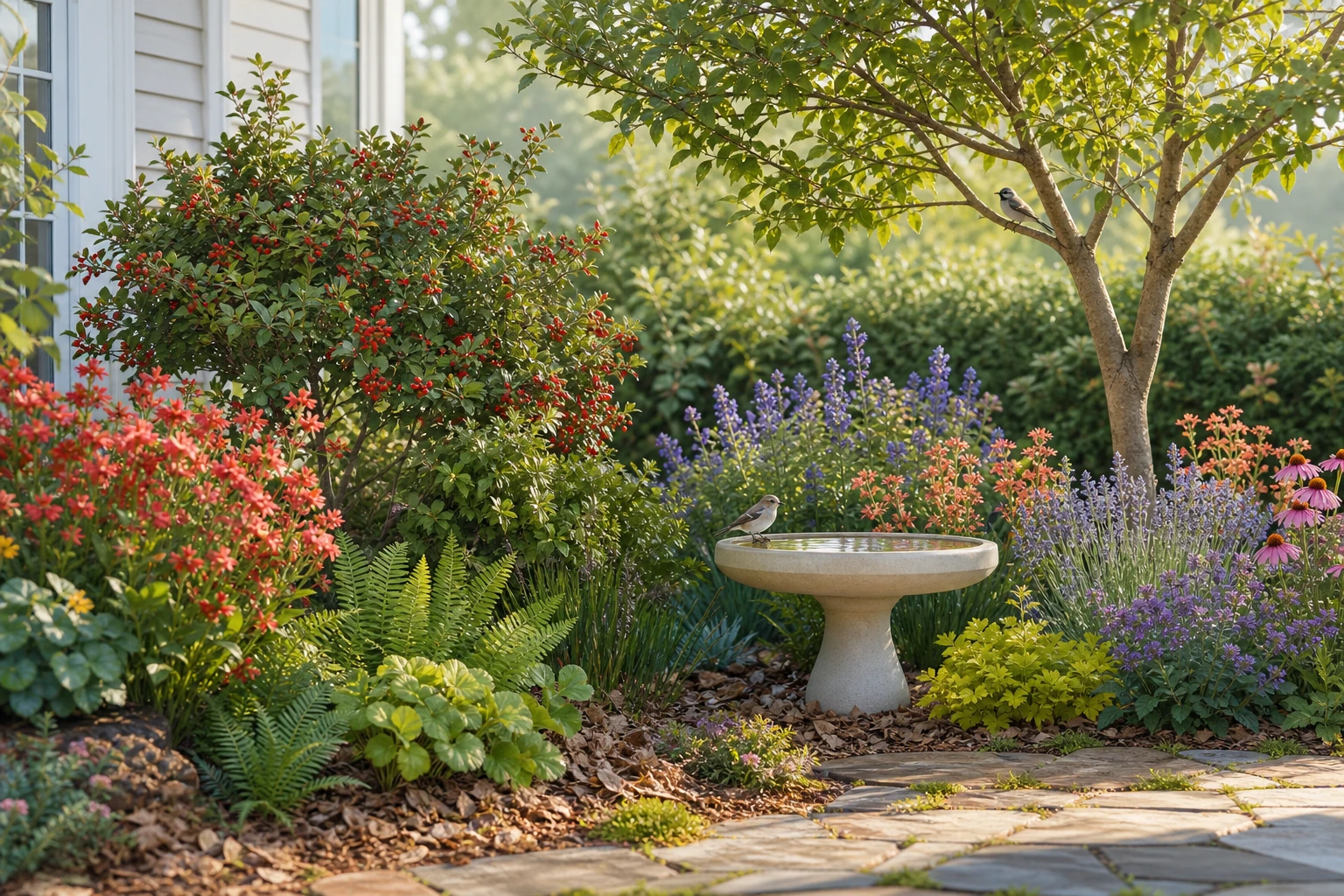
A bird-friendly garden is not a random collection of feeders and flowers. It is a connected set of layers that gives birds places to shelter, find food, and drink while the yard still works for people.
Begin by noticing what the yard already provides. A healthy tree or dense shrub may be doing more work than a new planting bed, while a bare fence line may be the missing connection. The goal is to strengthen the useful layer first, then fill the gap with plants suited to your region.
Keep one clear route for people as you add habitat. That small bit of structure—an open path, a defined bed edge, and water you can clean—helps a wildlife-friendly garden feel intentional instead of unfinished.
Keep what already works, then fill the missing layer
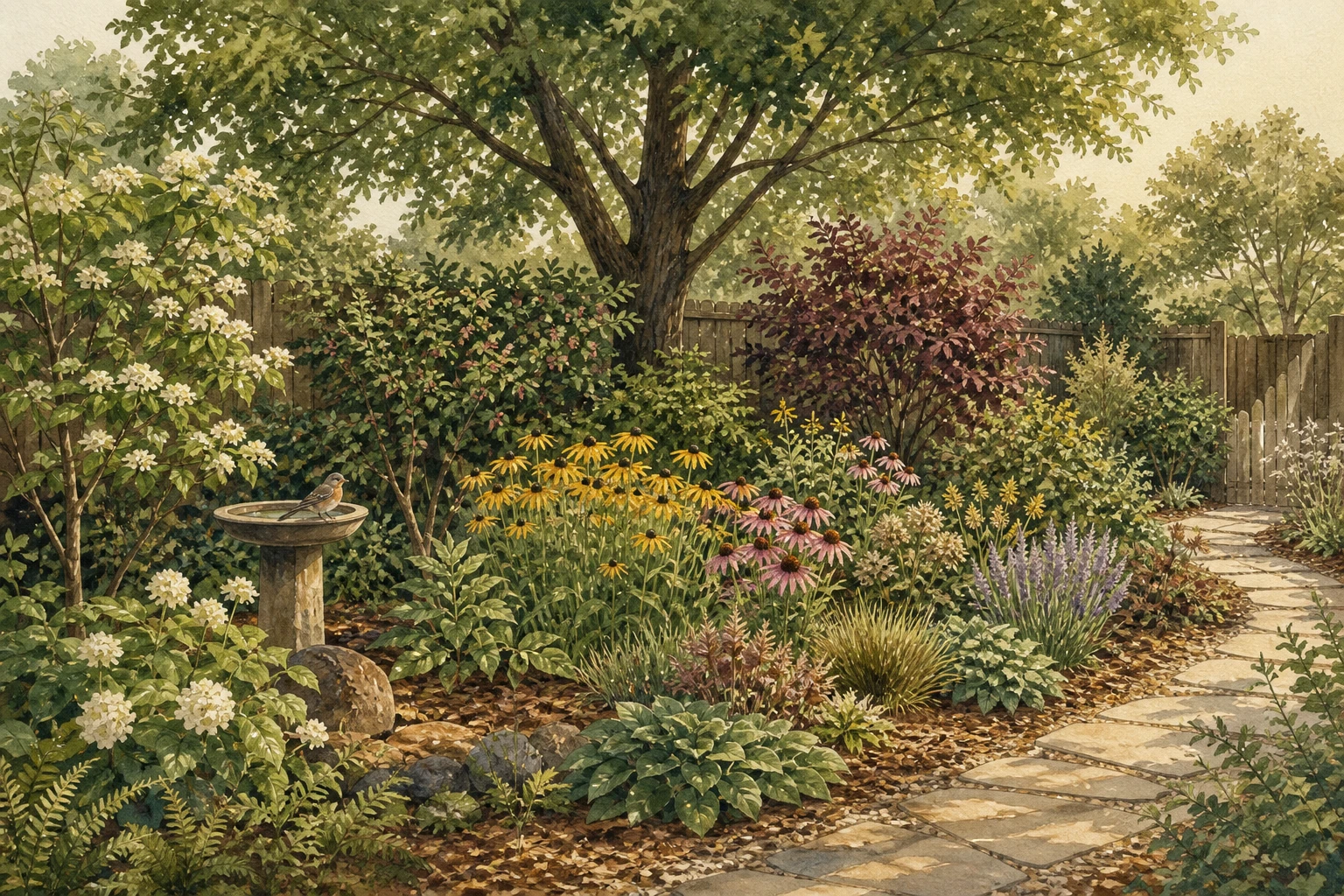
A mature tree or dense shrub may contribute more habitat immediately than several trays of new flowers.
Canopy
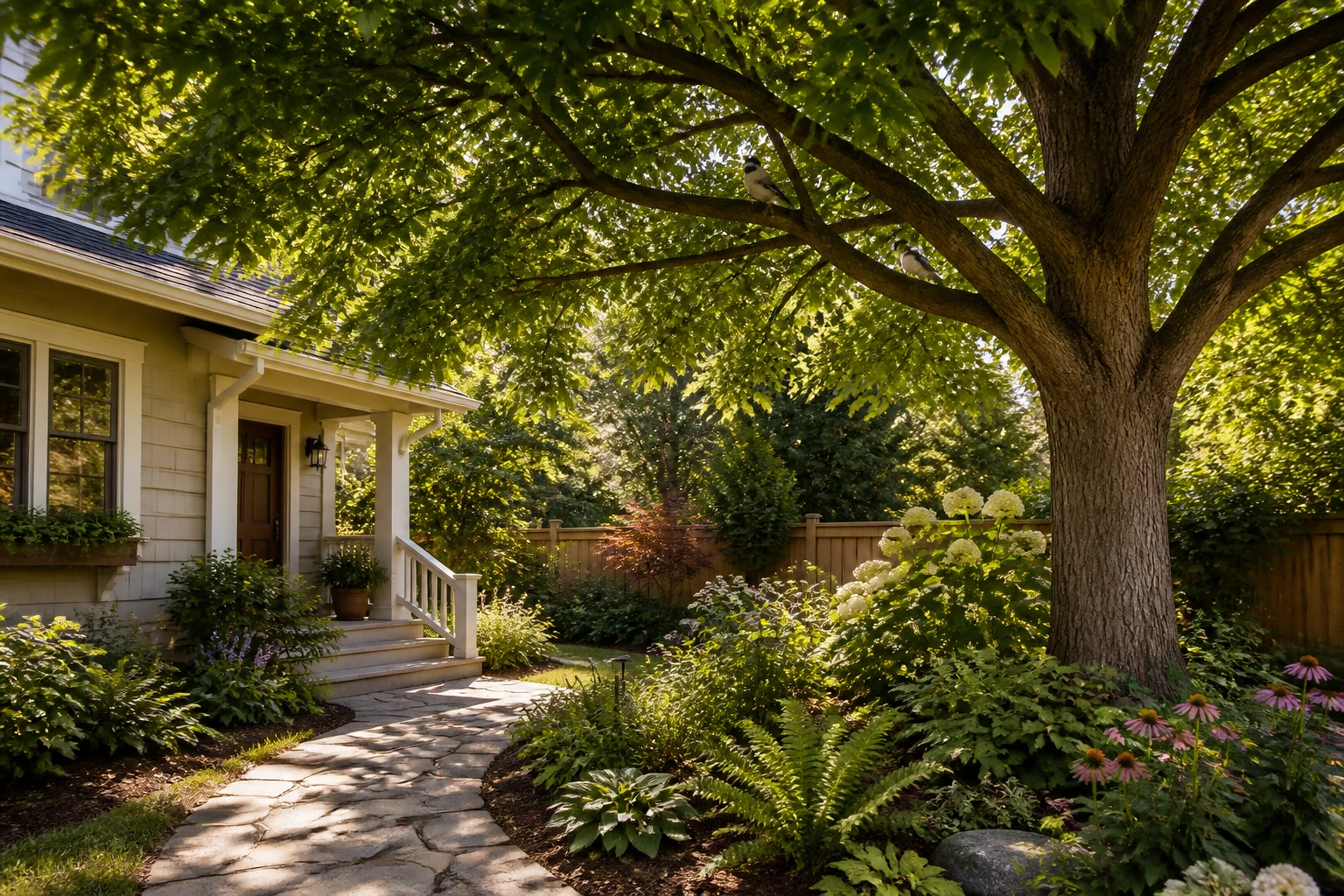
Protect a healthy existing tree where it fits the property. Add another only when there is room for its full canopy and roots.
Shrub layer
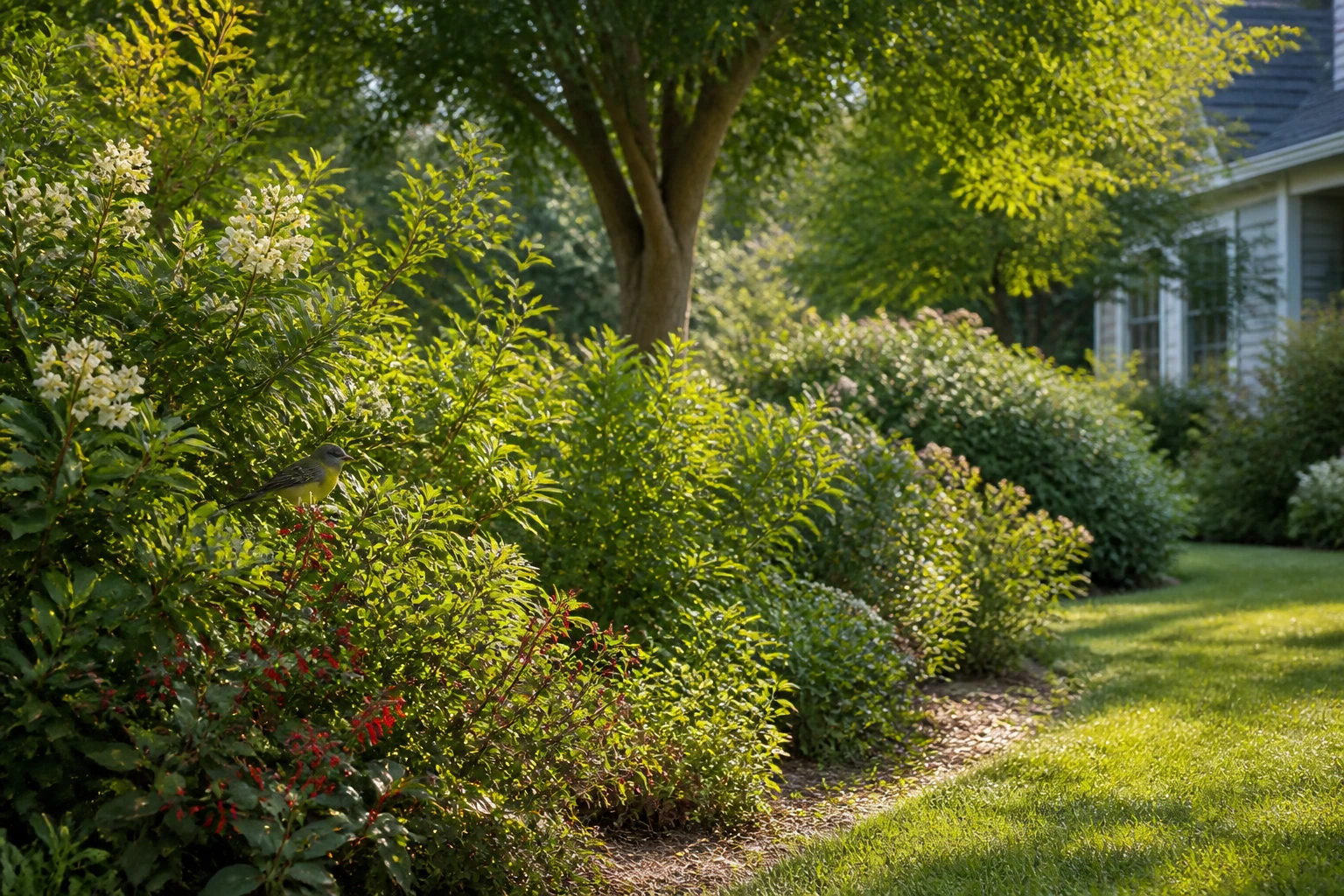
Use connected, regionally native shrubs for shelter, nesting structure, and seasonal fruit or insects.
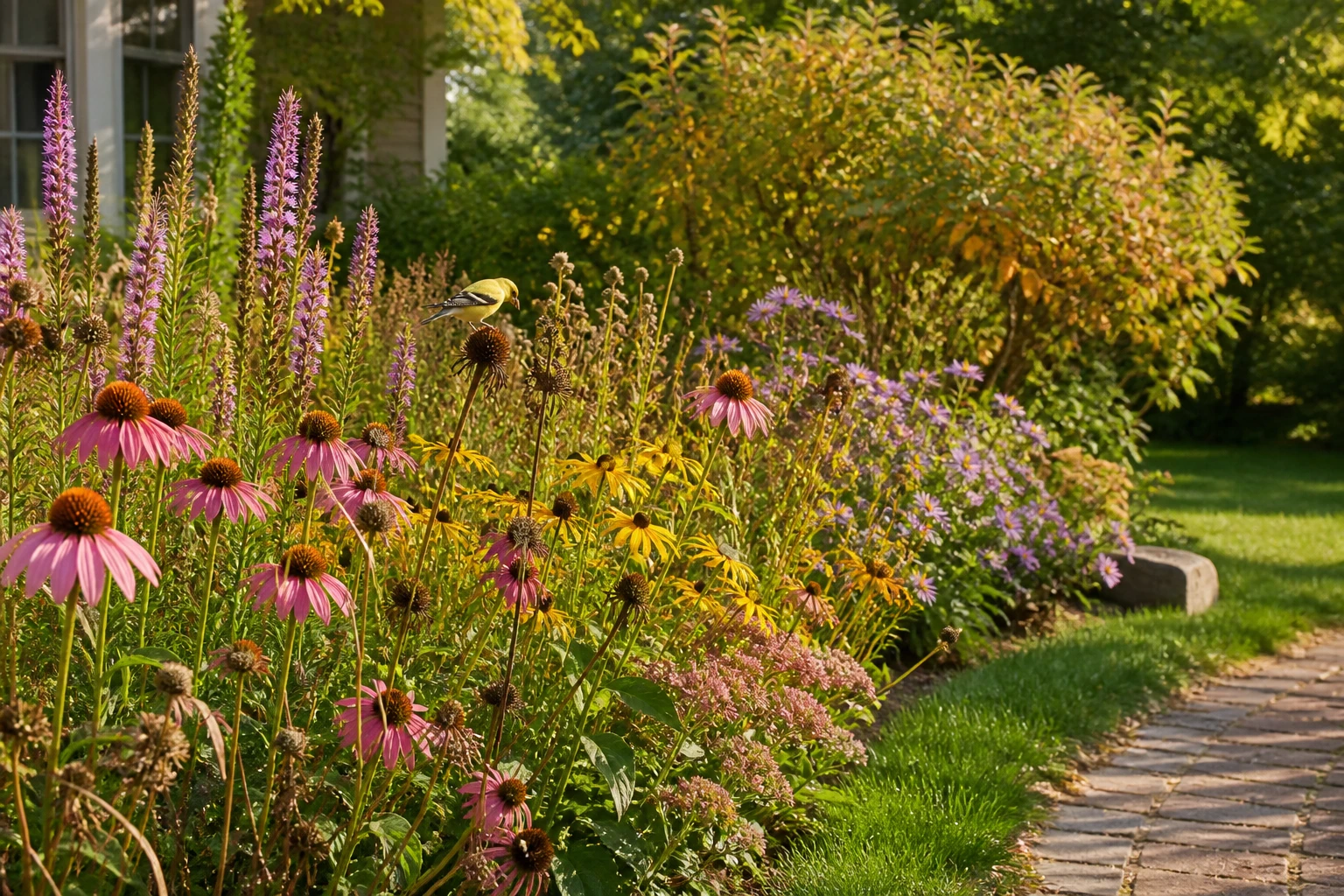
Flower and seed layer
Repeat locally appropriate flowers and grasses that offer resources across more than one season.
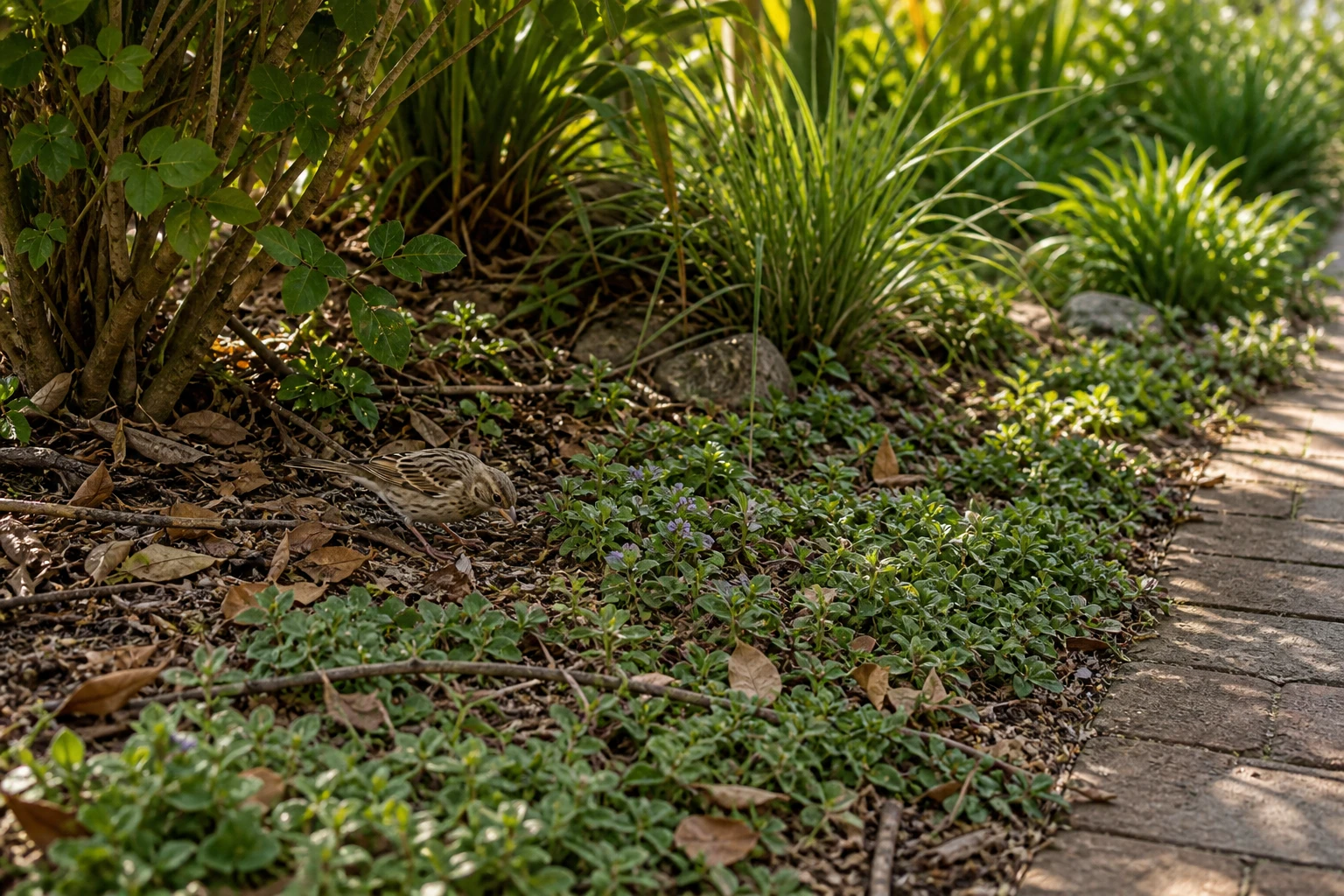
Low cover
Keep some leaf litter, low plants, and undisturbed soil where safety and local rules allow.
Penn State's Pennsylvania examples show how the layers can work: oaks, hickories, or beeches for canopy; redbud or native dogwood as smaller trees; and serviceberry, spicebush, winterberry, elderberry, or blueberry for fruiting shrubs. Use a regional native-plant source to build the same layers where you live.
Provide the three resources birds return for
A habitat garden works as a system. One resource cannot replace the others.
Shelter
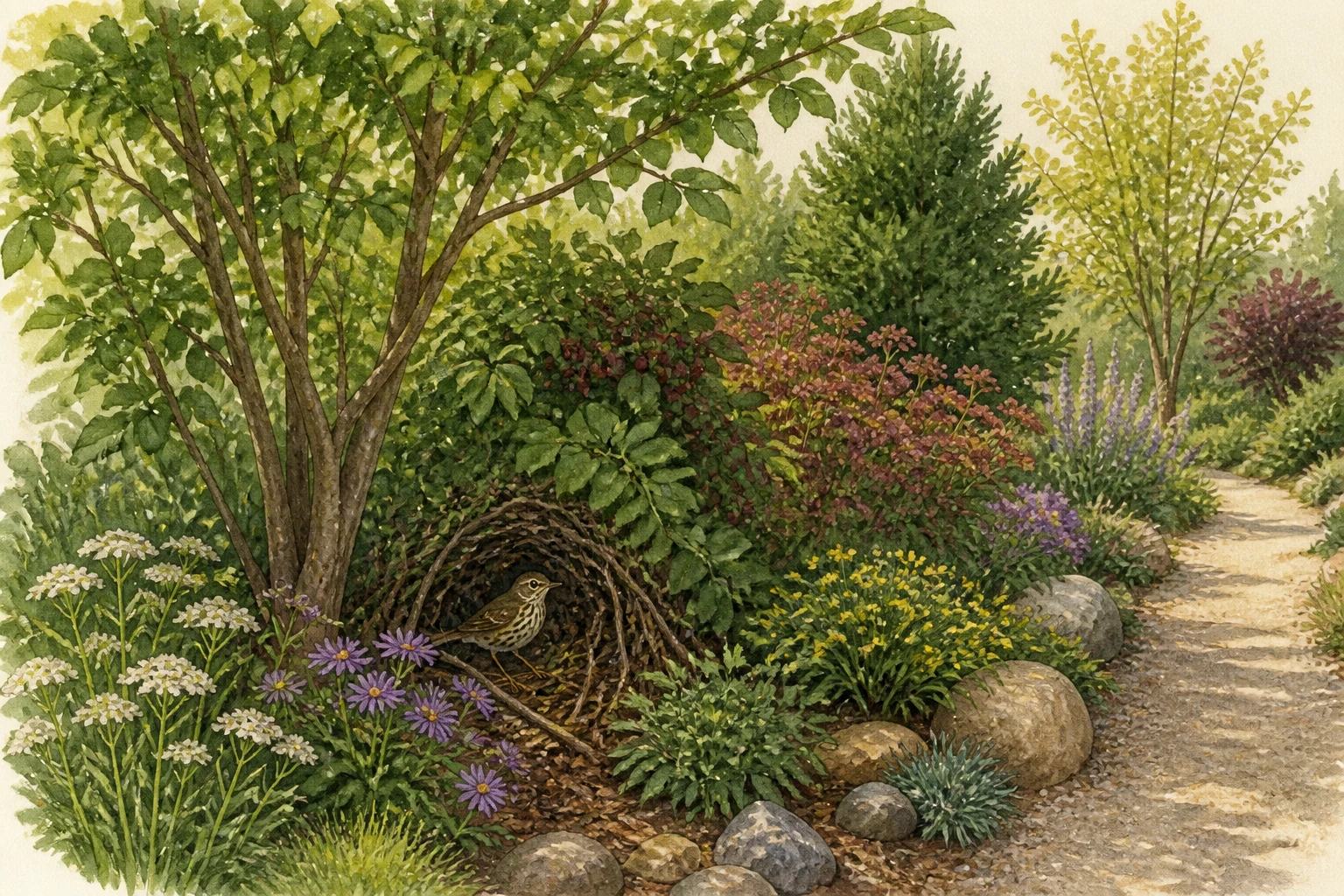
- Design move: Layered shrubs, trees, and protected pockets that offer cover from weather and predators.
- Watch for: Dense planting beside a blind path or doorway can conflict with human use.
- Local check: Keep circulation visible while connecting habitat away from the route.
Food
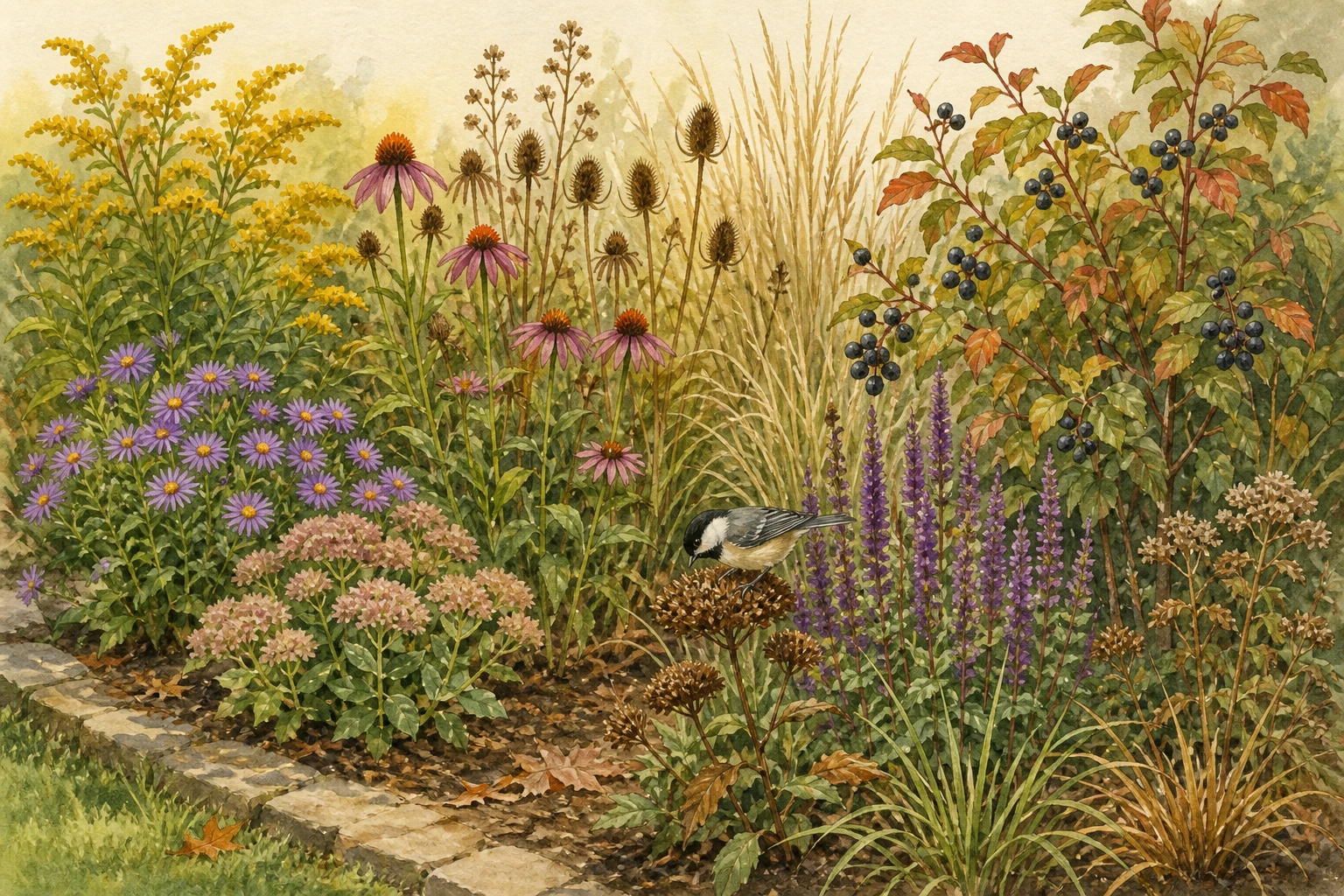
- Design move: Regionally native plants that support insects, fruit, nuts, nectar, and seeds across seasons.
- Watch for: One berry-heavy season leaves gaps during the rest of the year.
- Local check: Use a regional native-plant source and check invasive status.
Water
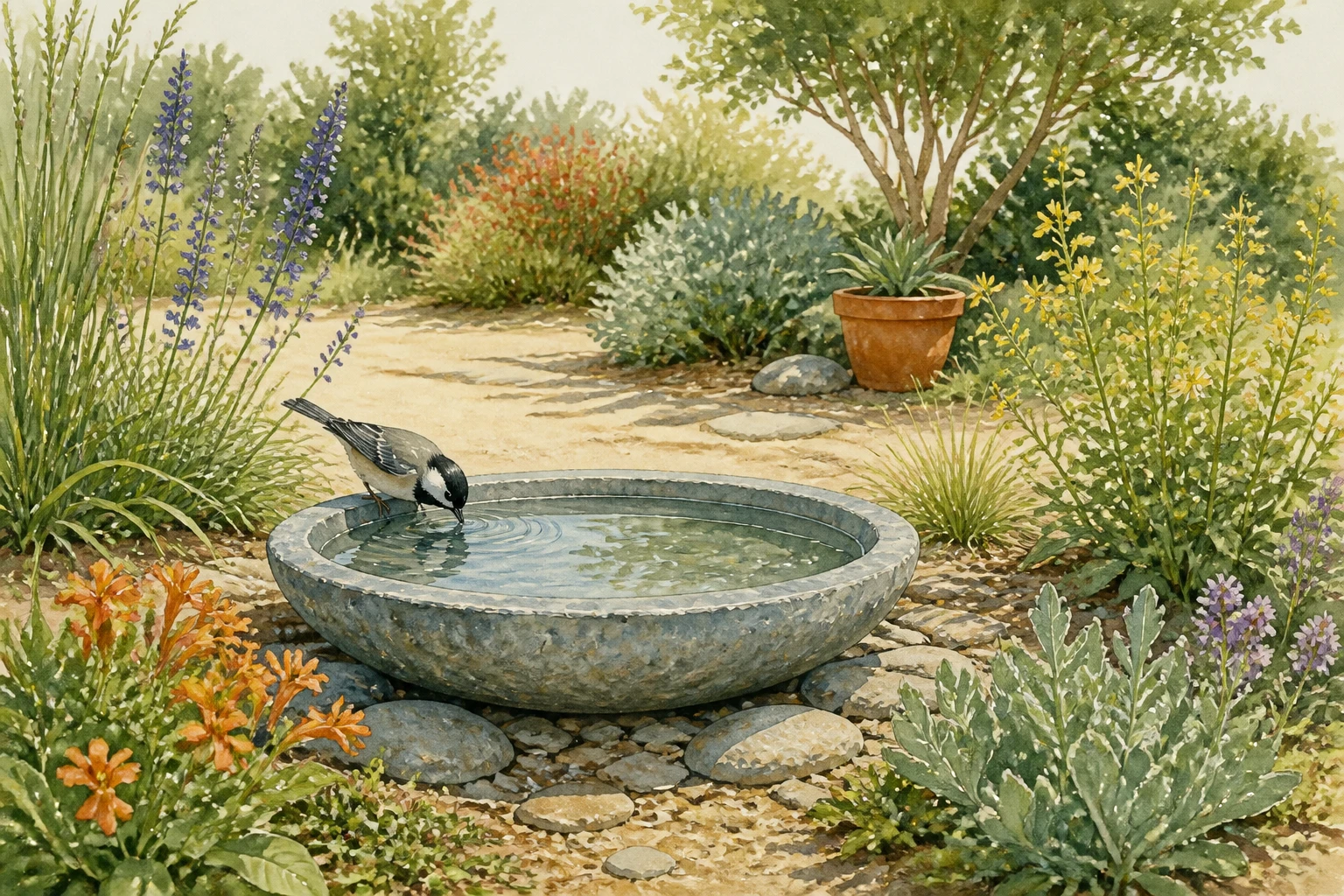
- Design move: A shallow, clean water source with open sightlines.
- Watch for: Stagnant or hidden water can create maintenance and safety problems.
- Local check: Plan frequent cleaning and safe placement.
Sources: Penn State Extension, University of Minnesota Extension
Improve a small yard without filling every open space
The first phase should strengthen existing habitat and reveal the missing function.
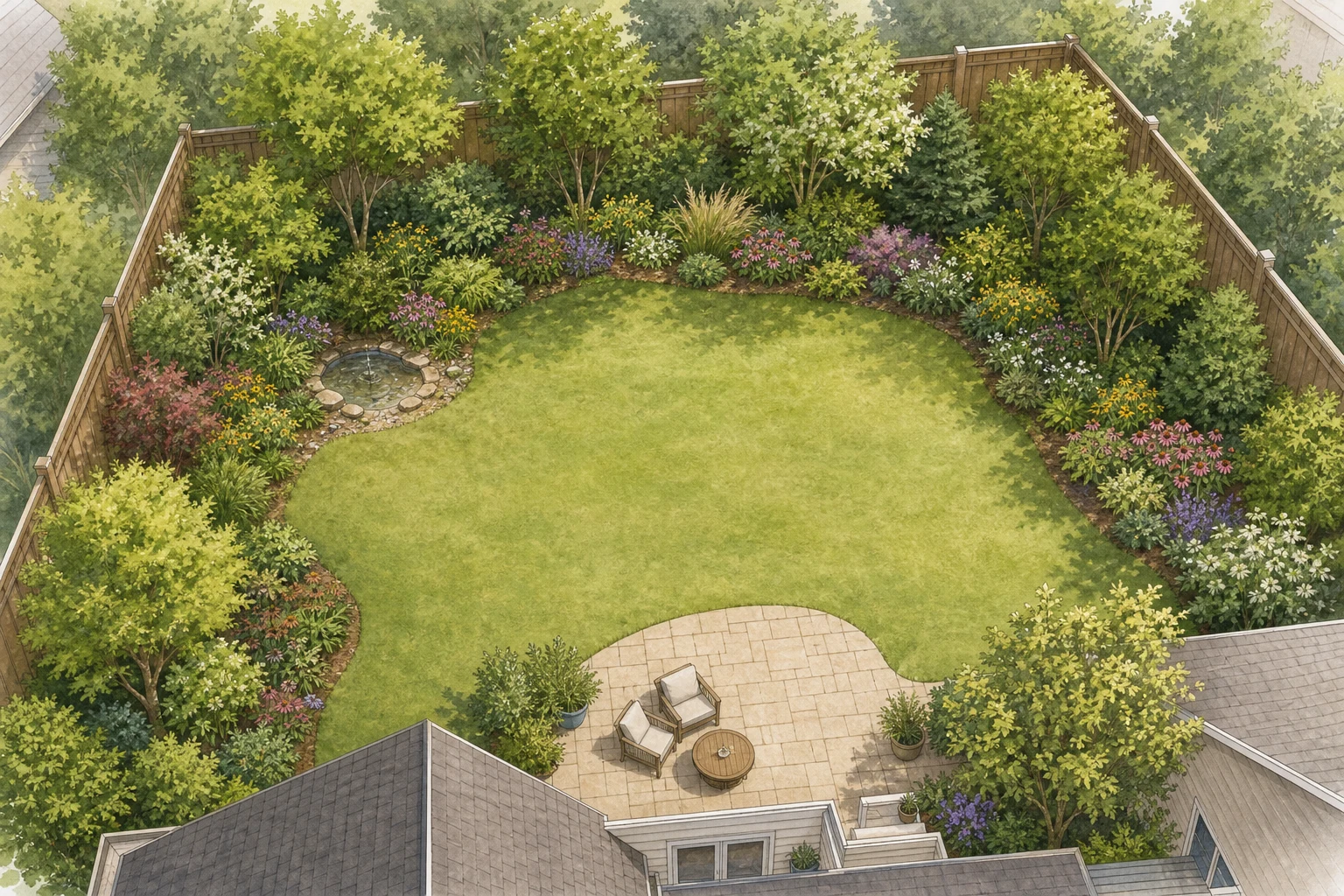
A lawn, one small tree, and a fence-line shrub
The yard already has canopy and one sheltered corner but lacks a connected middle layer, seasonal food, and water.
- 1
Keep the healthy tree
Use it as the canopy anchor instead of waiting for a new habitat tree to mature.
- 2
Widen the shrub connection
Add two or three native shrubs from your region along the fence without blocking the gate.
- 3
Replace one lawn edge
Create a repeated flower and seed band rather than scattering individual plants around the yard.
- 4
Place water in an open view
Set a shallow cleanable basin where birds can see the surroundings and the homeowner can maintain it.
One connected edge can add shelter, food, and water while the center remains open for people.
Check the garden from a bird's route and a homeowner's route
Useful habitat still needs clean water, safe circulation, and regionally accurate plants.
Check the native status: Use a regional source and the exact botanical name rather than assuming every familiar shrub is native.
Cut back on pesticides: Avoid broad pesticide use that removes the insects many birds depend on.
Water can be cleaned: Place the basin where it can be emptied, scrubbed, and refilled easily.
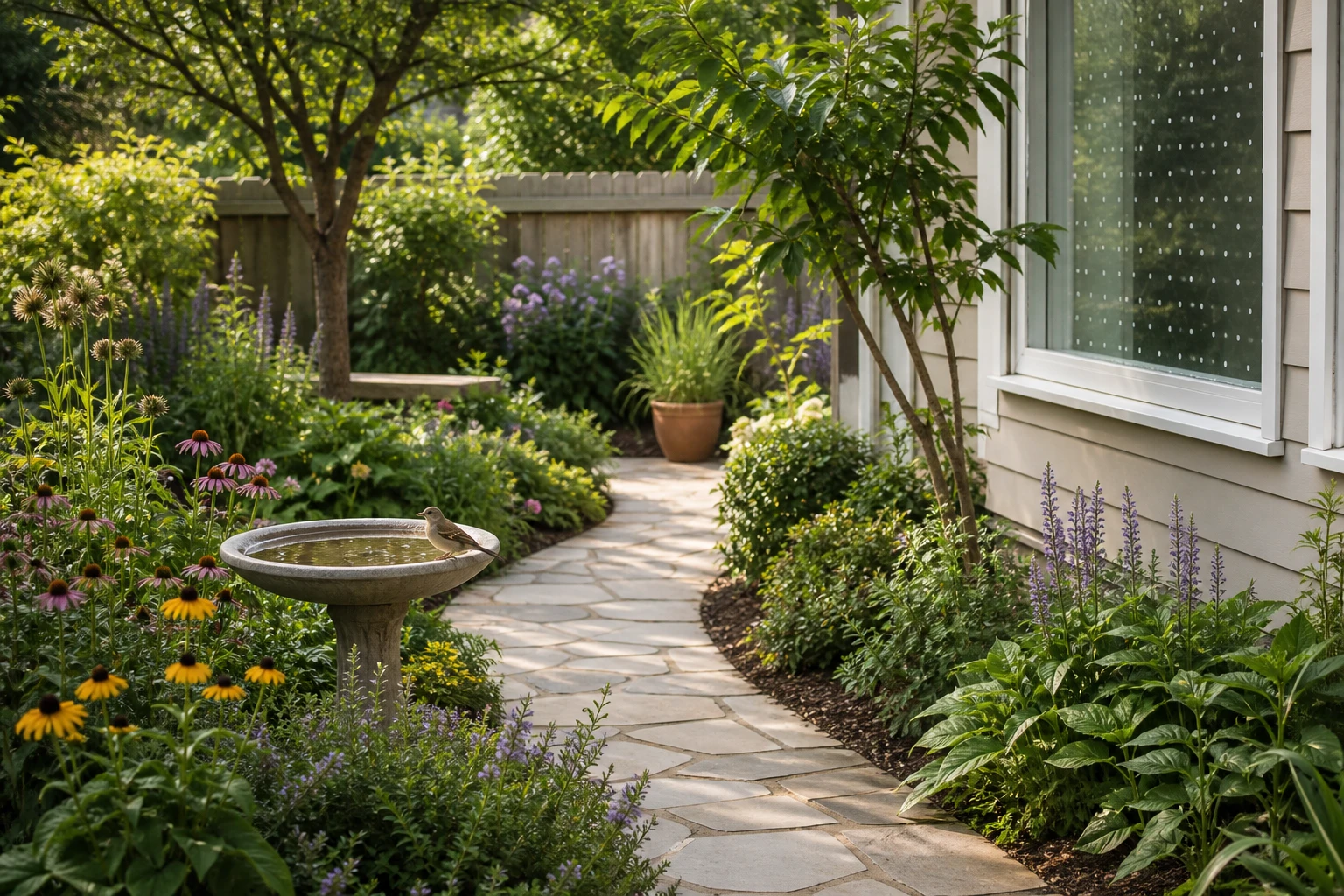
Look at the windows: Prioritize glass that has already caused collisions, reflects habitat or sky, or sits near feeders, water, or fruiting plants. American Bird Conservancy recommends patterns or screens on the outside surface, with gaps of two inches or less, because a treatment applied inside the glass can disappear behind daytime reflections.
Keep cats indoors: Keep cats indoors or use a secure enclosure so added habitat does not become a hunting route.
Frequently asked questions
What makes a garden bird-friendly?
A bird-friendly garden provides shelter, food, water, and connected vegetation layers. Regionally native plants, reduced pesticide use, clean water, and safe placement matter more than adding one decorative feeder.
Do I need a large yard to attract birds?
No. A small yard can protect one tree, connect a few shrubs, add a repeated flower-and-seed edge, and maintain a shallow water source while preserving useful open space.
Should a bird garden look wild?
It can still look intentional. Keep a clear path, repeat a few plant groups, define the bed edge, and concentrate denser habitat where it will not block household circulation.
 Gardenful
Add the missing habitat layer, not a random plant list.
Use Gardenful to compare a connected shrub and flower edge, then choose plants with a regional native-plant source.
Gardenful for iPhone
Download the app free and start with a photo of your yard.

Sources(4)
- [1]
- [2]Habitat at Home
University of Minnesota Extensionhttps://extension.umn.edu/natural-resources-news/how-communities-can-strengthen-ecosystems-together
- [3]Solutions for Homes
American Bird Conservancyhttps://abcbirds.org/strategies/solutions-for-homes/
- [4]When Window Collisions Hit Home
American Bird Conservancyhttps://abcbirds.org/news/when-window-collisions-hit-home/