Container design
Container garden ideas that work from every view
The short answer
A strong container garden begins with the pot's job and viewing direction. Put the tallest role toward the back when the pot sits against a wall, center it when people see the pot from all sides, and let one container lead a group while the others repeat its material, foliage, or color. Choose plants that share compatible light and watering needs.
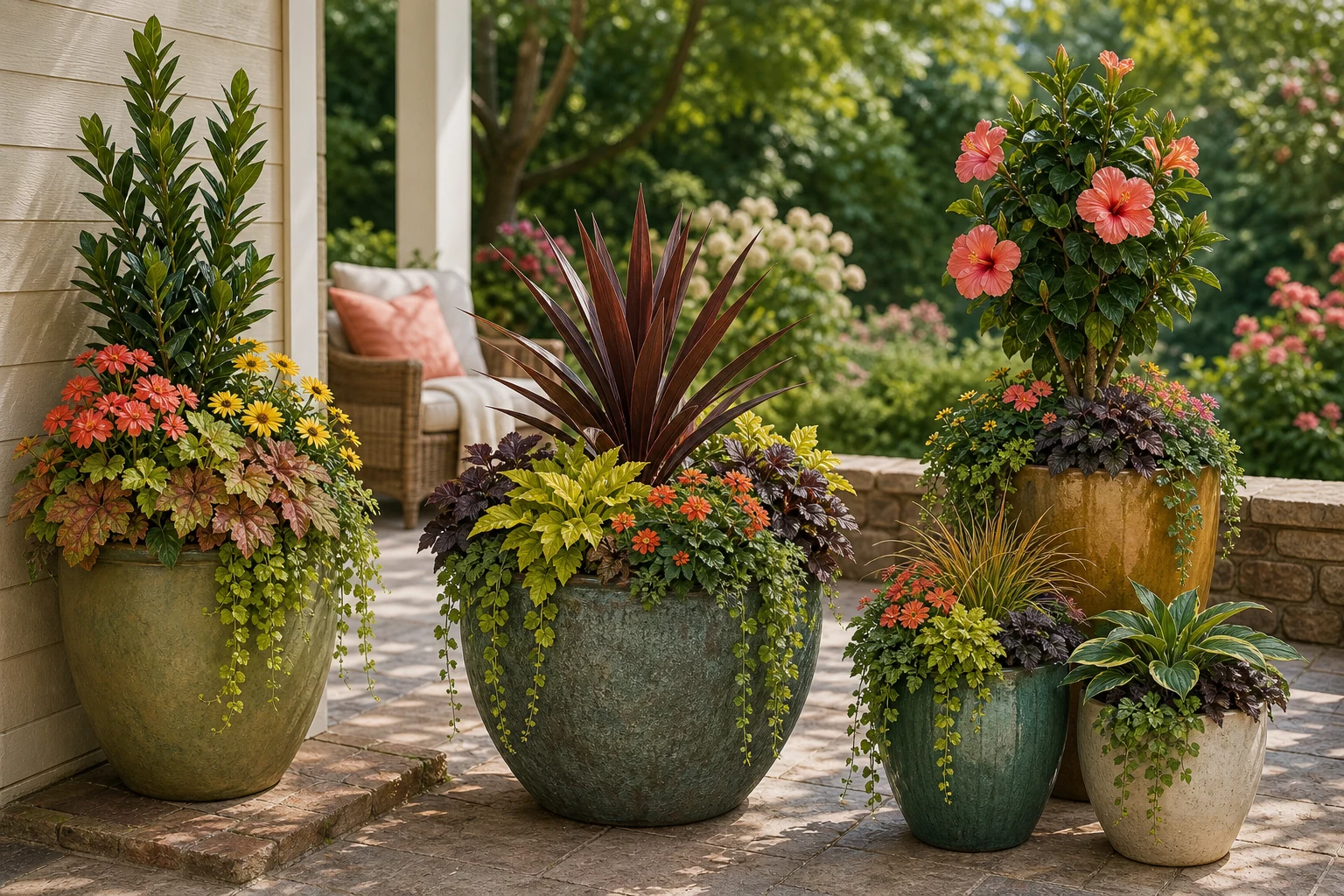
Choose the viewing direction before arranging the plants
Thriller, filler, and spiller only becomes useful when the same roles respond to where the pot sits and how people approach it.
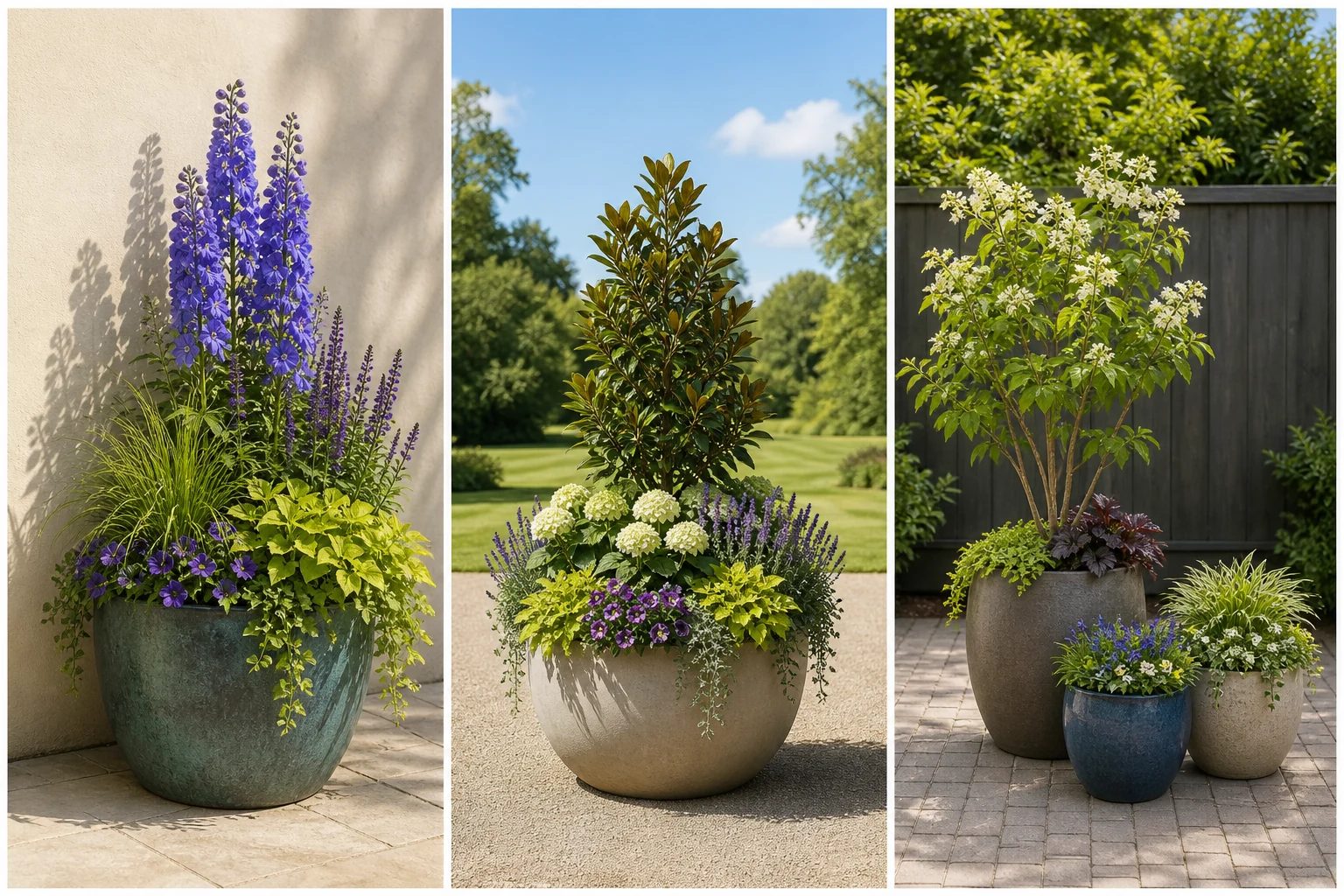
One-sided container
Place the tallest structure toward the wall, keep the middle visible from the main approach, and trail selectively over the front or sides.
All-around container
Center or gently offset the main structure, then distribute middle and edge plants so no side reads like the back.
Coordinated group
Let one larger pot lead and use two quieter companions. Repeat a pot material, foliage color, or line quality rather than copying every plant.
Use four plant roles instead of filling every pot with novelty
Roles keep the composition readable after the first flush of flowers. A plant may fill more than one role, and a quiet pot does not need all four.
Start with structure, build a generous middle, repeat one visual cue, and soften the rim only where it improves the silhouette.
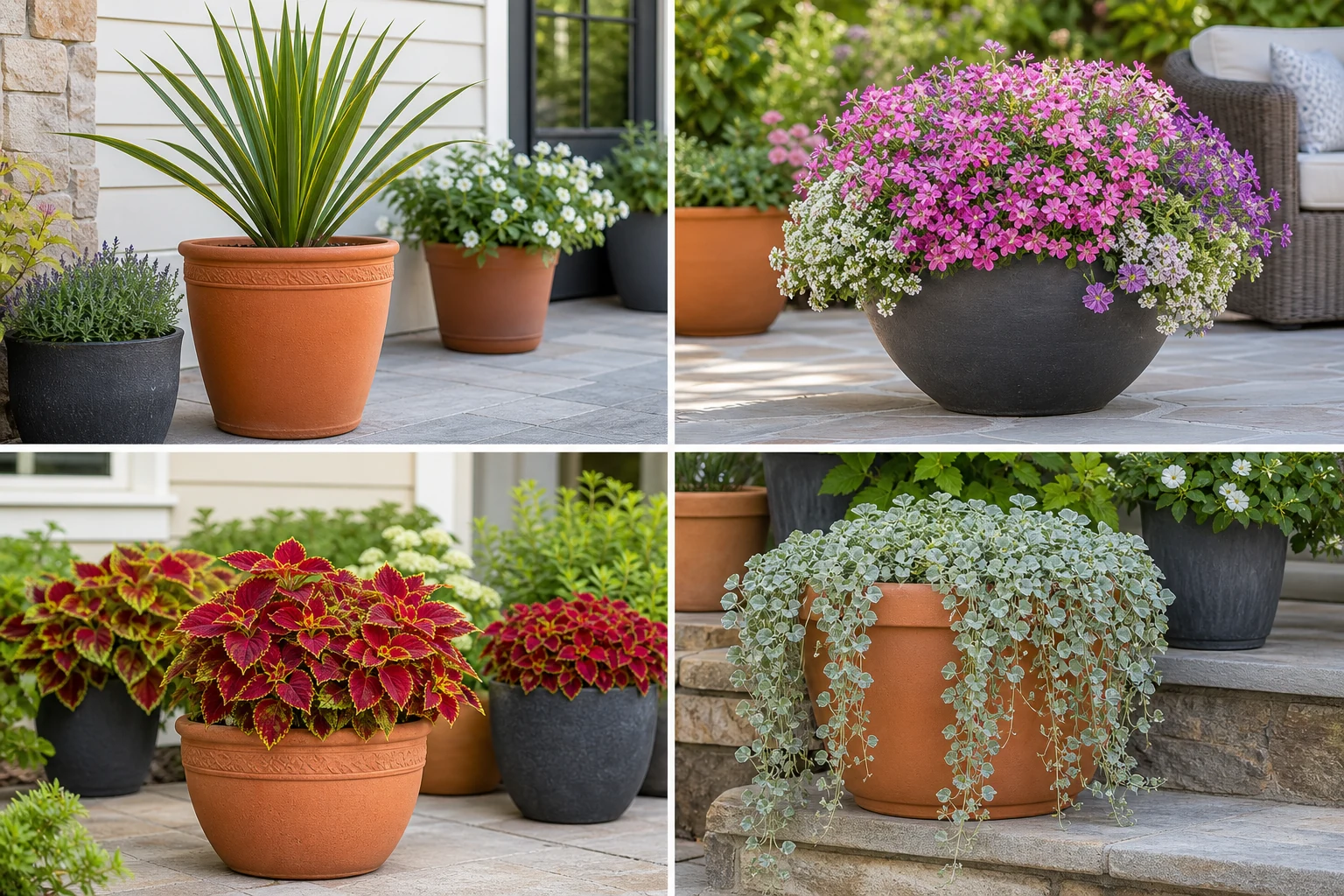
Structure or thriller
An upright, architectural, or woody form gives the composition a clear height and direction.
Mounded filler
A broad middle mass makes the pot feel intentional and hides the awkward space around a young centerpiece.
Repeated accent
A recurring foliage color or flower note connects this pot to nearby containers and the surrounding garden.
Edge softener or spiller
A trailing form relaxes the rim, but it should not hide the whole container or block a route.
Sources: Penn State Extension, University of Florida IFAS Extension
Check the growing conditions inside the pot
A container is a small root zone exposed to sun and wind. Beautiful plant combinations fail quickly when their care needs or mature sizes do not fit that volume.
Compatible light: Observe the exact location. Reflected heat against a wall can make it harsher than a nearby in-ground bed.
Compatible water: Keep plants with similar moisture needs together and expect containers to dry faster than the ground.
Working drainage: Use a pot with drainage openings and a stable surface where water can leave without damaging the route or structure.
Enough root volume: Compare the mature plant and expected season of use with the pot's usable soil volume, not only its decorative outer width.
A practical watering route: Place thirsty pots where a hose or watering can can reach them without crossing furniture or stairs.
Build a three-pot porch group without making three centerpieces
A small group feels calmer when each container has a distinct level of emphasis.
A porch corner seen from the walk and the front door
The group sits beside the entrance but outside the required route. It receives morning sun and is easy to water.
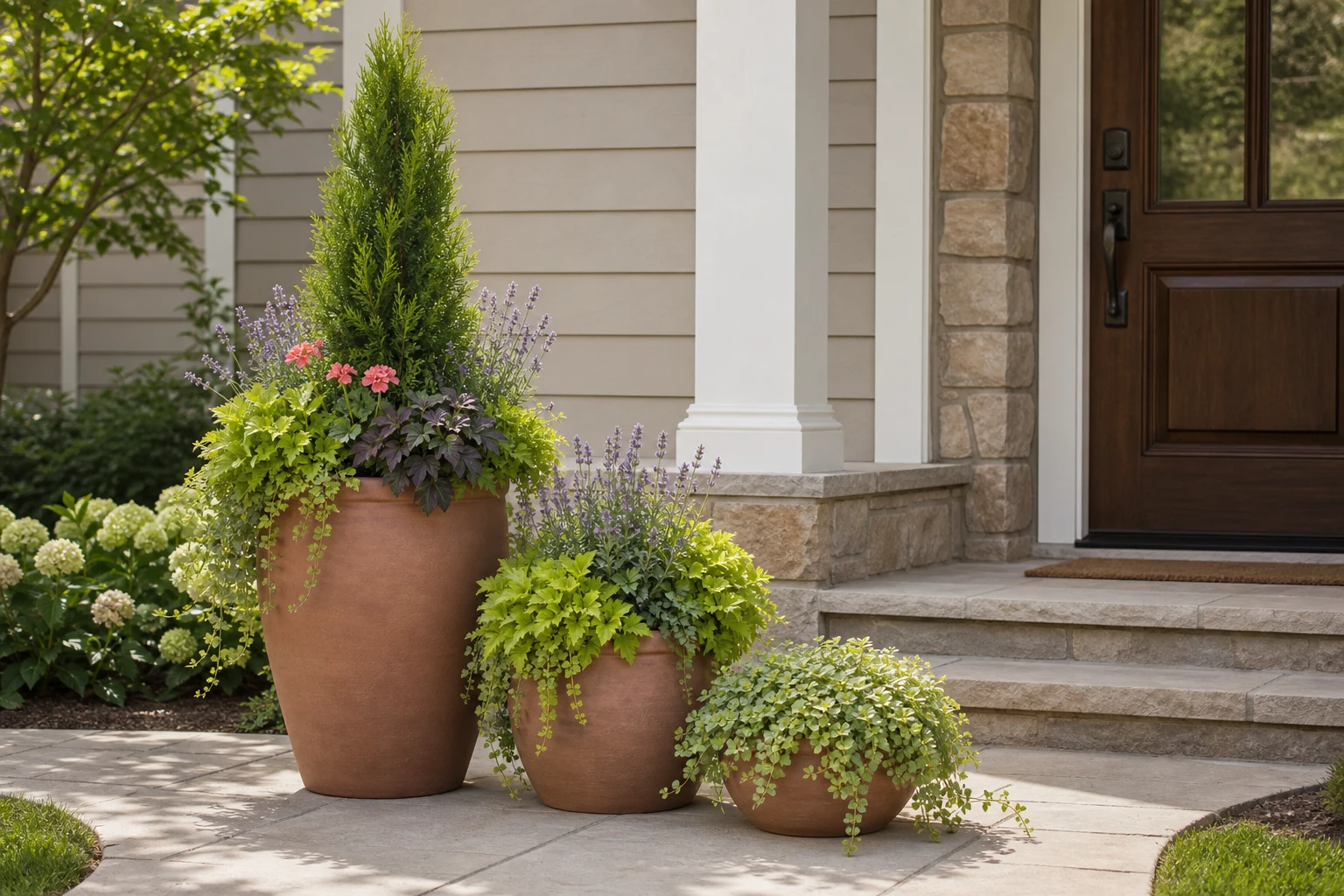
- 1
Lead with one tall pot
Give it the strongest structure and the clearest seasonal accent.
- 2
Repeat one cue in the middle pot
Use the same foliage color or flower note at a lower height rather than repeating the complete recipe.
- 3
Let the smallest pot stay simple
One generous mound or trailing form can finish the triangle without adding another focal point.
From the walk, the eye reads one composition. Up close, each pot still has enough space and identity to be maintained separately.
Frequently asked questions
What is the thriller, filler, spiller rule?
It assigns three roles: a taller structural thriller, a middle filler, and a trailing spiller. Treat it as a flexible composition tool, not a requirement that every pot include three different plants.
Where does the thriller go in a container?
Put it toward the back when the pot is seen mainly from one side. Center or gently offset it when the container is viewed from all sides.
How do I make several containers look coordinated?
Repeat one material, foliage color, flower note, or line quality. Let one pot lead and keep the companions quieter instead of making every container a separate centerpiece.
Can shade and sun plants share one pot?
Only if the exact location genuinely meets both plants' light and moisture needs, which is uncommon. A reliable combination uses plants with compatible growing conditions.
What plants can fill the thriller, filler, and spiller roles?
Examples include canna or an upright ornamental grass as thrillers, coleus or lantana as fillers, and trailing petunias or sweet potato vine as spillers. These are role examples, not one recipe; combine only plants with compatible light, water, root-space, and seasonal needs.
 Gardenful
Carry one container style into the rest of the yard
Use a photo to explore the larger planting direction, then coordinate pots through repeated forms, foliage, or color.
Gardenful for iPhone
Download the app free and start with a photo of your yard.

Sources(2)
- [1]
- [2]Landscape Design with Plants: Creating Outdoor Rooms
University of Florida IFAS Extensionhttps://ask.ifas.ufl.edu/publication/EP449