Gardenful field guide
Drought-tolerant front yard ideas that do not feel bare
The short answer
A drought-tolerant yard uses water deliberately; it does not treat every part of the site the same. Map water zones before choosing plants. Protect existing trees, place any moderate-water flowers near the entrance, and use locally adapted low-water plants in hotter areas. Even drought-tolerant plants need water while they establish.
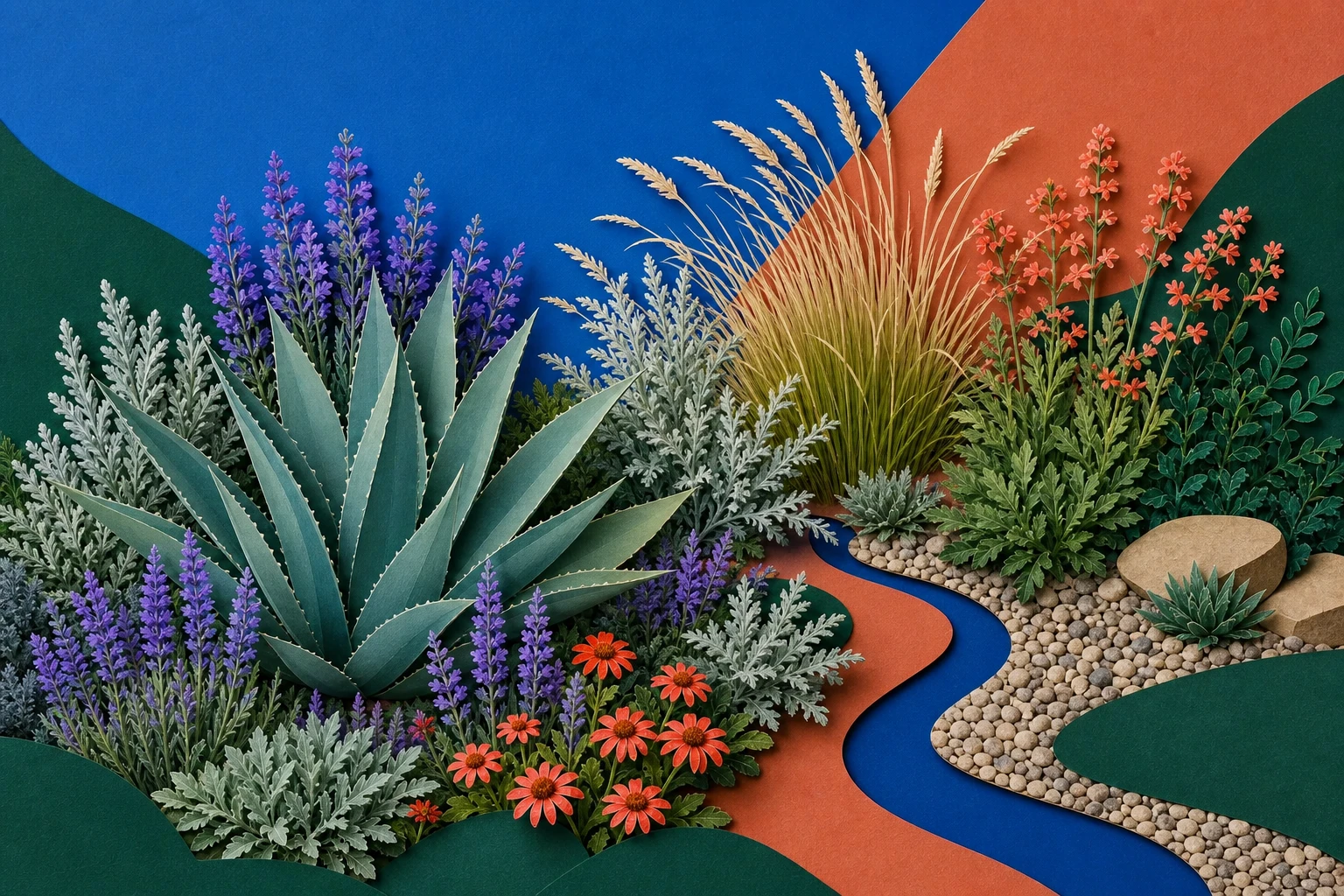
Map water before choosing plants
A yard does not become drought tolerant because it uses gravel, agaves, or a particular visual style. It becomes drought tolerant when the plants fit the climate, soil, and watering plan.
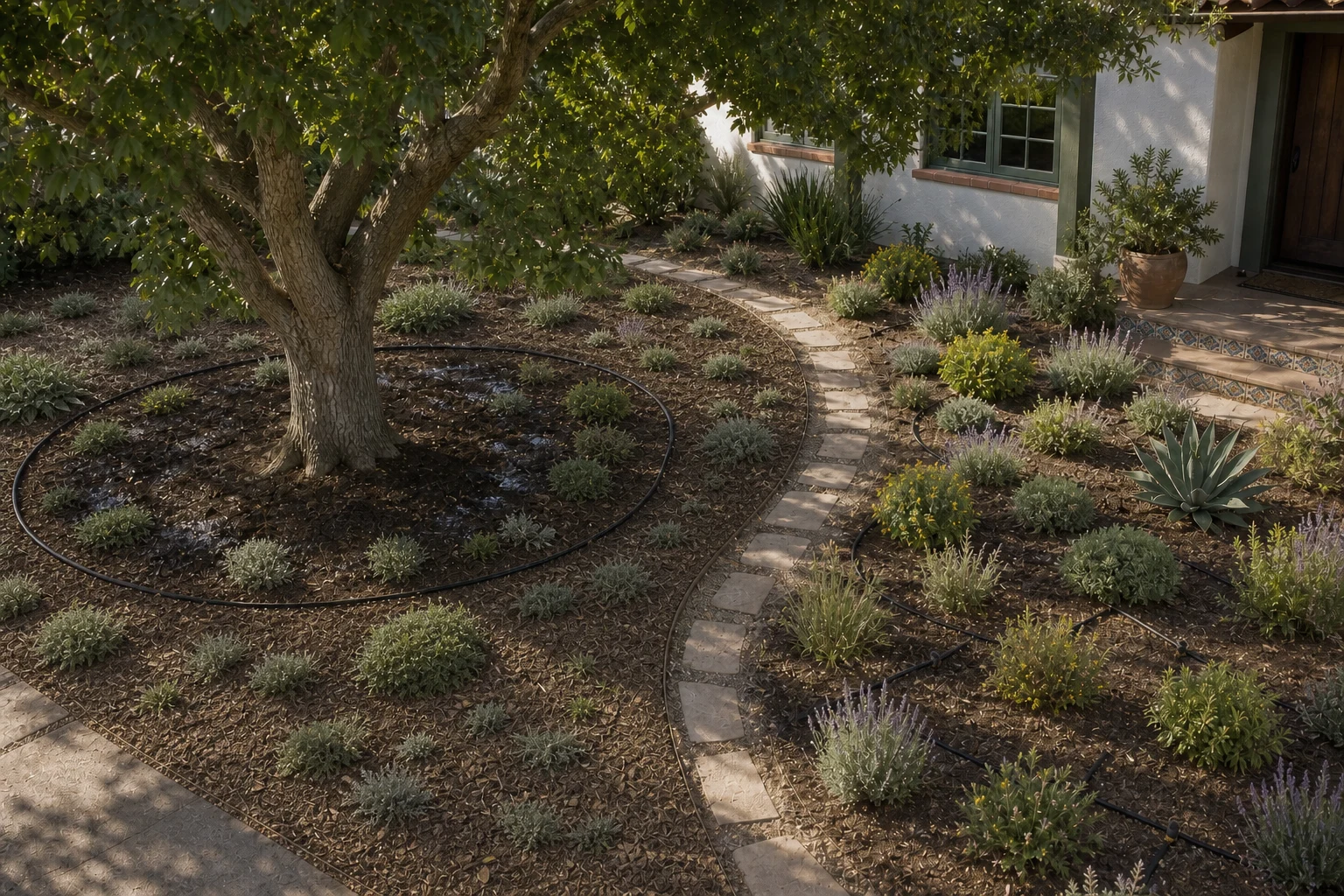
A plant that thrives through a California summer may struggle in humid clay. A High Plains flowering plant may dislike a wet Southeastern winter. Copying the same agave, lavender, and ornamental grass list across the country creates a recognizable look, but it does not create a reliable low-water yard.4,5
Before choosing plants, mark the where water is already needed. A mature tree may have depended on years of lawn irrigation. The front step may justify a small moderate-water planting because you see it every day. The curb may be hotter, windier, and better suited to tougher plants. These areas do not need the same schedule.1,2
Then separate from the long-term plan. New drought-tolerant plants still need regular attention while roots expand into the surrounding soil. Watering deeply and less often may become appropriate later, but the timing depends on species, soil, season, and local guidance.1,2
Map three water zones on the yard
A hydrozone is an area where plants with similar water needs share an irrigation pattern. Three main zones are enough for a useful first sketch.
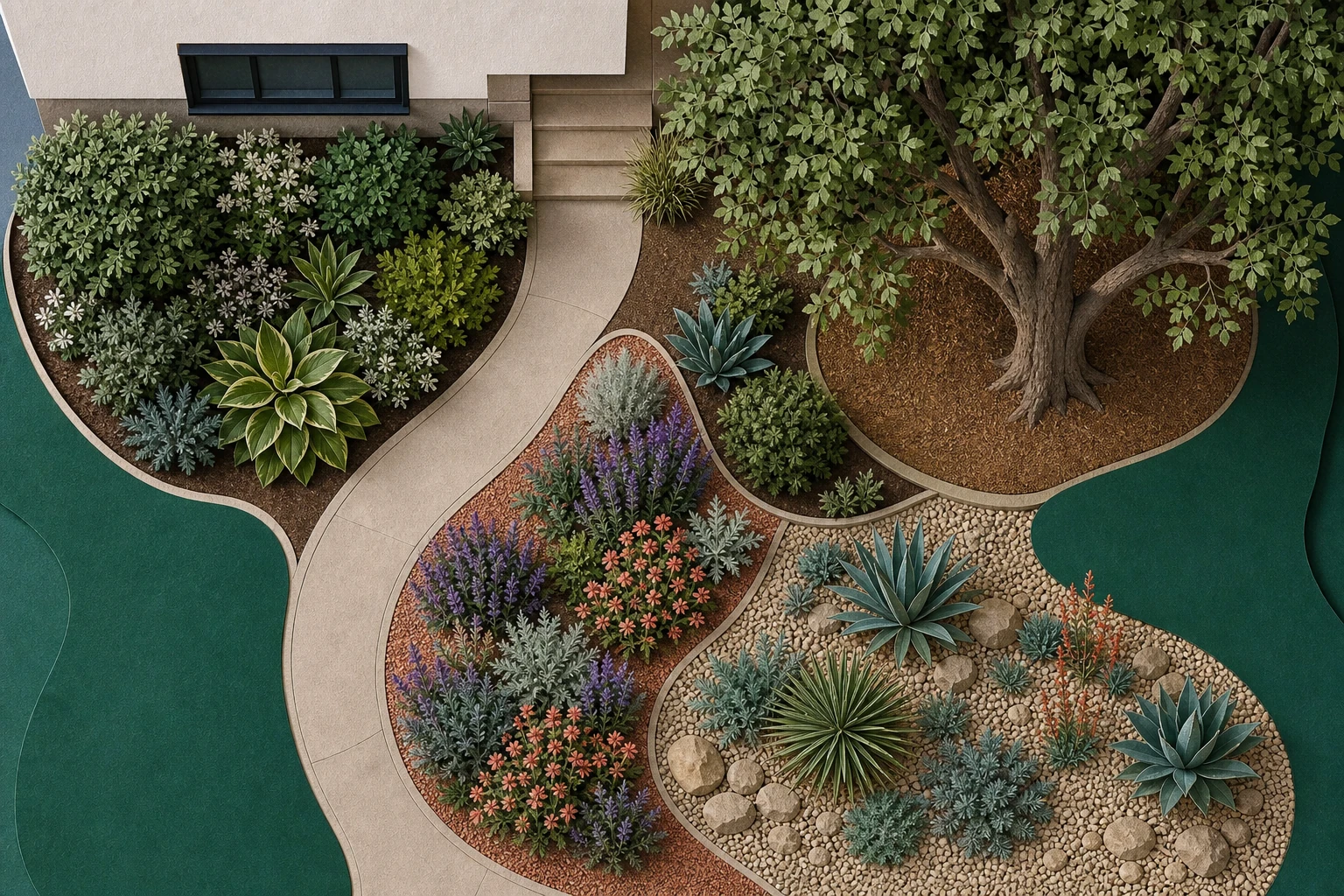
Existing tree zone
Map the canopy and likely root area before removing turf or changing irrigation. Avoid deep excavation, abrupt grade changes, and a watering shutdown that the tree cannot tolerate.
For example: A slow, deep tree-watering approach may need to continue even when the former lawn area becomes lower water.
Hot curb or driveway edge
Use plants that tolerate reflected heat and the actual soil drainage. Leave enough setback so mature foliage does not cover the sidewalk or block sight lines.
For example: Silver leaves, small leaves, and compact woody forms often signal heat strategies, but the exact plant still has to fit your climate.
Small planting area near the entrance
If you want more flower or lushness, concentrate it near the door instead of watering the entire frontage at the same rate.
For example: A small group of moderate-water flowers can have more impact near the entrance because people see it up close.
Put the zones on paper even if you hand-water. Treat any wet low spot as a separate drainage problem, not part of the dry planting zone.
Choose plants for your climate
Use these examples to ask better local questions. They are starting directions, not national plant lists.
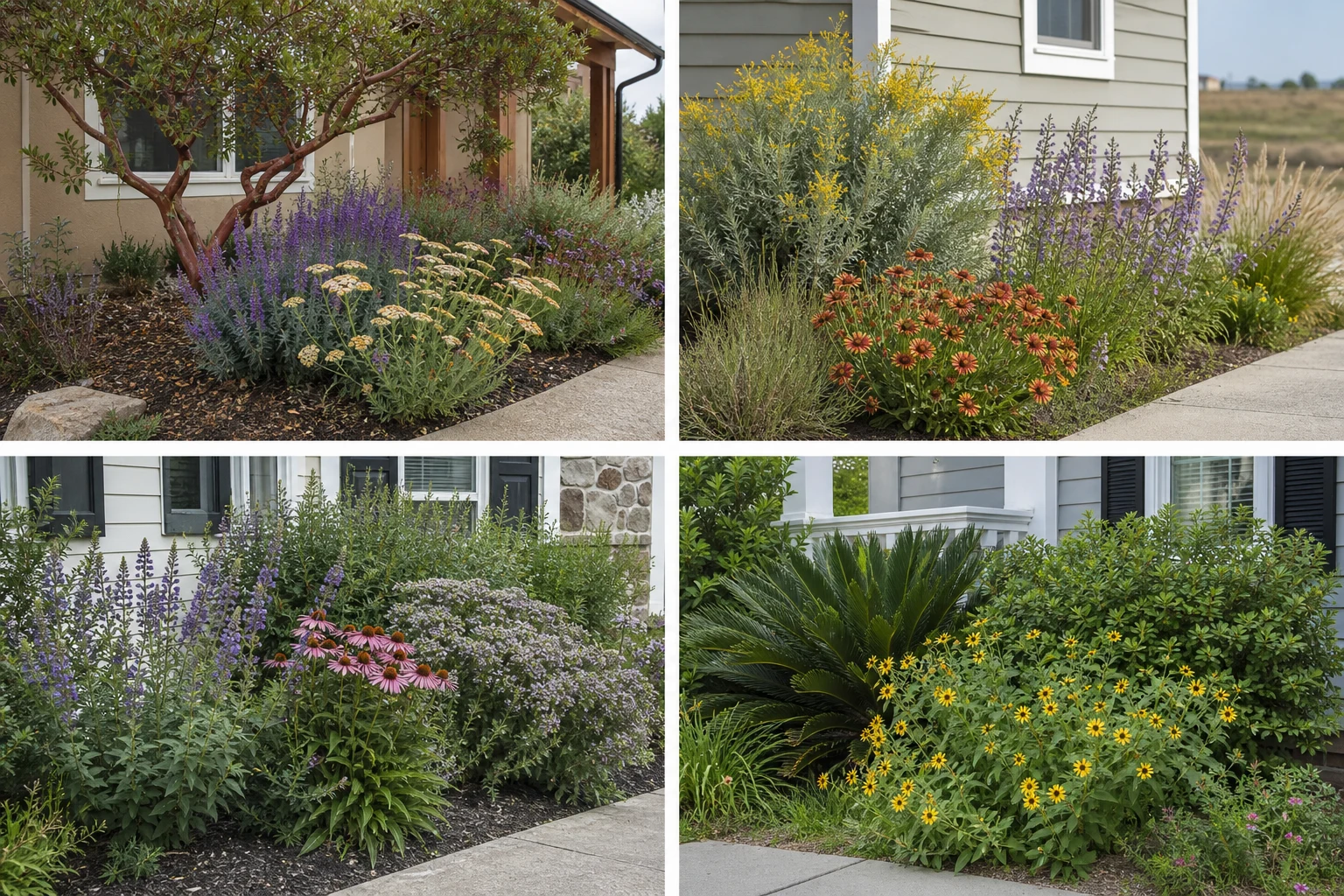
Summer-dry West
- Plants to investigate
- Site-sized manzanita or ceanothus, repeated California fuchsia or salvia, and a compatible low layer.
- Important limit
- Check drainage, frost, summer irrigation, fire guidance, and mature size.
High Plains or interior dry climate
- Plants to investigate
- Regionally suitable juniper or rabbitbrush, with repeated penstemon or blanketflower.
- Important limit
- Check winter cold, wind, soil texture, and first-season water needs.
Mid-Atlantic or humid continental sun
- Plants to investigate
- Baptisia or a compact shrub, with aromatic aster, mountain mint, coneflower, or creeping phlox.
- Important limit
- Check drainage, summer humidity, deer, and local behavior.
Warm, humid Southeast
- Plants to investigate
- Locally suitable dwarf yaupon, coontie, or compact palmetto with repeated regional flowers.
- Important limit
- Check cold exposure, salt, drainage, first-season water, and invasive status.
Drought-tolerant lists are most trustworthy when the source is regional and describes soil, exposure, mature size, and establishment care.
Sources: University of California Agriculture and Natural Resources, University of Florida IFAS Extension
Care for new plants through the first dry season
New drought-tolerant plants still need regular care while roots grow into the surrounding soil.
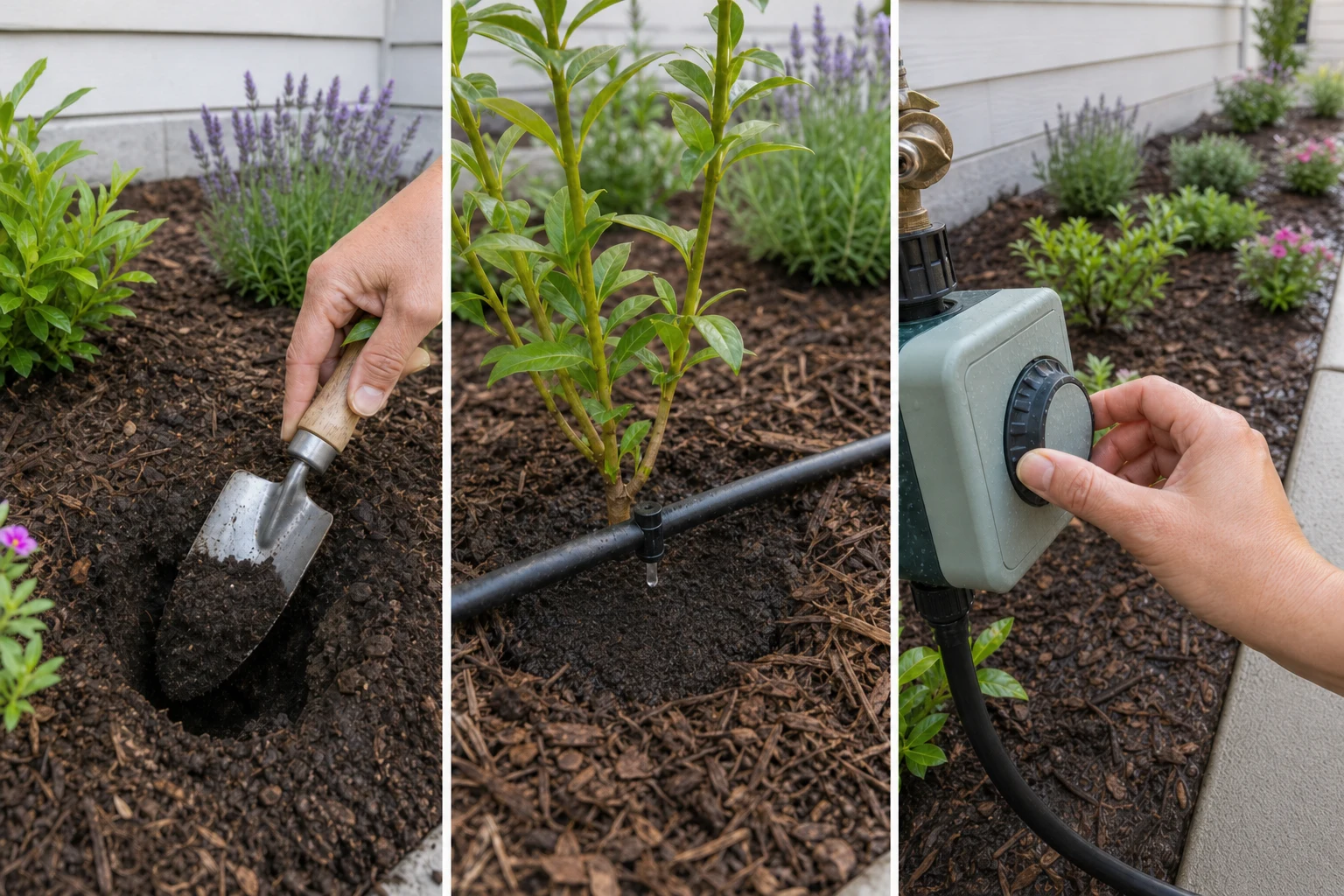
1
Check moisture below the surface
The top can look dry while the root area is still damp.
2
Water only as fast as soil absorbs it
Slow down or stop when water begins moving downhill.
3
Protect crowns and adjust for weather
Keep mulch away from trunks and crowns, respond to rain, heat, and wind, and review local drought, fire, and utility guidance before changing irrigation.
A healthy lower-water landscape is not the one watered least during installation. It is the one designed to need less supplemental water after proper establishment.
Frequently asked questions
Do drought-tolerant plants need water in the first year?
Yes. Most need regular establishment care while roots expand, though the schedule varies by plant, container size, season, soil, and weather. Follow regional guidance and adjust after checking the root-zone moisture.
Is gravel better than mulch for a drought-tolerant yard?
Neither is universally better. Gravel may suit some arid designs and drainage uses, while organic mulch can reduce evaporation and moderate soil temperature in many beds. Match the material to the plants, climate, slope, fire guidance, and maintenance plan.
Can I stop watering a tree after removing the lawn?
Do not assume so. A mature tree may have relied on lawn irrigation for years. Protect its roots and get regional advice on a separate long-term watering approach before changing the surrounding landscape.
 Gardenful
Explore a lower-water layout for your existing yard.
Start from a photo, keep the important trees and routes in view, and preview a fuller low-water planting layout before choosing local plants.
Gardenful for iPhone
Download the app free and start with a photo of your yard.

Sources(6)
- [1]Xeriscaping: Retrofit Your Yard
Colorado State University Extensionhttps://extension.colostate.edu/resource/xeriscaping-retrofit-your-yard/
- [2]Watering Tips
US EPA WaterSensehttps://www.epa.gov/watersense/watering-tips
- [3]Landscaping Tips
US EPA WaterSensehttps://www.epa.gov/watersense/landscaping-tips
- [4]Shrubs and Perennials
University of California Agriculture and Natural Resourceshttps://ucanr.edu/site/landscape-lush/shrubs-and-perennials
- [5]Low-Maintenance Landscape Plants for South Florida
University of Florida IFAS Extensionhttps://ask.ifas.ufl.edu/publication/EP107
- [6]Landscape Design with Plants: Creating Outdoor Rooms
University of Florida IFAS Extensionhttps://ask.ifas.ufl.edu/publication/EP449