Gardenful field guide
How to design an edible front yard
The short answer
An edible front yard still needs to read as an entrance and remain easy to harvest and care for. Keep the walk, door, windows, and house number easy to see. Then add edible plants in tidy groups: perhaps one fruit tree or trellis for height, repeated herbs or berry shrubs, and one easy-to-reach vegetable bed. Before buying, make sure you have room to harvest, prune, water, and manage pests.
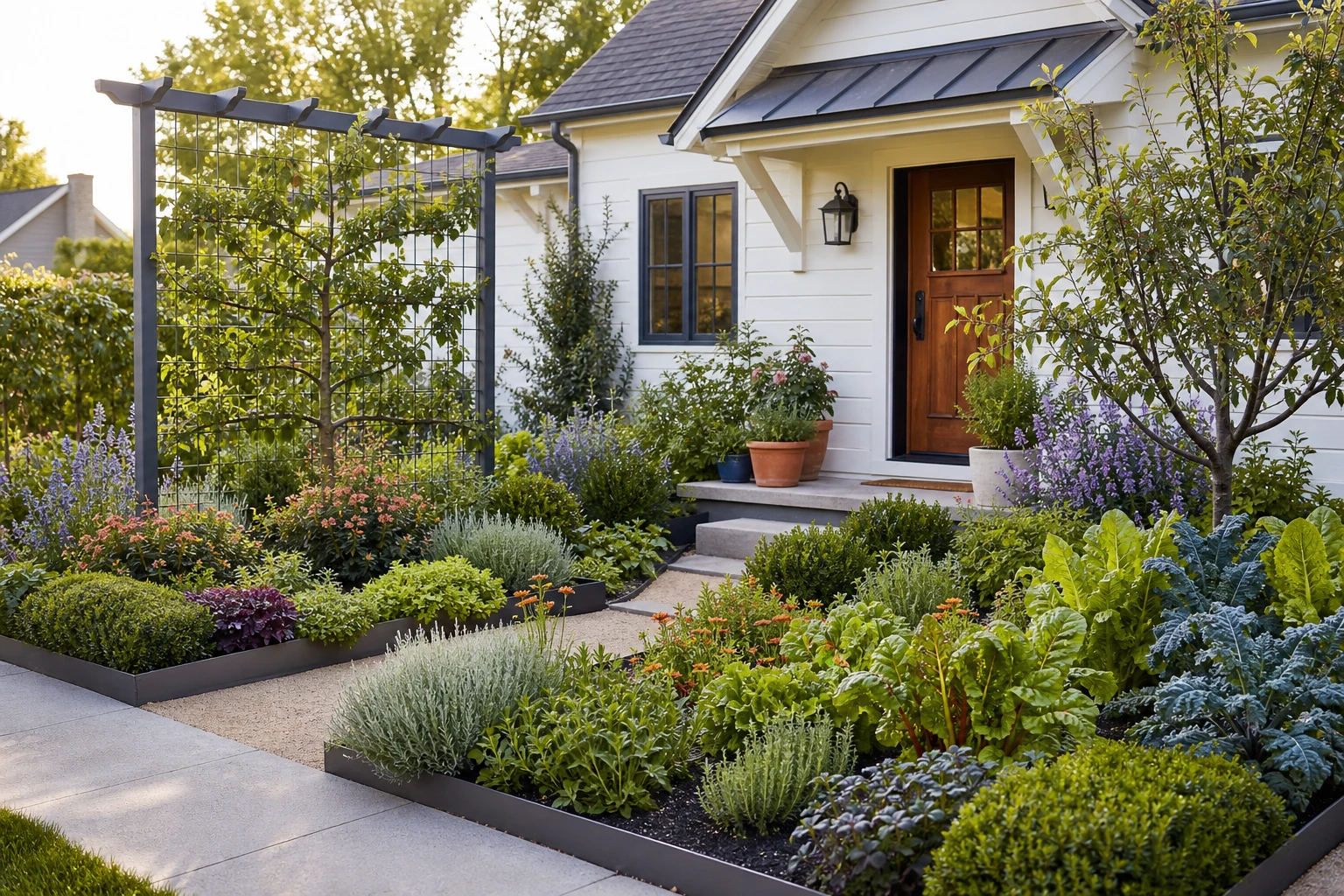
Give every edible plant a clear place
A fruit tree, trellis, or repeated shrub gives the front yard shape even when the vegetable bed is between crops.
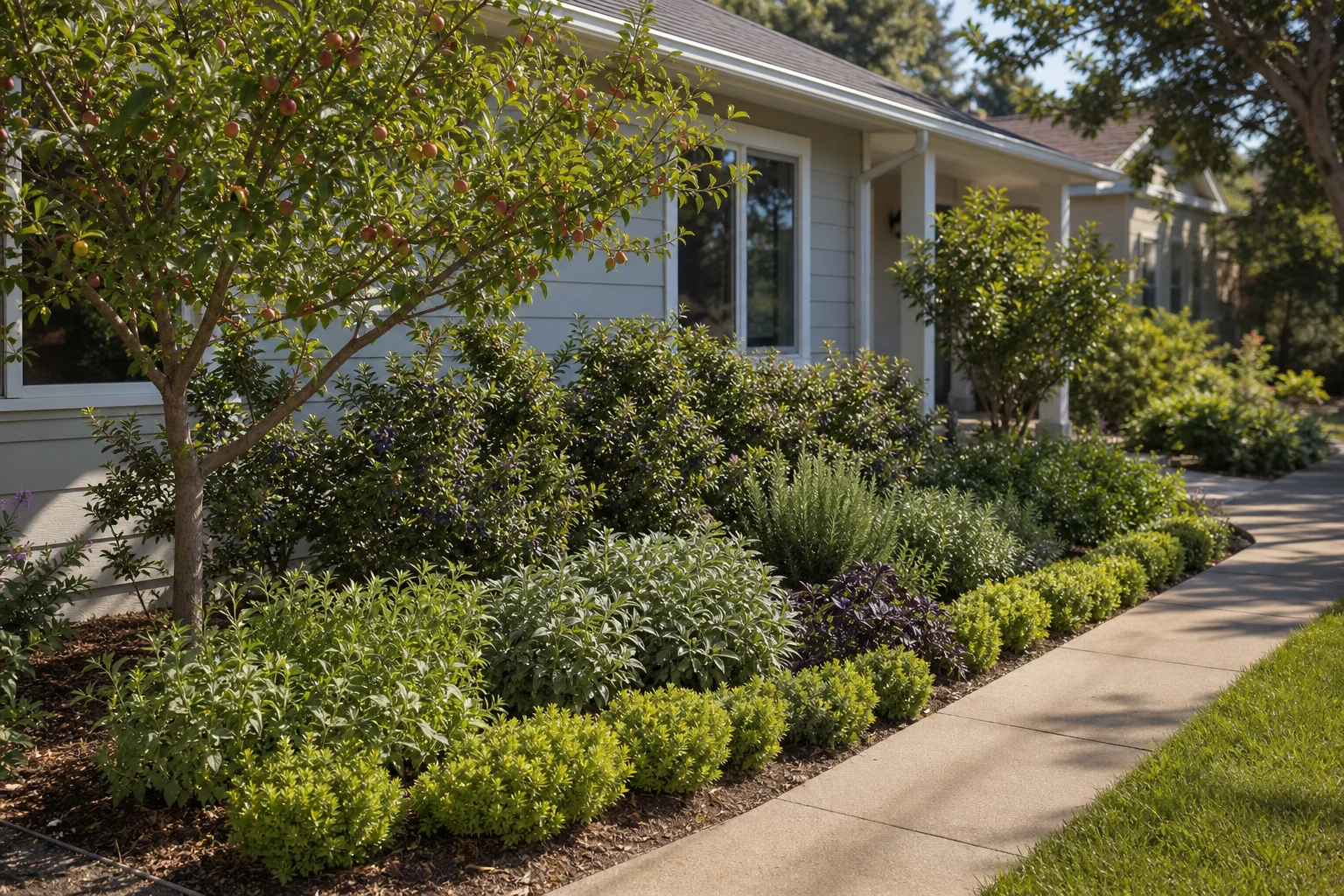
Structure
Use one fruiting tree, shrub, or vine support that leaves room for roots, harvest, and the front walk.
Repeated middle layer
Repeat a short set of berry-like shrubs or culinary herbs instead of scattering one of everything.
Seasonal bed
Concentrate annual vegetables in one accessible area that can be replanted neatly.
Ground and edge
Use mulch, low herbs, or a crisp bed edge to keep the entry tidy.
Oregon State Extension shows how edibles can do familiar landscape jobs in the Pacific Northwest: an apple tree brings spring blossom, blueberry offers fruit and red fall color, rhubarb supplies bold leaves in sun, and strawberries can form a low edge. Use those as examples of the roles, then choose plants that fit your region and site.
Choose how much should be edible
The format depends on sun, time, harvest habits, local rules, and how the entrance must function.
| Format | What it includes | Watch for |
|---|---|---|
| FormatEdible accents | What it includesHerbs, one fruiting shrub, or seasonal greens in an ornamental bed. | Watch forScattered crops can be hard to water and harvest.First checkGroup by care and picking route. |
| FormatMixed edible border | What it includesRepeated fruiting shrubs, herbs, flowers, and one structural plant. | Watch forFruit drop, netting, pruning, and dormant form remain visible.First checkPlan the whole-year appearance. |
| FormatKitchen bed | What it includesA sunny accessible area where food production is primary. | Watch forNeeds replanting, soil care, water, and an off-season strategy.First checkCheck rules, soil safety, sun, and time. |
Sources: Oregon State University Extension
Add edibles without hiding the front door
Use productive plants to strengthen the entry rather than replacing every ornamental plant.
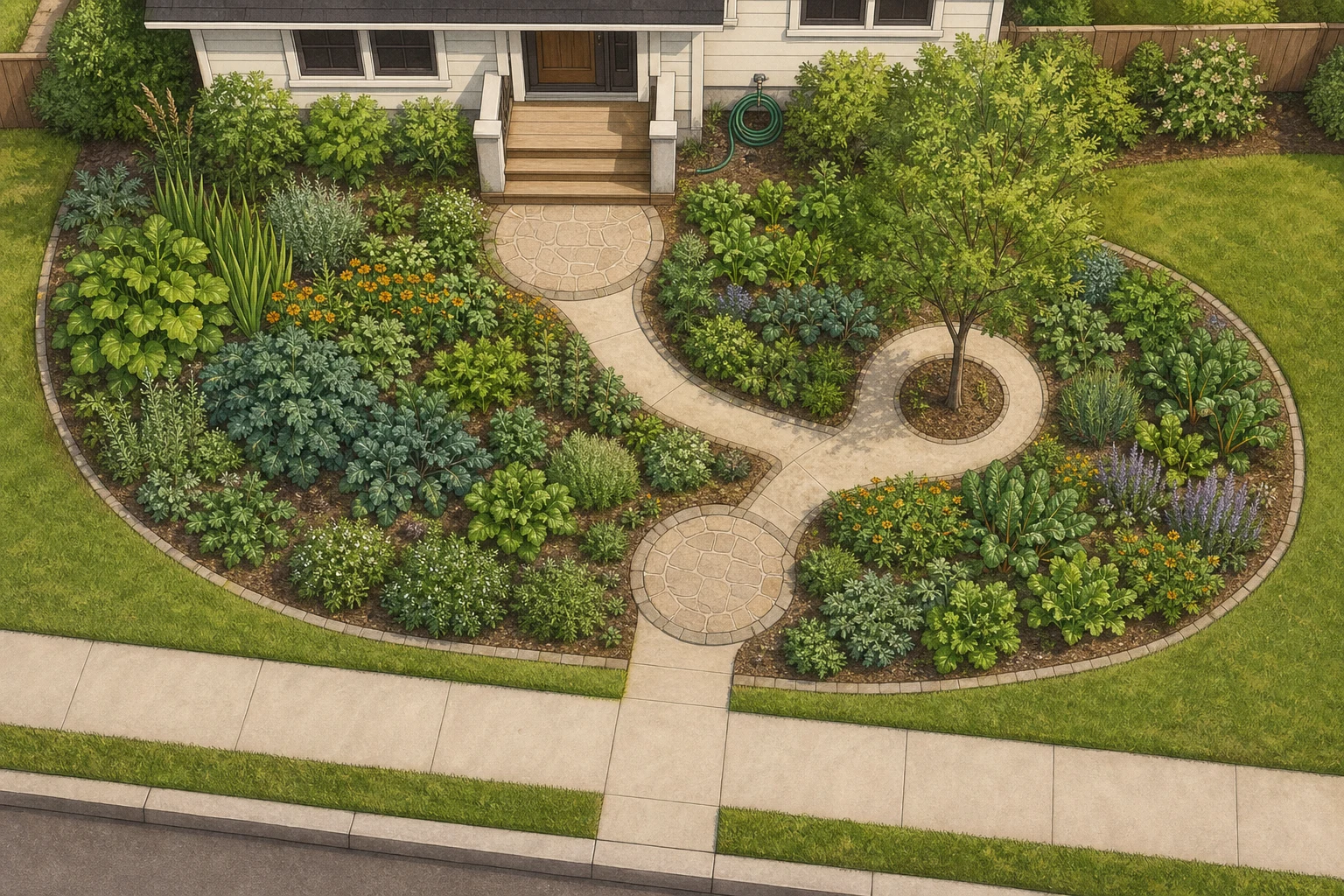
A sunny walk with two shallow beds
The house has a visible door, limited bed depth, and enough sun for a small productive palette.
- 1
Keep the walk and door open
Draw mature widths and harvest reach outside circulation.
- 2
Use one vertical edible feature
Place it away from windows, utilities, and the main sightline.
- 3
Repeat one herb mass
Use the same durable herb on both sides, chosen for the sun and climate.
- 4
Keep annual vegetables together
Use one low bed near water for planting, harvest, and cleanup.
The tree, repeated herbs, and clear path keep the entry looking cared for between harvests.
Check what makes a front-yard crop practical
A beautiful edible plan still needs safe soil, reliable care, and local permission.
Soil and site safety: If road exposure or past land use raises concern, ask local extension or a health department whether testing is appropriate.
Local rules: Check municipal, utility, visibility, and association requirements.
Pollination and harvest: Confirm partners, likely yield, and who will pick it.
Pest plan: Expect that netting or barriers affect the public view.
Frequently asked questions
Can I grow food in my front yard?
Often yes, but check rules, utilities, visibility, soil safety, sun, water, and maintenance.
How can an edible front yard look tidy?
Use permanent structure, repeat a short palette, keep annuals in one bed, define the edge, and plan between crops.
What edible plants should I use?
Start with the job: a small tree, shrub, vine, seasonal bed, or low edge. Then choose plants that fit your climate, sun, soil, available space, and what your household will actually harvest.
 Gardenful
Give every edible plant a clear place.
Use Gardenful to compare a productive front-yard layout, then check the crops, soil, harvest access, and local rules.
Gardenful for iPhone
Download the app free and start with a photo of your yard.

Sources(2)
- [1]Edible Landscaping
Oregon State University Extensionhttps://extension.oregonstate.edu/sites/extd8/files/documents/12281/ediblelandscaping.pdf
- [2]Right Plant, Right Place
University of Florida IFAS Extensionhttps://ask.ifas.ufl.edu/publication/EP416