Gardenful field guide
How to design a formal garden
The short answer
A formal garden gets its order from clear geometry and repetition, not from rigid or exotic plants. Start with one strong line, such as the walk from the sidewalk to the door. Repeat a small set of plant shapes on both sides, keep the edges deliberate, and end the view at the door, a seat, or one simple feature.
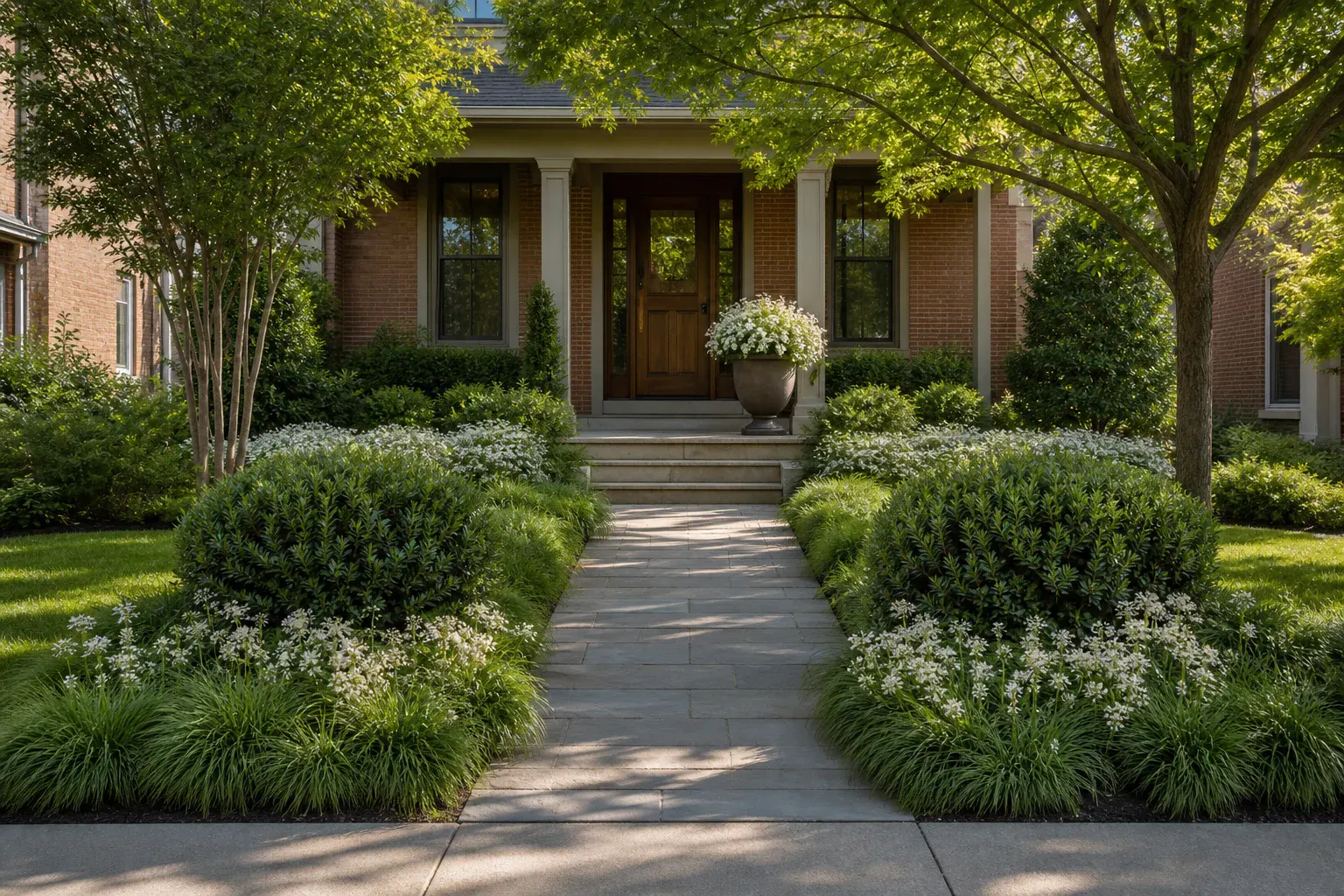
Create order before choosing plants
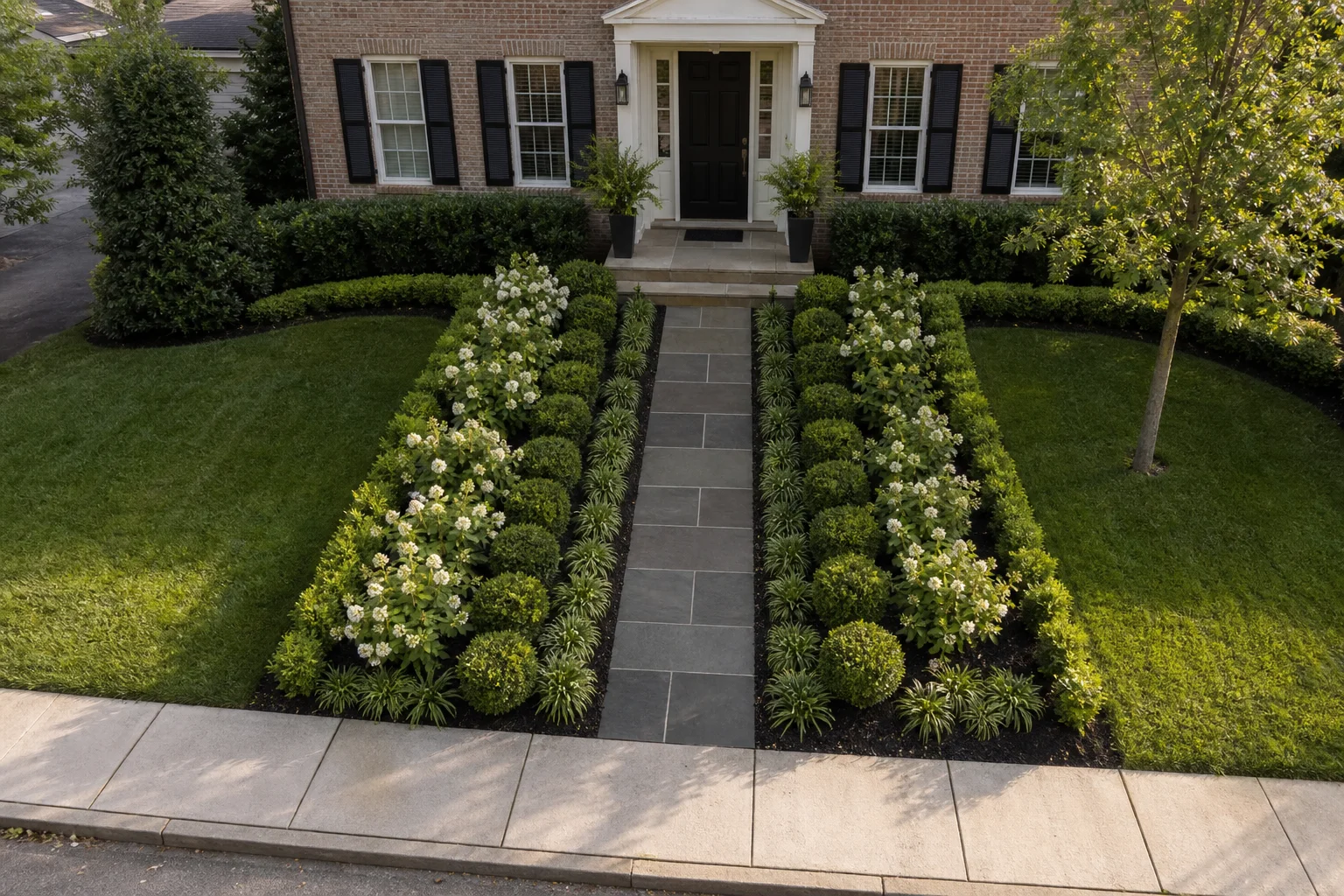
Formal design becomes easier when you reduce it to four moves that can be seen from the main approach. The is the main line that organizes the path or view.
- 1
Choose one governing axis
Use the walk to the door, the line from a window to a bench, or the center of a terrace. A small yard rarely needs more than one dominant line.
- 2
Repeat a module
Mirror or rhythmically repeat one structural shrub, one lower mass, and one seasonal accent. Repetition creates formality more reliably than ornate objects do.
- 3
Give the view an ending
Let the axis terminate at the front door, a seat, a specimen plant, or a simple container. The focal point should clarify the route rather than compete with it.
- 4
Decide how crisp the edges must stay
Clipped hedges create the strictest reading but require regular work. Naturally compact plants, repeated sedges, or a clean hard edge can hold the geometry with less pruning.
Choose the level of formality you can maintain
These are not separate plant palettes. They are different ways to distribute structure and softness.
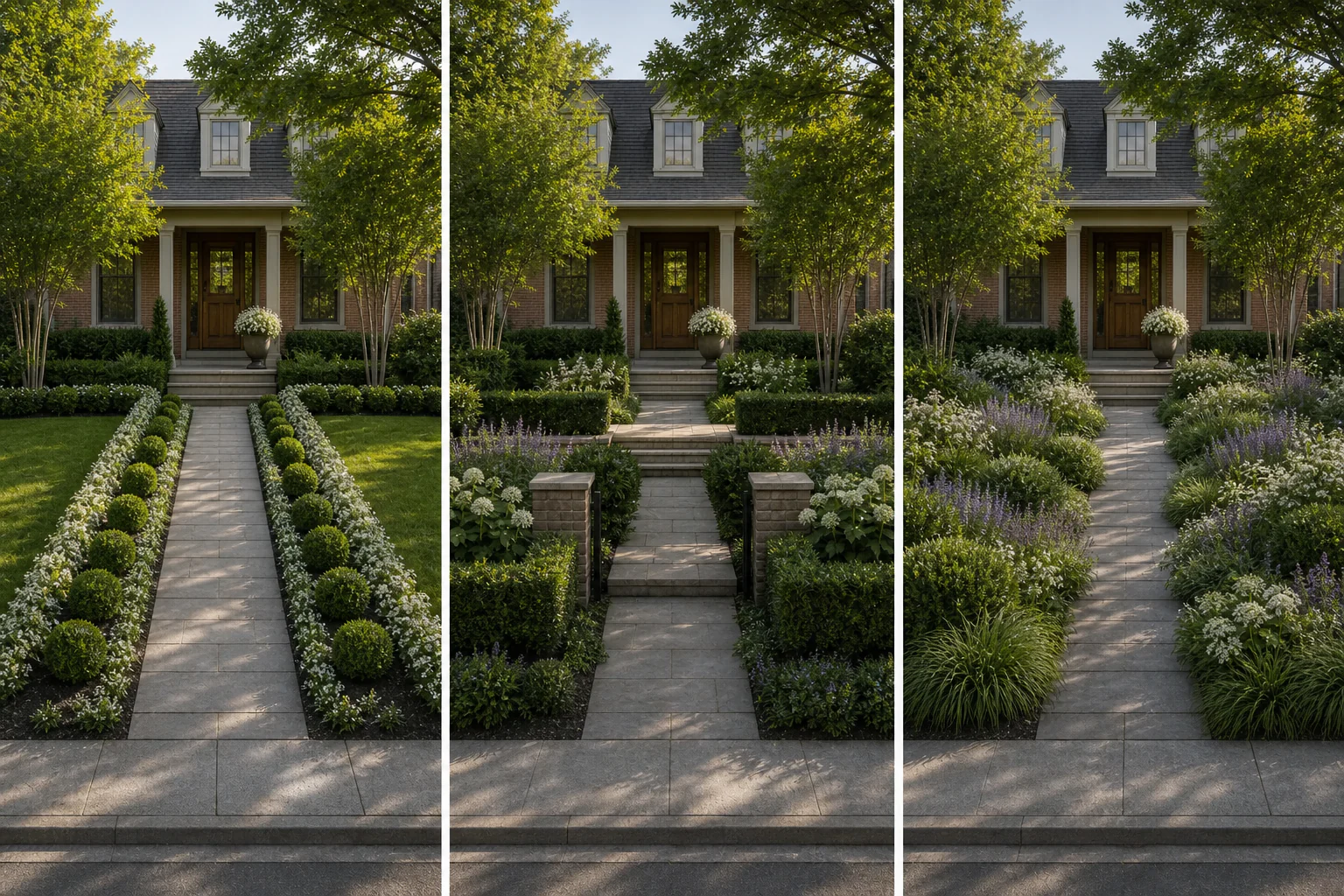
Crisp symmetry
- What creates the order
- A centered entry, terrace, or narrow courtyard with mirrored structure and a strong focal ending.
- Watch for
- The edges and repeated plants need consistent pruning or replacement to stay legible.
- Best first move
- Draw the centerline and mature outlines before buying anything.
Layered structure
- What creates the order
- A clear route with repeated shrubs, softer flowering bands, and enough depth to read as ordered rather than mirrored.
- Watch for
- Too many separate layers can turn a simple entry into several unrelated borders.
- Best first move
- Repeat the same structural plant through every planting band.
Relaxed formal
- What creates the order
- A clear framework of repeated shrubs or grasses filled with looser flowers and locally adapted plants.
- Watch for
- Without a strong edge or repeated backbone, the planting can drift toward an unrelated mixed border.
- Best first move
- Repeat one structural form through the whole view.
Sources: University of Florida IFAS Extension, Royal Horticultural Society
Build a four-role formal plant palette
Choose plants only after the geometry is clear. Keep the same roles, then translate the exact plants for your region and site.
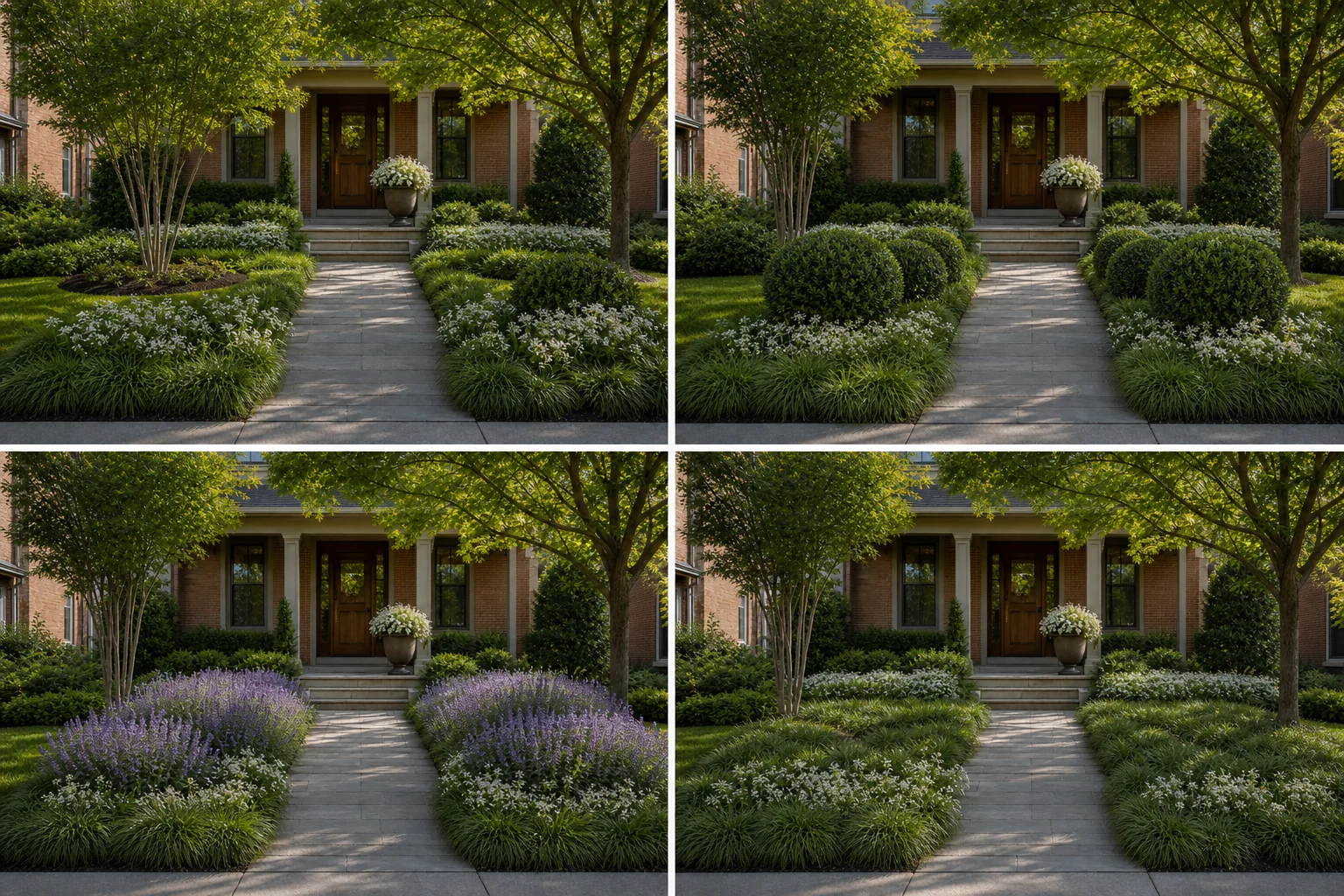
- Anchor
- Repeated structure
- Seasonal mass
- Ground layer
Mid-Atlantic example
A serviceberry-like small tree, compact evergreen structure, repeated Virginia-sweetspire-like shrubs, sedge-like ground plane, and a white fall-flowering accent can create regional formality without copying a European plant list.
Upper Midwest example
A hardy small tree, compact ninebark-like structure, repeated little-bluestem-like blocks, coneflower-like seasonal masses, and an aster-like late accent can hold a formal rhythm in colder sites.
Southeast example
A locally scaled magnolia- or redbud-like anchor, compact yaupon-like structure, oakleaf-hydrangea-like seasonal mass, and shade-tolerant sedge-like ground layer can translate the same composition.
These are role-based regional directions, not purchase lists. Confirm the exact plant or variety, mature size, pest pressure, and local invasive guidance before buying.
Use one strong formal gesture in a small front yard
A modest entry does not need a parterre. It needs one relationship that stays clear from the sidewalk.
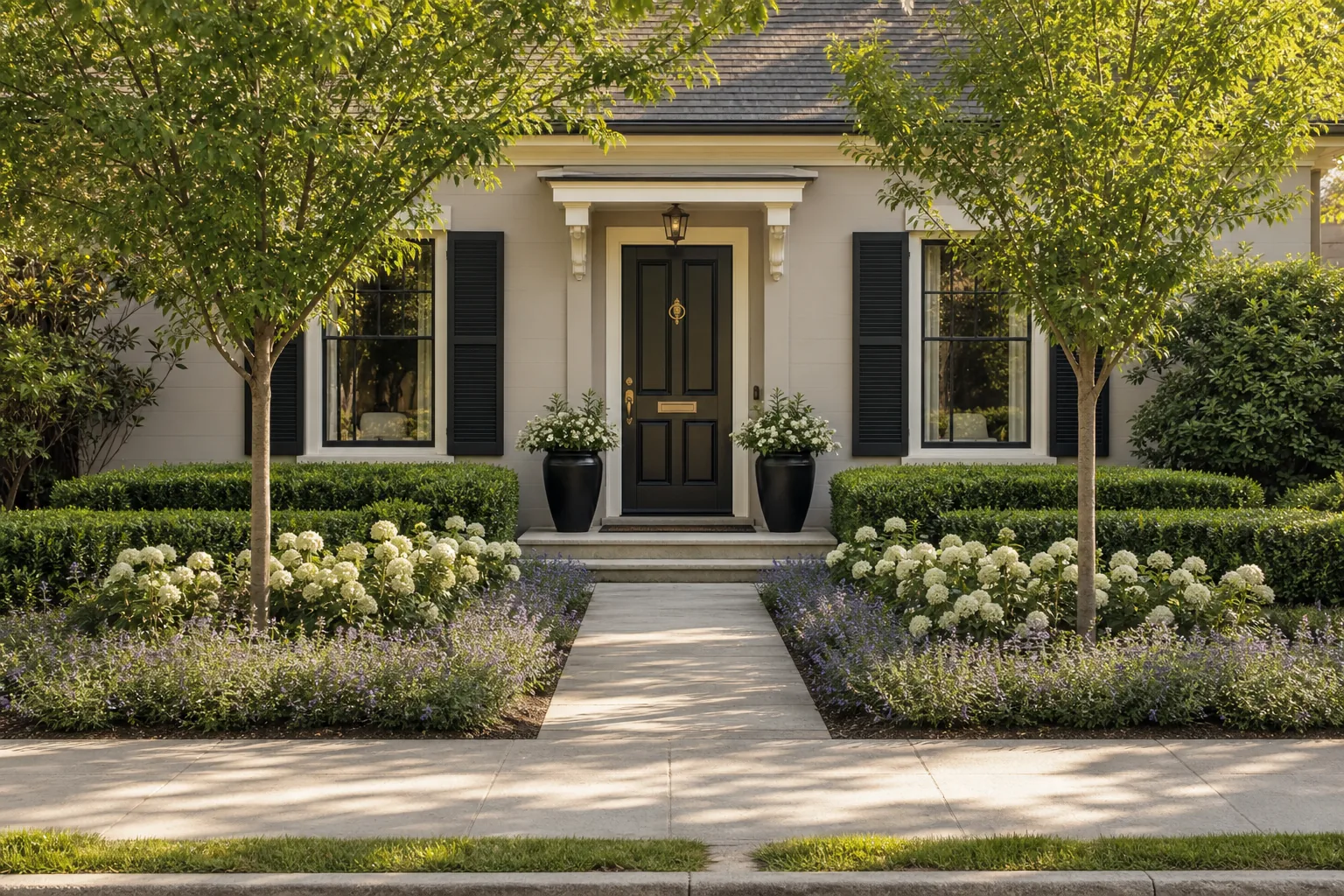
A centered walk with two planting bands
The front door is centered, the walk is direct, and the planting depth is limited on both sides.
- 1. Preserve the walk
- Keep the route wide and visually continuous from sidewalk to door.
- 2. Mirror the first mass
- Repeat one compact structural plant on both sides, drawn at mature width.
- 3. Repeat one soft layer
- Use the same low foliage or flowering mass along both edges instead of several small specimens.
- 4. End at the door
- Let the door, a pair of lights, or one simple container finish the axis.
If the centerline, repeated shapes, and focal ending read clearly, the garden will feel formal without more ornament.
Verify the maintenance and plant fit
The cleanest plan fails when its plants outgrow the module or its upkeep exceeds the time available.
Mature dimensions: Check the expected height and width of the exact plant variety, not the nursery pot.
Pruning reality: Decide which outlines must stay clipped and how often that work is realistic.
Regional health: Screen hedging plants for local pests, disease, invasiveness, and winter or heat stress.
Site fit: Verify light, drainage, soil, water, utilities, and clearance from walls and paths.
Boxwood, privet, yew, and similar traditional names are not universal defaults. Local conditions and current pest guidance should decide the exact structural plant.
Frequently asked questions
What makes a garden look formal?
A clear axis, repeated shapes, controlled edges, balance, and a focal ending create a formal reading. The plants themselves can be clipped or loose, native or nonnative, as long as they fit the site and repeat coherently.
Can a small yard have a formal garden?
Yes. Use one dominant line and one repeated planting module. A centered walk with two balanced masses often reads more clearly than a small yard divided into several ornamental rooms.
Does a formal garden need boxwood?
No. Boxwood is one traditional structural plant, but pest pressure, climate, and mature size may make another compact evergreen, grass, sedge, or clean hard edge a better local choice.
Can native plants work in a formal garden?
Yes. Style comes from arrangement. Locally suitable native plants can be grouped symmetrically, repeated in blocks, or kept within a clear edge to create formal order.
 Gardenful
Test the structure before you commit to the hedge.
Use a clear front-yard photo to compare a crisp or relaxed formal direction, then verify every exact plant for your site.
Gardenful for iPhone
Download the app free and start with a photo of your yard.

Sources(4)
- [1]Formal garden plants
Royal Horticultural Societyhttps://www.rhs.org.uk/garden-design/design-with-plants/formal-garden-plants
- [2]Basic Principles of Landscape Design
University of Florida IFAS Extensionhttps://ask.ifas.ufl.edu/publication/EP375
- [3]
- [4]Right Plant, Right Place
University of Florida IFAS Extensionhttps://ask.ifas.ufl.edu/publication/EP416