Backyard design ideas
5 ways to make your backyard feel more inviting
The short answer
If your backyard looks fine but you rarely sit outside, start with comfort. Give yourself a good place to sit, an easy way to reach it and shade when you need it. These five changes can make the space more welcoming while keeping room for play, pets or a quiet patch of lawn.
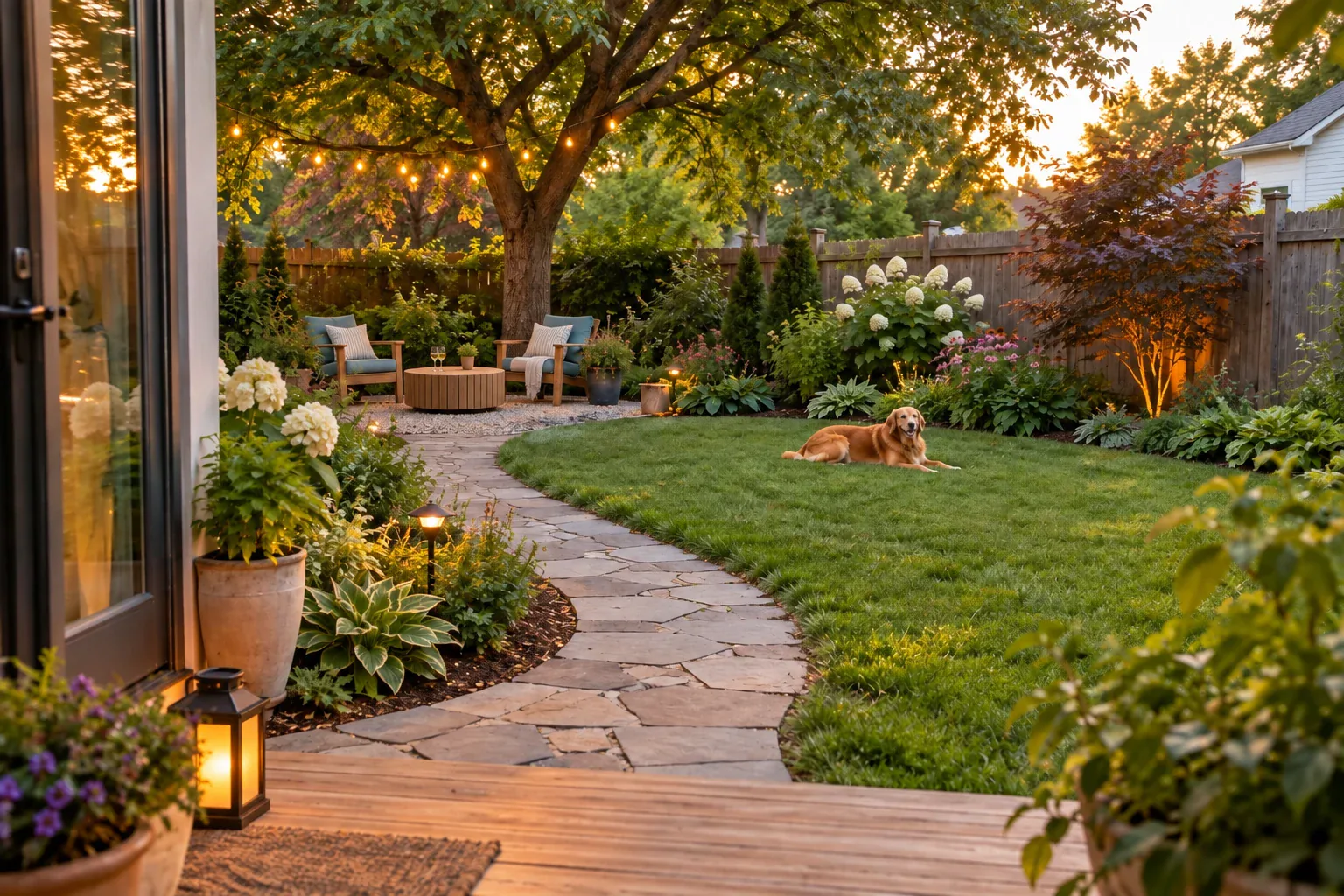
Five moves that make a backyard feel more inviting
Choose the ideas that fit how you want to use the yard: a quiet seat, room for friends, or somewhere to play. You don't need to add all five at once.
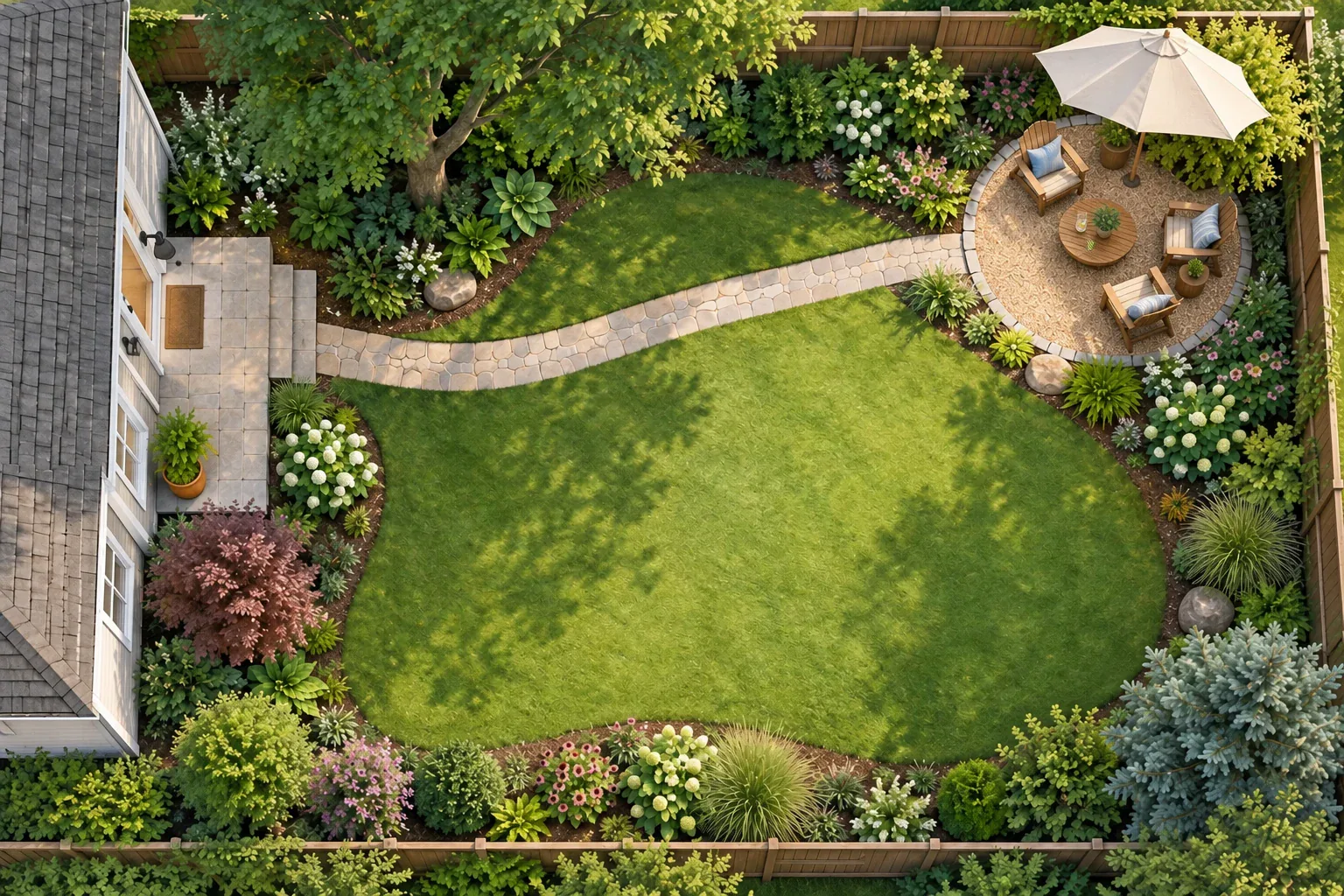
- 1
Create one destination
A reason to stay
Place a couple of chairs and a small table where you'd actually like to spend time. Try the furniture there before committing to a new patio, and leave enough room to pull a chair out.
- 2
Connect the destination to the house
An easy way to arrive
Make it easy to get there from the back door, with a path or a clear opening through the planting. Leave room for doors to open, and keep steps, drains and service access clear.
- 3
Add comfort before decoration
A space people can use
Visit the spot at the time you'll use it. Add an umbrella if it gets too hot, and keep a table within reach. For evenings, use low, shielded lights aimed at the route, with a timer or switch so they aren't on all night.
- 4
Layer the planting around the room
A room with a soft edge
Put taller shrubs near the fence and smaller plants beside the path. A planted edge can make a seating area feel sheltered without blocking the view or crowding the chairs.
- 5
Keep one area flexible
Space to adapt
Leave enough open lawn, patio, or clear ground for changing plans. The backyard feels more generous when every square foot does not have a fixed object on it.
Sources: University of Florida IFAS Extension, University of Florida IFAS Extension, University of Florida IFAS Extension, DarkSky International and Illuminating Engineering Society
Start with the reason you don't use the yard
Too hot in the afternoon? Nowhere to put a drink? An awkward trip across wet grass? Fix the thing that sends you back indoors before choosing more plants or decorations.
Decide what would bring you outside more often: morning coffee, dinner with friends or a quiet place to read. Put that activity where it will be comfortable, then plan the planting around it.5,2
Then draw the route from the door or the place people enter. A path can be direct, gently angled, or implied by planting and paving, but it should not force people through a wet bed, narrow pinch point, or maintenance zone.4,2
Finally, decide what should stay open. Lawn, patio, or a clear central area can be the flexible space that keeps the backyard useful between the more defined rooms.5,3
Work through a backyard that feels unused
Suppose you have a broad lawn and an empty corner by the back fence. You'd like to sit there after dinner, but there's no comfortable seat or dry way to reach it.
Turn an empty corner into a place to sit
The goal is a comfortable outdoor room without losing the open lawn that makes the yard useful for everyday life.
- 1
Choose a comfortable spot for the chairs
Choose the sunny or shaded corner based on the activity, furniture footprint, access, and the time of day people will use it.
- 2
Make the route visible from the door
Use a simple path or repeated planting edge so the destination reads as connected rather than stranded beyond the lawn.
- 3
Frame the boundary, not the whole center
Layer plants along the fence or side edge to give the room a backdrop while preserving the open middle for pets, play, or changing furniture.
- 4
Plan care at the same time
Group plants by water need, keep hose or irrigation access realistic, and choose an amount of pruning and cleanup you will actually maintain.
Finish the seat and path first. Add planting around the corner, leaving the middle of the lawn open for play.
Keep the inviting idea livable
The backyard should feel good on an ordinary weeknight, not only in the finished image. Check the practical conditions before expanding the plan.
Match plants to water and light: Group plants with similar needs and do not assume one irrigation pattern will suit every zone.
Keep routes and service access open: Preserve gates, hose access, mower paths, drainage routes, and the clearances furniture needs.
Make the destination comfortable at the right time: Observe sun, wind, glare, mosquitoes, privacy, and the direction of the view before fixing the seat or table.
Phase the work: Finish the destination and route first, then add planting layers or lighting once you understand how the space is used.
A welcoming backyard has room for real life: people, pets, tools, weather, and plans that change.
Frequently asked questions
How do I make my backyard feel more inviting?
Start with one reason to stay, connect it to the house with a clear route, add comfort such as shade or lighting, frame the space with layered planting, and keep one area open for flexible use.
Should a backyard have an outdoor room?
An outdoor room can make a large or unused backyard easier to use, but it can be informal. A seat, table, planted edge, and route may define the room without a wall or major construction.
What makes a backyard feel welcoming instead of empty?
A couple of comfortable chairs can make an empty corner feel useful. Add a clear path and planting behind the seats to make the spot feel sheltered. Leave enough open space for the things you already do in the yard.
How can I make a backyard inviting on a budget?
Finish one destination and its route first. Reuse sound hardscape, add a small seat or table, improve the planting edge, and phase shade, lighting, or larger work instead of starting everywhere at once.
Can Gardenful help me plan an inviting backyard?
Yes. Use a photo of the patio or corner you want to improve, and Gardenful can show you how new planting could make it feel greener and more inviting. The design includes suggested plant names and quantities, so you have more than a picture when you're ready to shop.
 Gardenful
Make room for the way you want to spend time outside.
Picture a greener patio or a cozy corner for morning coffee. Add a photo in Gardenful to see a planting design for that spot, with suggested plants to make it your own.
Gardenful for iPhone
Download the app free and start with a photo of your yard.

Landscape planning sources(5)
The layout, plant, and water guidance is grounded in university extension and public water guidance reviewed September 10, 2026.
- [1]Five Principles for Responsible Outdoor Lighting
DarkSky International and Illuminating Engineering Societyhttps://darksky.org/resources/guides-and-how-tos/lighting-principles/
- [2]Landscape Design: Ten Important Things to Consider
University of Florida IFAS Extensionhttps://edis.ifas.ufl.edu/publication/EP375
- [3]Landscape Planning
University of Maryland Extensionhttps://extension.umd.edu/resource/landscape-planning
- [4]Drawing a Landscape Plan: The Base Map
University of Florida IFAS Extensionhttps://ask.ifas.ufl.edu/publication/EP456
- [5]Landscape Design: Arranging Plants in the Landscape
University of Florida IFAS Extensionhttps://ask.ifas.ufl.edu/publication/EP449