Whole front yard planning
Front yard landscaping ideas for a complete, connected yard
The short answer
A front yard feels complete when its entrance, open ground, planting, and property edges read as one place. Plan those parts as a connected system. Keep the walk to the door obvious, decide what the open ground needs to do, connect the foundation, driveway, curb, and property edges, then repeat a small set of plant roles across the whole frontage. Choose exact plants only after the layout fits the site's light, water, roots, utilities, and maintenance.
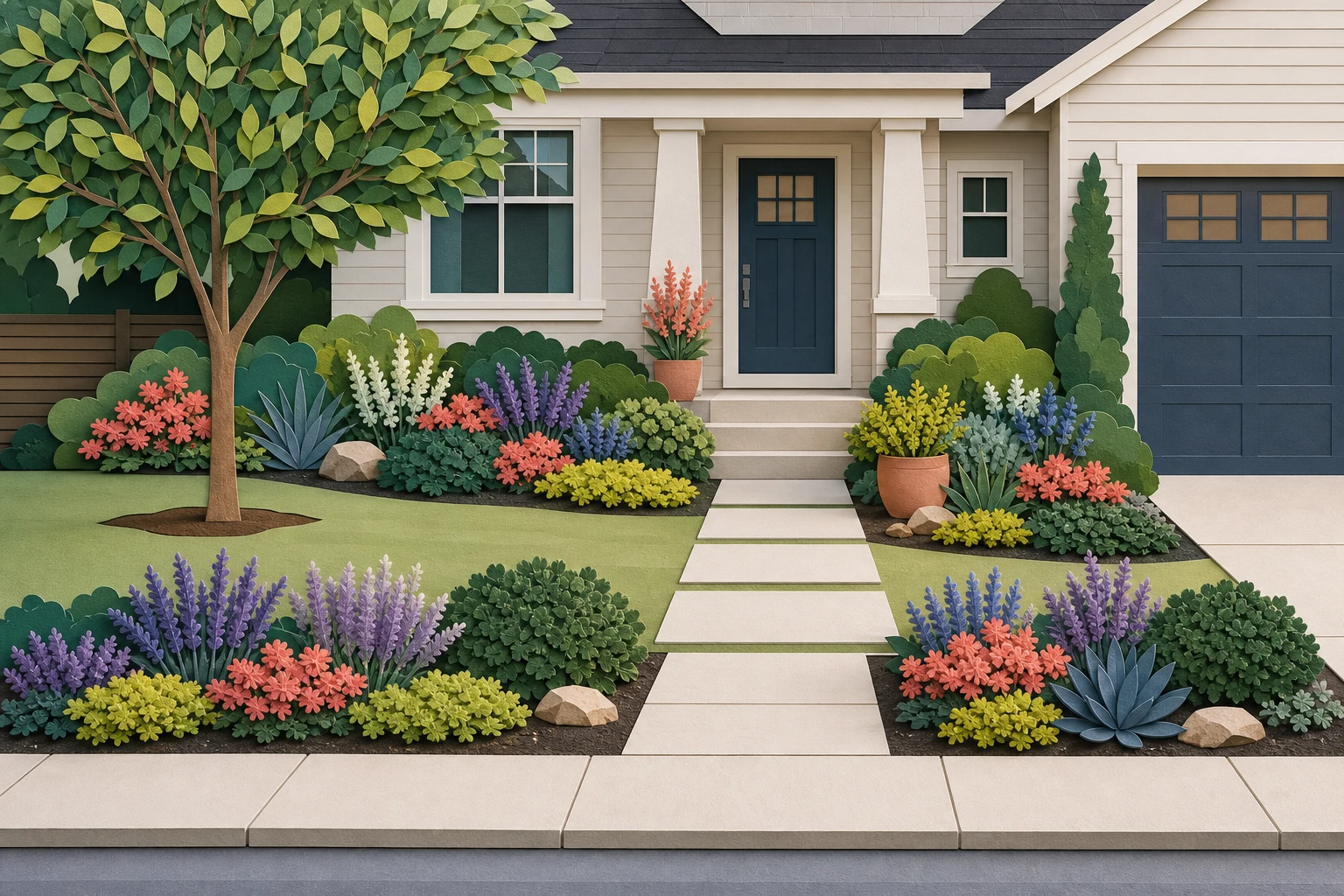
Read the whole frontage before improving one bed
A beautiful foundation bed can still feel disconnected when the driveway, tree, curb, and route to the door tell four different stories.
Stand at the curb, driveway, and front door. From each point, record what stays: doors, windows, steps, walks, driveway, healthy trees, utilities, downspouts, slopes, property edges, and the places people cross every day. UGA Extension recommends putting site observations on a base map so the design responds to the site instead of fighting it.1
Write one job beside each major area. The entrance may need to become easier to find. Open ground may need to support play, absorb rain, preserve a tree, or simply give the house breathing room. A narrow strip beside the driveway may need car-door clearance rather than more flowers.
Then choose one main viewpoint. The curb usually controls the broad composition, but a corner lot, side entry, or daily driveway arrival may make another view equally important.
Choose one whole-yard direction before collecting ideas
These four directions solve different site and lifestyle problems. Pick the one whose structure fits the yard, then adapt its plants locally.
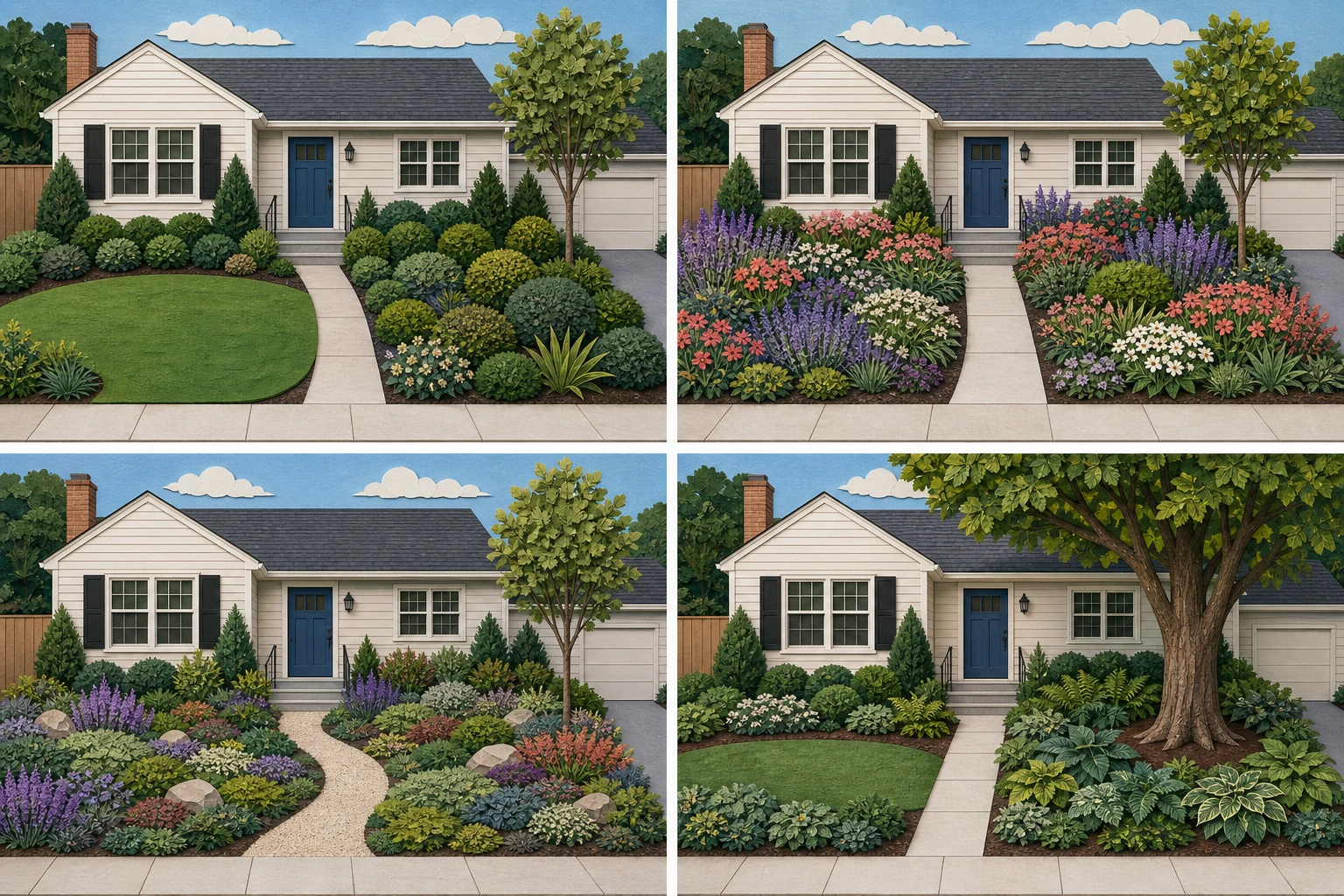
Structured and lower care
Best when the yard needs calm structure
Keep one clean open shape, repeat broad shrub or foliage masses, and use flowers as a smaller accent. This direction works when predictable edges and fewer recurring decisions matter most.
Flower-forward
Best when seasonal color is the priority
Keep the route and permanent green structure legible, then build generous flowering groups around them. Plan bloom succession so the frontage does not depend on one short peak.
No-lawn path garden
Best when lawn has no useful role
Replace the lawn's jobs, not just the grass. Provide a comfortable route, living ground coverage, access for maintenance, and enough open space that the entrance still reads from the street.
Shade under an existing tree
Best when a healthy tree already organizes the frontage
Protect the trunk flare and roots, keep grade changes modest, and use broad shade-tolerant layers outside the busiest root zone. Let the tree remain the yard's main structure.
Connect the curb, driveway, door, and planting beds
The zones have different constraints, but repetition and one clear route make them belong together.
Solve the fixed interfaces first, then carry the same plant structure across the remaining ground.
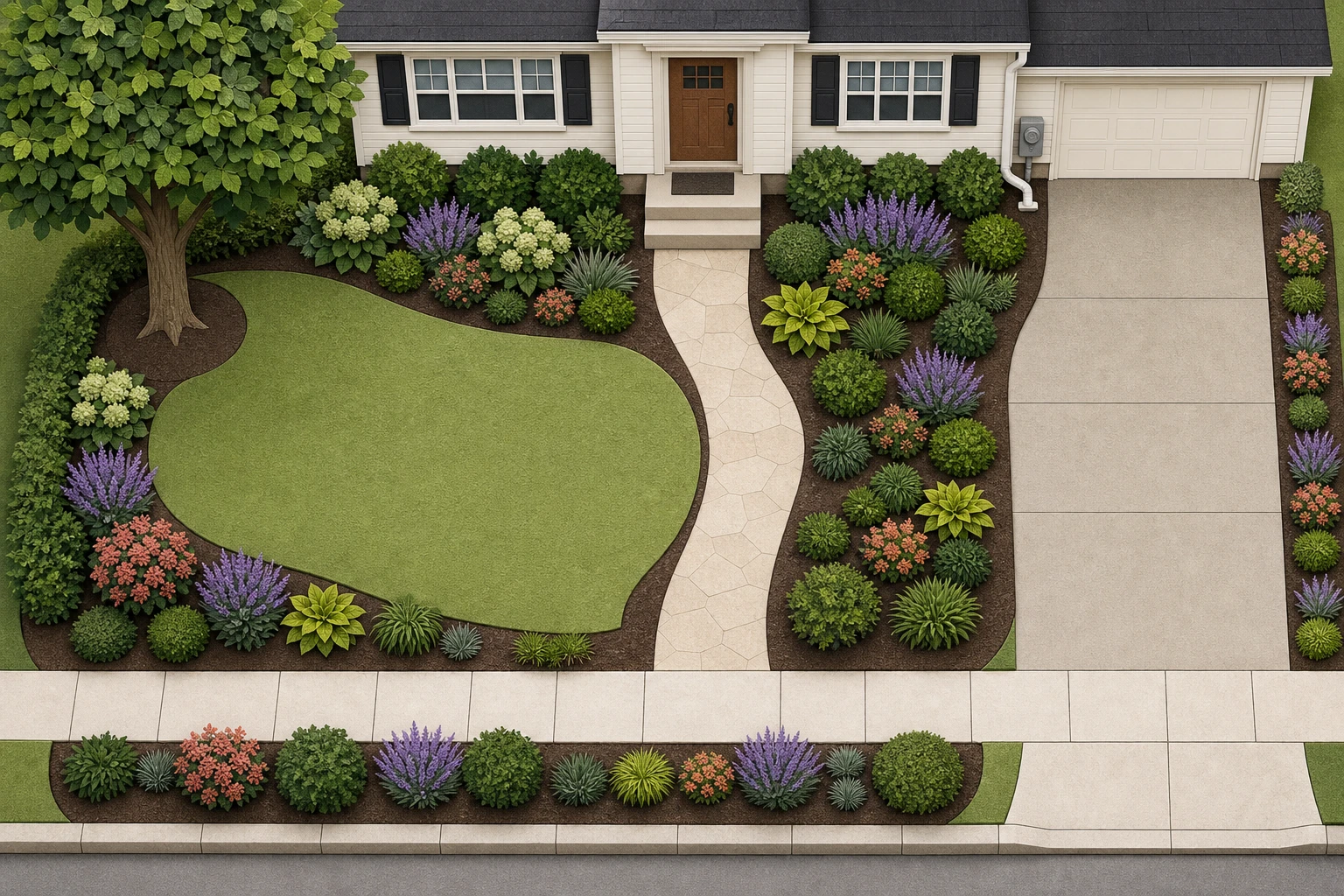
- 1
Entrance route
Organizes arrival
Keep the front door visible and the walking surface continuous. Use planting to reinforce the route rather than make visitors guess between openings.
- 2
House edge
Protects the building interface
Leave room for windows, steps, meters, downspouts, vents, and maintenance. Use mature plant size, not nursery size, to set the planting envelope.
- 3
Open ground
Provides breathing room
Give the open shape a job such as play, visual rest, flexible use, or water-smart lawn. Do not fill it only because empty ground feels unfinished.
- 4
Existing tree
Sets the largest living structure
Preserve a healthy tree's roots, trunk flare, and long-term canopy. Let its shade and mature scale guide the planting beneath and around it.
- 5
Driveway edge
Handles the hardest working edge
Protect car doors, sightlines, snow or bin access, and the places people step out. Repeat tough low planting only where daily use leaves room.
- 6
Sidewalk and curb
Finishes the street edge responsibly
Check public right-of-way rules, visibility, salt, reflected heat, utilities, and maintenance access before treating this strip like an ordinary flower bed.
Sources: University of Florida IFAS Extension, University of Georgia Cooperative Extension
Repeat the same plant roles across separate beds
A short role-based palette is easier to repeat across separate beds than a long list of unrelated favorites.
- 1
One main structure
Use the existing tree, a small locally suitable tree, or a restrained group of large shrubs to establish the yard's long-term scale.
- 2
A repeated middle layer
Carry one or two shrub or durable foliage forms across the foundation, entrance, or driveway beds so the frontage reads as one garden.
- 3
A seasonal flowering mass
Repeat one main flower family in groups large enough to read from the street. Add succession without turning every month into a different palette.
- 4
A low connecting layer
Use locally suitable ground-covering plants, a simple edge, or mulch to connect the soil plane and reduce scattered gaps.
Choose exact plants after checking local light, soil, water, winter conditions, mature size, invasive status, pets, and fire guidance where relevant.
Install the yard in a useful order
You do not need to finish every bed at once. You do need one plan that keeps each phase from contradicting the next.
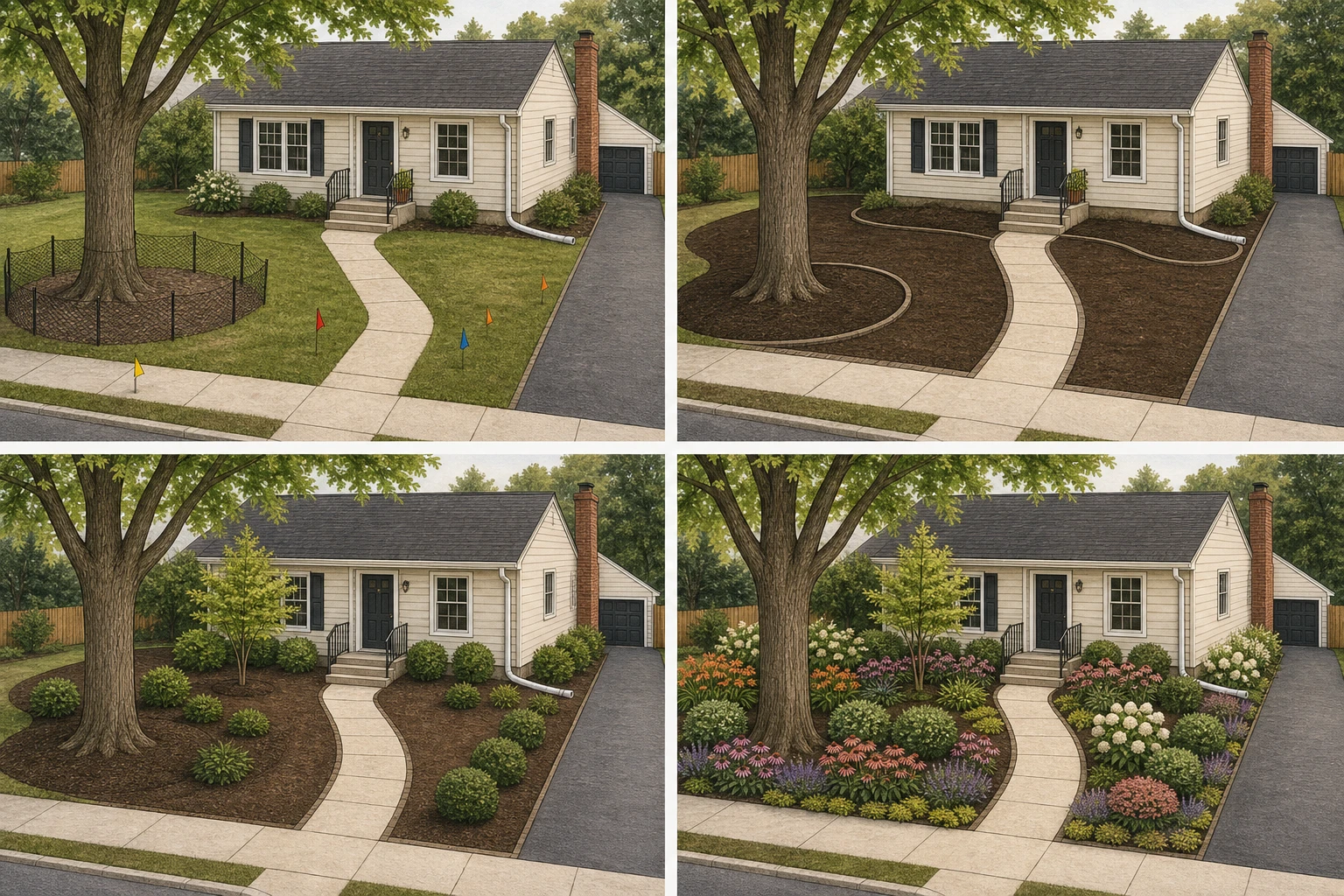
1
Protect what stays
Mark tree roots, utilities, drainage paths, access, and healthy plants before demolition or soil work.
2
Fix routes and major edges
Resolve the front walk, driveway access, bed boundaries, and any professional drainage or grading work before delicate planting.
3
Install long-term structure
Place trees and larger shrubs with mature room, then establish the repeated middle layer.
4
Fill and refine
Add flowering groups and the low connecting layer. Mulch open soil and leave room for the plants to reach mature size.
Check the plan before digging or buying
Front yards touch the house, street, utilities, neighbors, and public rules. Treat those boundaries as design inputs.
The entrance remains obvious: Check the yard from the curb, driveway, and sidewalk. The door and route should remain visible after plants mature.
House and service access remain open: Keep windows, steps, handrails, meters, vents, downspouts, gates, and maintenance routes clear.
Water has a safe destination: Observe rain before changing grades or directing downspouts. Bring in qualified local help for drainage or grading work.
Utilities and rules are confirmed: Contact 811 before digging in the U.S. and check property lines, easements, right-of-way rules, sightline requirements, and HOA restrictions.
The plant list fits the actual site: Confirm mature size, sun, soil, water, local climate, invasive status, and establishment care with regional sources or a knowledgeable local nursery.
Frequently asked questions
How do I start landscaping my front yard?
Map what stays, make the route to the front door clear, decide what the open ground needs to do, and choose one whole-yard direction. Add individual plants only after the layout fits the site's light, water, roots, utilities, and maintenance.
What makes a front yard look professionally planned?
A clear entrance, a small repeated plant palette, mature-scale spacing, connected bed shapes, and deliberate open ground usually matter more than the number of plant varieties.
Should every front yard have a lawn?
No. Keep lawn where it has a useful job and fits local water and maintenance goals. If it has no job, replace its functions with a comfortable route, living coverage, usable open space, and maintenance access.
How can I landscape the front yard in phases?
Make one complete plan, protect existing assets, resolve routes and major edges first, install long-term structure next, and fill flowering or ground layers as the budget allows.
 Gardenful
Turn the complete frontage into one plan.
Photograph the house from the curb, include the door, walk, driveway, tree, and open ground, then use Gardenful to compare a planting direction before checking every plant and site constraint locally.
Gardenful for iPhone
Download the app free and start with a photo of your yard.

Sources(4)
- [1]Drawing a Landscape Plan: Site Analysis
University of Georgia Cooperative Extensionhttps://extension.uga.edu/publications/detail.html?number=C1032-4&title=drawing-a-landscape-plan-site-analysis
- [2]Landscape Design: Ten Important Things to Consider
University of Florida IFAS Extensionhttps://ask.ifas.ufl.edu/publication/ep375
- [3]Landscaping Tips
U.S. Environmental Protection Agency WaterSensehttps://www.epa.gov/watersense/landscaping-tips
- [4]