House-style landscape design
4 ways to make your landscaping fit your house without starting over
The short answer
Does your garden feel disconnected from the house? You may not need a different style or a new set of plants. Try simplifying a bed edge, repeating a material you already have, grouping similar plants or opening up a view of the porch. These four changes work with an existing yard, one area at a time.
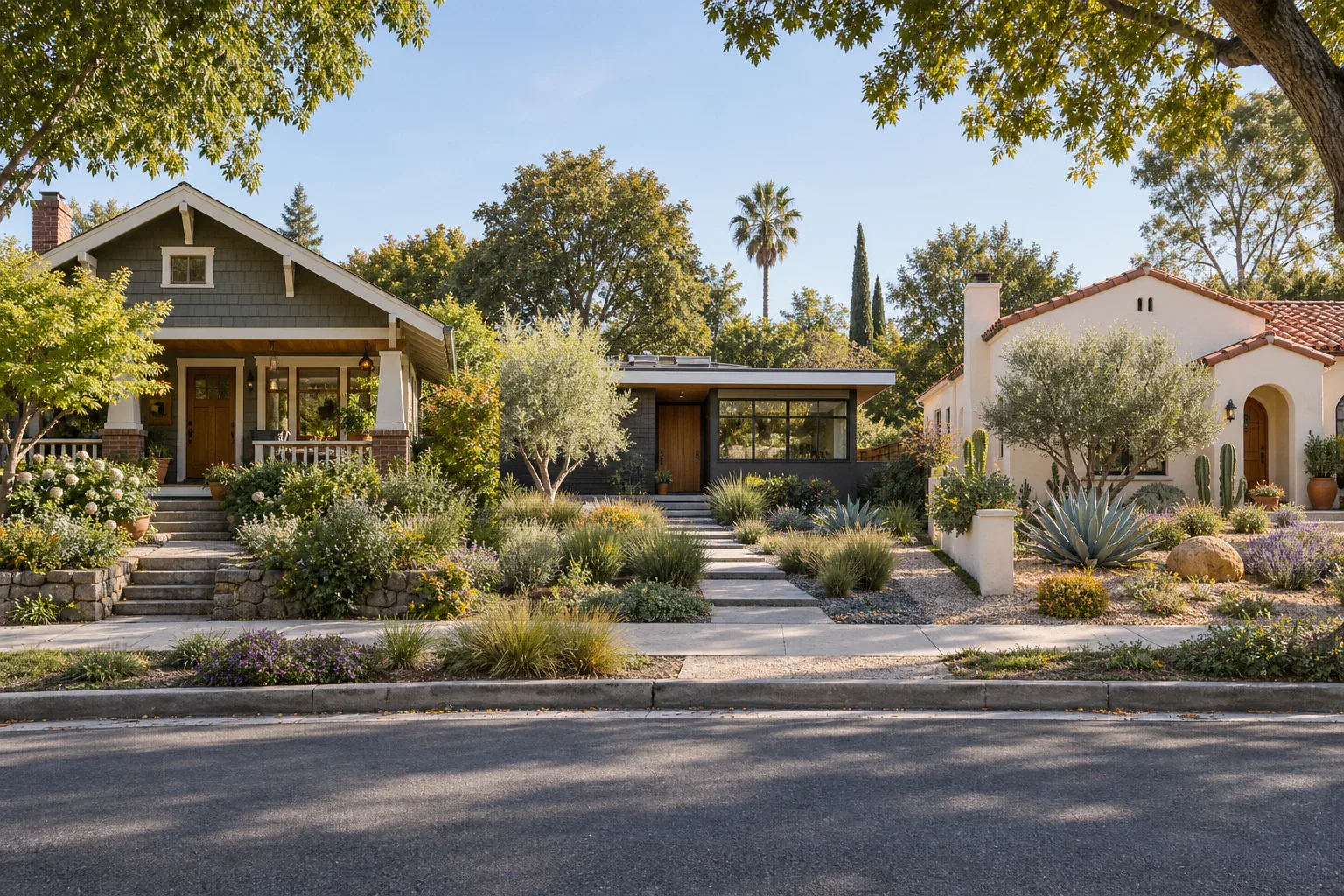
Four small changes that connect house and garden
Pick the mismatch you notice most. You can test these ideas with a photo, a hose laid on the ground or pots you already own before buying plants.
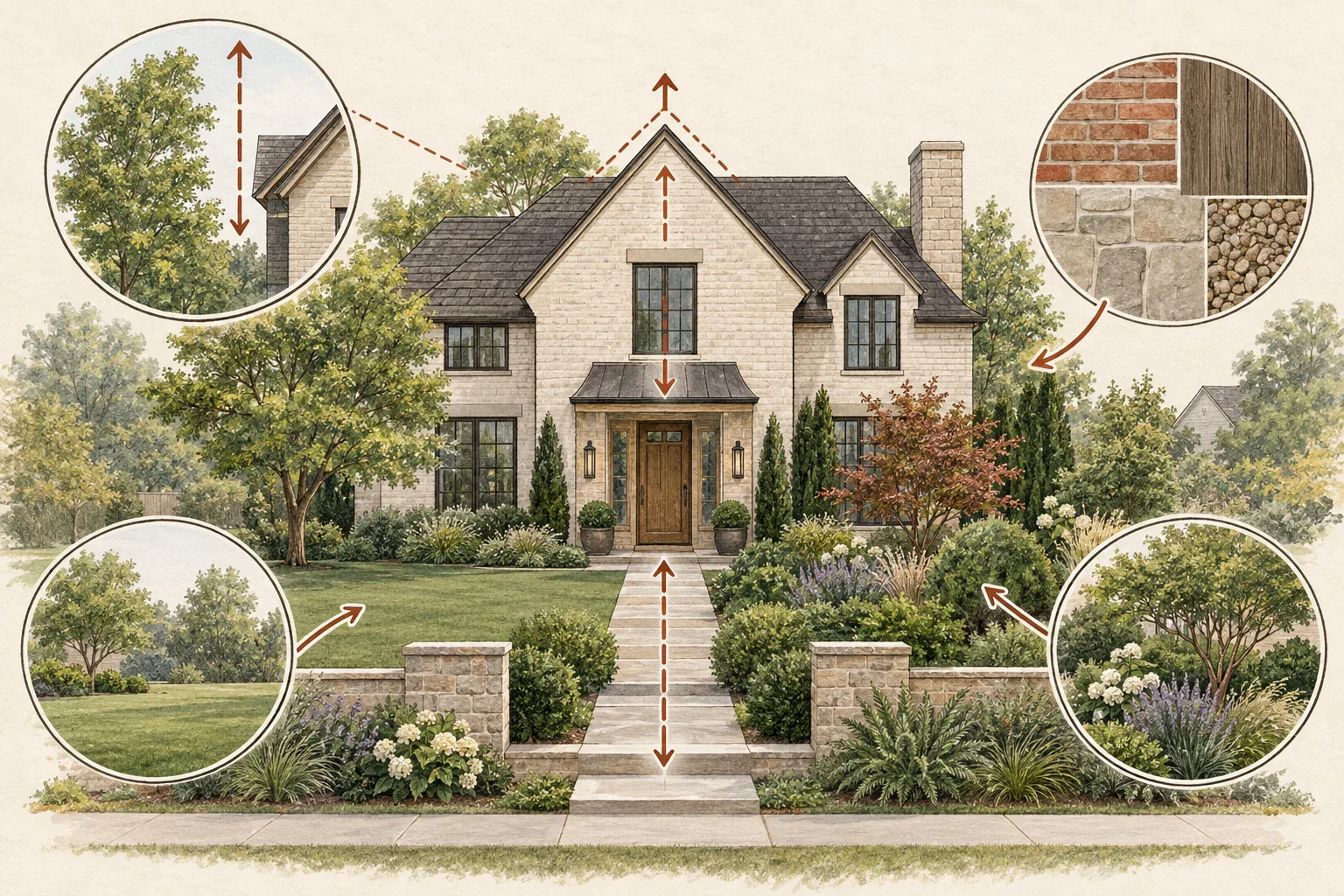
- 1
Simplify one bed edge
One shape that relates to the house
If the porch and path are straight but the bed has lots of little curves, try one cleaner line. Lay a hose or rope on the ground first. Keep drainage, access and existing roots in mind before changing the edge.
- 2
Repeat one material or color
A connection without matching everything
Try a pot that picks up the warmth of the brick, or edging that relates to the stone steps. You don't need to replace sound paving. One repeated material can connect the garden to the entrance.
- 3
Repeat a plant shape you like
A calmer planting pattern
If the bed feels like a collection of unrelated purchases, repeat a low rounded shrub or a soft foliage clump in a few places. Choose plants that suit each spot; the shape can repeat even when the species changes with the light.
- 4
Leave a view open
Room to see the house
Keep a patch of lawn, a view of the porch or a clear area below a window. Not every gap needs a plant. If shrubs keep swallowing the windows, consider a smaller-maturing replacement instead of committing to constant pruning.
Sources: University of Florida IFAS Extension, University of Florida IFAS Extension, University of Florida IFAS Extension, University of Maryland Extension
Borrow a detail you already like
You don't have to identify the house's architectural style first. Start with a detail you like: a straight porch edge, warm brick, stone steps or the spacing of the windows. Repeat that idea once in the garden.
Begin with the view from the street and the view from the front door. A landscape can make a tall facade feel grounded, reinforce a low horizontal line, frame an entry, or create a transition where the house meets the yard.1,3
Notice materials and colors, but do not match them literally. A repeated edge material, foliage texture, or restrained color family can connect the landscape to the house without turning the yard into a catalog of copies.1,5
House style never overrides site fit. A plant that looks right in a reference photo still needs the right light, water, soil, mature space, and maintenance level in your yard.4,2
Try the idea on one existing bed
For a bed beside a brick porch, your plan might be: straighten one fussy edge, move a terracotta pot nearer the steps, repeat a low shrub and keep the window clear. You don't need to do all four this weekend.
- 1
Mark what stays
A small, specific starting area
Keep sound paving, healthy established plants and the route to the door. Draw your proposed change on a copy of the photo.
- 2
Use what you have first
A low-cost test
Move an existing pot or temporarily mark the new bed line. Look from the street and the porch before buying materials.
- 3
Check the growing space
Plants chosen for both appearance and fit
Measure the available bed depth and note the sunlight. Choose the mature plant size that fits, then look for the form you want.
- 4
Stop after the useful change
A refresh you can keep up with
Finish one bed and live with it for a while. Extend the pattern only if the new area is easier to enjoy and maintain.
Sources: University of Florida IFAS Extension, University of Florida IFAS Extension, University of Florida IFAS Extension
Check style against the real site
Before buying, check that the plants you like will fit the bed and grow in its light and soil.
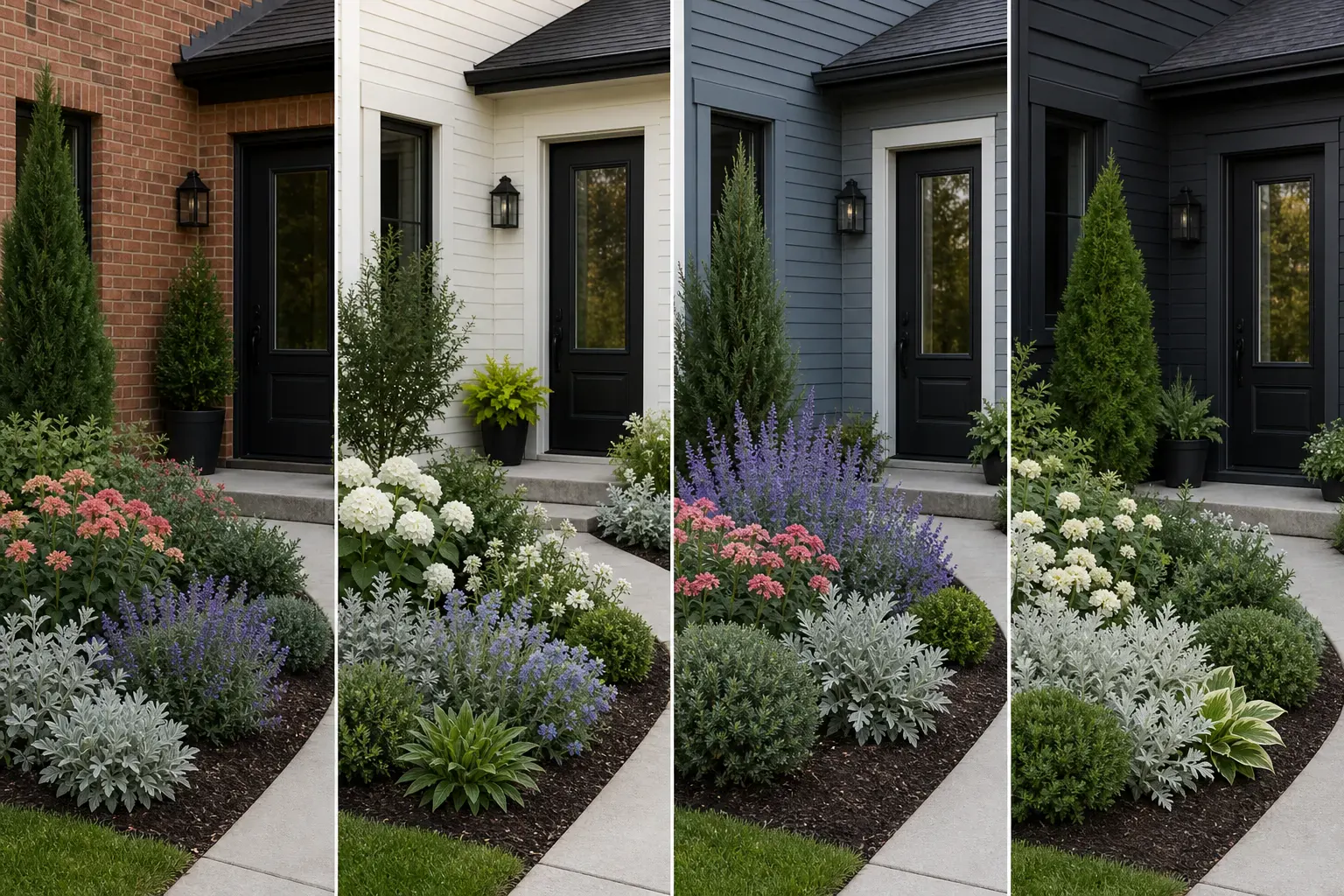
Check light, soil, moisture, and mature size: The right style plant in the wrong place is still the wrong plant.
Check the entry and windows: Keep doors and windows clear, and leave room to walk, open windows and maintain the house.
Choose a look you can keep up with: A formal or heavily layered look can require more pruning, cleanup, irrigation, and replacement than the reference suggests.
Finish one area first: Finish the bed beside the porch or patio before carrying the same planting into another part of the yard.
A house-style landscape feels convincing when it belongs to the architecture and the climate at the same time.
Frequently asked questions
Should landscaping match the style of my house?
It should relate to the house, but it does not need to be a literal theme. Echoing line, scale, material, and planting rhythm usually creates a stronger connection than copying a historical plant list.
What is the smallest change that can make landscaping fit a house better?
Choose one visible connection: repeat a color from the house in a pot, simplify a bed edge to echo the path, or repeat an existing plant near the entrance. Try one change before replacing healthy planting.
Should I change the bed shape or the plants first?
Look at the outline first. If the bed crowds a path or feels disconnected from the house, test a new edge with a hose or rope. If the outline already works, repeating or regrouping plants may be enough.
How can I test a landscaping change before buying plants?
Lay out a proposed edge with a hose or rope, or move existing pots into the places you want to fill. View it from the street and front door. Check walking space and the mature size of any new plants before buying.
Can Gardenful show me planting that suits my house?
Yes. Start with a photo that includes your house and the bed you want to change. Tell Gardenful the look you like, then see a realistic planting design beside your own porch, walls and windows. Suggested plant names and quantities help you decide what to look for at the nursery.
 Gardenful
See planting that feels at home beside your house.
You don't have to know which plants will bring it together. Add your yard photo and style preferences in Gardenful to see a design, complete with suggested plants.
Gardenful for iPhone
Download the app free and start with a photo of your yard.

Landscape and planting sources(5)
The design principles and site-fit guidance are grounded in university extension sources reviewed September 10, 2026.
- [1]Landscape Design: Ten Important Things to Consider
University of Florida IFAS Extensionhttps://edis.ifas.ufl.edu/publication/EP375
- [2]Landscape Planning
University of Maryland Extensionhttps://extension.umd.edu/resource/landscape-planning
- [3]Drawing a Landscape Plan: The Base Map
University of Florida IFAS Extensionhttps://ask.ifas.ufl.edu/publication/EP456
- [4]Right Plant, Right Place
University of Florida IFAS Extensionhttps://ask.ifas.ufl.edu/publication/EP416
- [5]Landscape Design: Arranging Plants in the Landscape
University of Florida IFAS Extensionhttps://ask.ifas.ufl.edu/publication/EP449