Gardenful field guide
How to landscape around utilities and air conditioners
The short answer
Utilities can be softened from view only after their airflow, clearance, and service routes are protected. Follow the equipment manual, keep a direct path to every meter and shutoff, and contact 811 before digging. Then place a few plants off to one side, where they block the view from the patio without surrounding the equipment.
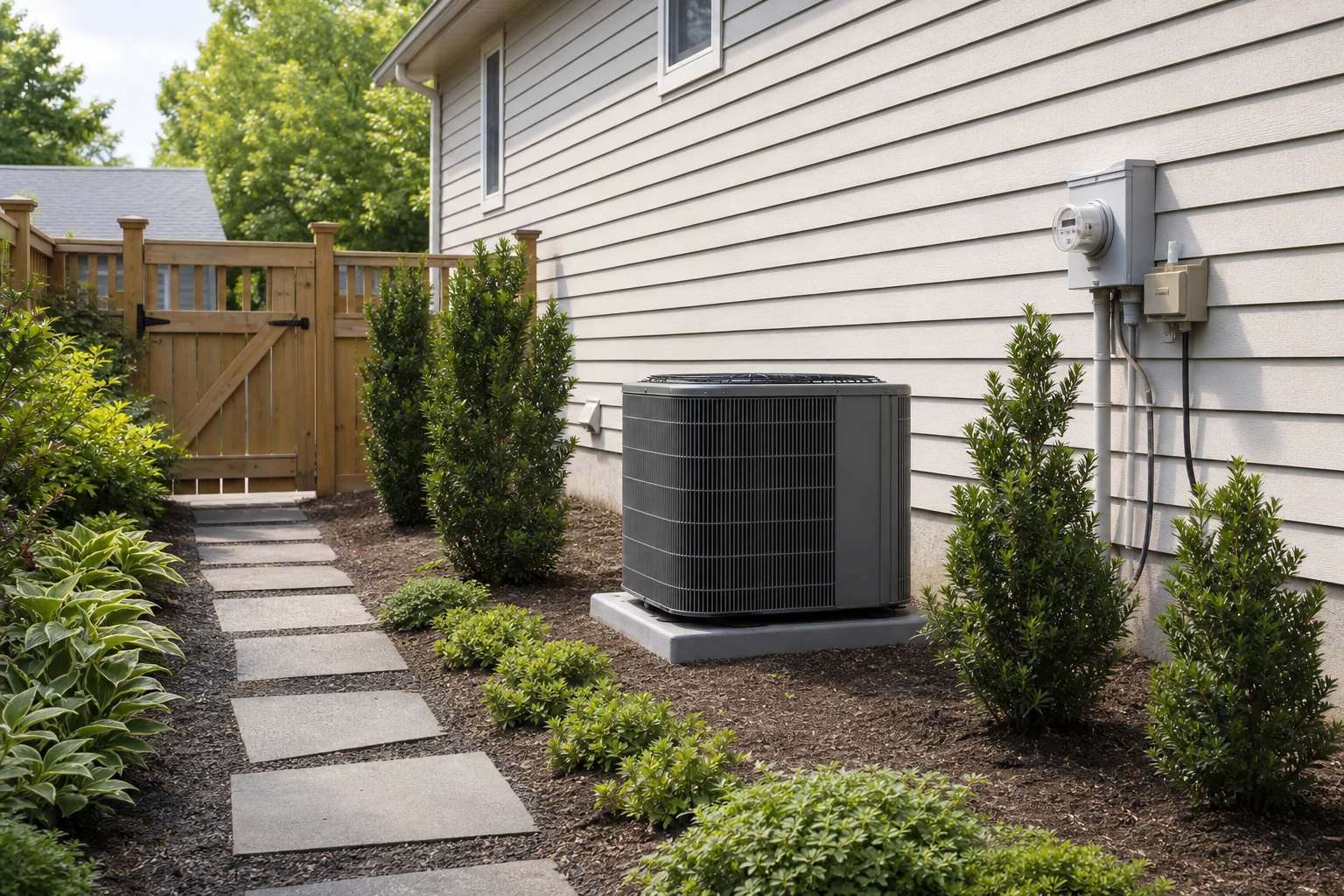
Draw the no-plant zones first
Before adding plants, mark the space the equipment and service technician need.
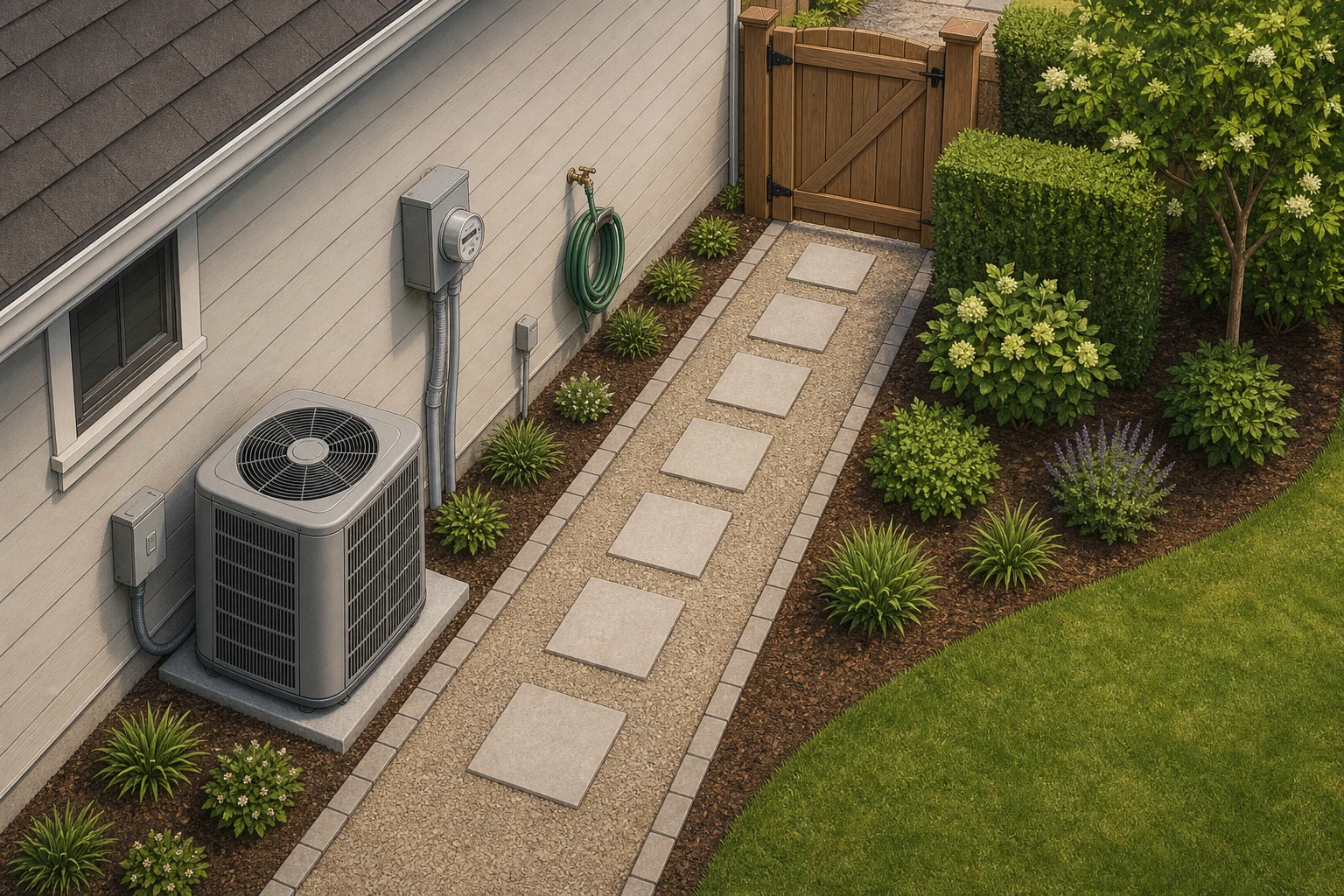
- 1
Read the equipment manual
Use the condenser or heat-pump manufacturer's airflow and service clearances; they differ by unit.
- 2
Keep a direct service route
A technician should be able to reach the unit, meter, shutoff, hose, and panel without pushing through shrubs.
- 3
Mark the building openings
Keep windows, dryer and foundation vents, exhausts, and drainage paths open.
- 4
Locate buried utilities
Contact 811 before any digging and follow the instructions for the marked site.
Screen the view instead of enclosing the equipment
The useful question is where the equipment is visible from, not how completely it can be hidden.
| Pattern | What it does | Watch for |
|---|---|---|
| PatternOffset plant pocket | What it doesBlocks one patio or window sightline while leaving the service side open. | Watch forA shrub that is small at purchase may fill the route later.Best checkDraw mature width, then add working clearance. |
| PatternLow repeated edge | What it doesSoftens a broad utility wall without hiding meters or vents. | Watch forTall flowers may still flop into access during the season.Best checkCheck mature height, spread, and winter form. |
| PatternFreestanding screen outside the zone | What it doesProvides visual separation where planting would interfere with roots or service. | Watch forMay require permits, footings, wind design, or utility approval.Best checkConfirm local rules and access before construction. |
Keep one side yard practical and planted
This example treats the service route as part of the design rather than leftover space.
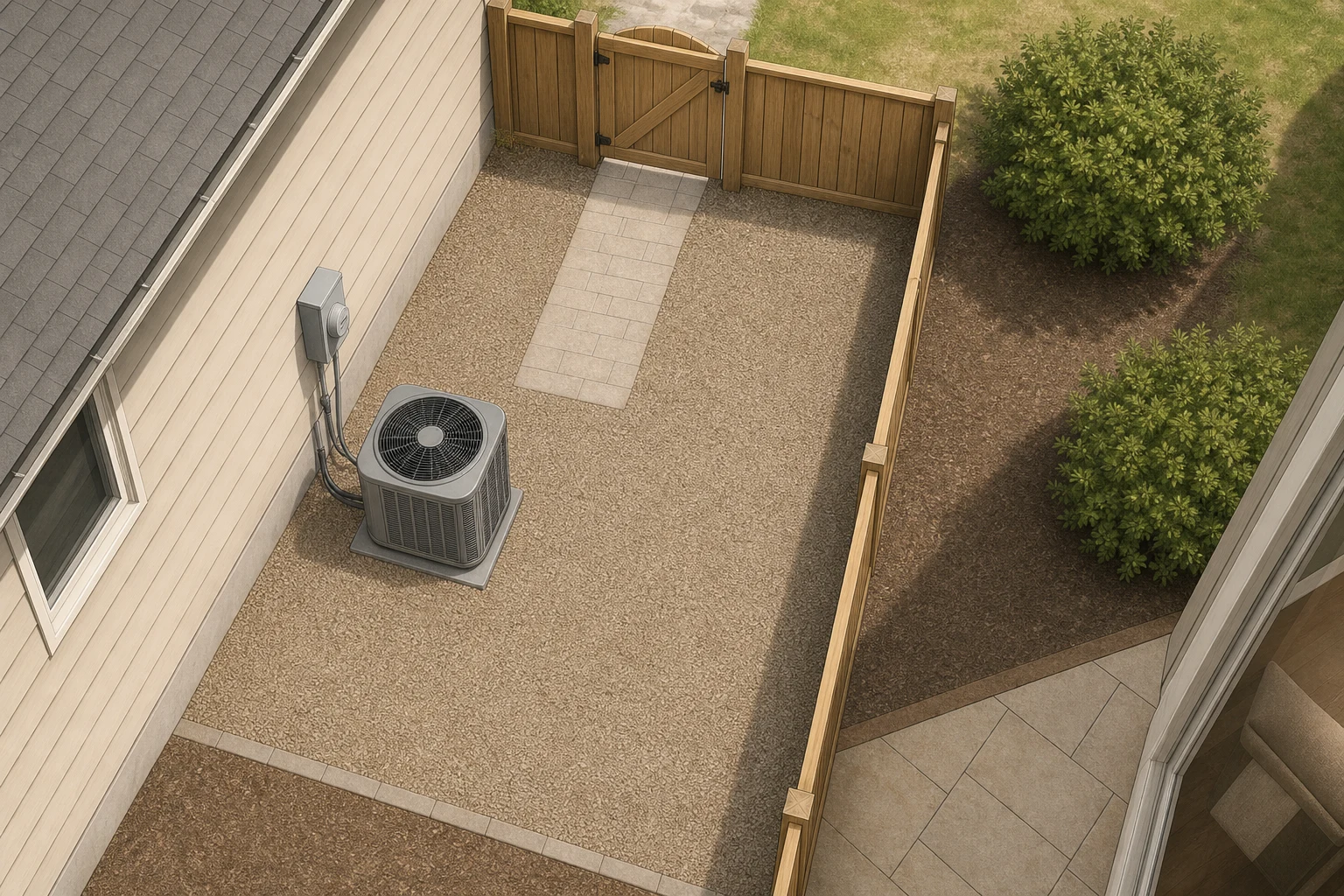
A condenser and meter beside the patio view
The equipment sits against the house. The patio sees it at an angle, while a technician approaches from the gate.
- 1
Preserve the gate-to-equipment route
Use a stable open surface rather than stepping through a planted bed.
- 2
Keep the condenser surround open
Follow the current equipment manual and leave debris-removal access.
- 3
Place one offset shrub group
Move the planting toward the patio sightline, outside the service and utility zones.
- 4
Repeat a low edge
Use one low plant to connect the side yard without blocking meters, vents, or the hose.
From the patio, the planting breaks up the view. From the gate, the equipment is still easy to reach.
Check the plan before you dig
Compare the plan with the utility marks, equipment manual, and mature plant sizes.
Wait for the 811 response: Contact 811 a few business days before you dig, wait for the utilities to respond, and follow your state center's instructions. The exact wait and marking rules are set by the state, not by the size of the project.
Check the equipment manual: Confirm airflow, service, debris, snow, and access requirements for the actual unit.
Draw plants at full size: Include seasonal flopping, snow load, and pruning access rather than nursery-pot width.
Keep drainage moving safely: Do not mound soil, trap water, or direct irrigation against the foundation or equipment.
Frequently asked questions
How close can plants be to an outdoor AC unit?
Use the installation and service manual for the exact equipment. The plant must remain outside required airflow and working space at mature size, and the route to the unit must stay open.
Can I plant shrubs in front of a utility meter?
Do not block the meter, shutoff, panel, or service approach. An offset plant pocket outside the access zone can soften the wider view without hiding the equipment.
Do I need to contact 811 for a small shrub?
811 says to contact the service before digging projects that include planting trees and shrubs. Follow the process and wait requirements for your state before disturbing the soil.
 Gardenful
Mark the working zones before you visualize the planting.
Use Gardenful to explore planting off to one side, then compare the idea with the equipment manual, utility marks, and mature plant sizes.
Gardenful for iPhone
Download the app free and start with a photo of your yard.

Sources(1)
- [1]811 Before You Dig
Common Ground Alliancehttps://811beforeyoudig.com/