Raised flower beds
Raised flower bed ideas for reach, soil, and drainage
The short answer
A raised flower bed is easier to use only when the planting area and the working space are planned together. Make every part of the bed reachable without stepping into it. Reserve the path first, choose the height for the gardener and the plants, confirm drainage and material safety, then compose a low edge, a repeated middle layer, and a few airy accents.
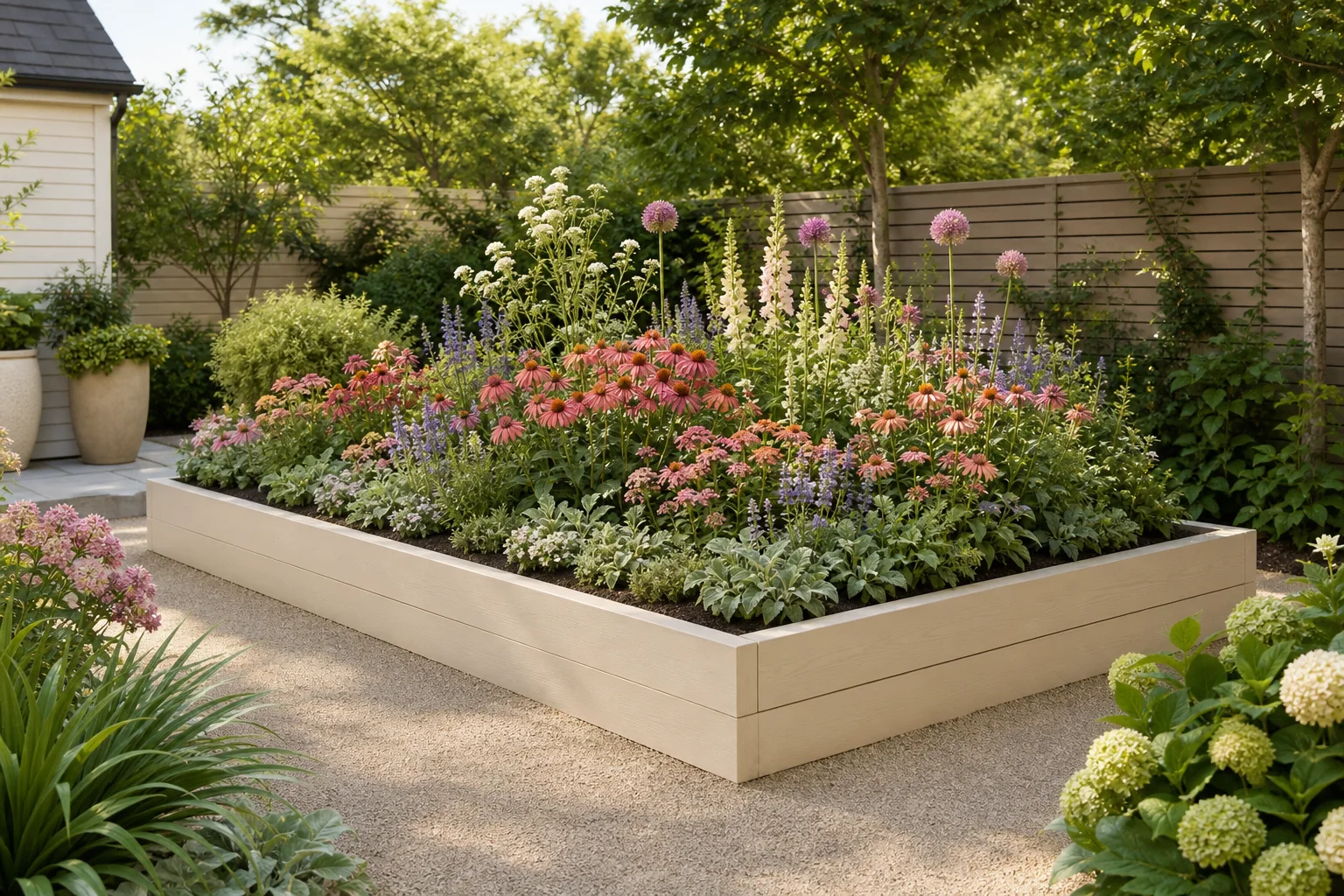
Use a raised bed when the added height solves a problem
A raised bed can improve access, define a small garden, or provide a managed soil zone. It also adds materials, irrigation exposure, and an edge that eventually needs repair.
Choose the raised format for a specific reason: less bending, a seated working height, poor existing soil, a compact garden boundary, or clearer protection from foot traffic. If none of those matters, an in-ground bed may be simpler.1,2
Keep the bed away from buried utilities and drainage routes. Do not trap water against a foundation, fence, or retaining structure.
Notice the heat and exposure around all four sides. Raised soil can dry differently from in-ground soil, so irrigation and plant choice need to match the actual site.
Size the bed from the gardener's comfortable reach
The center should remain reachable for planting, weeding, cutting back, and checking irrigation.
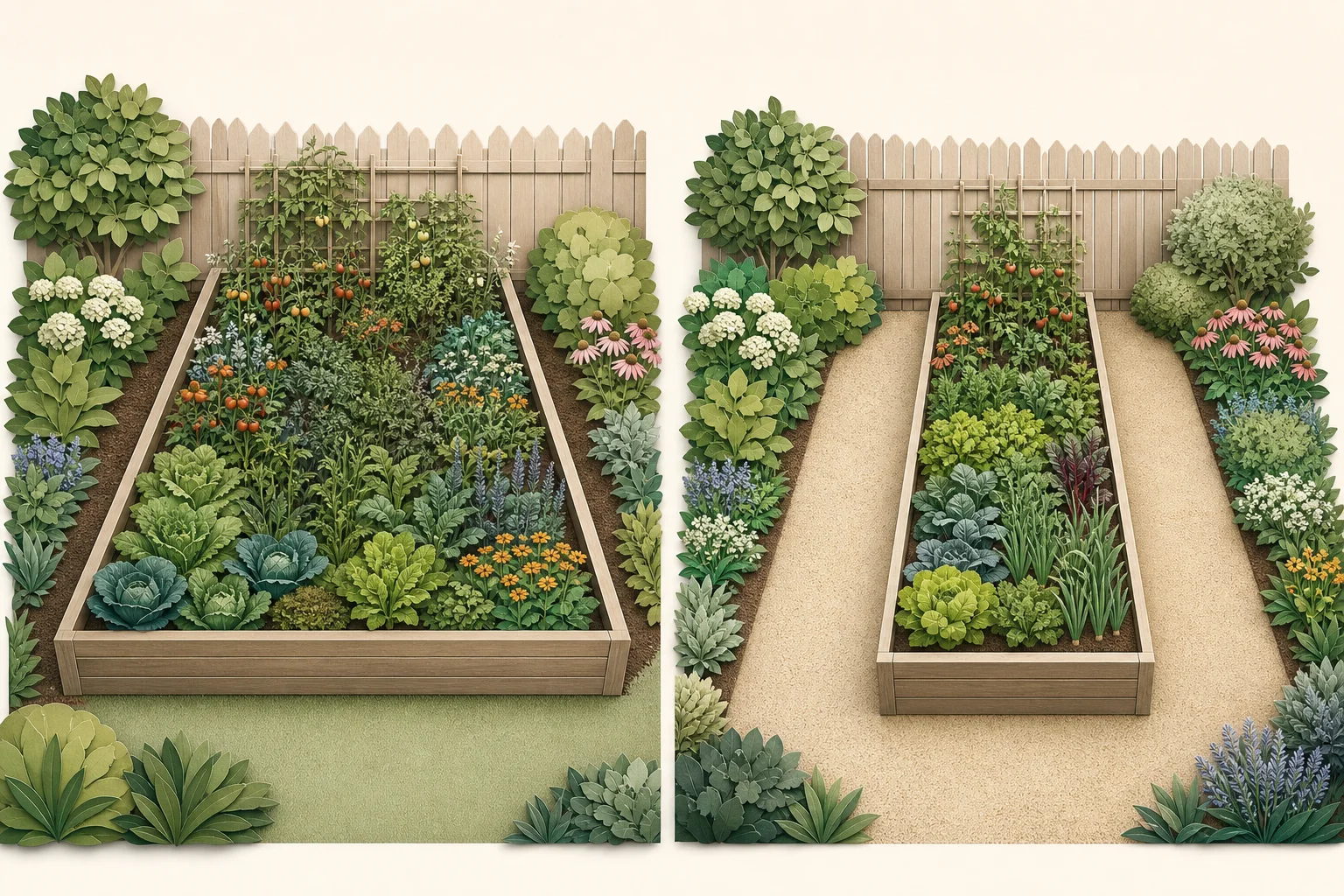
- Unreachable center
- Reach from both sides
Mock up the outside edge with cardboard or hose. Kneel, sit, or stand in the position you will actually use, then reach without leaning your weight on the soil or wall.
A bed reached from both long sides can be wider than one reached from only one side. Extension guidance often uses about four feet as an adult two-sided reference, but your reach, mobility, wall height, and plant mass should decide the final dimension.2
Leave enough path space for turning, tools, watering, and the gardener who needs the most room. Confirm local accessibility guidance when the bed is meant to support a specific mobility need.
Plan the whole bed system before adding soil
The visible wall is only one part of the project. Drainage, material, soil, irrigation, and paths determine how it performs.
- 1
Confirm drainage
Water must leave the bed without eroding the base, staining paving, or collecting against a structure.
- 2
Choose a suitable material
Use durable materials appropriate for soil contact and the intended plants. Avoid unknown treated or salvaged materials where contamination is a concern.
- 3
Build an appropriate soil profile
Use a planting mix suited to the bed depth, region, and plant type rather than filling a deep bed with one uniform bagged product by default.
- 4
Plan watering access
Place the hose, drip line, shutoff, and inspection points where they can be reached without crossing the planting.
- 5
Finish the path
Stabilize the working surface before the bed is full and difficult to access from all sides.
For tall walls, heavy loads, complex slopes, or accessible construction, get local structural and code advice.
Compose the flowers in three readable layers
The raised edge already creates a strong outline. Keep the planting calmer by repeating a short palette.
Use a durable low edge, a broad repeated middle, and a few vertical accents with different seasonal moments.
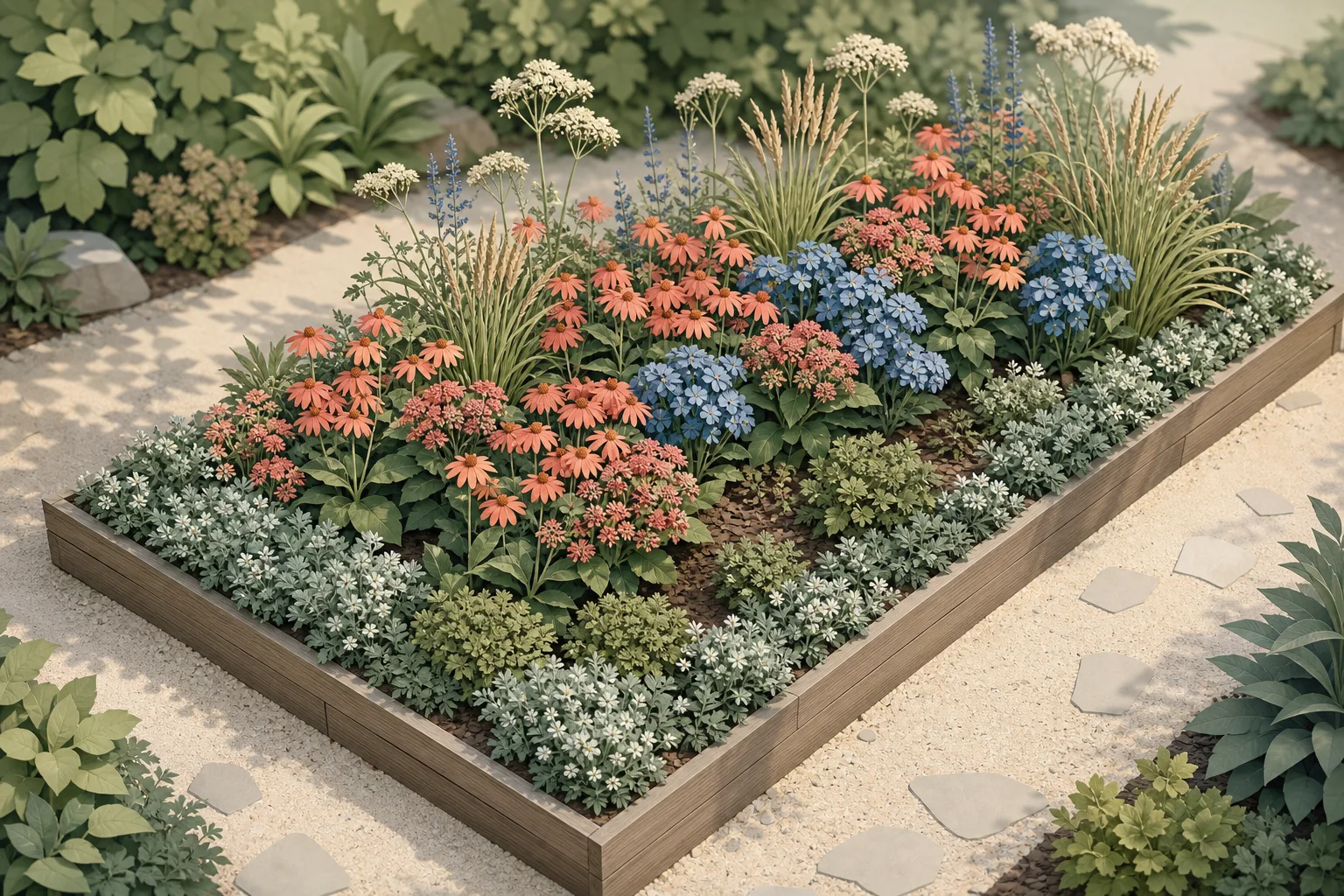
- 1
Low durable edge
Softens the wall
Use a restrained plant that can tolerate the hotter, drier outer edge and will not engulf the path.
- 2
Repeated middle mass
Carries the main rhythm
Repeat one or two mounding plants in broad groups so the bed still reads when individual flowers fade.
- 3
Airy vertical accents
Adds height and season
Use a few narrow or transparent upright forms where they will not shade or hide the whole middle layer.
- 4
Intentional gaps
Makes change manageable
Reserve a few reachable pockets for bulbs, annuals, or seasonal experiments instead of scattering change everywhere.
Sources: NC State Extension
Check the bed after bloom and during maintenance
A flower bed needs to work in the ordinary weeks as well as its best photograph.
Foliage still forms a composition: At least one repeated layer should remain legible when the main flower event ends.
Cutback is reachable: Tall stems and spent foliage can be removed without stepping into the soil or crushing the edge.
Plant vigor fits the bed: Avoid aggressive spreaders that turn a contained bed into a yearly excavation project.
Winter structure is deliberate: Decide which stems or seed heads remain and which collapse messily in your climate.
Frequently asked questions
How wide should a raised flower bed be?
Make every point reachable from an available side without stepping into the soil. A two-sided bed can be wider than a bed against a wall or fence. Test your own reach and mobility before building.
How deep should a raised flower bed be?
Depth depends on the reason for raising it, the plants, underlying soil, drainage, material, and desired working height. Use local horticultural and construction advice rather than a universal number.
What should I plant in a raised flower bed?
Start with plant roles: a low durable edge, one or two repeated middle masses, and a few airy vertical accents. Then choose locally suitable species for the site's sun, water, soil depth, mature size, and your maintenance tolerance.
 Gardenful
Plan the bed and its working space together.
Photograph the full area, including paths, fence, hose route, and nearby doors. Explore the visible planting with Gardenful, then verify the bed assembly and exact plants locally.
Gardenful for iPhone
Download the app free and start with a photo of your yard.

Sources(3)
- [1]Growing Vegetables in Raised Beds
University of Maryland Extensionhttps://extension.umd.edu/resource/growing-vegetables-raised-beds
- [2]Raised Bed Gardening
Oregon State University Extension Servicehttps://extension.oregonstate.edu/catalog/fs-270-raised-bed-gardening
- [3]