Gardenful field guide
Flower bed ideas you can turn into a planting plan
The short answer
A flower bed is easier to compose when it has one main job and a site that can support it. Decide whether the bed should look good through foliage, change color across the seasons, support pollinators, or need less routine care. Match that direction to the bed’s sun and moisture. Place the longest-lived plants first, repeat a few groups through the middle, and use lower plants along the edge. Draw every plant at full size before you buy.
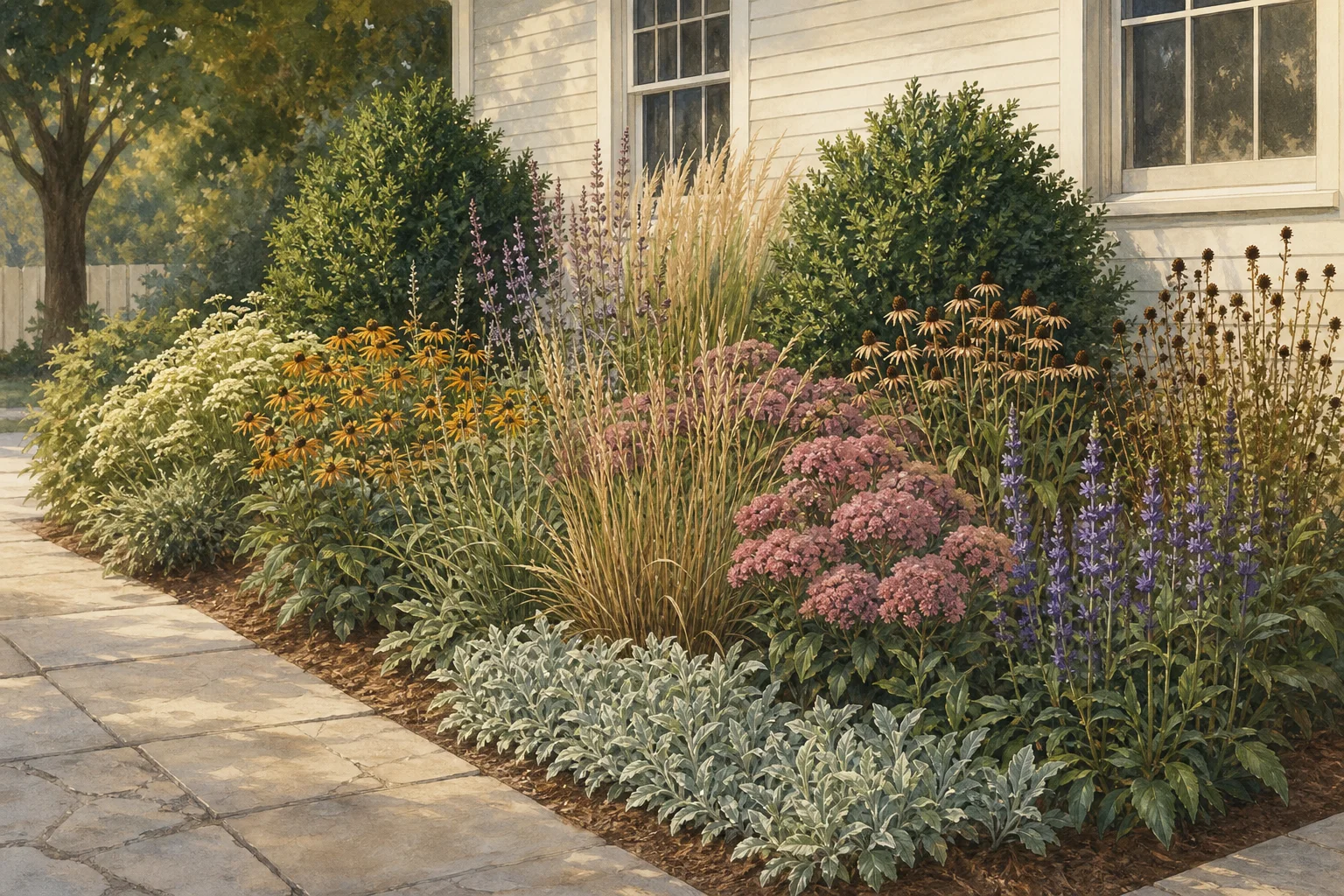
Start with one flower-bed idea, not twenty favorite plants
Each direction creates a different editing rule. Choose the effect that matters most, then let the site narrow the plant list.
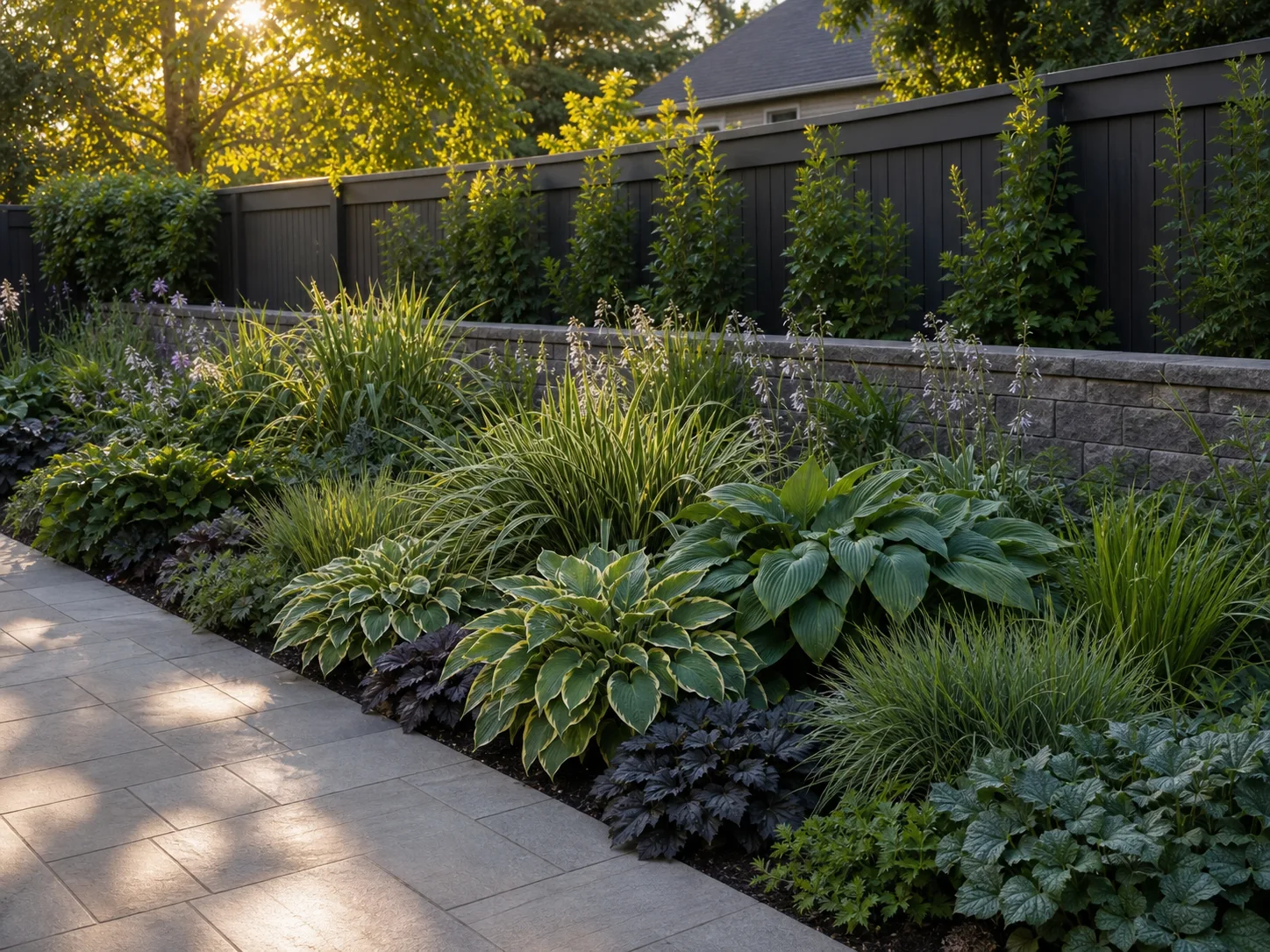
Foliage first
Best for interest between blooms
Build from a small set of contrasting leaf shapes, repeat them, and let flowers act as accents.
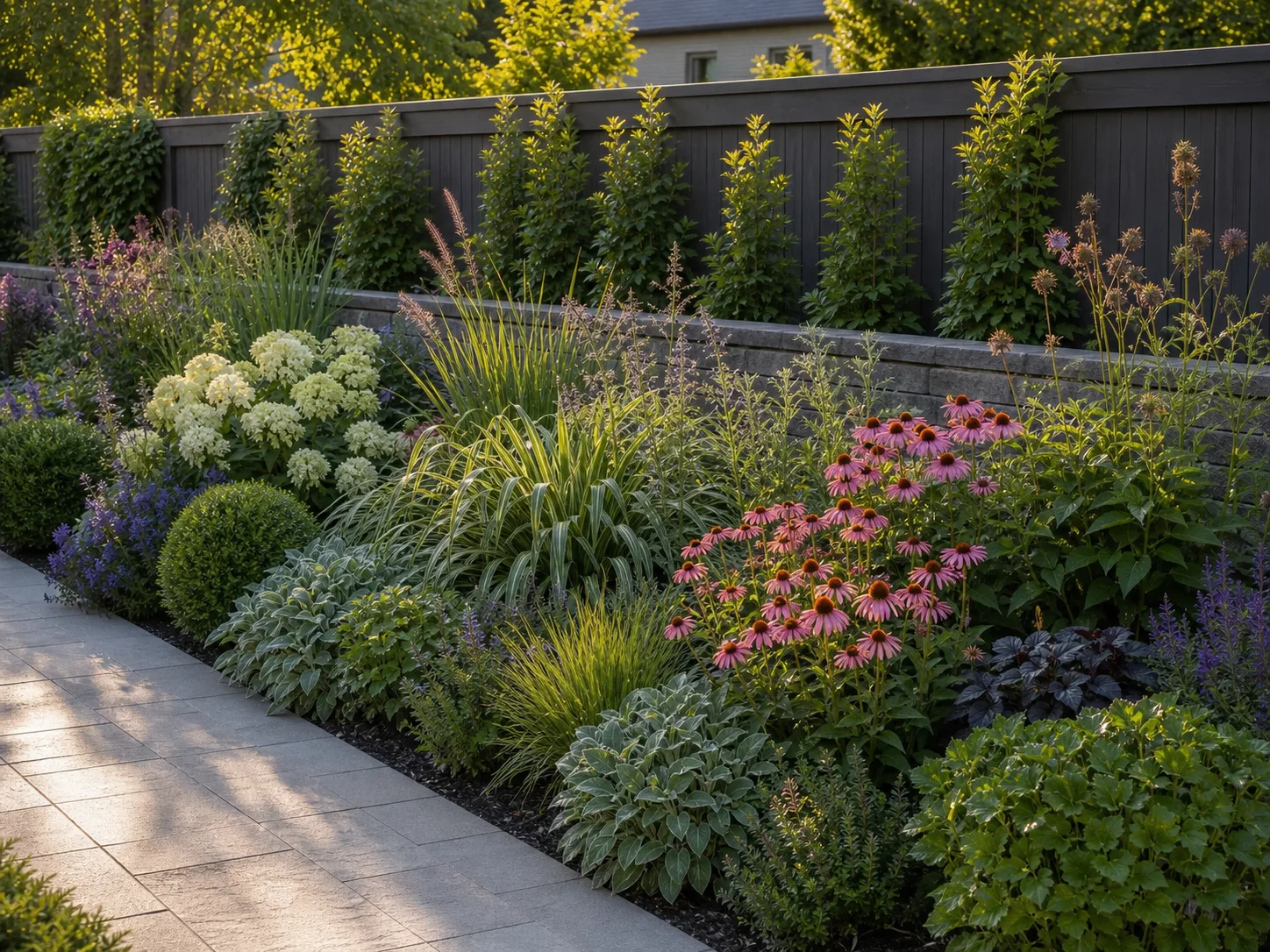
A seasonal relay
Best for changing seasonal color
Assign early, middle, late, and winter interest to overlapping masses instead of expecting every plant to peak together.
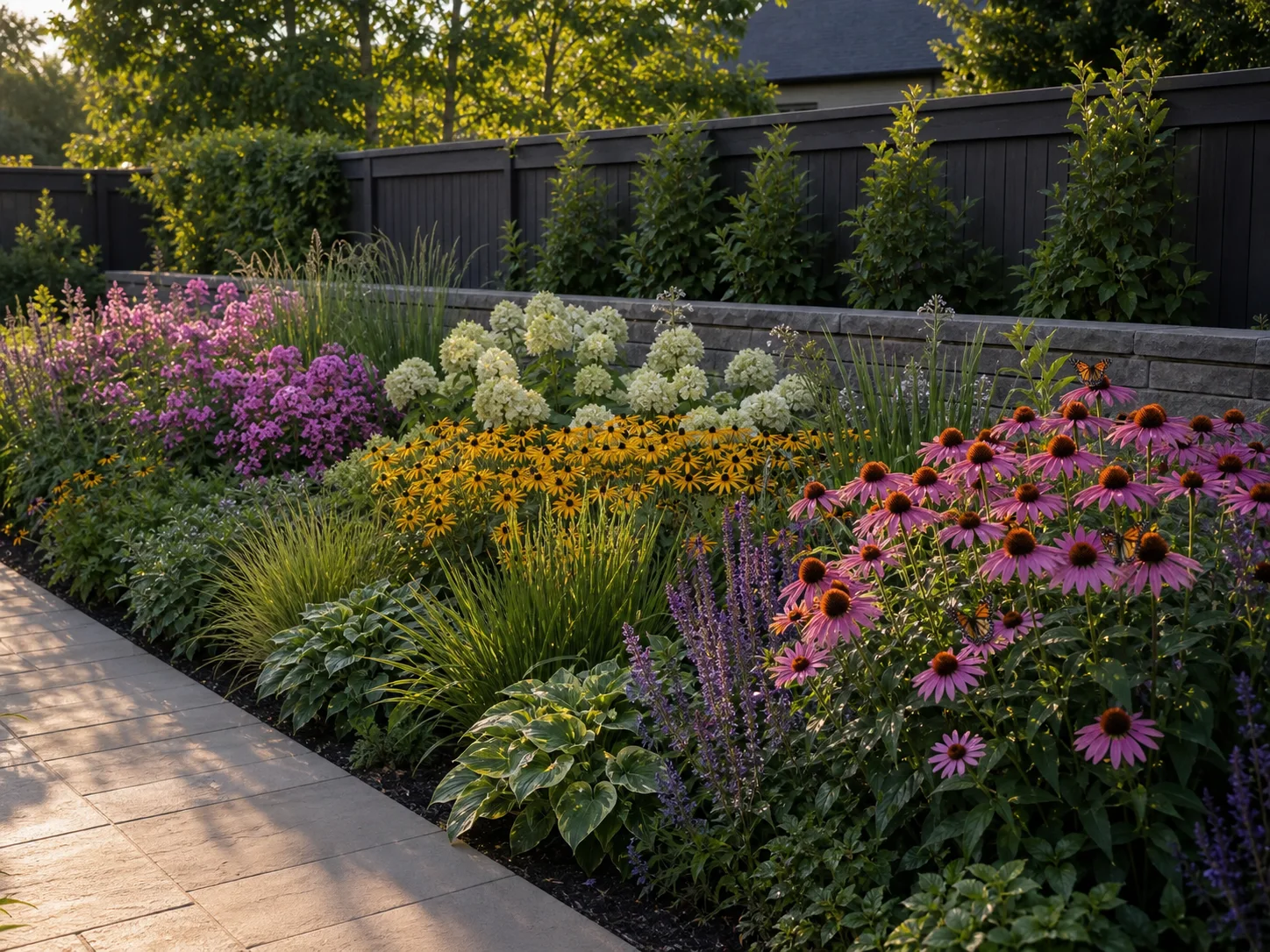
Pollinator focus
Best when habitat is a primary goal
Build repeated blocks of locally appropriate flowering plants with varied bloom times, forms, and heights.
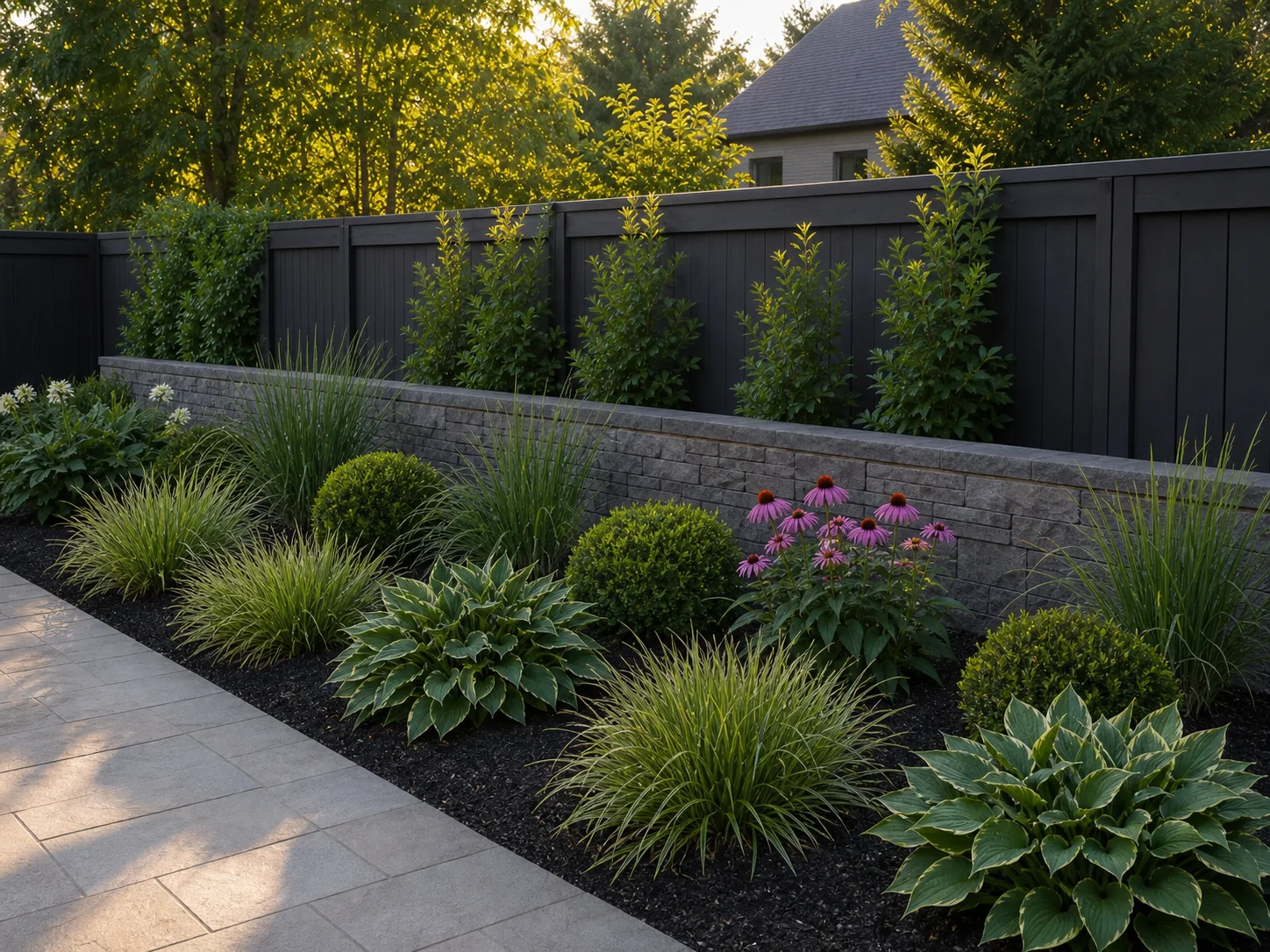
Calm and lower input
Best for simpler recurring care
Limit the palette to a few well-adapted groups, leave mature space, cover the soil, and reserve annual color for one deliberate pocket.
Build the bed from a few repeated groups
Start with the longest-lived plants, then repeat a few groups through the middle and along the edge. The linked guides cover exact placement and quantities.
Draw the bed edge from the house, walk, patio, fence, or open lawn it needs to relate to. Give it enough depth for the mature plants and the viewing distance. A decorative wiggle doesn’t create useful planting space.1,3
Place the longest-lived plants first, then repeat the groups that fill most of the bed. Use one low group along part of the front edge. Repetition leads your eye through the planting; too many single plants can make the bed look like a nursery display.1,2
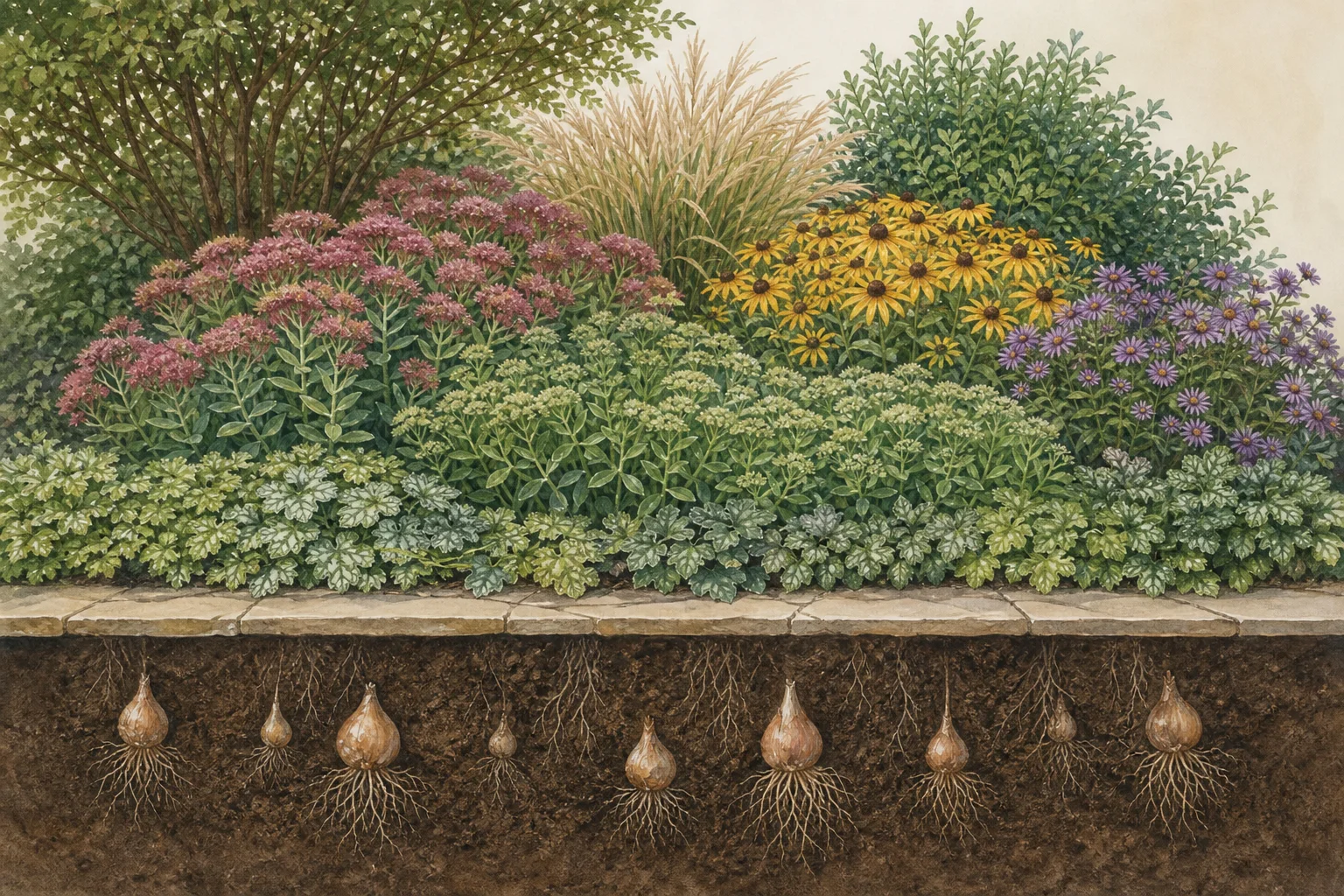
Tuck spring bulbs among perennials that emerge later. Let the bulb leaves yellow naturally because they feed the bulb for the next year; the later foliage can hide that necessary but untidy stage.6
Turn a sunny rectangular bed into a seasonal relay
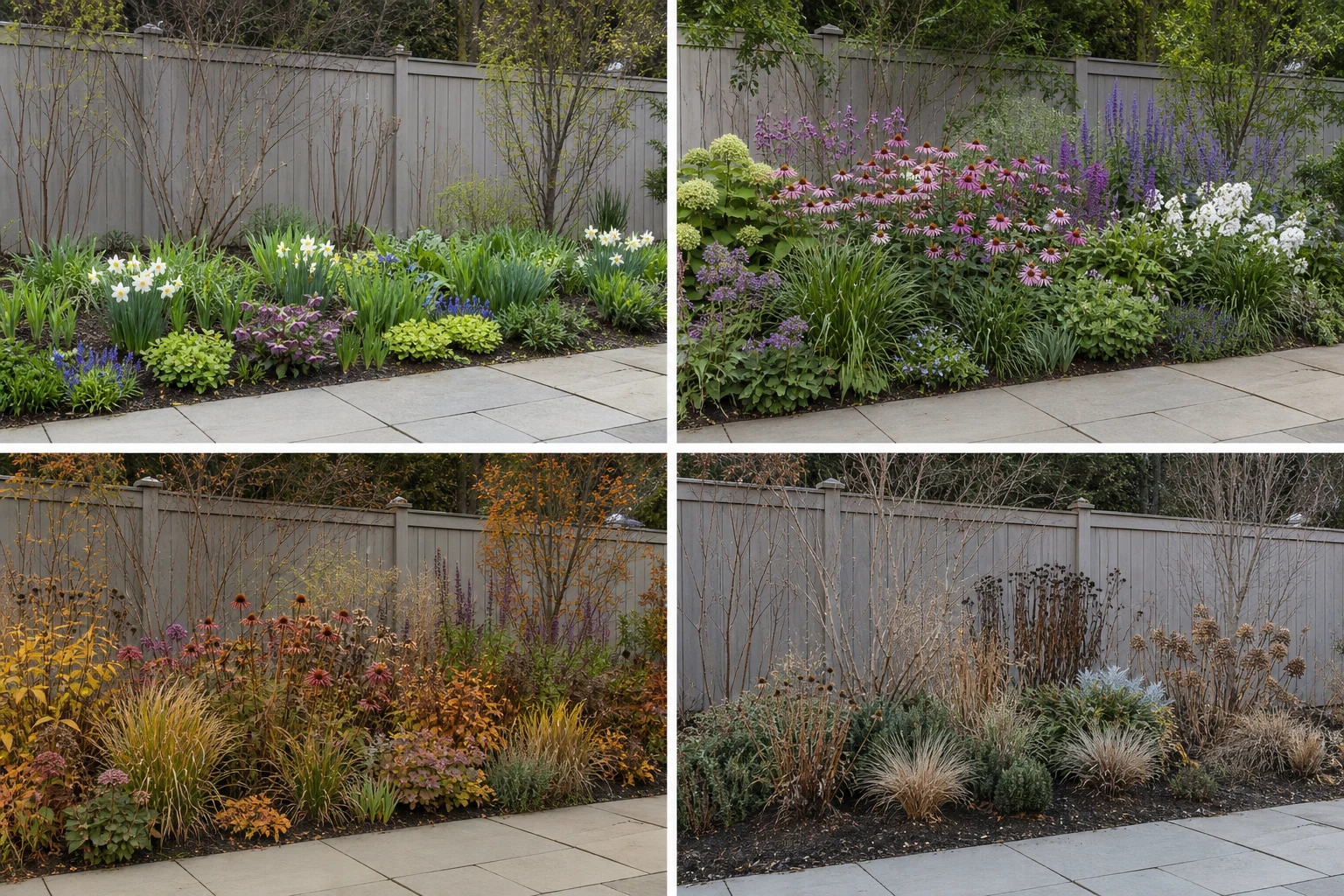
This example keeps the same basic shape while different plants take the lead through the year.
A long bed viewed from the patio
The bed receives direct sun for most of the day. The owner wants flowers from spring through fall but does not want the bed to disappear in winter.
1
Start with two compact shrubs
Place one at each end, sized to remain inside the bed and preserve the patio view.
2
Repeat three middle groups
Give each group a different peak season, while repeating a leaf shape or color that ties them together.
3
Run one low plant along part of the edge
Choose one low plant that fits the bed and repeat it instead of making a row of unrelated samples.
4
Tuck bulbs into the existing rhythm
Place early color through the middle groups so emerging perennials can hide the bulb leaves as they yellow naturally.
Bulbs lead in spring, perennials in summer, grasses and seed heads in fall, and shrubs carry the winter view.
Audit the plant list before buying
Use reference photos for mood, then make sure the plant list fits the light, moisture, space, and seasons in your bed.
Light and moisture: Match each plant to observed sun, soil drainage, and irrigation rather than the bed’s general label.
Mature width: Calculate quantities from usable bed area and mature spread, then adjust for the actual arrangement.
Seasonal gaps: Make a simple month-by-month ledger for flower, foliage, fruit, seed, bark, and dormancy.
Local behavior: Confirm hardiness, invasiveness, toxicity, pest pressure, and nursery availability with regional sources.
Recurring work: List the watering, staking, cutting back, dividing, pruning, and cleanup the bed will require.
Buying plants before the bed has clear groups often creates a scattered collection. Set the groups first, then choose plants that fit each job and the conditions in the bed.
Frequently asked questions
How do I plan a flower bed?
Record the site conditions, draw a bedline with useful depth, choose one design direction, place structural plants first, repeat middle-layer masses, connect the edge, and verify mature spacing and seasonal gaps.
How many different flowers should be in a flower bed?
Start a modest bed with about three to five plant types, repeated in groups, plus any lasting shrubs or grasses. Each group may contain several plants; Xerces uses clumps of roughly three to ten plants of one species in its larger pollinator projects.
How do I make a flower bed look good all year?
Use lasting structure, foliage, bark, seed heads, bulbs, and overlapping bloom periods. Make a seasonal ledger and repair the weakest period instead of adding more peak-summer flowers.
What is a low-maintenance flower bed?
It uses plants that fit the site and mature space, compatible water needs, covered soil, simple edges, and a limited repeated palette. It still needs establishment watering and periodic care.
 Gardenful
Turn one flower-bed idea into a visible plan.
Use Gardenful to compare a planting layout on your photo, then check the plants, quantities, mature sizes, and local fit.
Gardenful for iPhone
Download the app free and start with a photo of your yard.

Sources(6)
- [1]Landscape Design: Drawing a Planting Plan
University of Florida IFAS Extensionhttps://ask.ifas.ufl.edu/publication/EP456
- [2]Landscape Design: Arranging Plants in the Landscape
University of Florida IFAS Extensionhttps://ask.ifas.ufl.edu/publication/EP449
- [3]Basic Principles of Landscape Design
University of Florida IFAS Extensionhttps://ask.ifas.ufl.edu/publication/MG086
- [4]Right Plant, Right Place: The Art and Science of Landscape Design
University of Florida IFAS Extensionhttps://ask.ifas.ufl.edu/publication/EP416
- [5]
- [6]Planting Bulbs, Tubers and Rhizomes
University of Minnesota Extensionhttps://extension.umn.edu/gardening-minnesota/planting-bulbs-tubers-and-rhizomes