Gardenful field guide
How to landscape a yard with sandy soil
The short answer
Sandy soil loses water and nutrients quickly, but a dry surface alone does not prove the soil is sandy. Confirm the texture first. If it is sandy, spread suitable compost through the whole new bed, cover the surface with mulch, and group plants that need similar amounts of water. Choose plants adapted to fast drainage, and do not try to fix sand by mixing in clay.
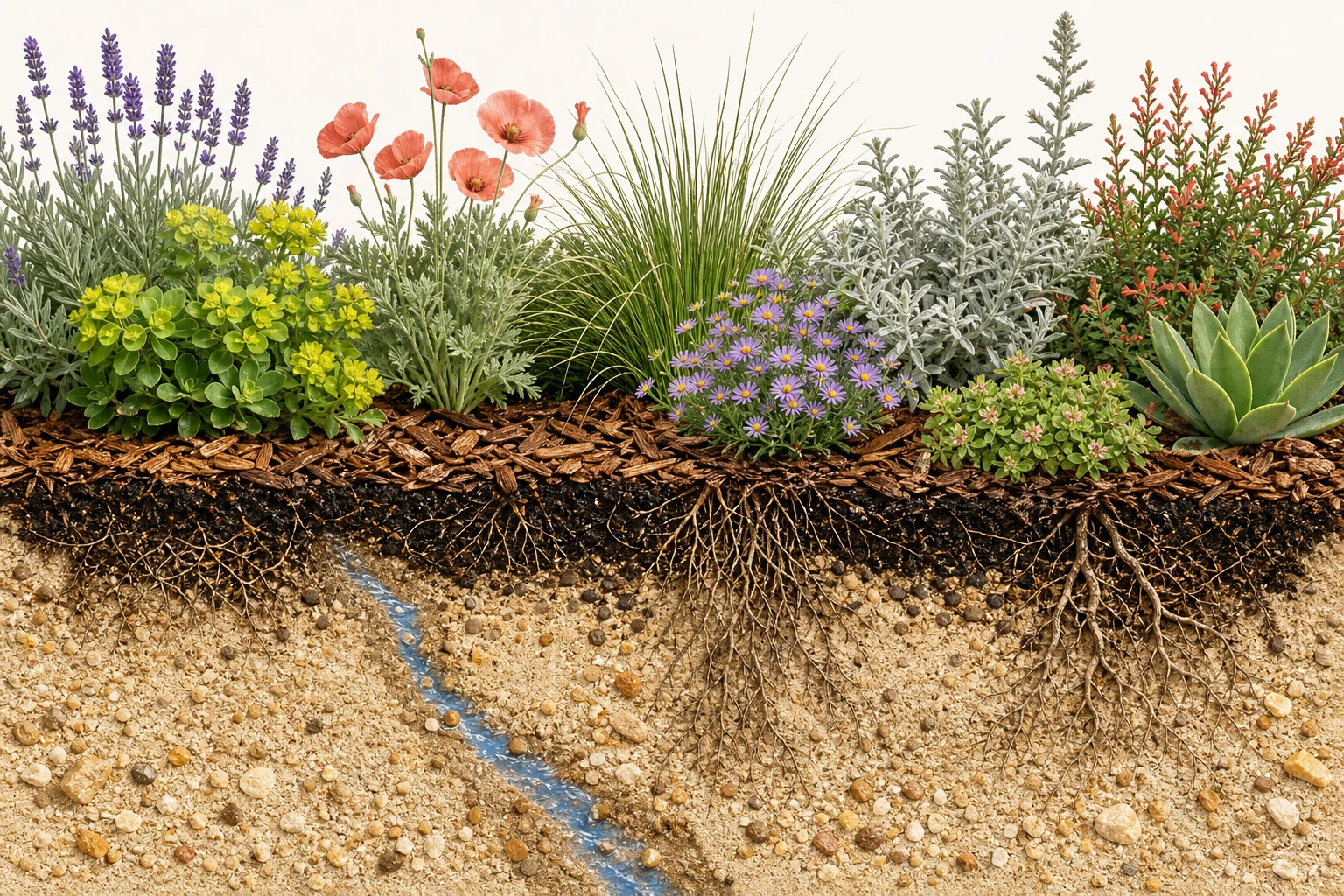
Separate sandy texture from a watering problem
Start with two separate questions: what is the soil made of, and where is the water going?
- 1
Check the texture
Sand-dominated soil feels gritty and does not hold a firm ribbon or ball when moist.
- 2
Watch where water goes
Note whether water disappears rapidly, runs across the surface, or pools over a compacted layer.
- 3
Send a representative soil sample
Use a local testing laboratory for pH and nutrient guidance rather than guessing from texture alone.
- 4
Divide the yard by condition
A sandy curb edge, irrigated foundation bed, and tree-root zone should not share one amendment or watering plan.
Improve the whole root zone
Spread improvement across the bed, cover the surface, and choose plants that can handle fast drainage.
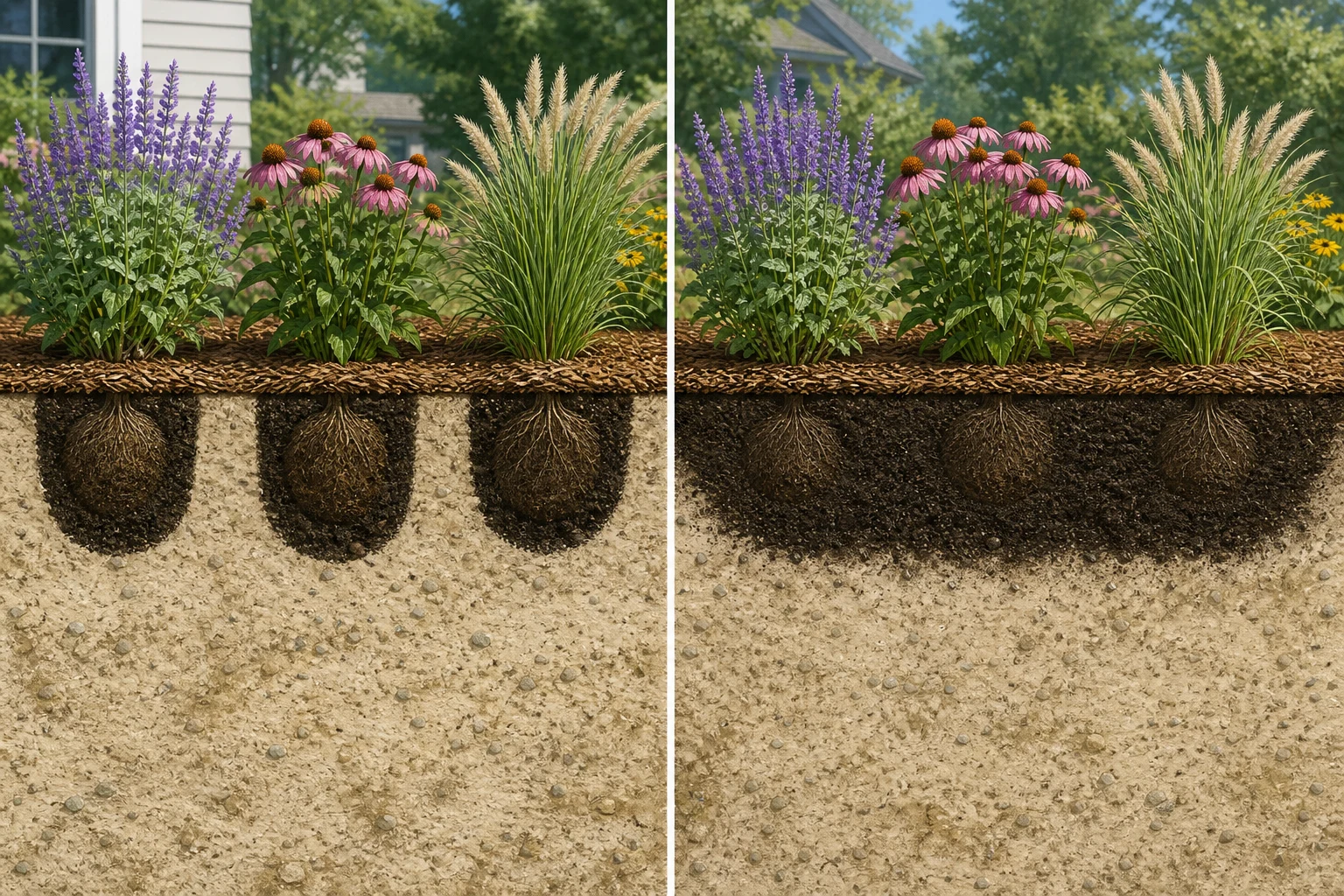
- Isolated holes
- Prepared band
| Response | What it changes | Watch for |
|---|---|---|
| ResponseComposted organic matter | What it changesImproves water and nutrient holding across a whole new planting bed rather than in individual holes. | Watch forThe amount and method should fit the project and tested material.Useful checkUse a reputable source and local soil-test guidance. |
| ResponseOrganic surface mulch | What it changesReduces exposed soil and moderates moisture after planting. | Watch forIt must stay away from stems and crowns and be replenished by measured need.Useful checkChoose a material that stays put on the site's slope and wind. |
| ResponseAdapted plant palette | What it changesWorks with fast drainage instead of maintaining a permanently different soil condition. | Watch forDrought adaptation does not remove establishment watering or local-fit checks.Useful checkConfirm climate, sun, mature size, and exact water needs regionally. |
| ResponseGrouped irrigation | What it changesKeeps plants with similar needs together so watering can be adjusted by zone. | Watch forFrequent shallow watering can leave roots near the surface.Useful checkCheck moisture below the mulch before changing the schedule. |
Sources: Utah State University Extension, Oregon State University Extension
Choose a sandy landscape design pattern that matches the site
Soil preparation is easier to maintain when the bed shape and water plan support it. Choose one pattern for the area you are actually improving, then keep plants with compatible drainage and watering needs together.
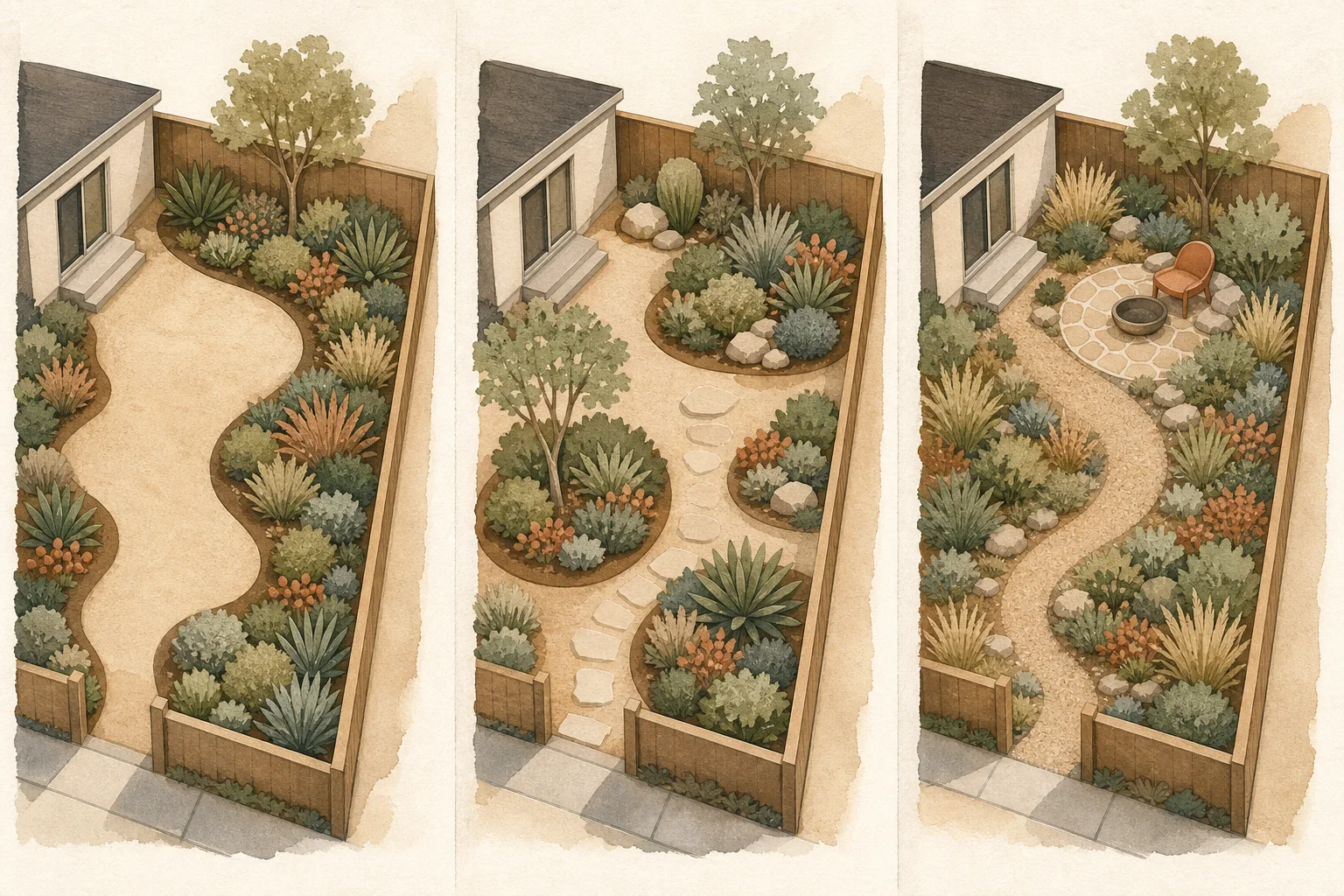
Continuous prepared band
Use one connected bed when the yard has a clear edge and you want roots, mulch, and irrigation to share a manageable zone. This is the simplest pattern for a new border or foundation bed.
Contained planting islands
Use separate islands when paths, existing trees, utilities, or a lawn route divide the yard. Prepare each island consistently instead of creating rich pockets around individual plants.
Dry-adapted matrix with a focal zone
Use a looser matrix when fast drainage is part of the design. Group plants that can share the same dry conditions, keep a focal area legible, and avoid scattering thirsty plants across the whole yard.
The illustration shows layout logic, not a recommendation for exact species, bed dimensions, or irrigation hardware. Confirm local soil-test and water guidance before building.
Sources: Utah State University Extension, Oregon State University Extension
Build a front bed that does not dry in scattered patches
Repeated groups with similar water needs are easier to water and monitor than a mix of unrelated plants.
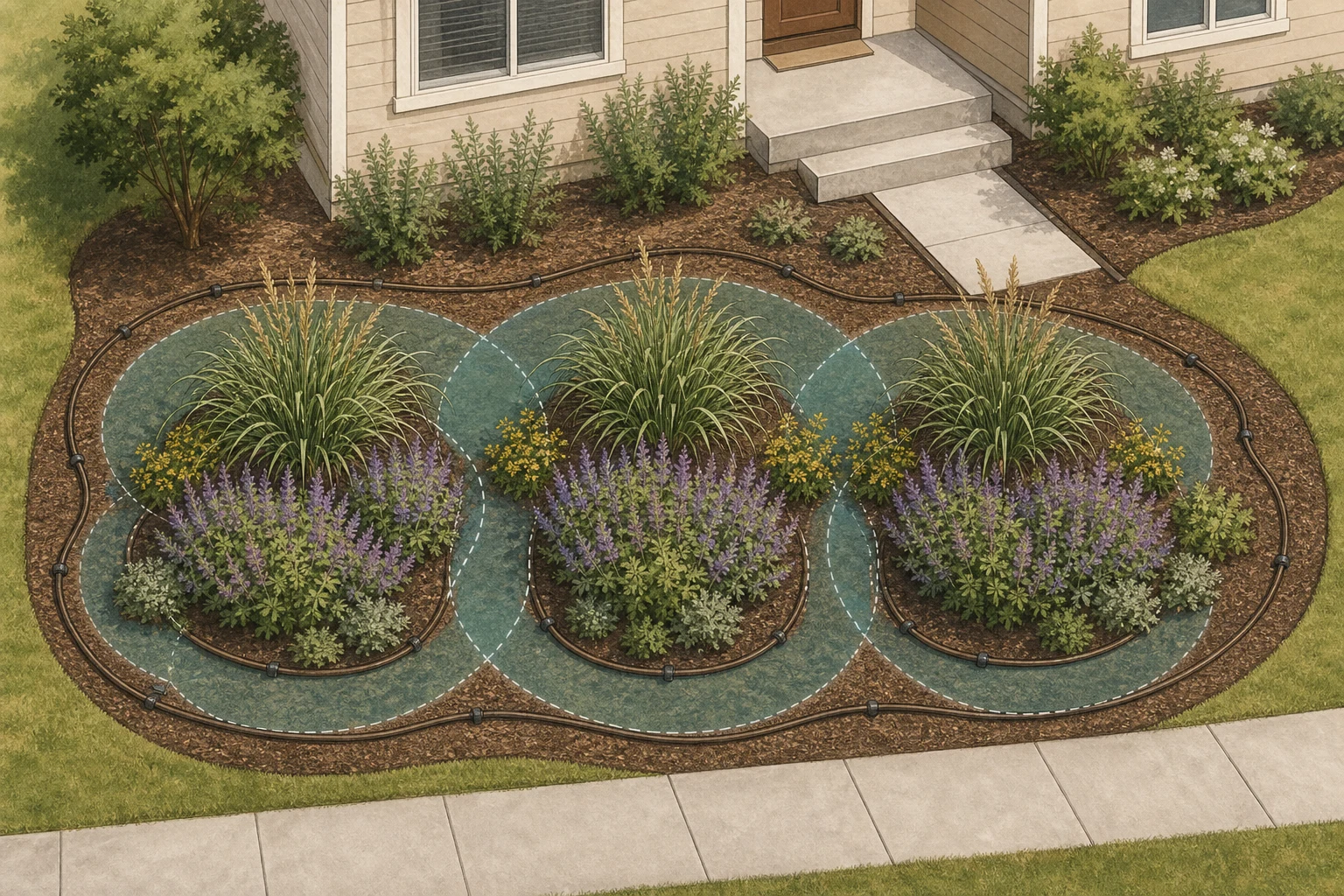
A sunny, fast-draining bed beside a warm walk
A soil test confirms sand-dominated texture. The bed has no tree roots or drainage conflict and can be prepared before planting.
- 1
Prepare the whole planting band
Use the locally recommended compost approach across the bed rather than enriching isolated holes.
- 2
Repeat three compatible groups
Choose one taller plant, one broad flowering group, and one low edge with similar site and water needs.
- 3
Cover the soil after planting
Apply an appropriate organic mulch while keeping every crown and stem clear.
- 4
Water by root-zone evidence
Check beneath the surface and adjust as plants establish instead of following a fixed shallow schedule.
The bed becomes one manageable water and soil zone rather than a collection of exceptions.
Avoid fixes that create a second soil problem
Sandy soil rewards gradual improvement and accurate plant fit.
Clay mixed into sand: Utah State University Extension warns that the wrong proportions can create a concrete-like material.
Compost used as soil: Compost is an amendment, not a substitute for the mineral soil structure plants need.
Fertilizer added without a test: Fast drainage and local pH make a soil-test recommendation more useful than a generic schedule.
Drought-tolerant plants left unwatered: Even adapted plants need appropriate establishment care.
Frequently asked questions
How can I improve sandy soil for landscaping?
Confirm the soil texture, follow local soil-test guidance, add appropriate composted organic matter before planting, cover the surface with mulch, and choose plants adapted to the site's drainage and climate.
Should I add clay to sandy soil?
No. Improve the whole root zone with the compost approach recommended for your soil test, then use mulch and plants that suit fast drainage.
Do plants in sandy soil need more water?
Sandy soil often drains quickly and holds less water, but irrigation should follow the plants, weather, root depth, mulch, and measured soil moisture. Group compatible plants and check below the surface.
What is a good sandy landscape design?
Choose a bed pattern that makes soil preparation and watering manageable: a continuous prepared band for a clear border, contained islands around existing constraints, or a dry-adapted matrix with compatible plant groups. Confirm the soil and exact plant fit locally before buying.
 Gardenful
Build one bed for plants that like the same conditions.
Use Gardenful to compare the planting groups, then check the plants and soil preparation with a local source.
Gardenful for iPhone
Download the app free and start with a photo of your yard.

Sources(2)
- [1]Gardening in Sandy Soils
Utah State University Extensionhttps://extension.usu.edu/yardandgarden/research/gardening-in-sandy-soils
- [2]How to Use Compost in Gardens and Landscapes
Oregon State University Extensionhttps://extension.oregonstate.edu/catalog/em-9308-how-use-compost-gardens-landscapes