Gardenful field guide
What to do with overgrown foundation shrubs
The short answer
An overgrown shrub may need pruning, renewal, or replacement, and the right choice depends on its identity and mature size. Identify the plant before you cut it. If it is healthy and naturally fits the spot, thin or renew it using a method suited to that shrub. If it will always cover the window or crowd the walk, replacement is usually the better long-term fix. Cutting every stem near the ground works only for shrubs that tolerate rejuvenation.
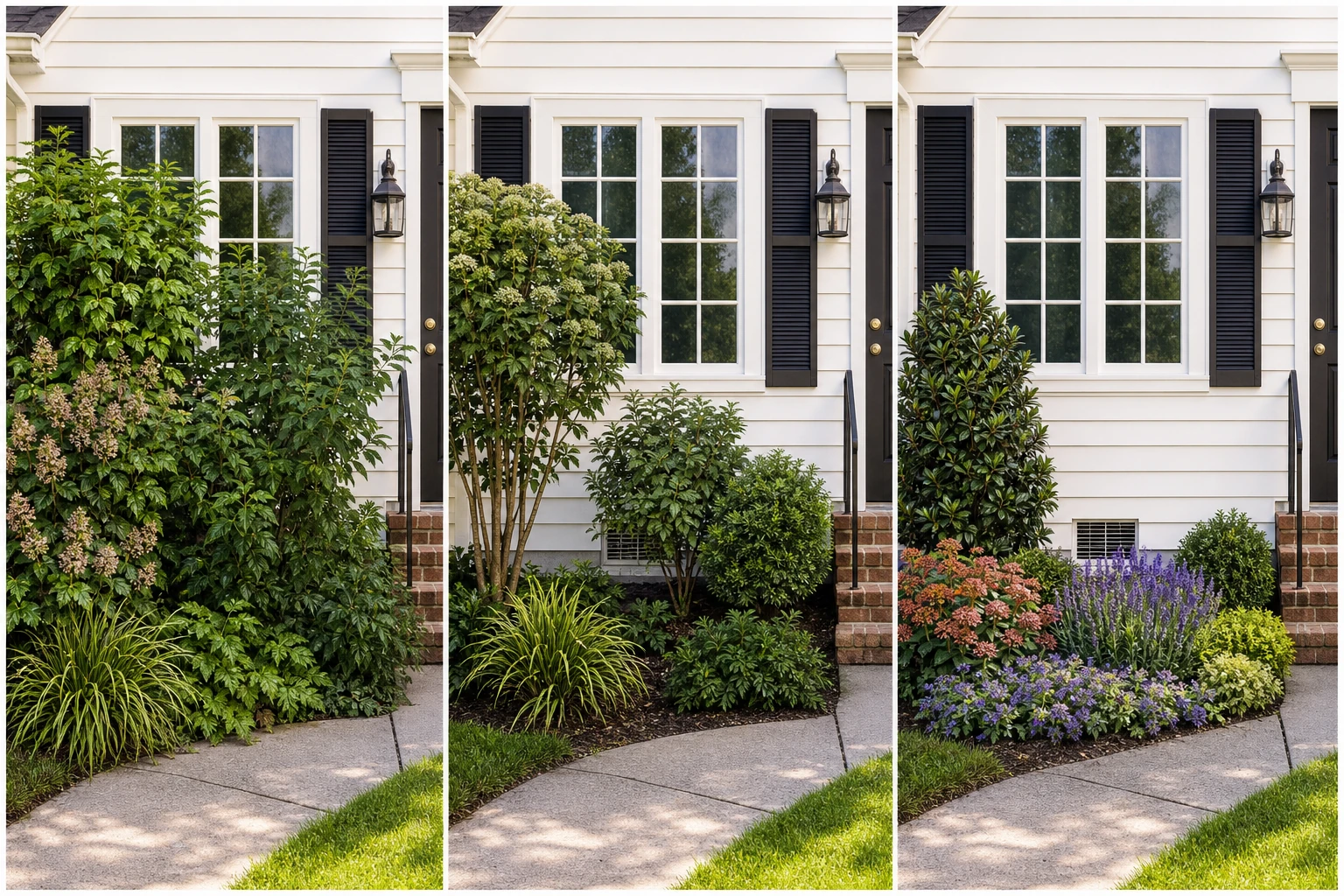
- Overgrown
- Renew
- Replace
Identify the plant before choosing the tool
The same cut that renews one multi-stem shrub can disfigure another plant.
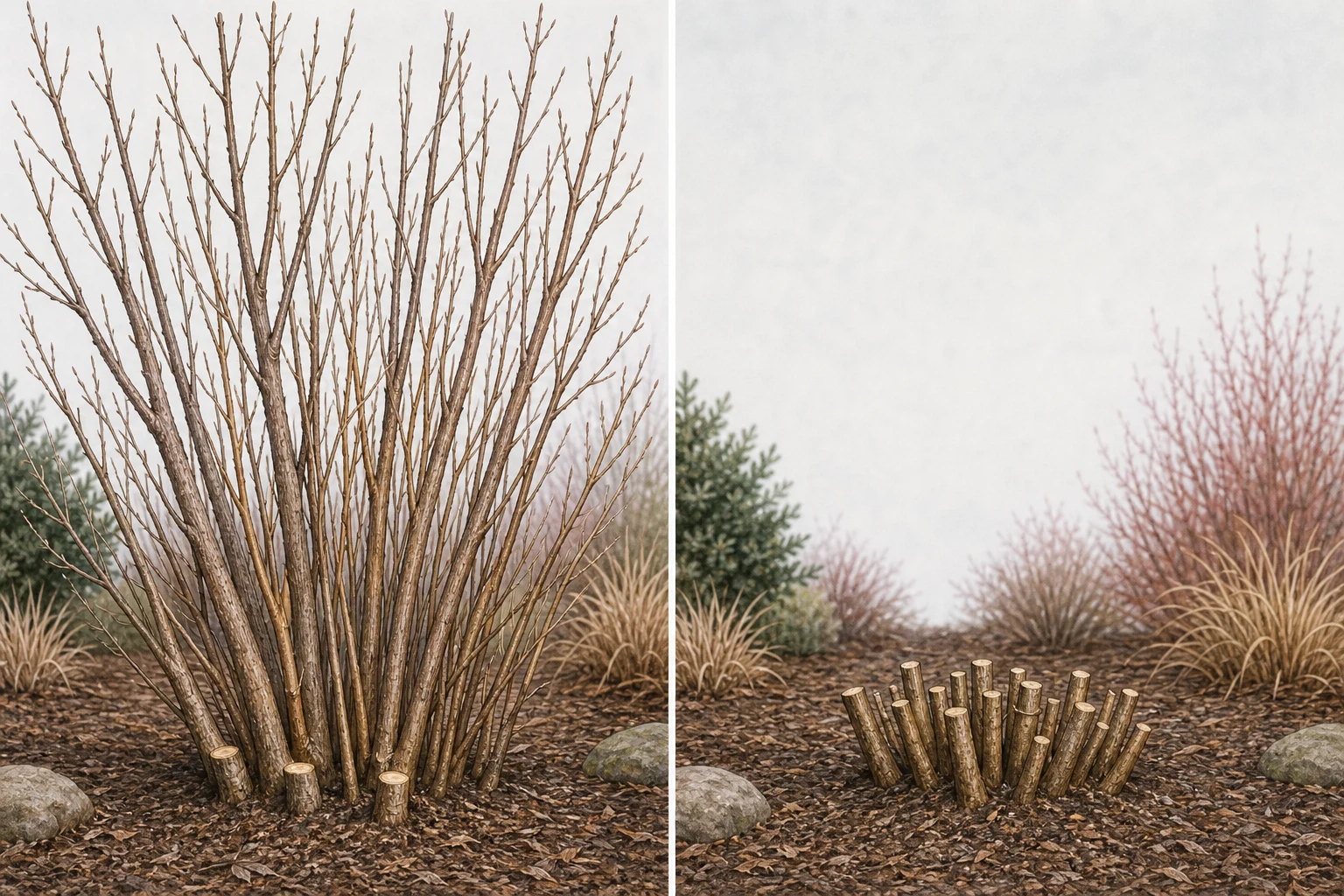
- Gradual renewal
- Full rejuvenation
- 1
Identify the exact shrub
Use leaves, stems, buds, flowers, and growth habit, then confirm locally.
- 2
Check health and structure
Separate healthy overgrowth from dead wood, disease, damage, or hazards.
- 3
Compare natural size with the space
If it naturally grows across the window, pruning remains a recurring fight.
- 4
Learn its pruning response
Confirm whether it tolerates renewal, rejuvenation, thinning, or only light pruning.
Choose the least drastic option that solves the mismatch
Pruning is useful maintenance, not a cure for a plant that is too large for the site.
| Action | When it fits | Watch for |
|---|---|---|
| ActionKeep and thin | When it fitsA healthy shrub whose natural size fits. | Watch forHeading and shearing can create more work.Before actingIdentify the shrub, then remove dead, rubbing, or crowded branches at their point of origin. |
| ActionRenew gradually | When it fitsA multi-stem shrub that responds to older stems being removed. | Watch forThe plant may look uneven and flowering can change.Before actingCheck that it grows from multiple stems and learn when it sets flower buds before removing the oldest stems. |
| ActionRejuvenate | When it fitsA healthy multi-stem deciduous shrub with a cane-growth habit that is known to regrow after being cut near the ground. | Watch forMost evergreens and single-trunk shrubs do not recover from it.Before actingConfirm species, health, and season. |
| ActionReplace | When it fitsA plant that is unhealthy, invasive locally, hazardous, or permanently too large. | Watch forRemoval may disturb roots, utilities, and walls.Before actingPlan removal and replacement at mature size. |
Sources: University of Minnesota Extension, Penn State Extension
Rebuild the bed without replacing every plant
Preserve useful maturity and spend replacement money where the mismatch is greatest.
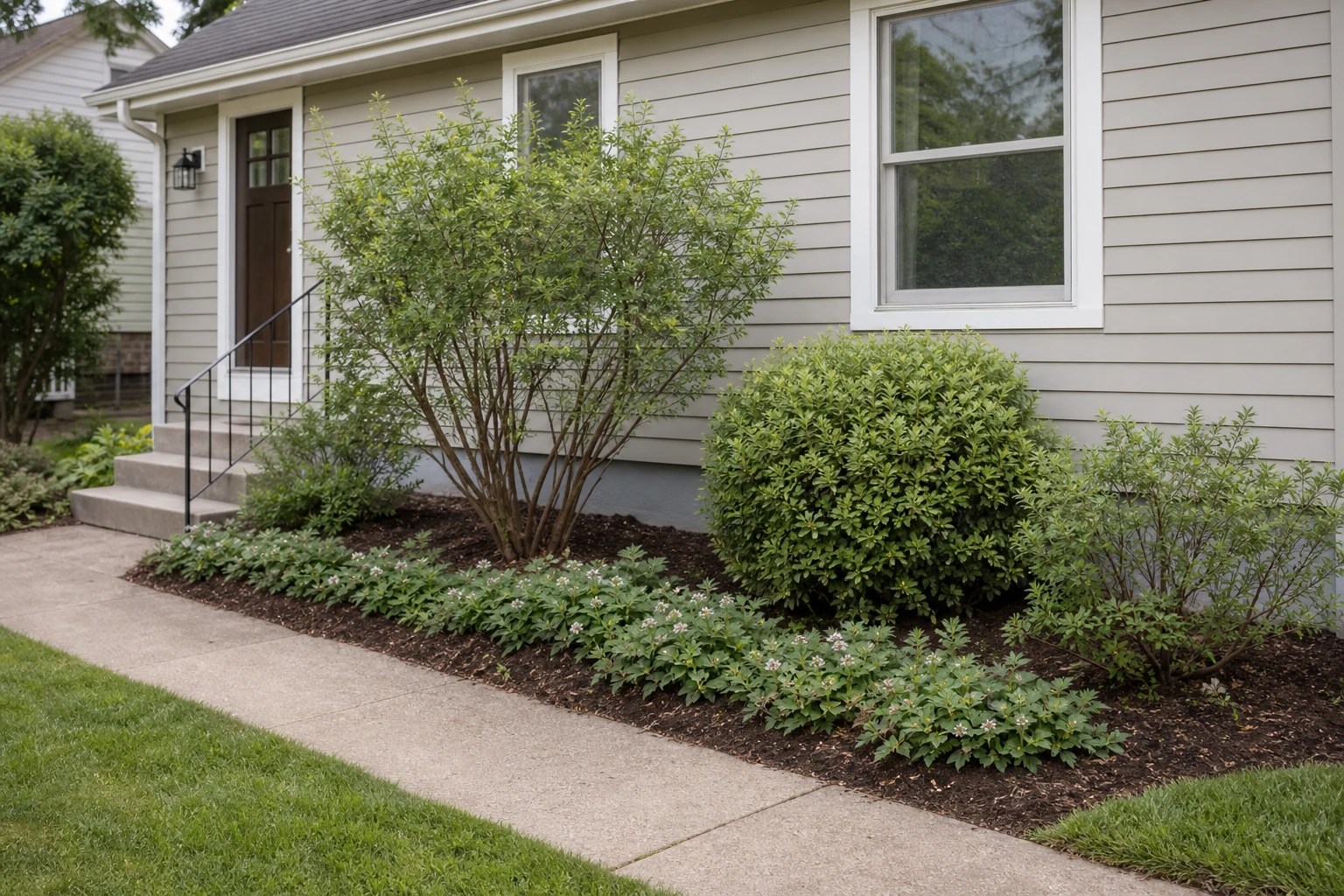
Three shrubs below two windows
One multi-stem shrub is healthy, one evergreen blocks the window, and one compact shrub fits but has dead branches.
- 1
Renew the multi-stem shrub
Use the locally appropriate method and season.
- 2
Replace the permanent mismatch
Choose a natural mature size below the window and outside the walk.
- 3
Clean the compact shrub selectively
Remove dead or damaged wood and preserve its form.
- 4
Tie the bed together
Repeat one low plant or mulch through the mixed-age bed.
Keep two useful shrubs and solve the one mismatch pruning cannot erase.
Check before cutting, digging, or buying
A correct replacement plan begins with the plant and the space.
Confirm the timing: Know when flower buds form and when local guidance recommends pruning.
Protect utilities: Contact 811 before digging and protect foundations, wires, irrigation, and roots.
Draw the mature size: Keep windows, vents, doors, lights, address numbers, and the walk clear.
Match the help to the risk: Use qualified help for hazardous or utility-adjacent plants.
Frequently asked questions
Should I prune or remove an overgrown shrub?
Keep or renew a healthy shrub whose natural size fits and whose growth habit responds to pruning. Replace a plant that is unhealthy, hazardous, or permanently too large.
Can I cut it to the ground?
Only some healthy deciduous shrubs with multiple stems tolerate rejuvenation, and University of Minnesota Extension describes cutting the canes back near the ground in early spring. Confirm the exact plant, its growth habit, and local timing first.
What should replace shrubs under windows?
Choose by mature size, climate, light, soil, water, pest pressure, and available height without constant shearing.
 Gardenful
Keep the useful shrubs and replace the mismatch.
Use Gardenful to compare the cleared bed and replacement planting, then confirm the pruning method and new plants locally.
Gardenful for iPhone
Download the app free and start with a photo of your yard.

Sources(2)
- [1]Pruning Trees and Shrubs
University of Minnesota Extensionhttps://extension.umn.edu/planting-and-growing-guides/pruning-trees-and-shrubs
- [2]Keeping Plants Well Groomed
Penn State Extensionhttps://extension.psu.edu/keeping-plants-well-groomed