Build a border around lavender
What to plant with lavender
The short answer
Good lavender companions add a low edge, contrasting foliage or later flowers while sharing its need for sun and soil that drains freely. Creeping thyme makes a low edge; rosemary adds darker evergreen foliage where winters are mild enough. In colder gardens, woodland sage and showy stonecrop offer contrasting shapes and later-season interest. Choose the combination that fits your rainfall, winter cold and watering routine, then leave room for each plant's mature width.
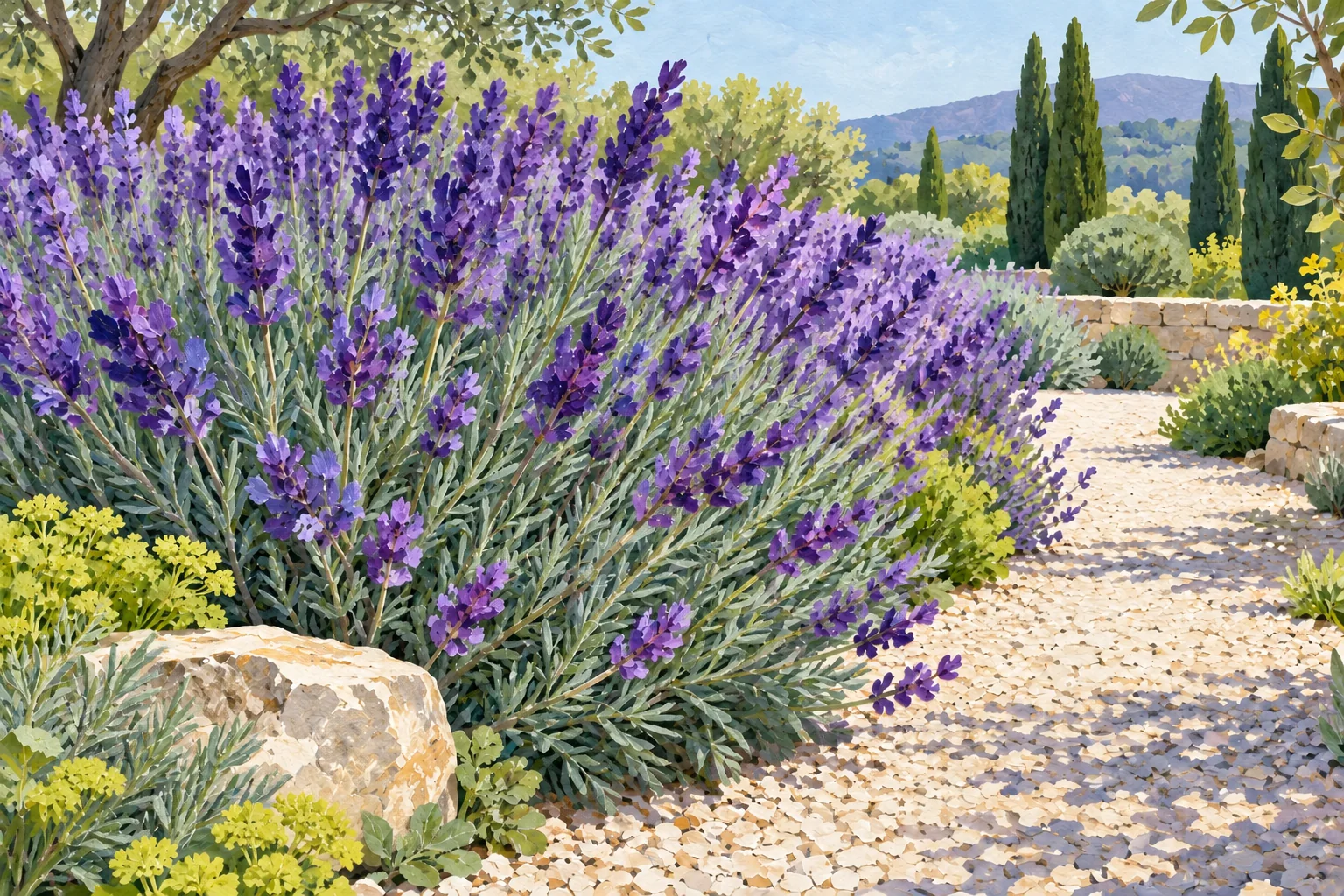
Choose the example closest to your conditions
The examples below show two ways to combine shapes around lavender. Use the site conditions to decide which parts you can borrow.
| Your site | Combination to try | What to check |
|---|---|---|
| Your siteSunny, dry summers; relatively mild winters | Combination to tryLavender with a thyme edge and a separate rosemary accent | What to checkThe rosemary variety's winter hardiness and mature spread |
| Your siteCold winters; a sunny bed with excellent drainage | Combination to tryHardy English lavender with salvia and showy stonecrop | What to checkWinter wet and each variety's hardiness |
| Your siteHumid summers, regular rain or heavy wet soil | Combination to tryTest a suitable lavender variety in a freely draining location before repeating it | What to checkA matching zone number does not solve humidity or drainage |
Give the edge and the larger accent different jobs
Compare the small leaves of the groundcover with the larger, woody growth of the trailing herb. They need different positions in the bed.
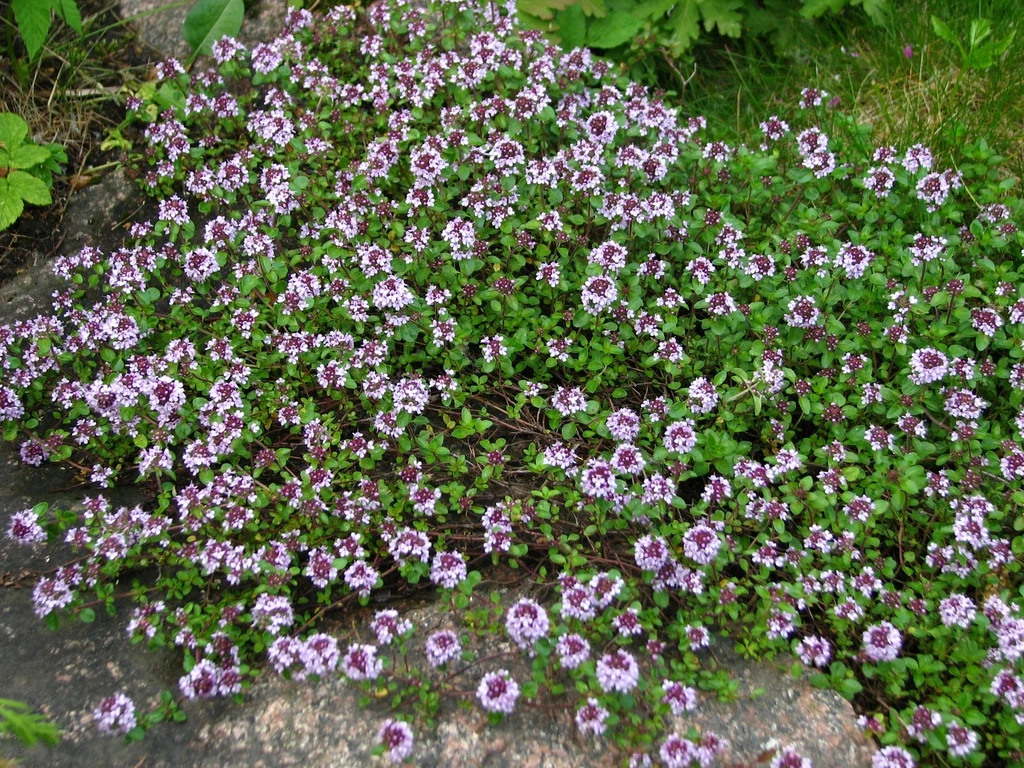
Creeping thyme for the low edge
Its small leaves give the front a finer texture. Keep the spreading mat clear of the lavender's base.
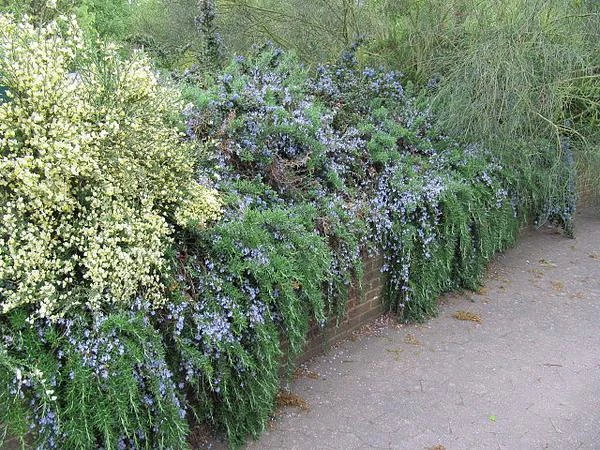
Prostrate rosemary for a larger accent
Its woody, trailing growth can cover much more ground. Reserve a separate corner or edge instead of treating it as a small filler.
A lavender path border for a dry-summer garden
Example: a sunny California garden with freely draining soil, winter rainfall and a bed watered separately from the lawn.
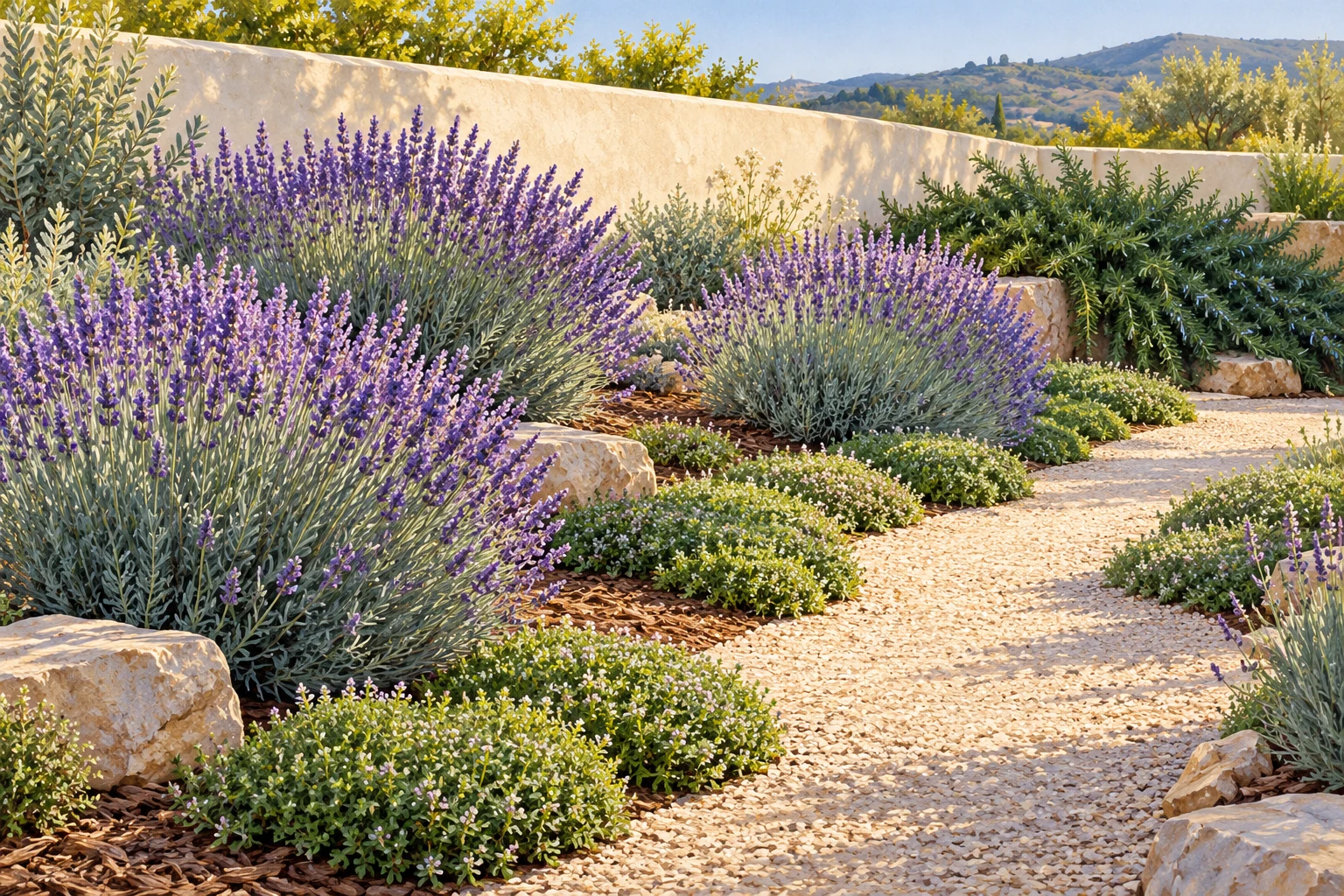
Repeat lavender through the middle of the bed. Put creeping thyme (Thymus serpyllum) toward the path, where its low mat contrasts with the taller flower stems. At one end, a prostrate rosemary variety (Salvia rosmarinus) can add a darker, more substantial shape. Check the named variety: rosemary sold as a small herb can become a large shrub.3,4
You don't need all three plants in a narrow strip. Lavender and a low edge may be enough. In a deeper bed, let the rosemary occupy a separate end or corner rather than weaving it between every lavender plant. That keeps its spreading growth from swallowing the repeated mounds.
Place the mature plant outlines behind the path edge so flowering stems don't take over the walking space. The scene relies on foliage as well as flowers; the thyme and rosemary don't have to bloom at the same time as the lavender for the combination to work.
A lavender border with interest after the main bloom
Example: a sunny upper Midwest garden, roughly zones 5–6, with an elevated bed that drains freely through winter.
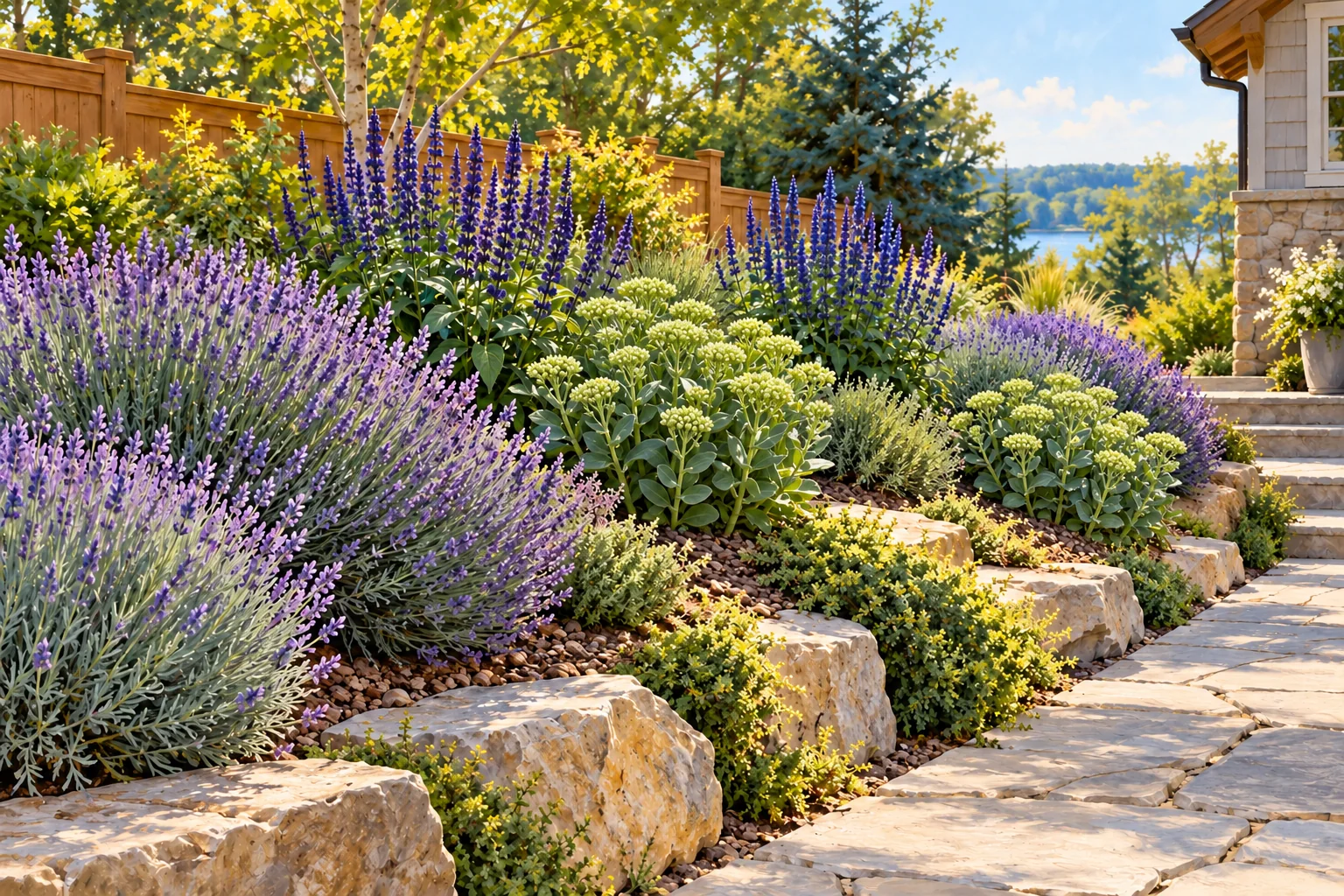
Start with a locally suitable English lavender (Lavandula angustifolia); 'Munstead' and 'Hidcote' are varieties to ask about. In Iowa, this species is a more reliable cold-climate choice than less hardy lavender types, but drainage remains important. A raised position helps only if excess water can actually leave the root zone.1
Woodland sage (Salvia nemorosa) adds upright flower spikes beside lavender's softer mounds. Showy stonecrop (Hylotelephium spectabile, often sold as sedum) adds broad, fleshy leaves and flowers in late summer or fall. Put the stonecrop in a visible group rather than hiding its foliage behind the lavender.5,6
This combination spreads the interest across the season. After the lavender's main display, the stonecrop has a different job to do. In winter, the herbaceous companions leave much less leafy cover, so keep a clear bed edge and decide whether nearby permanent planting needs to provide the winter structure.
Count plants from their mature width
Choose the actual varieties before turning a pleasing picture into a shopping list.
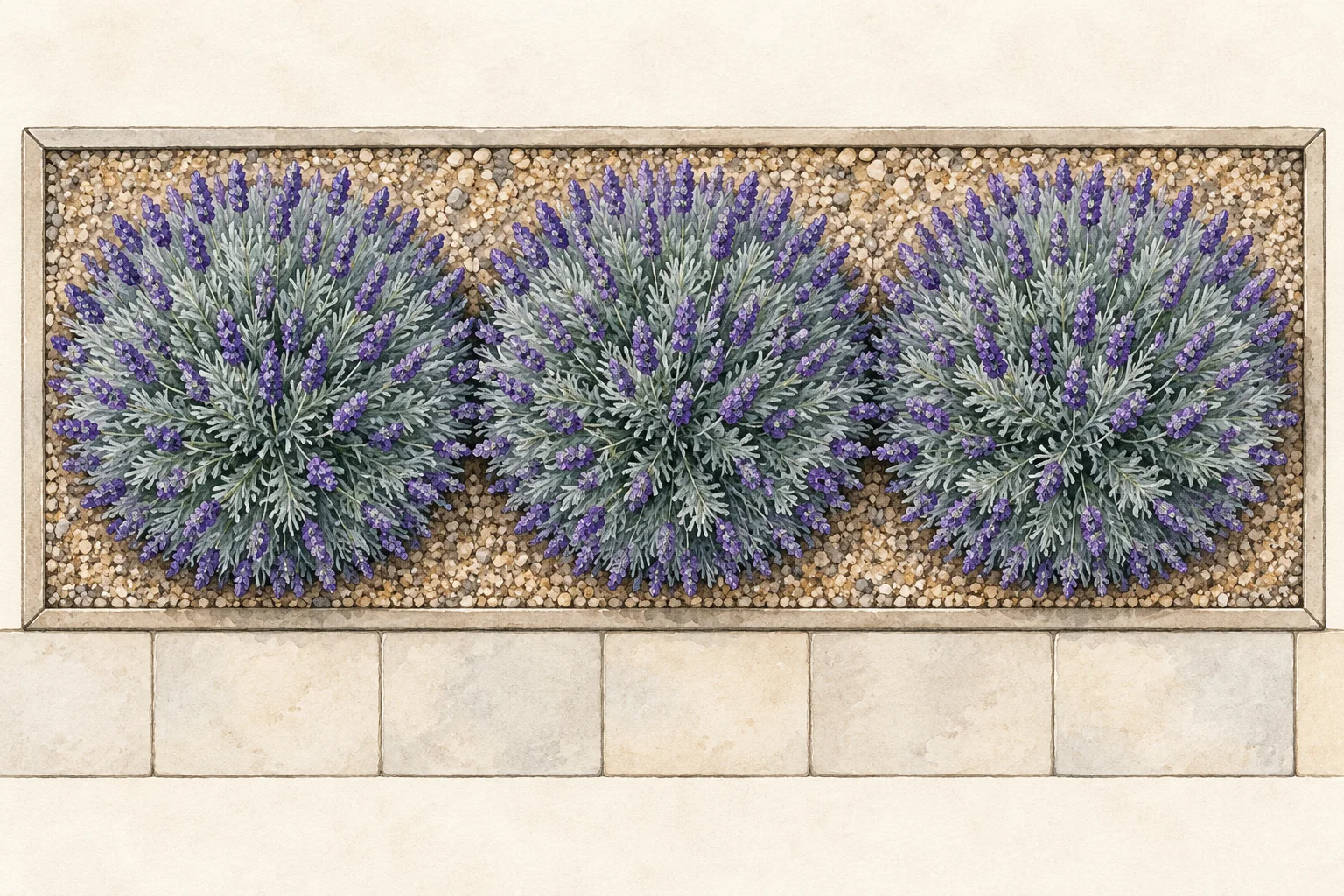
A short run of compact lavender
Suppose the selected lavender variety is expected to reach 2 feet wide, and you have a 6-foot planting run clear of other mature plants.
- 1
Mark three centers
Place centers 1, 3 and 5 feet along the run. At a 2-foot mature width, the end plants reach the ends of the 6-foot run and the neighboring outlines just meet.
- 2
Check the depth separately
Each center also needs room behind and in front. Put the lower edge outside those mature outlines, with additional clearance where flowers could lean into the path.
- 3
Adjust for care and local guidance
Use wider spacing if the variety or humid site calls for more air movement. That may mean fewer plants; don't squeeze an extra one into the same run.
Avoid a border that needs two conflicting care routines
A damp hydrangea bed and a regularly watered lawn edge are poor places to copy a dry lavender border. Keep water-loving plants in a separate bed or watering area. Adding gravel on top does not make waterlogged soil drain.
New lavender still needs establishment watering. Water according to the root-zone moisture and local conditions rather than treating drought tolerance as permission to leave a new plant dry. Avoid feeding the whole bed heavily just because one neighbor grows faster.1
Take a photo of the bed once you know where lavender can grow. In Gardenful, describe the lavender you want to keep and the look you like: a low path edge, silver foliage or a looser flowering border. Explore how those shapes could look together, then check the suggested plants against your site before making the nursery list.
Frequently asked questions
Can I plant rosemary and lavender together?
Yes, where both varieties suit the winter cold and the bed has sun and freely draining soil. Give rosemary room for its mature spread; many varieties grow much larger than a small nursery herb pot suggests. Keep the plants away from frequent lawn watering.
Can I plant roses with lavender?
Sometimes, if the bed provides the drainage lavender needs and you can water the roses without keeping the lavender too wet. In a rose bed that needs regular moisture, catmint or a suitable hardy geranium may be easier companions. Match care needs before choosing by color.
What can I plant in front of lavender?
A low thyme variety can make an attractive edge in a sunny, freely draining bed. Check its mature spread and keep it from growing over the lavender's base. Leave the full walking width clear where the bed borders a path.
Can I use the same lavender companions in every hardiness zone?
No. Hardiness zones describe winter cold, while summer humidity, rainfall, drainage and watering also affect the combination. Borrow the layout and plant roles from an example, then choose locally suitable varieties for those roles.
 Gardenful
See a lavender border beside your own home.
Start with a yard photo and explore the shapes and colors you like in Gardenful. Use the suggested plants and quantities to build a shortlist for your local nursery.
Gardenful for iPhone
Download the app free and start with a photo of your yard.

Sources(8)
- [1]Growing Lavender in Iowa
Iowa State University Extension and Outreachhttps://yardandgarden.extension.iastate.edu/how-to/growing-lavender-iowa
- [2]
- [3]Creeping thyme
NC State Extensionhttps://plants.ces.ncsu.edu/plants/thymus-serpyllum/
Full-form photograph by Kor!An (Андрей Корзун), CC BY-SA 3.0; converted to WebP, with responsive cropping.
- [4]Rosemary
NC State Extensionhttps://plants.ces.ncsu.edu/plants/salvia-rosmarinus/
Prostrate rosemary photograph by Leonora Enking, CC BY-SA 2.0; converted to WebP, with responsive cropping.
- [5]Woodland sage
NC State Extensionhttps://plants.ces.ncsu.edu/plants/salvia-nemorosa/
- [6]
- [7]
- [8]