Get to know your planting bed
How to test soil drainage before planting
The short answer
A soil drainage test shows how quickly water drains from the spot you want to plant. Fill a test hole with water, let it drain, then refill it and measure how far the water level drops in 15 minutes. The result helps you choose plants for the bed and spot slow drainage that needs attention before planting.
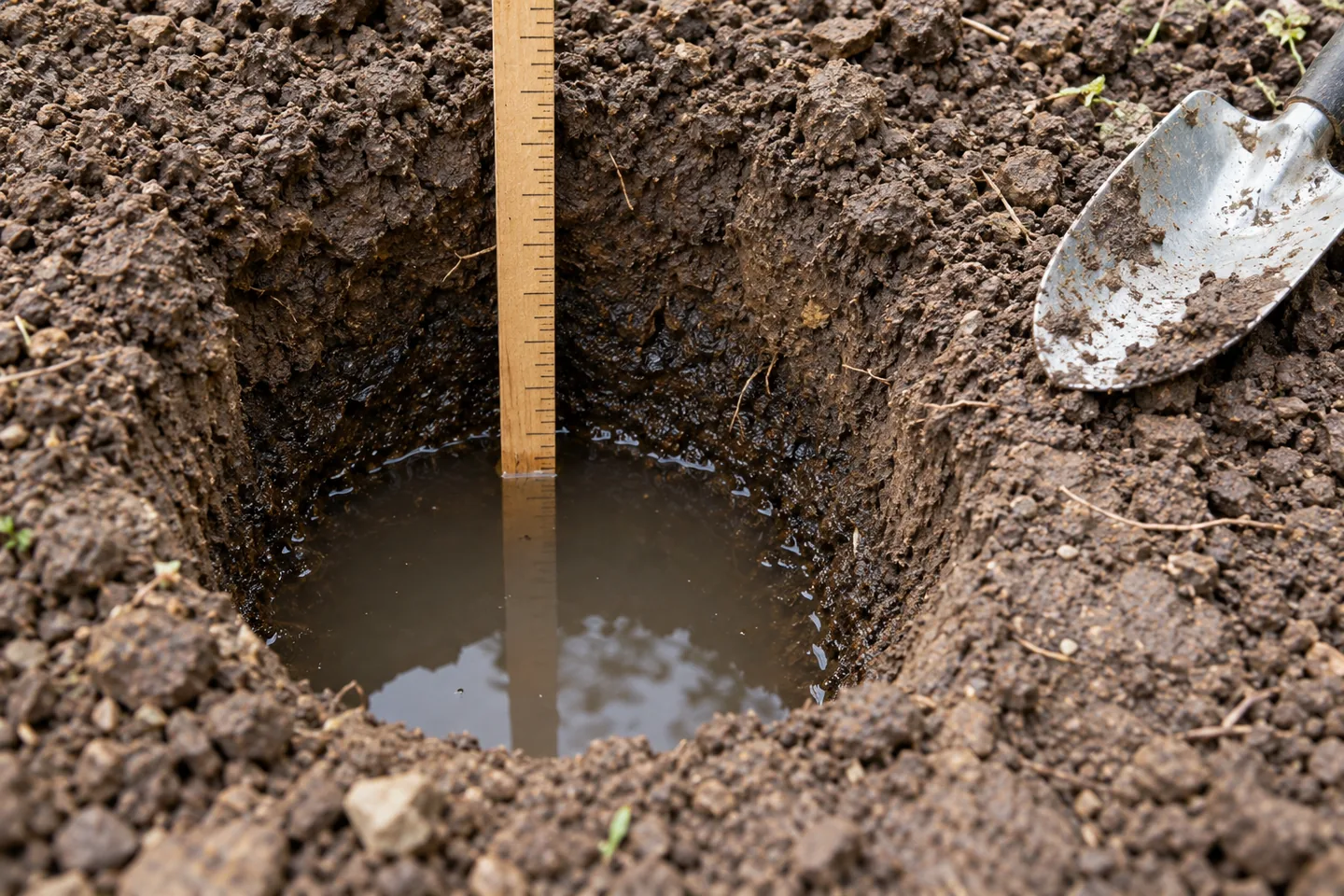
Test the place you want to plant
A result from the lawn won't necessarily describe the border beside your patio. Choose an open spot within the proposed bed. If one end regularly stays wet while the other dries, record them separately rather than assuming the entire border behaves alike.
In the US, contact 811 before digging, wait the required time and confirm that all utilities have responded. Also locate private irrigation or other buried lines, and avoid substantial tree roots. Keep the hole protected while testing and refill it afterward.3
Note the date, recent weather and location. Wait for workable ground rather than digging frozen or saturated soil. Keep a photo after rain too: the test is a snapshot of one spot, while repeated puddling tells you something about how the bed behaves over time.
Measure the second fill, after the soil is wet
You'll need a shovel, water, a ruler and a timer. This follows Iowa State Extension's 15-minute method.
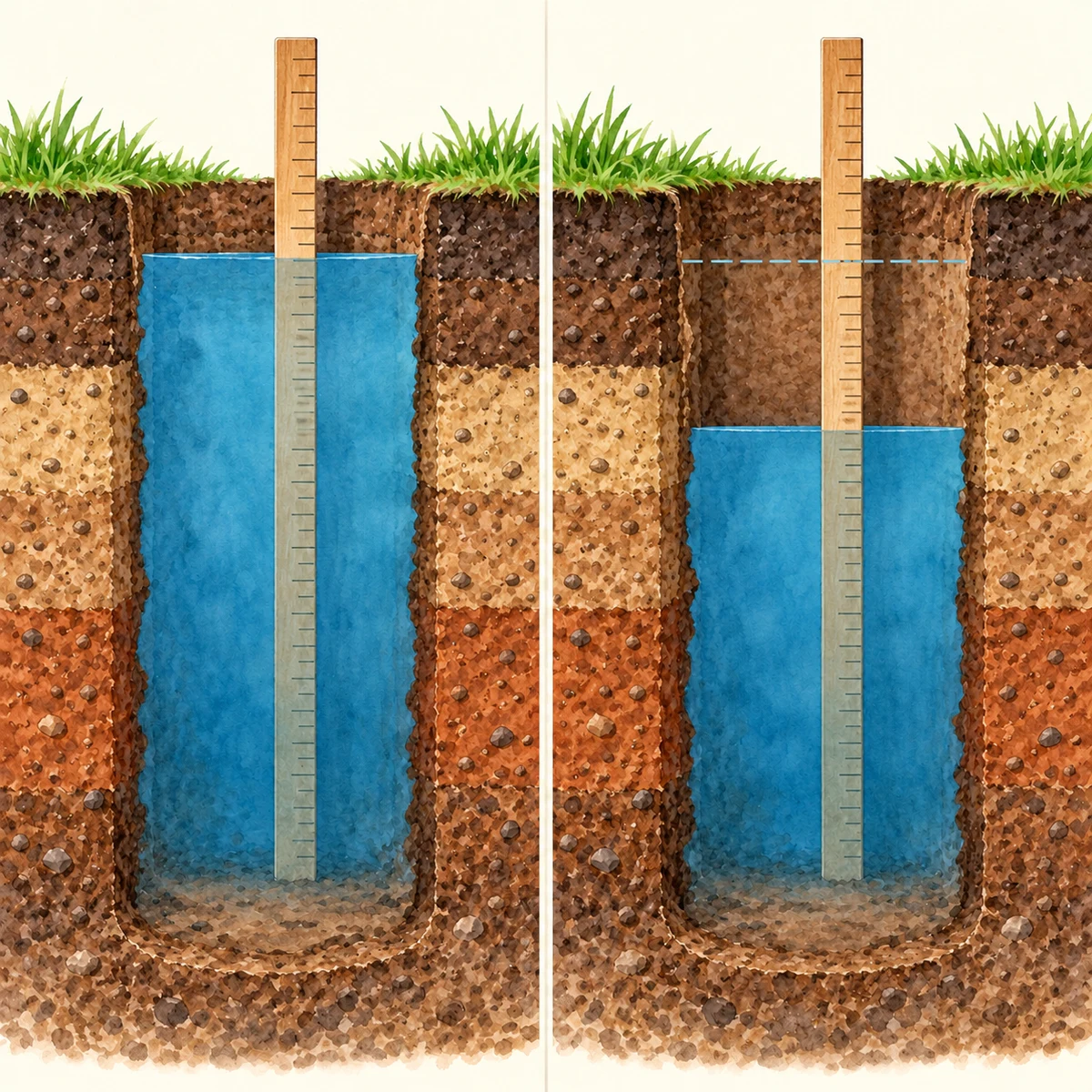
- After refilling
- 15 minutes later
For example, a half-inch drop in 15 minutes gives 0.5 × 4 = 2 inches per hour. Keep the two readings as well as the answer so you can explain what you measured.1
If the hole empties before your timed reading, write down when it emptied. A zero reading at 15 minutes cannot tell you the exact rate of a hole that was already empty earlier.
What to do next
- 1Dig at least 12 inches deep and 4–12 inches wide; Iowa State allows up to 18 inches for taller root balls. Avoid smearing overly wet soil against the hole's sides.
- 2Fill with water and let it drain to wet the surrounding soil. The first fill may drain quickly or take much longer; it isn't the timed reading.
- 3Immediately refill after it drains. Set the ruler’s zero at the bottom and record the water depth. Wait 15 minutes, then read the depth again with the ruler in the same place.
- 4Subtract the later depth from the starting depth. Multiply the drop in inches by four for an hourly estimate.
Use the rate to guide the next decision
Iowa State gives these screening ranges for garden soil. They help narrow a plant shortlist, rather than approve every plant in the bed.
| Estimated rate | What it suggests | What to do next |
|---|---|---|
| Estimated rateBelow 1 inch/hour | What it suggestsSlow drainage | What to do nextInvestigate persistent wetness or choose wet-tolerant plants. |
| Estimated rate1–3 inches/hour | What it suggestsSuitable drainage for many plants | What to do nextCheck each plant's other requirements. |
| Estimated rateAbove 4 inches/hour | What it suggestsVery fast drainage | What to do nextConsider plants suited to drier conditions. |
Sources: Iowa State University Extension
One border can have two different planting conditions
Imagine testing both ends of a patio border. Use the same method at each spot, then keep the results attached to their locations on your sketch.
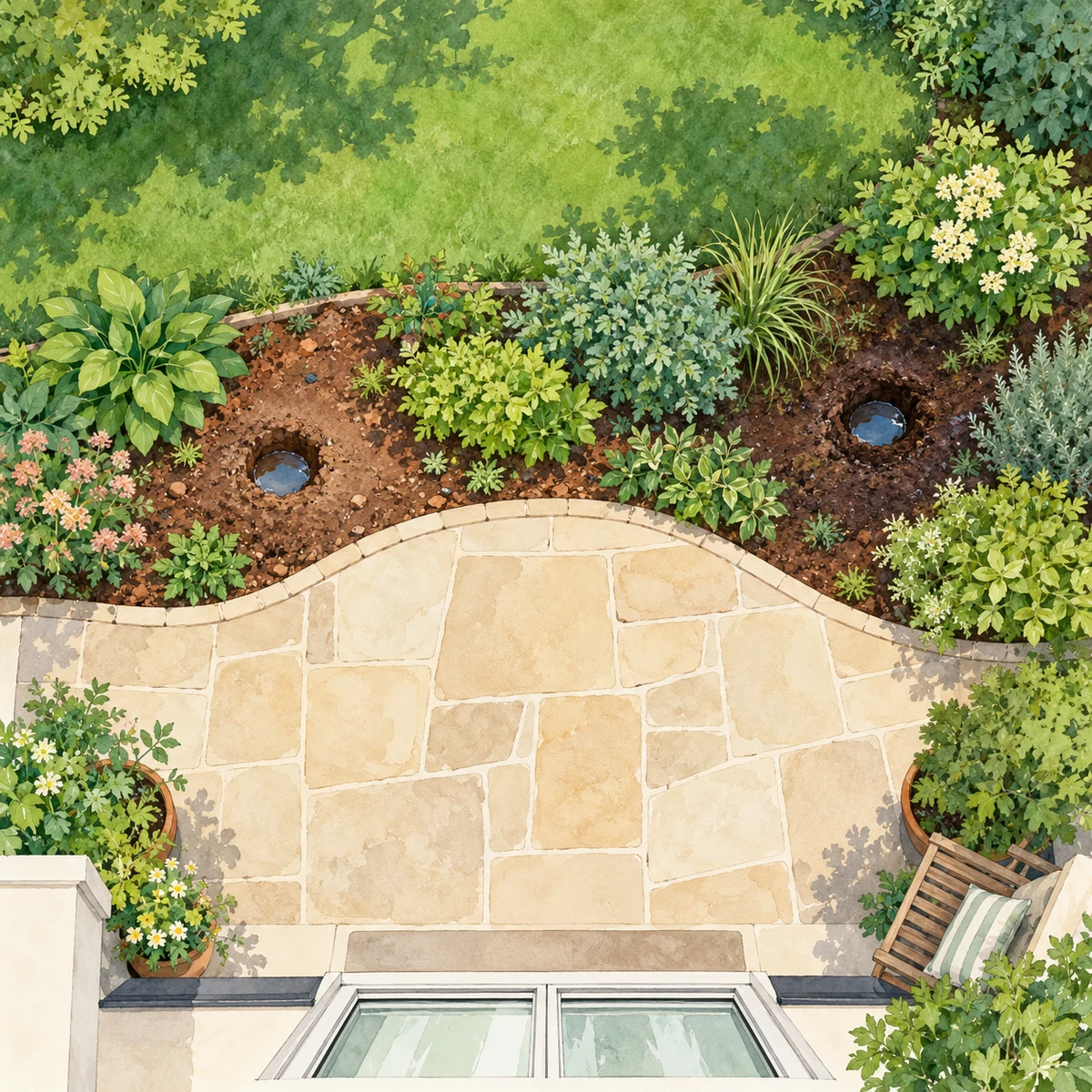
- 1
Left spot: half an inch in 15 minutes
The hourly estimate is 2 inches. That supports a broader shortlist, provided the plants also fit the sunlight, climate and available space.
- 2
Right spot: one-eighth inch in 15 minutes
The hourly estimate is half an inch. If this corner also stays wet after rain, keep it separate in the plan and investigate why before buying a matching row of plants for the whole border.
Solve the planting decision before buying amendments
Slow drainage doesn't identify its own cause. Maryland Extension lists possibilities including compaction, a restrictive soil layer, buried debris and a high water table. A lab soil test answers different questions, such as pH and nutrient levels; it doesn't replace observing water in the bed.2
Take the location, readings and rain photos to your local Extension service or a knowledgeable nursery. Ask whether a different plant palette suits the existing bed. If water threatens the house or paving, or the solution involves changing levels and redirecting runoff, get site-specific drainage advice before altering it.
Keep the drainage notes with your sunlight observations and yard photo. Gardenful can help you picture a planting design and explore suggested plants once you know which area you want to change.
Frequently asked questions
Does a soil test tell me whether my soil drains well?
A standard laboratory soil test usually reports chemical properties such as pH and nutrients. Check drainage separately in the planting area, and record what happens after rain.
Can I use this as a septic or construction percolation test?
No. This is a garden planting check. Septic approval, engineered drainage and rain-garden siting have their own local requirements and testing methods.
What if the first fill hasn't drained?
Record what you observe and protect the hole. Don't treat the first fill as the timed result or force a numerical rate from it. Persistent water is a reason to investigate the spot before planting.
 Gardenful
Turn your site notes into a planting design.
Use a photo of your yard to explore a Gardenful design, then check its suggested plants against the light, soil and space you've recorded.
Gardenful for iPhone
Download the app free and start with a photo of your yard.

Sources(3)
- [1]Testing and Improving Soil Drainage
Iowa State University Extensionhttps://yardandgarden.extension.iastate.edu/how-to/testing-and-improving-soil-drainage
- [2]Soil Health, Drainage, and Improving Soil
University of Maryland Extensionhttps://extension.umd.edu/resource/soil-health-drainage-and-improving-soil
- [3]Before You Dig
Common Ground Alliance / 811https://811beforeyoudig.com/Before-You-Dig/