Small-space garden design
Balcony garden ideas for small spaces
The short answer
Treat the balcony as an outdoor room: keep the door and walking route clear, put plants where light and wind fit, and give the space one main use such as sitting, privacy, herbs, or flowers. Check building rules, weight, drainage, and railing conditions before adding containers.
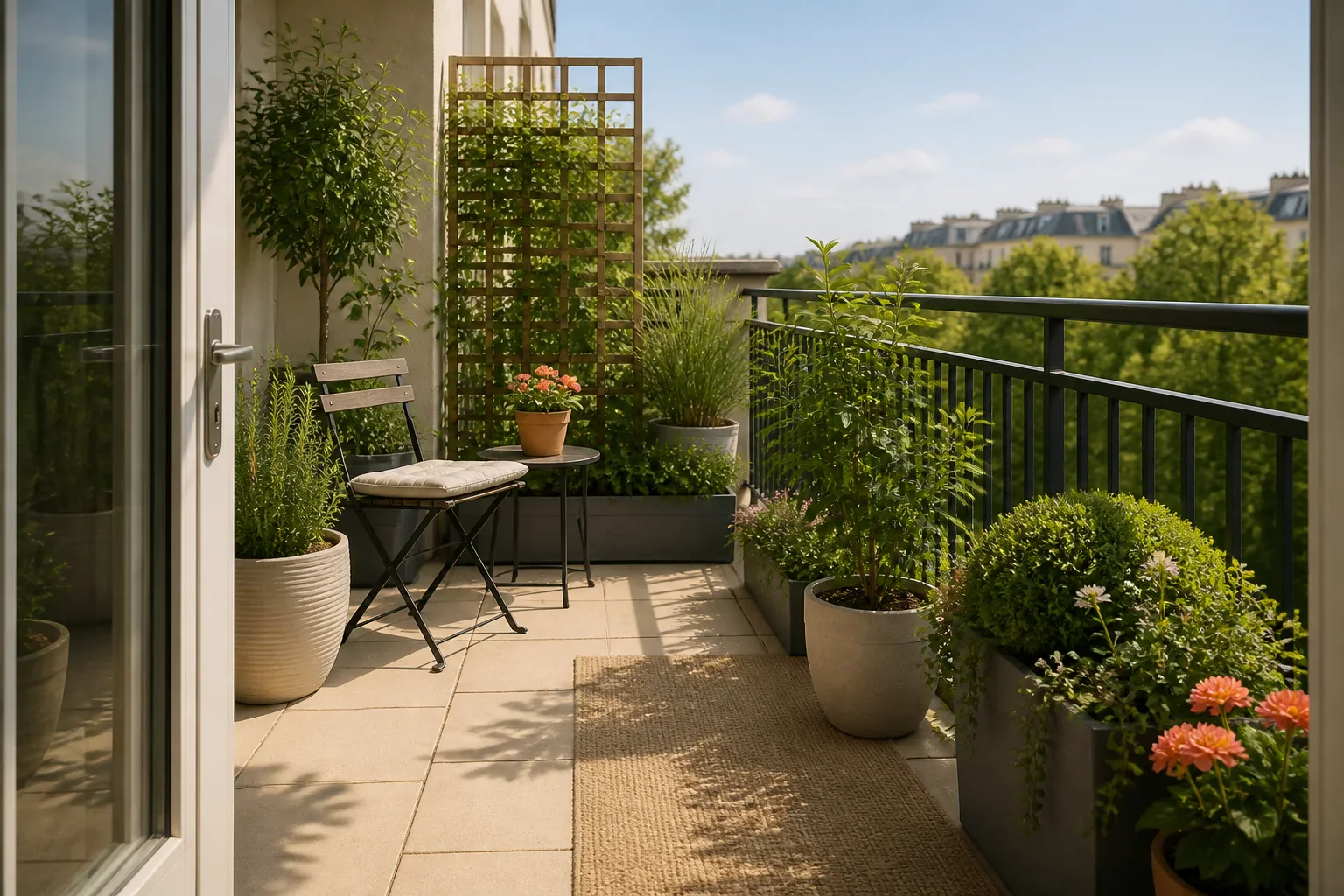
Start with the door, route, and view
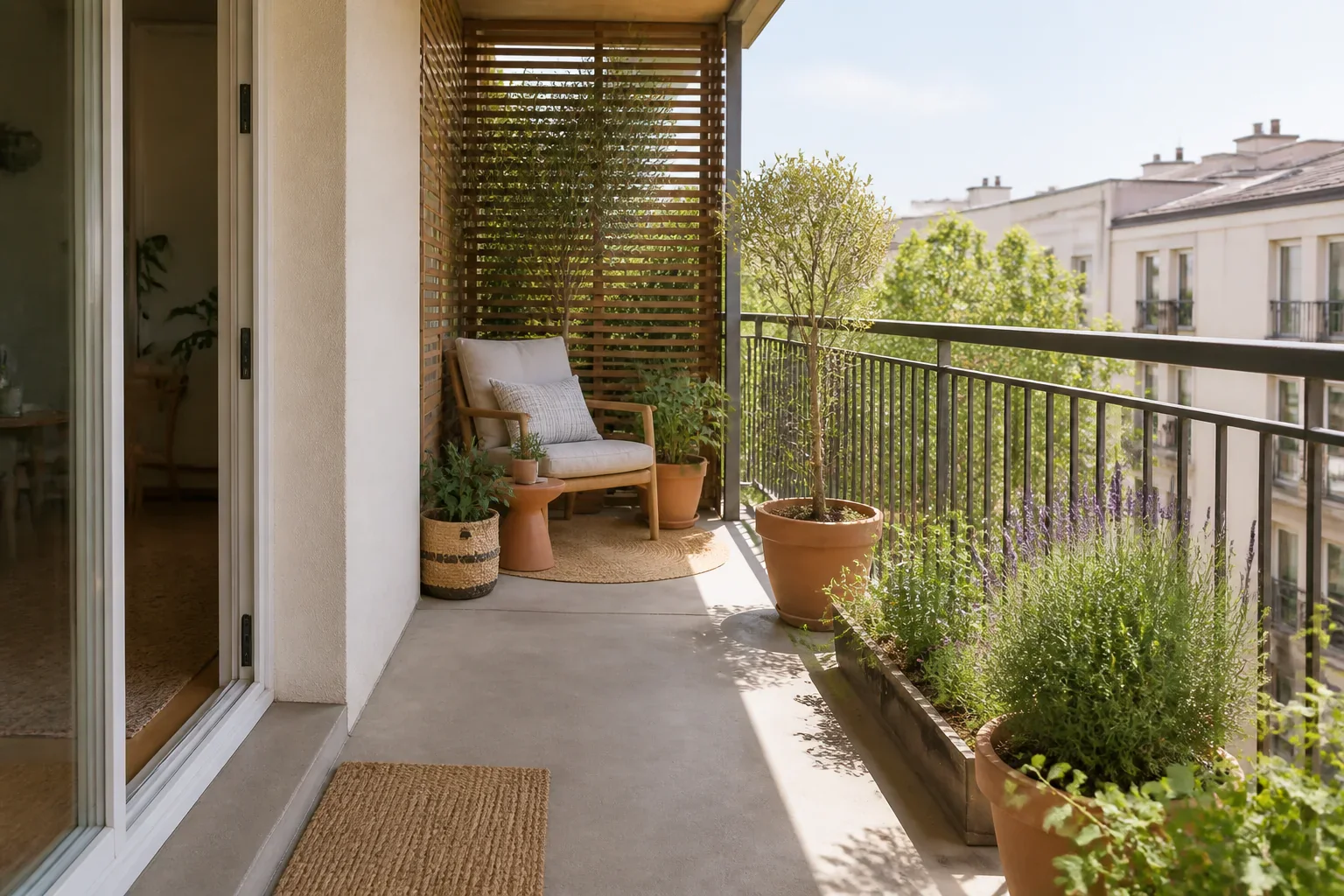
Start at the door and trace the route you use with a watering can, groceries, laundry, or a chair. Protect the door swing, walking path, drainage points, and room to tend each pot.5,3
Watch the space at different times of day. Note the bright edge, sheltered corner, reflected heat, and spots an overhang keeps dry. A balcony can change from sun to shade within a few steps.1,3
Give the balcony one primary use: a seat, privacy, herbs, or flowers. Add secondary uses only when they do not compete for the same corner or block the route.5
Place containers by condition, not by the empty spots
Place each container where exposure, stability, and maintenance access work instead of filling every empty edge.
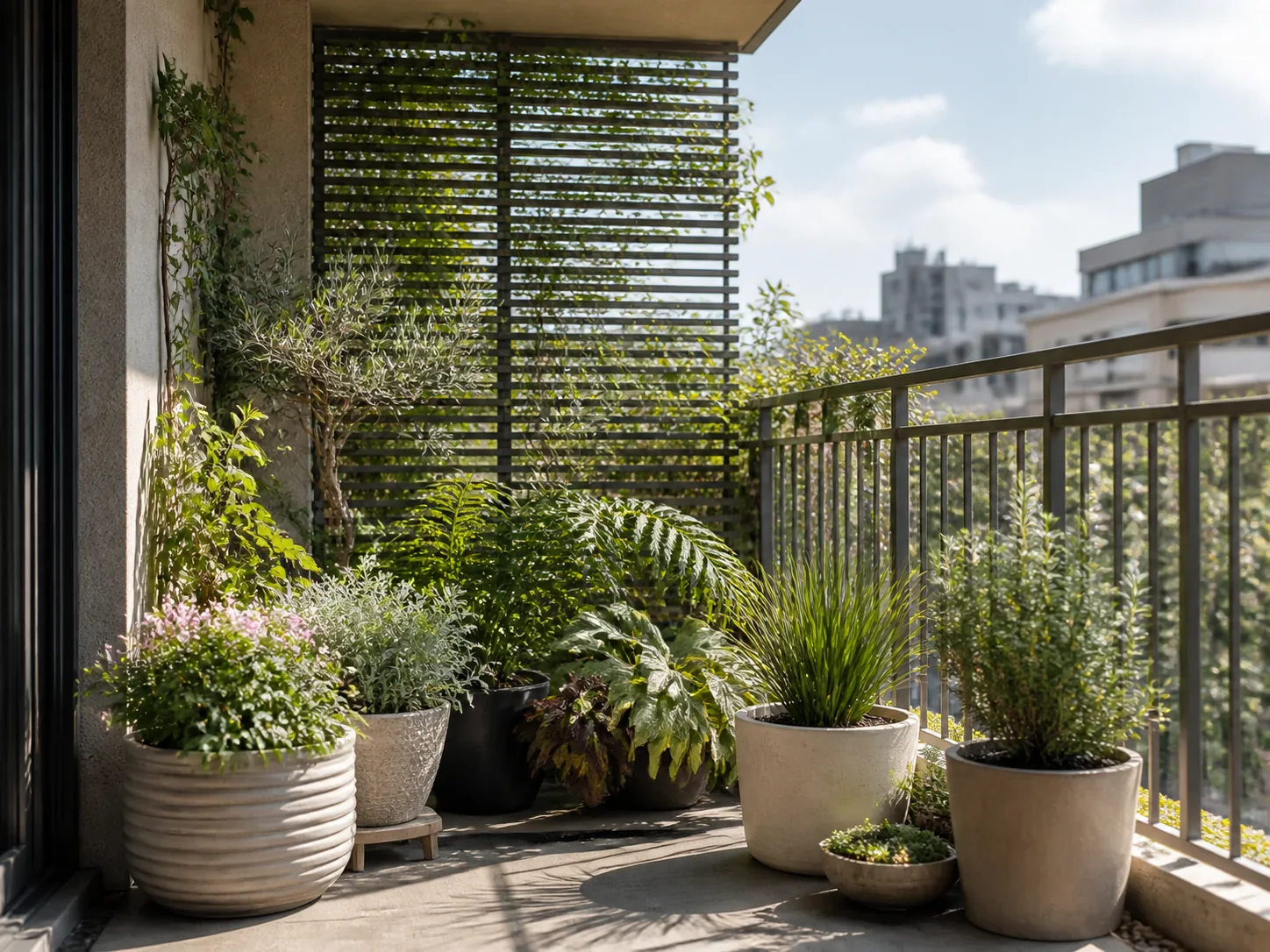
Use a stable base at the exposed edge
Use a broad, stable container for plants that catch wind. Match combined pot and plant weight to the exposure, and confirm balcony limits before placing anything heavy.
Filter wind instead of building a solid wall
Use a slatted or mesh screen to soften wind while letting air through. A solid barrier can create turbulence and add unapproved load.
Reserve the harshest light for plants that can take it
Put sun-loving choices near the bright edge after checking reflected heat. Put shade-tolerant foliage toward the protected side.
Keep water, drainage, and inspection reachable
Leave room to water every pot, control drainage, and inspect railings and attachments without climbing over furniture.
Sources: Royal Horticultural Society, University of Illinois Extension, University of Illinois Extension
Choose plants by the spot and mature size
Choose balcony plants for the conditions you can actually offer, not for a generic container list.
For a bright, hot, exposed edge, match the plant's light, heat, and watering needs to the spot. Herbs, succulents, and flowering annuals may work in the right climate, but check growing zone, winter temperatures, wind, and root volume.3,5
For a sheltered or shaded corner, prioritize foliage, texture, and a watering rhythm you can maintain. Plants with similar light and moisture needs are easier to combine.3,4
Compare mature size with the container's usable volume, not just the nursery pot. A few generous, compatible containers are often easier to keep healthy than a crowded row of tiny pots.2,4
A long, narrow balcony needs one clear route
When the balcony is narrow, the most useful design move is subtraction: keep the door-to-seat route open and let one planted edge do most of the visual work.
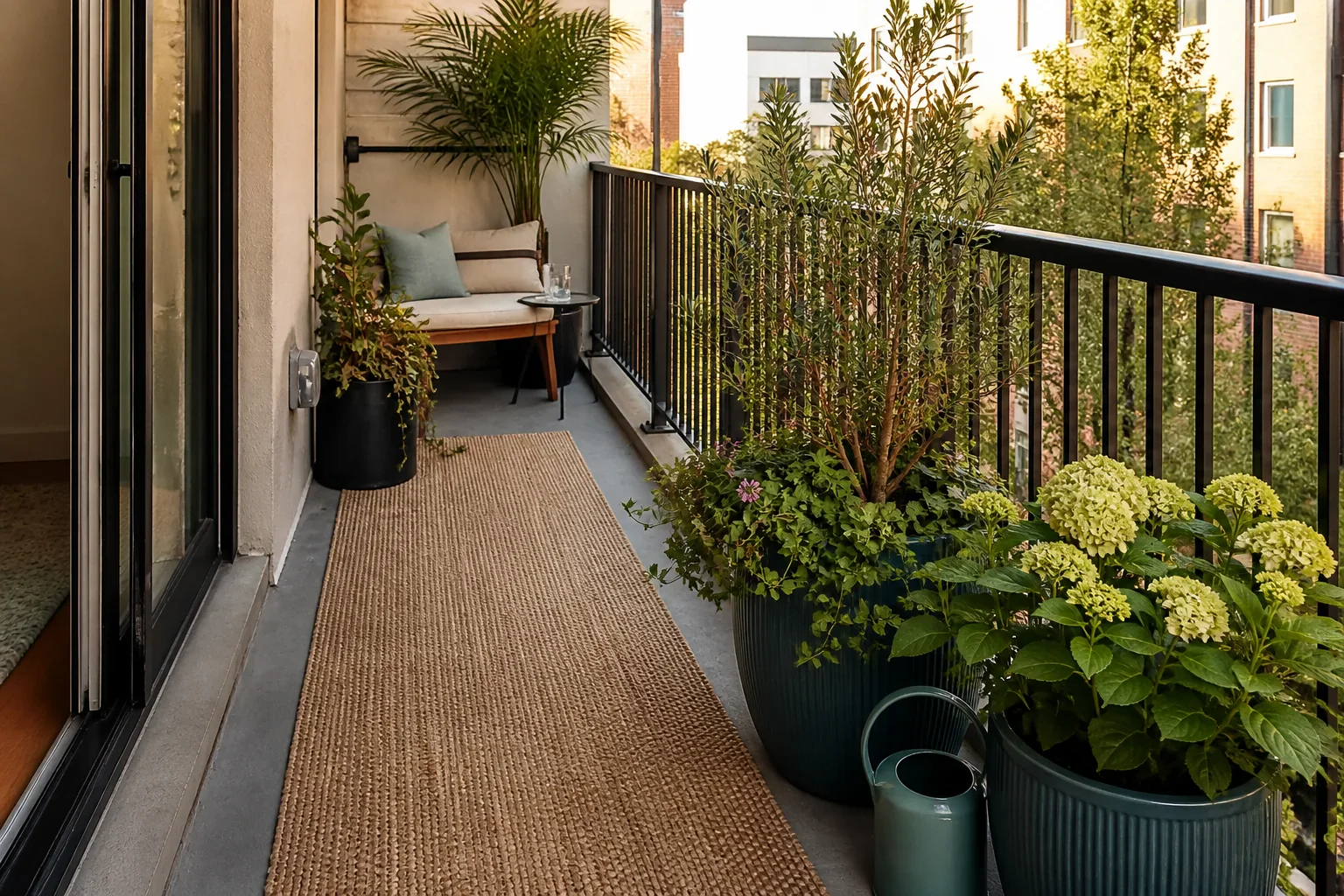
A balcony seen from the apartment door
The balcony is long and narrow, with the brightest light along the railing and a more sheltered corner at the far end. The resident wants a seat, a few plants, and an easy watering route.
- 1
Protect the route from the door
Keep the first stretch open so the door, watering can, and everyday movement do not have to weave through pots.
- 2
Let the far corner hold the seat
Place the chair where it does not pinch the route, then use a taller plant or filtered screen behind it only if the building rules allow the support.
- 3
Group the containers along one edge
Use a few related pots with compatible plants, leaving access to each one and keeping the outer edge clear of unapproved attachments.
The balcony feels larger because the route is continuous. The planting reads as one deliberate edge instead of a collection of pots competing with the furniture.
Check the building before you buy anything heavy
A beautiful container plan is still only a sketch until the building and the physical balcony can support it.
Confirm the rules: Check landlord, condo, building, and local requirements for containers, railings, screens, attachments, and water runoff.
Ask about weight limits: Soil, water, containers, plants, furniture, and people all add load. Do not guess at a safe weight or place a heavy group without appropriate building guidance.
Keep drainage controlled: Use containers with working drainage and a setup that will not stain the surface, damage the building, or drip onto people or property below.
Plan for bad weather: Know where pots, furniture, and screens go during strong wind, heat, storms, and winter conditions before the forecast forces a rushed move.
Leave a way to maintain it: You should be able to water, prune, inspect, and remove each container without leaning over the railing or blocking the exit.
If you cannot verify the rules, weight, attachments, or drainage, use portable containers only and ask building management or a qualified professional before adding fixed or heavy pieces.
Frequently asked questions
How do I start a balcony garden?
Start with the door, walking route, primary use, light, wind, drainage, and building rules. Then choose a few stable containers and plants whose mature size and care needs fit the exact spots.
What is the best layout for a small balcony?
Keep a continuous route from the door, group most containers along one edge, and reserve a corner for seating or a focal plant. Avoid filling every edge before you know how the space is used.
Are heavy planters safe on a balcony?
Do not assume they are safe. Soil, water, pots, plants, furniture, and people all add load. Check the building's rules and weight guidance, and ask a qualified local professional when the load or support is uncertain.
How do I protect balcony plants from wind?
Use stable broad-based containers, place tall or top-heavy plants where they are less exposed, and consider a well-supported slatted or mesh screen rather than a solid wall. Secure or move items before strong weather.
What plants grow well on a balcony?
The best choice depends on your growing zone, light, wind, heat, watering access, container size, and mature spread. Choose plants with compatible needs for each group and verify exact varieties locally rather than relying on a universal balcony list.
 Gardenful
Plan the balcony around how you use it
Use the balcony's route, light, wind, and primary use to make a short list of containers and plants you can actually maintain.
Gardenful for iPhone
Download the app free and start with a photo of your yard.

Sources(5)
Balcony conditions vary by building, climate, exposure, and local rules. These sources support the planning and safety boundaries; they do not replace building guidance, structural review, or local plant verification.
- [1]Roof Gardens and Balconies
Royal Horticultural Societyhttps://www.rhs.org.uk/garden-design/roof-gardens-balconies
- [2]Container Size
University of Illinois Extensionhttps://extension.illinois.edu/container-gardens/container-size
- [3]Containers
University of Illinois Extensionhttps://extension.illinois.edu/container-gardens/containers-0
- [4]
- [5]Container Gardening for Small Spaces
University of Minnesota Extensionhttps://extension.umn.edu/news/container-gardening-small-spaces-big-beauty-tiny-places