Universal home garden planning
Accessible garden design for an easier, more adaptable yard
The short answer
An accessible garden reduces the effort and uncertainty involved in moving, reaching, resting, and doing routine work. Start with the person, activities, and equipment that will actually use the yard. Make the main route continuous and predictable, bring frequent work within comfortable reach, place water and tools near the plants that need them, and add useful places to rest. Keep permanent changes adaptable, and verify ramps, handrails, grading, and regulated work with qualified local help.
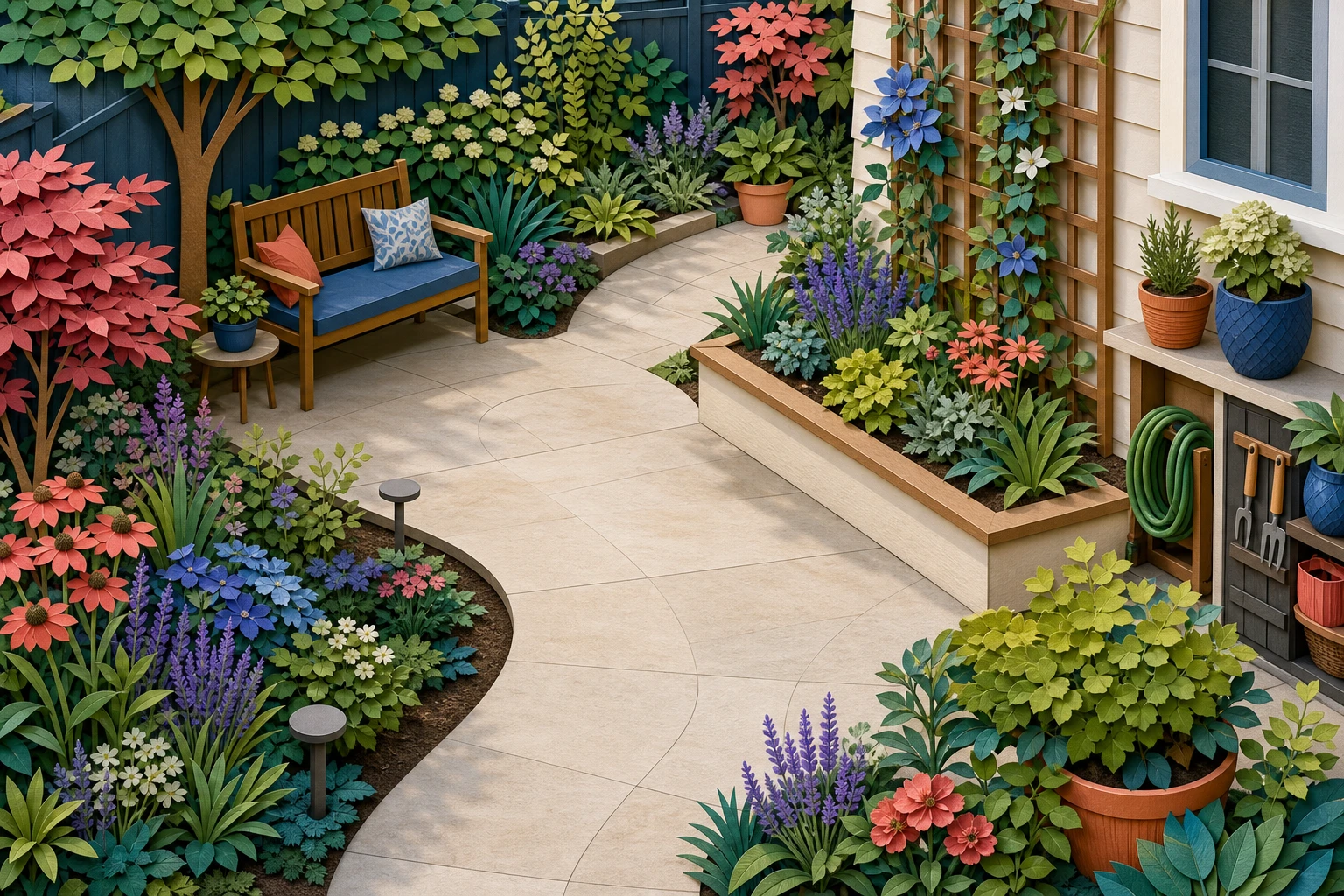
Ask what is difficult before choosing a solution
An older gardener, a wheelchair user, someone with limited grip, and a person managing fatigue may need completely different changes.
Walk through a real garden task from start to finish. Where does the person enter? What do they carry? Where do they turn, sit, water, prune, harvest, or dispose of material? Ask which movement is tiring, painful, unsafe, or simply inconvenient.
Oregon State University Extension frames universal garden design around a broad range of abilities and recommends easier navigation, reachable planting, rest, appropriate tools, and lower-maintenance plant choices. The useful principle is to remove unnecessary effort without making the garden feel clinical.1,2
Prioritize the task that happens most often. Moving the hose, reaching a favorite bed, or getting from the door to a seat may matter more than rebuilding the whole garden.
Connect movement, turning, rest, and work in one route
A route is easier to use when it is continuous, firm, predictable, and connected to the same destinations everyone else uses.
Plan the complete journey from threshold to destination, including the return trip and any place a person needs to pause or change direction.
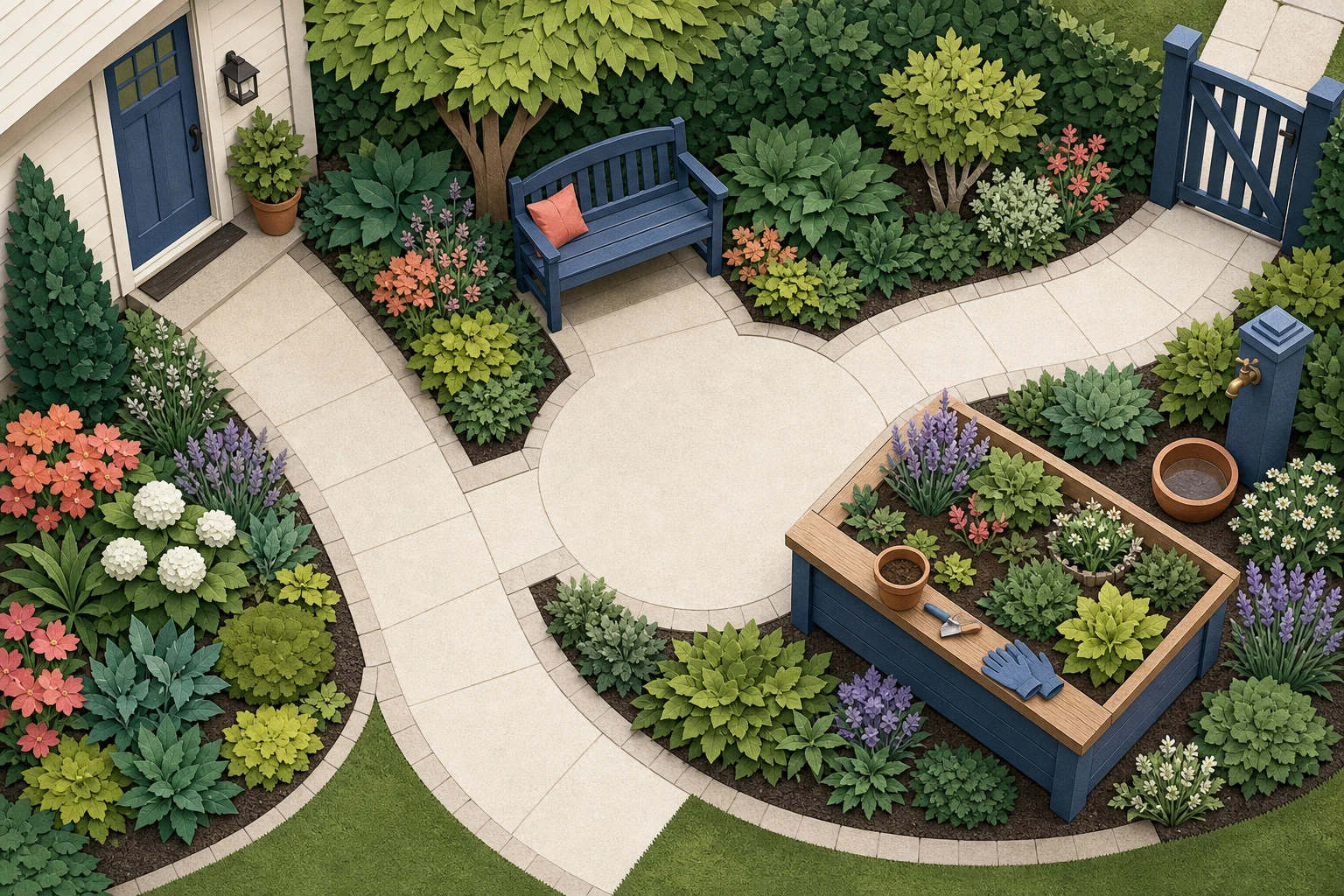
- 1
Threshold
Makes entry part of the plan
Begin where the house meets the yard. Door clearance, level changes, mats, drains, and weather exposure can decide whether the rest of the route is usable.
- 2
Continuous route
Removes avoidable navigation work
Use a stable surface with predictable edges and enough clear space for the actual person, device, helper, wheelbarrow, or cart.
- 3
Rest point
Extends comfortable time outside
Place a supportive seat in shade where a pause is useful, not only where a leftover corner happens to exist.
- 4
Reachable destination
Makes the trip worthwhile
Bring the most valued plants or tasks to a comfortable working height and reach for the intended gardener.
- 5
Return and exit
Completes the journey
Avoid dead ends when possible. Check how the person turns, opens the gate, returns with tools, and moves when the path is wet or busy.
Public ADA standards can inform questions about route continuity and surfaces, but they do not automatically make a private home garden compliant. Use the requirements that apply to the actual property and project.
Sources: Oregon State University Extension, U.S. Department of Justice
Choose the growing format around reach and upkeep
Raised beds are one option, not the universal answer. Compare how each format changes reach, watering, cost, permanence, and soil volume.
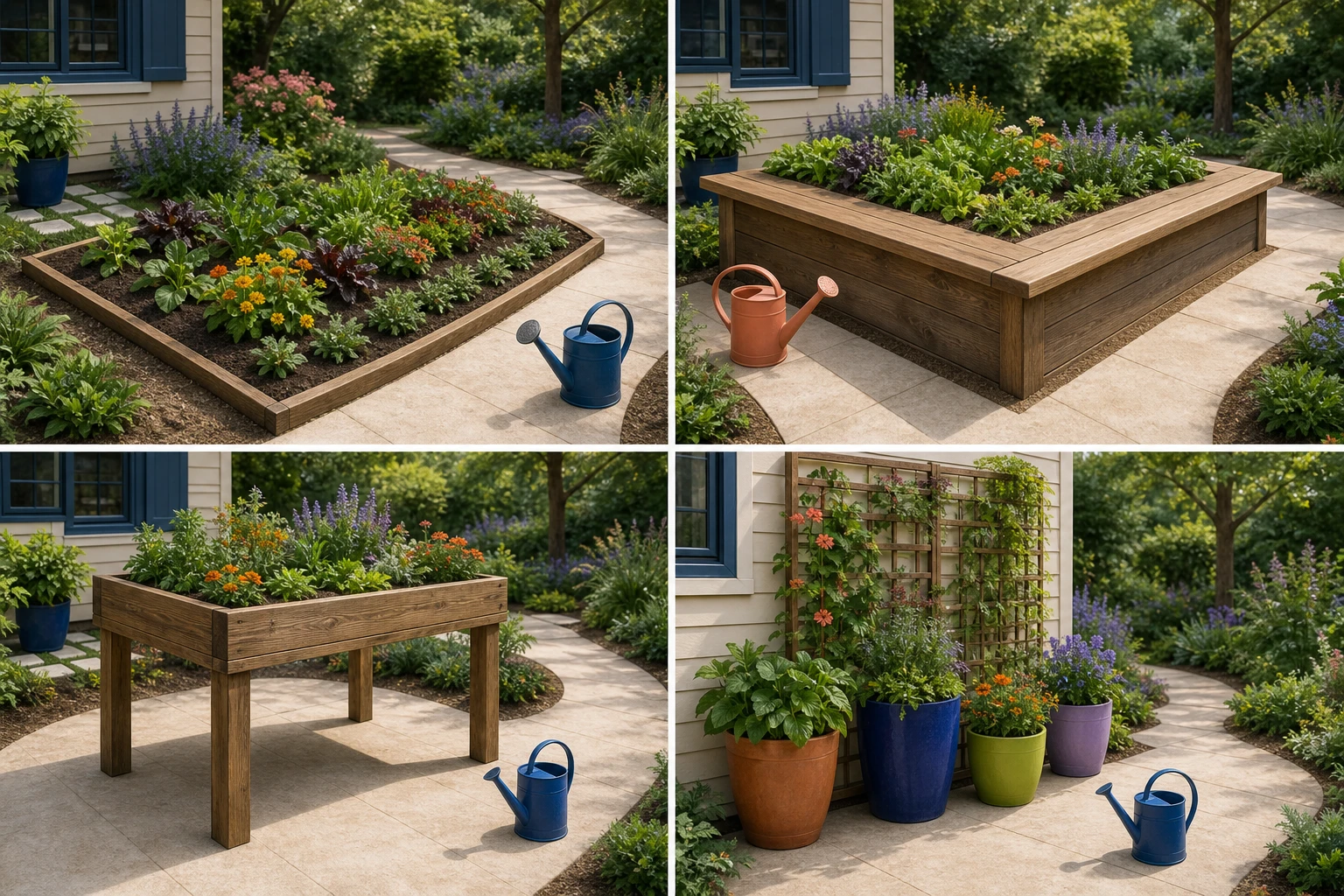
Ground-level bed
Least new construction
Keep the bed narrow enough for the intended reach and make at least one side easy to approach. It uses the existing soil but still requires bending, kneeling, or long-handled tools.
Raised edge with a sitting ledge
Combines planting and rest
A broad stable edge can support seated work and short pauses. Check the approach, leg position, wall stability, drainage, and whether the center is still reachable.
Elevated tabletop planter
Brings a small growing area within reach
Open space beneath can bring the work surface closer to a seated gardener. It has limited soil volume and needs a deliberate watering, drainage, and structural plan.
Containers and a vertical trellis
Most adaptable arrangement
Movable containers and vertical growing can place favorite plants near the door and at varied heights. They dry faster and can become heavy, so reduce lifting and simplify watering.
Bring one frequent garden routine closer together
This example groups watering, tools, potting, compost, planting, and rest around one clear work area beside the house.
A back-door work zone with too much carrying
The gardener tends containers and one raised bed several times a week. The hose, tools, potting surface, and compost currently live in different corners.
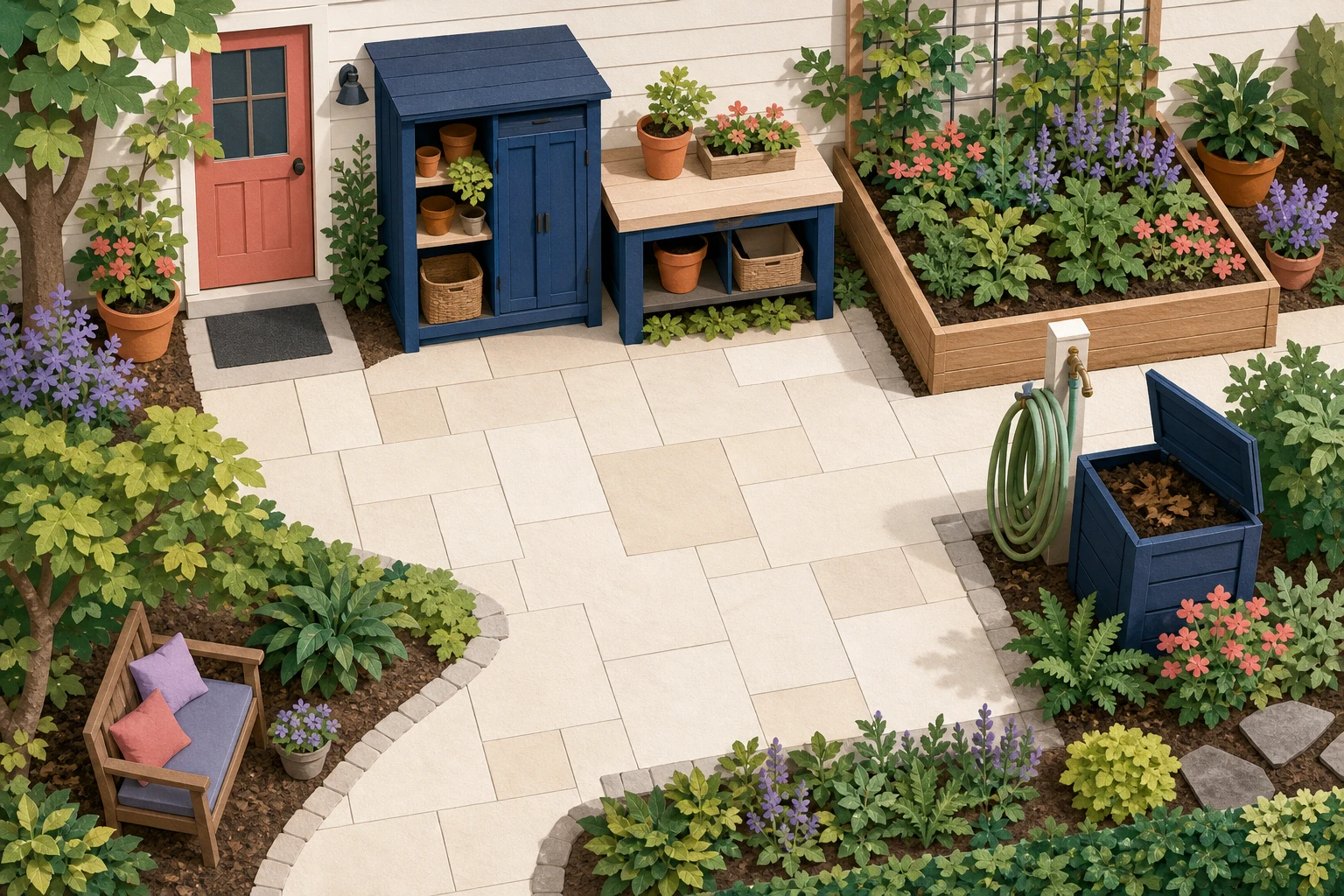
- 1
Store frequent tools by the door
Keep light, frequently used tools at an accessible height. Put heavy or hazardous materials in secure storage appropriate to the household.
- 2
Give potting one stable surface
Use a work height and clear-under space that fit the intended posture, then keep only frequent supplies within easy reach.
- 3
Place water beside the plants
Use an easy-to-operate control and a lightweight hose or suitable irrigation approach. Store the hose off the route after use.
- 4
Keep compost outside the through-route
Put amendments close enough to reduce carrying but far enough aside that lids, tools, and spilled material do not narrow the path.
- 5
Add a shaded pause
A stable seat with useful support turns rest into part of the task instead of the point where the gardening session ends.
The improvement is not a special garden feature. It is fewer long carries, fewer obstacles, and a predictable place for the work.
Keep permanent choices adaptable
A garden cannot be literally future-proof. It can leave room for changing equipment, energy, reach, and interests.
Routes stay predictable: Keep edges legible, control glare where possible, maintain lighting for the actual use, and remove hoses, tools, dropped fruit, and loose material promptly.
Frequent plants stay close: Put herbs, flowers, or crops that receive regular attention near the door, water, and work surface. Reserve farther areas for lower-frequency care.
Containers can move without lifting: Use smaller pots, wheeled supports rated for the load, or permanent positions with watering in place rather than planning repeated heavy moves.
The layout reduces routine maintenance: Favor plants that fit their mature space, repeat manageable forms, cover open soil, and preserve access for pruning, watering, and cleanup.
The plan is tested by the intended user: Walk or roll the route, approach each work area, operate the gate and water, and check the view from seated and standing positions before making permanent changes.
Separate home-garden ideas from regulated construction
A guide can help you ask better questions. It cannot certify an accessible route or replace project-specific design and code review.
Public ADA standards cover particular buildings and facilities. They can help a homeowner understand concepts such as continuous routes, surface stability, slope, and turning space, but they do not automatically govern or certify a private residential garden.
Bring in qualified local help for ramps, handrails, major level changes, retaining structures, drainage, electrical work, or any project that must meet accessibility, building, or permitting requirements. Test the proposal with the person and mobility equipment that will actually use it.
For a smaller first step, remove one recurring obstacle, bring one valued task closer, and add one good place to pause. Those changes can improve the garden without pretending every need has one permanent solution.
Frequently asked questions
What makes a garden accessible?
An accessible garden fits the actual person using it. Common priorities include a continuous stable route, room to approach and turn, planting within comfortable reach, nearby water and tools, useful rest, and fewer trip or carrying hazards.
Do I need raised beds for an accessible garden?
No. Ground-level beds, raised edges, elevated tabletop planters, containers, and vertical growing each solve different reach and maintenance problems. Choose the format after observing the intended gardener's posture, reach, route, and watering routine.
Is an accessible home garden automatically ADA compliant?
No. ADA requirements apply to particular public and commercial settings, and project requirements vary. Use qualified local guidance when a route, ramp, handrail, structure, or facility must meet accessibility or building rules.
How can I make an existing garden easier without rebuilding it?
Clear and repair the main route, move frequent containers closer to the door, store the hose and tools off the path, add a supportive shaded seat, and bring one valued task to a comfortable working height.
 Gardenful
Design the planting around an easier day in the garden.
Photograph the route and the work area together, use Gardenful to explore a planting direction, then test the layout with the person, equipment, and local requirements that matter.
Gardenful for iPhone
Download the app free and start with a photo of your yard.

Sources(4)
- [1]Gardens Are for Everyone
Oregon State University Extensionhttps://extension.oregonstate.edu/catalog/em-9403-gardens-are-everyone
- [2]Designing Gardens Everyone Can Enjoy
Oregon State University Extensionhttps://extension.oregonstate.edu/news/designing-gardens-everyone-can-enjoy
- [3]Raised Bed Gardening
Oregon State University Extensionhttps://extension.oregonstate.edu/sites/default/files/documents/12281/raisedbed.pdf
- [4]2010 ADA Standards for Accessible Design
U.S. Department of Justicehttps://www.ada.gov/law-and-regs/design-standards/2010-stds/