Front yard trees
How to choose the best tree for your front yard
The short answer
The best front-yard tree is not a universal species. It is a locally suitable tree whose mature canopy, roots, and maintenance fit the available space without conflicting with the house, walk, drive, sightlines, or utilities. Choose its job and mature envelope first, then select the exact tree locally.
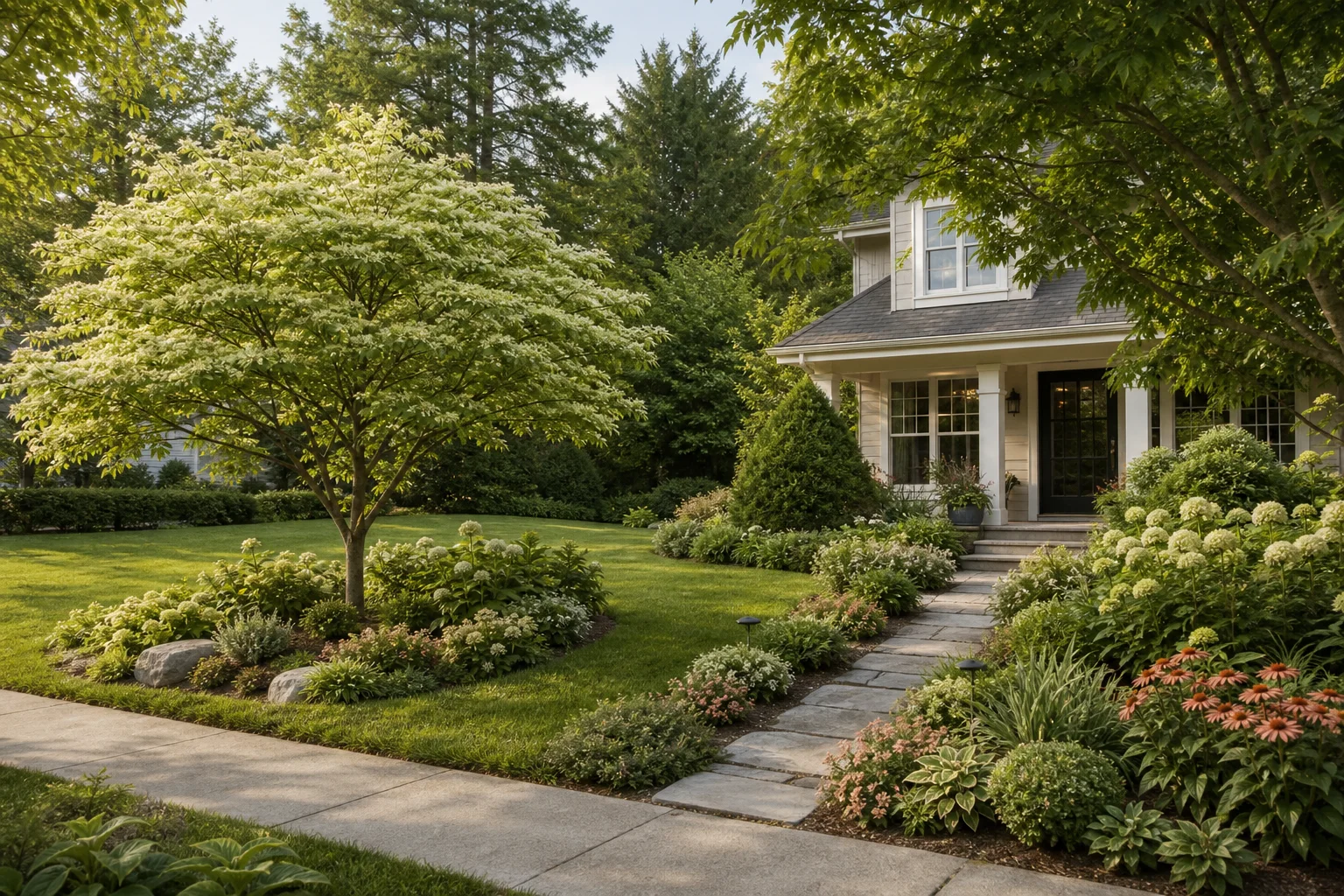
Give the tree one primary job
A tree can do several things, but the leading job determines canopy shape, placement, and acceptable tradeoffs.
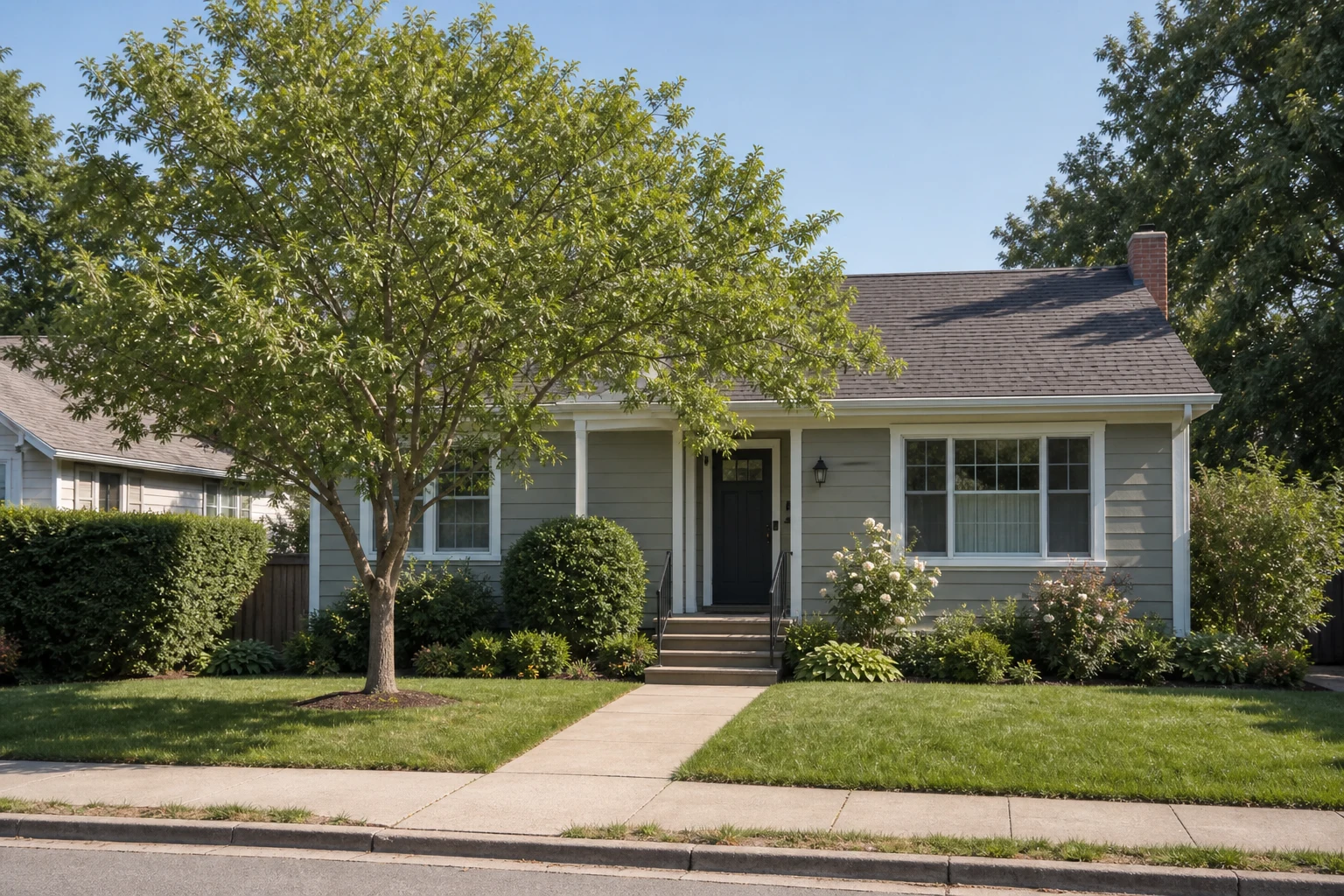
Frame the house
Prioritize form and proportion
Place a canopy near one side of the facade so it balances the view without hiding the entrance.
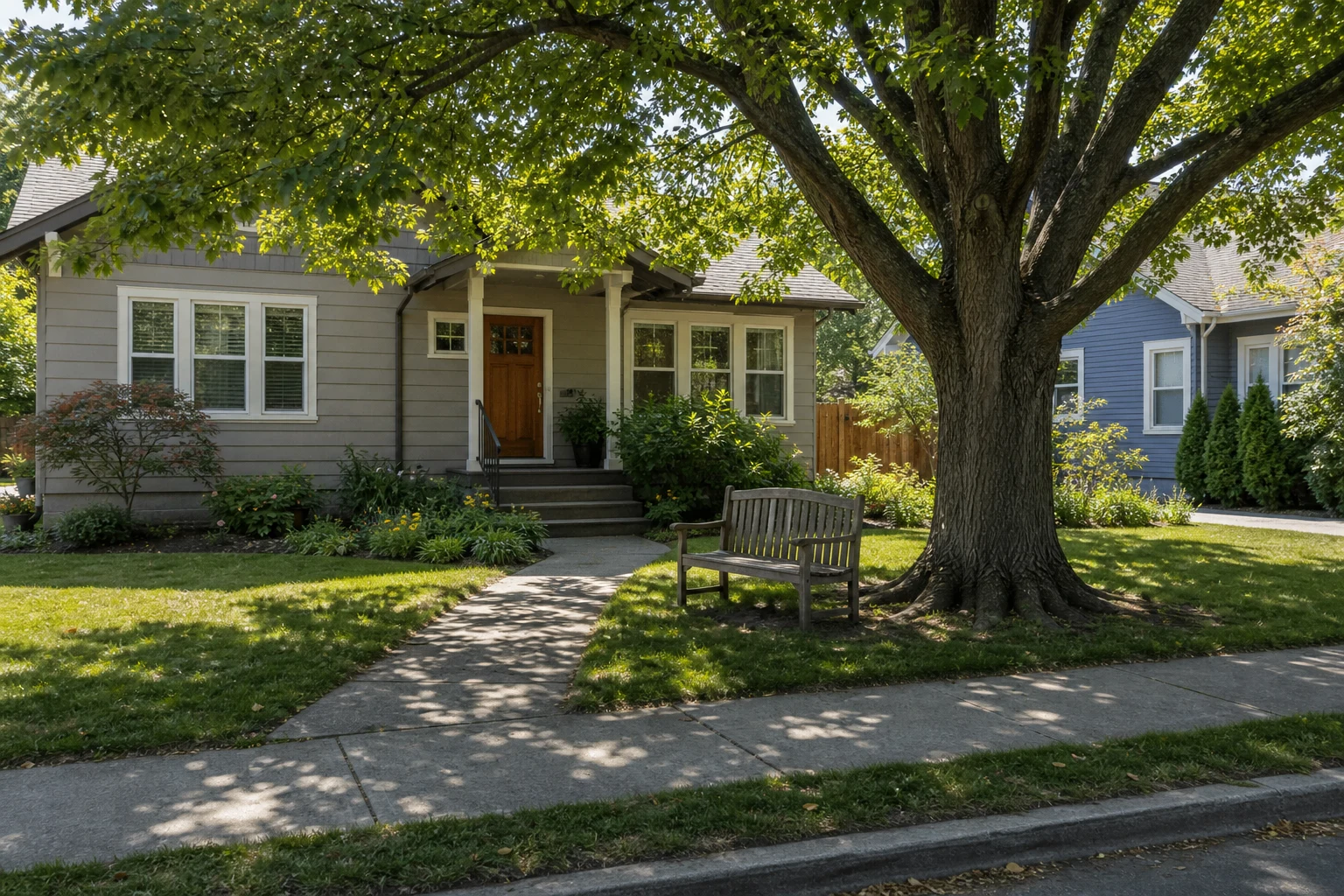
Shade a useful place
Prioritize canopy position
Aim future shade toward a walk, sitting area, or exposed part of the home while respecting climate and structure.
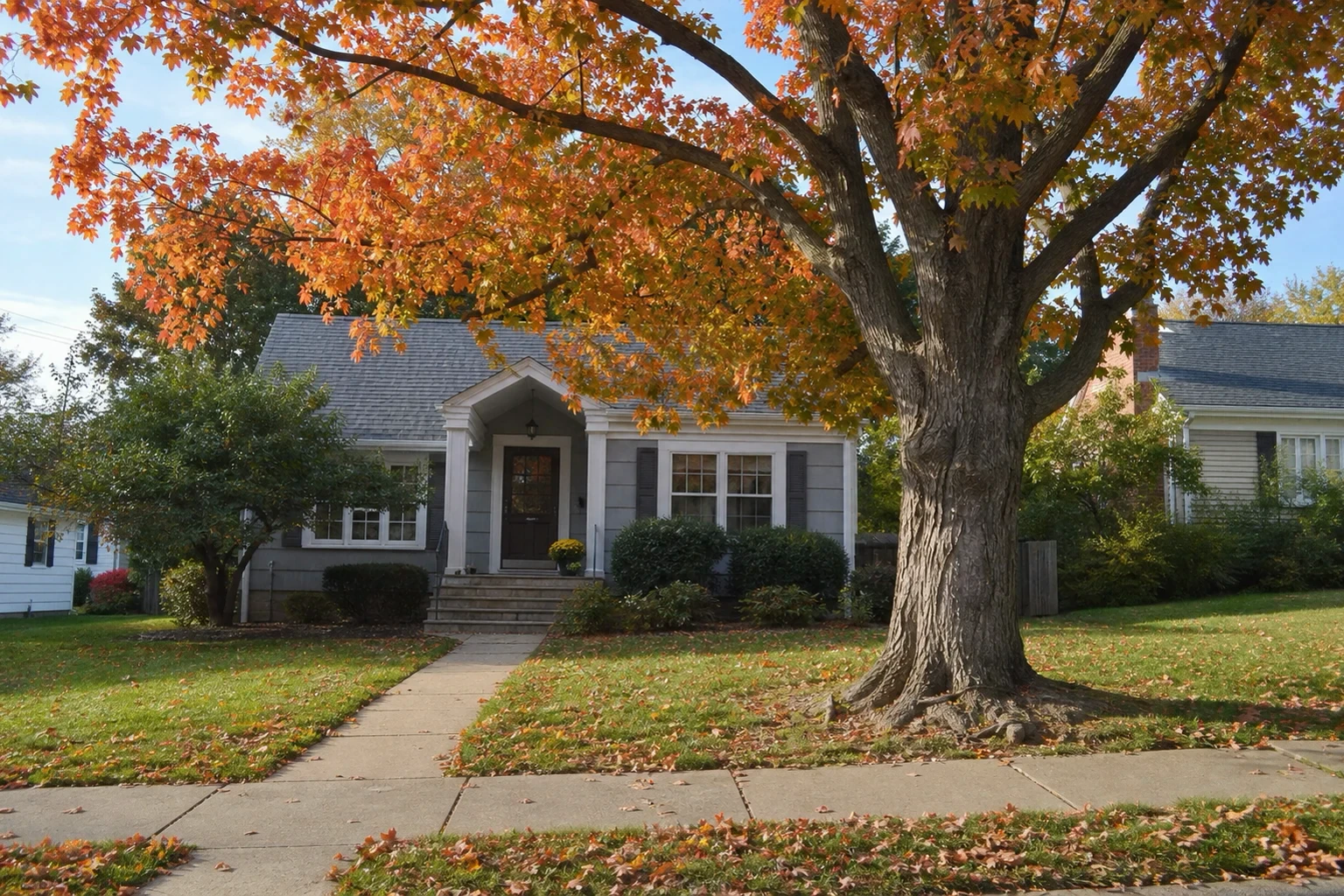
Add seasonal character
Prioritize more than one week
Use flower, fruit, bark, fall color, or winter form only after mature fit and site tolerance work.
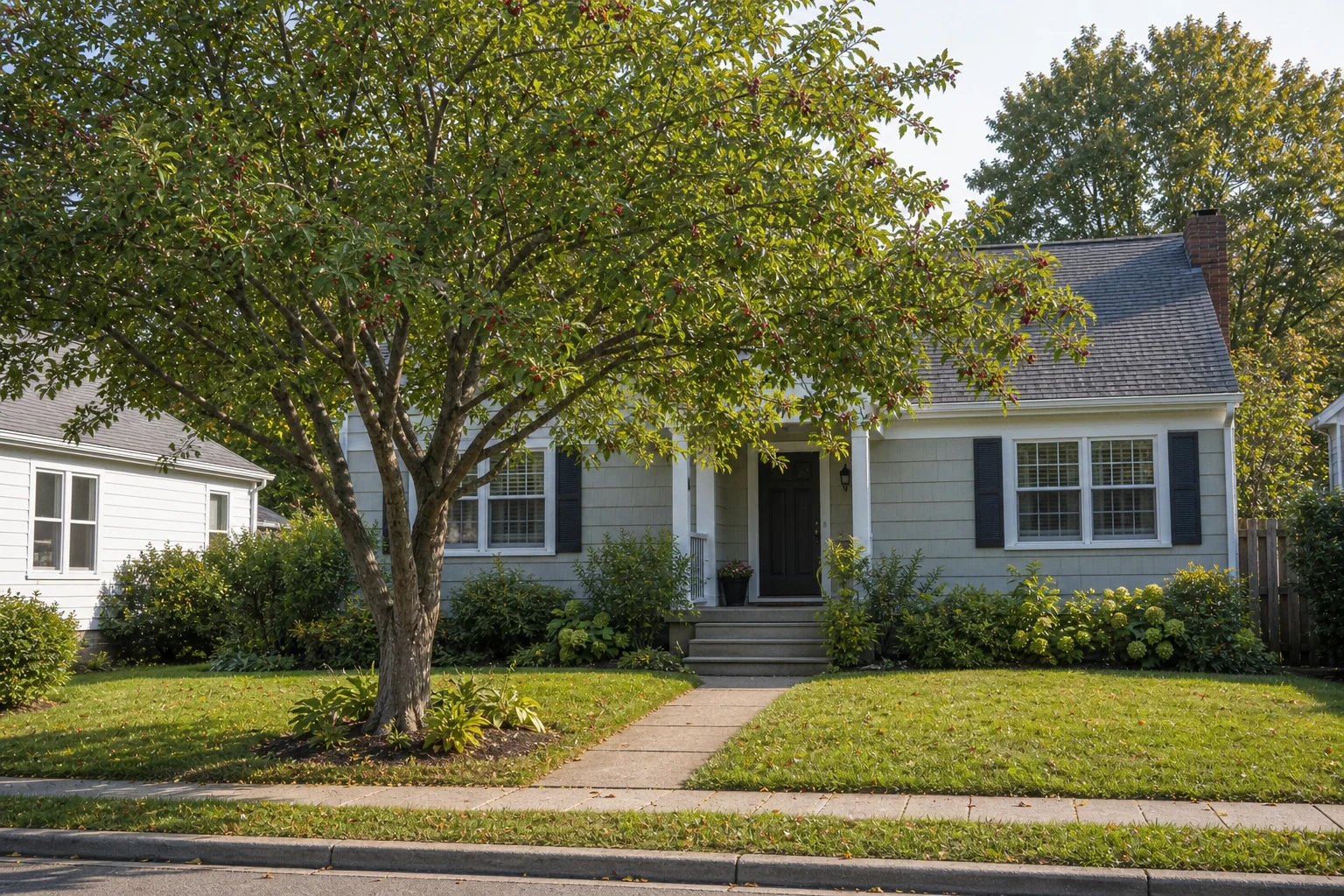
Support habitat
Prioritize one useful resource
Choose the wildlife benefit first—such as supporting caterpillars that birds eat, producing fruit or nuts, providing nectar, or offering cover—then use local guidance to find a regionally appropriate tree that fits the site.
The habitat image shows one visible resource—fruit—rather than treating an animal sighting as proof of habitat value. Verify the exact tree, site fit, and wildlife relationship locally.
Place the mature canopy before naming the tree
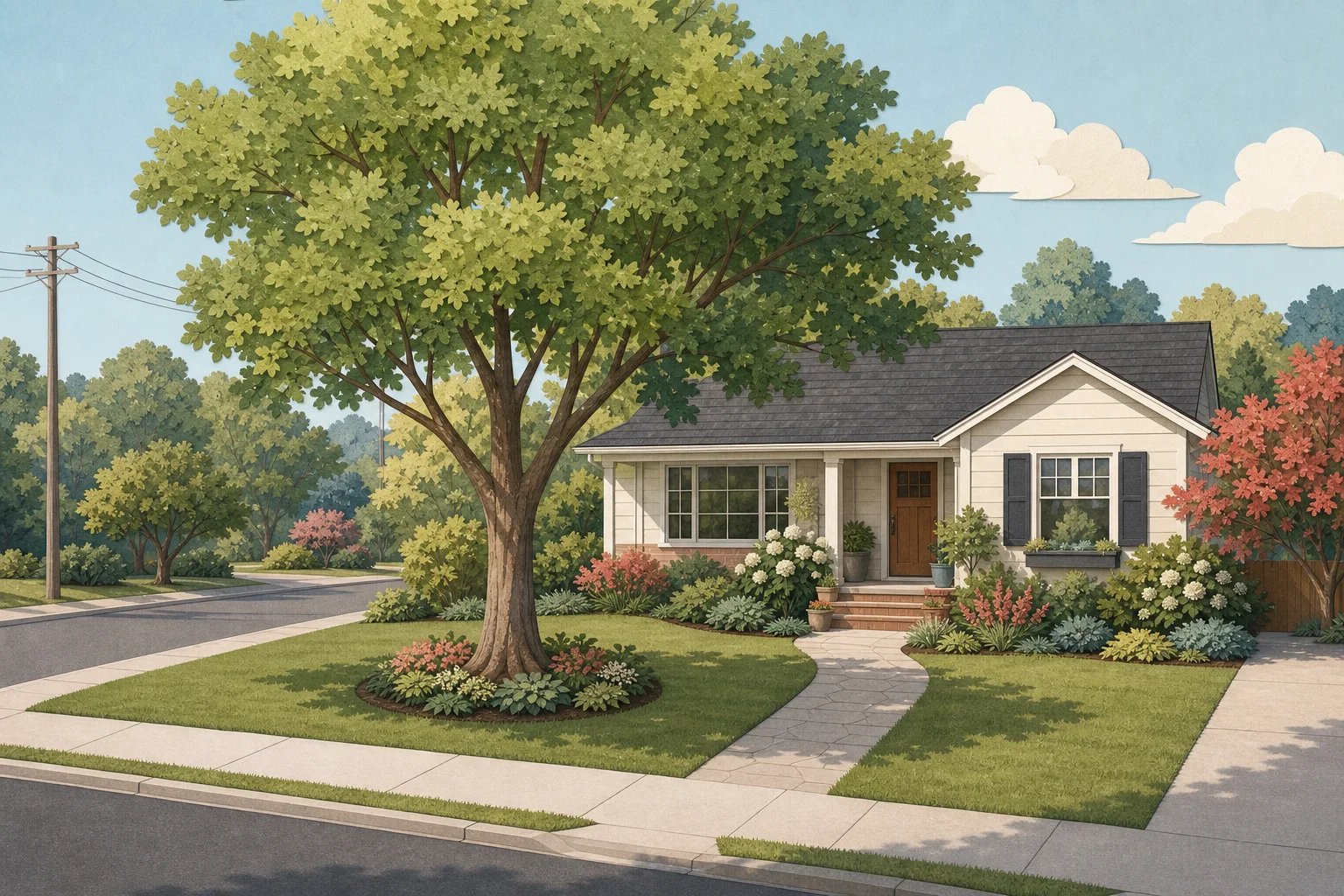
Draw the space the tree will occupy at maturity, including the trunk, canopy, root environment, and maintenance access.
The tree must fit the front yard at maturity with clear relationships to structures, routes, sightlines, and utilities.
- 1
House and roof
Protects long-term fit
Leave room for the mature crown and normal maintenance without planning to control an oversized tree through constant pruning.
- 2
Walk, drive, and street
Protects circulation
Preserve visibility, passage, vehicle clearance, and local setback requirements.
- 3
Utilities
Prevents avoidable conflict
Locate overhead and buried services before species selection or digging. Utility guidance is local and tree-specific.
- 4
Root environment
Supports tree health
Reserve connected soil volume and avoid treating a tiny opening in paving as enough growing space for a large canopy.
Sources: Penn State Extension, University of Minnesota Extension
Ignore the nursery silhouette and picture the mature tree
A young tree can make a bad location look generous. The conflict appears after the landscape is established.
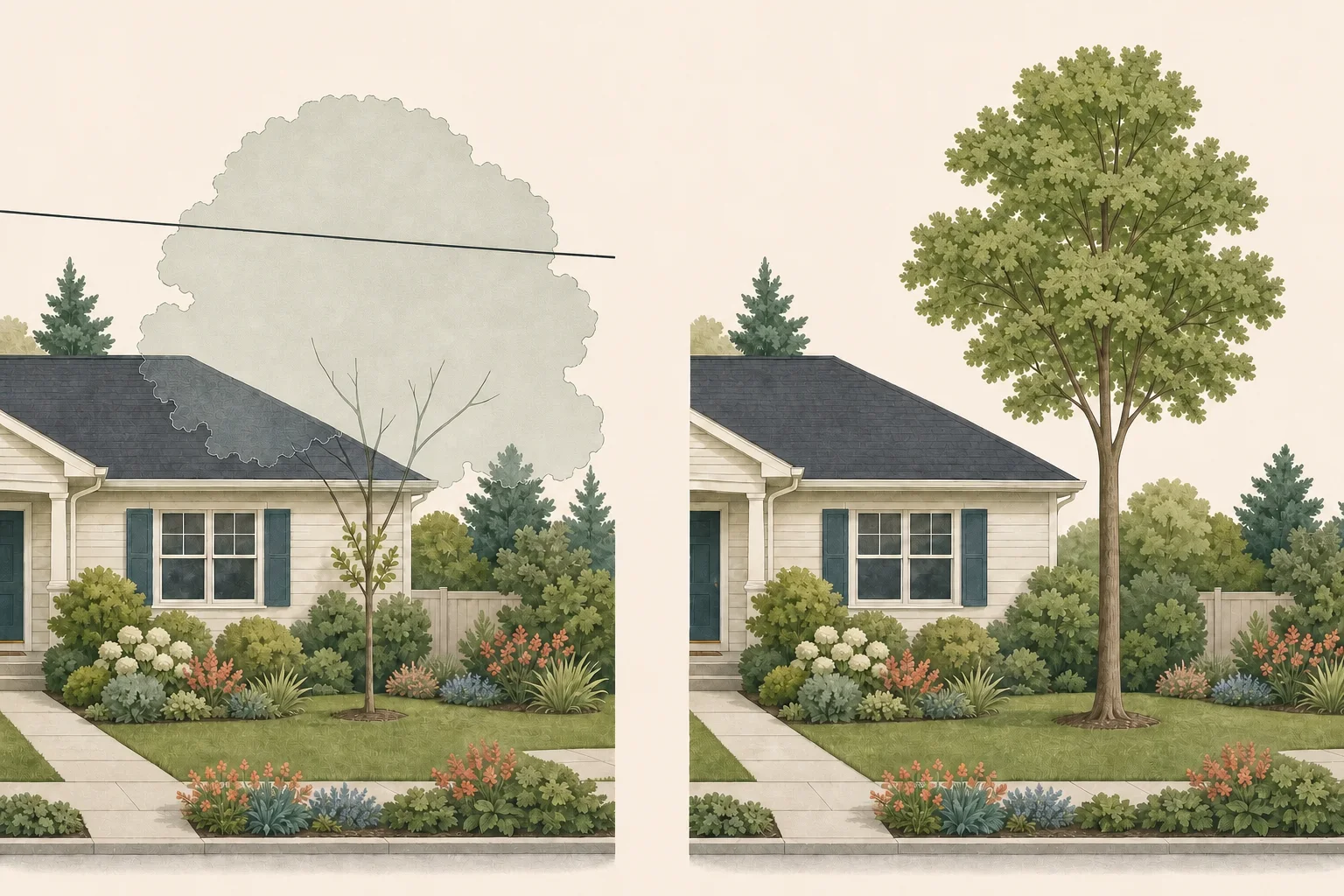
- Nursery size only
- Mature envelope fits
Use the expected mature height and spread for the exact species and cultivar, then check whether local conditions may change that performance. Compare the full envelope with wires, eaves, windows, drives, sidewalks, signs, and views.1,2
Do not rely on repeated topping or severe pruning to hold a large tree inside a small space. Select a tree whose normal mature form fits the job.
Check local tree options against the site
Once the job and space are clear, use local sources to narrow the species and cultivar.
- 1
Climate and hardiness
Check regional heat, cold, chilling, wind, and changing climate conditions alongside the national zone number.
- 2
Sun, soil, and drainage
Match the tree to measured light, soil constraints, compaction, moisture, and irrigation reality.
- 3
Pests, disease, and invasiveness
Use current Extension, municipal, utility, and invasive-species guidance for your location.
- 4
Household and street fit
Consider thorns, fruit drop, allergens, pets, children, fire guidance, snow, salt, and local sightline rules where relevant.
- 5
Available nursery stock
Confirm the exact botanical name and cultivar. Similar common names can hide major differences in mature size and behavior.
A local certified arborist, Extension office, municipal forester, or utility tree list is more useful than a universal top-ten list.
Treat the ground below the tree as changing space
Light, roots, and moisture change as the canopy grows. The first underplanting plan should be easy to edit.
Keep the trunk flare visible and protect it from piled mulch, edging damage, and repeated mower or string-trimmer contact.
Use a broad, simple planted or mulched zone rather than a tight ring of thirsty flowers. Select plants for the current and future shade, root competition, and water regime.
Expect the composition to evolve. A young tree may support sun plants that need replacement as shade increases.
Frequently asked questions
What is the best tree for a front yard?
There is no universal best tree. The right choice fits the mature space, local climate, soil, drainage, utilities, household needs, and the job you want the tree to do. Use local Extension, municipal, utility, nursery, or arborist guidance for the exact species.
How far should a tree be from a house?
The safe location depends on mature canopy and root characteristics, building conditions, local codes, utilities, and species. Draw the mature envelope and get local arboricultural guidance rather than using one distance for every tree.
Can I plant a tree under a power line?
Only select trees and locations approved for the actual utility context. Mature height guidance and required clearances vary, so consult your local utility before buying or planting.
 Gardenful
Test the canopy, then choose the tree.
Use a front-yard photo that includes the house, street, walk, drive, and existing trees. Explore placement and scale in Gardenful, then verify the exact species and planting details with local experts.
Gardenful for iPhone
Download the app free and start with a photo of your yard.

Sources(3)
- [1]
- [2]Planting Trees and Shrubs
University of Minnesota Extensionhttps://extension.umn.edu/news/planting-trees-and-shrubs
- [3]