Gardenful field guide
Child-friendly garden design for play, growing, and family time
The short answer
A child-friendly garden supports movement, discovery, and supervision without turning the whole yard into fixed play equipment. Start with a continuous route a child can follow, and let it loop when the yard allows. Keep the main movement area, gate, growing bed, and shaded pause visible from the usual adult viewpoint. Leave one flexible open area. Secure boundaries, water, plants, products, and age-appropriate play still need their own checks.
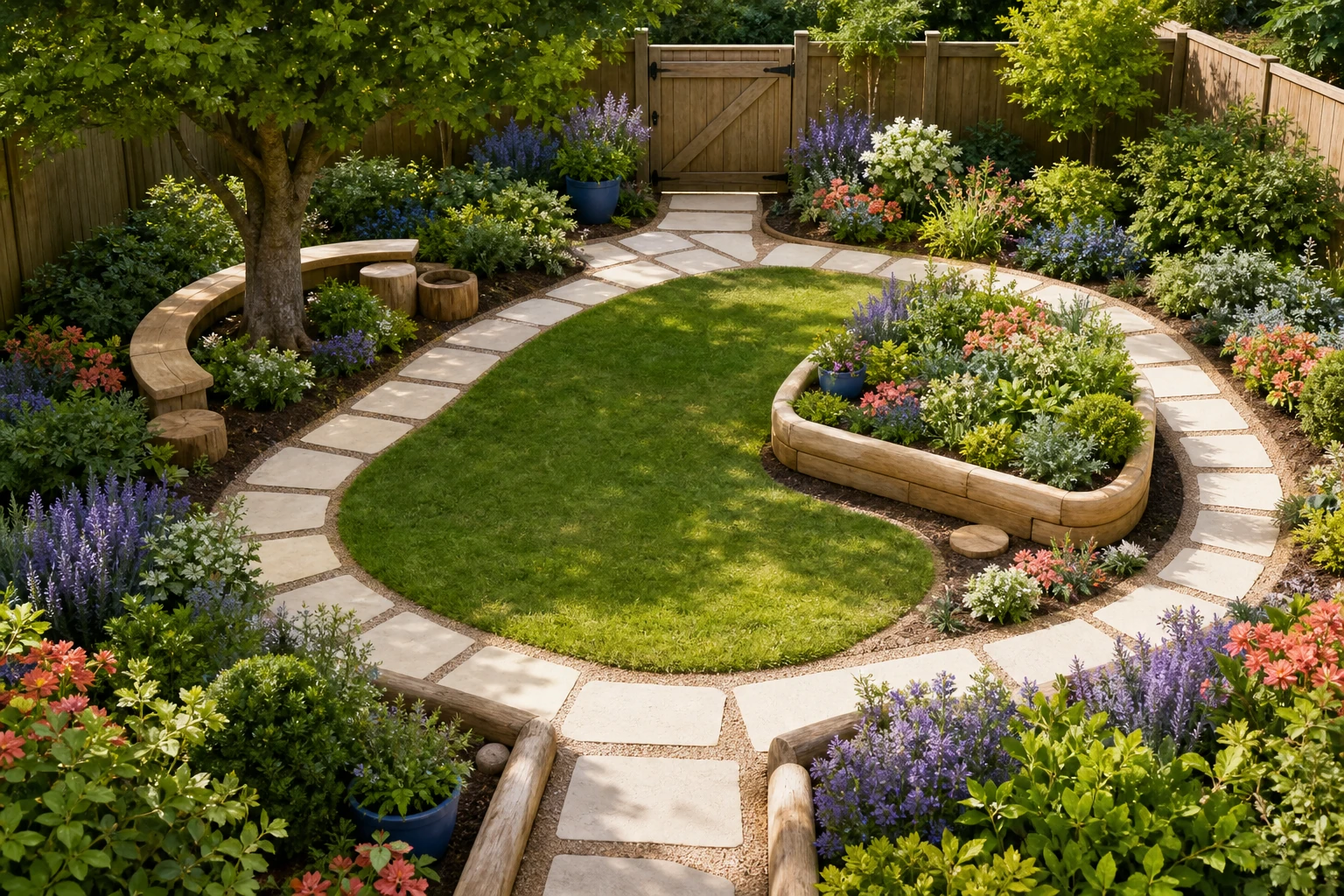
Plan the route before the activities
A family yard works when movement is predictable and the important areas are easy to see.
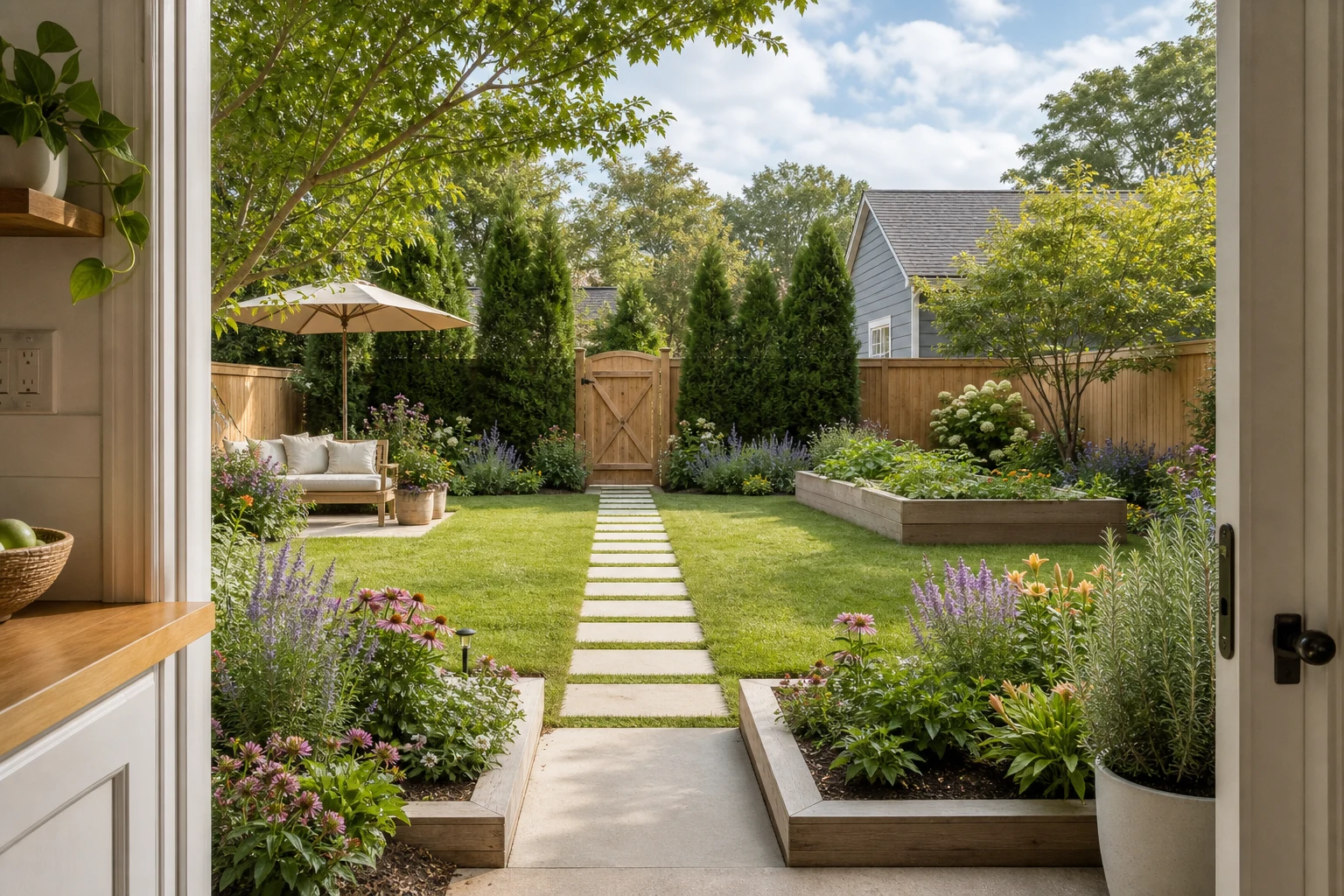
- 1
Choose the adult viewpoint
Start at the kitchen window, patio seat, or doorway most often used for supervision.
- 2
Draw one continuous route
Connect the door, open area, garden bed, and gate without hidden dead ends. Let the route loop when the yard has enough room.
- 3
Keep one open area
Reserve a durable middle for active play instead of scattering activities through delicate beds.
- 4
Put discovery beside the route
Use a low planting bed and sturdy textures where a child can pause without stepping through the garden.
Give movement, growing, quiet, and supervision a visible place
The same yard can support all four when each use has a clear relationship to the route.
Keep the center open, place the growing bed by the route, use the tree for shade and pause, and keep the door-to-gate view open.

- 1
Open play area
Supports movement without scattering obstacles
Use a resilient open surface or broad route for fast movement. Keep loose materials, sharp edges, and fragile planting outside the main running line.
- 2
Growing bed beside the route
Makes gardening easy to join
Place a low bed or container close to water where an adult and child can work together without carrying tools through active play.
- 3
Shade and quiet pause
Adds a calmer kind of use
Use the tree's shade for a seat or short pause. Keep the approach and interior visible instead of surrounding it with a dense screen.
- 4
Door-to-gate view
Keeps supervision connected to the yard
Check the activity areas from the kitchen window, patio, or door. Keep the route and gate in view, while remembering that visibility is not a substitute for supervision or secure boundaries.
Penn State's child-garden examples include peas, beans, carrots, strawberries, cucumbers, pumpkins, sunflowers, zinnias, herbs, and nasturtiums. Pick two or three that grow well in your region, label them, and keep the family rule simple: ask an adult before tasting anything.
Sources: Penn State Better Kid Care, Penn State Extension, Poison Control
Keep permanent structure flexible as interests change
Build the route, shade, boundaries, water access, and planting first. Let the activity inside that structure change.
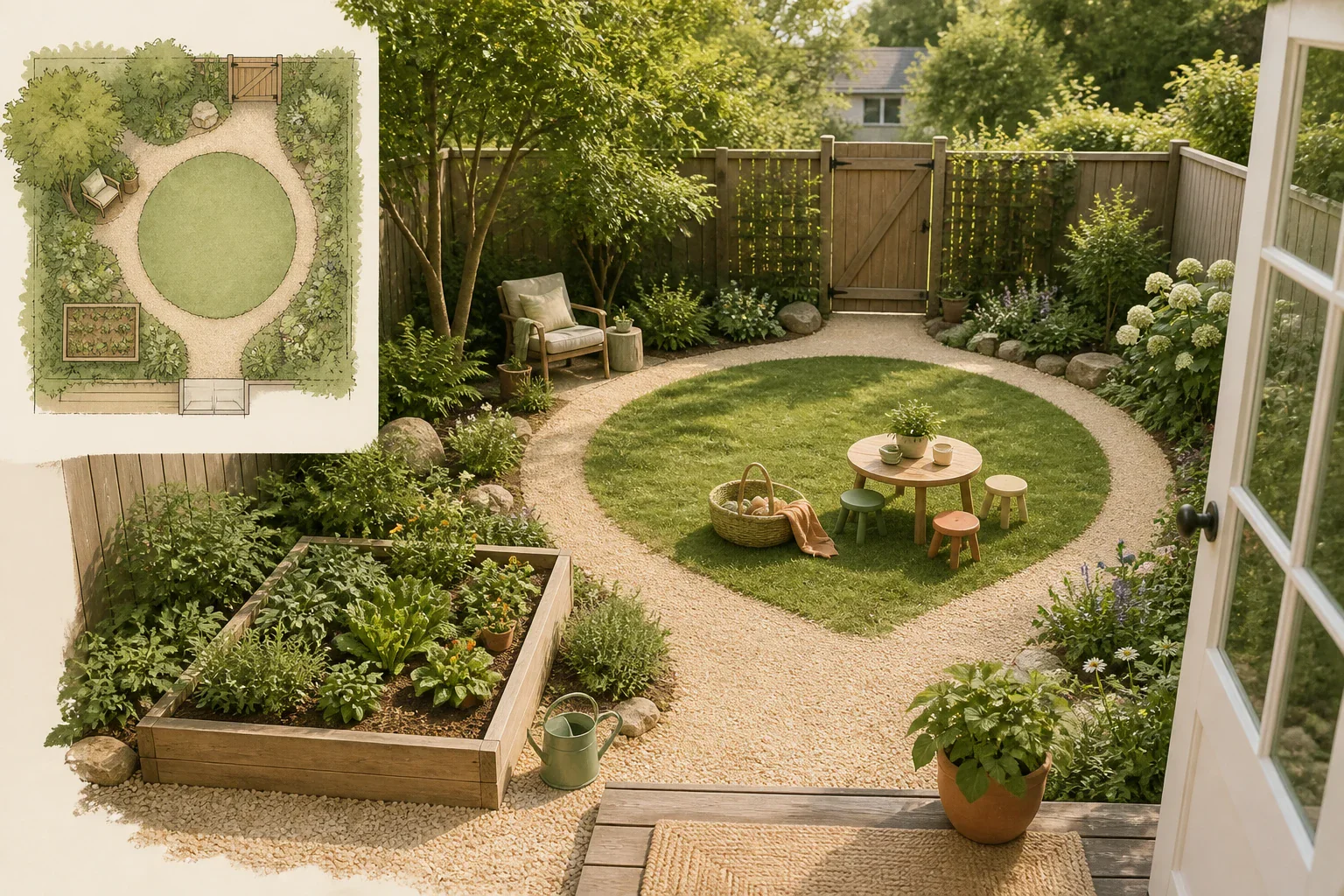
One open center through several stages
The back door overlooks the yard. The family wants a space that can support wheeled play now, loose-parts building later, and everyday gathering without rebuilding the permanent layout.
- 1
Keep one adaptable open area
Use movable, age-appropriate activities rather than assigning the whole center to one permanent piece of equipment.
- 2
Keep movement and growing at the edges
The continuous route and low bed remain useful as the child grows because neither depends on one game.
- 3
Change small features, not the whole yard
A movable table, dig box, container, hammock, or extra seat can replace an outgrown activity while the route, shade, and clear sightlines stay.
A flexible layout serves more years because the permanent parts support many activities instead of one age.
Check the real safety details
Walk the finished plan as a parent. Visibility helps, but it does not make plants, water, gates, equipment, or products safe on its own.
Identify every plant: Know what each plant is, and teach children not to eat unidentified garden material.
Products secured: Store fertilizers, pesticides, fuels, tools, and treated seeds according to their labels.
Boundaries, water, and equipment checked: Inspect gates, traffic access, water, retaining edges, and local requirements. Use current CPSC guidance for home play equipment instead of treating a garden layout as a playground-safety plan.
Heat and shade planned: Provide shade, drinking water, and an appropriate schedule.
Seeds and treated products: Penn State Better Kid Care advises against using seeds with children younger than three because some seeds and bulbs are chemically coated, and recommends checking the potting-soil label. In the U.S., keep Poison Control's 800-222-1222 number where an adult can find it quickly.
Frequently asked questions
What makes a garden child-friendly?
A continuous visible route, flexible active area, secure boundaries, shade, reachable planting, verified plants and products, and an adult supervision plan. The details should change with the child's age, abilities, and interests.
Which plants are safe for children?
For a supervised growing bed, Penn State suggests familiar crops and flowers such as peas, beans, carrots, strawberries, cucumbers, pumpkins, sunflowers, zinnias, herbs, and nasturtiums. Identify ornamentals already in the yard with Poison Control's illustrated plant guide, and teach children to ask an adult before tasting anything.
Does a family garden need play equipment?
No. A continuous route, adaptable open area, low growing bed, shade, and sturdy planting can support movement and discovery. If you add equipment, follow current product, CPSC, and local safety guidance.
 Gardenful
Start with the route, the open area, and the adult viewpoint.
Use Gardenful to test a flexible family-yard planting direction, then verify plants, boundaries, equipment, and safety requirements.
Gardenful for iPhone
Download the app free and start with a photo of your yard.

Sources(4)
- [1]
- [2]The Child-Friendly Garden
Penn State Extensionhttps://extension.psu.edu/the-child-friendly-garden
- [3]
- [4]Outdoor Home Playground Safety Handbook
U.S. Consumer Product Safety Commissionhttps://www.cpsc.gov/safety-education/safety-guides/playgrounds/outdoor-home-playground-safety-handbook