Gardenful field guide
How to design a coastal garden
The short answer
Coastal conditions usually weaken from the exposed edge toward the shelter of the house or garden. Treat that exposure as a series of zones. Use the toughest locally appropriate plants at the ocean-facing edge, add a middle layer that filters wind, and reserve more delicate plants for the protected interior. Before buying, check salt spray, wind, soil, drainage, winter cold, storms, fire guidance, invasive status, and local coastal rules.
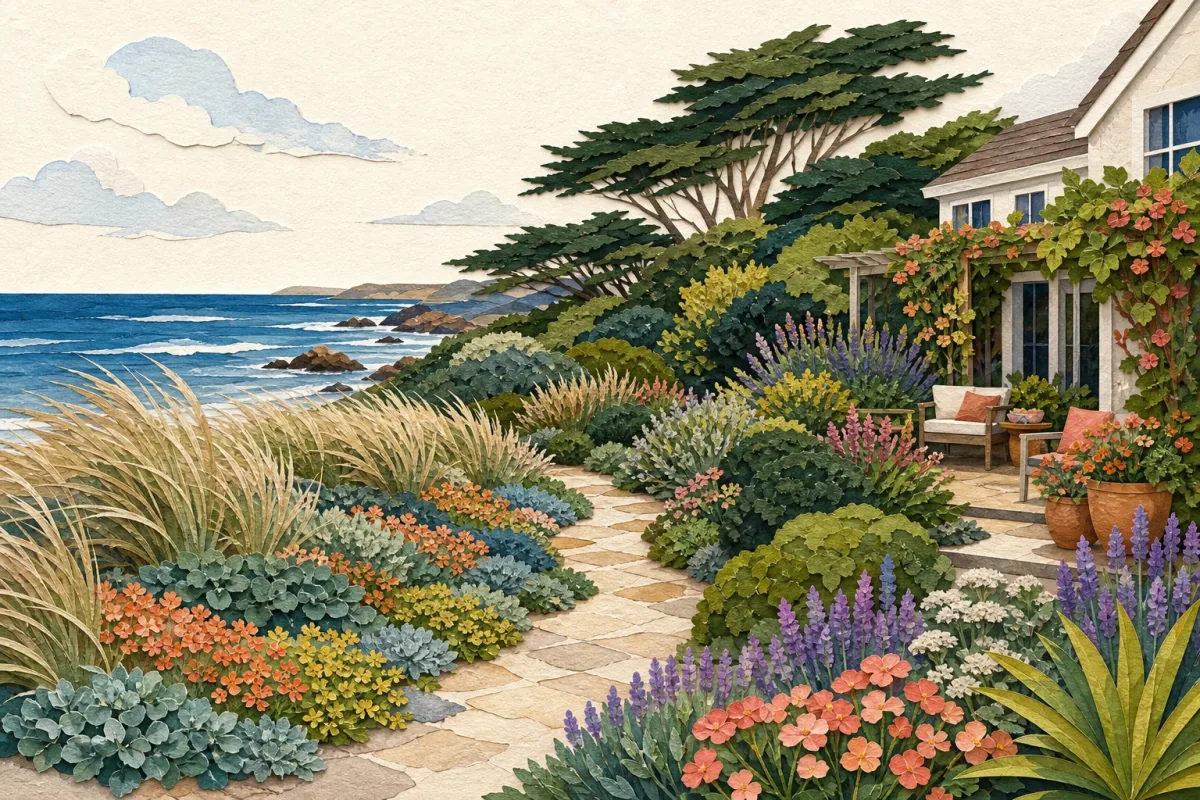
Map the forces that shape the site
Distance from the water is only one clue. Buildings, dunes, slopes, fences, streets, and neighboring vegetation can make two nearby gardens behave very differently.
- 1
Find the salt-facing edge
Look for leaf burn, sparse growth, salt residue, and the direction of storm spray. Direct aerosol exposure can reach farther inland than everyday breezes suggest.
- 2
Observe wind in more than one season
Mark prevailing and storm winds, turbulent corners around buildings, and calm pockets. Winter exposure may be more limiting than summer conditions.
- 3
Check the root environment
Sandy soil may drain quickly and hold fewer nutrients, while construction or foot traffic can create compacted pockets. Test assumptions rather than treating all coastal soil as the same.
- 4
Record local constraints
Verify dune protection, setbacks, views, utilities, irrigation restrictions, fire guidance, and local invasive-plant rules before changing the site.
Design from the exposed edge toward a protected core
Use the exposure map to divide the garden into working bands. The boundaries will be irregular, but the model keeps a sheltered plant from being placed on the front line.
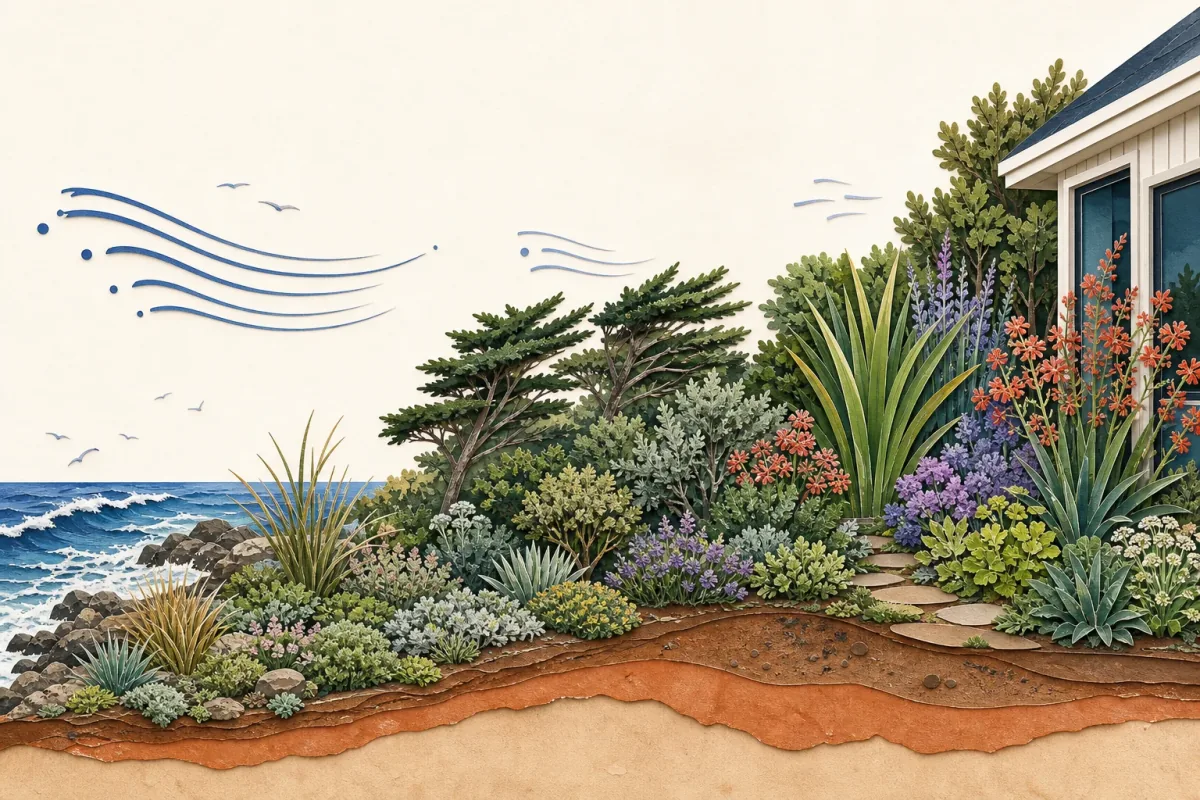
Ocean-facing front line
- Plant direction
- The most salt-, wind-, and site-tolerant plants supported by regional guidance.
- Design role
- Use repeated low or flexible forms that can recover rather than a collection of delicate specimens.
- Check
- Direct salt exposure, sand movement, erosion, rules, and storm access.
Filtering shelter band
- Plant direction
- Mixed-height, wind-firm planting with enough permeability to reduce wind gradually.
- Design role
- A layered filter generally avoids the turbulence and single-point failure of a solid plant wall.
- Check
- Mature height, roots, neighbor views, utilities, and maintenance access.
Protected inner garden
- Plant direction
- A broader palette matched to the calmer light, soil moisture, and remaining salt exposure.
- Design role
- Shelter can also create shade, dry rain shadows, or trapped humidity.
- Check
- The actual microclimate, not the distance from the shore alone.
Salt tolerance is not one fixed trait. A plant may tolerate salty soil, occasional spray, or direct aerosol exposure differently.
Sources: University of Florida IFAS Gardening Solutions, University of Massachusetts Amherst Extension
Give each layer a practical job
The coastal look should follow site function. Wind-shaped plants, repeated grasses, and weathered materials feel convincing when they are doing useful work.
Build redundancy into the outer layers, preserve a clear route and view, and spend the most delicate planting where the garden genuinely provides shelter.
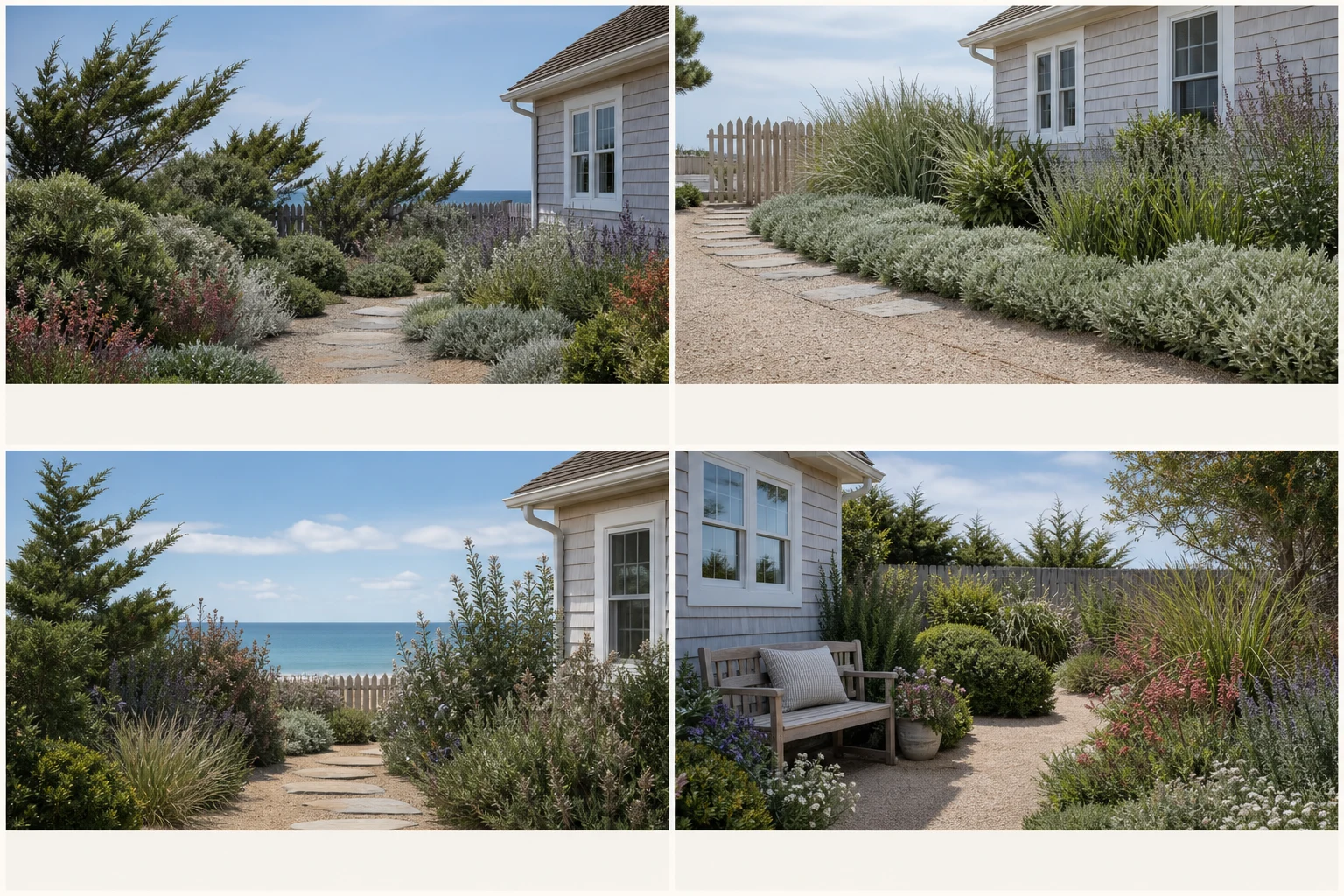
Filter wind
Check mature density, wind firmness, and how gaps will change as plants grow.
Use locally suitable plants in staggered groups with varied heights and some permeability instead of expecting one clipped hedge to absorb every storm.
Hold a readable ground layer
Get local guidance where erosion or sand movement is active.
Repeat plants or approved surface treatments that can cover exposed soil without interfering with protected dunes, drainage, or required access.
Frame, do not erase, the view
Verify view ordinances, neighbors, and mature canopy spread.
Keep one deliberate opening and place height where it screens an unwanted sightline or helps shelter the use area.
Create a sheltered destination
Recheck wind eddies, shade, and dry pockets before choosing plants.
Use the protected side of planting or a building for a seat, entry, or more diverse garden palette.
A coastal garden can be formal, cottage-like, modern, or naturalistic. Exposure is a site condition, not a single visual style.
Verify every exact plant against the coastal site
A plant described as coastal may only suit one region or one kind of exposure. Use local sources and check the complete set of conditions.
Type of salt exposure: Distinguish salt in soil or irrigation from occasional storm spray and regular airborne salt. Confirm what the regional source actually tested or observed.
Wind and mature form: Check flexible growth, branch structure, mature height, rooting, and whether pruning would create weak or dense growth in the exposed position.
Soil and establishment water: Match drainage, pH, organic matter, and water availability. Even drought-tolerant plants need an establishment plan appropriate to the site.
Climate beyond the coast: Verify winter cold, summer heat, rainfall, humidity, and fire guidance. A plant from a warm Atlantic coast may not fit a cool Pacific site.
Local ecological fit: Check invasive status, protected habitat rules, wildlife value, and availability with a regional extension office, native plant program, or knowledgeable nursery.
For active dunes, erosion, retaining work, shoreline stabilization, or stormwater construction, use qualified local guidance rather than a planting visualization.
Frequently asked questions
What makes a plant good for a coastal garden?
It must fit the specific exposure: salt spray or salty soil, wind, drainage, climate, and maintenance. Regional guidance is essential because coastal conditions and suitable plants differ widely.
Should a coastal windbreak be a solid hedge?
Usually a layered, somewhat permeable planting filters wind more gradually than a single solid wall, which can create turbulence and fail at one point. The exact design depends on space, mature plants, structures, views, and local conditions.
Can I use delicate plants behind salt-tolerant shrubs?
Potentially, if the shrubs and site create a genuinely protected microclimate. Observe salt burn, wind, shade, dry rain shadows, and winter exposure before assuming distance from the water provides enough shelter.
Does sandy coastal soil need compost?
Do not apply a universal amendment recipe. Test the soil and follow regional guidance; the appropriate approach depends on existing organic matter, drainage, target plants, protected-site rules, and whether sand movement or erosion is active.
Can Gardenful design a coastal garden?
Gardenful can help visualize a planting-led direction and layered exposure concept. Verify exact plants, coastal rules, utilities, fire guidance, erosion, and any structural or drainage work locally.
 Gardenful
Plan your coastal garden from the exposed edge inward.
Use a wide photo that shows the water-facing boundary, buildings, main view, and protected area before exploring a layered planting direction.
Gardenful for iPhone
Download the app free and start with a photo of your yard.

Sources(3)
- [1]Coastal Landscapes
University of Florida IFAS Gardening Solutionshttps://gardeningsolutions.ifas.ufl.edu/design/landscaping-for-specific-sites/coastal-landscapes/
- [2]
- [3]