Gardenful field guide
How to plan a deer-resistant garden
The short answer
No plant is reliably deer-proof. Start by mapping where deer enter, travel, browse, and bed down. Protect the plants and seasons that matter most, use locally reported lower-preference plants for the exposed framework, and combine that palette with an appropriate physical or behavioral deterrent. Expect pressure to change with deer population, weather, and available food.

Map pressure before replacing plants
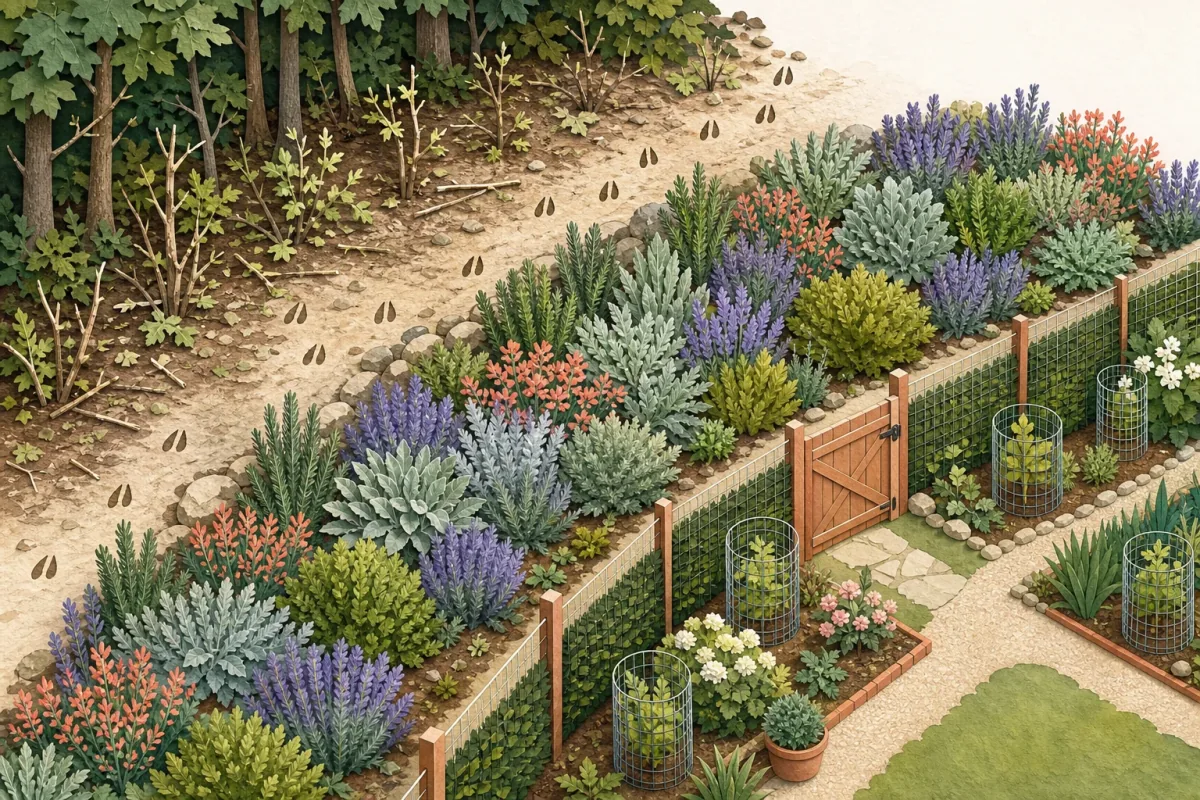
Walk the garden at the edges of the day and after fresh damage. Record the pattern instead of treating every missing leaf as the same problem.
- 1
Find the route
Look for tracks, droppings, rubbed trunks, and repeated movement along edges or openings. Do not assume the shortest path on your plan is the route deer use.
- 2
Name the damage
Ragged browsing, stripped buds, and antler rub call for different protection. Rule out rabbits, rodents, insects, disease, and weather before redesigning the bed.
- 3
Mark the vulnerable season
New spring growth, flower buds, drought, deep snow, and fall rut can change what is eaten and when protection matters most.
- 4
Set a realistic threshold
Decide which losses are tolerable and which plants need reliable protection. A lightly browsed back edge and a destroyed entry specimen are not the same design problem.
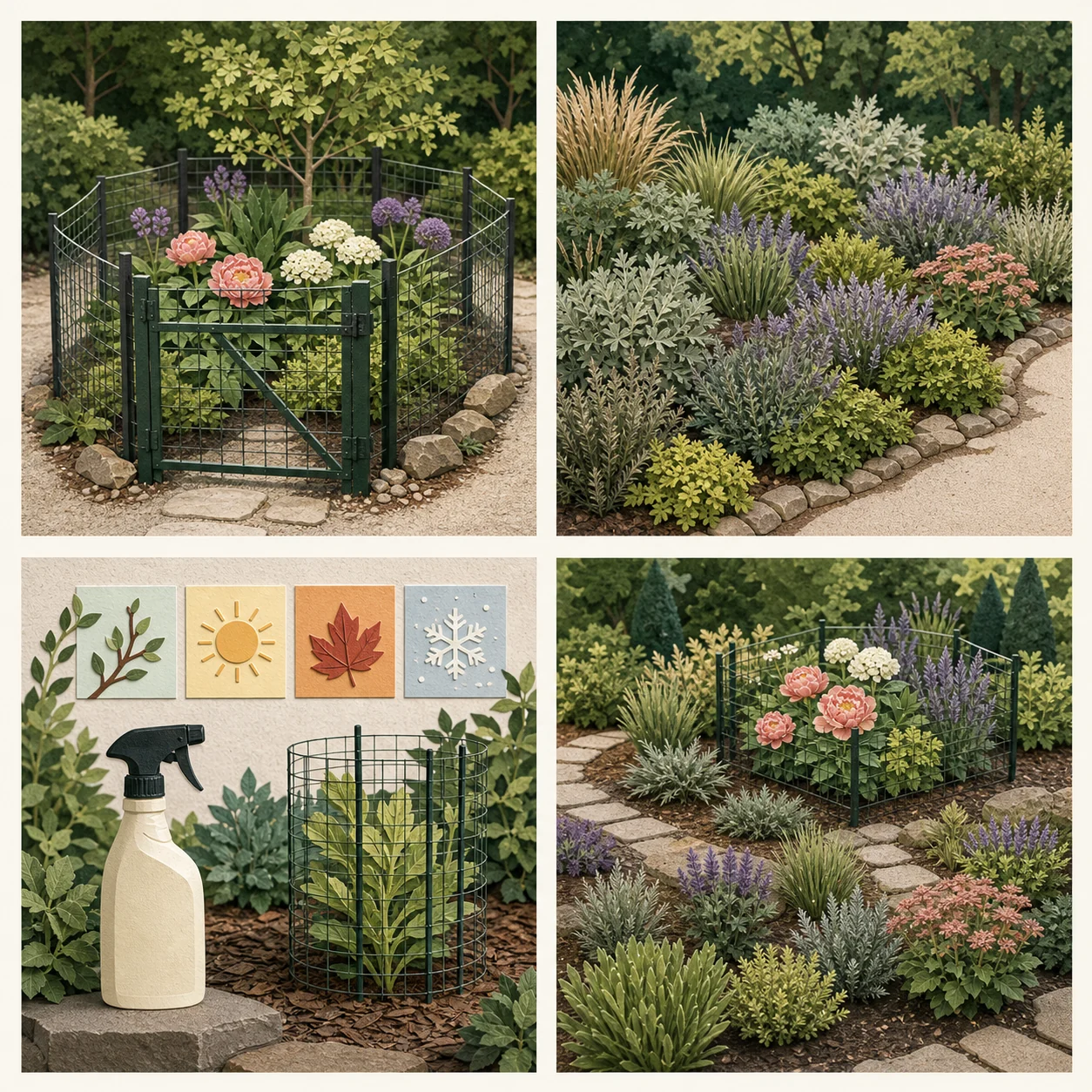
Use more than one layer of defense
A plant list alone is fragile. Match the response to the value of the planting and the level of pressure.
Put the most dependable protection around the highest-value or most vulnerable plants, then use lower-preference planting to reduce routine losses elsewhere.
Physical protection
Verify local rules, gates, height, visibility, and safe installation.
Use an appropriately designed fence, enclosure, trunk guard, or seasonal barrier where reliable exclusion is necessary.
Plant selection
Do not treat a national list as a local guarantee.
Build exposed areas from plants that regional sources report as less preferred, then verify every exact species for site and household safety.
Repellents and routines
Follow labels and reapply as directed; habituation can reduce effect.
Use labeled products or other locally recommended deterrents as part of a rotating routine, especially during vulnerable growth periods.
Placement and recovery
Plan for what the bed looks like after some damage.
Keep tempting plants in protected pockets and repeat resilient structure where occasional browsing will not erase the whole design.
High deer pressure may require exclusion. Plant texture, scent, or toxicity can influence preference, but none makes a plant universally safe from browsing.
Sources: Rutgers New Jersey Agricultural Experiment Station, University of California Agriculture and Natural Resources
Place plants according to browsing risk
Use the pressure map to decide where a plant belongs. This is more durable than dividing the nursery into plants deer eat and plants they do not.
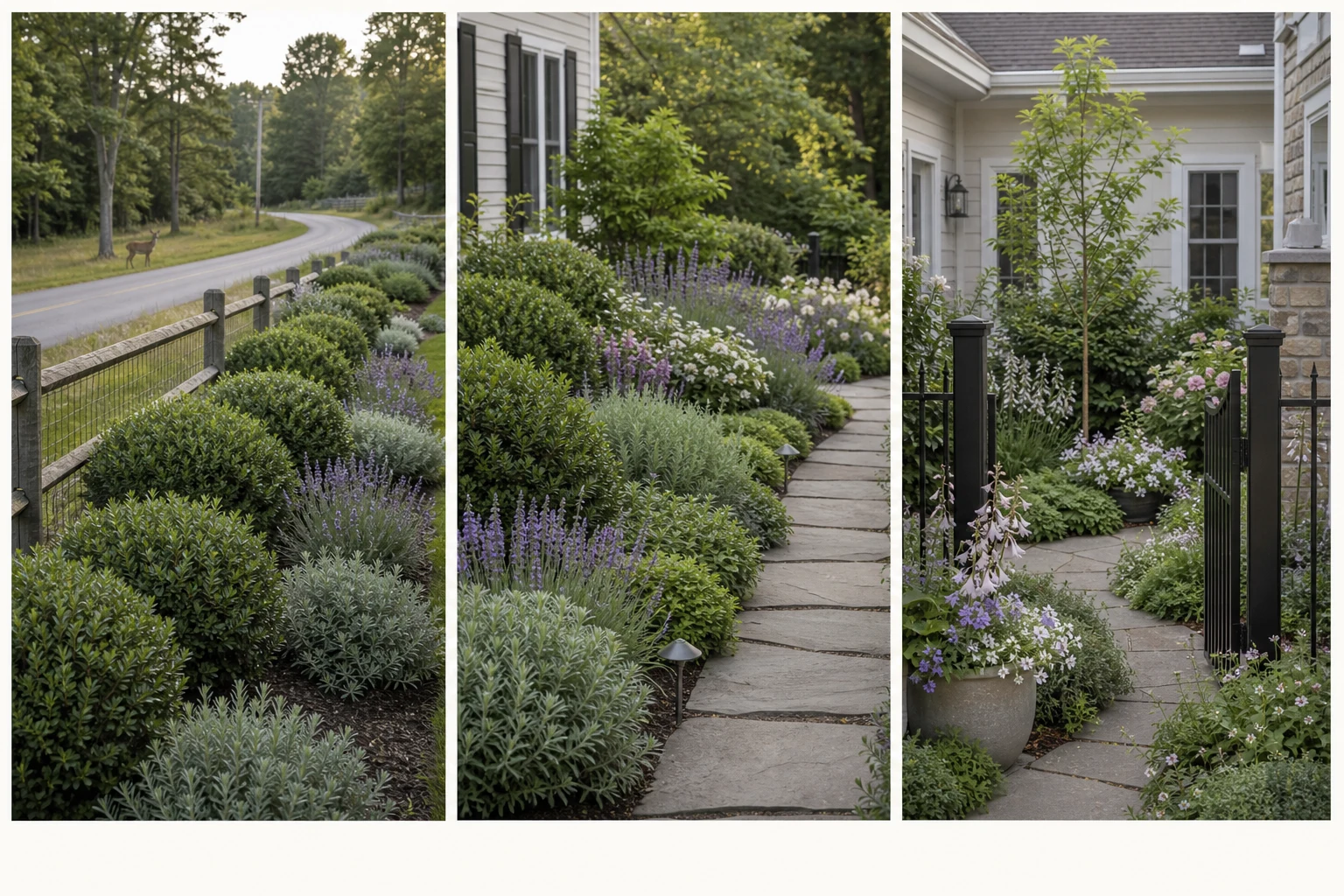
Exposed route or boundary
- Planting direction
- Durable structure and locally lower-preference plants that can recover from occasional browsing.
- Protection
- Accept some damage or use a continuous barrier where loss is not acceptable.
- Check locally
- Local deer lists, invasive status, mature size, and road or sidewalk sightlines.
Visible middle layer
- Planting direction
- Repeated foliage masses with some seasonal color, chosen for both lower preference and recovery.
- Protection
- Protect new growth during the highest-risk season.
- Check locally
- Whether local reports describe the exact plant or only a related species.
Protected entry or courtyard
- Planting direction
- Favorite flowering plants or young woody plants that would be costly to replace.
- Protection
- The pocket only works if gates, gaps, and container access remain controlled.
- Check locally
- Household toxicity, pollinator activity, and maintenance access.
A young plant can be vulnerable even when its mature foliage is usually passed over. Protect establishment growth until the root system and framework are stronger.
Monitor the plan and change one variable at a time
A short damage log helps you see whether the layout, barrier, plant choice, or seasonal routine is failing.
Fresh damage inside a protected zone: Inspect gates, low spots, openings, and overhanging access before assuming the barrier concept has failed.
One plant repeatedly targeted: Move it to a genuinely protected pocket, protect it seasonally, or replace its role with a locally lower-preference option.
Damage rises during drought or winter: Increase protection before the recurring pressure period rather than waiting for the first severe loss.
A deterrent stops working: Confirm that it is used according to directions, then adjust timing or combine it with a different layer instead of escalating randomly.
The garden only works behind cages: Rebalance the palette so permanent protection is concentrated around a few priority plants rather than every specimen.
Use local wildlife and extension guidance for deterrents and barriers. Keep people, pets, roads, and neighboring properties in mind.
Frequently asked questions
Are any plants completely deer-proof?
No. Deer may eat almost any plant when pressure is high or other food is scarce. Use regional lower-preference lists as one layer in a broader plan, not as a guarantee.
Do strongly scented or fuzzy plants stop deer?
Those traits can make some plants less preferred, but preference varies. Check the exact plant against regional observations and plan for physical protection where damage would be unacceptable.
Where should I put plants deer like?
Concentrate them in a reliably protected entry, courtyard, enclosure, or container zone rather than scattering them along deer routes. Protect young plants during establishment too.
Will repellents solve a deer problem?
Repellents can be one useful layer when applied according to the label and refreshed as directed, but pressure, weather, and habituation affect results. High-pressure sites may need physical exclusion.
Can Gardenful identify deer-resistant plants for my yard?
Gardenful can help visualize a planting direction, but local deer preference is variable. Verify the exact plants with regional extension guidance and pair the palette with the protection appropriate to your pressure level.
 Gardenful
Plan the exposed and protected parts of your garden.
Start with a photo that shows the boundary and damaged bed, then compare a resilient planting direction before replacing plants.
Gardenful for iPhone
Download the app free and start with a photo of your yard.

Sources(3)
- [1]White-tailed Deer Damage
University of Minnesota Extensionhttps://extension.umn.edu/planting-and-growing-guides/white-tailed-deer-damage
- [2]Landscape Plants Rated by Deer Resistance
Rutgers New Jersey Agricultural Experiment Stationhttps://njaes.rutgers.edu/pubs/publication.php?pid=e271
- [3]Deer-Resistant Garden Strategies
University of California Agriculture and Natural Resourceshttps://ucanr.edu/blog/real-dirt/article/deer-resistant-garden-strategies