Garden paths
Garden path ideas that start with where you need to go
The short answer
A garden path works best when its shape follows where people actually need to go. Draw the shortest comfortable route between real destinations first. Then decide where a bend, pause, or secondary stepping path has a reason to exist. Choose the surface for frequency, slope, drainage, and accessibility, and keep mature plants out of the walking envelope.
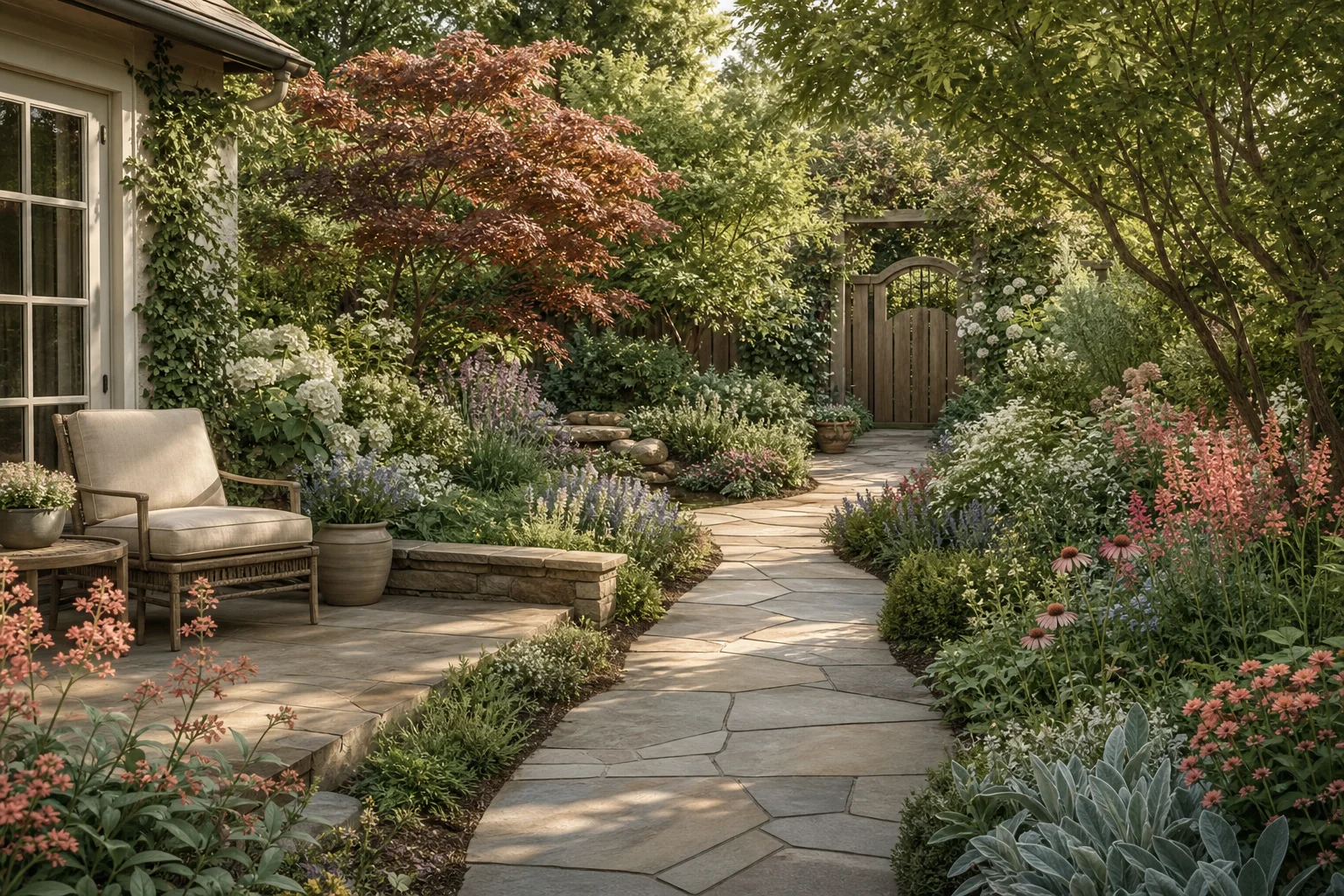
Connect real destinations before drawing a decorative line
A path is circulation first. List the places people actually move between and the objects they carry.
Mark doors, gates, parking, bins, hose connections, seating, play areas, sheds, and maintenance routes. Draw the simplest connection between the destinations used every day.
The ground plane tells people where to move. Changes in surface, width, and direction can signal arrival, a slower pace, or a secondary route, but those changes are clearest when each has a reason.1
Walk the proposed line while carrying a basket, pushing a bin, or moving the tool that uses it. A route that works only when empty is not wide or direct enough for its real job.
Give every curve a reason
A curve can reveal a view or move around an obstacle. Extra wiggles lengthen the route and often get shortcut.
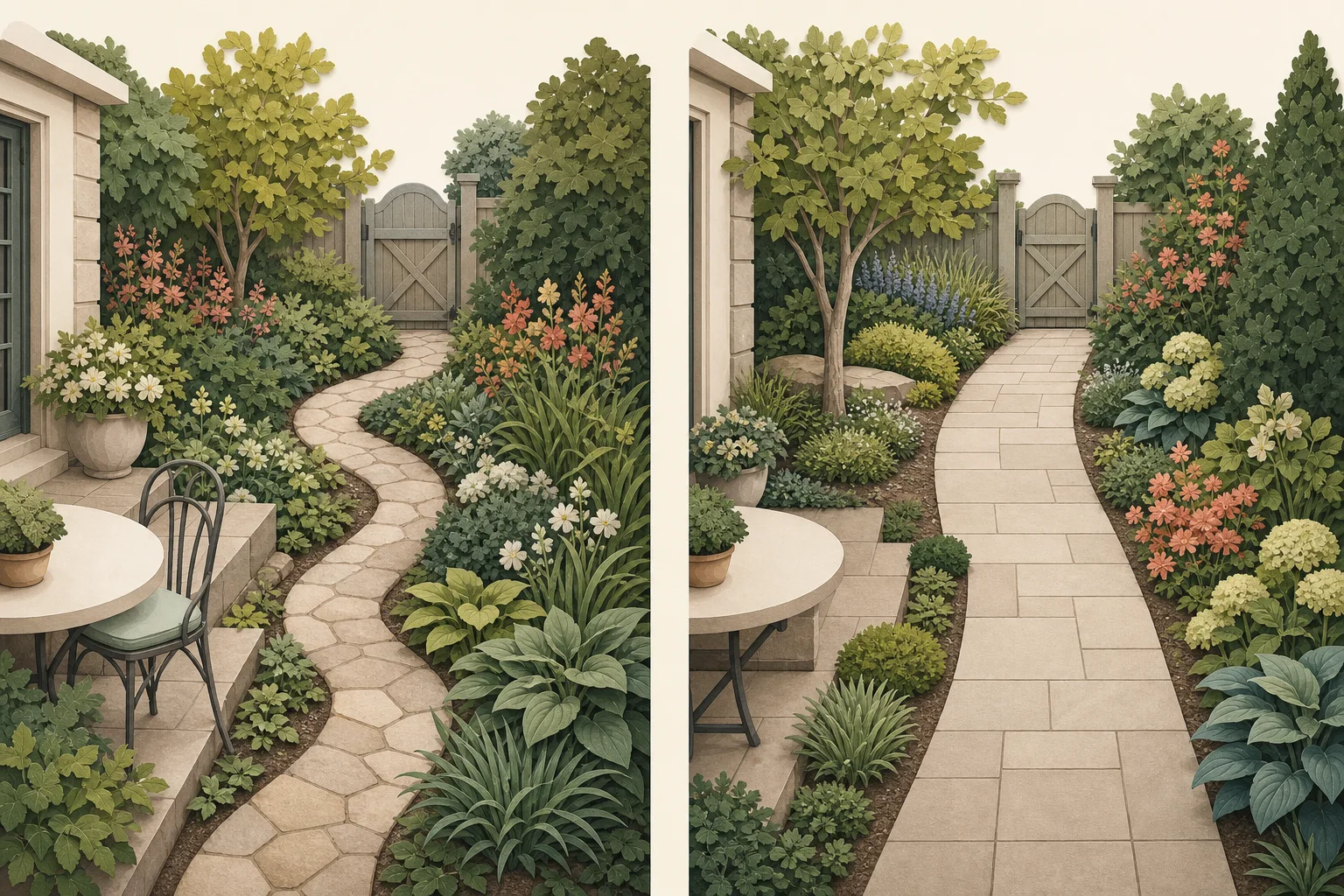
- Decorative wandering
- Purposeful route
Use a direct line for frequent trips such as front door to parking, kitchen to bins, or patio to gate. Direct does not have to mean rigid; a slight shift can preserve a tree or make the arrival more comfortable.
Use a slower discovery route only where wandering is part of the experience, such as a loop through a garden or a short branch to a bench. The destination should reward the detour.
Build one path system with a clear hierarchy
Not every route needs the same width, surface, or emphasis. The main route should be easiest to recognize and use.
Keep the everyday route continuous, use stepping stones for occasional detours, and widen the path where people turn, meet, or wait.
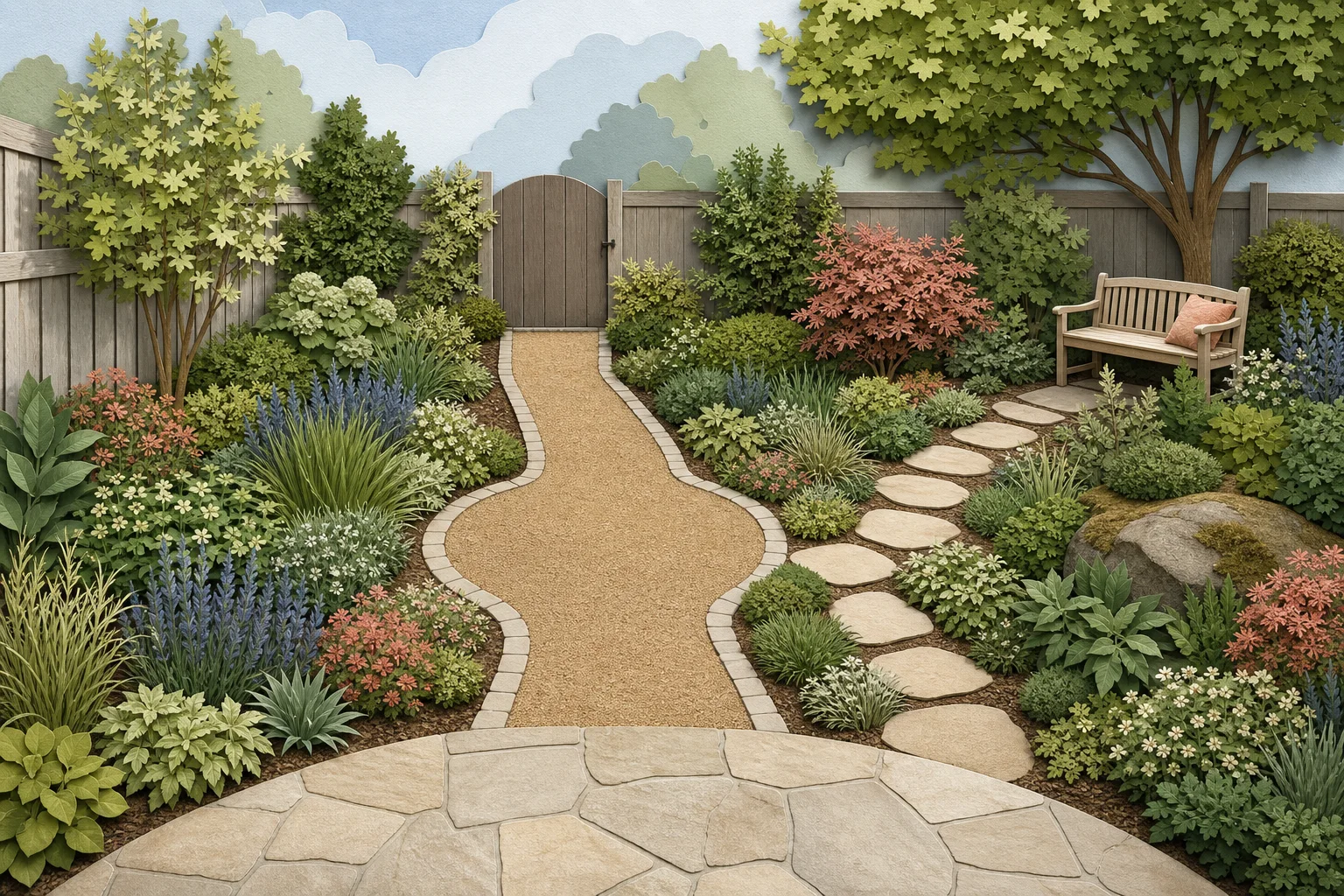
- 1
Main route
Reads first
Use the most stable, continuous, and comfortable path for everyday movement.
- 2
Secondary route
Reads as optional
Use a quieter branch for an occasional destination when accessibility and maintenance allow.
- 3
Pause or junction
Gives movement more room
Widen the main path where routes meet or where someone needs room to turn, wait, or stop and look.
- 4
Threshold
Signals arrival
Change material or alignment only where the experience actually changes, such as door, gate, patio, or steps.
Sources: NC State Extension
Choose the surface for the hardest day, not the prettiest photo
Rain, freeze and thaw, slope, wheels, bare feet, leaves, snow, and local construction practice matter more than a material trend.
Stable continuous paving
Best for primary circulation
Prioritize a firm, even route for frequent access, wheels, steps, or an entry sequence.
Permeable unit paving
Best when infiltration is designed
Use an engineered permeable assembly where site, maintenance, and local practice support it.
Compacted granular surface
Best for informal level routes
Use only where slope, edging, drainage, mobility needs, and local material performance make it practical.
Stepping route
Best for secondary access
Reserve spaced stones for slower, occasional movement where every step can stay stable and visible.
For steps, steep slopes, public-facing access, retaining edges, or drainage changes, use local code guidance and a qualified installer.
Keep the walking envelope clear at mature size
Path-edge planting should frame movement without wetting ankles, catching clothing, hiding the edge, or narrowing the route.
Mature foliage stays back: Place the plant center far enough away for its mature spread, including flowers that arch or flop after rain.
Thorns and irritants stay off the route: Confirm household and pet safety, especially near narrow paths and children's play routes.
The edge remains visible: Keep steps, changes in level, and the path boundary legible in daylight and at night.
Runoff has somewhere safe to go: Do not pitch water toward the foundation, neighboring property, or an erodible planting pocket.
Measure the open route after plants reach mature spread, not from edge to edge on installation day.
Frequently asked questions
Should a garden path be straight or curved?
Use the most direct comfortable route for frequent movement. Add a curve when it responds to a real obstacle, reveals a view, or creates a useful pause. A decorative curve without a reason is likely to be shortcut.
How wide should a garden path be?
Width depends on who uses it, how often, what they carry or roll, and local accessibility needs. Mock it up with hose or tape, then walk it with the largest real task before committing to construction.
What is the lowest-maintenance path material?
There is no universal answer. A stable material installed on the right base and drainage for your climate usually requires less correction than a fashionable material used in the wrong setting.
 Gardenful
Draw the route before you pick the paving.
Use a yard photo that includes both destinations and any obstacles. Gardenful can help you explore how the route and planting feel together before you price the construction.
Gardenful for iPhone
Download the app free and start with a photo of your yard.