Driveway planting
Driveway landscaping ideas for heat, visibility, and arrival
The short answer
A driveway edge is a chain of working and exposure zones, not one continuous flower bed. Divide it into a clear car-use band, a harsh band beside the paving, and a planting band. Keep plants out of door swings and backing views, account for heat, runoff, snow, or deicing salt, and concentrate the strongest planting near the entry instead of lining the entire drive with equal detail.
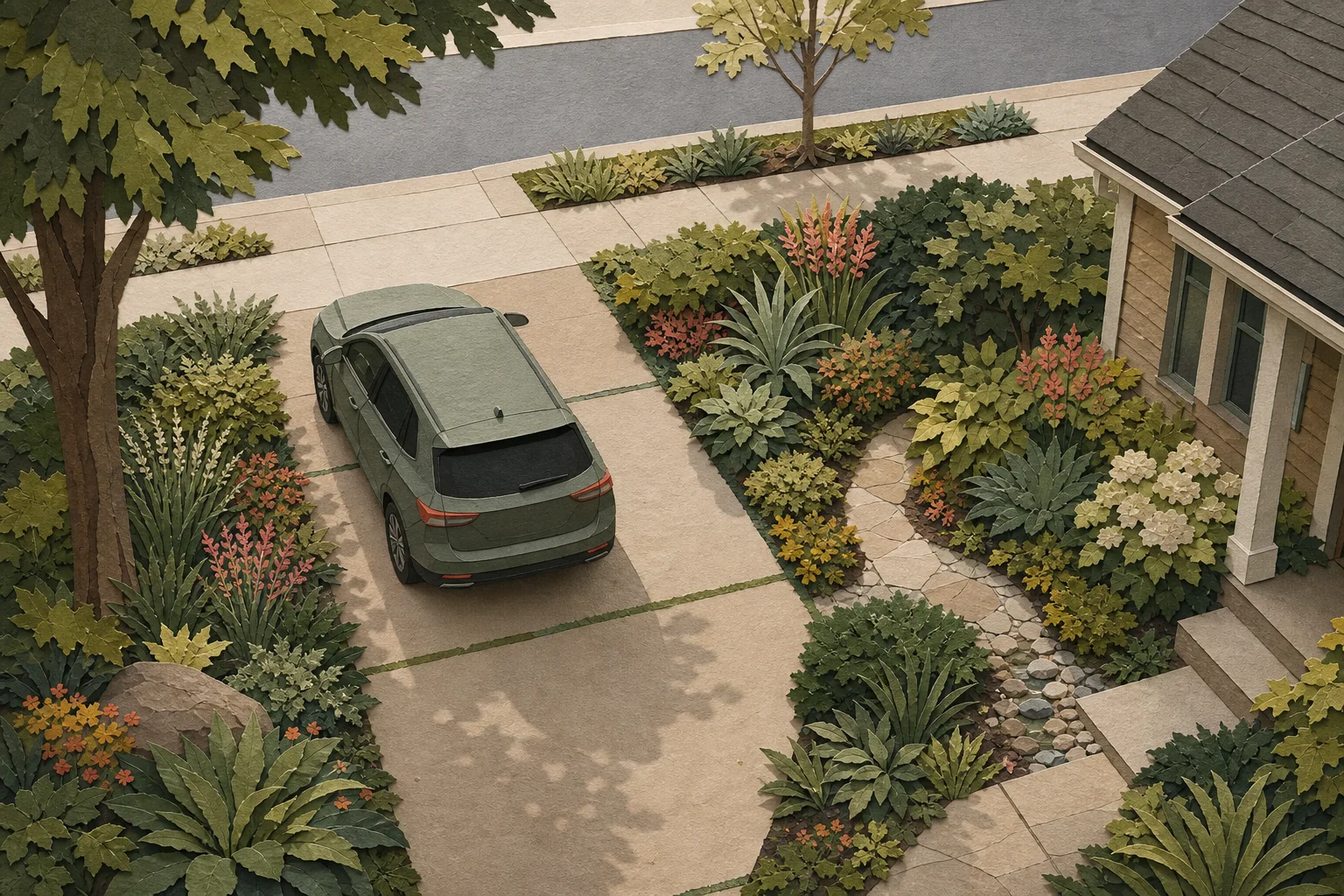
Map the driveway when every car is home
The useful edge is determined by doors, bins, deliveries, snow, and backing, not by the empty driveway photo.
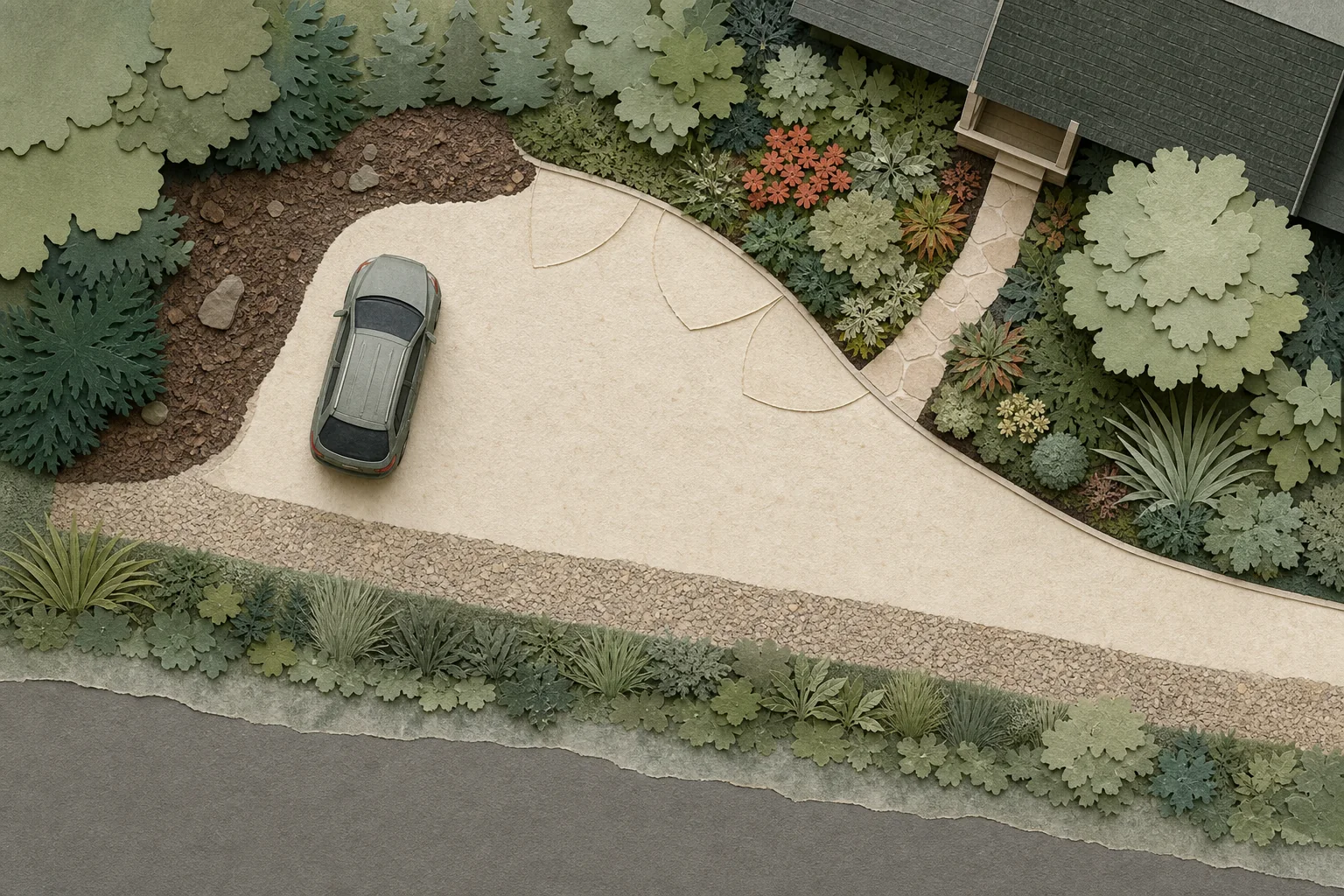
- Car-use band
- Harsh exposure band
- Plantable band
Park the household vehicles in their normal positions. Open every regular door and hatch, walk around with groceries, move the bins, and record where passengers step off the paving.
Keep planting low and set back wherever it could block a driver, pedestrian, or cyclist from seeing and being seen. Sightline rules vary by municipality, especially near sidewalks, alleys, and streets, so verify the local requirement rather than copying a generic triangle.4
Check four driveway-edge exposure conditions
One strip can have different light, heat, moisture, runoff, and salt exposure along its length. Treat each condition you actually observe as a separate planting zone.
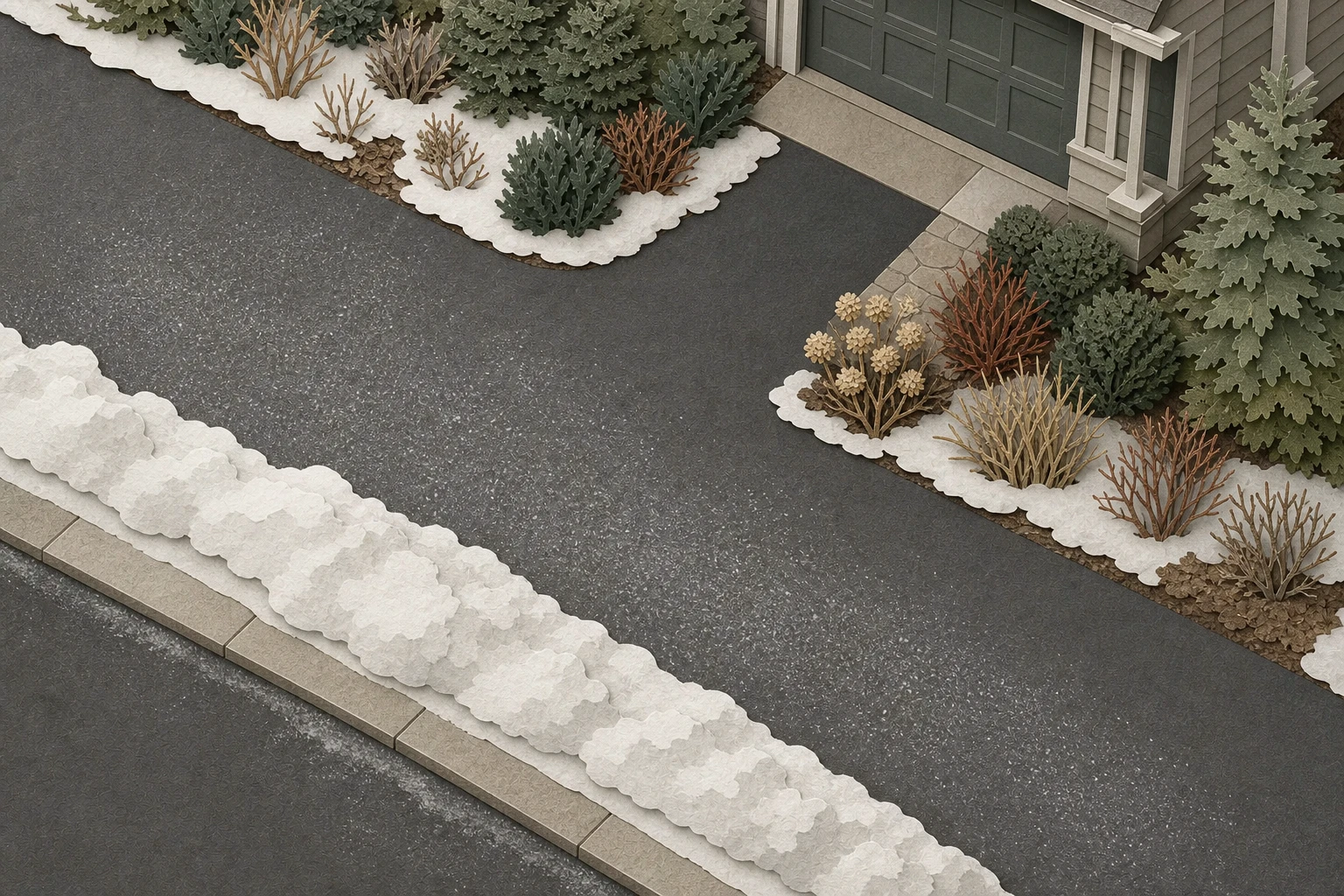
Deicer-exposed edge
Use an exposure-specific setback
Where deicers are used, salt can arrive through soil runoff and spray. Minnesota guidance keeps trees and shrubs at least three feet from treated driveways and walks, and at least seven feet from roadways exposed to salt spray. Use those as cold-climate reference points, then verify local practice.
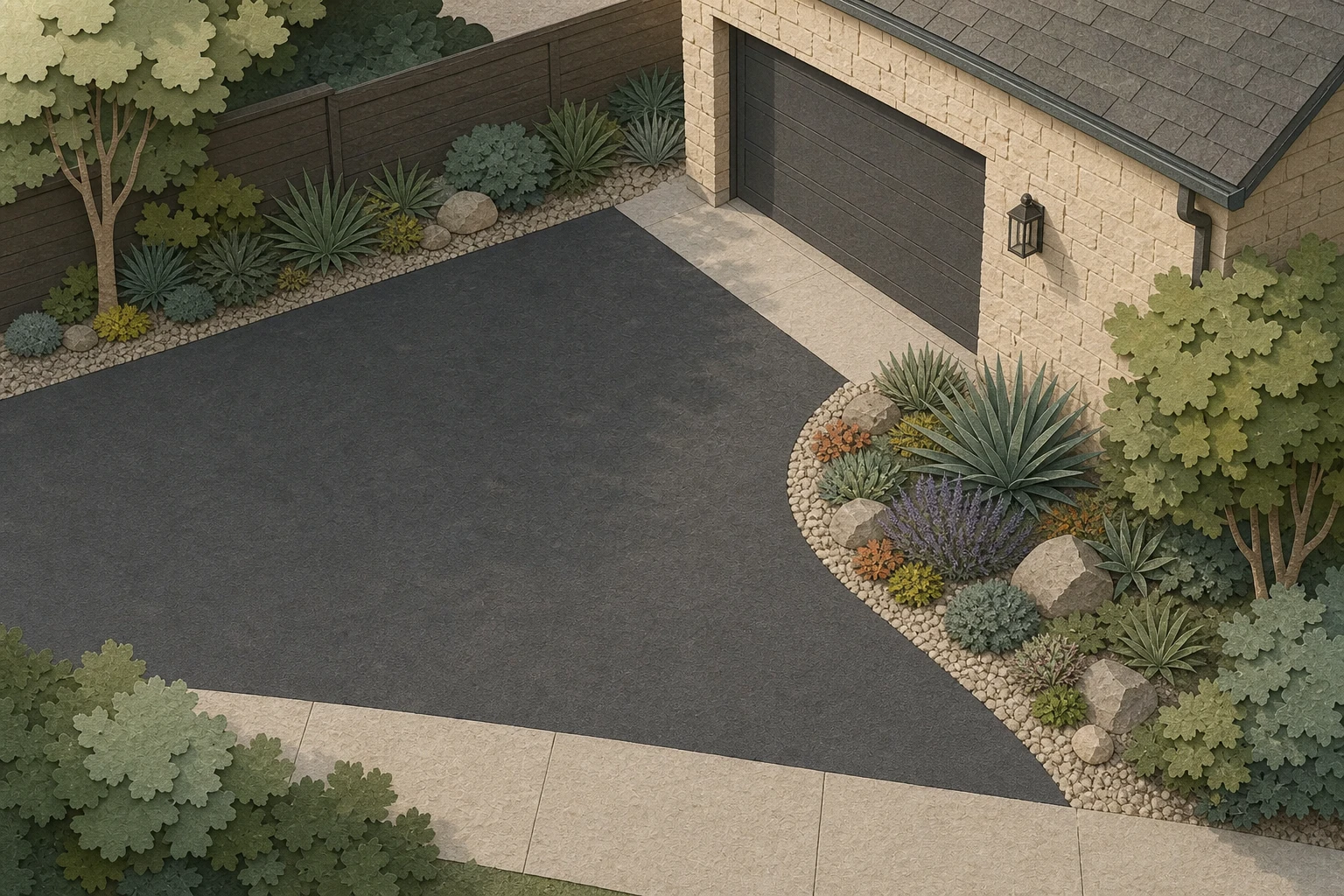
Heat-storing hardscape edge
Choose for heat as well as sunlight
Pavement and walls can absorb and reflect heat, increasing temperatures and water loss near the edge. Observe the afternoon exposure and soil moisture instead of treating ordinary full-sun tolerance as proof that a plant will fit here.
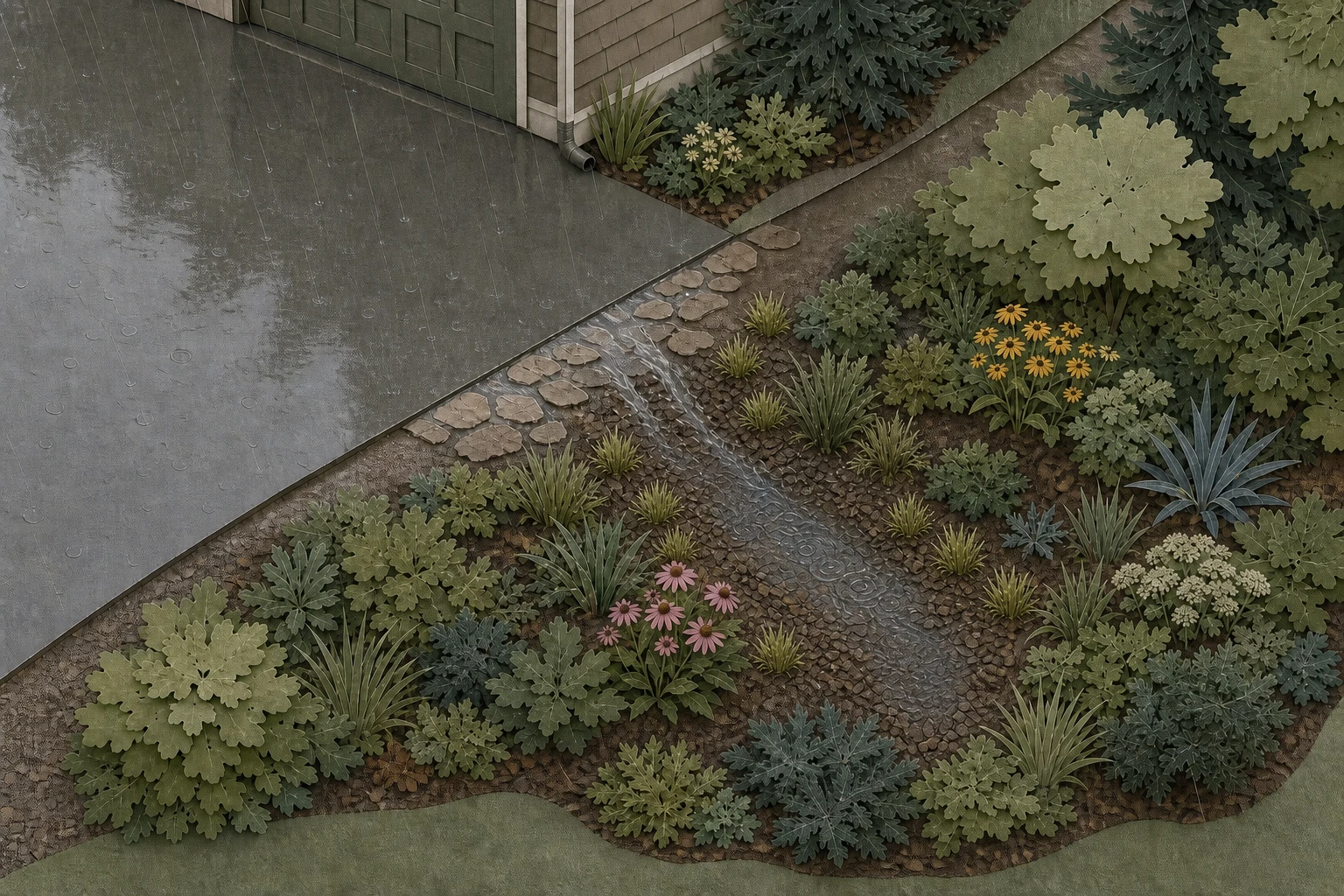
Runoff receiving point
Keep concentrated flow out of the plant crown
Watch a normal storm. Driveway runoff can carry sediment, deicer, oil, and other pollutants. Keep concentrated flow out of plant crowns, and use local stormwater guidance before redirecting water into a planted basin.
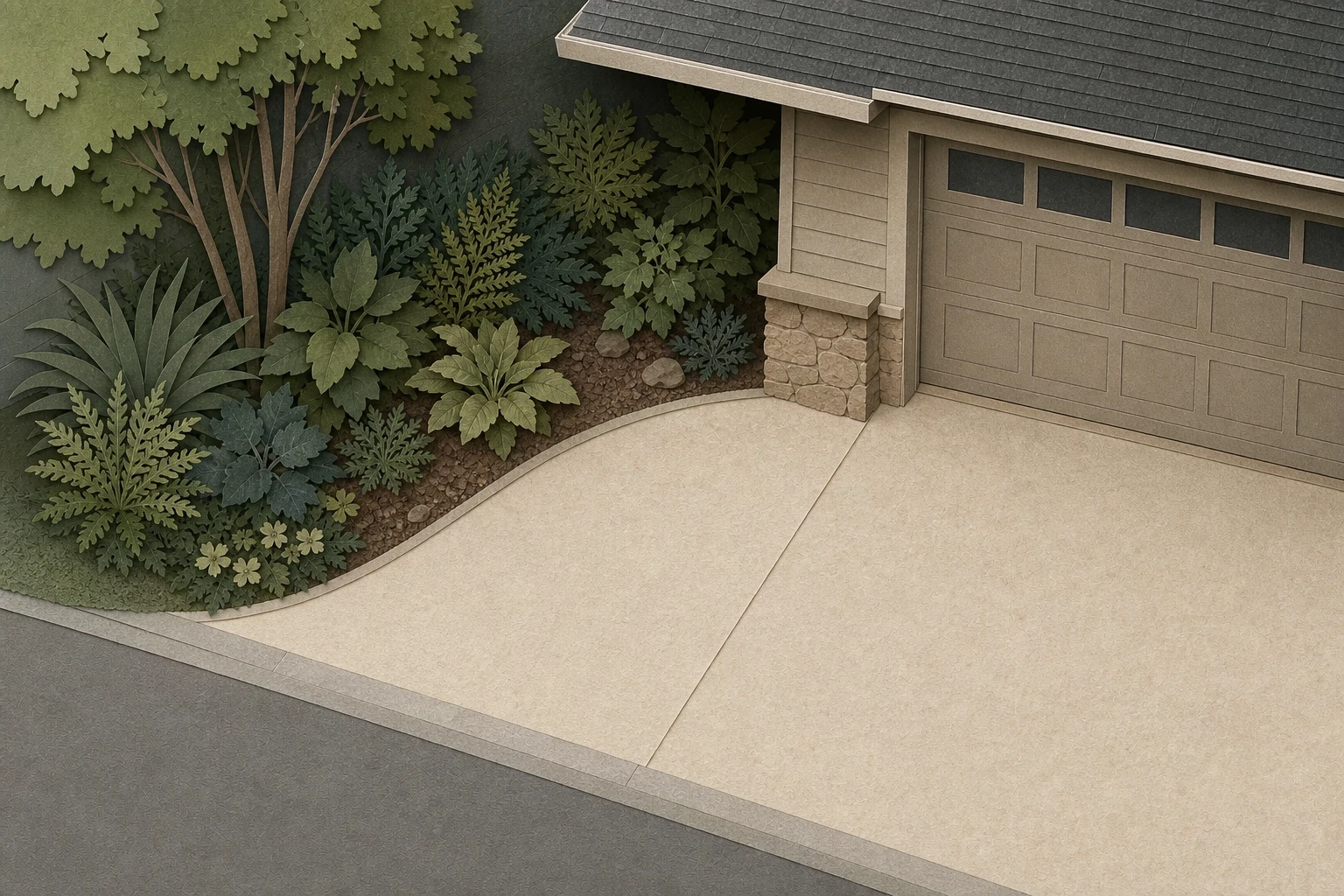
Dry shade at the house end
Measure light and moisture separately
A garage wall or roof overhang can reduce direct light and keep rain from reaching the soil. Check this pocket separately rather than assuming it receives the same water and sun as the open driveway edge.
Build the planting toward the destination
A driveway is a movement line. Use plant rhythm to guide the eye without turning the whole edge into a decorated corridor.
- 1
Keep the first decision low
At the street or sidewalk, preserve sightlines and the practical step-out area before adding any focal feature.
- 2
Repeat a resilient middle
Use one ground layer or mounding plant in broad groups where the exposure is consistent.
- 3
Turn the corner with emphasis
At the front walk, gate, or porch, use the tallest or most contrasting form to mark the change in direction.
Plan one single-car driveway beside a front walk
The example keeps the paving and grade unchanged. It organizes only the planting and clear routes.
A driveway with a hot west edge
The passenger side opens toward the bed, plowed snow is stored near the street, and the front walk turns left near the garage.
- 1
Reserve two step-out pockets
Leave stable, plant-free landing areas beside the common passenger positions rather than expecting people to step into mulch.
- 2
Keep the snow-storage end simple
Use a recoverable low layer or no permanent planting where plowed snow and street salt regularly accumulate.
- 3
Repeat one heat-fit mass through the middle
Where deicers are used in a cold climate, UMN recommends salt-tolerant perennials that die back each year rather than vulnerable evergreens at the pavement edge. Fine fescue is its named turf example for higher-salt areas. Verify exact ornamental choices locally.
- 4
Mark the walk with one upright form
Place the focal plant beyond the door and backing zones so it announces the path rather than obscuring movement.
The most visible plant belongs at the decision point near the walk, not at the most hazardous point near the street.
Check the driveway in every season you use it
A summer photo misses winter storage, rain routes, and low-angle visibility.
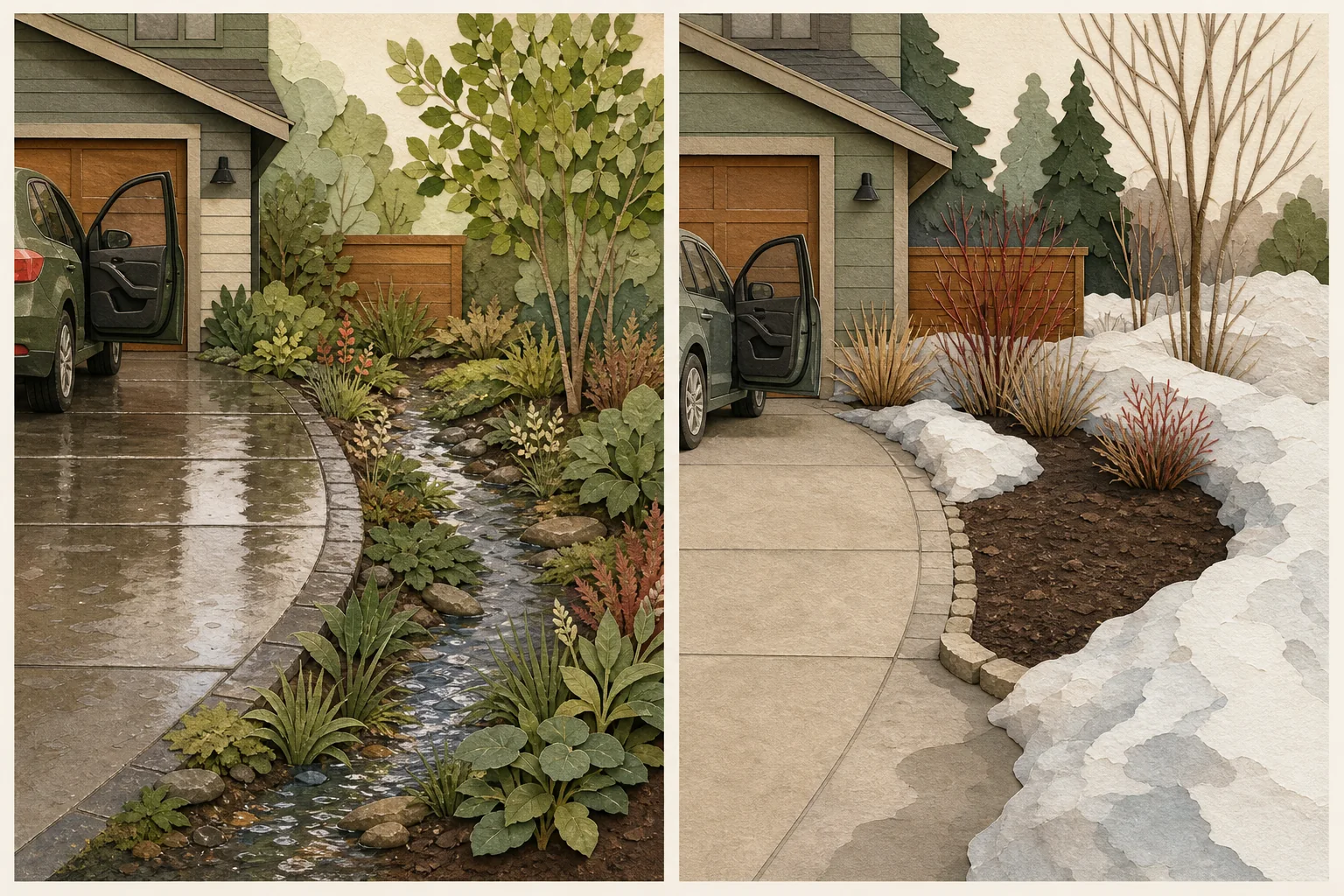
- Wet-weather check
- Winter and service check
Doors and hatches open fully: Mature plants and bed edges remain outside the normal movement envelope.
Drivers can see and be seen: Street, sidewalk, alley, and neighboring driveway views remain open under local rules.
Runoff has a safe route: The bed does not trap water against paving or buildings, erode into the drive, or receive a concentrated polluted flow.
Winter storage is marked: Snow, plow throw, deicers, and meltwater have a planned destination where relevant.
Utilities are located: Contact 811 and follow the utility-marking process before changing the bed or digging for plants.
Frequently asked questions
What plants are best beside a driveway?
Start with traits, not a national list: mature width off the paving, tolerance of the actual heat and moisture pattern, recovery from snow or foot traffic, and verified salt tolerance where deicers are used. In Minnesota, Extension recommends salt-tolerant perennials that die back yearly and fine-fescue turf mixes for higher-salt areas, while warning against vulnerable evergreens beside treated surfaces.
How close should shrubs be to a driveway?
Place the plant so its mature spread stays out of doors, mirrors, backing views, walking areas, snow storage, and pavement. Where deicers are used, University of Minnesota Extension gives a regional reference of at least three feet from treated driveways and walks and seven feet from roadways exposed to salt spray. Local conditions and the exact plant still control.
Can driveway runoff water a flower bed?
Runoff can carry sediment, deicer, oil, and other pollutants and may arrive too quickly. Observe the flow and use local stormwater guidance before intentionally directing it into a bed.
How wide should a planting strip beside a driveway be?
There is no useful width until car doors, mirrors, bin routes, backing views, snow storage, runoff, and mature plant spread are drawn. Measure those working zones with the vehicles present, then use only the space that remains.
 Gardenful
Design the driveway while the cars are in it.
Mark movement, sightlines, exposure, and runoff first. Then use planting to make the route calmer and the entrance easier to read.
Gardenful for iPhone
Download the app free and start with a photo of your yard.

How this guide was built
The page treats the driveway as a moving, seasonal, and exposed edge before it treats it as curb appeal.
Extension sources support site observation, mature plant fit, visual sequence, and the separate effects of deicer spray and soil salt.
The diagrams do not supply universal clearance dimensions. Vehicle size, road geometry, snow practice, accessibility needs, drainage, and municipal rules vary.
Sources(7)
- [1]The Effects of Deicing Salts on Landscapes
University of Minnesota Extensionhttps://extension.umn.edu/lawns-and-landscapes-minnesota/effects-deicing-salts-landscapes
- [2]Low-Impact Development Planting Guide
Utah State University Extensionhttps://extension.usu.edu/stormwater/ms4/lid-planting-guide
- [3]Gardening in the Shade
University of Minnesota Extensionhttps://extension.umn.edu/gardening-minnesota/gardening-shade
- [4]
- [5]Landscape Design: Arranging Plants in the Landscape
University of Florida IFAS Extensionhttps://ask.ifas.ufl.edu/publication/EP449
- [6]811 Before You Dig
Common Ground Alliancehttps://811beforeyoudig.com/Before-You-Dig/
- [7]