Budget yard design
How to design your yard on a budget
The short answer
Start with one real part of your yard and one job for it. Use Gardenful to see a planting direction on your own yard, then measure and price that area. Plant it yourself when the work is straightforward, or bring in local help for technical site work and installation.
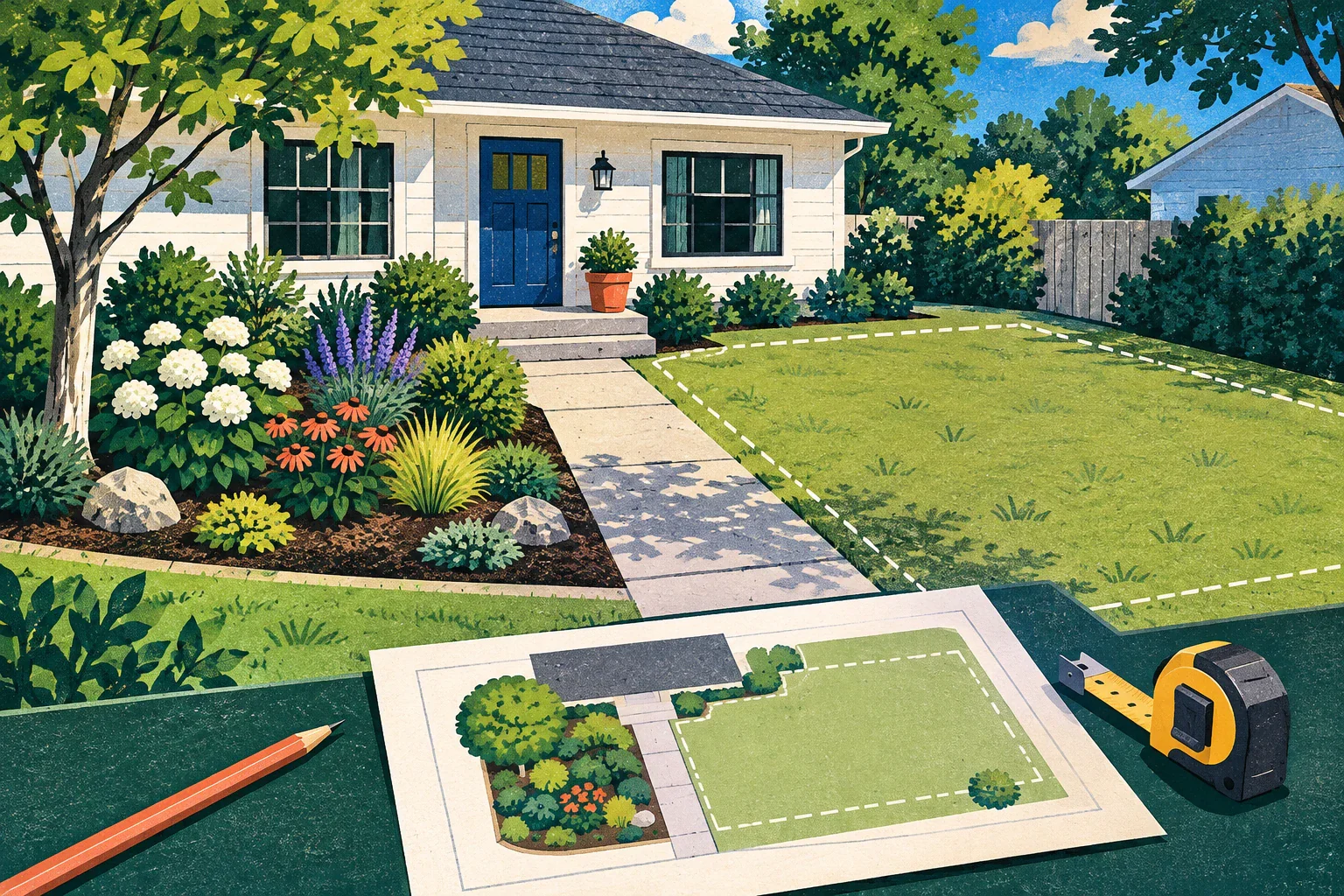
Choose one yard change
Before you compare a landscape designer, DIY work, or a design app, decide what you need to learn. That answer determines what you should spend on first.
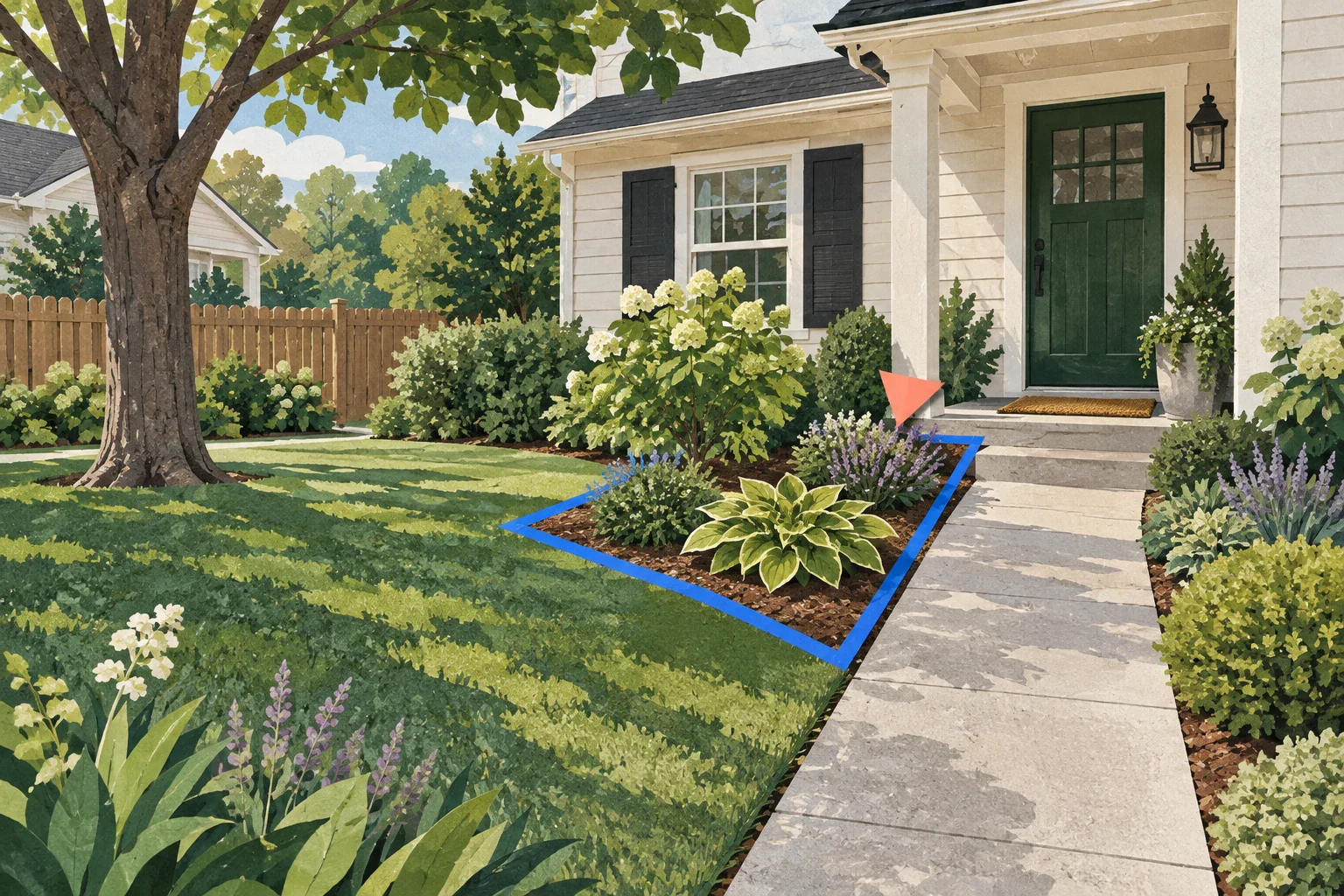
Pick one change you can recognize when it is done: make the front entry feel finished without changing the path; add privacy where the patio or kitchen window looks out; or turn a bare side strip into a useful planting bed.1
Take the photo from the place where you judge the yard: the front door, sidewalk, kitchen window, patio, or gate. Keep the house, path, mature plants, utilities, and hardscape visible.1,3
A photo helps you choose the direction. Measurements and local checks decide whether it fits. Record the bed edges, light, water, utilities, drainage, and any rule that can change the work before you buy.3
Write one sentence before you spend
- 1I want to change: [area or view].
- 2It should: [add privacy, make the entry feel finished, or improve a patio view].
- 3This phase is done when: [clear, visible result].
Match the budget to the decision
A design app, a DIY planting phase, and a local professional solve different parts of the job. Pick the least expensive one that answers the question in front of you.
Gardenful
You want to see a planting direction on your actual yard before buying plants or paying for a broader service.
What it gives you: A yard-based visual with named plants, design roles, suggested quantities, and notes.
DIY first phase
You can measure, research site fit, buy materials, and do a straightforward planting project.
What it gives you: You keep control of pace and labor, and you own site checks, quantities, installation, and care.
Local professional
The project needs site judgment, a measured plan, installation, or technical work.
What it gives you: You pay for experience and coordination where they reduce site or execution risk.
You can combine them: use Gardenful to choose a direction, then plant the straightforward part yourself or hand a clear brief to a local professional.
Sources: Apple App Store, University of Florida IFAS Extension, Mississippi State University Extension, University of Florida IFAS Extension
Plan one complete area before expanding
A smaller finished area is usually more useful than a whole yard filled with unfinished compromises. Make the first phase independent, connected, and easy to judge.
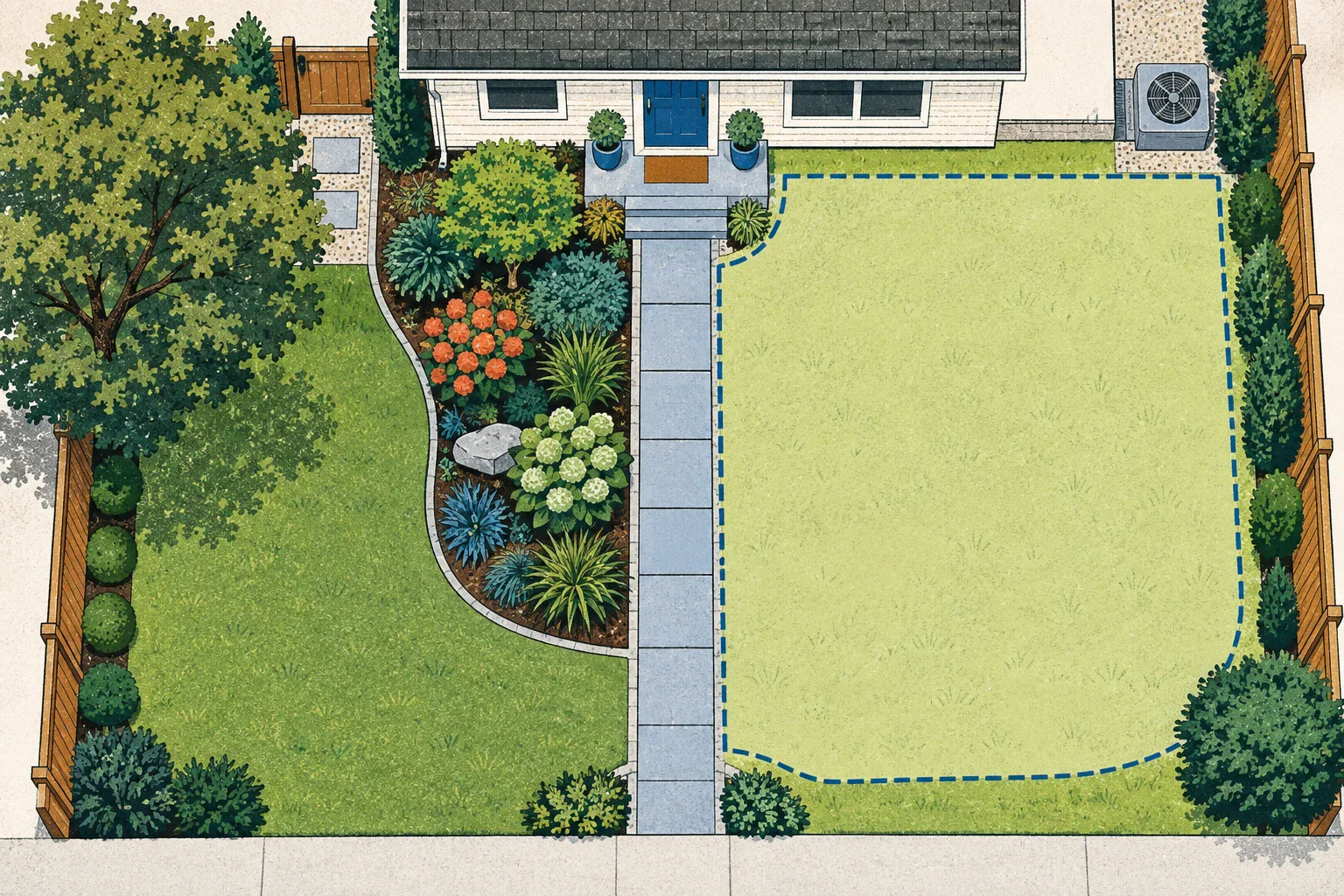
- 1
Choose the area that earns daily attention
Start where a finished change will improve daily life: the entry, patio edge, kitchen-window view, or route to the gate.
- 2
Preserve useful structure
Keep sound paths, healthy mature plants, fences, patios, steps, doors, windows, and service routes. Removing or moving them changes the budget first.
- 3
Make the phase complete
Include the bed edge, preparation, plants, ground layer, water access, and first-season care the area needs.
- 4
Reserve room for mature growth
Use mature width and height, not nursery pot size, to decide how many plants fit.
Sources: University of Florida IFAS Extension, University of Florida IFAS Extension, University of Florida IFAS Extension, Mississippi State University Extension
Price one finished phase
Price the part of the yard you can finish, including the work that makes it usable after planting.
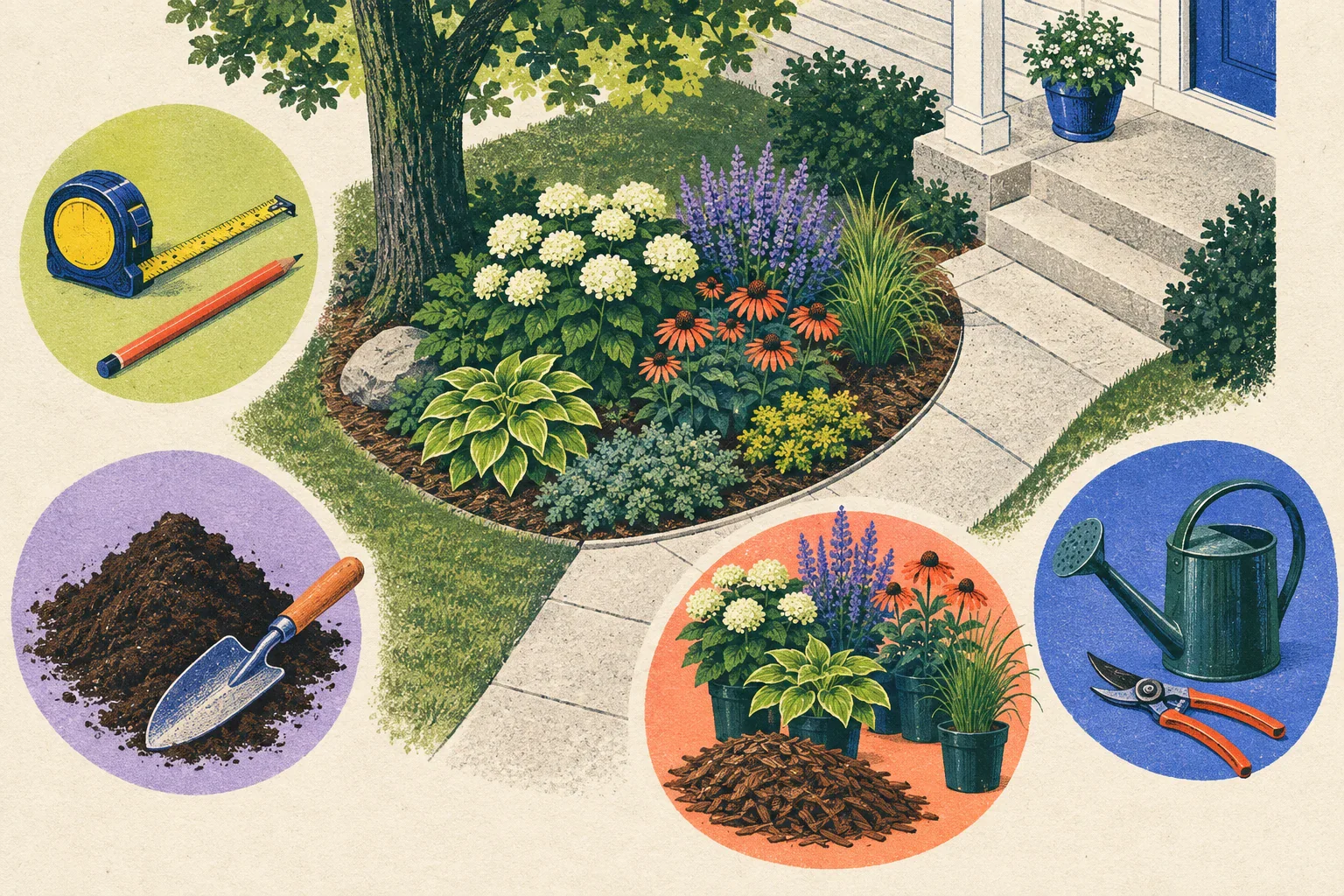
- 1
Area and access
Measure the bed and note paths, steps, doors, utilities, delivery access, and removal.
- 2
Preparation
Include clearing, soil work, bed shaping, grading, drainage, and other work that must happen first.
- 3
Plants and ground layer
Price the full plant group, mulch or other ground layer, delivery, and realistic substitutions.
- 4
First-season care
Allow for watering, weeding, staking, pruning, and replacements while new plants establish.
If the total is too high, reduce the boundary or delay accents. Do not remove the work that keeps the phase usable or safe.
Sources: University of Florida IFAS Extension, University of Florida IFAS Extension, University of Florida IFAS Extension, US EPA WaterSense
Use Gardenful before you buy the first plants
Use Gardenful when you want to see whether a planting direction belongs in your actual yard before you buy a cart of plants. Start with a yard photo, focus on the area that should change, and connect the direction to named plants, roles, suggested quantities, and notes.
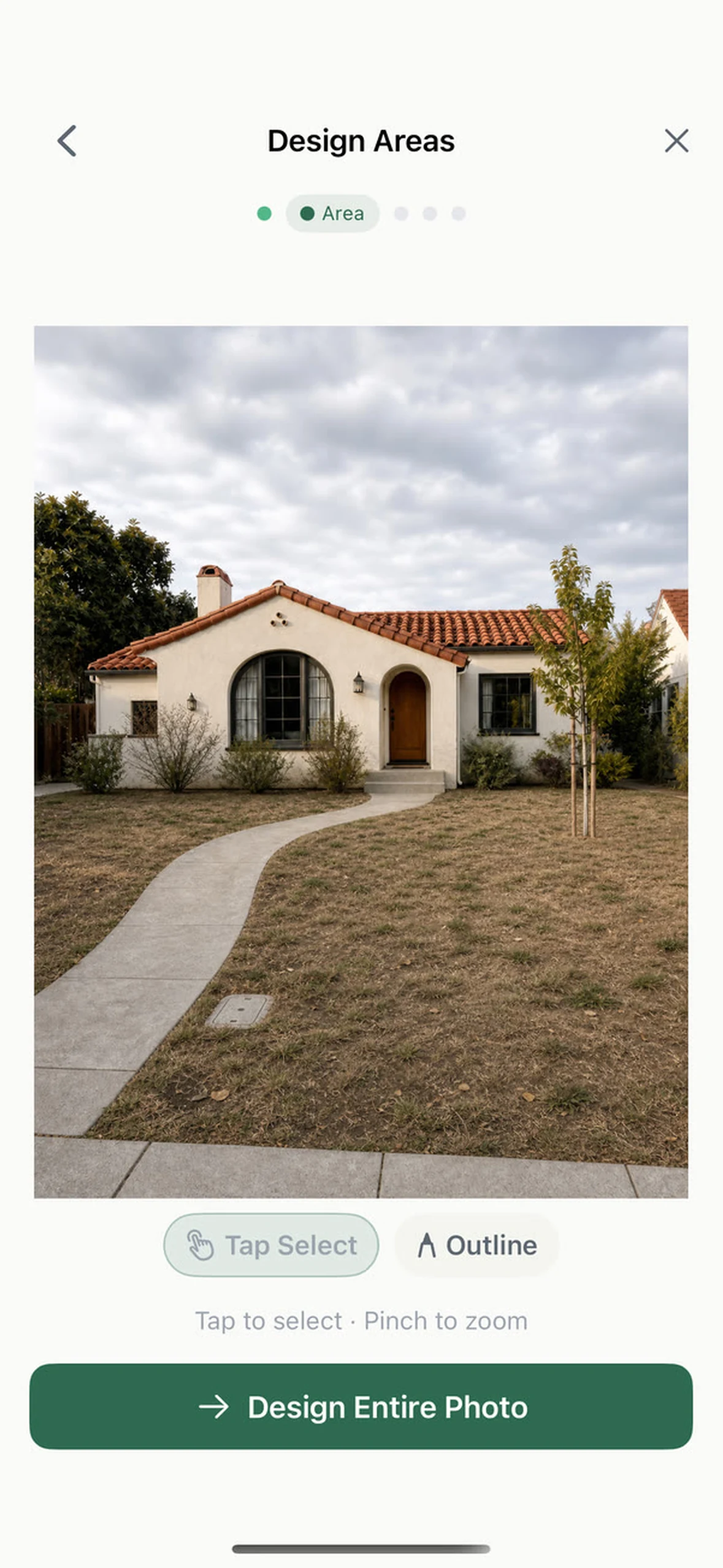
Choose the area you want to change
Focus the design on the bed or patch you are actually budgeting. Keep the house, route, and surrounding features recognizable.
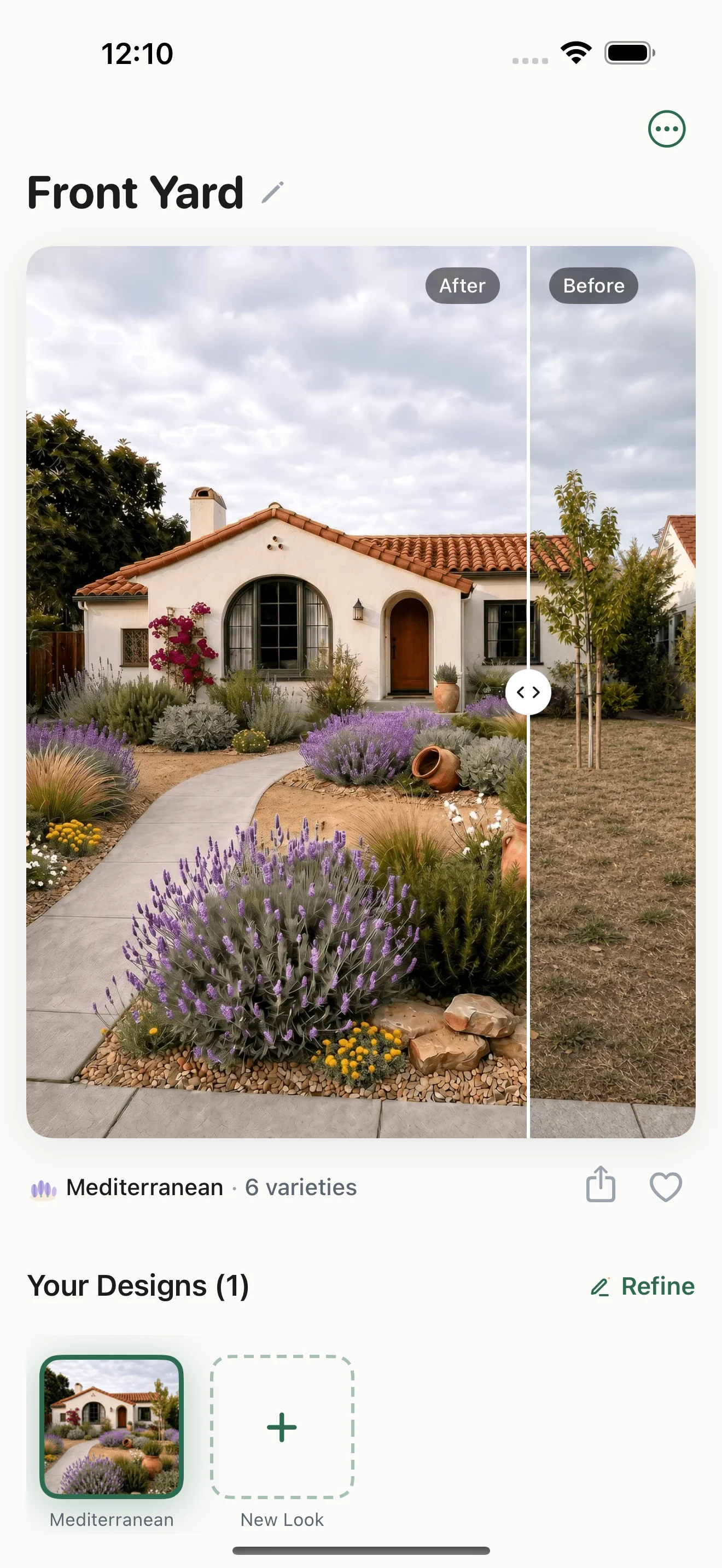
Compare the direction on the real yard
Check whether the direction still belongs to the house, path, window, and existing landscape. Use it to decide whether the idea deserves measurement and pricing.
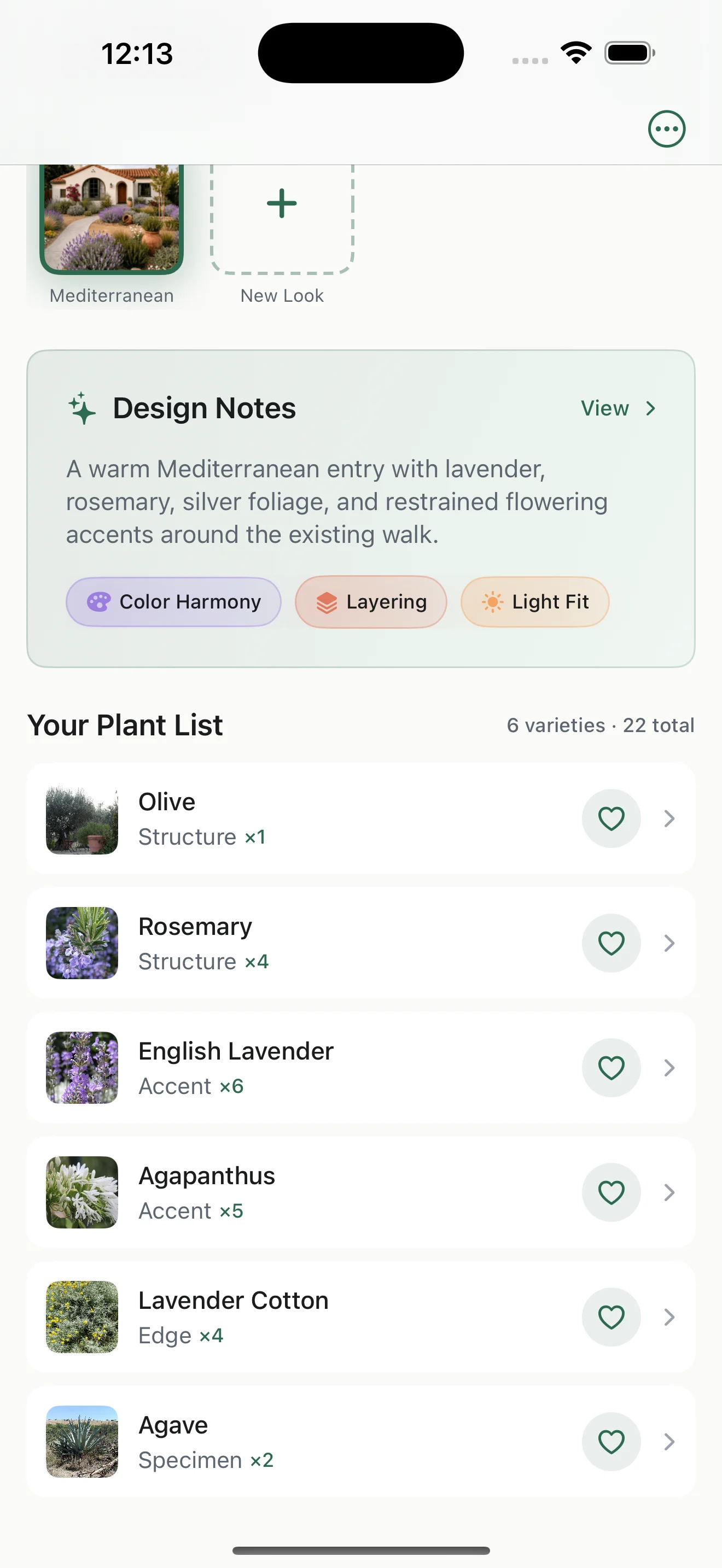
Use the plant list as a starting brief
Review the named plants, roles, suggested quantities, and notes. Then verify mature spread, light, water, availability, substitutions, and bed dimensions before buying.
Gardenful turns a yard photo and your taste into a planting direction you can react to, discuss, and price. That gives you a clearer starting point before you buy plants or decide how much local help the project needs.
Worked example: finish one entry area first
Here is how the budget approach works on a real entry project.
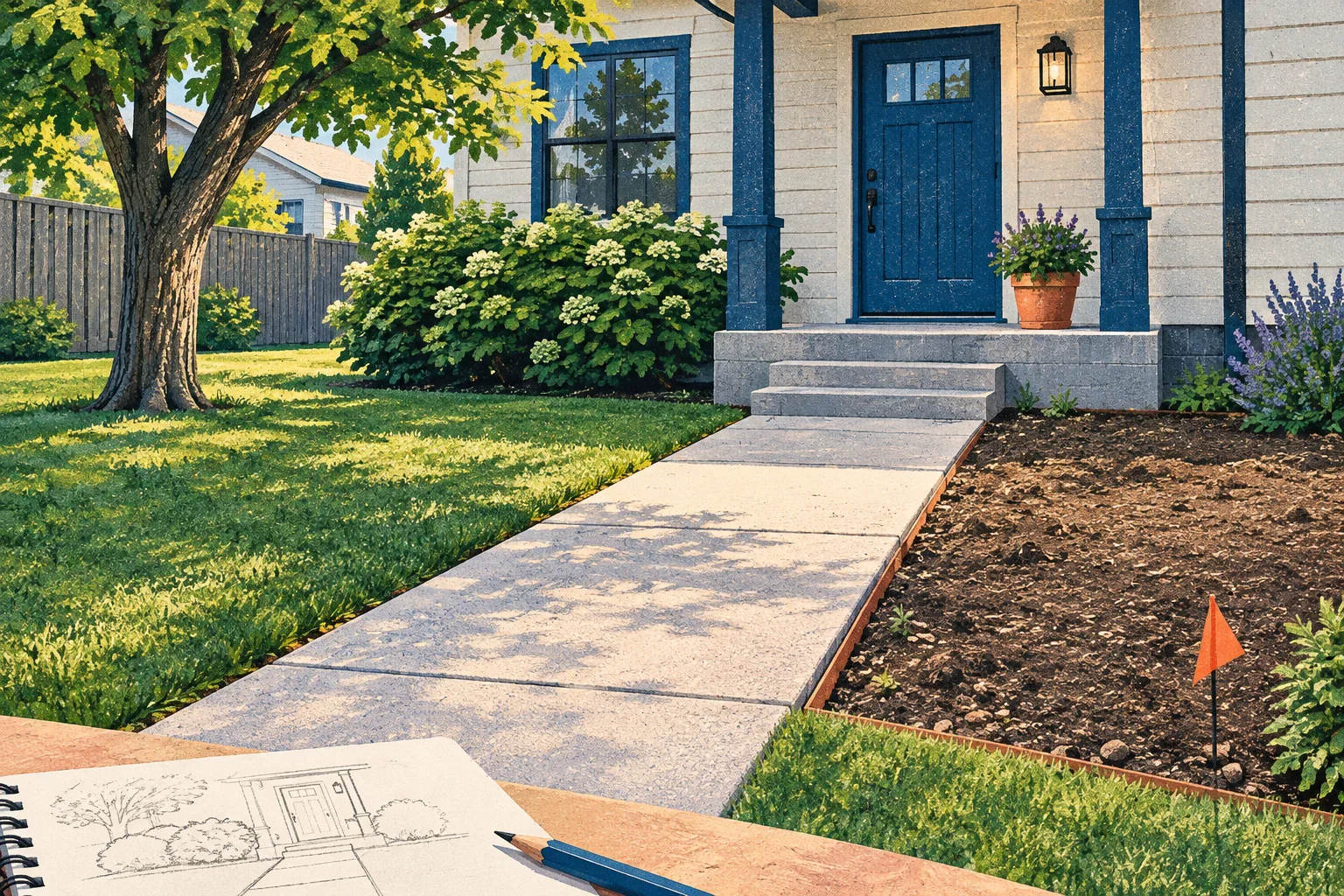
An unfinished bed beside a sound walkway
The homeowner wants a clearer front entry. The walk, steps, healthy shrub, and existing tree stay. The lawn beyond the first bed is a later phase. The exact bed should be measured before any quantities are ordered.
- 1
Define the first boundary
Photograph the entry from the approach and the door. Circle the bed that can change, keep the path open, and write the job as “make the entry feel finished without changing the path.”
- 2
Test one planting direction in Gardenful
Use the real yard photo and select only the area you are considering. Compare a direction that fits the entry and deserves measurement.
- 3
Translate the image into plant roles
Look for structure, repeated groups, an edge, and seasonal contrast before choosing individual plants. Verify site fit as you price the phase.
- 4
Price the complete first area
Add preparation, plants, mulch or ground layer, water access, delivery or equipment, and first-season care. If the total is too high, shrink the boundary or defer accents while keeping the route and core planting rhythm intact.
- 5
Plant it yourself or hand off the right part
Do the low-risk planting work yourself if you want to. Bring in local help for uncertain drainage, grading, utilities, large tree work, hardscape, structures, permits, or installation you cannot safely coordinate.
The affordable choice is not “never hire.” It is paying only for the judgment, labor, and site responsibility you actually need.
Know when a landscaper saves money
DIY works well for a bounded planting phase. Bring in a landscaper when a mistake would mean redoing the site, coordinating trades, or taking on work you cannot safely verify.
A planting-focused phase with a clear boundary and no unresolved site problem.
DIY the straightforward planting work
Choose the direction, measure the bed, buy the plants, mulch, and install in stages. Verify mature size, light, water, soil, local fit, and first-season care.
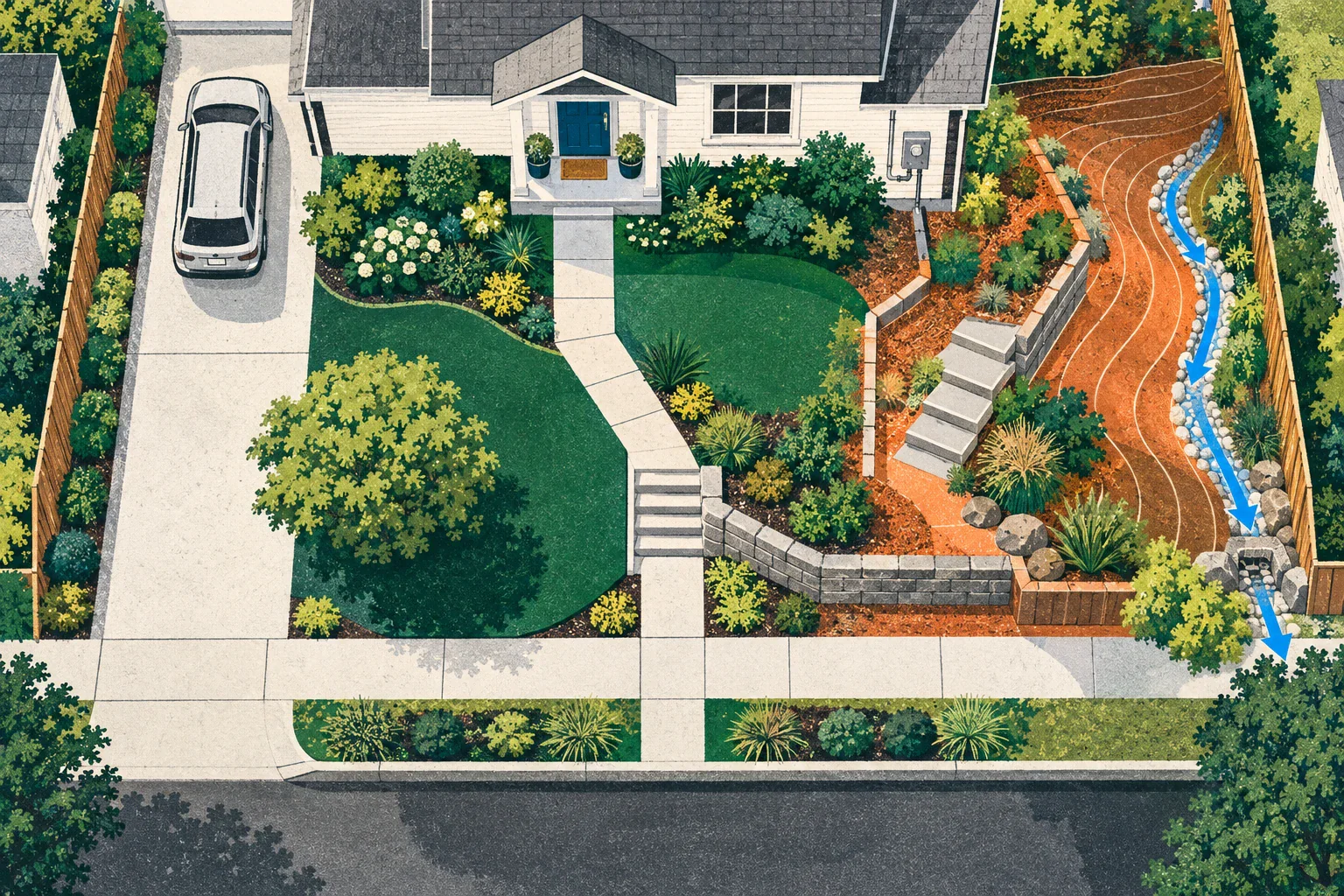
A professional answer for one physical problem, not an open-ended whole-yard package.
Get a quote for one physical problem
Ask for help with drainage, grading, retaining, steps, irrigation changes, removal, tree risk, or difficult access. Give the person a clear photo, boundary, and question.
A measured plan, technical documentation, installation management, or several trades working together.
Hire for coordination when the project needs it
A local designer or landscape professional may be the right value when you need a site visit, coordinated drawings, construction sequencing, permit-sensitive work, or someone else to carry the execution responsibility.
Before you pay, ask what is included: site verification, drawings, plant or material quantities, revisions, installation, permits, contractor coordination, and what remains your responsibility.
Sources: University of Florida IFAS Extension, University of Florida IFAS Extension, Mississippi State University Extension
Frequently asked questions
What is the cheapest way to design a yard?
Start with one real yard photo and one clear design question. Use Gardenful to test a planting direction, then measure and price one complete area. Plant it yourself when the work is straightforward, and hire local help for technical site work or installation you do not want to manage.
Is Gardenful free?
Gardenful lets you start with a free visualization. Additional visualizations may require Garden Pass; check the current in-app offer and subscription terms before subscribing.
What is the best free landscape design app?
There is no best app for every project. For a beginner who wants to see a planting direction on a real yard photo, Gardenful is an iPhone option with named plants, roles, suggested quantities, and notes. Use the visual to choose a direction, then verify the site before buying or building.
Can I design my yard without hiring a landscaper?
Yes, when the first phase is a clearly bounded, planting-focused project with no unresolved drainage, grading, utility, structural, or permit issue. Use a base map, measure the area, check plant fit and mature size, price the complete phase, and plan first-season care before buying.
Is Gardenful cheaper than a landscape designer?
Gardenful gives you a faster, lower-cost way to explore a planting direction before you pay for a design service. A designer or landscaper is the better fit when the project needs a site visit, technical judgment, or installation coordination. Compare the scope and responsibility, not only the price.
When should I hire a landscaper?
Hire qualified local help when the project involves uncertain drainage or grading, retaining walls, steps, structures, utilities, hazardous trees, major removal, permit-sensitive work, a measured construction plan, or installation coordination you do not want to manage yourself.
 Gardenful
Start with one area you can name.
Take a photo of the yard you have, choose the part you want to change, and use Gardenful to see whether the planting direction is worth measuring and pricing.
Gardenful for iPhone
Download the app free and start with a photo of your yard.

How this guide was built
The framework separates an affordable visual-planning question from the site and execution decisions that still need measurement or local responsibility.
The DIY and budgeting sequence follows university extension guidance on defining use, recording existing conditions, making a base map, matching plants to site, and installing a landscape in stages. Watering and establishment checks are included because the first-season work is part of the real cost.
Gardenful's current public product positioning supports a photo-based garden visualization, named plant choices, suggested quantities, and design notes that help a homeowner choose a direction before planning the work.
Gardenful publishes this guide because a visual planting direction can make the first yard decision easier. Use it to choose a direction, then price the real work with the same care you would bring to any planting project.
Sources
These sources support the planning and verification sequence. They do not replace local measurements, plant guidance, professional advice, or current product terms.
- [1]Landscape Design: Ten Important Things to Consider
University of Florida IFAS Extensionhttps://ask.ifas.ufl.edu/publication/EP375
- [2]Drawing a Landscape Plan: The Base Map
University of Florida IFAS Extensionhttps://ask.ifas.ufl.edu/publication/EP456
- [3]Landscape Design: Site Analysis and Measurements
University of Florida IFAS Extensionhttps://ask.ifas.ufl.edu/publication/EP427
- [4]Right Plant, Right Place
University of Florida IFAS Extensionhttps://ask.ifas.ufl.edu/publication/EP416
- [5]Home Landscape Design
Mississippi State University Extensionhttps://extension.msstate.edu/publications/home-landscape-design
- [6]Watering Tips
US EPA WaterSensehttps://www.epa.gov/watersense/watering-tips
- [7]