Make an existing garden yours
Inherited a garden? What to keep, change and leave alone
The short answer
An inherited garden can give you shade, privacy and established plants that would take years to replace. Keep the healthy plants doing useful work, address hazards and confirmed invasive plants, and identify unfamiliar plants before removing them. Start by changing one area you use or see every day while you learn what the rest of the garden does through the seasons.

Read the garden before clearing it
A garden that looks untidy may still have a good layout. Walk the routes you actually use: from the car to the door, out to the bins, and around the patio. Notice which plants give you privacy, frame a view or shade a place you like to sit. Those jobs matter more than whether you would have chosen the same plants.1
Take a wide photo from each of those places. Then photograph unfamiliar plants close up, including leaves, stems and flowers when present. Ask the previous owner for plant names, irrigation details and any seasonal photos they have. A bare patch in winter might contain bulbs; a leafy screen in summer might offer little privacy in January.
Sketch the house, paths, beds, trees and water sources. Mark anything you already know is a problem, such as a blocked gate or water collecting beside the house. You now have a useful record to compare against, even if you haven't identified every plant.
Decide what stays by the job it does
Mark your photo or sketch with three decisions. A plant can earn its place without being your favorite flower.
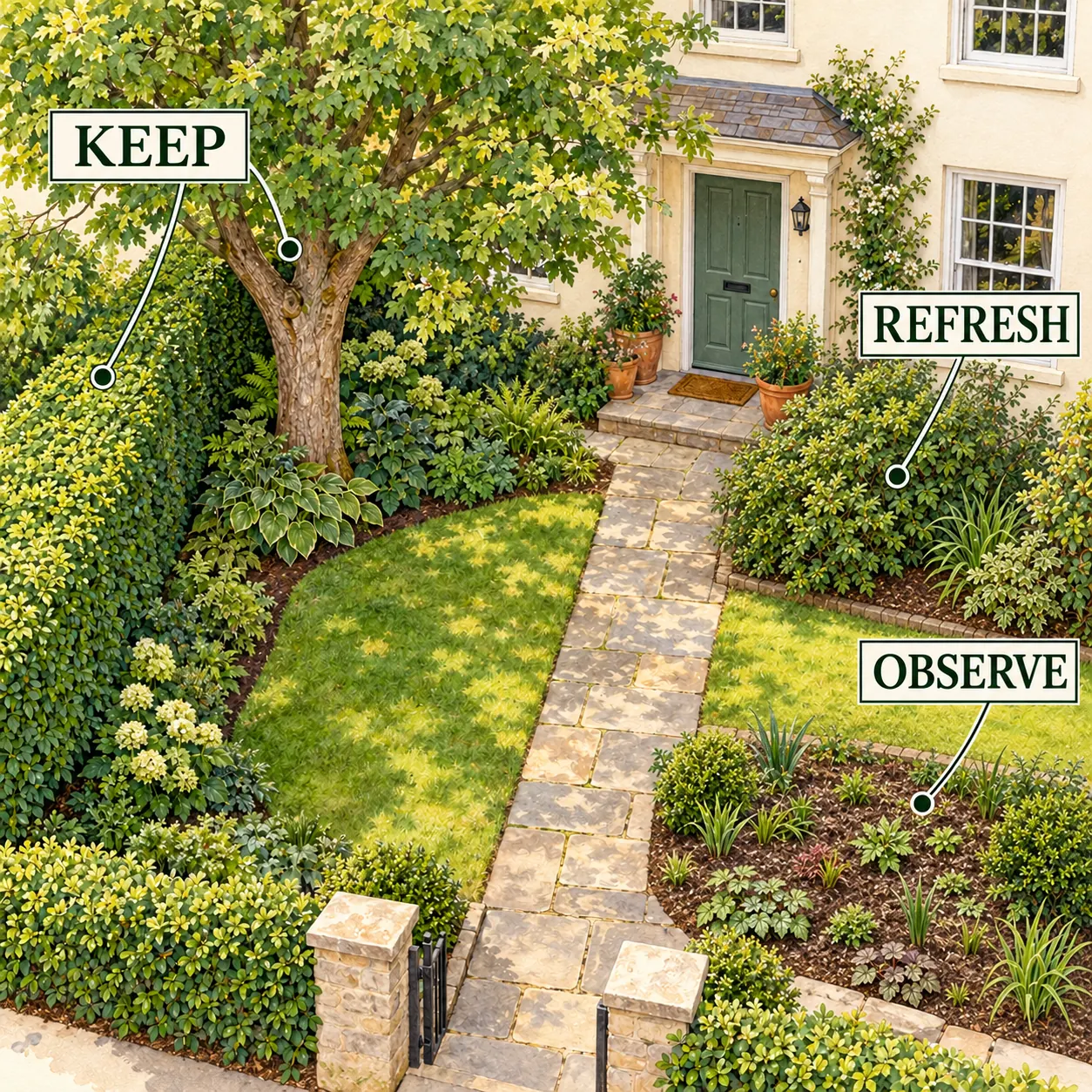
Keep plants that make the yard work
Healthy shade trees, a useful screen and shrubs that fit their space are worth planning around. Note the light they create for nearby beds before choosing anything new.
Change a clear mismatch
A shrub that repeatedly blocks the path or window may be too large for its position. Identify it before deciding between suitable pruning, moving it or replacement. Cutting it smaller every year can lock you into the same chore.
Watch what you don't yet understand
Label an unfamiliar clump and photograph it as it grows. See when it flowers, how large it gets and whether it fills a seasonal gap before deciding to remove it. Deal with hazards promptly.
Watch for the information one visit can't give you
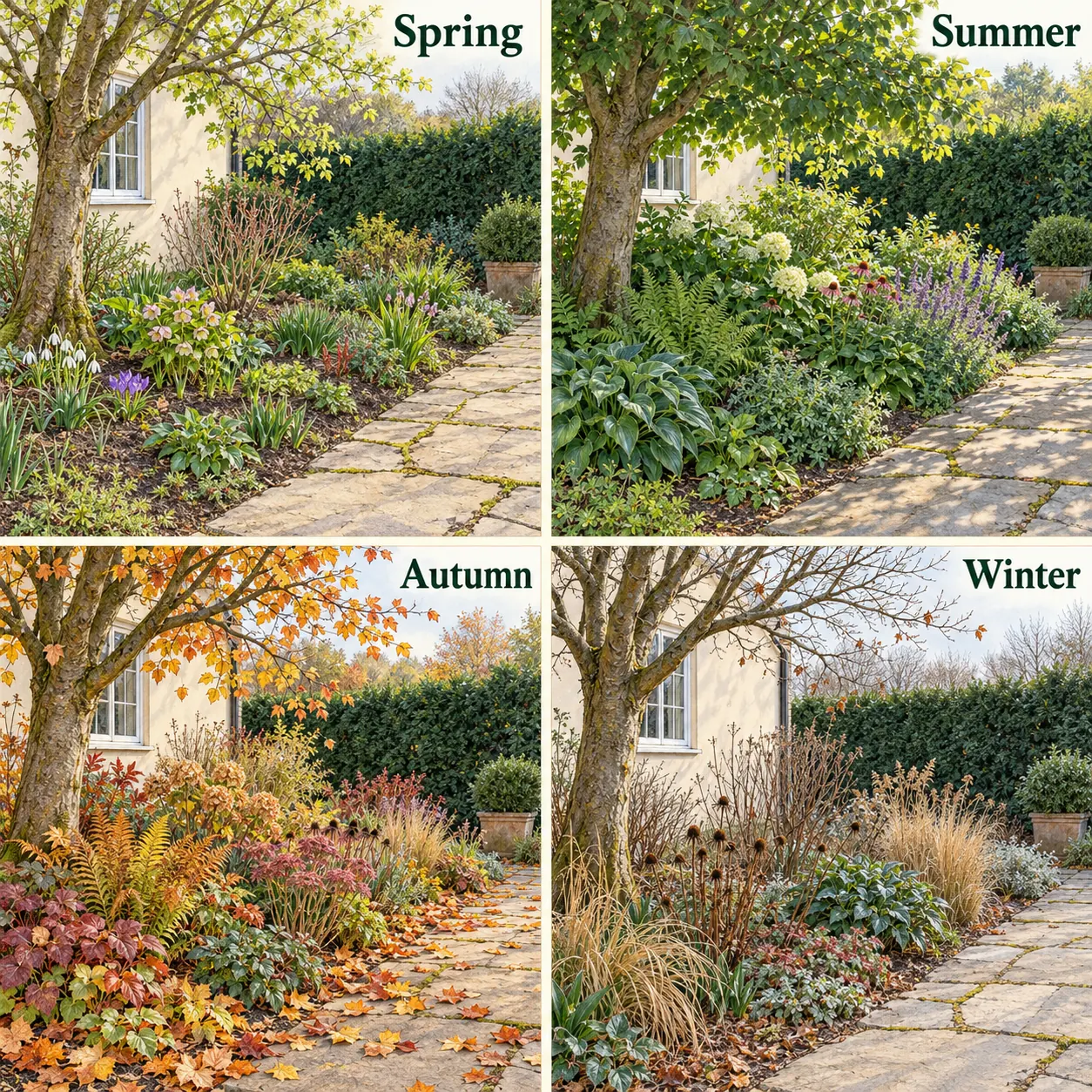
You don't have to postpone every improvement for a year. Keep the uncertain parts while tackling straightforward maintenance and one well-understood bed. What matters is seeing the seasons that could change your plan.
In spring, look for plants emerging in apparently empty soil. In summer, record where tree shade falls and which beds dry quickly. After leaf fall, check the views from windows and the places you want privacy. Watch where water goes during rain rather than relying on a dry-day photo.
Write down what bothers you and when. ‘The patio feels exposed in winter’ points to a different solution from ‘I don't like this shrub's flowers.’ The first needs dependable screening; the second may only need a change in the foreground.
Refresh the entrance without clearing the whole yard
Suppose your front garden has a healthy tree shading the house, a hedge screening the neighbor, and an entrance bed crowded with shrubs. Keep the tree and hedge for now. Concentrate on the bed you pass every day, where lower planting could make the doorway feel open and welcoming.
Identify the crowded shrubs and check their mature size. If renewal pruning suits the species, it may be worth keeping one. If their normal size conflicts with the path, plan a smaller replacement. Measure the usable bed after allowing room for the plants you retain, rather than buying enough new plants to fill every visible gap.
Before digging, take a photo with the doorway, path and retained plants in view. Gardenful can help you picture new planting in the selected bed and suggest plants and quantities to explore. Describe what you want to keep, then compare the idea with your original photo. It's an approachable way to see whether a small change gives you the garden you had in mind.
Check these before removing plants
Before clearing a bed, check what you would lose and how you will replace it.
Confirm the identity: Use a clear photo and local nursery or extension advice for uncertain plants. Confirm suspected invasive plants against local guidance before choosing a removal method.
Protect the plants staying: Keep digging and equipment away from established tree roots. Get an arborist's advice for tree work or suspected damage instead of treating it as ordinary bed cleanup.
Check below and around the bed: Arrange utility locating before digging. Find private irrigation lines, check boundaries, and get help for drainage or retaining-wall problems before adding planting.
Plan the next season: Know what will cover the cleared ground and how you will water the replacement plants. Keep each phase small enough to finish and care for.
Frequently asked questions
Should I wait a year before changing an inherited garden?
You can start sooner with clear problems and a small area you understand. Watch unfamiliar plants through the seasons that reveal their value before removing them. Seasonal observation is especially helpful for bulbs, flowering shrubs, shade and winter privacy.
Should I remove all the overgrown shrubs?
No. Identify them first and work out whether they fit the space at their normal mature size. Some respond well to suitable renewal pruning. A plant that must be repeatedly cut back to keep a path or window clear may be better replaced with something smaller.
What should I do first in a neglected garden?
Check access and hazards, photograph the garden, identify the main plants and record water problems. Choose one bed to improve while keeping useful shade and screening. Get local advice for hazardous trees, invasive plants or structural drainage issues.
 Gardenful
Make the garden you inherited feel like yours.
Start with a photo of one bed. Explore a planting idea with Gardenful, then use the suggested plants and quantities to plan your next nursery visit.
Gardenful for iPhone
Download the app free and start with a photo of your yard.

Sources(3)
- [1]Landscape Planning
University of Maryland Extensionhttps://extension.umd.edu/resource/landscape-planning
- [2]Pruning Shrubs and Hedges in the Home Garden
University of Maryland Extensionhttps://extension.umd.edu/resource/pruning-shrubs-and-hedges-home-garden
- [3]