Know which gaps will fill
Why your new garden looks sparse—and how to plan for growth
The short answer
A new garden can look sparse because small nursery plants haven't reached their mature width. Before buying more, check the exact varieties' expected sizes and mark those outlines in the bed. If the outlines fill the space while keeping paths and access clear, give the plants room to grow. Use a neat mulch surface, a container or suitable seasonal flowers for an attractive start instead of adding permanent plants you'll need to remove later.
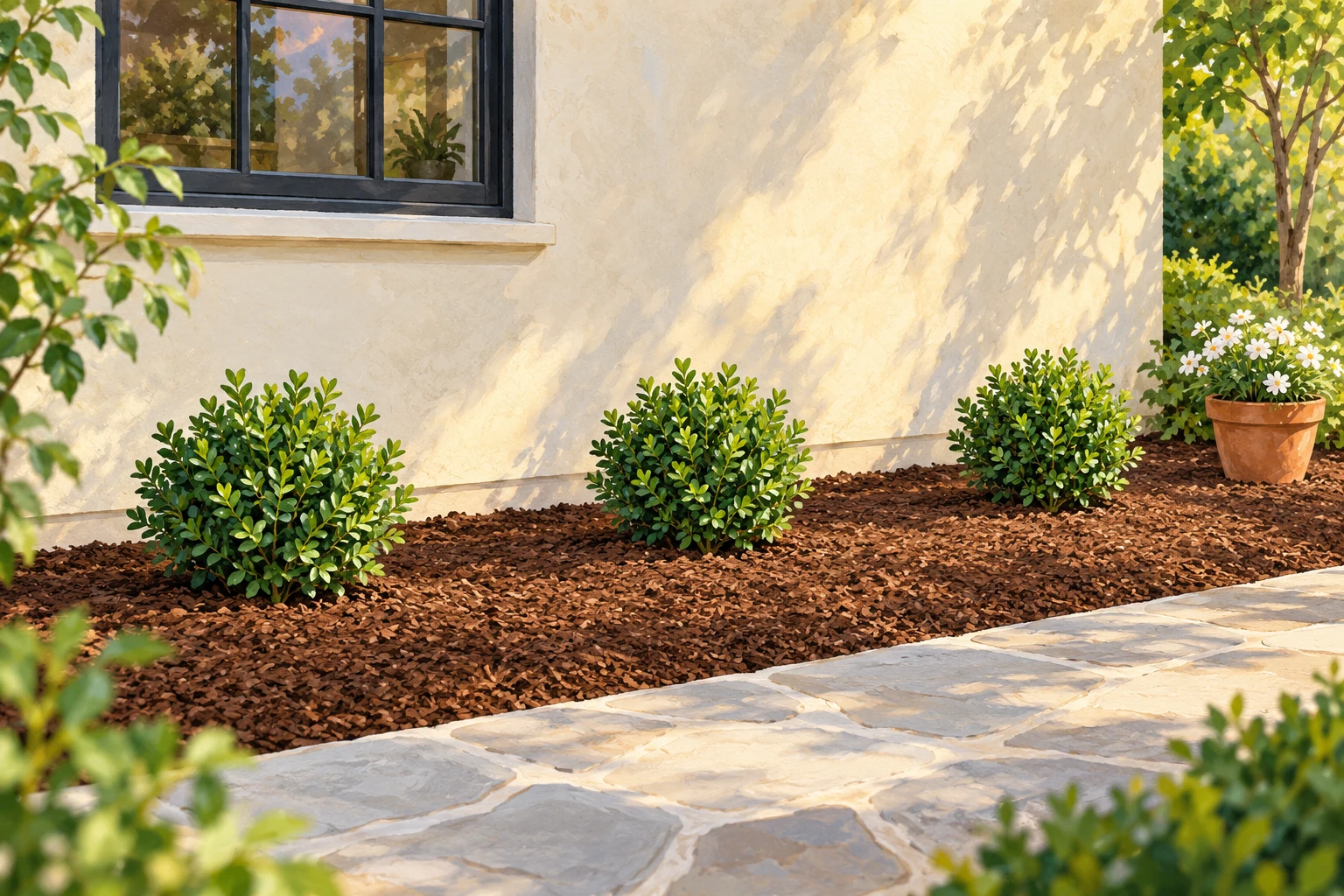
Picture the same bed with larger plants
It's easy to mistake a small plant for a small-growing plant. A young shrub in a compact pot may eventually occupy most of the gap you're tempted to fill.
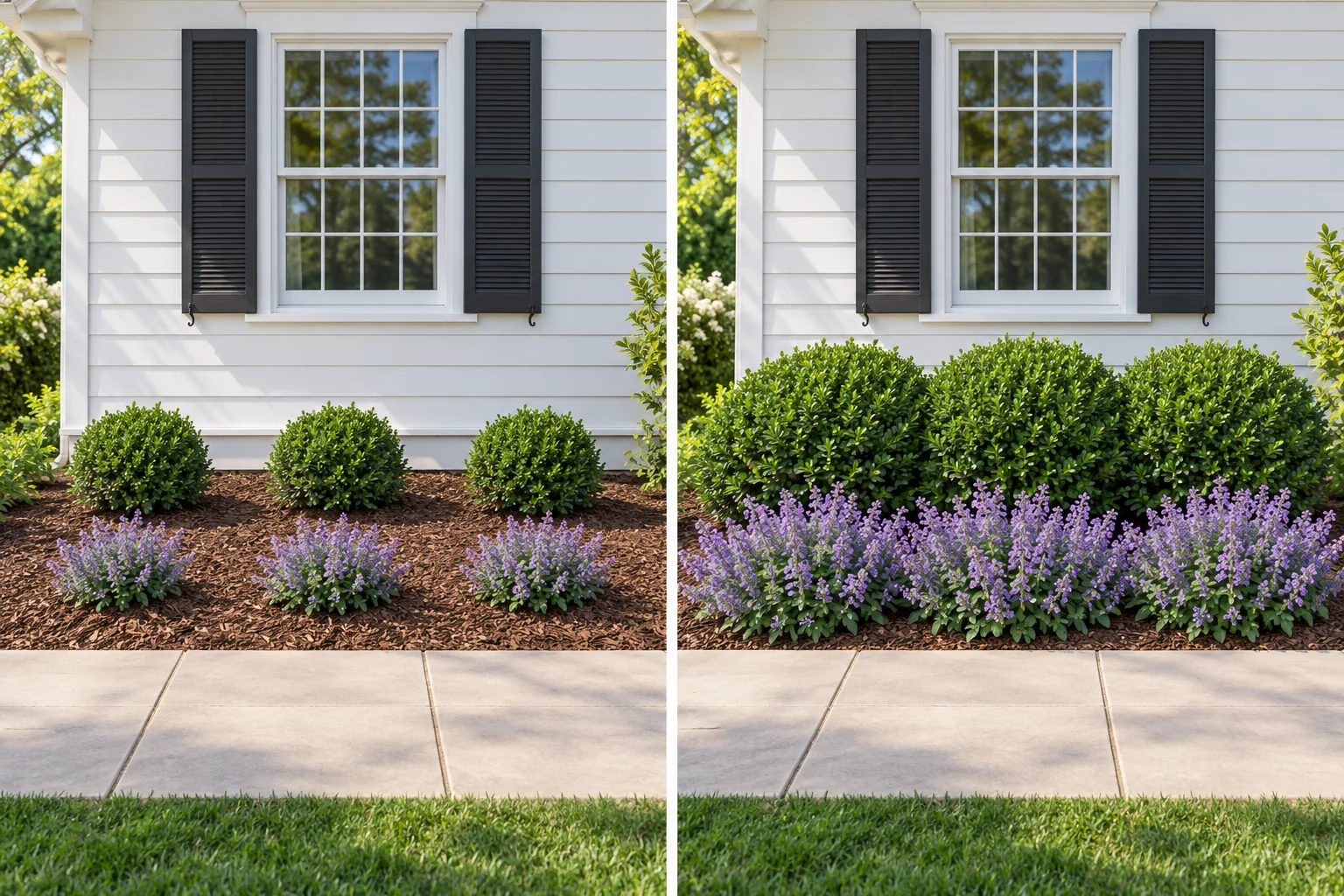
- Just planted
- Grown in
Use the named variety's mature height and width when choosing its position. Sketch the expected outlines, including existing plants, rather than counting how many nursery pots fit in the bare soil. Allow the clearances you need for walking, windows, maintenance and air circulation before filling the remaining space.1,2
A full-looking design image shows a destination. It doesn't tell you how large the plants will be when you buy them, or how quickly they'll reach that size. Keep the finished idea and a planting-day layout together so your shopping list matches the intended growth.
Decide whether the gap needs time or a different plan
Check the space in a season when the plants would normally be in leaf. Then compare the gap with their expected mature outlines.
The mature outlines will fill it
Keep the planned spacing and care for the plants. If they can occupy the space at their normal size, adding another permanent plant creates a future removal job.
The space opens only in part of the year
Check the plant's seasonal habit. A perennial that dies back in winter won't solve a winter gap by getting older. Add a different season of interest, or let the path, bed edge and retained shrubs carry the view.
The mature outlines still leave an unwanted opening
There may be room for another plant, a wider-growing variety or a revised bed edge. Measure the gap at mature size and choose something that fits its light, moisture and purpose.
Should you buy three shrubs or five?
Suppose you have a 9-foot stretch of bed and choose a shrub variety labeled 3 feet wide at maturity. The goal is a continuous row with room in front for access, not a dense formal hedge.
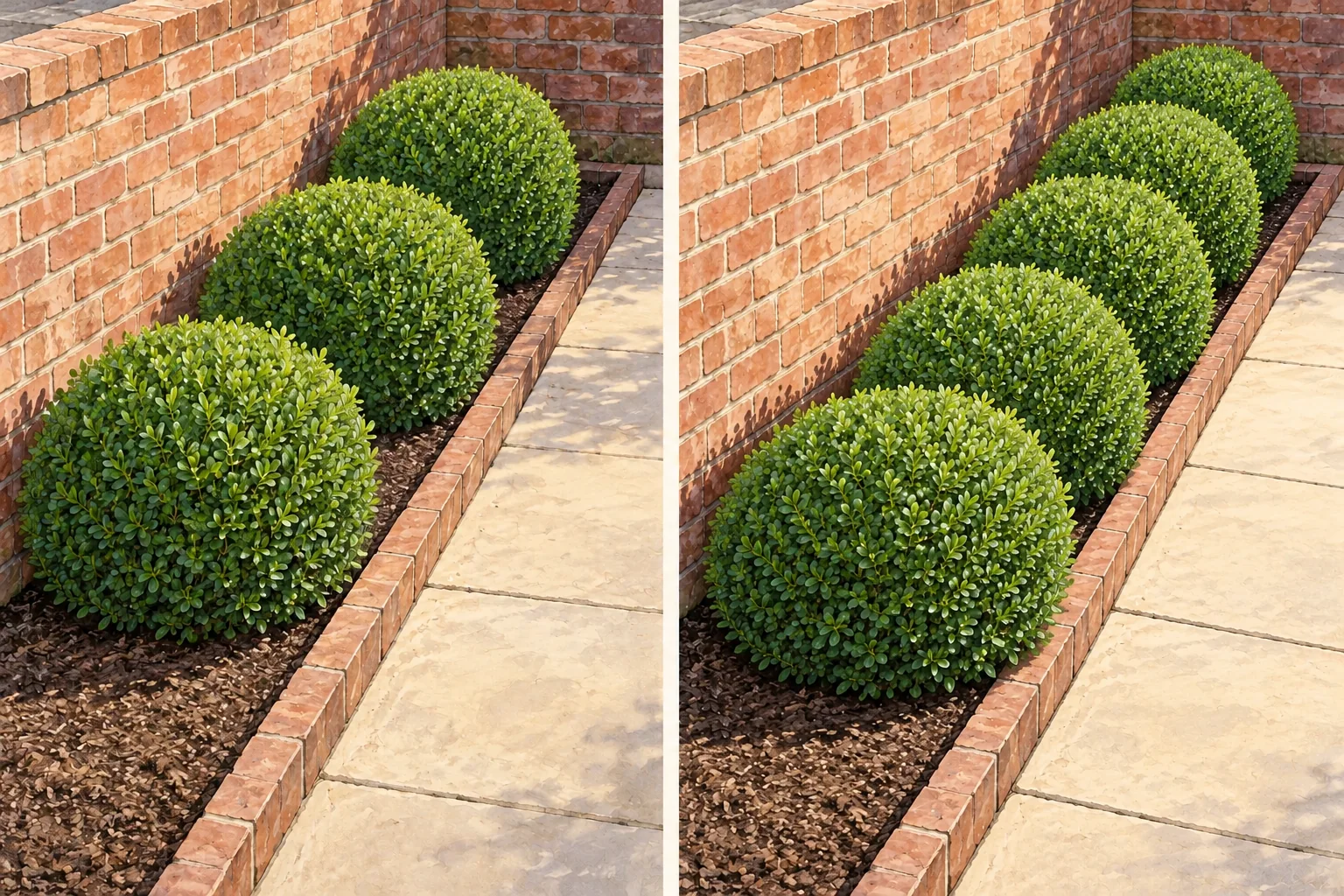
- Three shrubs
- Five shrubs
Three shrubs can fill that length when their centers are 3 feet apart, with the first and last centers 1.5 feet from the ends. Each plant gets a 3-foot-wide space. With the same end clearances, five evenly spaced centers would be only 1.5 feet apart. The young plants might look better together immediately, but their expected mature widths would overlap substantially.
Choose three for this layout and spend the difference on good preparation, aftercare or one larger starting plant in the most visible position. Use the recommended spacing for the exact variety and kind of border you want.
Check bed depth too. A 3-foot-wide shrub needs room toward the path as well as toward its neighbors. Moving all the plants closer together along the row won't solve a bed that's too shallow for their mature spread.
Make the first season attractive without filling every gap
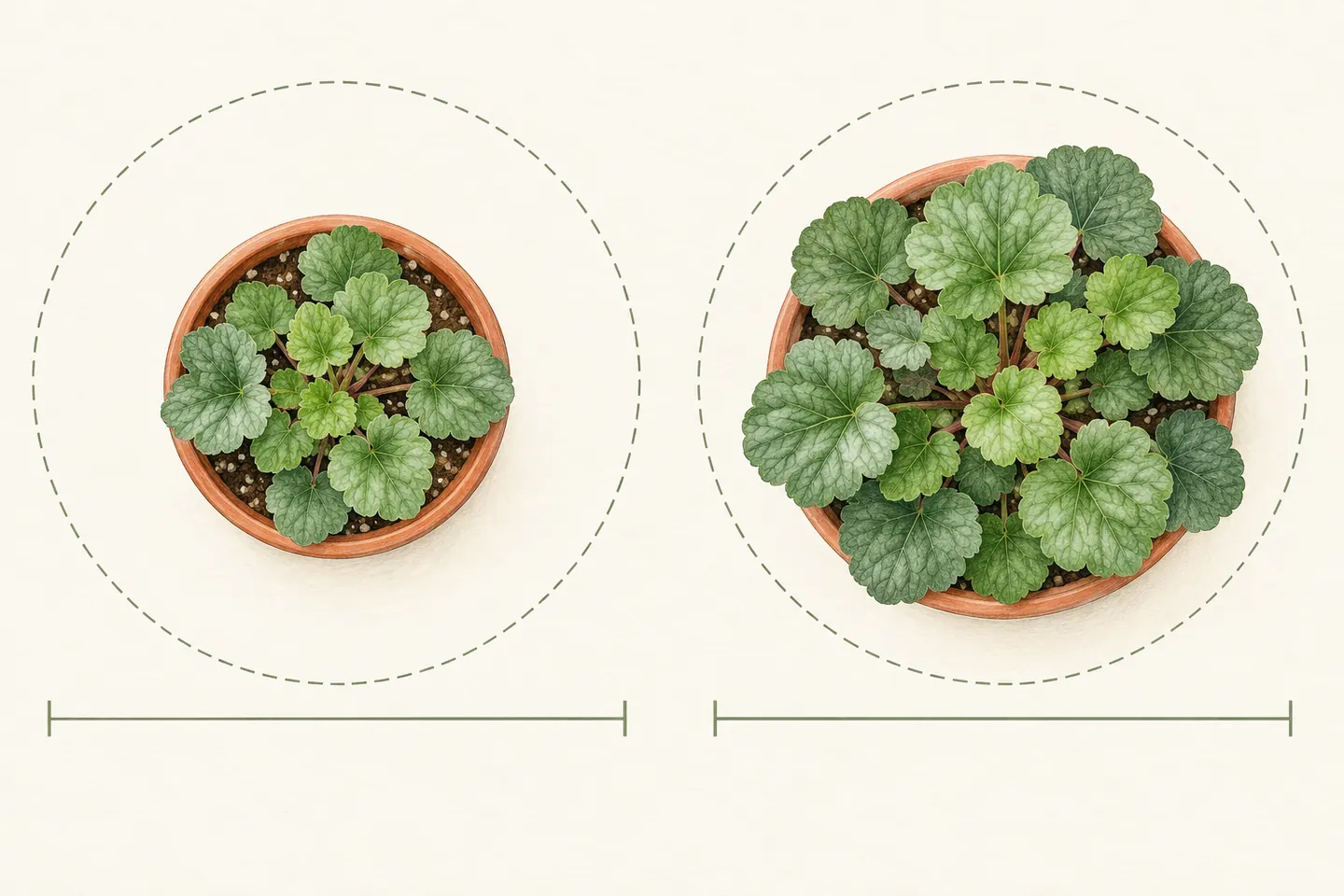
- Smaller pot
- Larger pot
A clean bed edge and a suitable, even mulch surface help the open spaces look deliberate. Keep mulch away from trunks and crowns, and check its existing depth before adding more. Around trees and shrubs, mulch also reduces competition and helps retain soil moisture; it has a practical job while the plants establish.4
For color, use a manageable patch of annual flowers that suits the same growing conditions, outside the new plants' root balls. Plan to remove it as the permanent planting expands. A container near the entrance can also bring flowers into the view without squeezing another permanent root system into the bed. Leave watering and maintenance access open.1
If you have a little more to spend, compare larger and smaller stock of the same suitable variety. A larger starting plant can improve an important view sooner. It still needs the same mature space, and it may cost more to move, plant and care for. Buying a few larger plants and leaving the rest small can be more useful than buying extra shrubs for temporary fullness.
Watch the plants before deciding that the plan failed
Above-ground size and root establishment aren't the same thing. New shrubs need moisture checks while their roots spread into the surrounding soil. Follow care for the plant and your local conditions; don't keep adding water or fertilizer simply because the bed hasn't filled out yet.3
Photograph the same view when the plants are in leaf, comparing like seasons. Note whether they're getting wider, losing foliage or being browsed. Ask a local nursery or Extension service about persistent wilting or dieback before adding plants to the same spot.
Frequently asked questions
How long does a new garden take to fill in?
It depends on the plants, starting sizes and growing conditions. Ask about the actual varieties and compare progress in the same season each year. A bed with fast-spreading perennials will change differently from one built around slow-growing shrubs.
Should I plant closer together so the garden looks full immediately?
Only if you have deliberately chosen a dense planting system and its maintenance. For a permanent border, use the plants' expected mature widths and recommended spacing. Crowding plants for an immediate effect can create competition, blocked access and a need to remove plants later.
Can I fill the gaps with annual flowers?
Yes, where the light, water and available root space suit them. Keep them clear of the new plants' crowns and root balls, and remove them as the permanent planting expands. A separate container is useful when there isn't a suitable planting pocket.
Are larger nursery plants always better?
No. They can improve the initial view, but they cost more and need appropriate handling and aftercare. Compare healthy plants of the same suitable variety and decide where a larger starting size would make the most difference. Mature spacing stays the same.
 Gardenful
See the garden you're growing toward.
Start with your yard photo in Gardenful. Explore a planting design and suggested plants, then choose sensible starting sizes and leave room for them to grow.
Gardenful for iPhone
Download the app free and start with a photo of your yard.

Sources(4)
- [1]Perennial Gardening
Colorado State University Extensionhttps://extension.colostate.edu/resource/perennial-gardening/
- [2]Landscape Design: Arranging Plants in the Landscape
University of Florida IFAS Extensionhttps://ask.ifas.ufl.edu/publication/EP449
- [3]
- [4]Mulching Trees and Shrubs
University of Maryland Extensionhttps://extension.umd.edu/resource/mulching-trees-and-shrubs