Help new planting settle in
How to water newly planted shrubs
The short answer
A new shrub's roots are still mostly in the soil that came out of its nursery pot. This root ball can dry out even when the garden soil beside it feels damp. Water thoroughly at planting, then check both places below the surface before watering again. If they feel moist, wait; if the root ball is dry, water it and the nearby soil slowly.
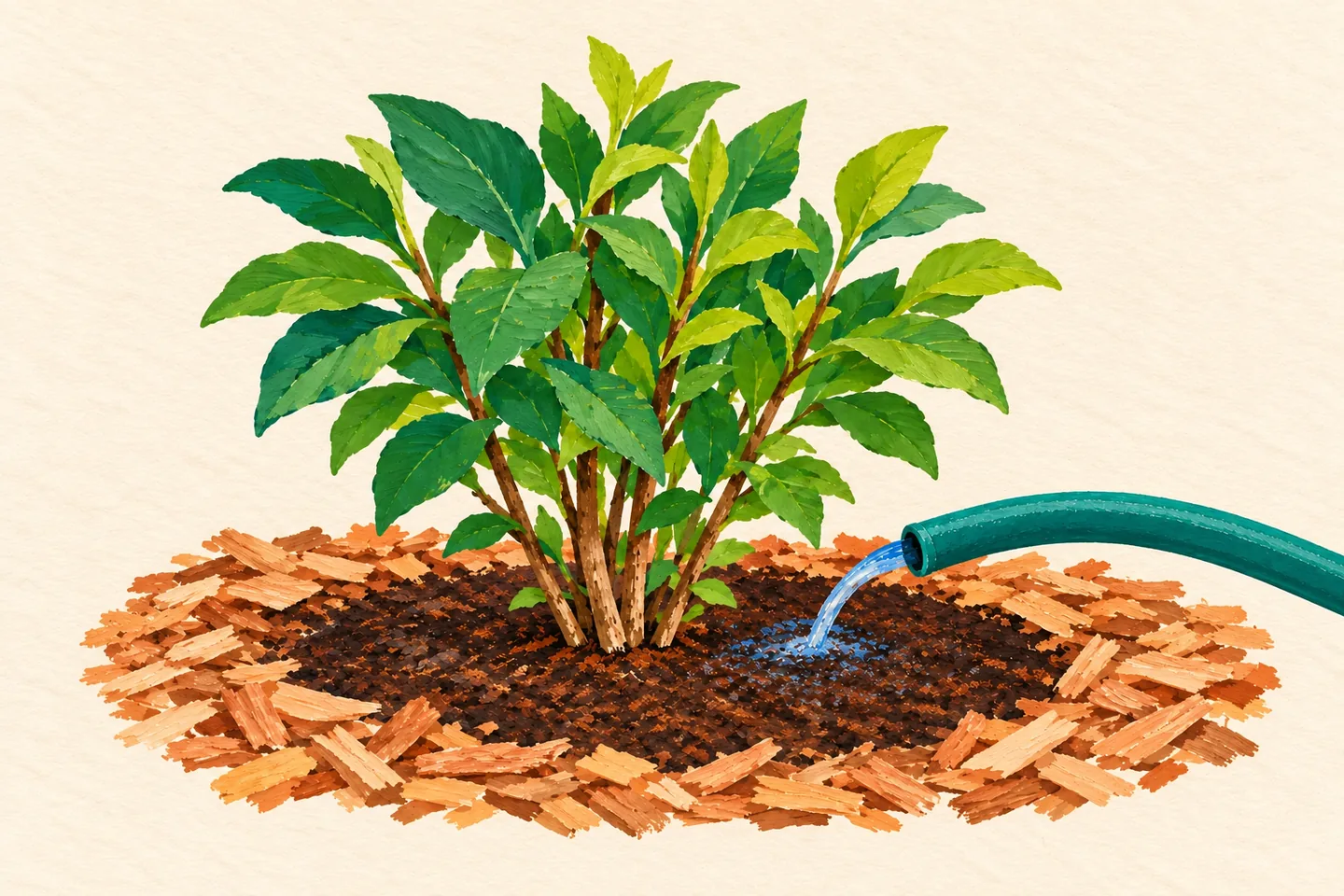
Check two places: the root ball and the soil beside it
The root ball is the mass of roots and growing mix that came out of the nursery pot. Its mix can absorb and lose water differently from your garden soil. A damp bed doesn't necessarily mean the shrub's roots are getting a drink.
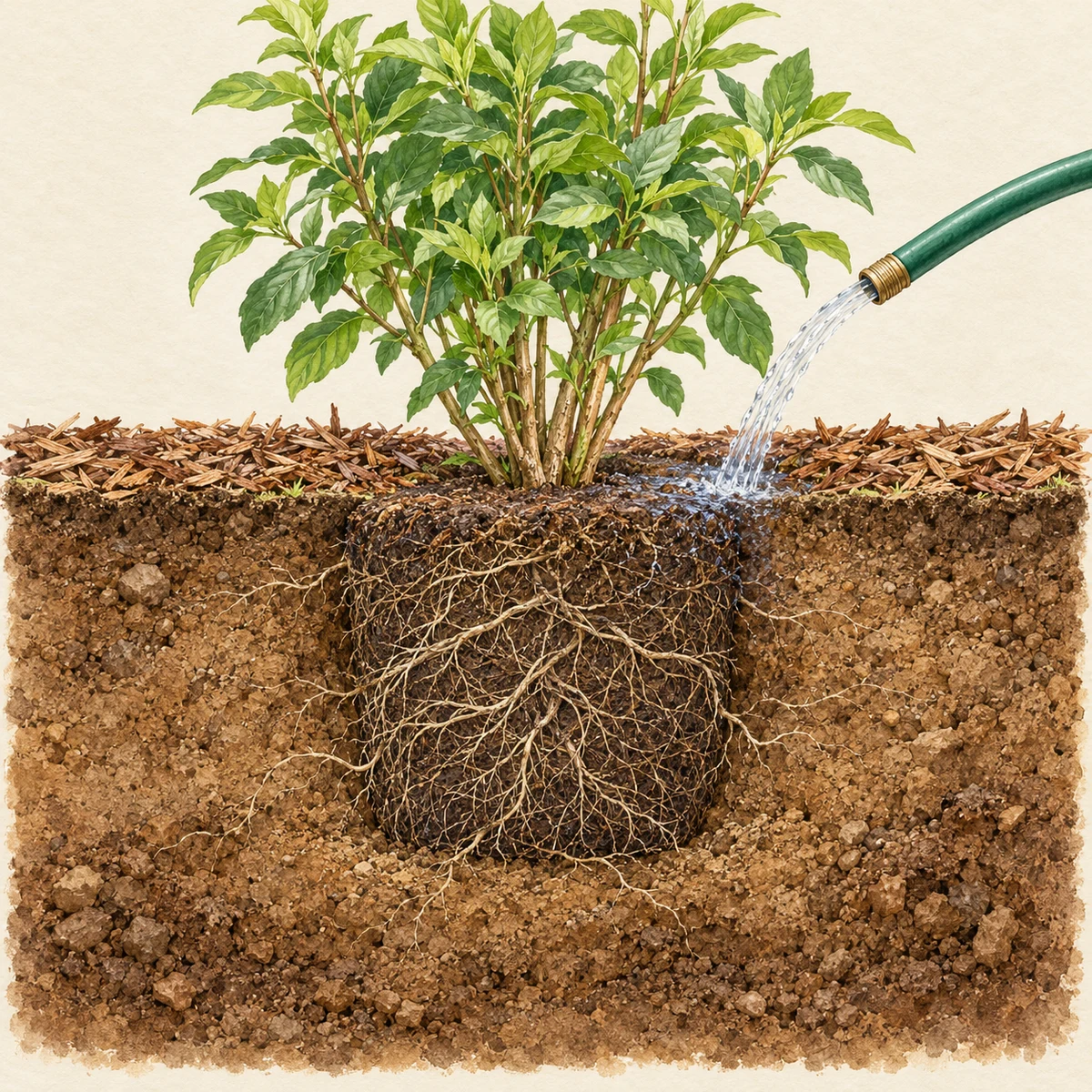
- 1
The original root ball
Check here even when nearby soil feels damp. Container mix can dry out or shed water, so apply a slow flow directly over it and make sure the water soaks in.
- 2
The surrounding soil
Keep this area moist too, so roots can grow beyond their original pot shape. As the shrub establishes, widen the area you water.
Sources: Oklahoma State University Extension, Washington State University Extension
Use the soil check to decide whether to water
Move mulch aside and gently check below the surface near the root ball and just outside it. Maryland Extension recommends checking about 6 inches deep. Use a screwdriver or the edge of a hand trowel to make a narrow opening, avoid cutting major roots, and replace the soil afterward. Feel the moisture; color alone isn't enough.
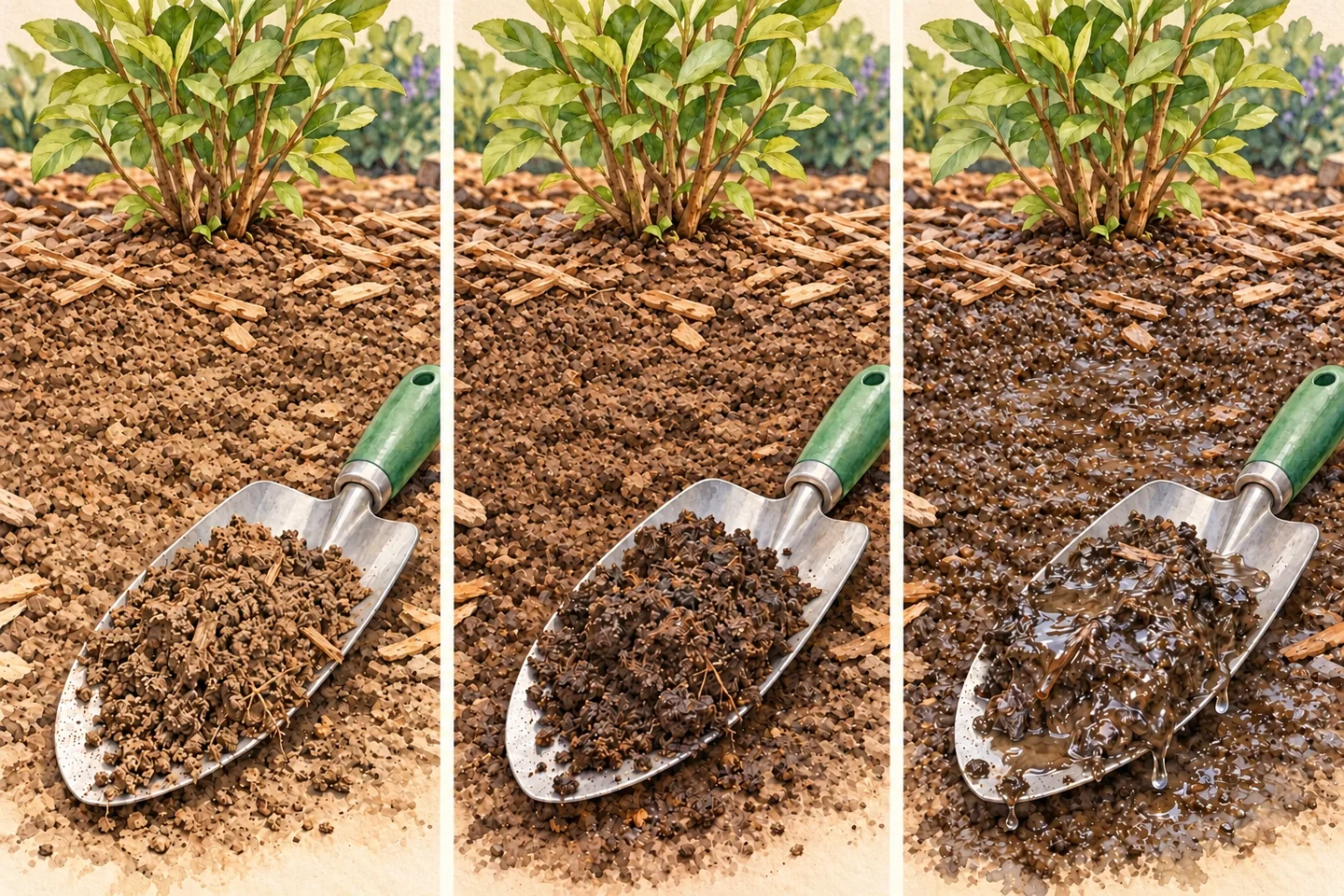
Dry below the surface: water
Apply water slowly to the root ball and adjacent soil. A quick surface sprinkle won't tell you whether the roots received enough.
Moist: wait and check again
You don't need to add water simply because the calendar says so. Check more often during hot, dry or windy weather.
Persistently soggy: pause watering
Standing water or saturated soil that stays wet calls for a drainage check. A wilting shrub can have overly wet roots as well as dry ones.
Sources: University of Maryland Extension, Oklahoma State University Extension
Check often at first, then learn the bed's pattern
For the first two weeks, check daily. After that, keep checking at least weekly and more often in drying weather. This follows Maryland Extension's monitoring advice; your plant, soil and climate determine whether each check leads to watering.1
Don't automatically skip a check because it rained. A brief shower may wet the mulch without soaking the root ball. Likewise, lawn sprinklers may miss a shrub or keep part of the bed too wet. Check the plant's actual soil rather than counting every rainy day as a watering.2,3
A starting amount you can measure
Minnesota Extension suggests one-quarter to one-third of the nursery container's volume per watering for newly planted shrubs. For a container holding 3 US gallons, that works out as follows.
| Calculation | Water volume | In quarts |
|---|---|---|
| Calculation3 gallons × ¼ | Water volume¾ gallon | In quarts3 quarts |
| Calculation3 gallons × ⅓ | Water volume1 gallon | In quarts4 quarts |
Sources: University of Minnesota Extension
Water slowly, then check that it soaked in
For drip irrigation, check where the water actually lands. A tidy line beside the shrubs isn't enough if it misses the original root balls. Keep checking both the original roots and the neighboring soil as the plants grow.4,1
What to do next
- 1Place a hose at a gentle trickle over the root ball, or use a watering can to apply water gradually. Move around the plant to reach the surrounding soil too.
- 2If water runs toward the path or pools faster than it can soak in, pause and slow the flow. Don't keep pouring onto a puddle.
- 3Following Maryland’s guidance, wait at least four hours after watering so moisture can move down, then check at about 6 inches. If the root ball is still dry, adjust where and how slowly you apply the water.
Keep mulch shallow and the stems clear
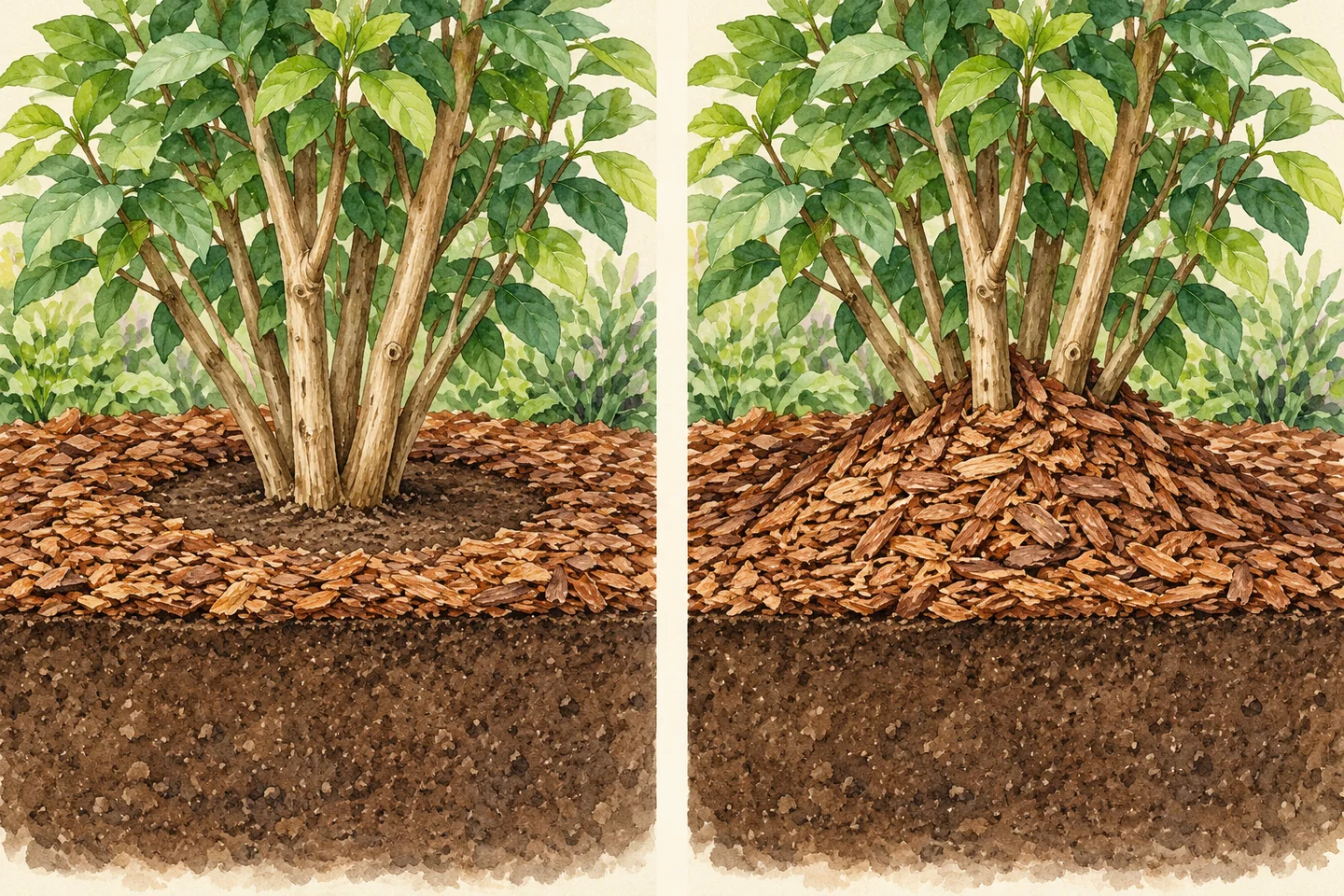
- Shallow layerKeep stems clear
- High moundMulch covers the stems
A shallow mulch layer helps retain moisture and suppress weeds. Move it aside when checking moisture so you can feel the soil underneath.5
Keep looking after the shrub beyond its first summer. Establishment takes time: Minnesota estimates at least two growing seasons for shrubs there. A drought-tolerant label describes what a plant can handle once established, not permission to let a newly planted root ball dry out.2
If you're adding more shrubs, group the next planting around compatible light and water needs. Photograph the bed while you can still see its edges and open spaces; those details make the next design easier to plan.
Frequently asked questions
Should I water newly planted shrubs every day?
Check every day at first; water according to the moisture you find and local plant guidance. A shrub drying quickly may need frequent watering, while one sitting in wet soil needs you to pause and investigate.
Why is my shrub wilting when the ground is wet?
Check the root ball as well as the surrounding soil. The nursery mix can be dry inside a damp bed, but persistently saturated roots can also cause wilting. If moisture checks don't explain the problem, ask your local Extension service or nursery before adding more water.
Can I use a timer instead of checking the soil?
Use a timer to deliver water, then check that its timing and placement work for the plant. Change the settings when weather and soil moisture change, and as roots spread beyond the original root ball.
 Gardenful
Picture the next planting before you buy it.
Use a photo of your yard to explore a Gardenful design with suggested plants, then check the choices against your bed's light, soil and watering needs.
Gardenful for iPhone
Download the app free and start with a photo of your yard.

Sources(5)
- [1]Watering Trees and Shrubs
University of Maryland Extensionhttps://extension.umd.edu/resource/watering-trees-and-shrubs
- [2]
- [3]Planting Trees and Shrubs
Oklahoma State University Extensionhttps://extension.okstate.edu/fact-sheets/planting-trees-and-shrubs
- [4]Planting Trees and Shrubs in the Landscape
Washington State University Extensionhttps://wpcdn.web.wsu.edu/wp-ecommerce/uploads/sites/2/product-4004-sku-FS047E.pdf
- [5]Mulching Trees and Shrubs
University of Maryland Extensionhttps://extension.umd.edu/resource/mulching-trees-and-shrubs