Choose your planting window
When to plant shrubs in your new garden
The short answer
Spring and fall are often good times to plant shrubs because cooler weather makes it easier to keep new roots watered. The right timing depends on your climate and the shrub you choose. Before ordering, check local planting advice for that plant and make sure the ground isn't frozen or waterlogged and you can water while it settles in.
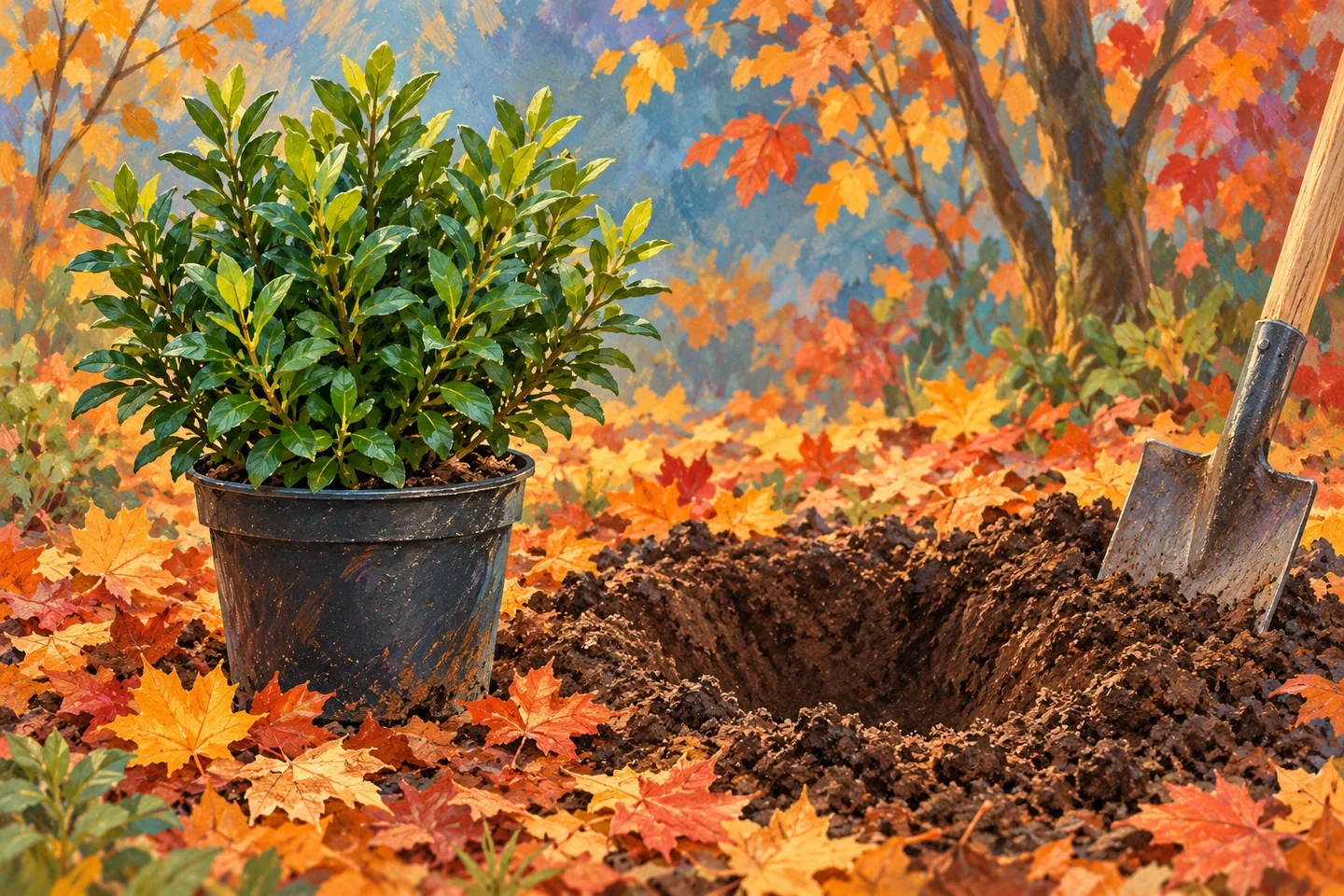
Use a local planting window, not a national month
A mild autumn in one garden can be the beginning of frozen soil in another. Look up local Extension guidance for the shrub you want, then check the conditions in your own bed.
Maryland Extension favors fall, unfrozen winter and early spring for many trees and shrubs, while identifying exceptions such as broadleaf evergreens that are better planted in spring. Minnesota guidance distinguishes plants by their nursery root system and calls for early-spring planting of bare-root stock. Use advice for your region and the kind of shrub you plan to buy.1,2
Don't use the hardiness-zone number as a planting calendar. It helps with winter-cold suitability, while today's soil condition, heat, water supply and the particular shrub determine whether planting now makes sense. Ask locally if your garden has unusual exposure or a very short autumn.
Ask whether the shrub grew in its pot
Two shrubs sold in containers may have had different starts. One grew in the pot; another was dug from a field and recently placed in it. Ask the nursery when the label doesn't tell you.
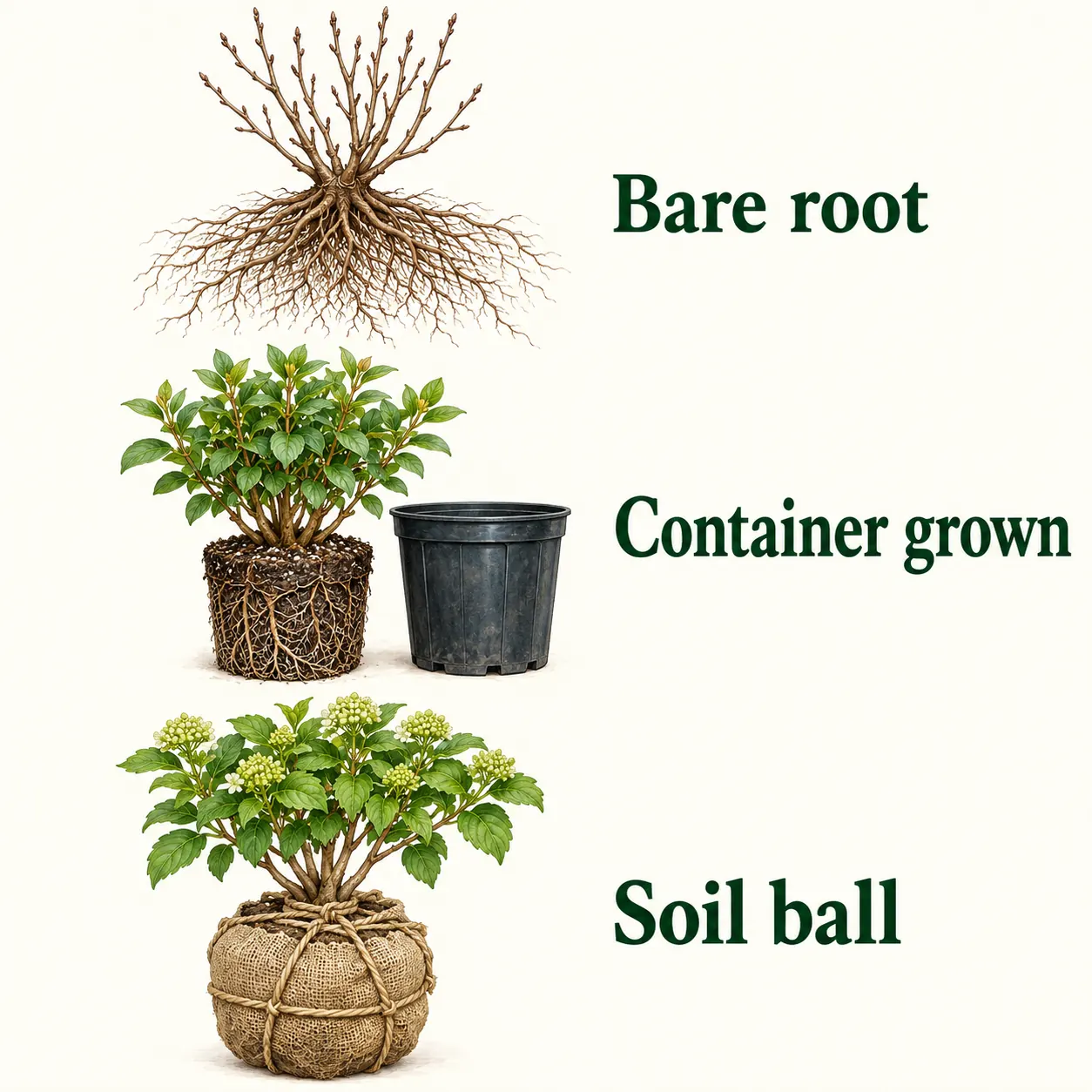
Bare-root shrubs arrive without soil around their roots. Minnesota Extension advises planting them in early spring before growth starts and protecting the roots from drying during handling. Container-grown plants have a broader growing-season window. Balled-and-burlapped plants arrive with a field-grown soil ball wrapped for transport; keep that ball supported and intact when moving it. Recently dug or potted plants need advice matched to their condition.2
Even with container-grown shrubs, choose a cooler day when you can water and check on the plant. Ask whether the plant is ready to go into the ground, how to handle its roots and whether its species needs a different seasonal approach. Heavy soil balls also require a realistic plan for moving and planting them safely.
Choose a day when the bed and aftercare are ready too
The plant can be ready before the garden is. Finish preparation first and choose a time when you can check watering, rather than squeezing planting in before a trip.
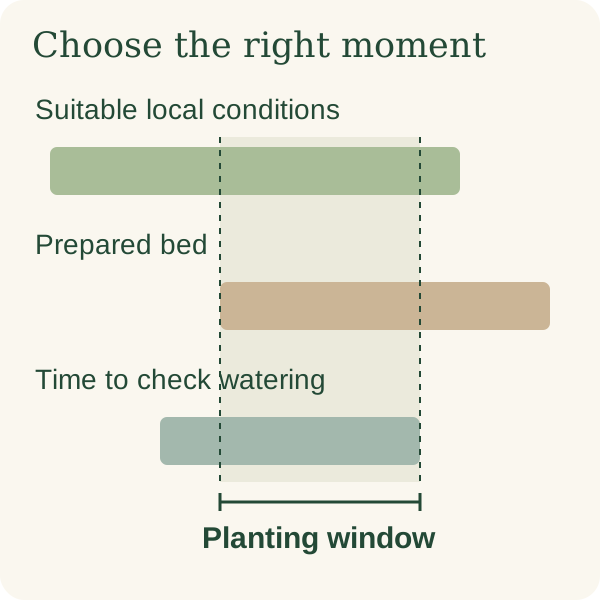
Avoid forcing a planting hole into frozen ground or using a wet site without first checking drainage. Maryland Extension recommends soil testing and matching the plant to the site's light and space before planting. Confirm utilities before digging, including privately owned lines that may need separate locating.1,3
Plant now when local advice supports the timing, the ground is prepared and you can check watering. Wait if the bed is unfinished, the soil is frozen or waterlogged, or you cannot provide aftercare. Ask the nursery how to judge moisture in that plant's root ball; checking it is more useful than following one watering schedule through both rainy and hot weeks.
Should you buy the discounted shrub now?
A sale makes the price attractive, but it doesn't make the planting date right. Suppose a shrub you want is discounted as autumn turns colder, and your new bed is still lawn.
A late-season purchase with an unfinished bed
You know the plant's name and mature size, but haven't checked its local planting window or prepared the soil.
Ask before buying
Confirm the exact shrub, how it was grown and whether local conditions still suit planting. For an evergreen near the end of the local season, ask specifically whether waiting until spring is safer.
Check the work still required
If the grass-removal method needs weeks, the plant and bed won't be ready together. Ask whether the nursery can hold or reserve suitable stock, rather than assuming a pot can sit unprotected through winter.
Choose a manageable commitment
Buy when you can provide the recommended care and planting conditions. Otherwise, save the plant name and the space in your design for the next suitable window.
Use the waiting time to settle the design
You can decide where the shrub belongs before planting season arrives. Measure its future space, watch the light and choose what the shrub should do: frame the door, screen a view or give a border year-round shape.
Gardenful can show how a shrub and its surrounding planting could look in your yard photo. Explore a design with suggested plants and quantities, then save the look you want to plant when the season is right.
Keep the final plant name, mature dimensions and nursery advice together. That makes it easier to choose a suitable replacement if the original variety isn't available when you're ready.
Frequently asked questions
Is spring or fall better for planting shrubs?
Both can work, depending on your region, the shrub and its root system. Check local guidance for the exact plant; a warm fall planting opportunity in one place can be too late in a colder location.
Can I plant a container-grown shrub in summer?
It may be possible, but heat and drying increase the care needed. A suitable cooler period is often easier to manage. Ask the nursery about the exact plant and postpone if you cannot provide the needed watering.
Can I keep a shrub in its nursery pot until spring?
Don't assume it can sit outside without protection. Ask the nursery for an overwintering plan for that plant and container in your climate before buying. If you cannot provide it, reserve or buy the plant closer to planting time.
 Gardenful
Have a planting idea ready for the right season.
See a Gardenful design on your yard photo and explore the suggested plants before you plan your nursery trip.
Gardenful for iPhone
Download the app free and start with a photo of your yard.

Sources(3)
- [1]Planting a Tree or Shrub
University of Maryland Extensionhttps://www.extension.umd.edu/resource/planting-tree-or-shrub
- [2]
- [3]