Gardenful field guide
Landscaping ideas around a pool
The short answer
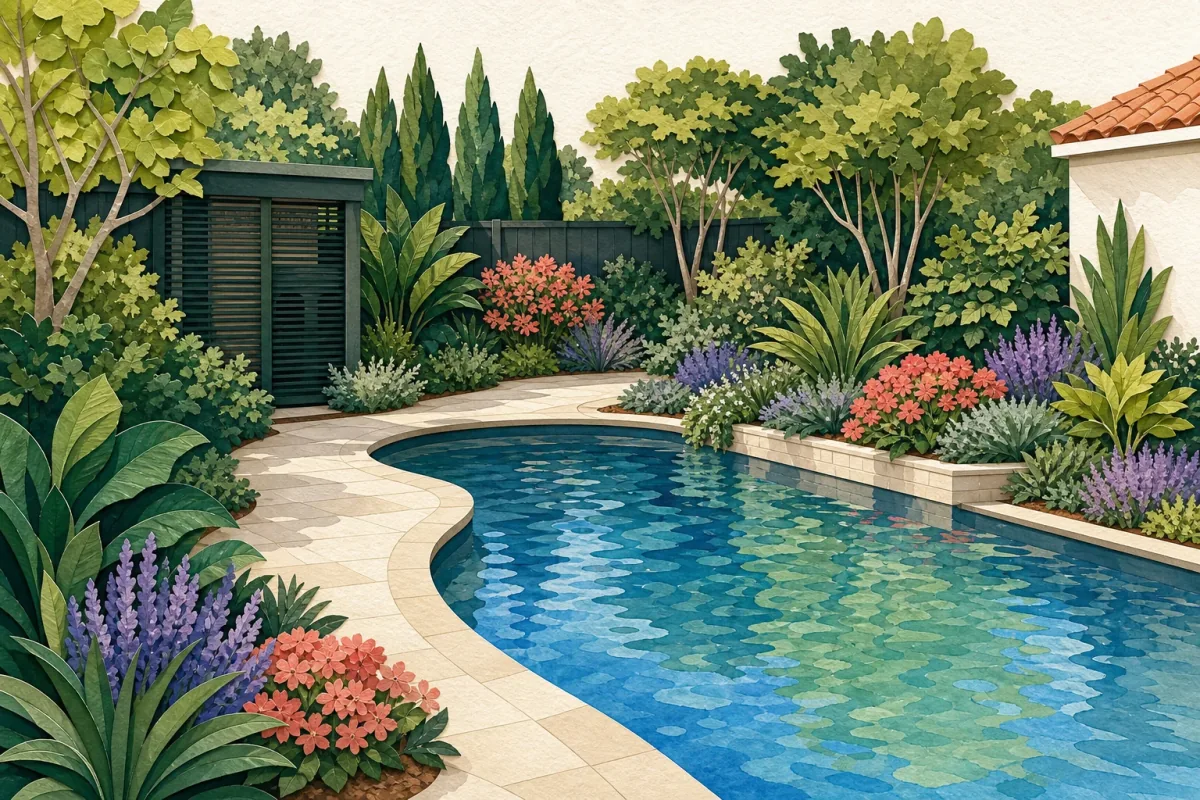
Poolside planting has to support safe movement, equipment access, and water use before it adds privacy or atmosphere. Keep gates, walking surfaces, sightlines, and required clearances open. Then map reflected heat, wind, splash, and debris exposure. Use planting to provide targeted shade, privacy, and a calm view, while choosing locally suitable plants whose roots, thorns, fruit, litter, and mature size fit the zone.
Map the pool when it is being used
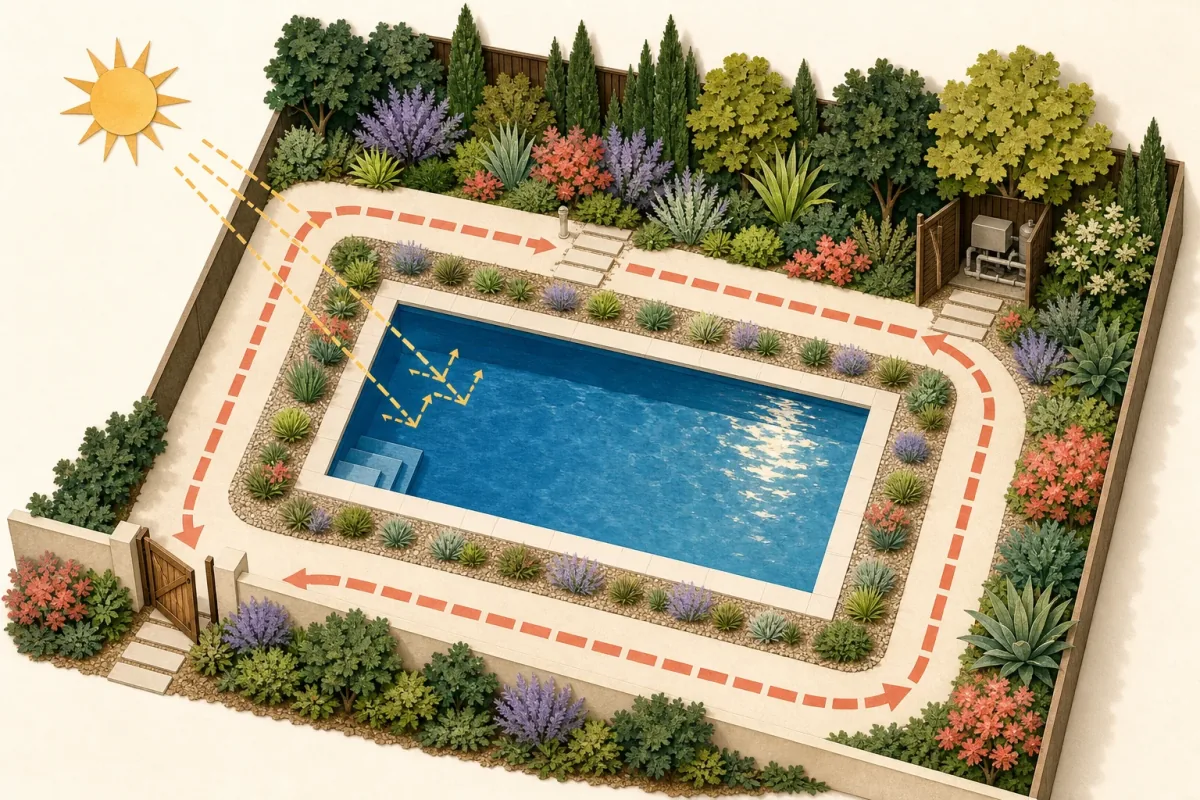
A quiet pool deck hides how much room people, furniture, cleaning equipment, and gates require. Draw those movements before deciding where planting begins.
- 1
Protect the walking edge
Keep the route around the pool clear at mature plant size. Avoid stems, thorns, fruit, irrigation spray, and spreading growth over the walking surface.
- 2
Keep equipment reachable
Preserve access for pumps, filters, utilities, cleaning tools, and repair work. Do not hide equipment so thoroughly that routine inspection becomes difficult.
- 3
Record the useful views
Note the view from the water, seating, main house windows, and entrance. Decide which sightline should stay open and which needs screening.
- 4
Observe heat, wind, and splash
Pool decks can reflect intense heat, wind can carry litter, and treated water can reach nearby plants. Conditions often change with distance from the water.
Divide the pool landscape into exposure zones
Plants beside the coping face different stress and maintenance expectations than plants several steps away. Use distance and function to narrow the palette.
| Zone | Design role | Prioritize |
|---|---|---|
| ZoneImmediate pool edge | Design roleA visually quiet, low layer where planting is permitted and useful. | PrioritizeCompact mature form, low litter, and tolerance of the measured exposure.Avoid or manageThorns, fruit, brittle stems, aggressive spread, slippery debris, and blocked routes. |
| ZoneSeating and shade zone | Design roleComfort and a framed view from chairs or loungers. | PrioritizeUseful canopy or screening placed away from active circulation.Avoid or manageRoots, mature canopy, falling debris, overhead clearance, and local safety requirements. |
| ZoneOuter privacy layer | Design roleScreening a specific neighboring view beyond the working deck. | PrioritizeLayered structure with enough room to mature naturally.Avoid or manageBoundary, utilities, wind, maintenance access, and unwanted shade. |
Sources: University of Florida IFAS Gardening Solutions, University of Florida IFAS Extension
Choose plant traits before plant names
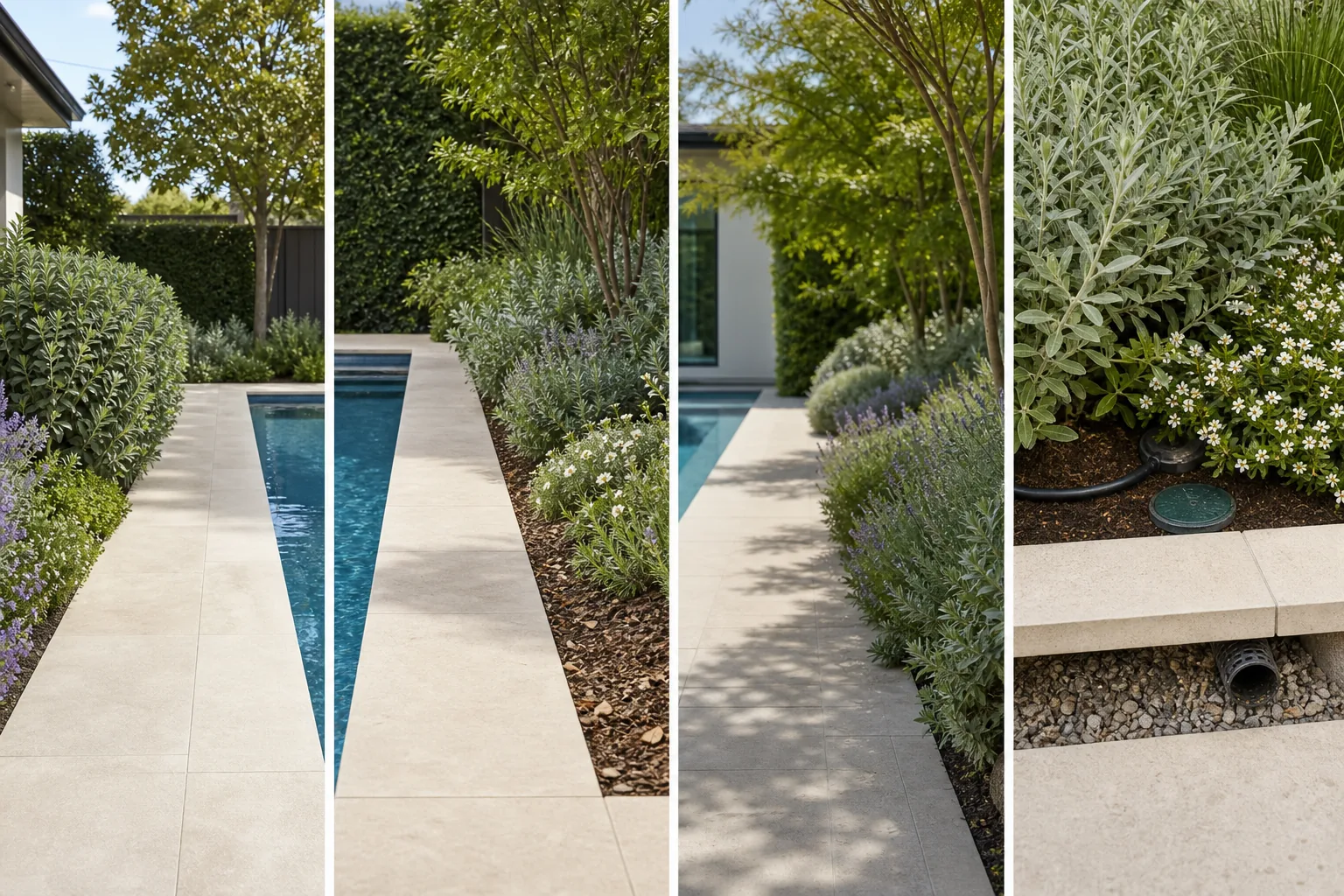
The exact species should come from regional guidance, but the screening questions are consistent. Reject plants whose normal behavior conflicts with the pool zone.
Favor a small, repeated palette of plants that fit the measured exposure and require no constant pruning to stay out of the pool's working area.
1
Mature form
Draw the mature outline, not the nursery container, on the plan.
Choose a height and spread that fit without repeated shearing near paths, fences, lights, and equipment.
2
Litter pattern
Low litter is relative; every living plant sheds something.
Research when the plant drops leaves, petals, fruit, seeds, bark, or fronds and how wind moves that material.
3
Contact and household safety
Verify the exact variety rather than relying on a broad common name.
Check thorns, sharp leaves, irritating sap, toxicity, fruit, bee activity, and how children or pets use the area.
4
Root and water behavior
Bring construction or root-clearance questions to qualified local professionals.
Consider available soil volume, irrigation, drainage, splash, and mature roots, especially near structures and paving.
Compose a calm view from the water
Pool areas already contain strong lines, reflective water, furniture, and equipment. A restrained planting composition is easier to read and maintain than a ring of unrelated specimens.
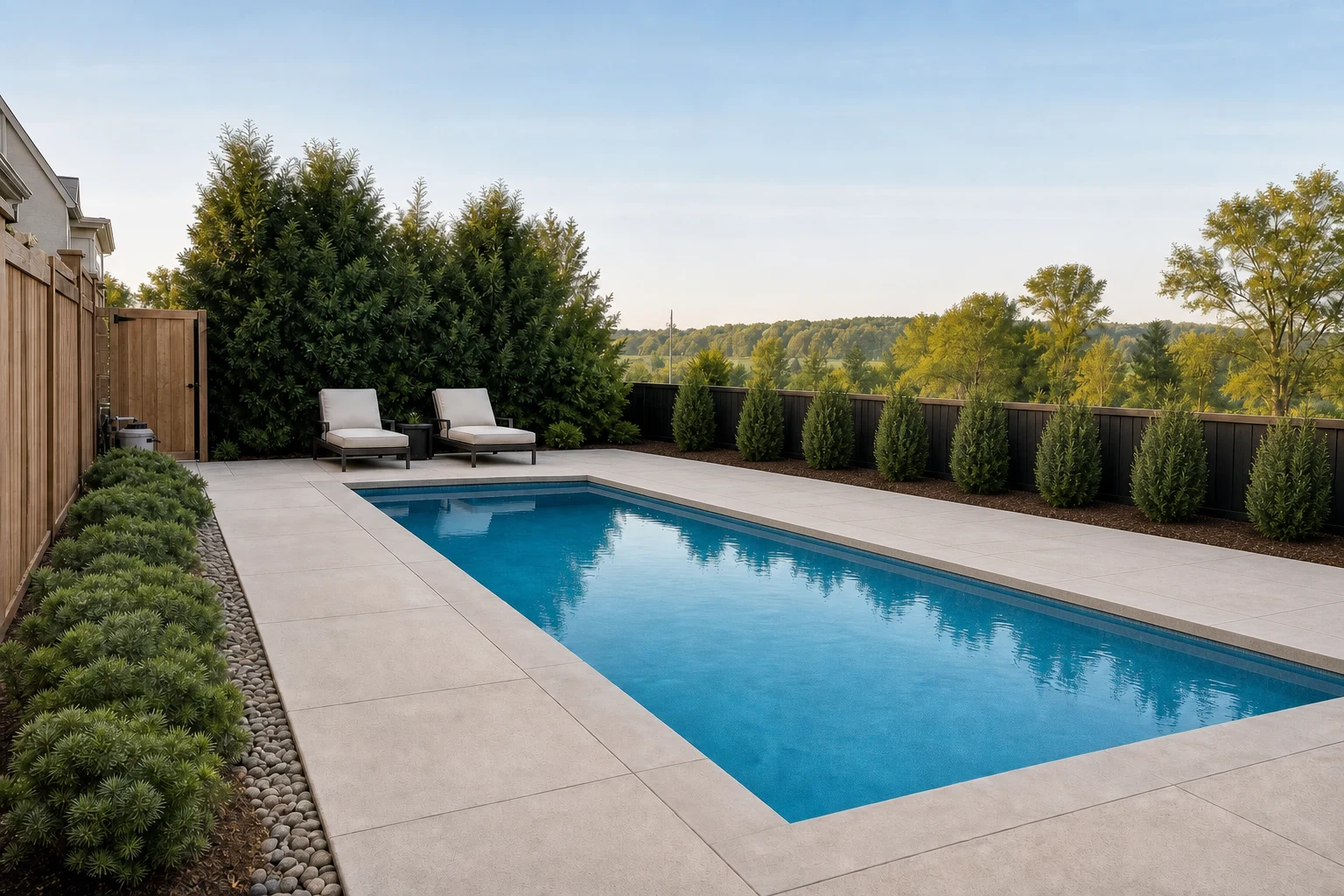
A sunny pool with an exposed seating edge
The walking loop and equipment access are clear. The main need is privacy beside the seating area and a softer view from the house.
- 1
Place privacy at the seated sightline
Build one outer layer where the exposure is actually felt instead of enclosing every boundary.
- 2
Repeat one structural form
Use a small number of compatible shrubs or upright plants to connect the long view across the pool.
- 3
Add one low foliage mass
Keep the immediate edge visually simple with a locally suitable plant whose normal spread stays off the route.
- 4
Leave an open visual break
Preserve a clear view toward the best borrowed landscape or architectural feature so the pool does not feel boxed in.
Use regional sources to verify every exact plant for climate, exposure, litter, roots, safety, and local pool requirements.
Verify the pool landscape locally
Pool barriers, sightlines, setbacks, surfaces, utilities, fire conditions, and construction requirements vary. A visual plan cannot approve them.
Current local rules for barriers, gates, clearances, and safety sightlines
Manufacturer and professional guidance for equipment access and nearby planting
Mature plant dimensions, roots, thorns, toxicity, litter, and invasive status
Observed heat, wind, splash, drainage, and irrigation in each planting zone
Whether shade or screening changes visibility, airflow, neighboring conditions, or solar access
A maintenance route that does not require stepping into planted areas or across wet surfaces
Keep design inspiration separate from pool construction and safety approval. Use qualified local professionals for those decisions.
Frequently asked questions
What are the best plants around a pool?
There is no universal list. Look for locally suitable plants with mature dimensions that fit the zone, manageable litter, appropriate roots, and tolerance of the site's heat, wind, water, and possible splash. Also verify thorns, toxicity, invasive status, and local pool rules.
How close can plants be to a pool?
The safe and practical distance depends on the plant's mature size and roots, the pool structure, paving, barriers, equipment, utilities, and local requirements. Draw mature dimensions and confirm construction and safety clearances with qualified local professionals.
How can I add privacy around a pool?
Screen the actual seated or water-level sightline with a layered outer planting zone. Preserve gates, equipment access, airflow, important safety views, and enough room for plants to reach mature size without constant shearing.
How do I reduce leaves and debris in the pool?
Research the shedding pattern of each plant and consider prevailing wind before placement. Use fewer plant types near the water, place heavier-litter plants farther away, and remember that no living plant is completely litter-free.
Can Gardenful design pool landscaping?
Gardenful can help explore a planting-led visual direction once the pool's access and safety boundaries are known. It does not design or verify pools, barriers, drainage, structures, utilities, or code compliance.
 Gardenful
See a calmer planting direction around the pool.
Keep the pool edge, seating, gate, and planting zones visible in one clear photo, then compare a focused privacy or shade composition.
Gardenful for iPhone
Download the app free and start with a photo of your yard.

Sources(2)
- [1]Poolside Plants
University of Florida IFAS Gardening Solutionshttps://gardeningsolutions.ifas.ufl.edu/plants/ornamentals/poolside-plants/
- [2]Basic Principles of Landscape Design
University of Florida IFAS Extensionhttps://edis.ifas.ufl.edu/publication/EP375/pdf