Build a bed around a favorite shrub
What to plant around hydrangeas
The short answer
Good hydrangea companions share the bed's light and moisture conditions and leave room for the shrub to grow. In a partly shaded eastern US garden with moist, well-drained soil, consider American alumroot, foamflower and Christmas fern. Place lower foliage toward the front and taller clumps beside the hydrangea. Check which hydrangea you have before borrowing a sunny or shady planting combination.

Start with your hydrangea and the light around it
A companion list can go wrong before you buy anything: it treats every hydrangea bed as the same place. Check the plant label or identify the shrub, then look at the actual light in the spaces beside it. A shady spot beneath the branches and the sunny front edge may need different plants.
Bigleaf hydrangeas generally benefit from protection from afternoon sun. Panicle hydrangeas tolerate more sun, so a combination designed for a shaded bigleaf bed may struggle beside one in an exposed border. Oakleaf hydrangeas can take sun to part shade and need well-drained soil. Mature size varies greatly by variety; a compact label matters more than a generic hydrangea size.1,2,3
For the example below, assume an established hydrangea in an eastern US garden with part shade and soil that stays moderately moist without remaining soggy. Check each plant's hardiness and local suitability before adapting it. If your bed bakes in afternoon sun, choose a different palette rather than trying to water shade plants through the mismatch.
Three companions for a partly shaded bed
These plants contribute different shapes and seasons. You can use one repeated plant or combine a low front edge with a taller clump at the side.
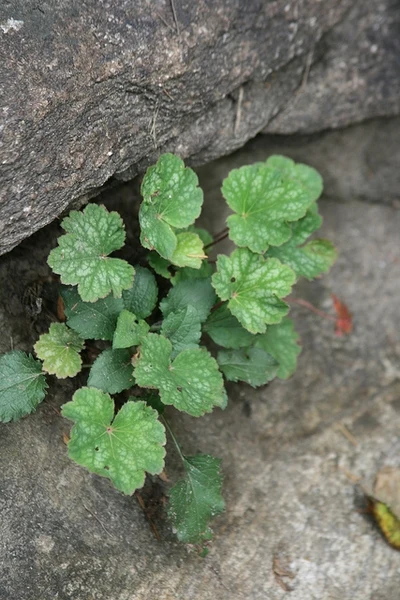
American alumroot for a leafy front edge
Heuchera americana forms a low mound of rounded leaves with slender flower stems. It suits part shade and well-drained soil. Use the foliage to repeat a shape along the bed, rather than relying on its small flowers for the main display.
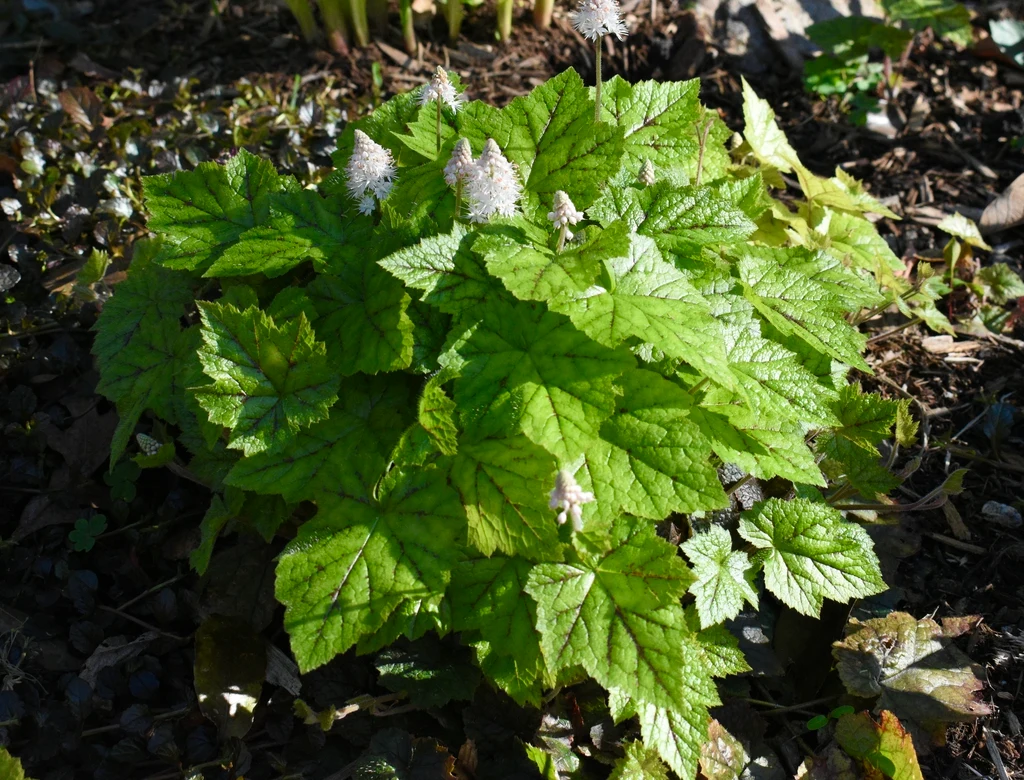
Foamflower for a softer spring layer
Tiarella cordifolia brings low foliage and airy spring flowers to shade. It needs moisture and can spread into colonies, so give it a defined area instead of squeezing it between tightly packed plants. Skip it in a dry, exposed bed.
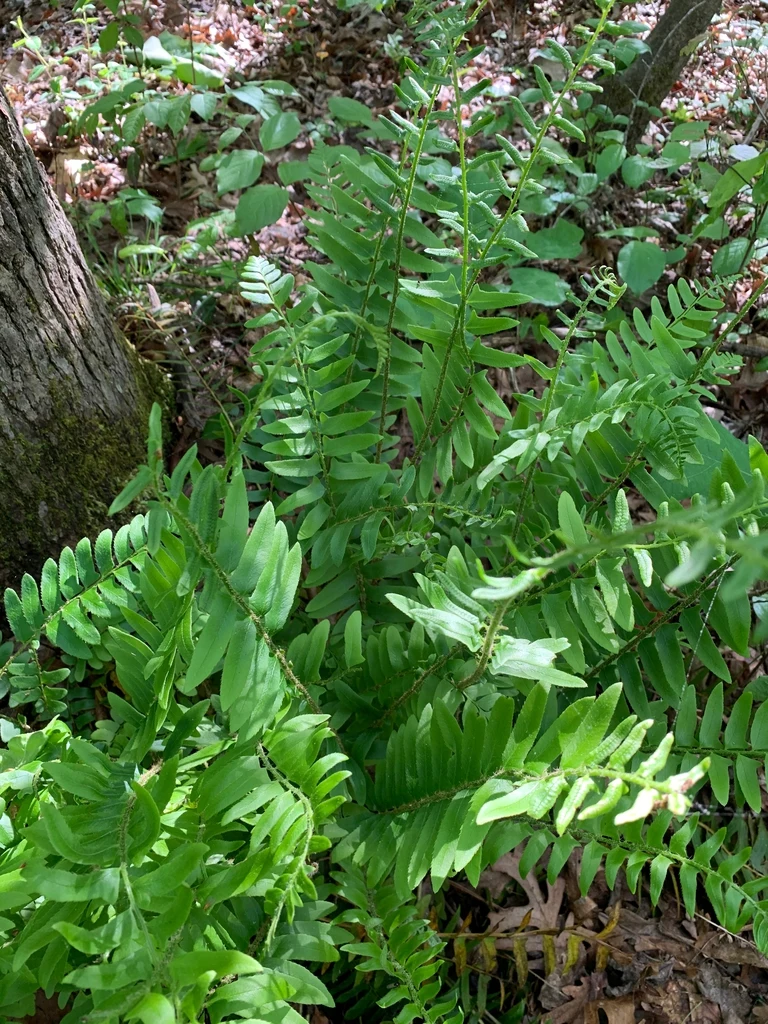
Christmas fern for a taller, finer texture
Polystichum acrostichoides has arching evergreen fronds that contrast with broad hydrangea leaves. Put it beside the shrub where you can see its shape. It prefers shade and well-drained soil; a persistently wet pocket can cause crown rot.
Arrange the plants around the mature shrub
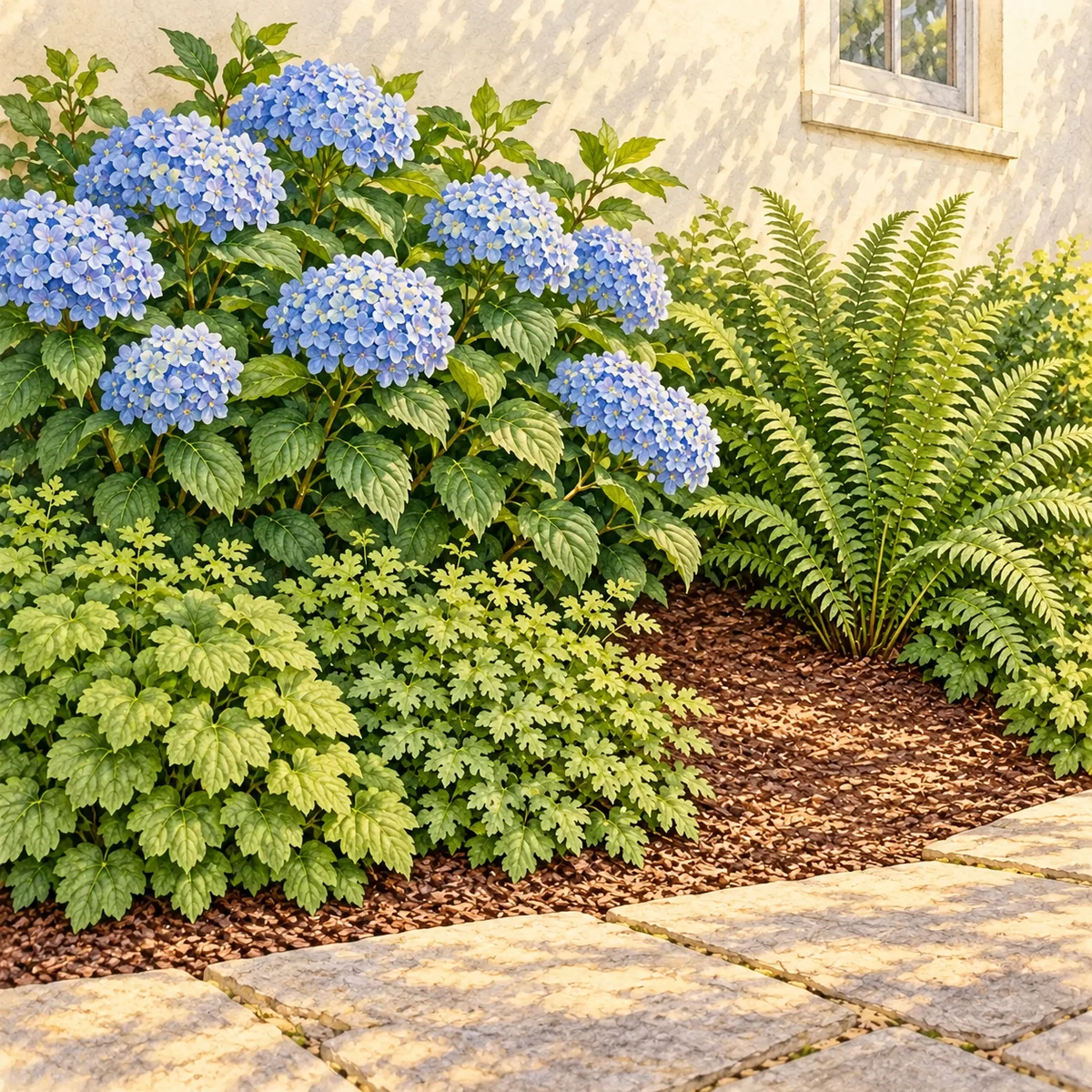
Draw the hydrangea at its expected mature width, then place the companions where their shapes will stay visible. Leave an opening you can reach from the path.
- 1
Low front edge
Repeat alumroot or foamflower toward the visible front, beyond the hydrangea's mature spread. You don't need a ring around the trunk; a front sweep is easier to see from the path.
- 2
Side fern
Place the arching fern beside the hydrangea to break up its rounded shape. In a shallow bed, one repeated low companion may fit better than all three species.
- 3
Open access gap
Keep a mulched opening for watering, checking the shrub and collecting fallen leaves. Don't fill every space just because the plants are small today.
Use mature width to work out the starting spacing
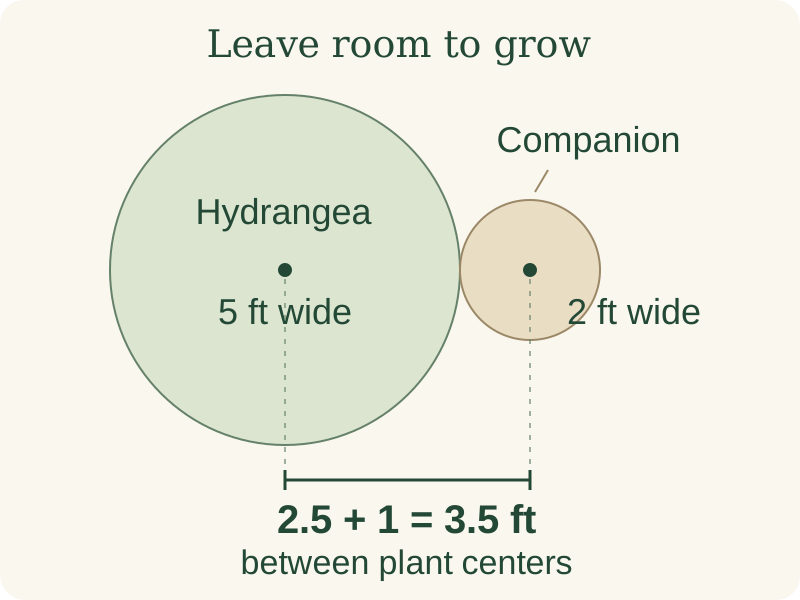
Suppose your hydrangea variety is expected to reach 5 feet wide and the companion you choose reaches 2 feet wide. Half of 5 is 2.5 feet; half of 2 is 1 foot. Add them and you get 3.5 feet between the centers. This starting layout lets their mature outlines meet, rather than placing the companion beneath the shrub.
Leave more room where you need access or where the recommended spacing calls for air circulation. These are example widths: use the labels for your actual varieties. Nursery pots can make the gap look large, but filling it with extra permanent plants creates crowding later.
For an established hydrangea, plant in open soil beyond its crown and avoid cutting substantial roots to fit a companion. If you can't make a planting hole without damaging the shrub, move the companion farther out. A mulch gap is a better choice than forcing another plant into the bed.
Avoid a pretty combination with conflicting care
Lavender and other plants that need dry, freely draining conditions can be a poor choice in a regularly watered hydrangea bed. Sharing a flower color doesn't mean sharing a watering schedule. Likewise, moisture-loving foamflower isn't a solution for dry soil under a thirsty tree.
Check the soil before watering a wilted shrub again. Heat and strong sun can make hydrangea leaves droop even when the soil is moist. If water stands in the bed, solve the drainage problem before adding more plants.
Once you have a shortlist, take a photo showing the hydrangea and the available bed. Tell Gardenful you want to keep the hydrangea and see how new planting could fill out the border. Take the suggested plants and quantities to the nursery with your light and soil notes.
Frequently asked questions
What can I plant in front of hydrangeas?
Choose lower plants that suit the same light and moisture, and place them beyond the shrub's mature spread. American alumroot or foamflower can work in a partly shaded eastern US garden with suitable soil. Use the actual varieties' mature widths to set spacing.
Can I plant directly under a hydrangea?
You can plant near it where light, soil and roots allow, but avoid crowding the crown or digging through substantial roots. Lower companions are often easier to see and establish toward the edge of the shrub's mature canopy.
Do hydrangea companions need acidic soil?
Choose companions for the soil you have and the needs of the particular plants. Don't change the whole bed's soil chemistry simply to chase a flower color. A soil test and local advice are useful before adding amendments.
Can I use the same companions with panicle and bigleaf hydrangeas?
Sometimes, if the beds have similar light and soil. Panicle hydrangeas tolerate more sun, while bigleaf hydrangeas often benefit from afternoon shade. Choose companions for the actual exposure, rather than using the hydrangea name alone.
 Gardenful
Give your hydrangea a bed that feels complete.
Upload your yard photo to Gardenful and explore planting around the shrub you love. Take the suggested plants and quantities to your nursery, along with your bed's light and soil notes.
Gardenful for iPhone
Download the app free and start with a photo of your yard.

Sources(8)
- [1]
- [2]
- [3]
- [4]American alumroot
NC State Extensionhttps://plants.ces.ncsu.edu/plants/heuchera-americana/
- [5]Foamflower
NC State Extensionhttps://plants.ces.ncsu.edu/plants/tiarella-cordifolia/
- [6]
- [7]
- [8]Hydrangeas
Alabama Cooperative Extensionhttps://www.aces.edu/blog/topics/lawn-garden/hydrangeas/