Frame the tree you love
What to plant around a Japanese maple
The short answer
A Japanese maple already gives a border its focal point. Lower planting can frame it while leaving the trunk and branching shape visible. Japanese forest grass, coral bells and small ferns are useful companions in suitable shade and soil. Around an established tree, protect the shallow roots first: leave root-filled ground undisturbed and look for planting space farther out. You can make a beautiful border without filling every inch beneath the canopy.
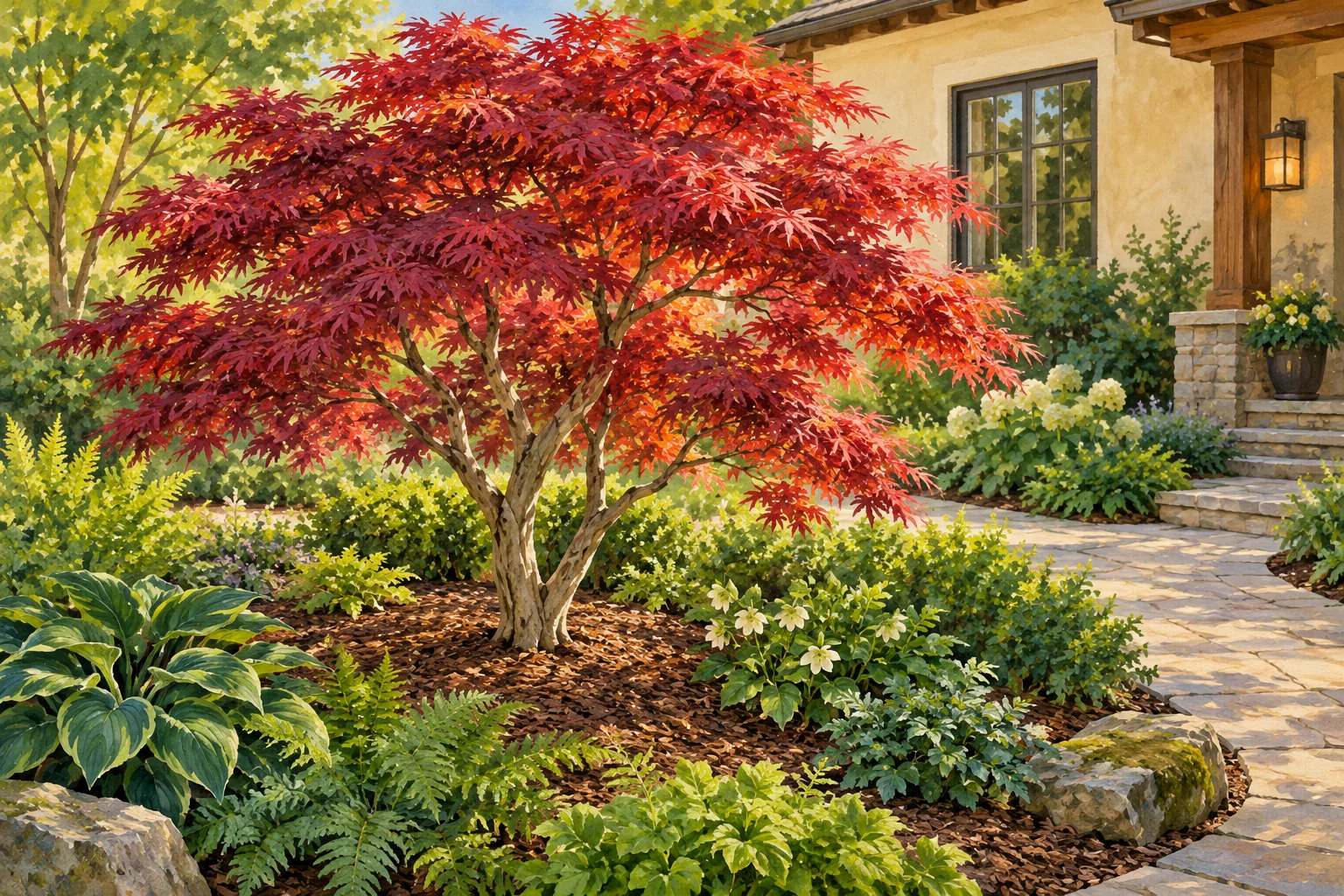
Around an established maple, start with the ground you can leave alone
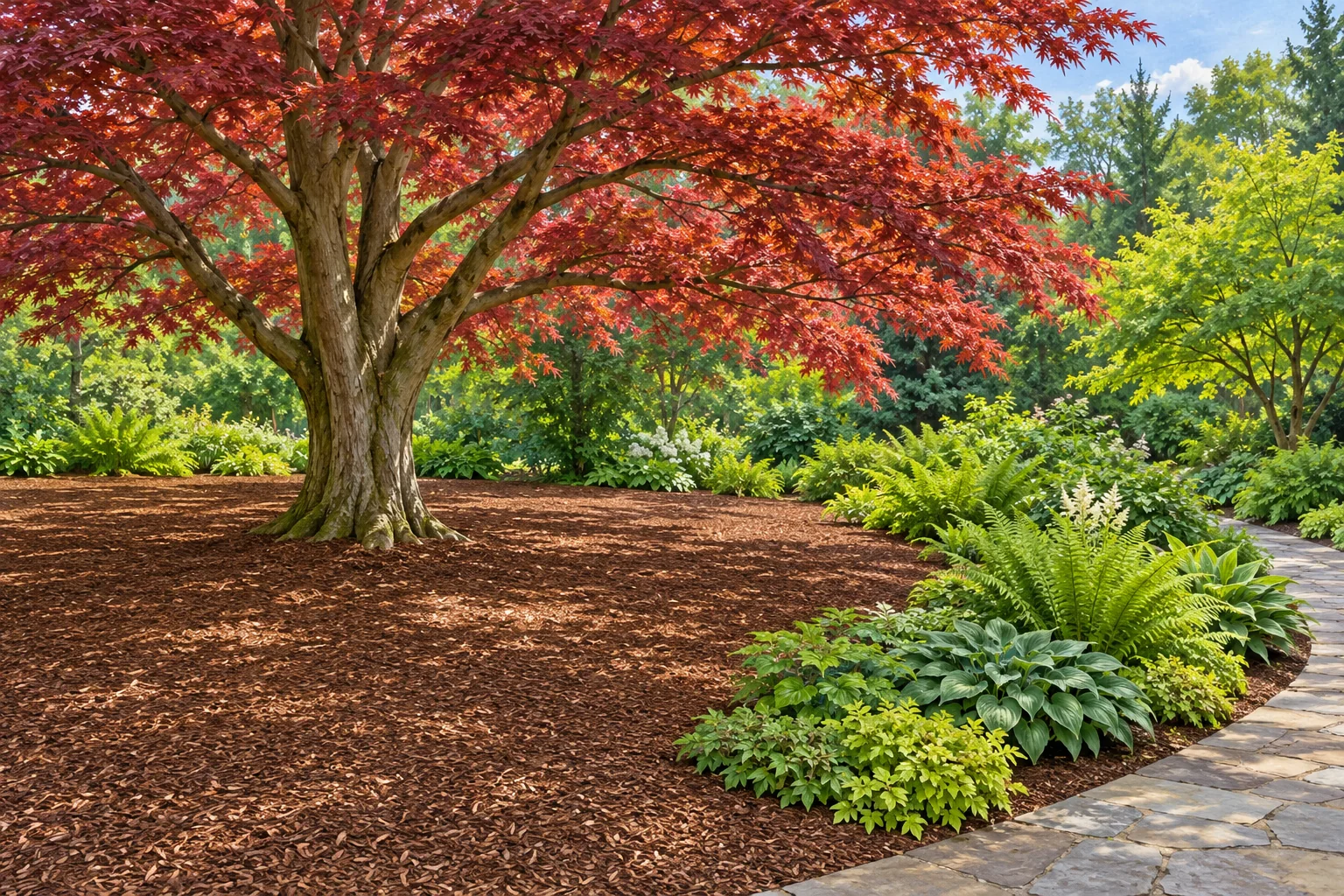
Japanese maples have shallow roots that are easily disturbed when you dig new planting holes. If the tree is established, resist turning the soil beneath it into a new perennial bed. Roots can extend beyond the branches, so the canopy edge is not a safe-digging boundary.1
Instead, look at the tree from the place you enjoy it most: a window, the porch or the path. A low group to one side may give you the fuller view you want without surrounding the trunk. Keep an existing, healthy companion planting if it works; this is a reason to avoid new disturbance, not to dig everything up.
Mulch is a finished surface here, not an empty space waiting for plants. Keep the root flare—the widening base where the trunk meets the roots—visible. A raised ring of fresh soil can bury it, so keep the existing grade rather than adding planting depth over the roots.3
Three companions for a sheltered, leafy border
These plants suit different parts of a moist, well-drained shade border. Use them in a new planting area or in suitable space away from established maple roots.
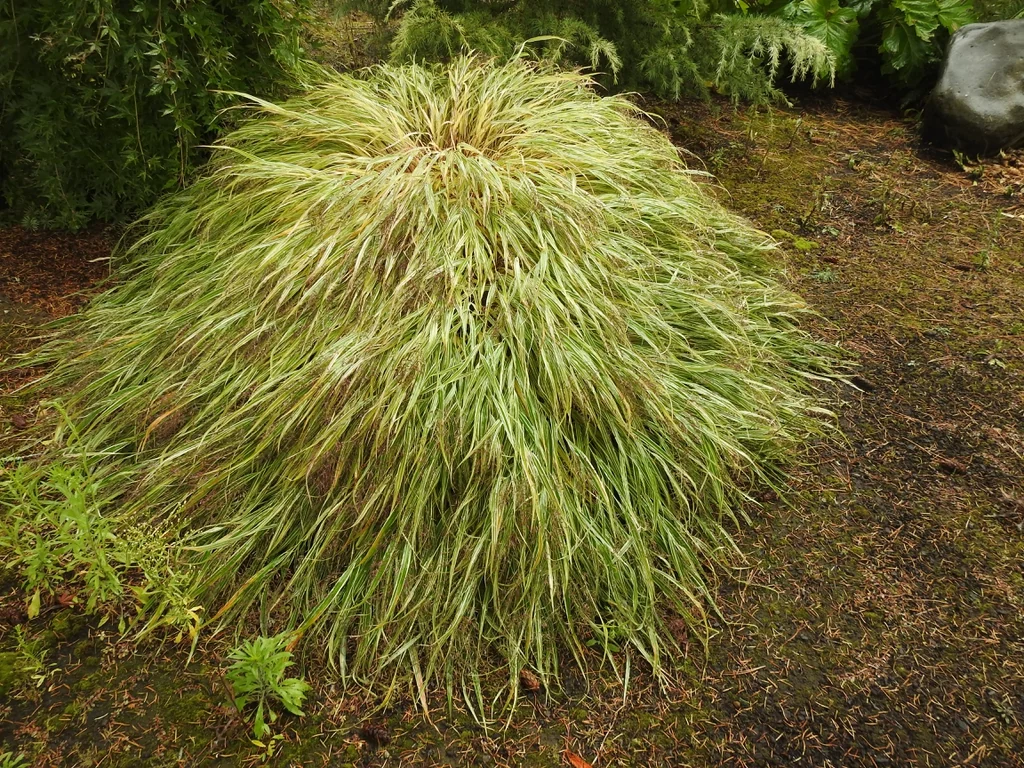
Japanese forest grass for a flowing edge
Hakonechloa macra makes soft, arching mounds. It likes partial shade and moist soil that drains well; hot sun and drought can spoil the leaves. It is slow to fill out and dies back in winter, so don't buy extra plants just to make the first season look full.
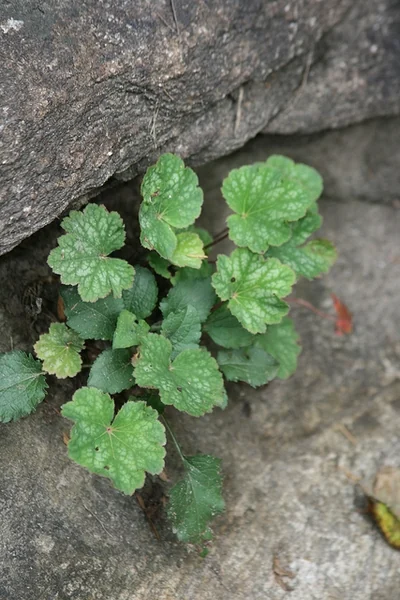
American coral bells for broader leaves
Heuchera americana adds a low mound of rounded leaves beneath the maple's finer foliage. It suits shade or part sun and moist, well-drained soil. Nursery hybrids vary in color, size and heat tolerance, so choose the actual variety for your site instead of buying by leaf color alone.
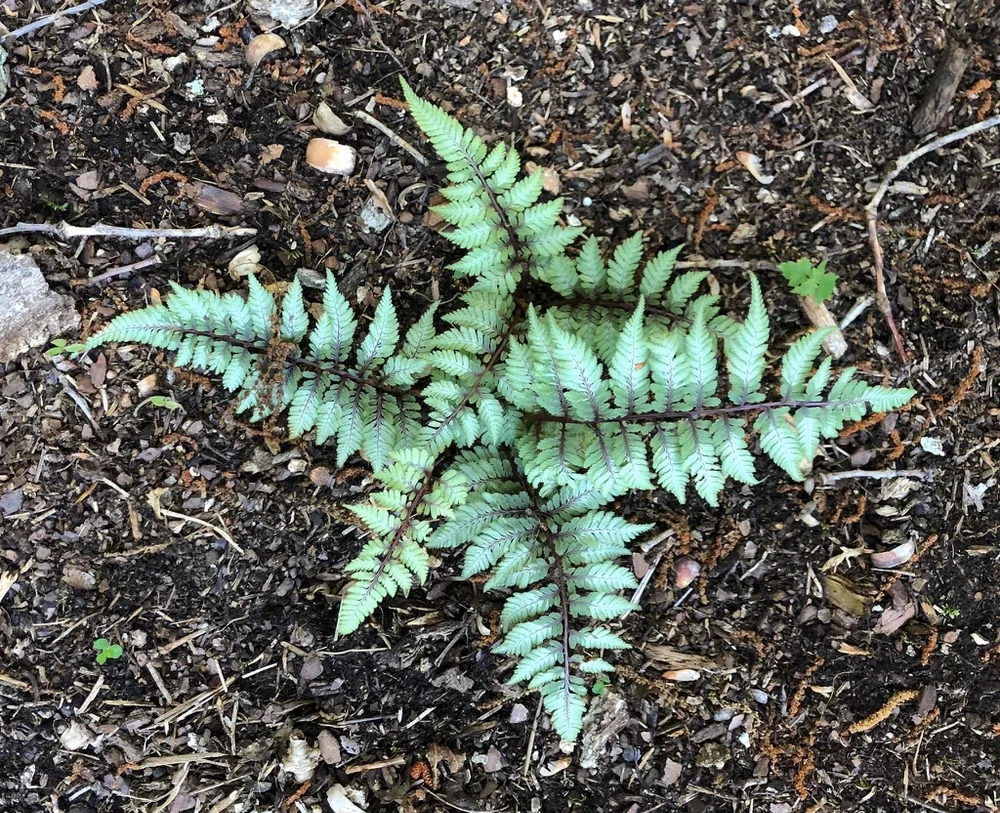
Japanese painted fern for fine texture
Athyrium niponicum adds finely divided silver-green fronds in moist shade. Its roughly 18–24-inch spread works beside broader foliage, where both shapes remain visible. It also dies back for winter; choose a locally suitable evergreen fern if winter greenery is the job you need done.
Sources: University of Illinois Extension, NC State Extension [5] [9]
In a new border, leave room for the maple to become the main event
Example: a sheltered northeastern or Mid-Atlantic yard around zones 6–7, with morning light, afternoon shade and moist, freely draining soil. Confirm the maple variety's hardiness and mature size before adopting the layout.
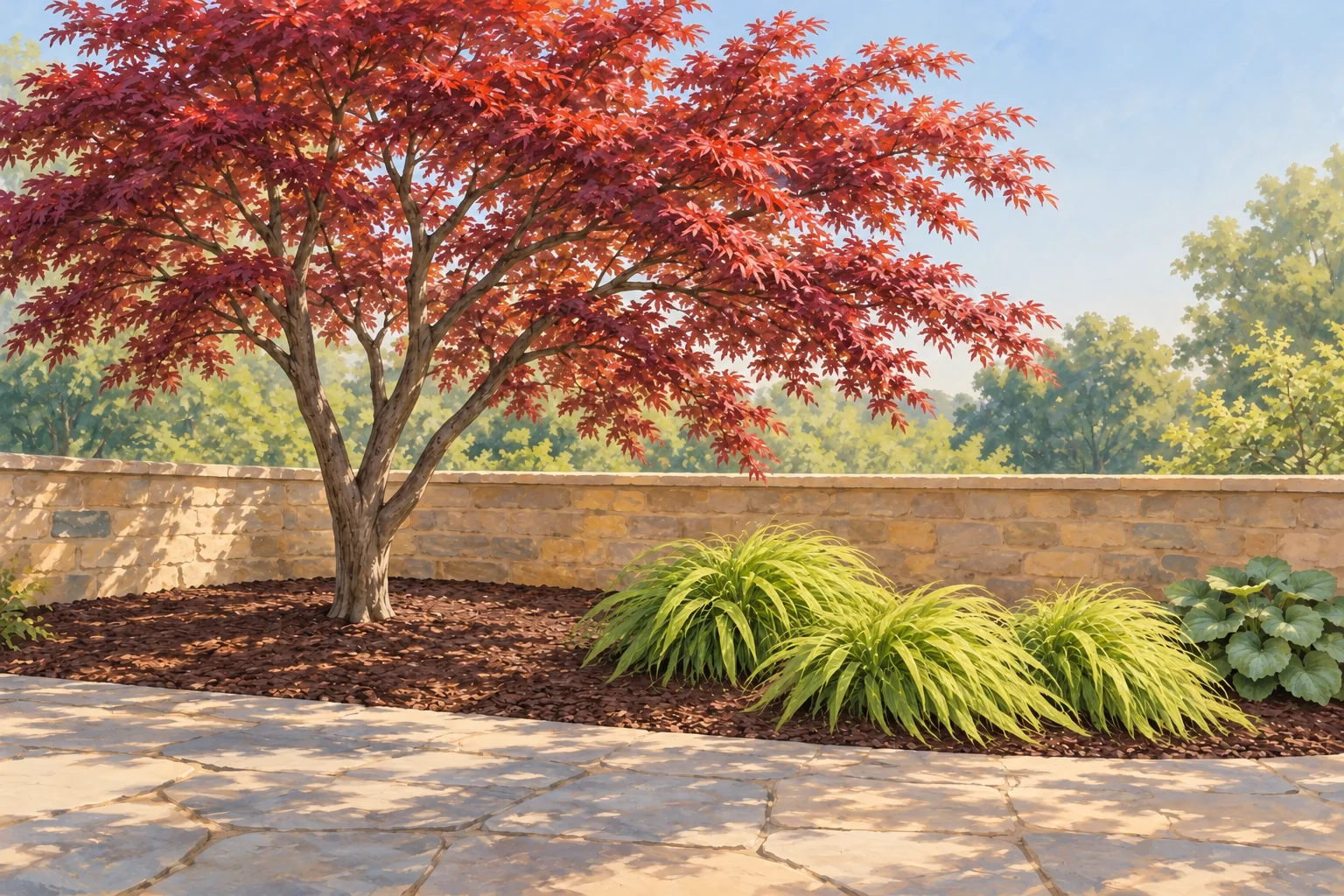
Place the maple first, using its expected mature canopy rather than the size in its nursery pot. A weeping variety with low branches needs more open foreground than an upright tree whose crown starts higher. Check the view from indoors as well as from the path.
For this example, repeat forest grass toward the front of the bed and use a smaller group of coral bells to one side. The grass gives the border a flowing edge; the broader leaves stop the whole planting from reading as one fine texture. You don't need all three companions from the list to make the combination work.
Water the new plants while they establish, then check moisture beneath the surface through summer. Japanese maples appreciate shelter from drying wind and scorching exposure. A hot western wall with dry soil needs a different site plan, not simply more shade plants around the tree.2
Make a planting sketch without guessing a safe distance from the trunk
Use a photo for the visible composition and an on-site check for the places where new planting is possible.
Mark what stays untouched.: Show the trunk, visible roots, existing paving and any ground packed with roots. Don't assume a fixed two- or three-foot ring protects the whole tree. Keep new heavy planters and paving excavation out of the root area, too.
Draw the mature plant outlines.: In a new bed, use the maple variety's expected width and each companion's mature spread. Leave the foreground lower where it would otherwise hide low branches.
Check the actual planting spots.: If a proposed hole encounters woody tree roots, move the plant or leave that area mulched. For extensive work near a valuable tree, ask an arborist to assess it before digging.
Choose for summer shade, then try the view
Notice the light in summer, when the maple is fully in leaf. A sunny-looking bed in March can become shady by June. Choose companions for that summer condition and the watering you can provide, then check their local suitability and winter hardiness.
To explore the view, photograph the whole tree and the bed around it. In Gardenful, describe the maple you want to keep, the ground that must stay untouched and the lower planting you like. Compare a planted edge with a more open arrangement before choosing your nursery shortlist.
Frequently asked questions
Can I plant hostas under a Japanese maple?
They can share suitable shade, but digging hostas into an established maple's roots can damage the tree. Plan them together in a new border, or use suitable space farther out after checking for roots. Leaving the ground beneath an established maple mulched is often the better choice.
What should I plant under a red Japanese maple?
Lower green foliage can contrast beautifully with red leaves. Forest grass, coral bells and ferns are possible companions where their light, moisture and hardiness needs fit. Keep the trunk visible and protect established roots before deciding where any new plant can go.
Can I put gravel around a Japanese maple?
Organic mulch is a useful default because it helps conserve moisture. Don't excavate roots, bury the trunk base or add a deep layer of material for the sake of a new surface. In a hot site, address sun and moisture conditions before choosing a decorative finish.
 Gardenful
Make the most of the tree you already love.
Try a softer planted edge or a calmer, more open border around your maple. Gardenful helps you picture the idea in your yard before you start buying plants.
Gardenful for iPhone
Download the app free and start with a photo of your yard.

Sources(9)
- [1]
- [2]How to grow Japanese maples
Royal Horticultural Societyhttps://www.rhs.org.uk/plants/acer/japanese-maples/growing-guide
- [3]Ornamental miniature Japanese red maple mulching
University of Maryland Extension via Ask Extensionhttps://ask.extension.org/kb/faq.php?id=893620
- [4]Hakone grass
University of Illinois Extensionhttps://web.extension.illinois.edu/hortanswers/PlantDetail.cfm?PlantID=608&PlantTypeID=3
- [5]American coral bells
NC State Extensionhttps://plants.ces.ncsu.edu/plants/heuchera-americana/
Photograph by Behnke Nurseries, Inc., CC BY 4.0; resized and converted to WebP for responsive display.
- [6]Japanese forest grass photograph
NC State Extensionhttps://plants.ces.ncsu.edu/plants/hakonechloa-macra-samurai/
Photograph by Kathleen Moore, CC BY 2.0; resized and converted to WebP for responsive display.
- [7]CC BY 2.0
Creative Commonshttps://creativecommons.org/licenses/by/2.0/
- [8]CC BY 4.0
Creative Commonshttps://creativecommons.org/licenses/by/4.0/
- [9]Japanese painted fern
NC State Extensionhttps://plants.ces.ncsu.edu/plants/athyrium-niponicum/
Photograph by Cathy Dewitt, CC BY 4.0; resized and converted to WebP for responsive display.