Make a shade border feel complete
What to plant around hostas
The short answer
Ferns and spring-flowering plants can make good hosta companions when they share the bed's light and moisture. Japanese painted fern adds fine foliage beside broad hosta leaves; Virginia bluebells bring spring flowers before disappearing for summer. Start with your hosta's mature width, then choose companions for the space left around it. A small nursery pot can become a surprisingly large mound.
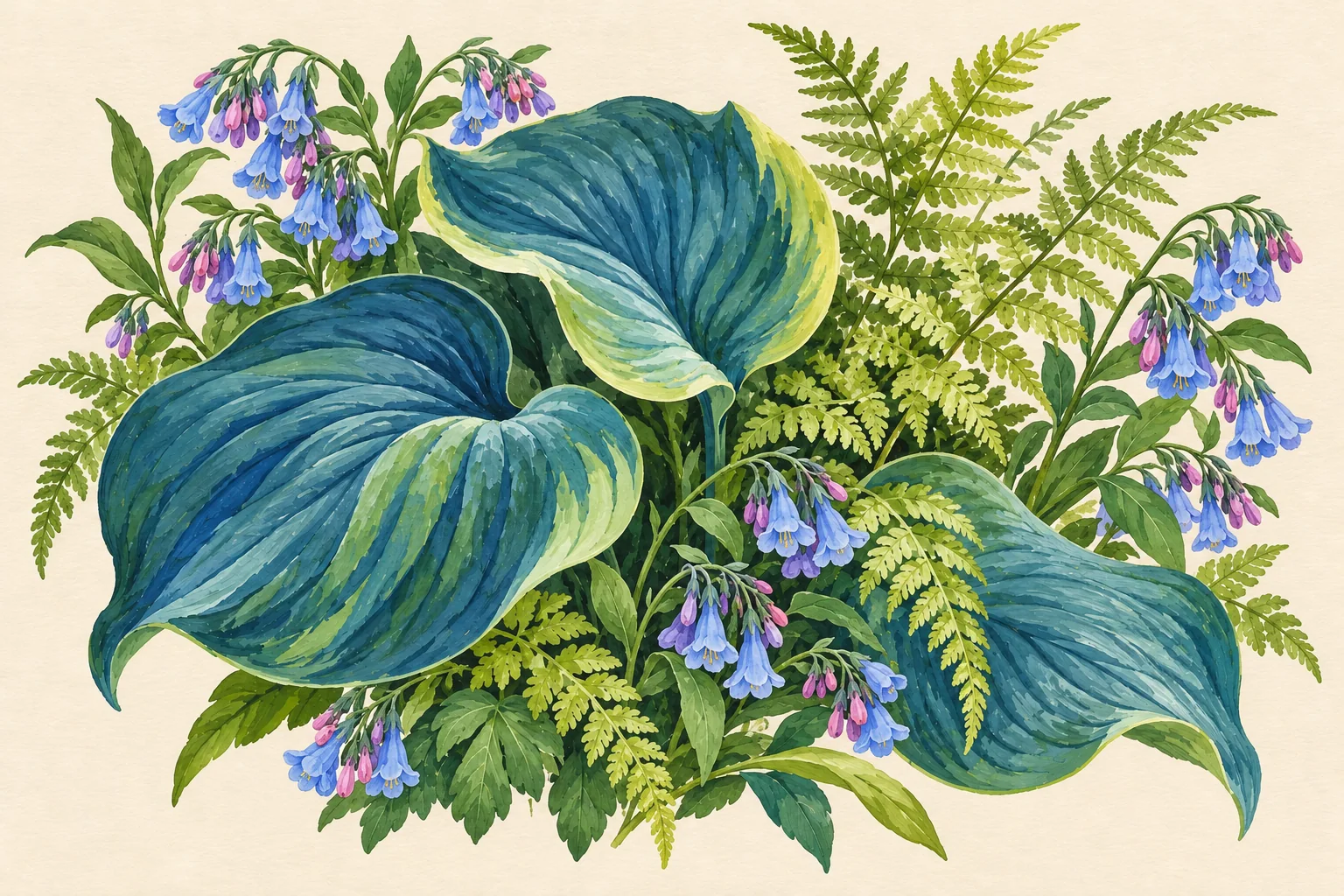
Leave room for the hosta you actually have
Before filling the gaps, find the hosta's variety name or measure an established clump in full leaf. Plants that look similar in nursery pots can need very different amounts of ground.
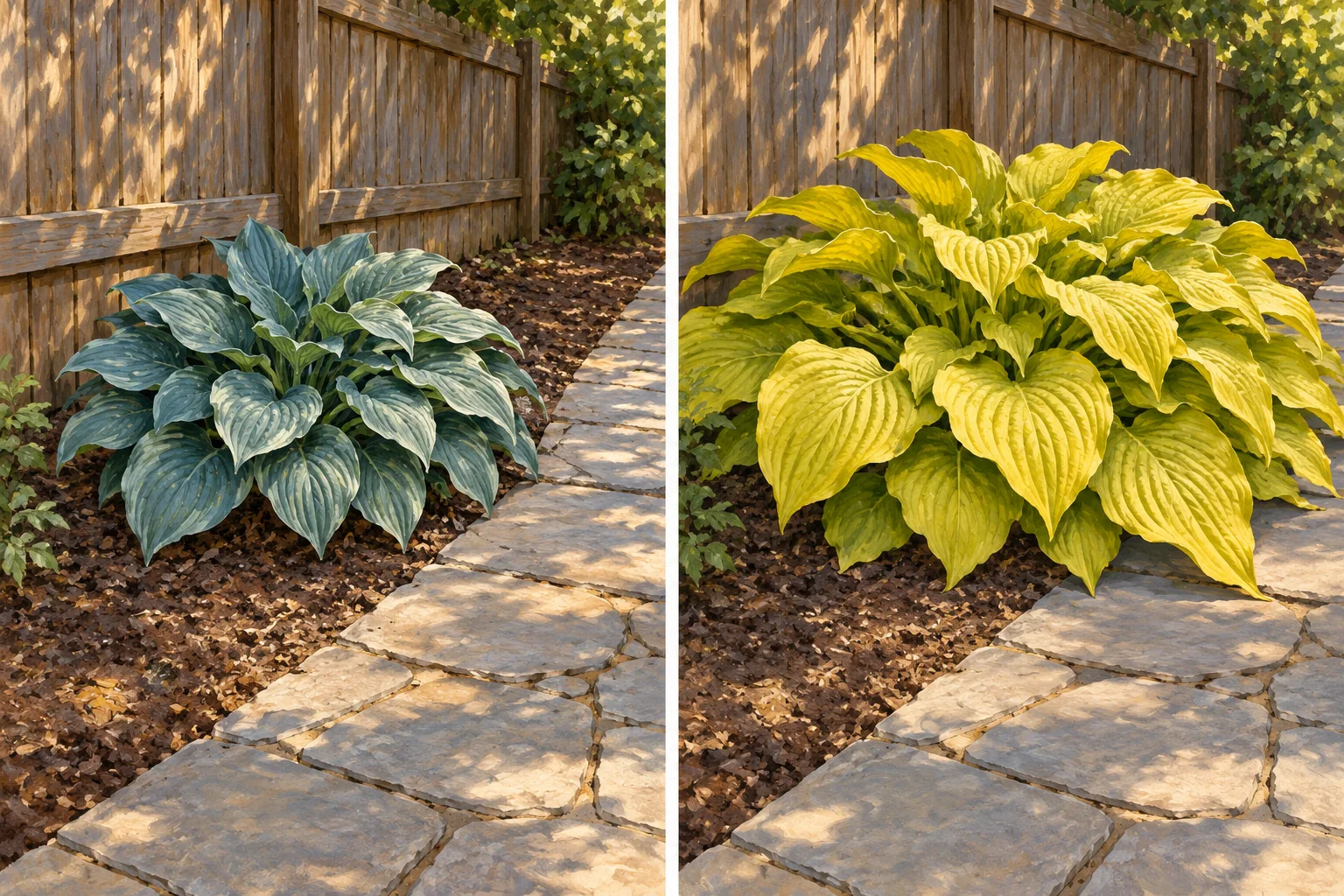
- Compact variety
- Larger variety
'Blue Mouse Ears' is a small, rounded-leaf choice; 'Sum and Substance' belongs to the giant group. 'Halcyon' offers medium-sized, blue-green foliage. Check the label for the exact variety's mature spread rather than spacing every hosta alike. If an inherited hosta has no name, wait until its leaves have expanded before deciding what fits beside it.3,2
Measure from the plant's center when laying out its future width. For a variety expected to spread 3 feet, mark a circle reaching 18 inches from the center in every direction. Add the clearance you want beside a walk, then choose companions for the space outside that outline.
Choose companions that add something the hosta doesn't
These examples suit moist, well-drained shade in central and eastern US gardens. Check that each variety tolerates your winter temperatures. One adds finer foliage; the other brings spring flowers.
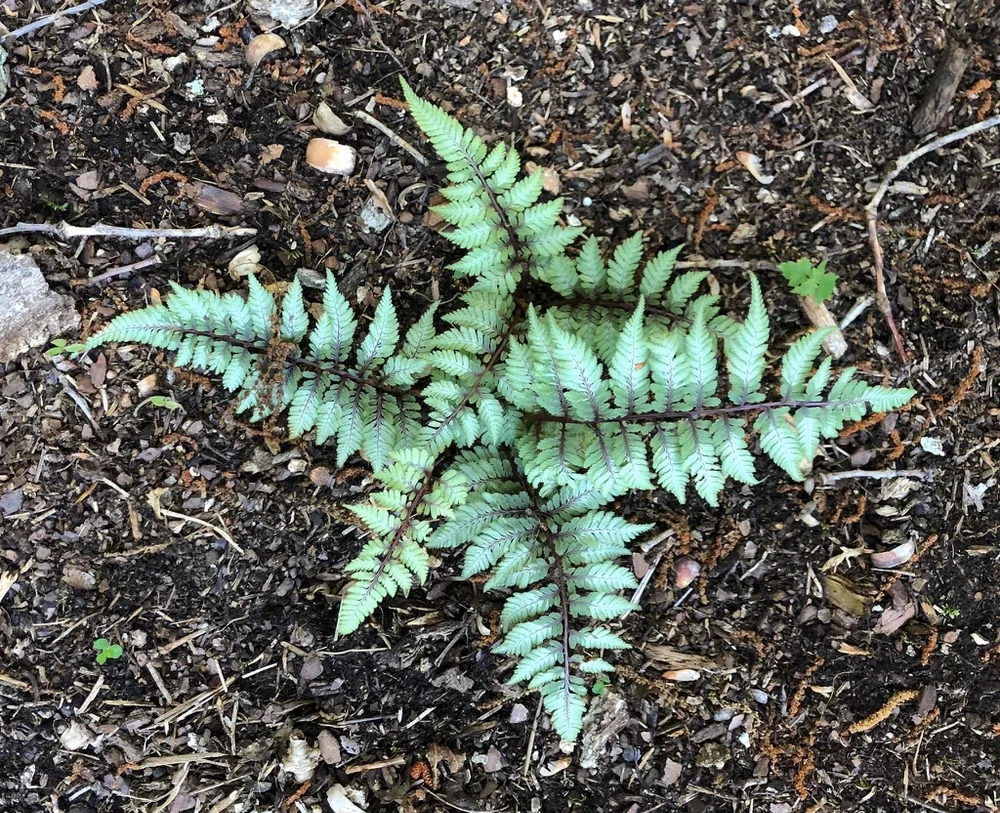
Japanese painted fern for finer summer foliage
The finely divided fronds contrast with broad hosta leaves. Place a clump beside the hosta, where both outlines remain visible, rather than hiding it behind a large mound. This fern generally reaches about 18–24 inches across and prefers moist soil in part to full shade.
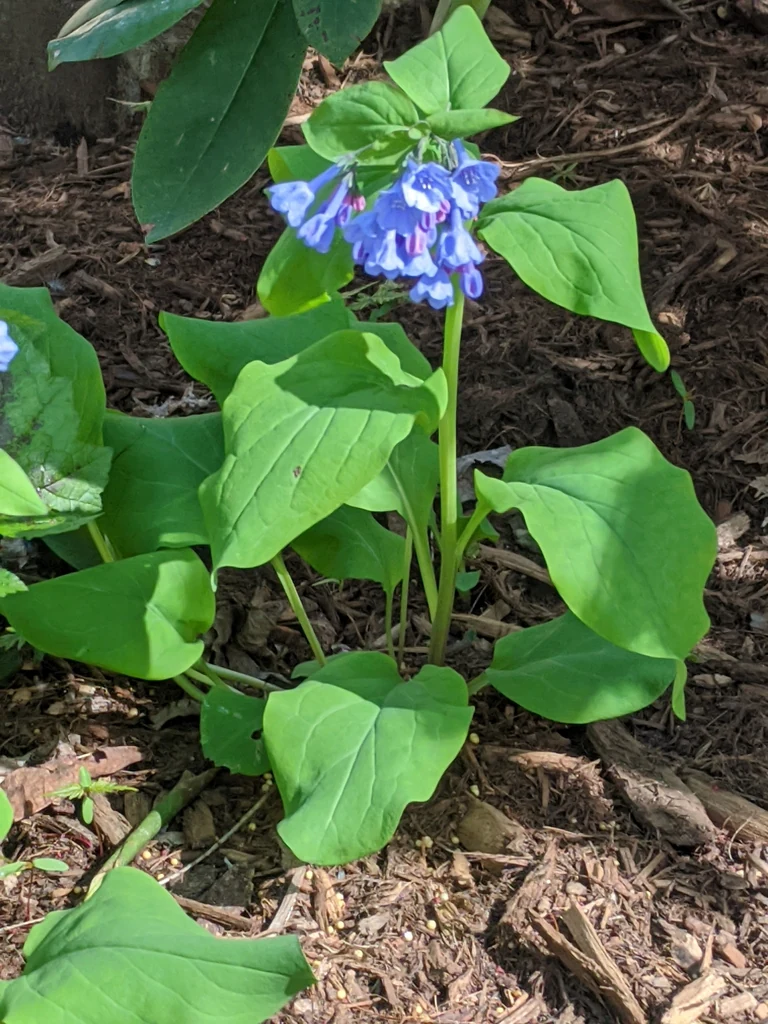
Virginia bluebells for an earlier flowering season
The blue flowers appear in spring, and the plant goes dormant by summer. Use it near later leafy growth so its departure doesn't leave the main view empty.
Change the combination when your shade is dry or hot
Shade doesn't guarantee moist soil. Under a tree or roof overhang, check moisture before copying this combination. Hostas generally grow best with filtered light and moist, well-drained soil; adding thirstier neighbors won't solve a dry bed. Don't cut major tree roots or raise the soil over them to make room for companions.1
A bed can also be shady at breakfast and sunny all afternoon. Record its direct sun before buying more shade plants. For a different climate, take the desired roles—broad mound, finer foliage, early flowers—to a local nursery or Extension service. Check the replacement varieties' growing conditions and mature sizes.
Give a shady path border a spring-to-summer handoff
Imagine an established hosta border beside a path, with morning light, afternoon shade and soil that stays moist without standing water. Keep the hostas and use the gaps for a longer season, rather than adding a different plant to every opening.
Space the foliage before adding spring flowers
Reserve the hostas' mature outlines and keep the path clear. For a hosta labeled 3 feet wide beside a fern expected to reach 2 feet wide, place their centers 2.5 feet apart for the outlines to meet: half of 3, plus half of 2. Leave more room for a visible gap or access.
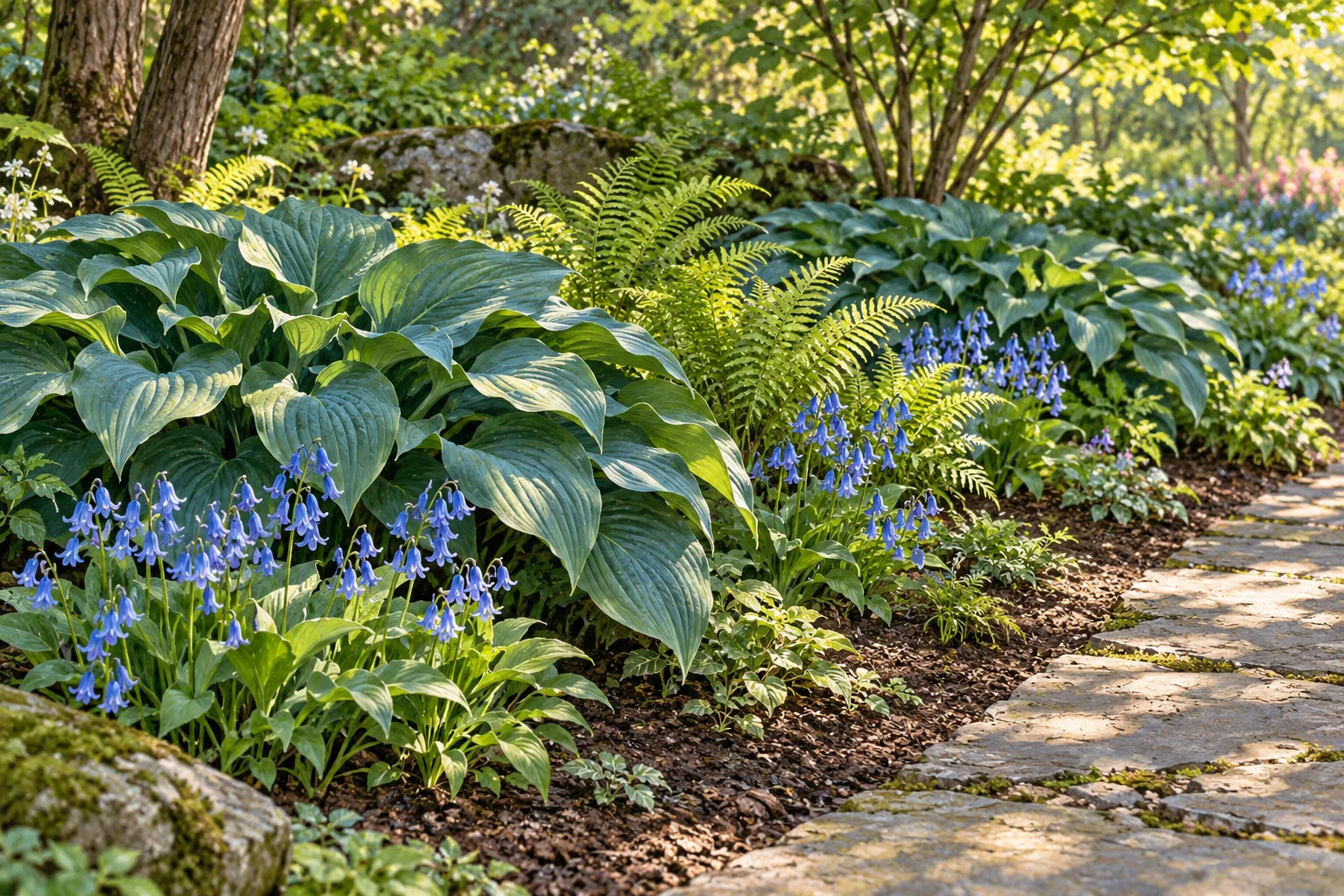
1
Spring: flowers between the leafy clumps
Place bluebells in suitable pockets outside the hosta and fern crowns. Their blue flowers add an early season of color. Mark their locations so you can find them after the foliage dies back.
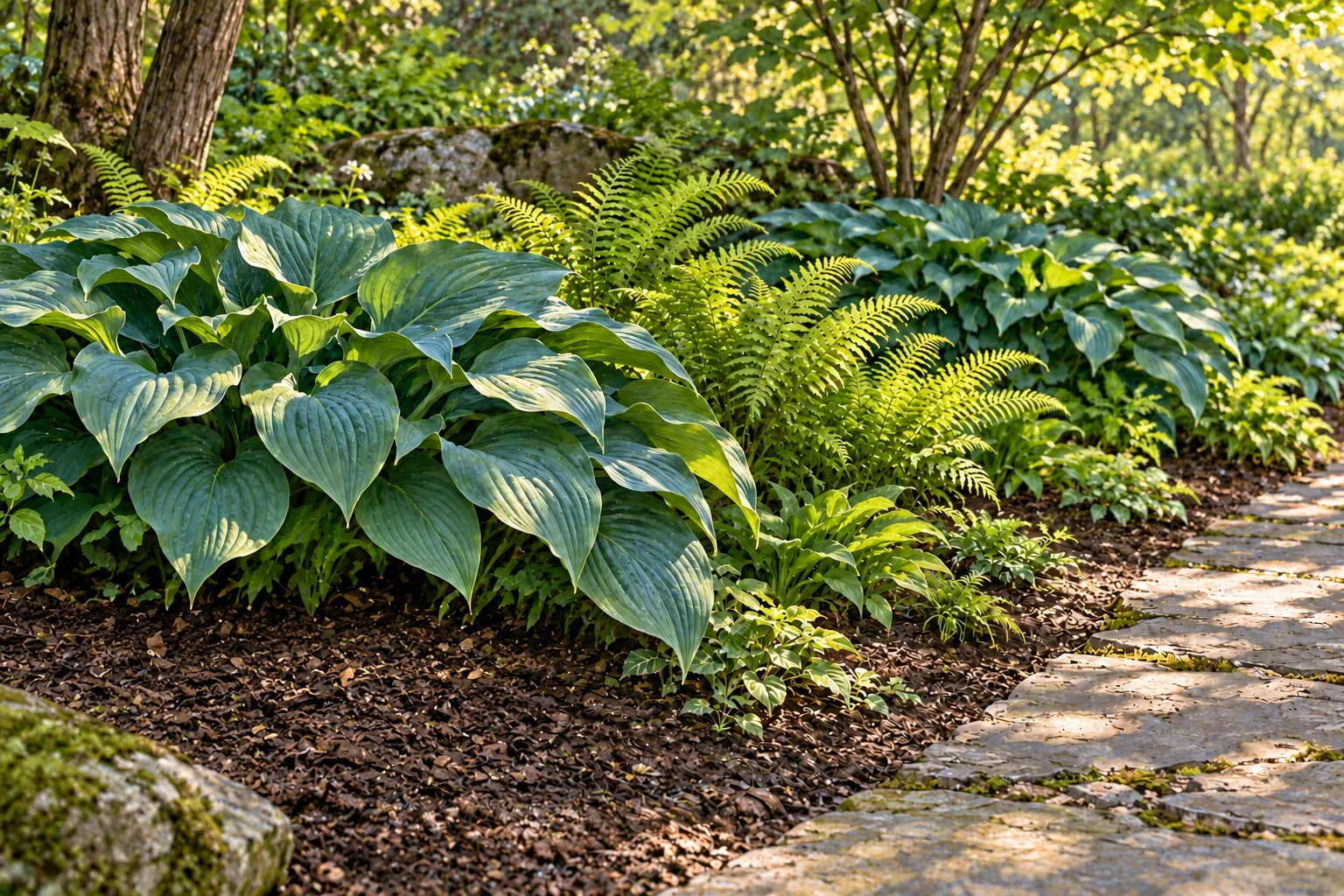
2
Summer: foliage carries the view
As the bluebells go dormant, larger hosta leaves and fine fern fronds take over. Keep the bluebells' ground undisturbed; their underground parts still occupy it. Don't fill the apparent summer vacancy with another permanent plant.
Keep a winter outline, and check what eats the leaves
Hostas die back in winter, and Japanese painted fern is deciduous too. Adding more of either won't give you winter screening. Keep an existing suitable evergreen behind the border, or let a well-shaped path and bed edge give the winter view its structure. Choose any new evergreen for the space and local conditions, not just to fill a winter photo.2,4
Deer and slugs can damage hosta foliage. Companion planting doesn't make the hostas deer-proof. If browsing is already severe, settle on workable protection or choose different focal plants before expanding the bed. Hostas are also toxic to dogs, cats and horses if eaten; choose other plants where animals are likely to chew them.1,3
Once you know what can stay, photograph the whole border with the path visible. Gardenful can help you picture a fuller planting idea around the hostas you want to keep, with suggested plants and quantities to explore. Compare the idea with your measured space before choosing what to buy.
Frequently asked questions
What looks good next to hostas?
Fine fern foliage gives a clear contrast to broad hosta leaves. Spring flowers can extend the season before hostas fill out. Choose plants that share your bed's light and soil moisture, and leave room for both plants' mature widths.
Can I plant bulbs or spring flowers between hostas?
Yes, where their growing requirements fit. Virginia bluebells are one option for suitable moist shade in central and eastern US gardens. They go dormant in summer, so mark their positions and let later foliage improve the view without digging into their crowns.
Should I divide hostas every year?
No. Mature hostas don't need routine division for plant health. Divide when you want more plants or need to change the clump's size, following suitable local timing and care. For a new planting, choosing a variety that fits reduces the need to divide it just to keep a path open.
What should I avoid planting around hostas?
Avoid plants that need a dry, sunny bed in the same closely watered shade planting. Also avoid companions whose mature foliage will bury a small hosta, or whose roots cannot be planted without damaging an existing tree. Judge compatibility by the actual conditions and plant sizes.
 Gardenful
Make a shade border you enjoy looking at.
Use your yard photo to explore a Gardenful design around the plants you want to keep. Save the idea and suggested plant list for your next nursery visit.
Gardenful for iPhone
Download the app free and start with a photo of your yard.

Sources(6)
- [1]Hostas
University of Minnesota Extensionhttps://extension.umn.edu/garden-and-home/yard-and-garden/gardening-in-minnesota/growing-hostas-in-minnesota
- [2]Hosta
NC State Extensionhttps://plants.ces.ncsu.edu/plants/hosta/
- [3]
- [4]Japanese painted fern
NC State Extensionhttps://plants.ces.ncsu.edu/plants/athyrium-niponicum/
Photograph by Cathy Dewitt, CC BY 4.0; resized and converted to WebP; shown without cropping.
- [5]Virginia bluebells
NC State Extensionhttps://plants.ces.ncsu.edu/plants/mertensia-virginica/
Photograph by Rachel Arnold, CC BY 4.0; converted to WebP; shown without cropping.
- [6]