Outdoor living edges
Deck landscaping ideas for the edge and the view from above
The short answer
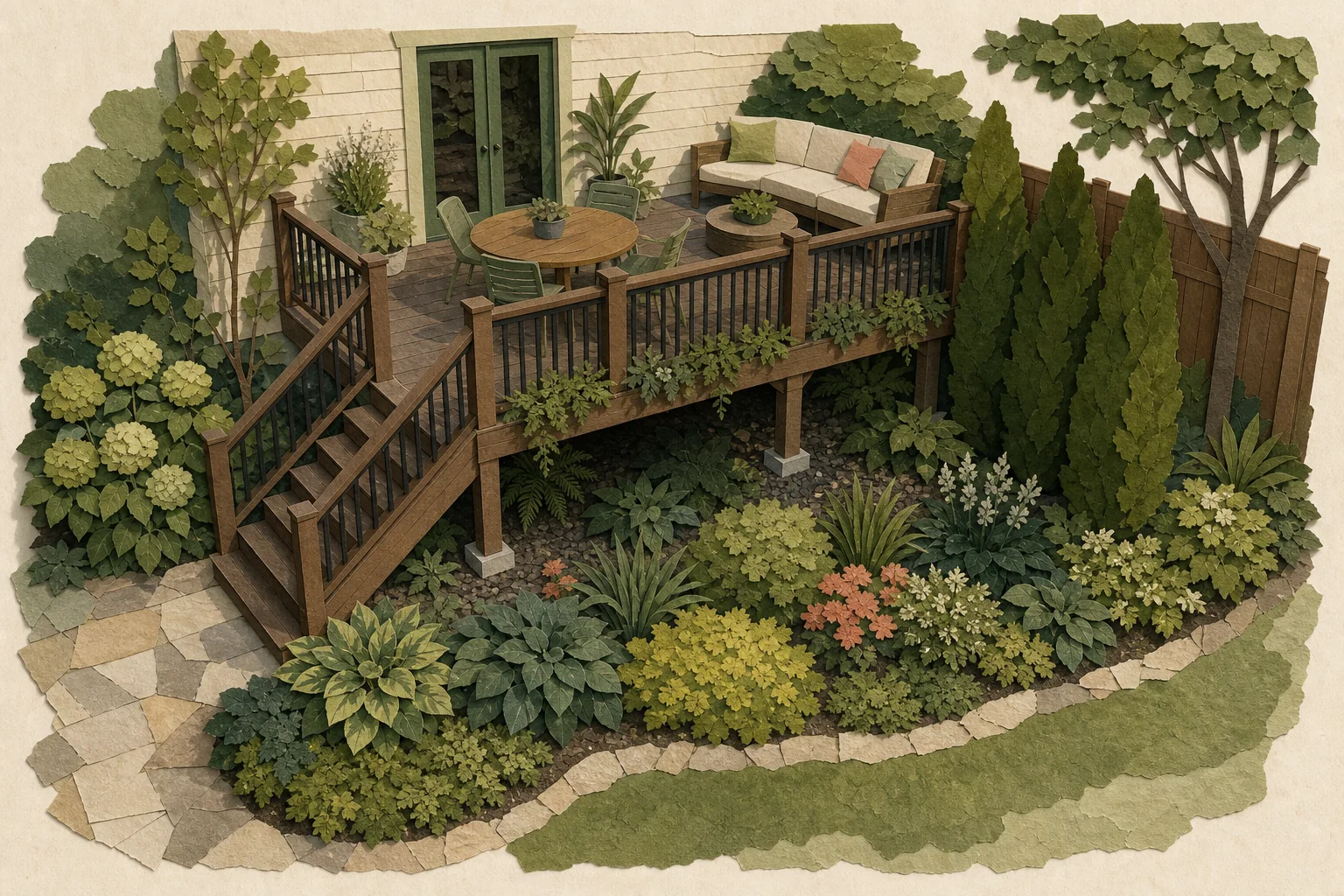
The ground around a deck changes with exposure, runoff, and the structure overhead. Treat it as three conditions: the open sunny perimeter, the drip or runoff line, and the darker area beneath the structure. Keep stairs, doors, footings, inspection, and drainage open; use broad foliage masses that read from above; and place privacy only on the sightline that needs it.
Map light and water around the whole deck
The shaded area beneath a deck, the drip line, and the open perimeter can behave like separate gardens.
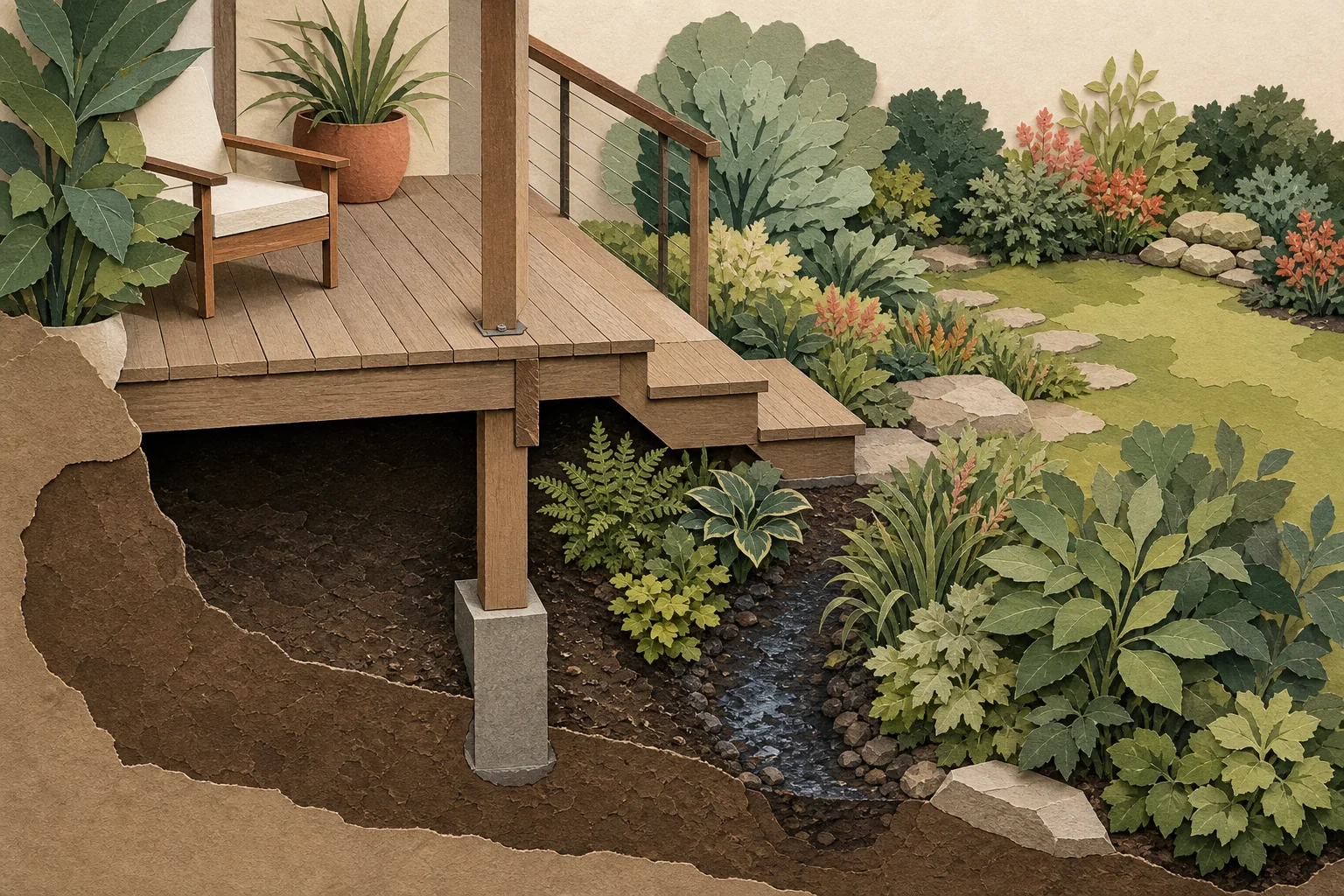
- Dry shade
- Drip edge
- Open perimeter
Photograph the edge in morning and afternoon and check the soil after rain. Structures can create deep or partial shade, shelter soil from rainfall, and concentrate water at roof, stair, or deck edges. Identify the observed pattern before choosing plants.1,2,3
Do not assume shade means moist soil. An under-deck or recessed area can be both dark and dry, while a drip line a few feet away receives concentrated water. University of Minnesota names hosta, Ligularia, and Heuchera as dry-shade candidates, but also notes that even adapted plants may need occasional deep watering. Verify each exact plant for your climate, moisture, toxicity, and mature size.
Keep planting clear of the deck's working edges
The deck is a structure. Draw the spaces that must remain open before deciding what the planted edge can become.
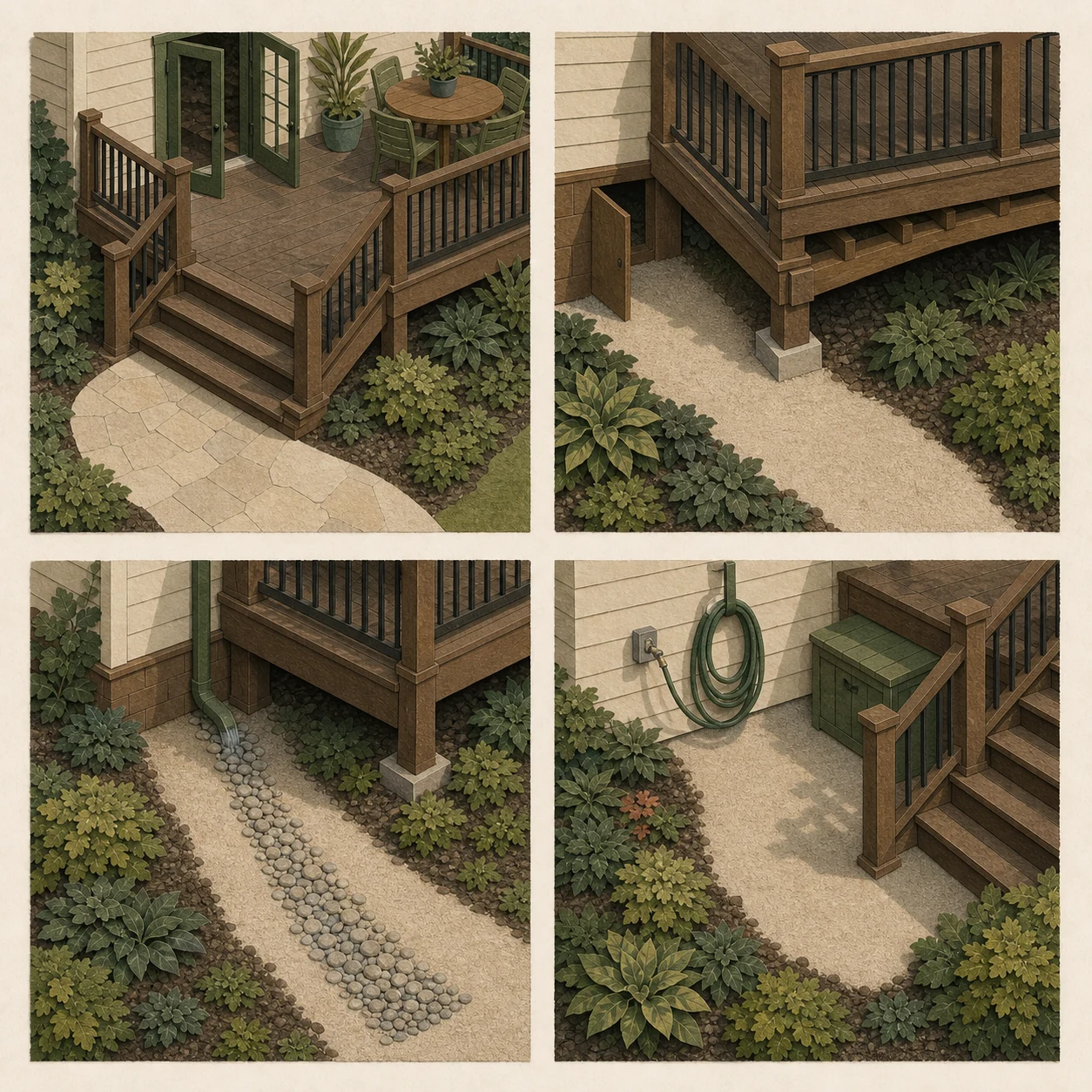
Keep stairs and doors clear
People can use the deck normally
Keep foliage, containers, and edging outside stairs, landings, handrails, gates, and door swings.
Keep structure visible
Footings and framing stay visible
Leave posts, connections, skirting access, and signs of moisture or decay visible.
Give runoff a safe route
Drip and runoff have a safe destination
Observe runoff and fix ponding, erosion, or water moving toward the house before planting.
Leave a working service pocket
Maintenance stays practical
Keep hoses, outlets, cleanouts, storage, marked utilities, and footing work in an open pocket.
If you see rot, loose connections, movement, or a changing gap at a post or ledger, keep the area open and arrange a professional inspection before planting.
Choose forms that hold up in the view from above
A deck creates a higher viewing angle. Mounding foliage, ground coverage, and broad seasonal masses often matter more than flowers aimed only outward.
Build the deck view with a low edge, repeated mounds, one targeted screen, and detail near the seat.
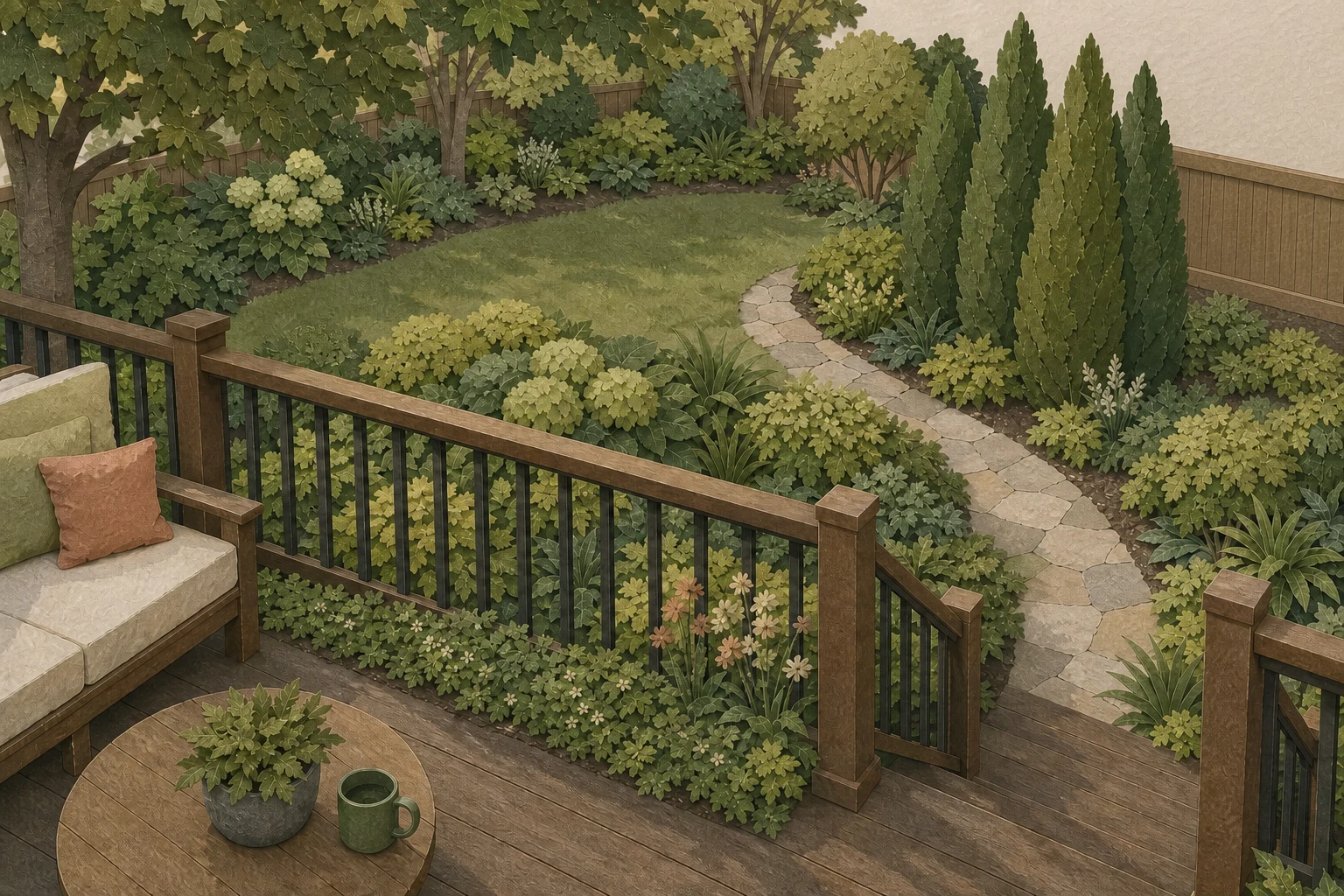
- 1
Low connective mass
Carries the top-down view
Use one broad foliage or ground layer to soften the deck edge when seen from above.
- 2
Repeated middle mounds
Builds calm structure
Use a few mature groups that remain below rail or seated sightlines where the view should stay open.
- 3
One targeted screen
Adds privacy without enclosing everything
Place height only on the exact neighbor, street, or service view that needs interruption.
- 4
Seasonal detail near the seat
Rewards the near view
Concentrate scent, flower detail, or foliage contrast where it can be appreciated up close without blocking the route.
If privacy is the primary job, map the exact seated sightline before filling the full deck perimeter. The related privacy guide below covers that process.
Sources: University of Florida IFAS Extension, NC State Extension
Plan a raised deck with one exposed neighbor view
The example keeps the stairs and under-deck access open while concentrating height only where it earns a job.
A raised rectangular deck beside a lawn
The south edge is sunny, the east edge is partly shaded, and one neighbor window is visible from the table.
- 1
Leave the stair bay unplanted
Extend the clear route beyond the final tread so mature plants do not lean into arrival or handrail use.
- 2
Use a repeated low mass on two edges
Choose exposure-appropriate plants with a similar mounding form so sunny and shaded sections still connect visually.
- 3
Place the screen on the seated sightline
Use one cluster of upright shrubs or grasses where it interrupts the neighbor view, not as a hedge around the whole deck.
- 4
Keep the under-deck zone simple
Where the measured conditions fit, hosta, Ligularia, or Heuchera illustrate different dry-shade forms in University of Minnesota guidance. Use exact local matches only where inspection, drainage, storage, and access remain practical.
The deck feels integrated because the low mass repeats around it. Privacy is a focused edit, not the organizing rule for every edge.
Review the deck from above, below, and from the yard
A successful edge works from the table, the yard, and the service side.
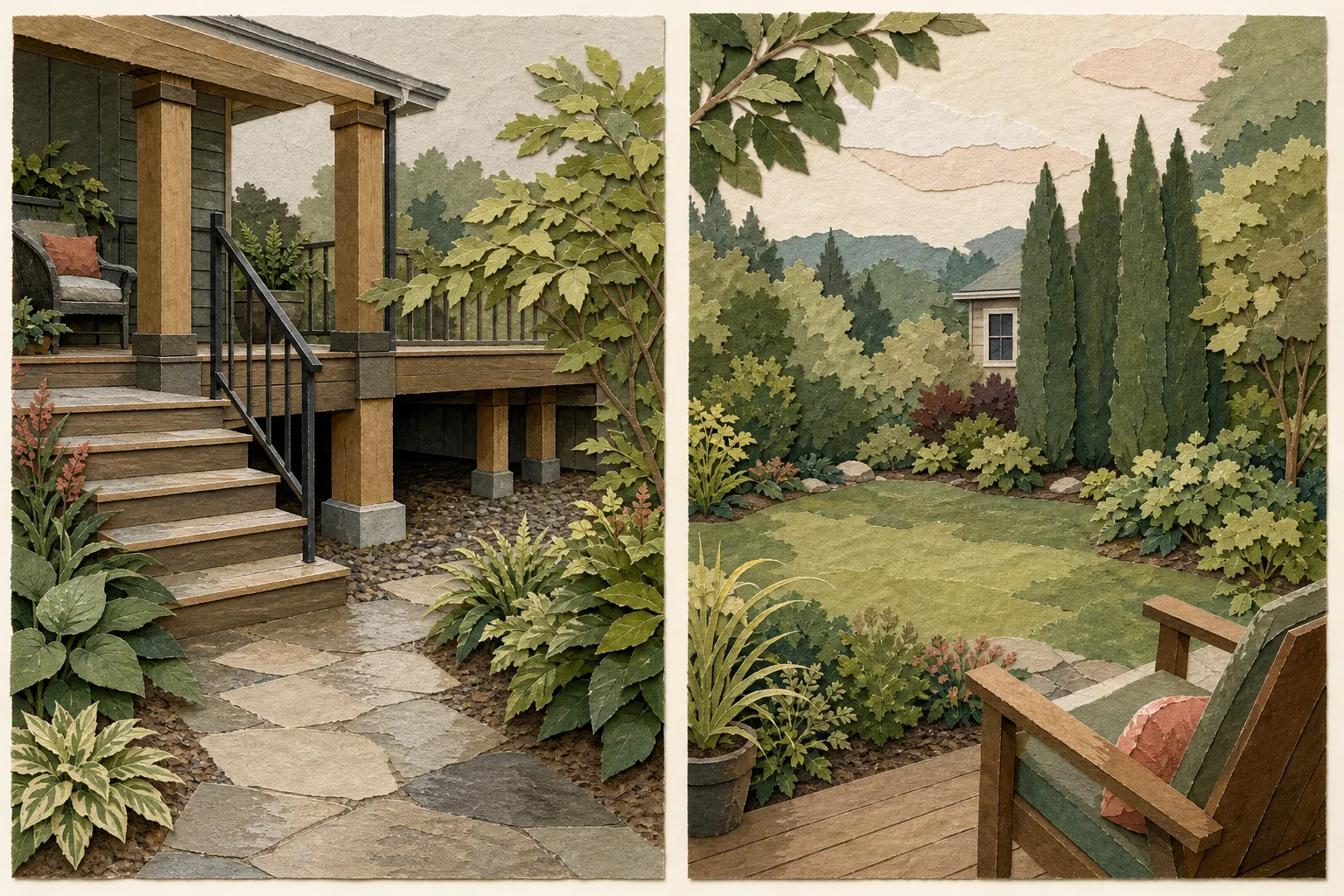
- Ground-level check
- View from the deck
From the seat: The intended view stays open and the targeted screen interrupts the actual problem sightline.
From the yard: Repeated plant masses connect the deck to the larger landscape without hiding stairs or structure.
From below or behind: Posts, footings, framing, utilities, drainage, and storage remain visible and reachable.
After rain: The drip and runoff pattern does not erode the bed, pond near the house, or repeatedly flatten plants.
At mature size: Plants remain outside the stair, door, rail, inspection, and maintenance envelopes.
Frequently asked questions
What should I plant around a raised deck?
Choose by zone. University of Minnesota names hosta, Ligularia, and Heuchera for dry shade, but site moisture and plant size still differ. Use plants matched to the observed sheltered zone, separate candidates at the wetter drip edge, and broader mounding groups in the open perimeter. Keep structure, stairs, and access clear.
Should plants hide the bottom of a deck?
They can soften the view without concealing posts, footings, connections, drainage, skirting access, or signs of moisture. Inspection and repair matter more than continuous coverage.
How do I add privacy around a deck?
Sit where privacy matters, photograph the exact view, and place enough mature height to interrupt that sightline. A focused cluster often preserves more light and openness than a perimeter hedge.
Can I put large planters on a deck?
A filled container can be much heavier than it looks, especially after watering. Confirm the deck's structural capacity, container stability, drainage, and applicable local requirements before placing large or numerous planters.
 Gardenful
Design the view from the chair.
Protect stairs, structure, and water routes first. Then use low repeated masses and one targeted screen to connect the deck to the yard.
Gardenful for iPhone
Download the app free and start with a photo of your yard.

How this guide was built
The guide separates planting composition from structural, drainage, and construction decisions.
Extension sources support the dry-shade and runoff observations, while landscape-design sources support viewpoints, mature massing, and targeted emphasis.
No footing, drainage, stair, fire, or building-code dimensions are provided. Those require the actual structure and current local requirements.
Sources(6)
- [1]Gardening in the Shade
University of Minnesota Extensionhttps://extension.umn.edu/gardening-minnesota/gardening-shade
- [2]Kinds of Shade
Colorado State University Extensionhttps://planttalk.colostate.edu/topics/design/1127-kinds-shade/
- [3]
- [4]Landscape Design: Arranging Plants in the Landscape
University of Florida IFAS Extensionhttps://ask.ifas.ufl.edu/publication/EP449
- [5]
- [6]811 Before You Dig
Common Ground Alliancehttps://811beforeyoudig.com/Before-You-Dig/