Curbside planting
Mailbox and curb strip landscaping ideas that keep access clear
The short answer
A mailbox bed or is shared access space before it is a flower bed. Confirm who controls the right-of-way, keep the mailbox and carrier approach clear, preserve driver and pedestrian sightlines, locate utilities, leave a stable car-door landing where needed, and choose low plants for heat, compaction, salt, and limited root space.
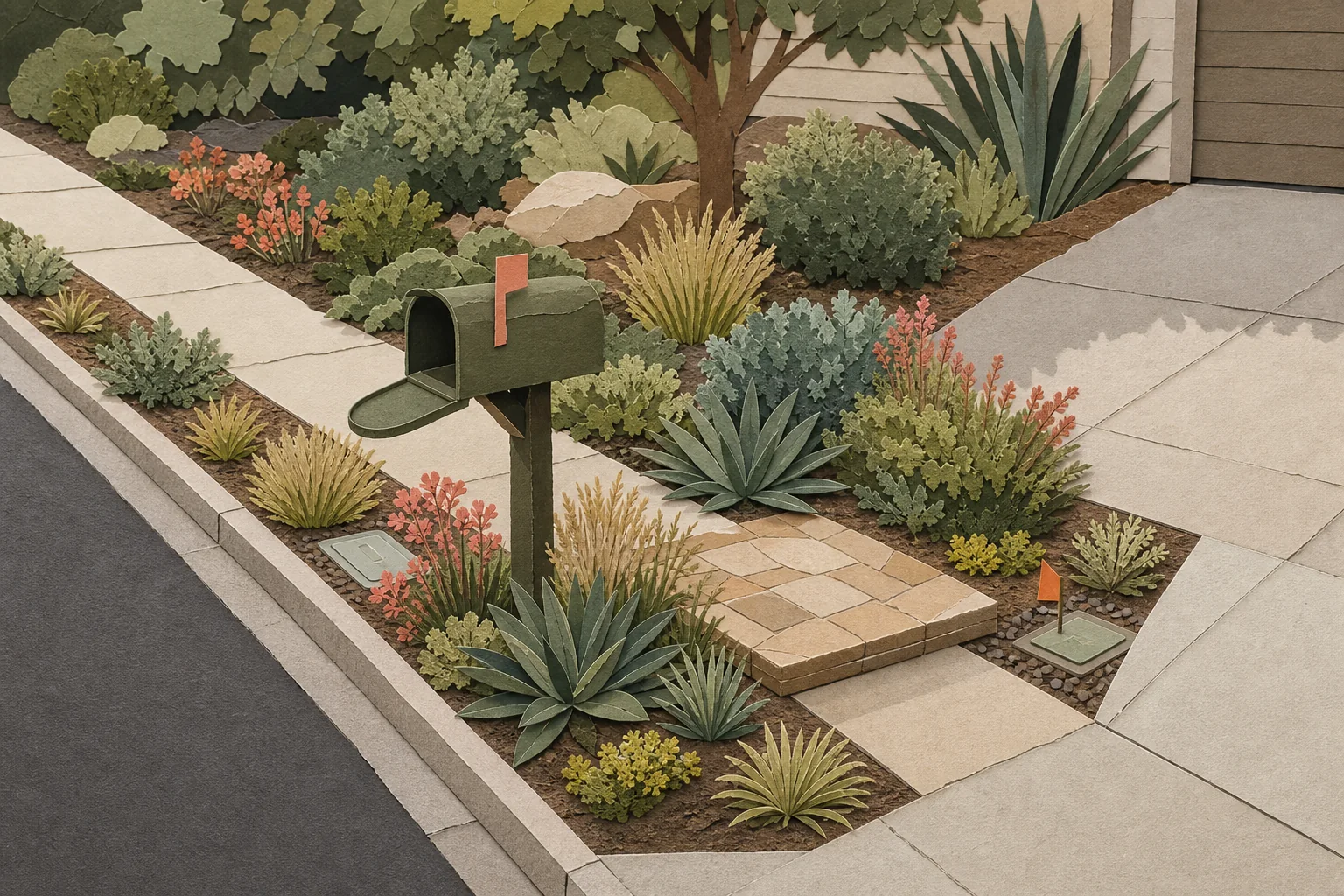
Confirm who controls the strip before you plant
A curbside bed may sit on land you maintain but do not fully control.
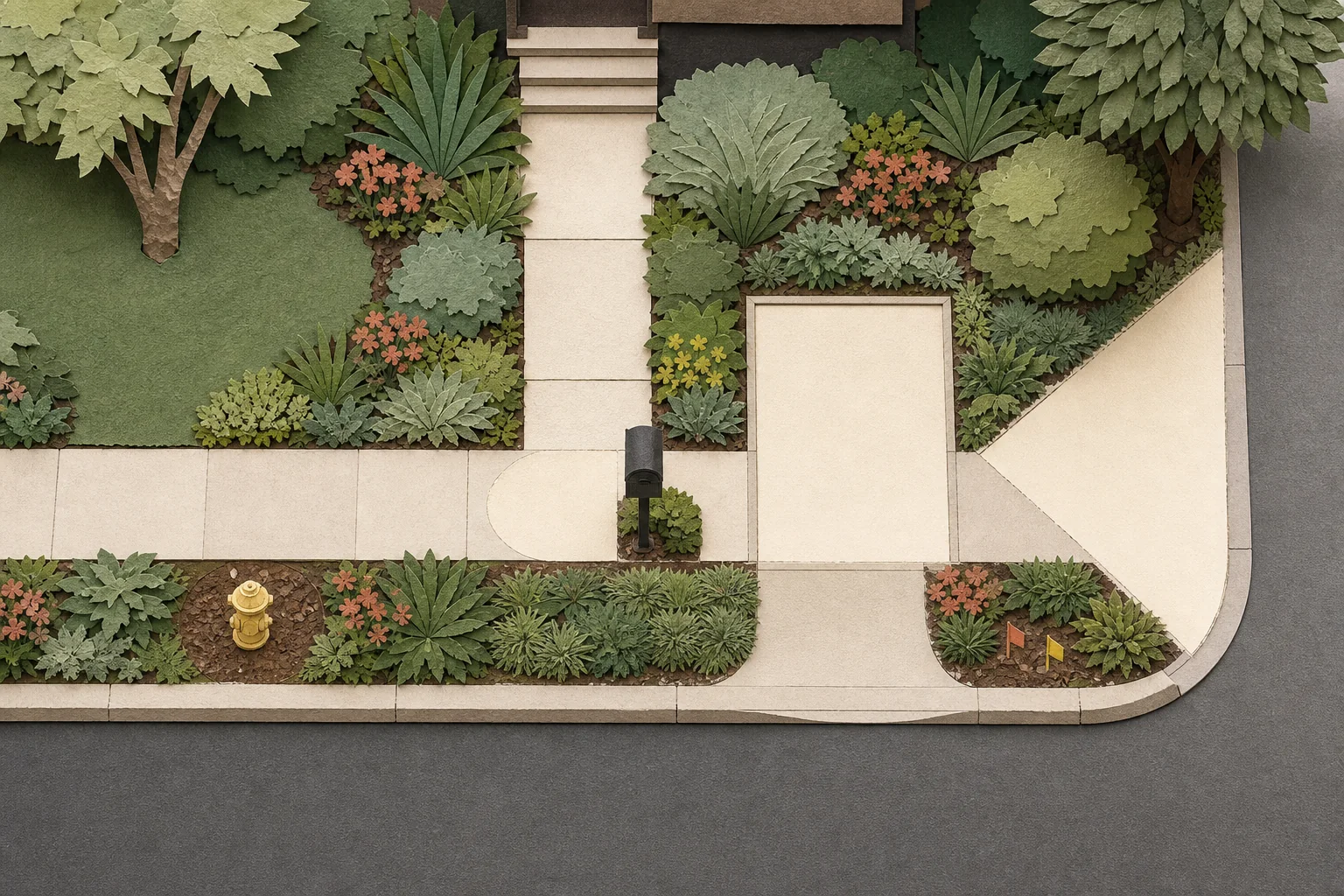
- Postal and walking access
- Street visibility
- Harsh exposure and utilities
Ask the municipality or public works department whether the strip is right-of-way, whether a permit is required, and what rules apply to plant height, intersections, driveways, hard edging, trees, irrigation, and utility access. HOA rules may add another layer.1,2
Keep the approach to a curbside mailbox clear. USPS warns that repeated obstruction can be reported and, after customer notice and district review, can lead to temporary withdrawal of delivery. The practical goal is simpler: keep the approach safe for the carrier, vehicle, and customer.3
Use published numbers as calibration, not permission. Penn State suggests keeping hellstrip plants under 36 inches, while Lincoln, Nebraska, limits curb-strip plants to 30 inches above the curb. Verify the rule for your own right-of-way, including flopping stems and snow-loaded plants.
Design the empty spaces before the plants
A mailbox apron, passenger landing, sightline pocket, and utility opening are functional parts of the composition, not gaps to fill later.
- 1
Leave a mailbox apron
Keep the approach and door operation free of stems, edging, irrigation hardware, snow storage, and loose material.
- 2
Place a car-door landing
Where passengers regularly exit, preserve a stable, locally permitted step-through instead of expecting plants to survive trampling.
- 3
Keep the corner low
Use the locally required visibility envelope and account for flowers, seed heads, wet stems, and snow load at full height.
- 4
Expose the service pocket
Keep valves, hydrants, signs, utility marks, and recurring maintenance points visible and reachable.
Use four low, durable plant roles
Choose exact species only after the strip's exposure and legal envelope are known.
Keep the palette short, low, resilient, and easy to read at street speed.
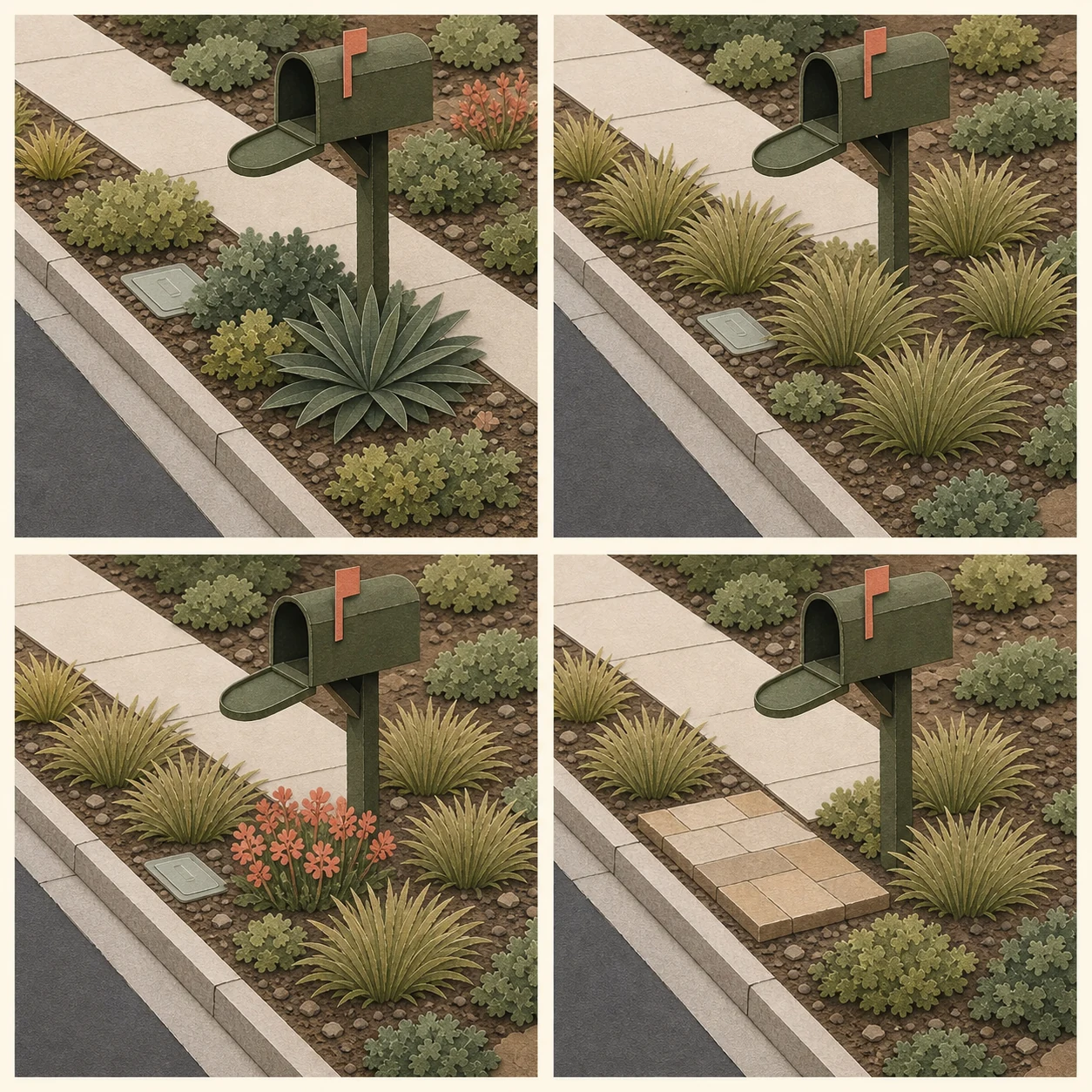
Persistent low structure
Use sparingly where woody plants are allowed
One compact form holds the design together outside the main salt, door, and visibility zones.
Main herbaceous mass
Use as the dominant rhythm
Use one low grass-like or mounding herbaceous form as the dominant repeated rhythm.
Brief seasonal signal
Use inside the main mass
Bulbs or a short flower sequence create interest without relying on one tall plant that later flops into the route.
Stable access break
Treat it as part of the design
A permitted paved, gravel, or open-soil landing gives parked-car passengers and mail users a place to step.
For one Great Plains reference, Nebraska Extension names little bluestem, blue grama, side-oats grama, sedum, yarrow, butterfly milkweed, and heath aster for sunny curbside conditions. Verify local nativity, hardiness, mature height, invasive status, salt exposure, and municipal rules before using any regional example.
Sources: Penn State Extension, Nebraska Extension, University of Minnesota Extension
Plan one mailbox at the end of a driveway
This example keeps mail delivery, backing views, and a passenger step-out clear while creating a small repeated planting.
A curbside mailbox beside a narrow planting strip
Cars park along the curb, the driveway meets the strip on one side, and deicing salt is used in winter.
- Leave the mailbox approach open
- Keep the front and carrier-side route free of branches, flowers, edging, snow storage, and irrigation hardware.
- Keep the driveway corner lowest
- Use the locally required visibility envelope and select plants that remain within it even when flowering or wet.
- Place the main mass away from the tire and salt band
- Use a repeated herbaceous group in the least compacted pocket, verifying both soil and spray tolerance locally.
- Add one stable step-through
- Where parking creates a regular passenger route, preserve a permitted landing instead of expecting plants to survive trampling.
The open gaps are not missing design. They are the access system that lets the planting remain welcome.
Check the curbside plan against real obligations
A successful strip remains safe and serviceable after the plants reach full size.
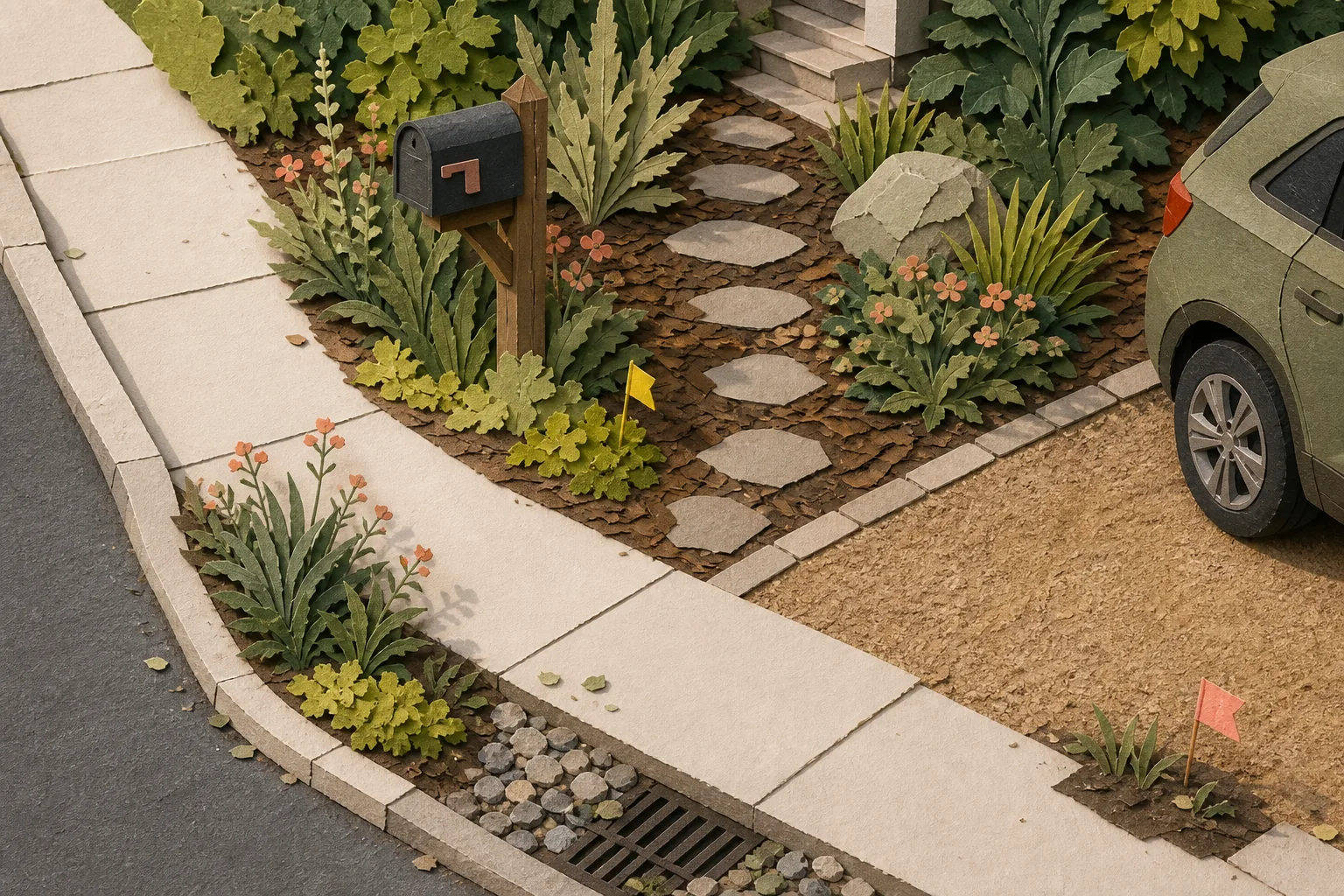
Municipal approval is clear: You know the right-of-way, height, visibility, tree, edging, irrigation, and permit rules that apply.
USPS access remains open: The carrier and customer can reach and operate the mailbox safely without plants or hardscape obstructing the approach.
People have somewhere to step: Sidewalk users and parked-car passengers do not need to trample the bed or step into the street.
The palette fits the harshest exposure: Local plant choices account for compaction, heat, salt, snow, drought, and the actual soil volume.
Utilities and maintenance stay visible: Flags, valves, signs, hydrants, roots, and access points remain unobstructed.
Frequently asked questions
What should I plant around a mailbox?
Choose low plants that fit the actual sun, soil, salt, heat, and local rules while keeping postal and customer access clear. Nebraska Extension's sunny curb-strip examples include little bluestem, blue grama, sedum, yarrow, butterfly milkweed, and heath aster. They are regional references, not a nationwide prescription.
Can I plant in the strip between the sidewalk and street?
Possibly, but many curb strips are in public right-of-way and are locally regulated. Check the municipality or public works department before planting, irrigating, adding edging, or installing a tree.
How do I keep people from stepping on curb-strip plants?
Design a stable, permitted access break where passengers normally exit parked cars or cross the strip. A landing is more durable and welcoming than signs or thorny plants.
Do I need to contact 811 for a mailbox flower bed?
Yes. The national 811 service specifically includes mailboxes, shrubs, fences, and small flower beds among projects that require a utility locate before digging.
 Gardenful
Design the access before the flowers.
Confirm the rules, draw the routes and views, then fill only the remaining plantable pockets with a short, locally verified palette.
Gardenful for iPhone
Download the app free and start with a photo of your yard.

How this guide was built
The guide combines current extension guidance for curb strips with official USPS access language and national utility-marking guidance.
No universal height, setback, or plant list is given because municipal rules and growing conditions differ.
Use the categories to decide what to measure and verify locally before changing the curb strip.
Sources(5)
- [1]Creating a Hellstrip Garden
Penn State Extensionhttps://extension.psu.edu/creating-a-hellstrip-garden
- [2]
- [3]
- [4]The Effects of Deicing Salts on Landscapes
University of Minnesota Extensionhttps://extension.umn.edu/lawns-and-landscapes-minnesota/effects-deicing-salts-landscapes
- [5]811 Before You Dig
Common Ground Alliancehttps://811beforeyoudig.com/Before-You-Dig/