Turn saved ideas into a style
How to choose a garden style that fits your home
The short answer
A garden style is the combination of shapes, planting and materials that gives a yard its character. You might love cottage flowers, a modern garden’s clear paths, or the quiet of a shaded woodland. Start with the pictures that appeal to you, then borrow the features that fit your house and the way you want to use the space. You can mix influences without rebuilding the whole yard.
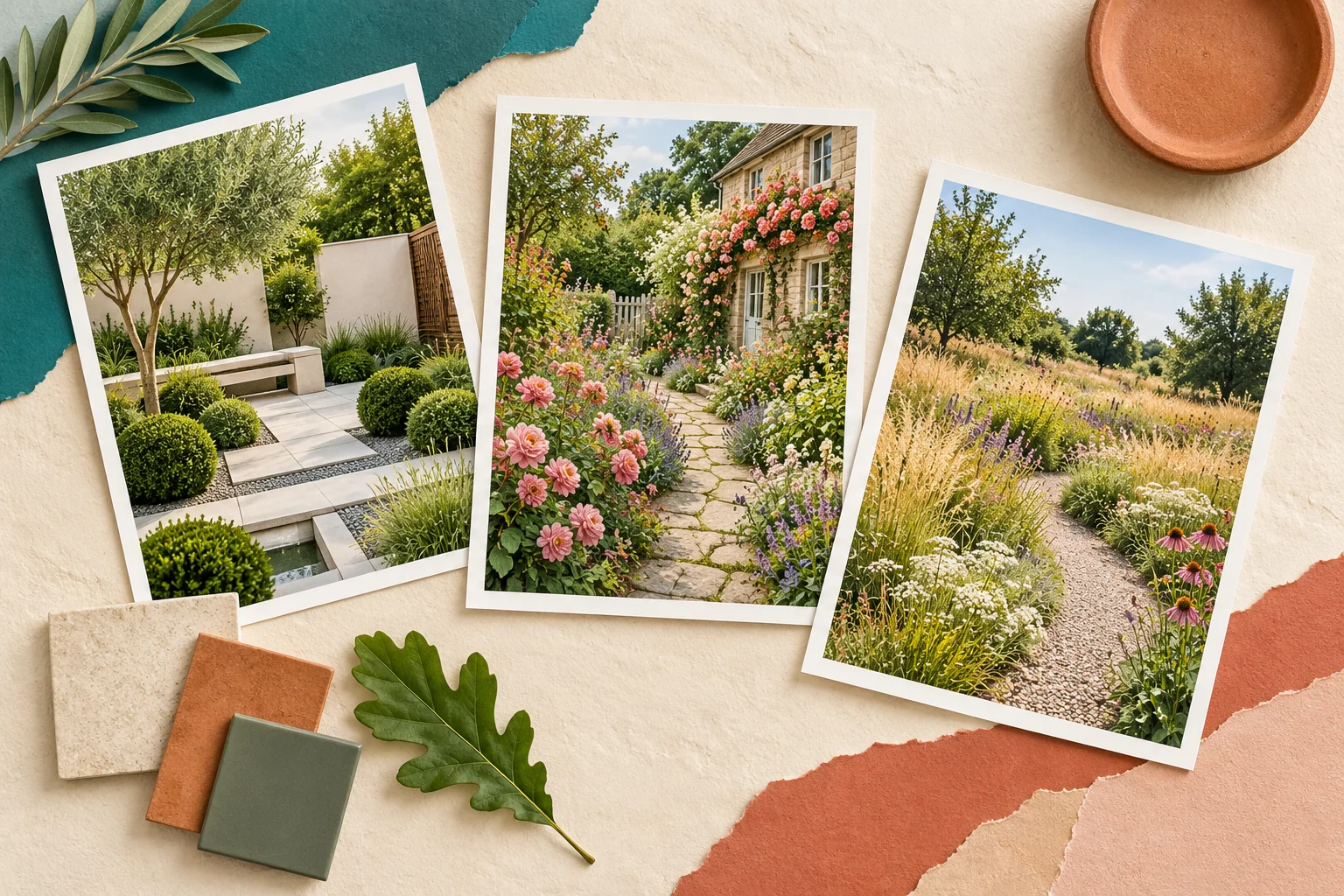
Which of these gardens would you like to come home to?
Start with your reaction to the pictures. Then look at the feature creating that feeling: the shape of the beds, how much ground you can see, the size of the leaves, or the balance of flowers and greenery. These are styles to explore, not boxes you have to fit into.
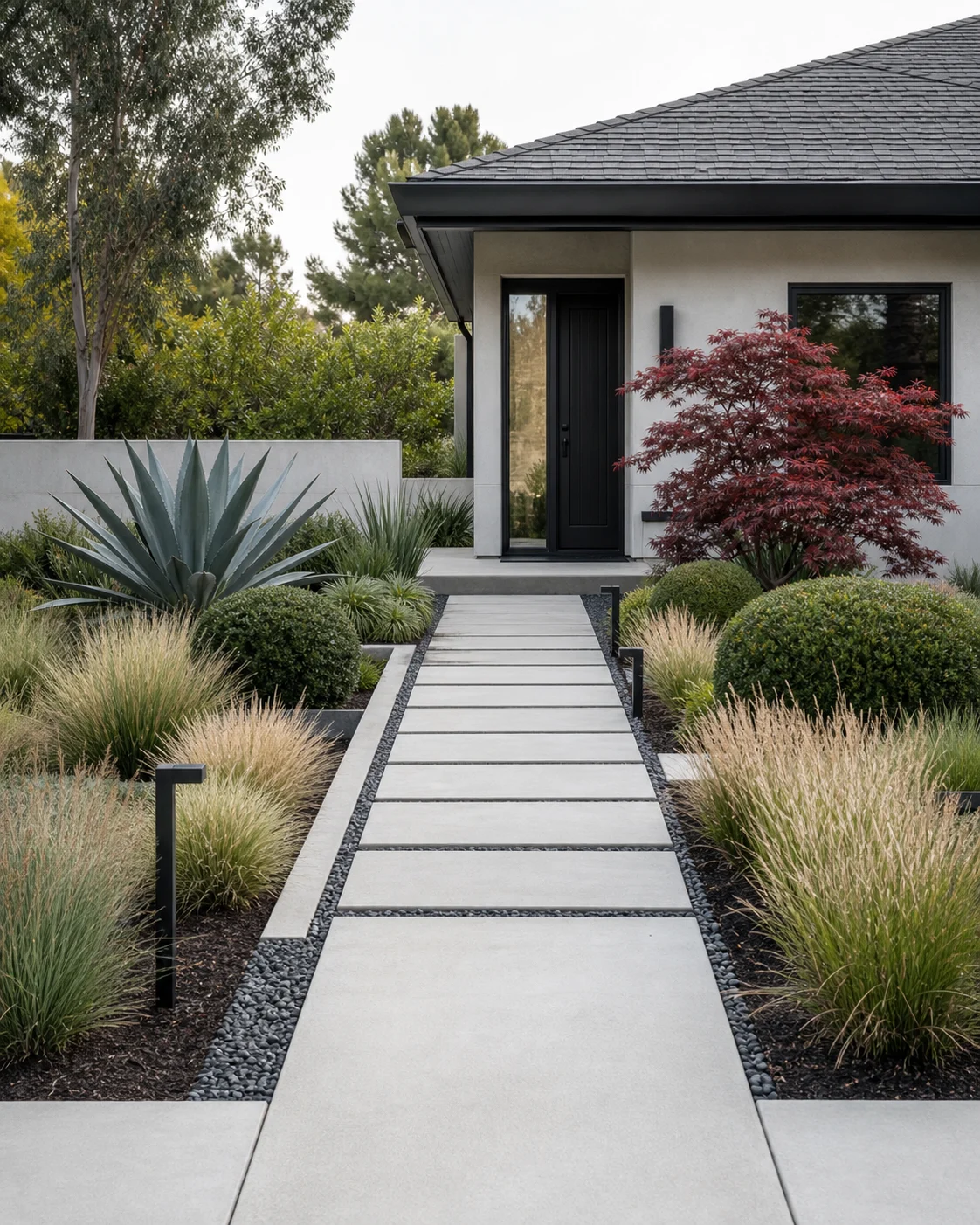
Modern: clear shapes and fewer competing details
Repeated plant forms and simple paving make the spaces between plants part of the design. If this appeals to you, try a smaller plant palette before replacing paths or paving. Modern planting can be soft and green; it doesn’t require gravel and spiky plants.
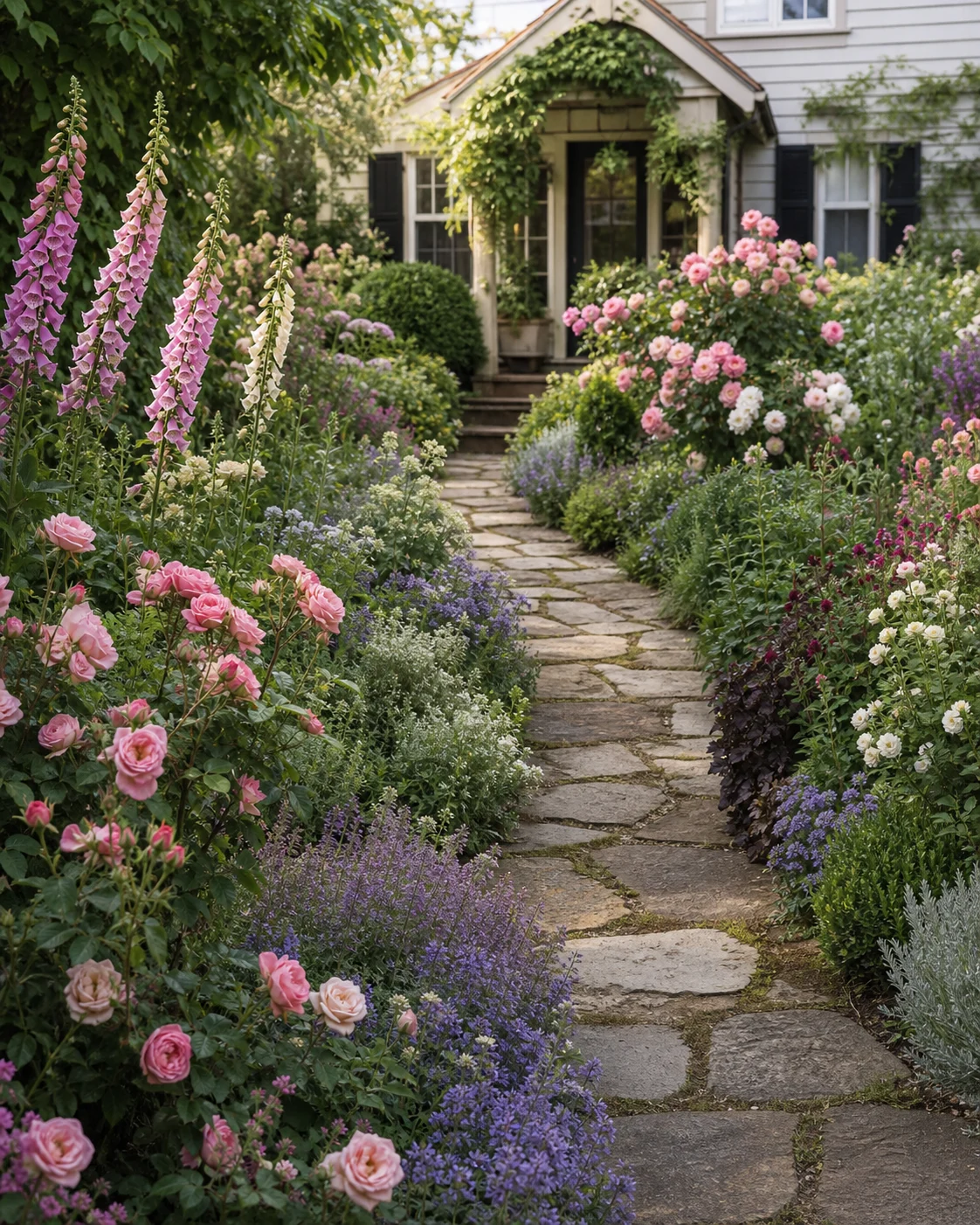
Cottage: flowers woven together
Layered flowers and softened edges give a garden a generous, intimate feel. Look for a clear path or repeated shrub underneath the abundance. That quiet structure is what keeps a flower-filled border from becoming a collection of unrelated plants.
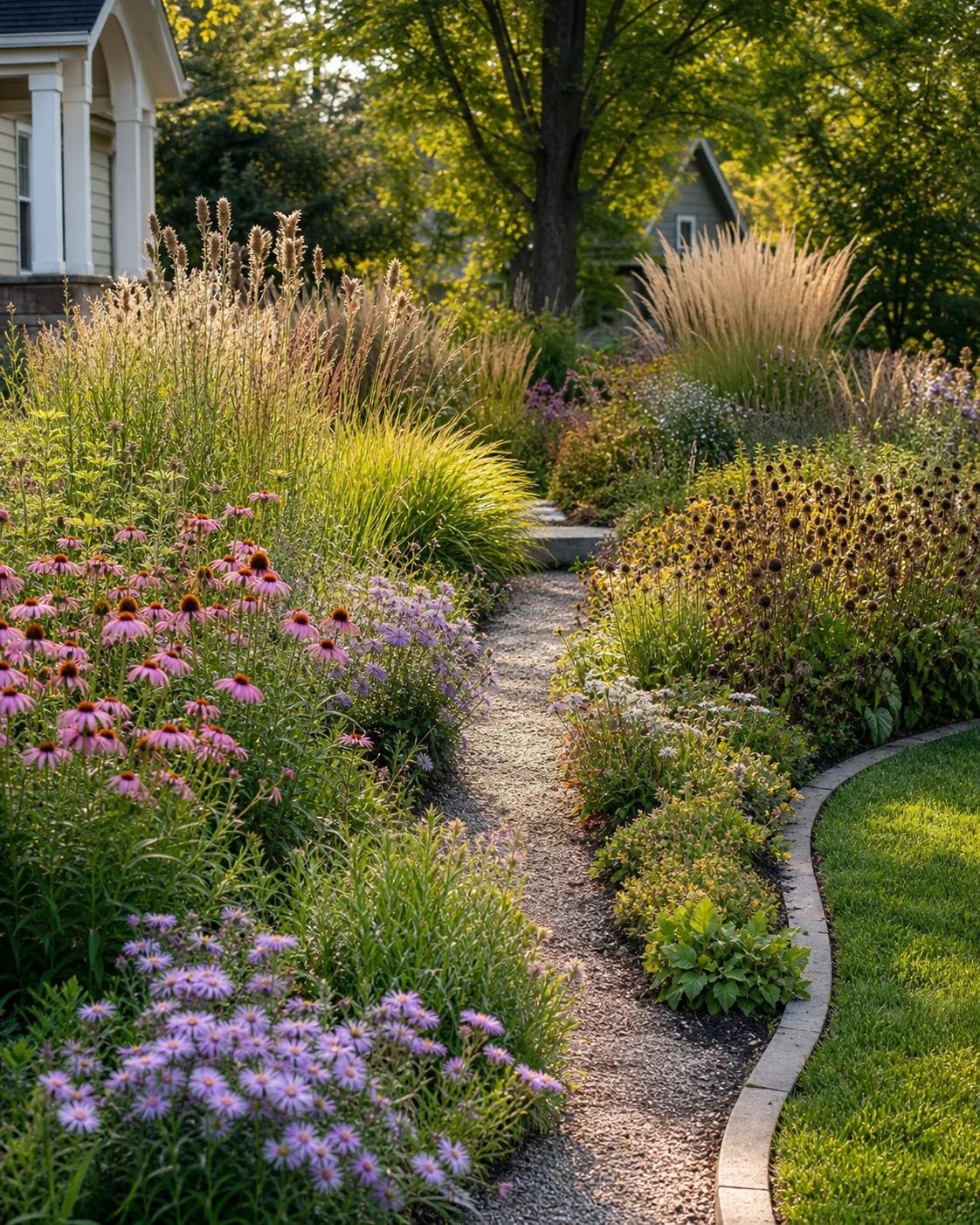
Naturalistic: movement and seasonal change
Grasses, perennials and seedheads create loose, changing groups. A neat edge can make that freedom feel deliberate beside a house. Choose this for the autumn and winter textures as well as the summer flowers.
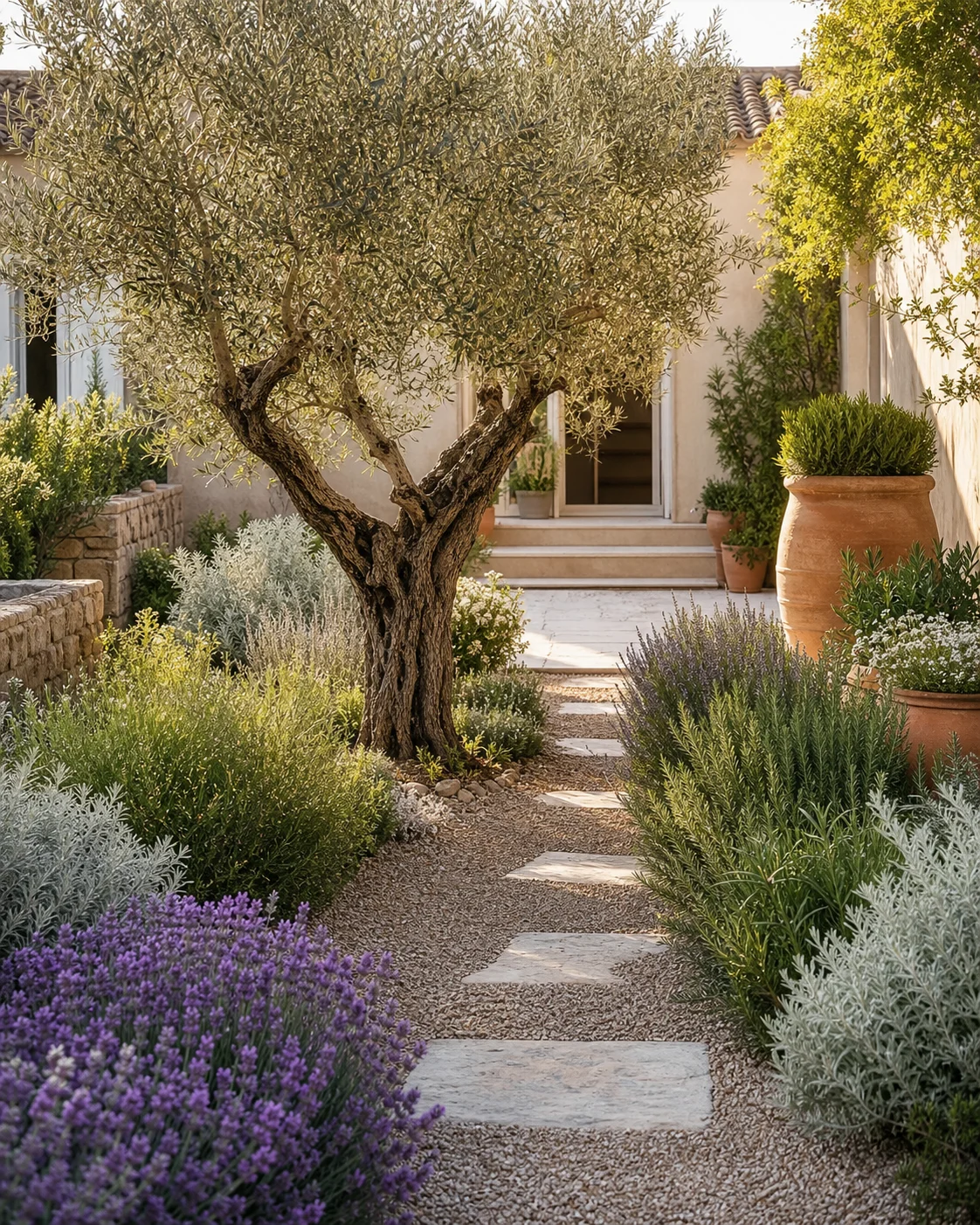
Mediterranean: warm surfaces and relaxed repetition
Pale stone, warm pots, silver foliage and aromatic planting often create the appeal. You may want the sheltered seat and repeated mounds more than a particular olive tree. Those features give you something to adapt when the original plants won’t suit your climate.
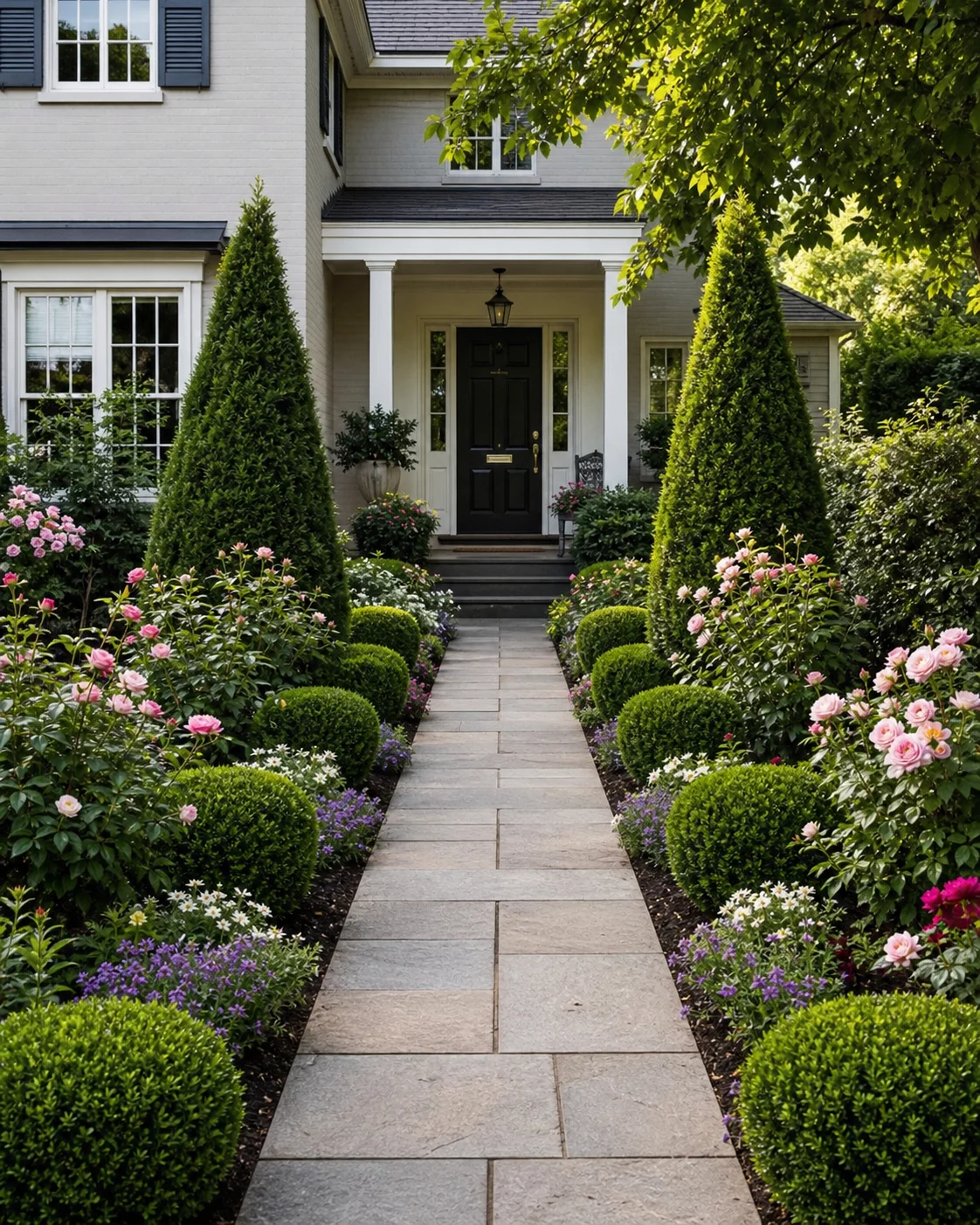
Formal: a strong sense of order
An obvious centerline, balanced sides and repeated shapes guide the eye. Formal and modern gardens can both be simple, but formal layouts often emphasize symmetry. You can keep that structure and let the flowers within it grow more loosely.
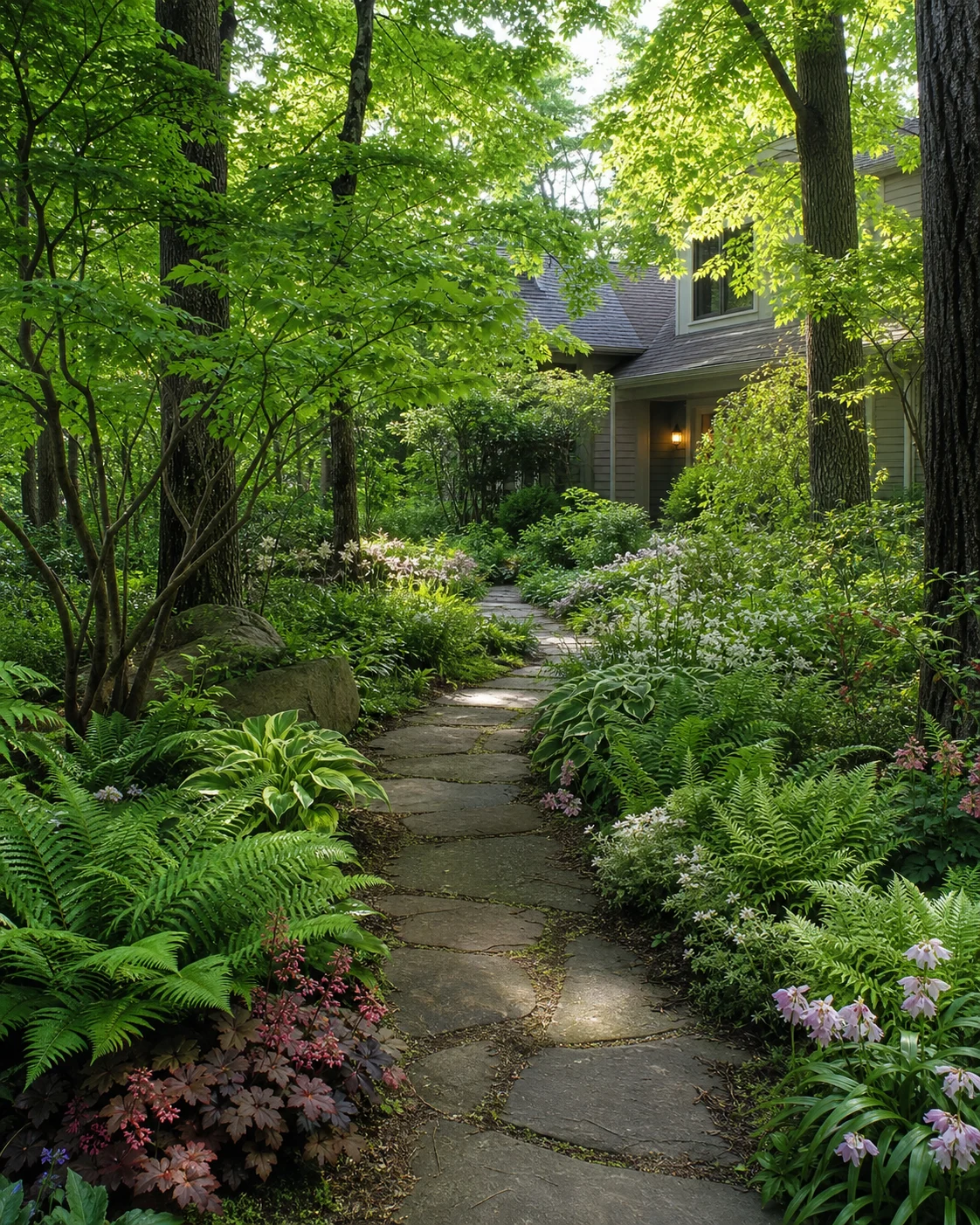
Woodland: a sheltered view through layers
Tree canopies, ferns and broad leaves create depth without relying on constant flowers. If you already have mature trees, this may work with what makes your yard special. Light, moisture and root space determine how much new planting fits beneath them.
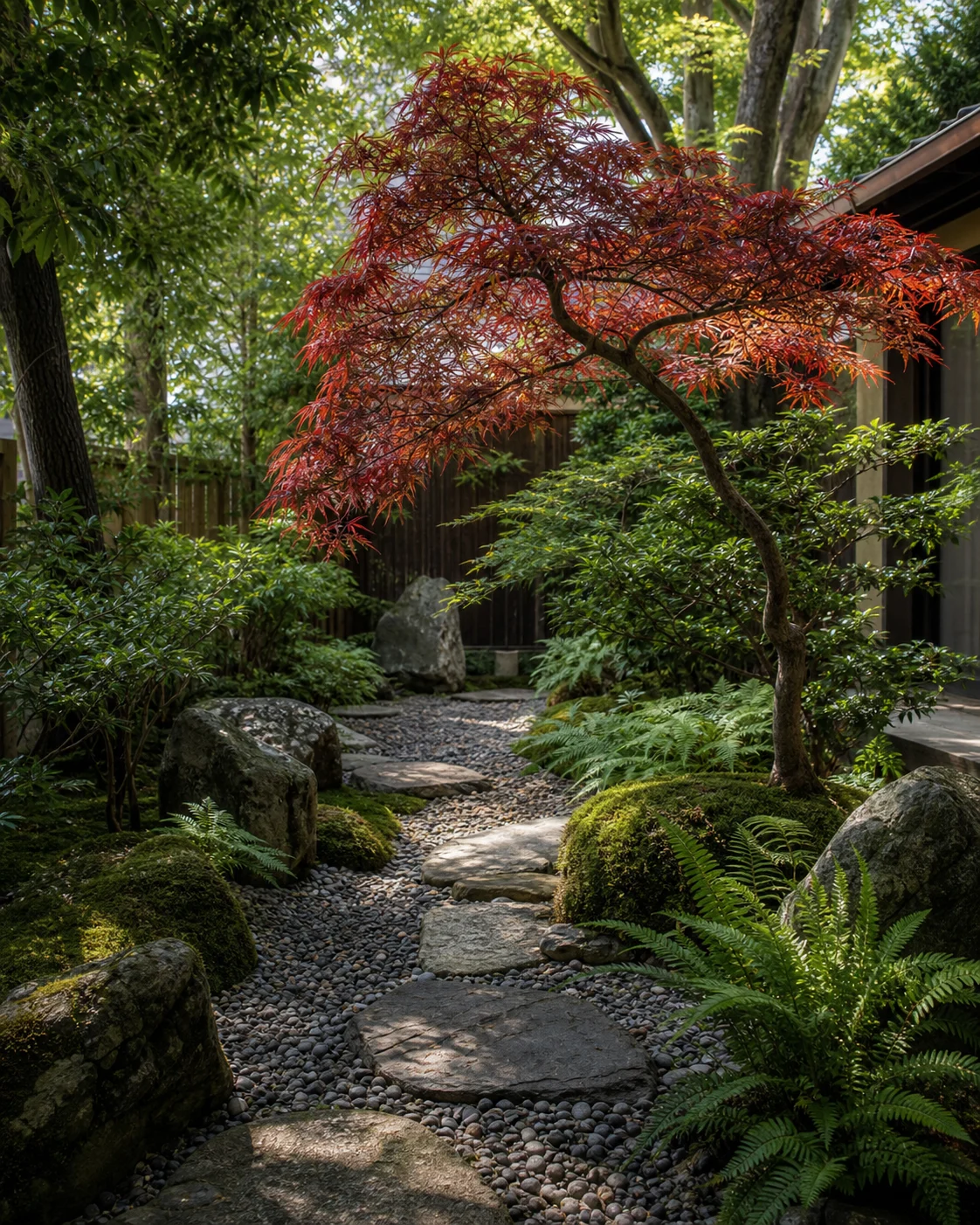
Japanese-inspired: space around a few focal points
A tree’s branching shape, a stone or a quiet ground layer can matter more than a crowded flower border. Notice what has been left open. Copying decorative objects without that balance rarely creates the same calm.
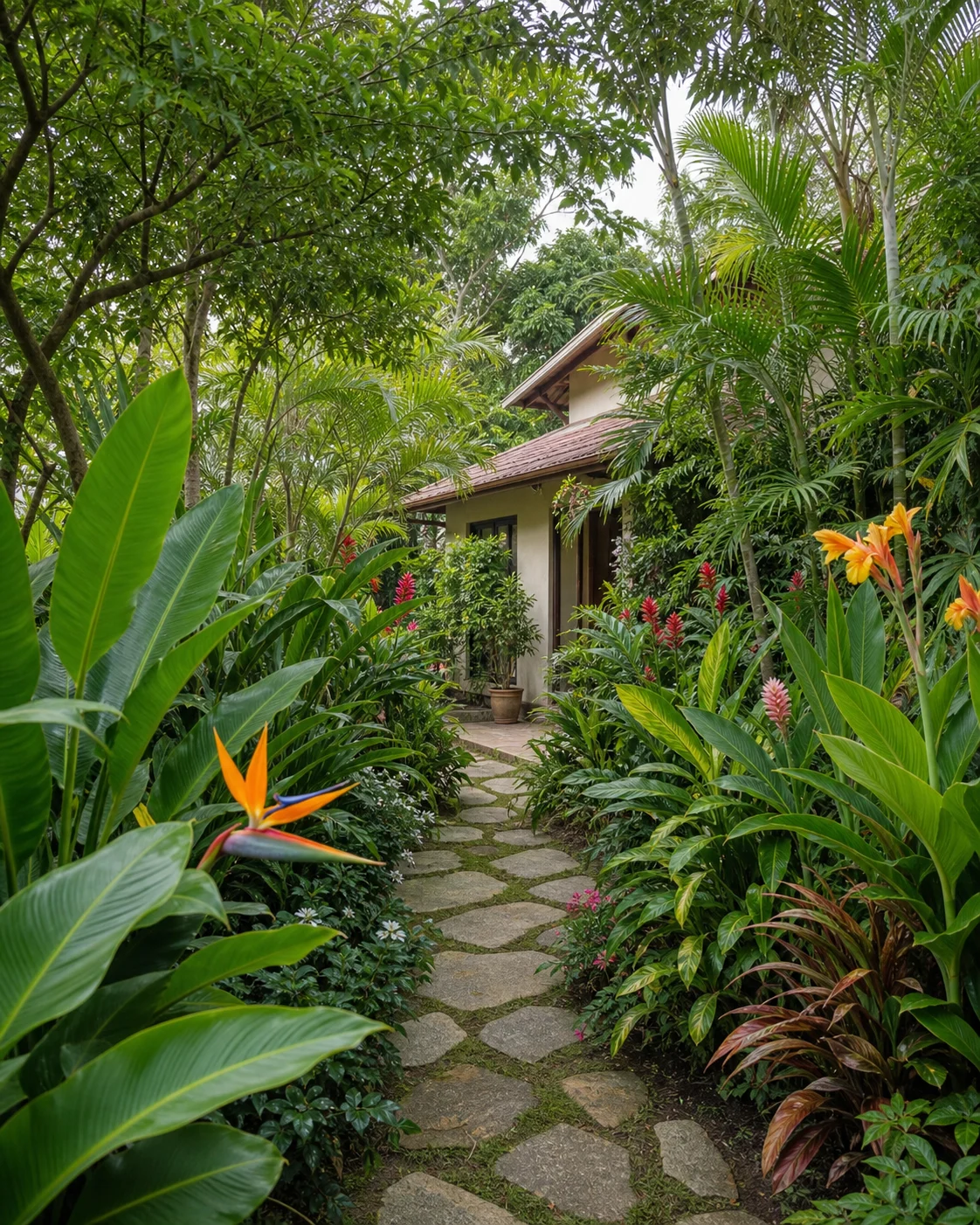
Tropical: bold leaves and enclosure
Large leaves, overlapping layers and strong silhouettes make a garden feel lush. In colder places, decide whether you want seasonal containers or a different palette that creates a similar leafy effect. The winter version deserves a place in the plan.
Sources: University of Florida IFAS Extension, NC State Extension
The same house can support very different planting
The house, path, lawn and bed outlines stay the same in these three examples. Only the planting changes. Compare the mood before deciding that a different style needs a new layout.
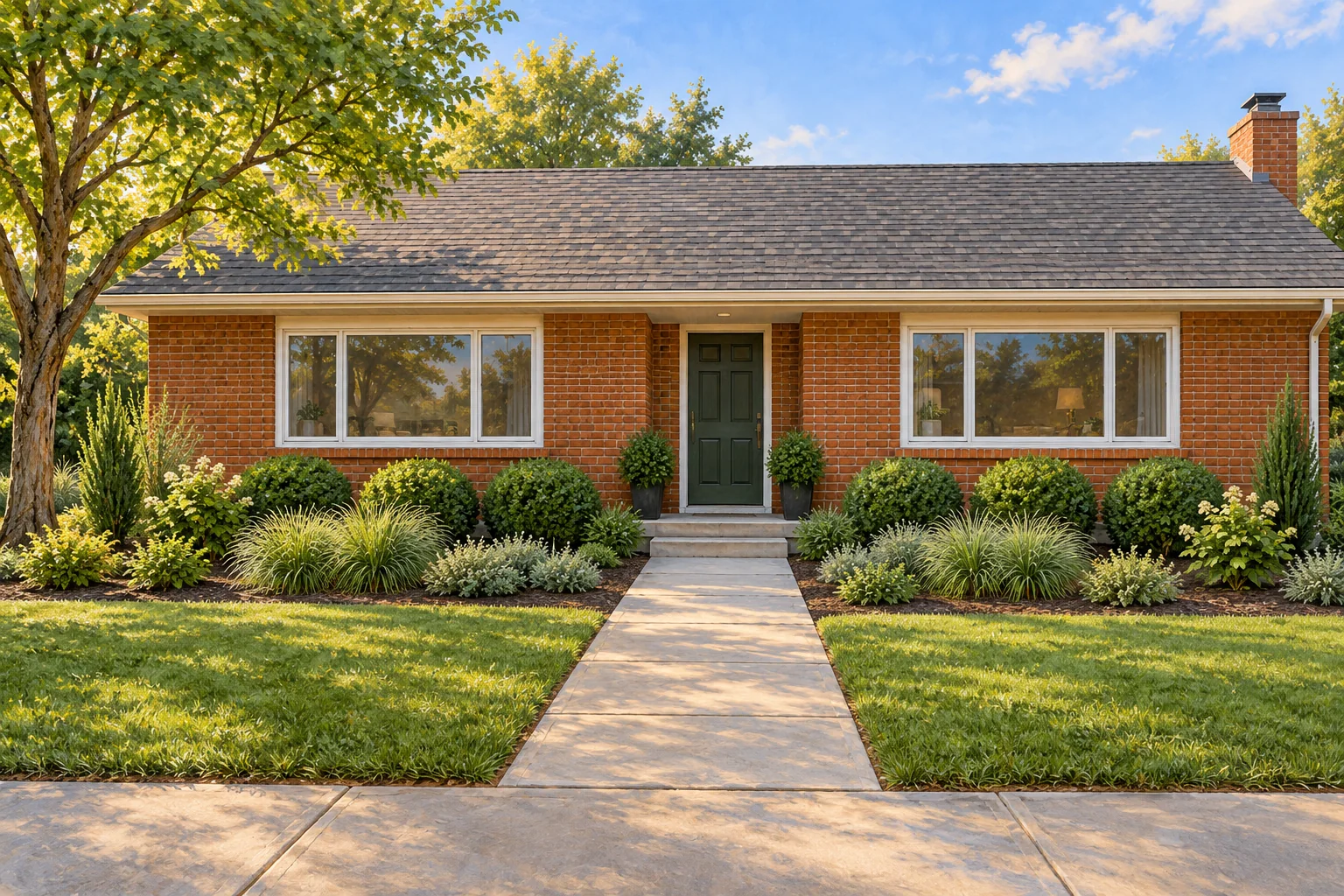
Calm and structured
Repeated rounded shrubs and lower fine foliage leave the brickwork and windows easy to see. Choose this style if you like a dependable outline and want flowers to be an accent. Naturally compact varieties can reduce the clipping needed to hold that shape.
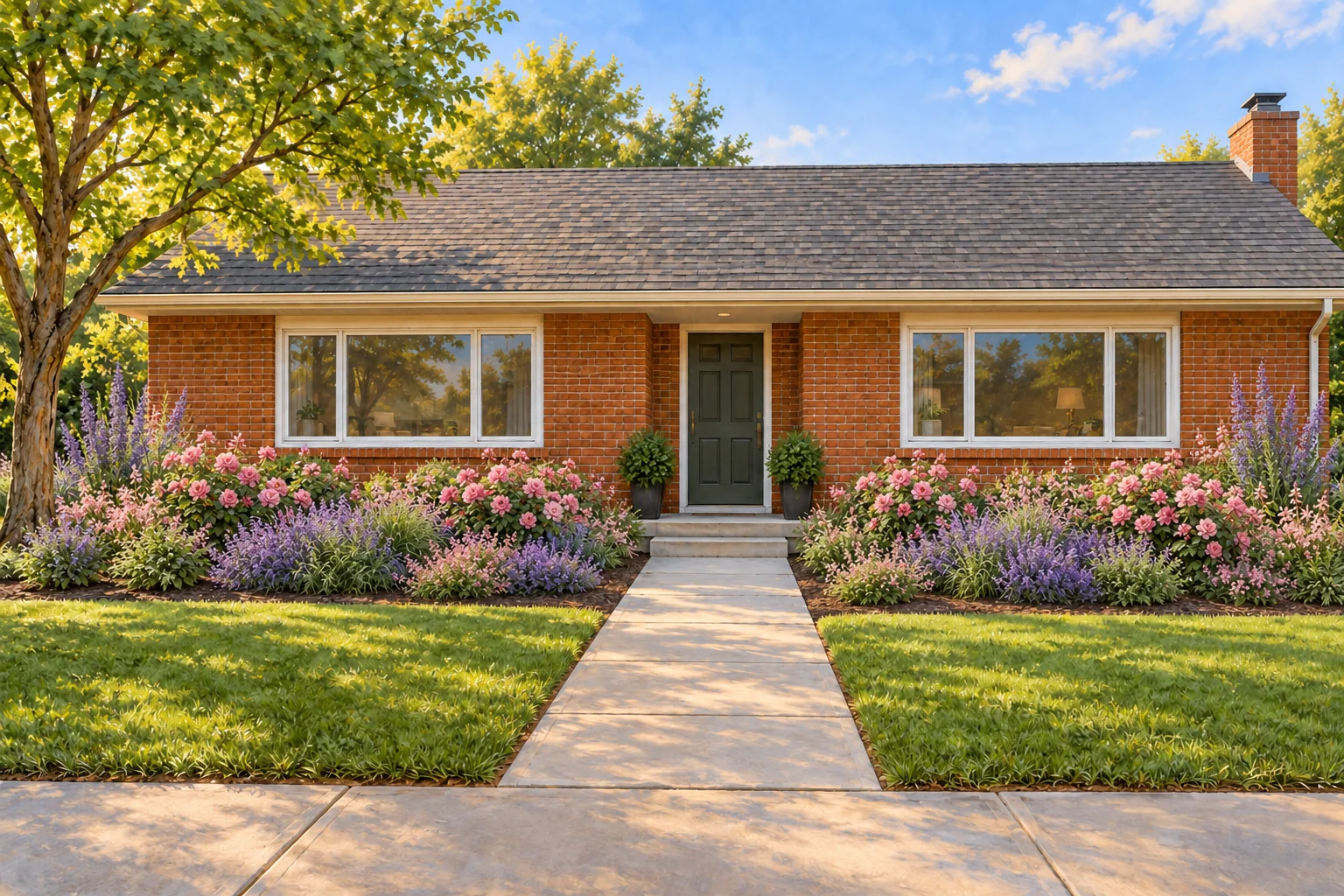
Flower-filled and softer
Pink flowering shrubs and purple perennials soften the same straight beds. The unchanged path still gives the front yard order. The flowering season brings more color, while foliage and the remaining shrubs carry the view between blooms.
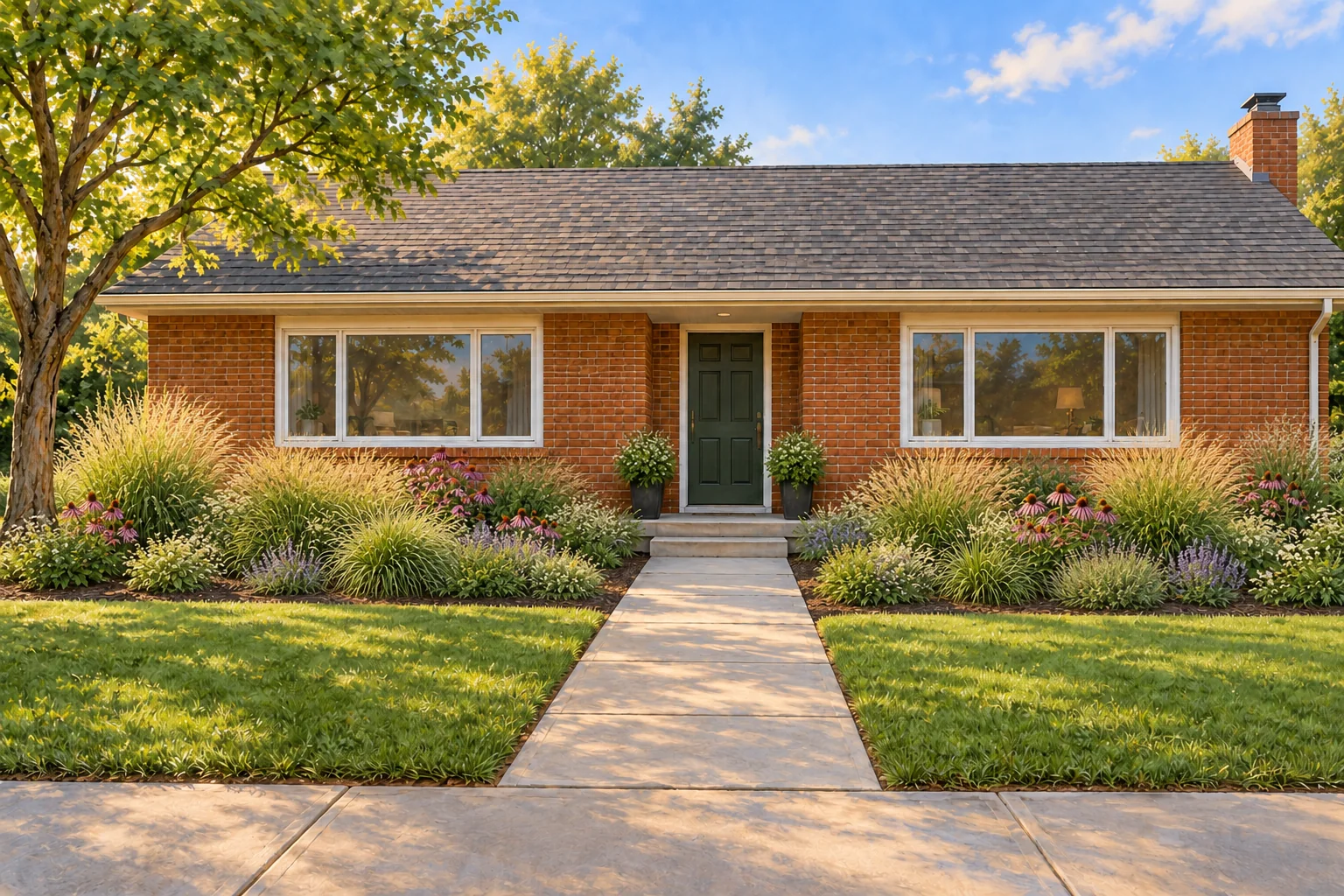
Loose and seasonal
Fine grasses and scattered perennial flowers change the texture more than the layout. Seedheads can extend the display, but the bed will look more open after seasonal cutback. Choose this because you enjoy that change, not because a summer photograph looks permanently full.
Sources: NC State Extension
Choose the layout and the planting mood separately
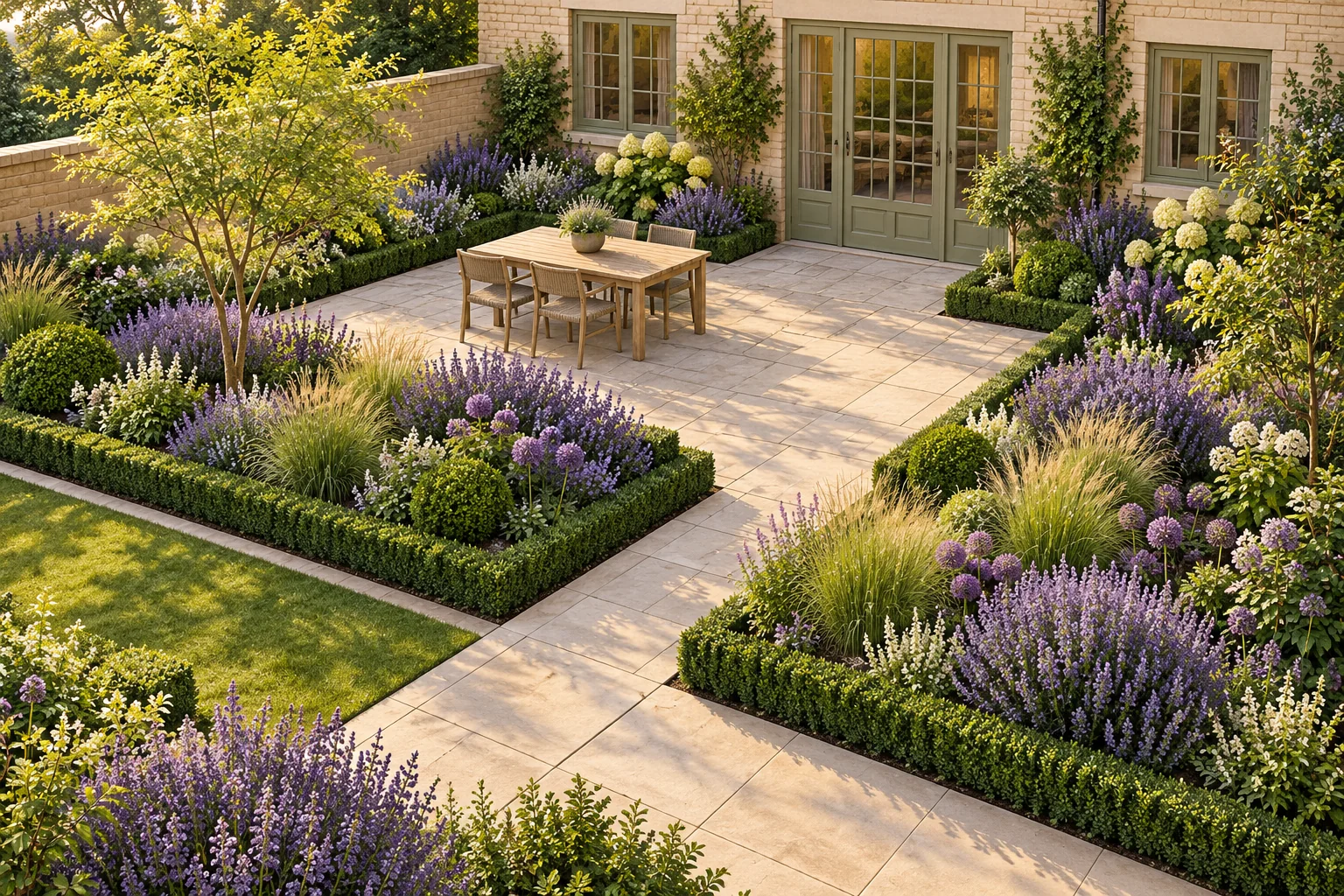
You may dislike a formal garden’s clipped hedges but love its clear paths. Or you may love cottage flowers without wanting a winding path through the lawn. Separate those preferences. Paths and bed edges organize the space; planting supplies much of its texture, color and seasonal change.
A formal layout and informal planting can work together. Repeating a material, plant shape or color helps different parts of the garden feel connected. The repeated feature does not have to be a plant that flowers all year: a path, low wall or evergreen group can do the steady work.3,1
Try describing an idea as “straight paths with loose flowers” or “warm stone with bold green leaves.” That is more useful than collecting several style names. If two ideas need incompatible watering or compete for the same small space, choose one for that bed and try the other in a separate area.
Let your house and yard suggest a starting point
Architecture gives you lines, materials and proportions to work with. It doesn’t dictate one historical garden style. The useful question is what the planting should reveal, soften or connect.
A low house with broad windows
Keep the main planting low enough to preserve the windows and repeat groups along the facade. Both soft grasses and more structured shrubs can work. Put a taller accent to one side rather than filling every available gap below the glass.
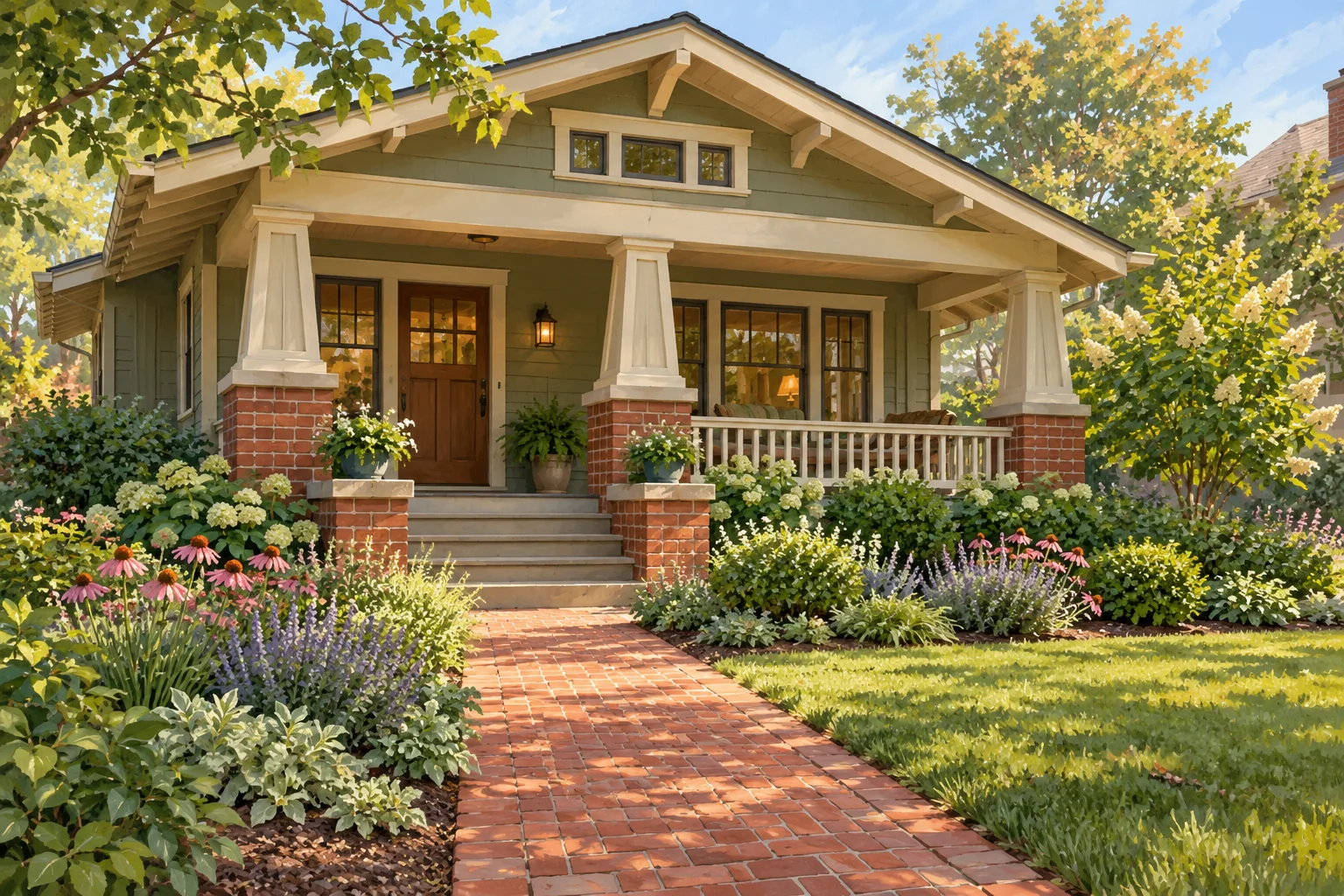
A house with a deep front porch
Keep the steps and porch piers visible, then use the deeper bed toward the yard for fuller planting. The shaded, rain-sheltered strip under the eaves can need different plants from the sunny outer edge.
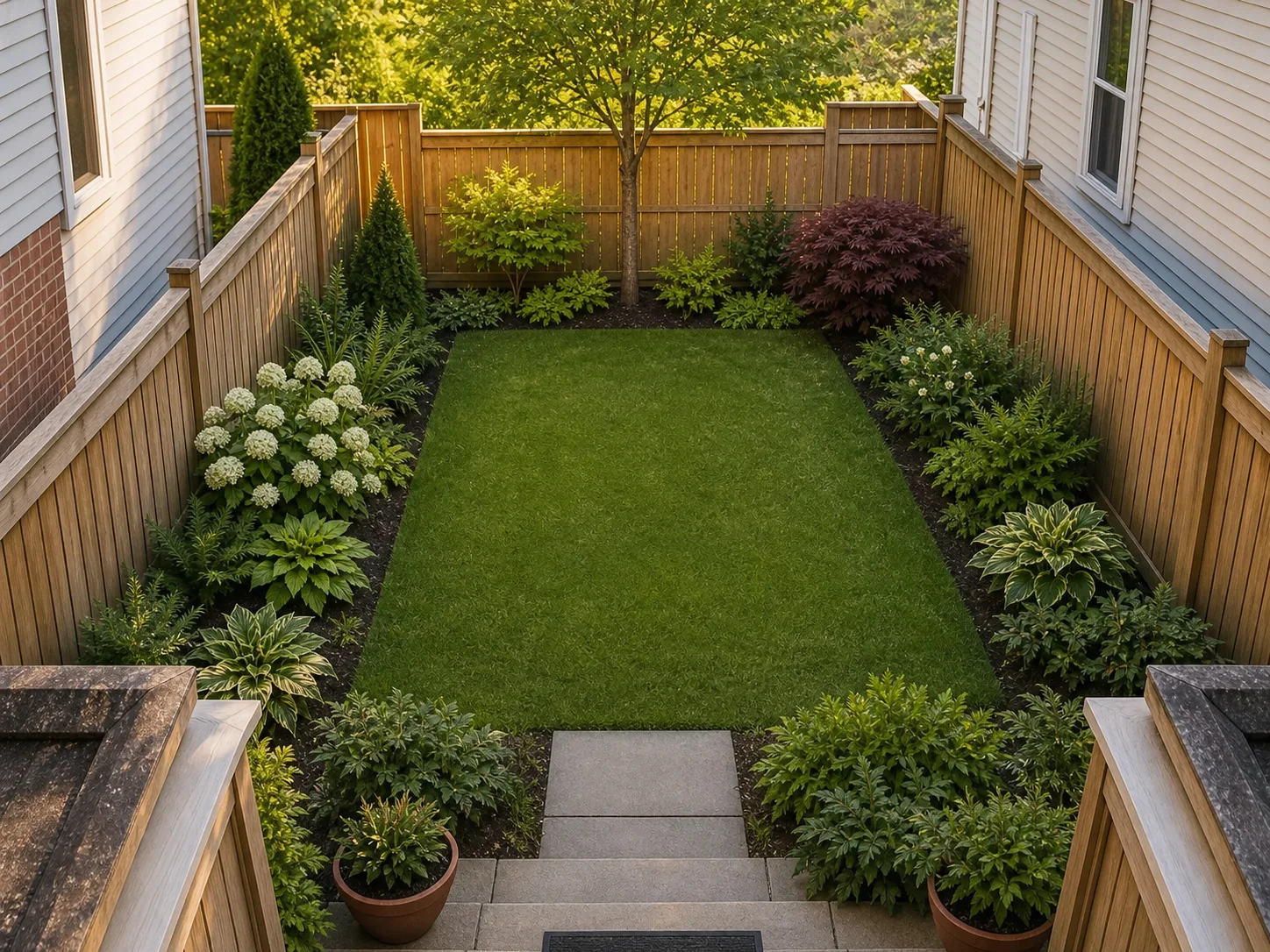
A small enclosed yard
Choose the place you want to sit before filling the center with beds. Planting around the edges can create a room; a clear route makes it usable. You can give that same room cottage flowers, restrained greenery or a leafy woodland mood.
Sources: NC State Extension, University of Florida IFAS Extension
Borrow the effect, then change the plants for your conditions
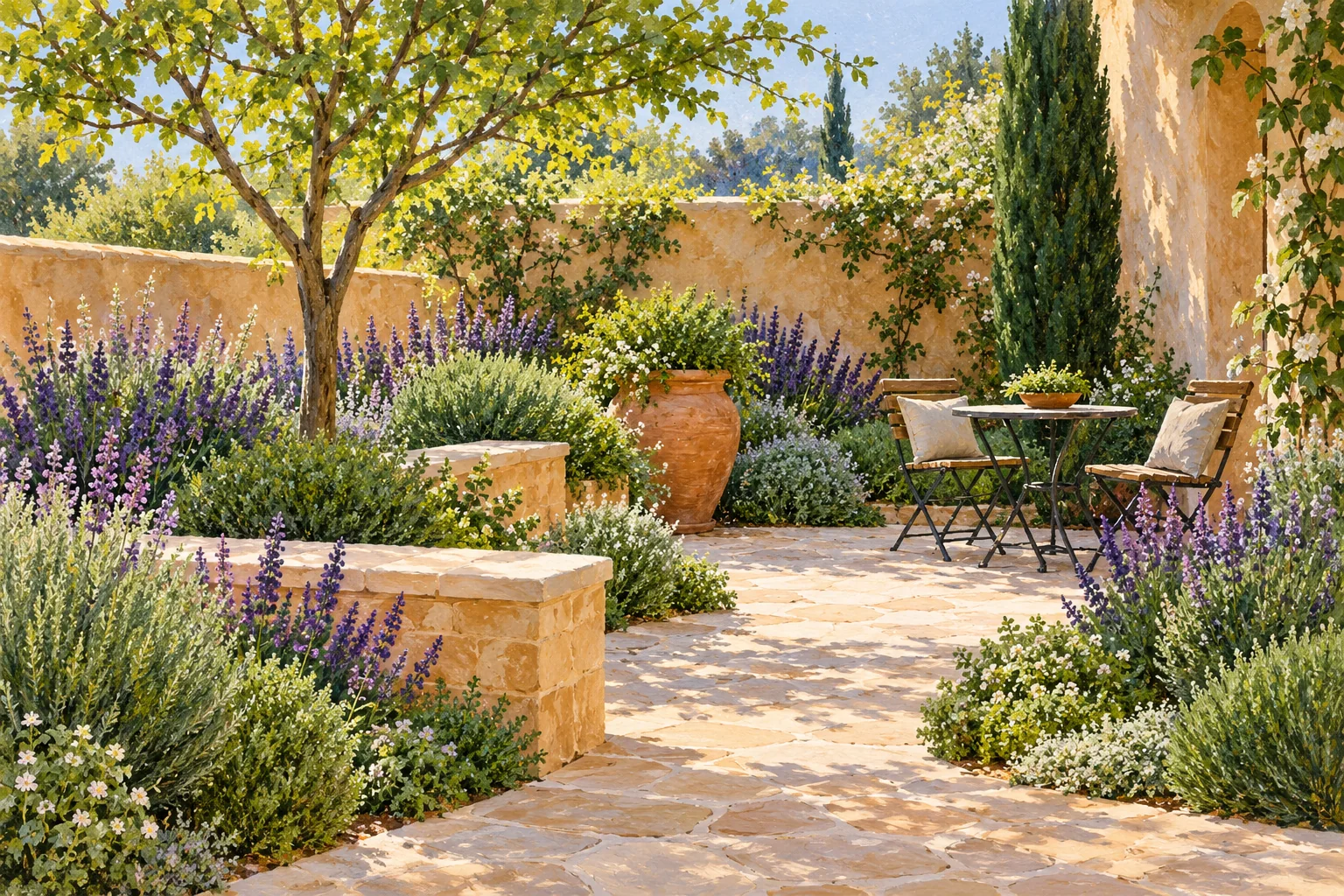
A garden photograph shows one place at one moment. A lavender courtyard may owe its appearance to dry summers and free-draining soil; a fern border may rely on sheltered shade. Keep the quality you like—silver foliage, purple accents, broad leaves or an airy canopy—then look for suitable ways to create it locally.
Sometimes the site offers a better idea than the original photograph. A shaded yard with established trees may become a beautiful woodland garden without removing the canopy to imitate a sunny meadow. A hot, exposed front bed can suit an open, lower-water composition instead of a thirsty leafy enclosure.
Your hardiness zone helps check winter cold, but it doesn’t tell you the summer heat, soil moisture or light beside your house. Our regional planting guides and climate examples in the cottage and Mediterranean guides help translate a look into a more useful shortlist.
Choose the jobs you're willing to repeat
Style names don't tell you the workload. Look at what keeps the particular garden looking the way it does, especially during its busiest season.
Crisp clipped shapes
Recurring work to consider: Pruning to preserve a precise outline, plus collecting the clippings.
A way to keep the effect with less work: Repeat naturally compact plants and use a clear bed edge for order.
A long season of flowers
Recurring work to consider: Some plants need staking, removing faded flowers or dividing crowded clumps; others need very little of it.
A way to keep the effect with less work: Choose a smaller repeated palette and let foliage carry the quieter weeks.
Loose grasses and seedheads
Recurring work to consider: Seasonal cutback, weeding and watching for plants that spread or self-seed.
A way to keep the effect with less work: Try one contained border first and retain an easy-to-maintain route beside it.
Sources: NC State Extension, University of Florida IFAS Extension
Choose a garden you will enjoy between its best photographs
Picture the garden between its best seasons. What remains when the roses finish, grasses are cut back or a deciduous tree loses its leaves? You don’t need every corner to perform all year, but the view from your front door or favorite chair should still give you something you like.
Then picture your everyday use: carrying groceries along the path, sitting in shade, keeping a patch of lawn for play or screening a neighbor’s window. Style should improve those moments. If an inspiration image removes the only useful open space, borrow its planting at the edge instead of copying the whole arrangement.
Finally, distinguish the mature garden from planting day. Dense inspiration photos can tempt you to buy too many permanent plants. Mark mature widths first, then use a tidy surface or a few seasonal pots while the main planting fills out.
Turn your preferences into a brief you can use
Choose two or three features you want to repeat and one part of the yard to try them in. A short brief should describe the view you want and the things the garden still needs to do.
Cottage flowers with a clear entrance
For a sunny brick-house front bed, keep the straight path and windows visible while giving the planting a softer mood.
- 1
Keep the parts that already work
Retain the straight path and repeat the brick or its warm color in a small detail. The permanent layout can provide the order without adding clipped hedges.
- 2
Choose the planting effect
Use repeated flowering groups, a few upright accents and lower foliage near the path. Pick the species for your climate and soil, and check what remains attractive between blooms.
- 3
Write down the limits
Keep the door and path clear, preserve plants you value, and choose varieties whose mature widths fit. Name the chores you want to avoid, rather than asking for ‘low maintenance’ without saying what that means.
Frequently asked questions
Does my garden have to match my house style?
It should feel connected to the house, but it doesn't have to copy its historical style. Repeated materials, colors, lines and proportions can link a contemporary garden to an older house, or soften a modern house with informal planting.
Can I mix garden styles?
Yes. A clear layout can hold looser planting, and different areas can have different moods. Repeat a material, plant form or color so the garden feels connected. Keep plant growing conditions compatible within each bed.
Can I have a cottage or Mediterranean garden outside its usual climate?
You can adapt many of the design qualities: repetition, color, shape, materials and the relationship between planting and paths. Change the plants for your conditions. A cold-winter or humid-summer adaptation may have a different winter appearance from the original inspiration.
Which garden style is easiest to maintain?
The easiest version uses plants that fit the site and mature space, in a layout you can reach and care for. Look at the actual pruning, watering, weeding and seasonal tasks. A style name alone can't tell you how much work the garden will need.
 Gardenful
See the style you love in the yard you have.
Start with a yard photo and the features you want to keep. Explore a planting design in Gardenful, with suggested plants and quantities to take to the nursery.
Gardenful for iPhone
Download the app free and start with a photo of your yard.

Sources(4)
- [1]Landscape Design: Finding Inspiration for a Design Theme
University of Florida IFAS Extensionhttps://ask.ifas.ufl.edu/publication/EP430
- [2]Landscape Design: Ten Important Things to Consider
University of Florida IFAS Extensionhttps://ask.ifas.ufl.edu/publication/EP375
- [3]
- [4]How to Use the Maps
USDA Agricultural Research Servicehttps://planthardiness.ars.usda.gov/pages/how-to-use-the-maps