Yard-type landscape design
Landscape design by yard type: 6 ways to work with a difficult yard
The short answer
Small, shady, sloped or oddly shaped: a difficult yard needs a plan for the thing that makes it tricky. A narrow side yard may need planting in the wider pockets; a shady bed may need foliage rather than more flowers. Find your closest match below and start with the change that makes that space more useful.
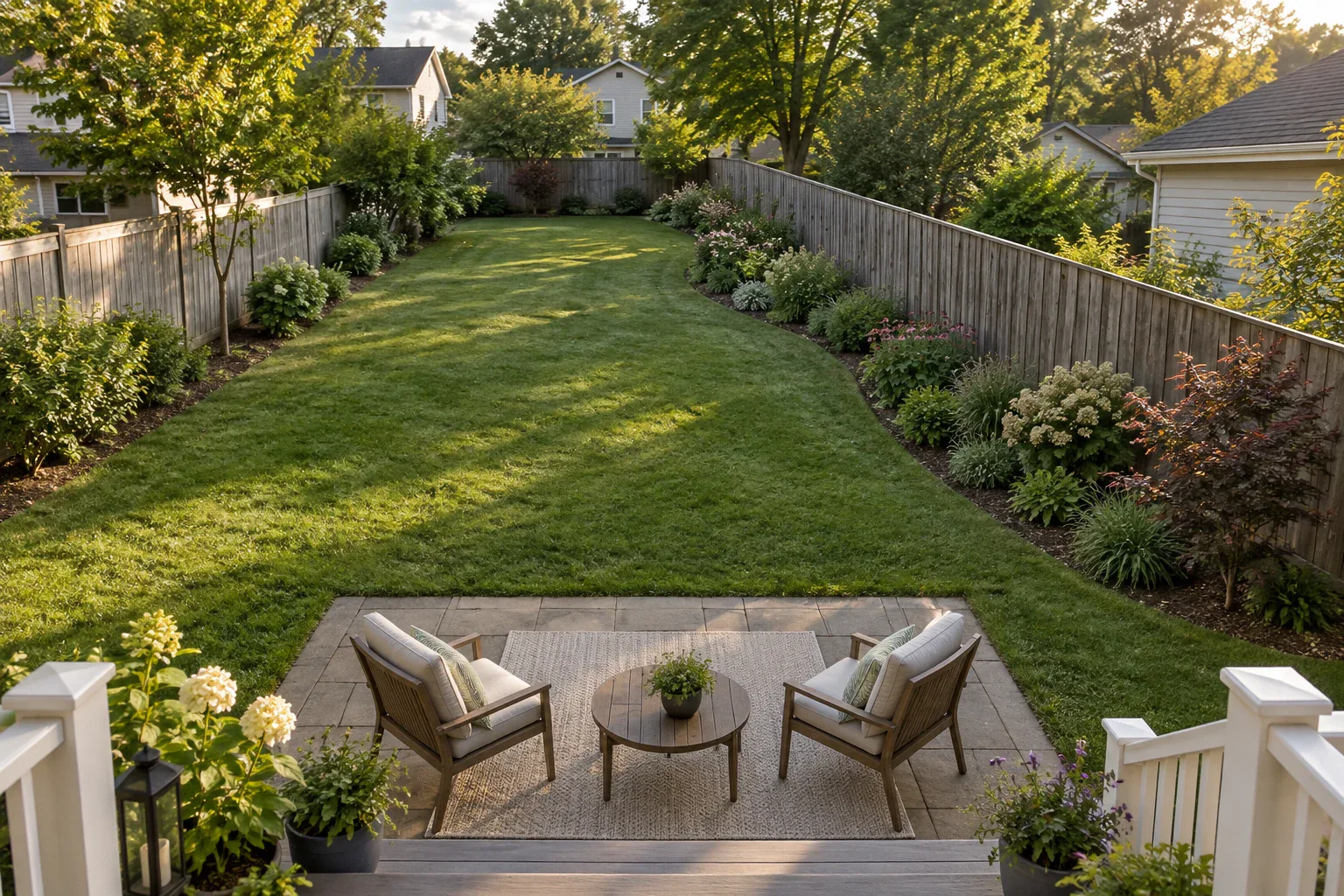
Six yard types and the first design move
Find the example closest to your yard. Each one gives you a practical change to try and the main thing to check before planting.
Small yard
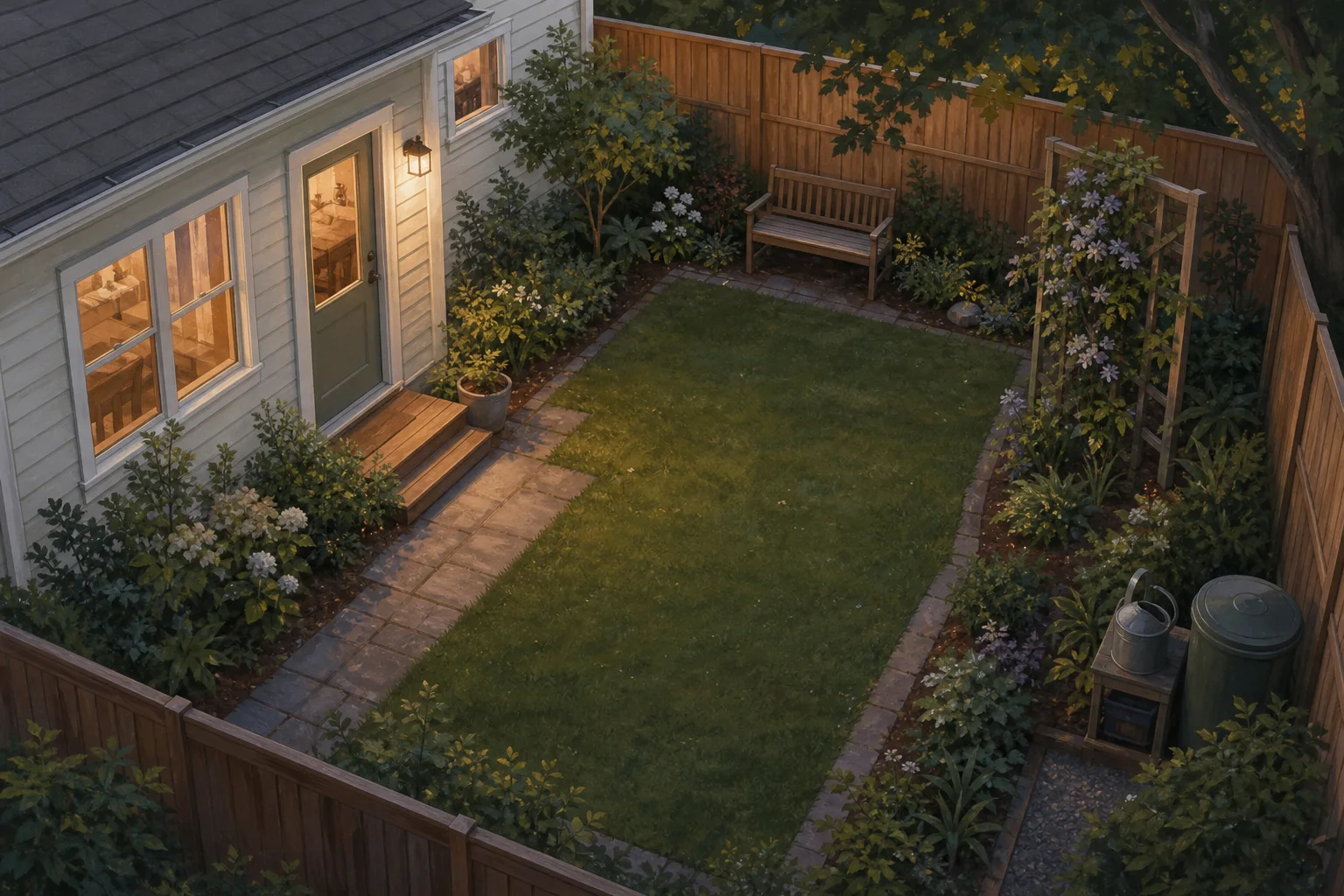
- Start by: Mark out one seating area and the route to it.
- Try this: Try the actual chair or table outside before buying more. Fewer objects and repeated planting can leave more usable room than many tiny beds.
- Check first: Mature size, privacy, views, door and gate access, and whether the open space is still useful.
Shady yard
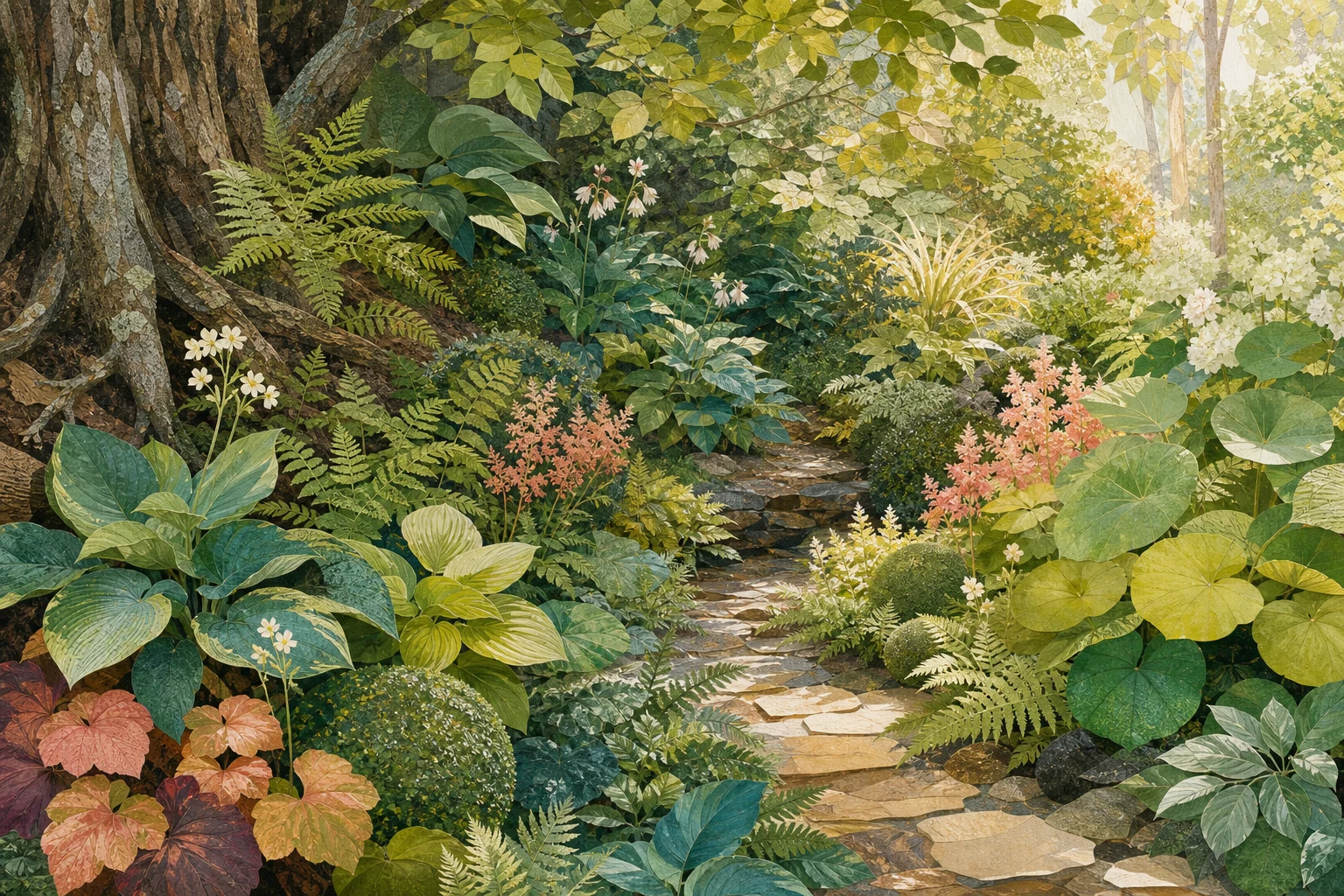
- Start by: Separate dry shade from damp shade.
- Try this: A shaded bed under thirsty tree roots is different from a moist woodland corner. Observe moisture as well as light; use foliage texture to add interest without relying on flowers alone.
- Check first: Hours of sun, root competition, soil moisture, drainage, and plant tolerance.
Sloped yard
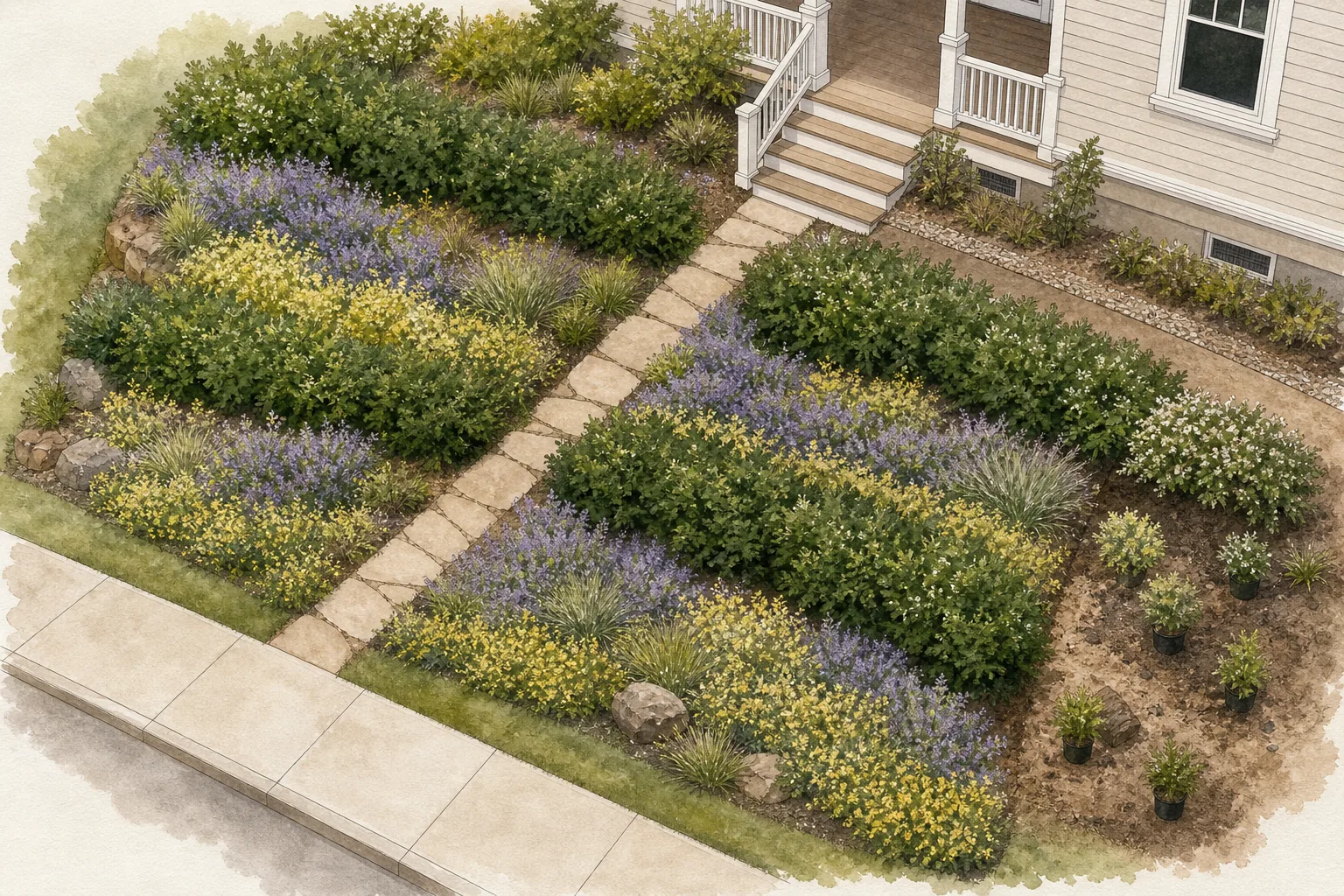
- Start by: Watch where water runs and check how you'll move across the slope.
- Try this: For a mild, stable slope, planting may be part of the solution. Retaining walls, regrading or persistent erosion need site-specific advice; don't choose a terrace from a picture alone.
- Check first: Drainage, soil movement, retaining needs, safe access, utilities, and local technical requirements.
Narrow side yard
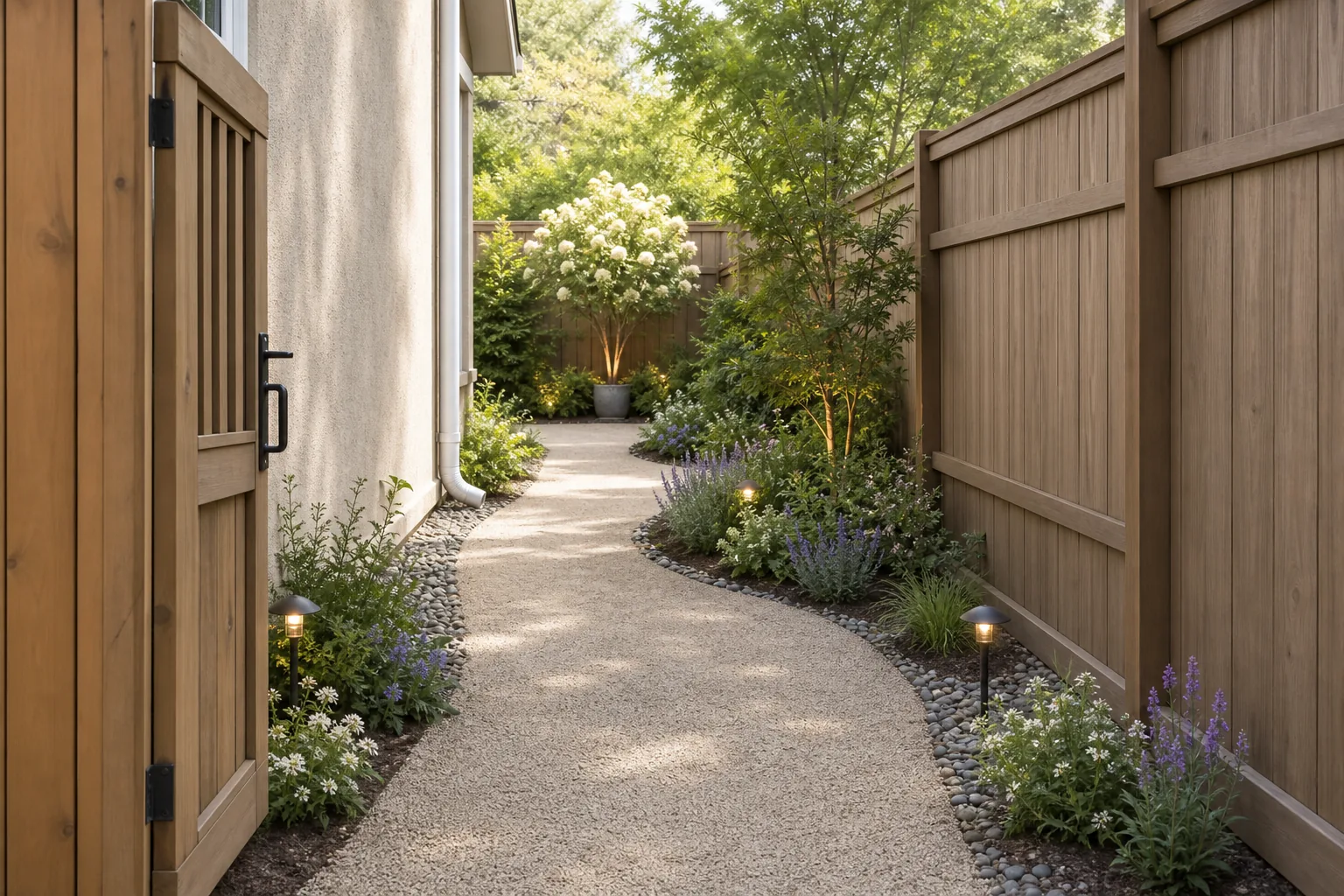
- Start by: Keep enough room to walk through and move bins.
- Try this: Put planting in the wider pockets along one side. Test the route with bins, a hose or whatever you need to move through it, not just an empty-handed walk.
- Check first: Minimum clear width, gates, hose and maintenance access, windows, and utility equipment.
Dry or hot yard
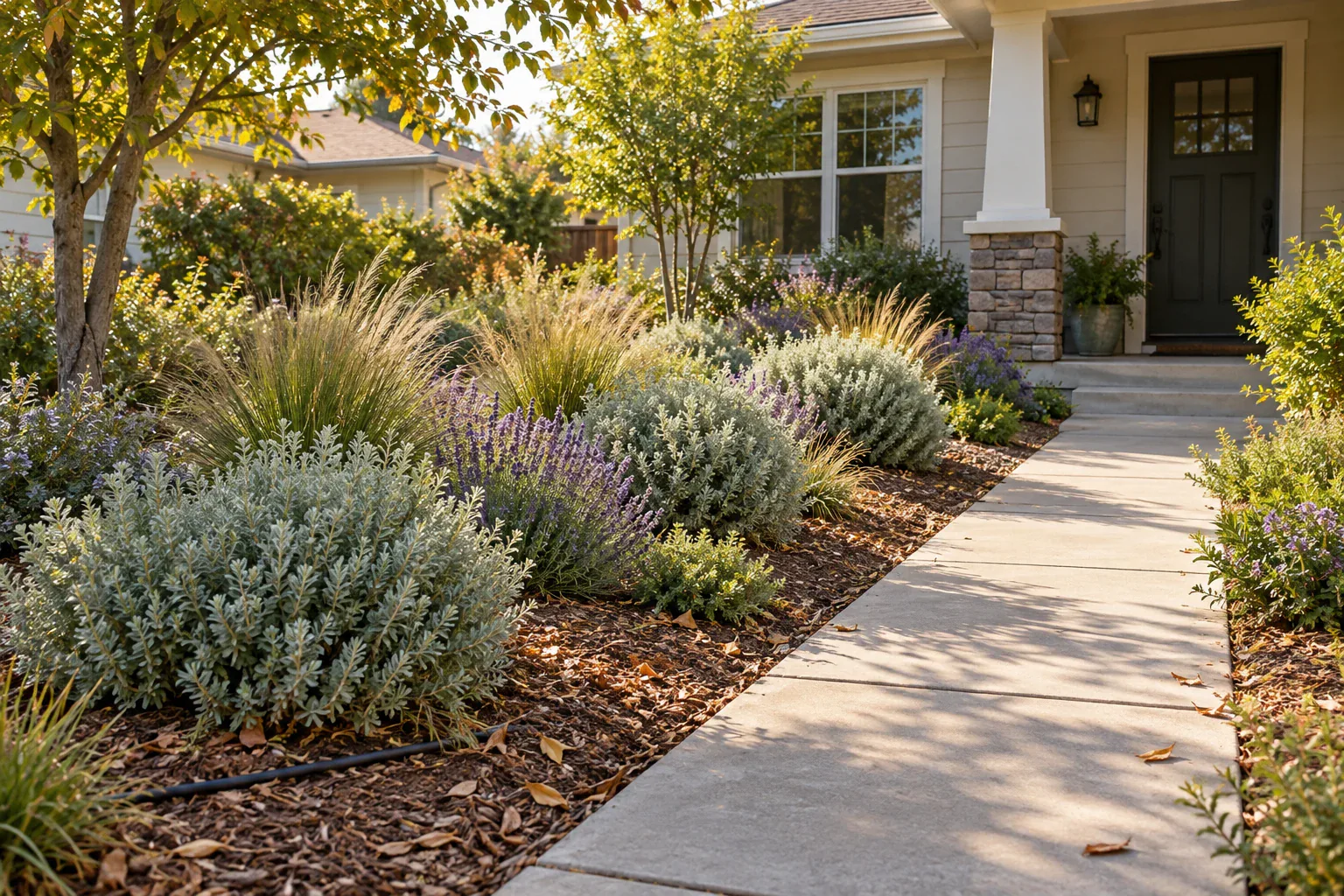
- Start by: Group plants by water need and protect the soil.
- Try this: A low-water approach still needs establishment watering, the right plant palette, and realistic irrigation.
- Check first: Sun, reflected heat, soil, drainage, water access, local plant fit, and seasonal watering.
Irregular or corner yard
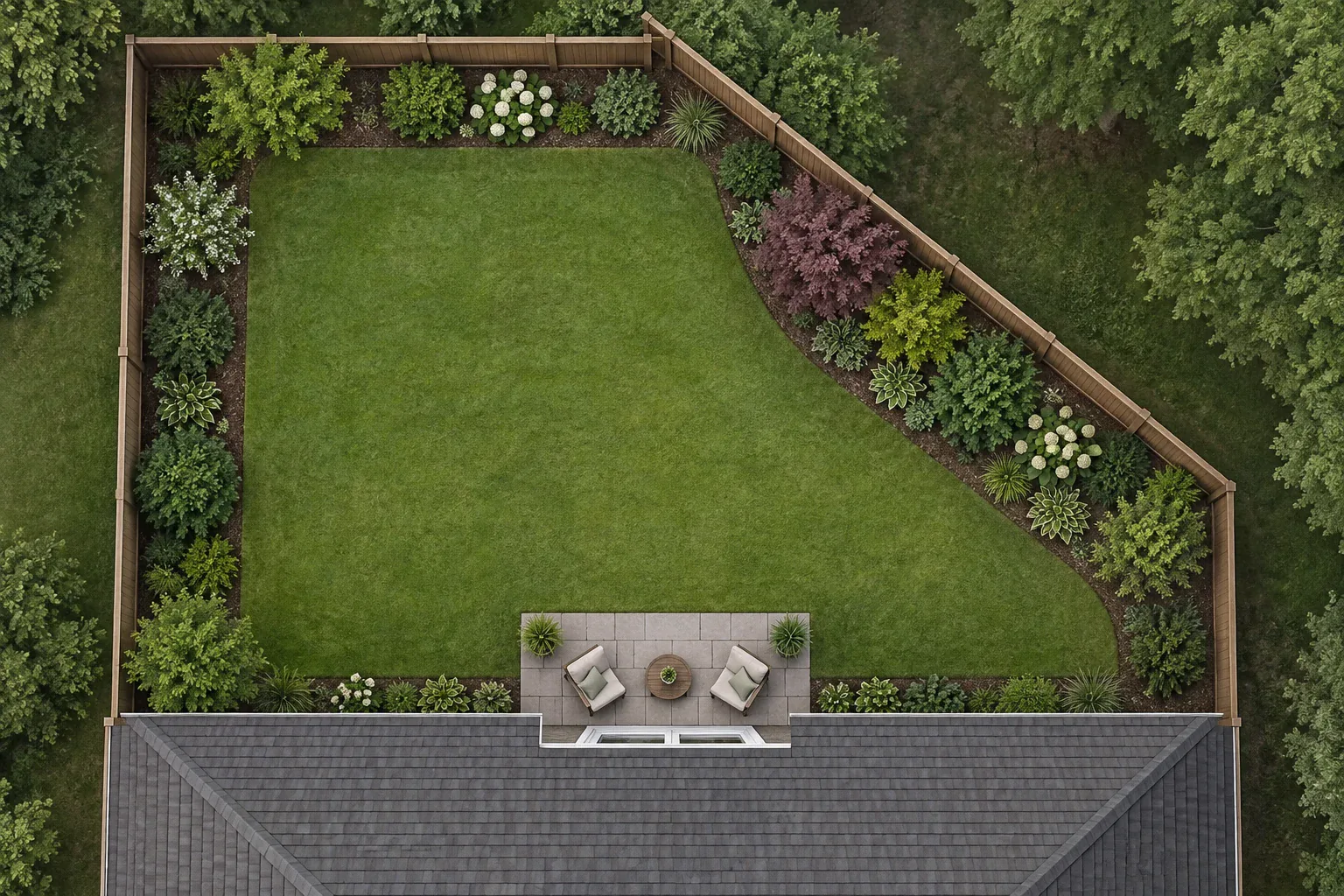
- Start by: Give the patio or lawn a simple shape.
- Try this: Align a small patio with the house and let a deeper planted bed fill an awkward angle. Check the actual property boundary first; a corner lot may also need clear street sightlines.
- Check first: Property edges, views, easements, access, runoff, and the relationship to neighboring spaces.
Sources: University of Maryland Extension, University of Florida IFAS Extension, University of Florida IFAS Extension, US EPA WaterSense, Call811.com, University of Maryland Extension
Describe what's difficult about your yard
Be specific: 'the side passage is too narrow for a bed' is easier to plan around than 'the yard feels awkward.' If several problems overlap, deal with water and safe access before the decorative choices.
Name the problem: a narrow passage, slope, shade, wet soil, intense sun or awkward boundary. Then say what you want to do there, such as sit, play, grow food or walk through.3,2
A base map makes the constraint visible. Record the house, paths, fences, utilities, existing trees, grade changes, drainage clues, and the dimensions that will change plant choice or access.4
Do not let a generated visual smooth away the difficult part. If the slope, shade, wet pocket, or narrow route disappears from the image, keep it in the written brief and test the idea against the real site.4,5,3
Choose one next test for your yard type
Do not solve the whole property in one pass. Pick the test that tells you whether the approach will work.
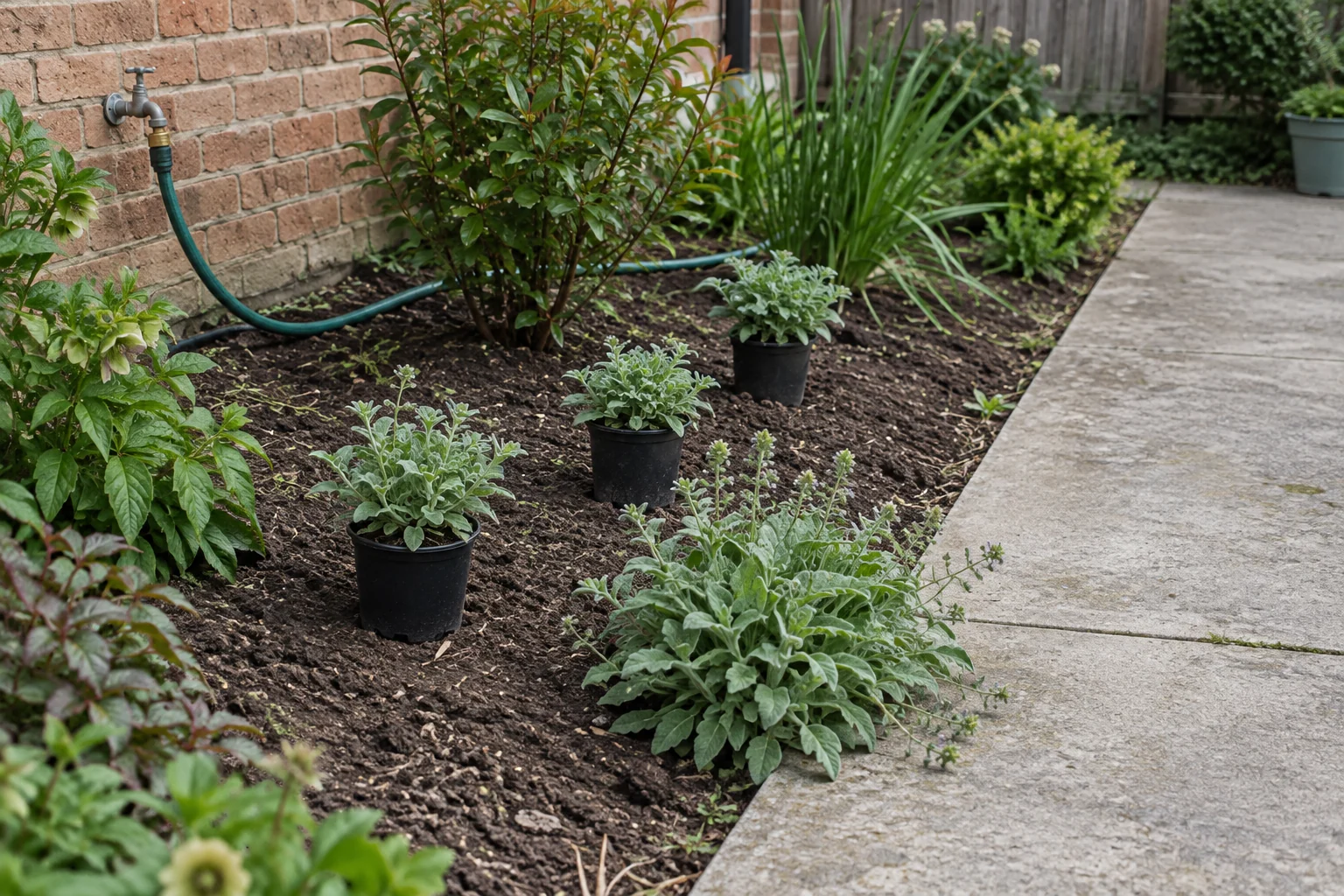
Test scale in a small yard
Is there still room to use the space?
Mark the mature footprint of the main tree, shrub, seat, or path before you buy. A paper or tape outline can reveal whether the idea leaves enough room.
Test light in a shady yard
What will really grow here?
Observe the target area at different times and seasons, then group plants by the actual light and moisture pocket rather than the label “shade.”
Test water in a sloped or dry yard
Can you water new plants without worsening erosion?
Watch where water moves, where soil settles, and how far irrigation or a hose reaches before choosing the planting arrangement.
Test circulation in a narrow or irregular yard
Can you still get bins and tools through?
Walk the route with tools, bins, gates, and furniture in mind. Keep the useful width visible in the plan.
Sources: University of Florida IFAS Extension, University of Florida IFAS Extension, US EPA WaterSense, University of Maryland Extension
Build a short site brief before planting
Write four short notes before you ask a nursery or designer for help. Include the same details when you try a design app.
- 1
The difficult part
Write the physical condition that makes the yard difficult.
- 2
The job
State what the space needs to do: arrive, sit, play, screen, grow, or connect.
- 3
The fixed features
List paths, trees, windows, fences, utilities, grade changes, gates, and anything you will preserve.
- 4
The first small project
Choose one area you can measure, price, install, and maintain before expanding.
Write down what cannot move, what needs a site check, and the one improvement you want to make first. That gives you a useful starting plan.
Frequently asked questions
How do I design a small yard?
Choose one destination, keep circulation clear, use mature scale and vertical structure carefully, repeat a small number of forms, and preserve some flexible space. Measure the footprints before buying.
What can I do with a shady yard?
Map the actual light and moisture pockets, choose plants that fit those conditions, and let foliage, texture, and seasonal structure carry more of the design. Shade is not one uniform condition.
How should I landscape a sloped yard?
Start with water movement, soil stability, safe access, and any retaining or drainage needs. The planting and visual style come after the site can support the intended use.
How do I make a narrow side yard useful?
Protect the minimum route or service width first, then use a layered edge, vertical planting, or durable surface to make the passage feel intentional without narrowing it.
Can Gardenful help with an awkward yard?
Yes. Show Gardenful the area you want to change and tell it what makes planting difficult, such as shade, heat or limited space. You can see a realistic design with suggested plants before buying. For erosion, retaining walls or drainage work, get advice from a local professional.
 Gardenful
Work with the yard you have.
That awkward corner could become a part of the yard you enjoy. Add a photo in Gardenful, tell it about the space and see a planting design with suggested plants to get you started.
Gardenful for iPhone
Download the app free and start with a photo of your yard.

Landscape planning sources(7)
The site-analysis, plant-fit, water, and utility guidance is grounded in extension and public utility sources reviewed September 10, 2026.
- [1]Native Plants for Shade
University of Maryland Extensionhttps://extension.umd.edu/resource/native-plants-shade
- [2]Landscape Design: Ten Important Things to Consider
University of Florida IFAS Extensionhttps://edis.ifas.ufl.edu/publication/EP375
- [3]Landscape Planning
University of Maryland Extensionhttps://extension.umd.edu/resource/landscape-planning
- [4]Drawing a Landscape Plan: The Base Map
University of Florida IFAS Extensionhttps://ask.ifas.ufl.edu/publication/EP456
- [5]Right Plant, Right Place
University of Florida IFAS Extensionhttps://ask.ifas.ufl.edu/publication/EP416
- [6]Watering Tips
US EPA WaterSensehttps://www.epa.gov/watersense/watering-tips
- [7]Call 811 Before You Dig
Call811.comhttps://call811.com/