Gardenful field guide
Small garden ideas that make every element earn its space
The short answer
A small garden feels roomier when one open area and one clear route do most of the work. Choose the main use first, move most planting toward the boundaries, and repeat a short list of plants and materials. Measure furniture with the chairs pulled out, and plan every plant at full size.
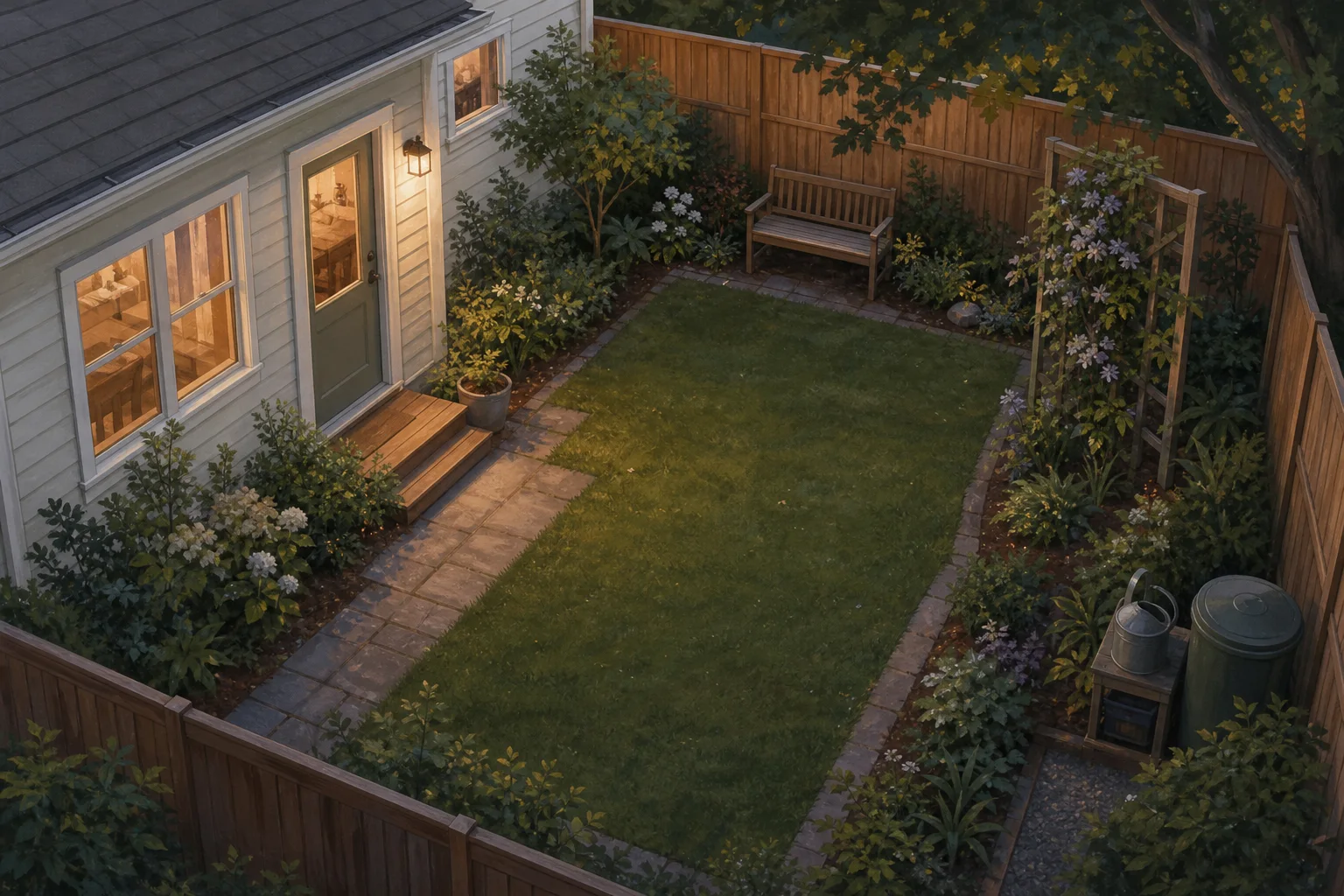
Choose a layout that gives the small garden a clear center
Trying to fit a patio, lawn, pond, shed, dining room, play area, and specimen collection into one small space usually makes every part weaker.
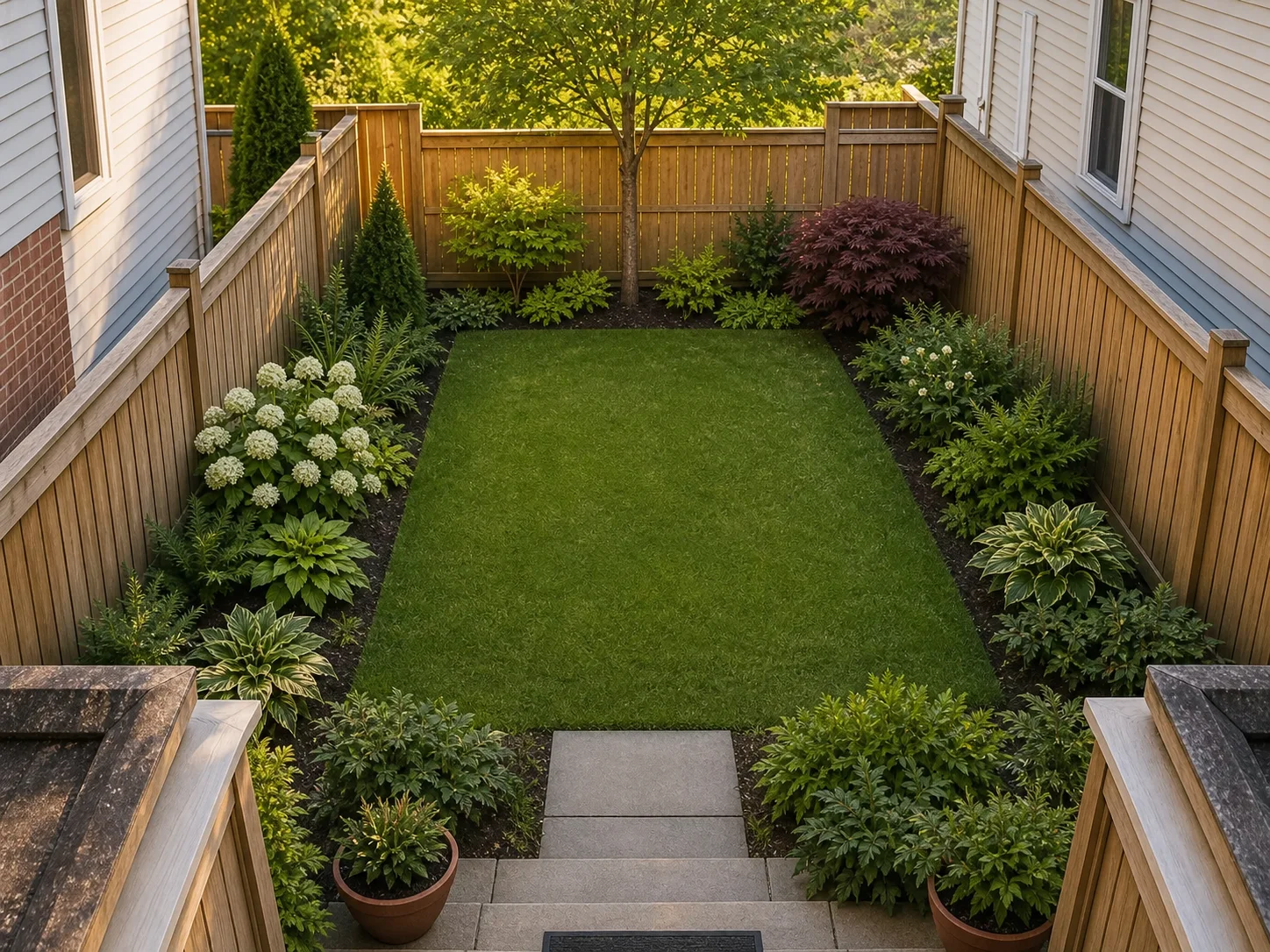
Open center, planted frame
Best for multi-use space
Keep the middle flexible and use the boundaries for deeper, connected planting.
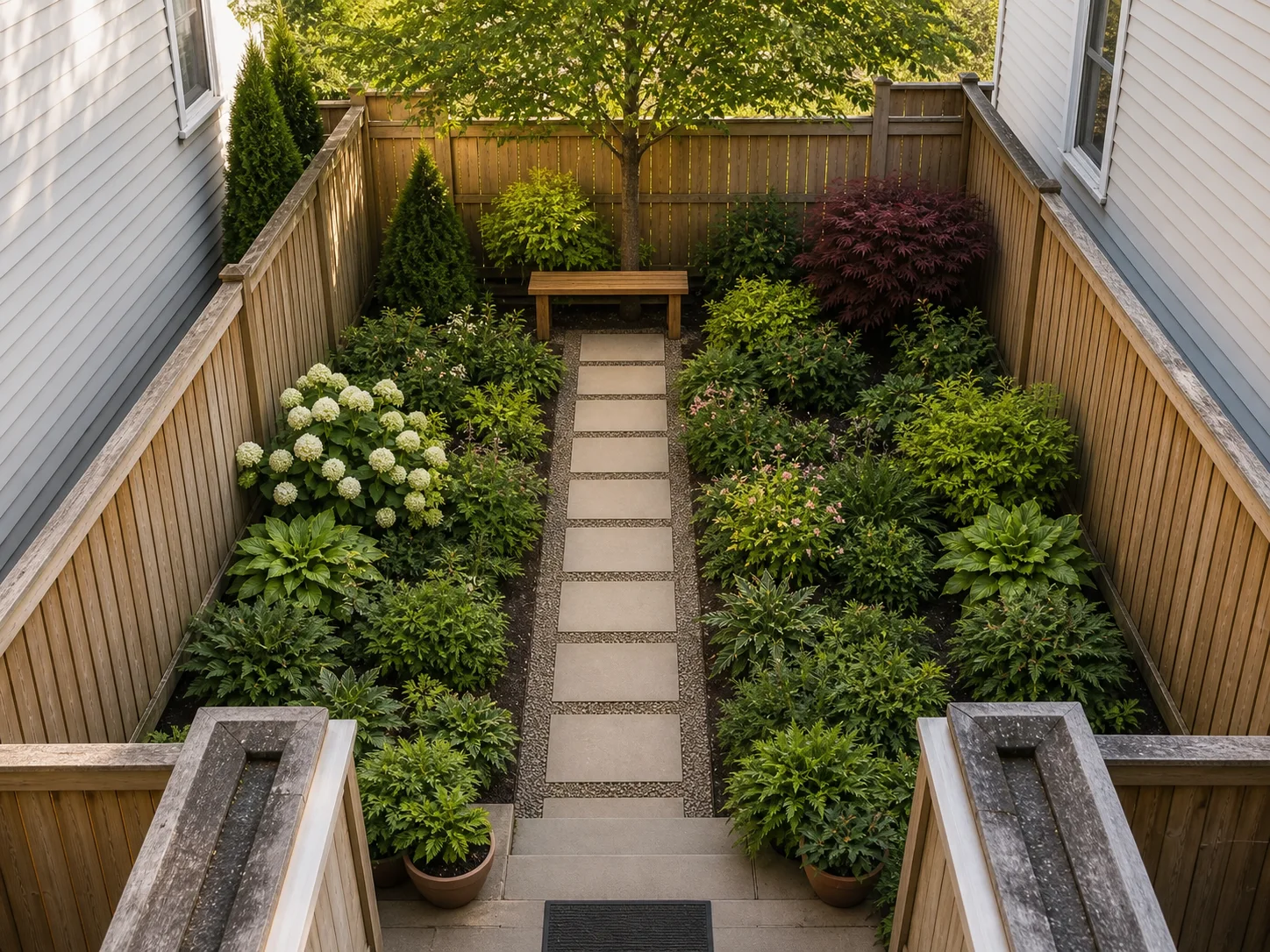
Direct destination
Best for a strong focal end
Run one clear path to a bench, potting surface, or tiny dining area at the far end.
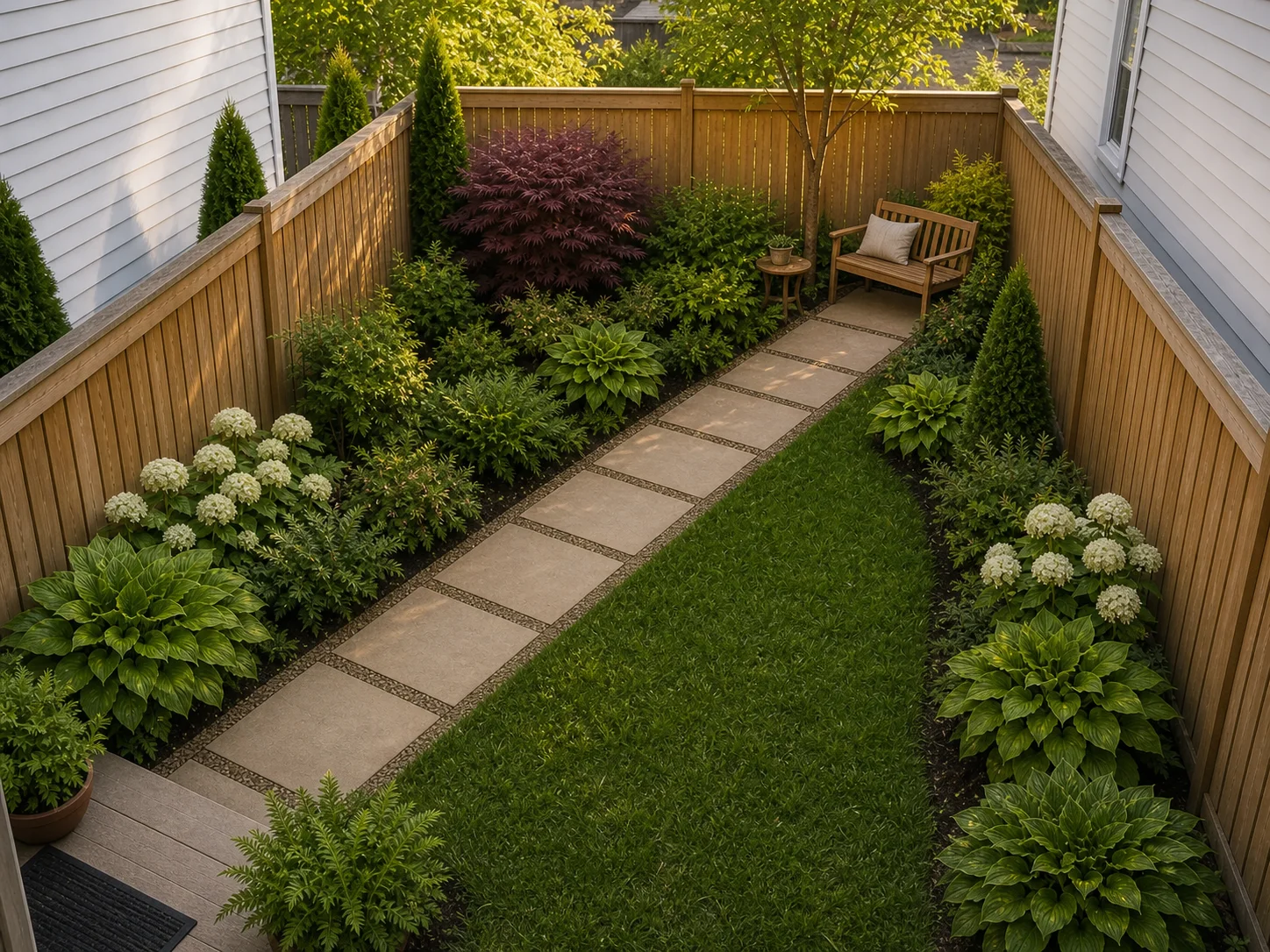
Diagonal destination
Best for stretching the view corner to corner
Aim the view toward a seat, tree, or focal plant in the far corner so the eye travels across the longest dimension.
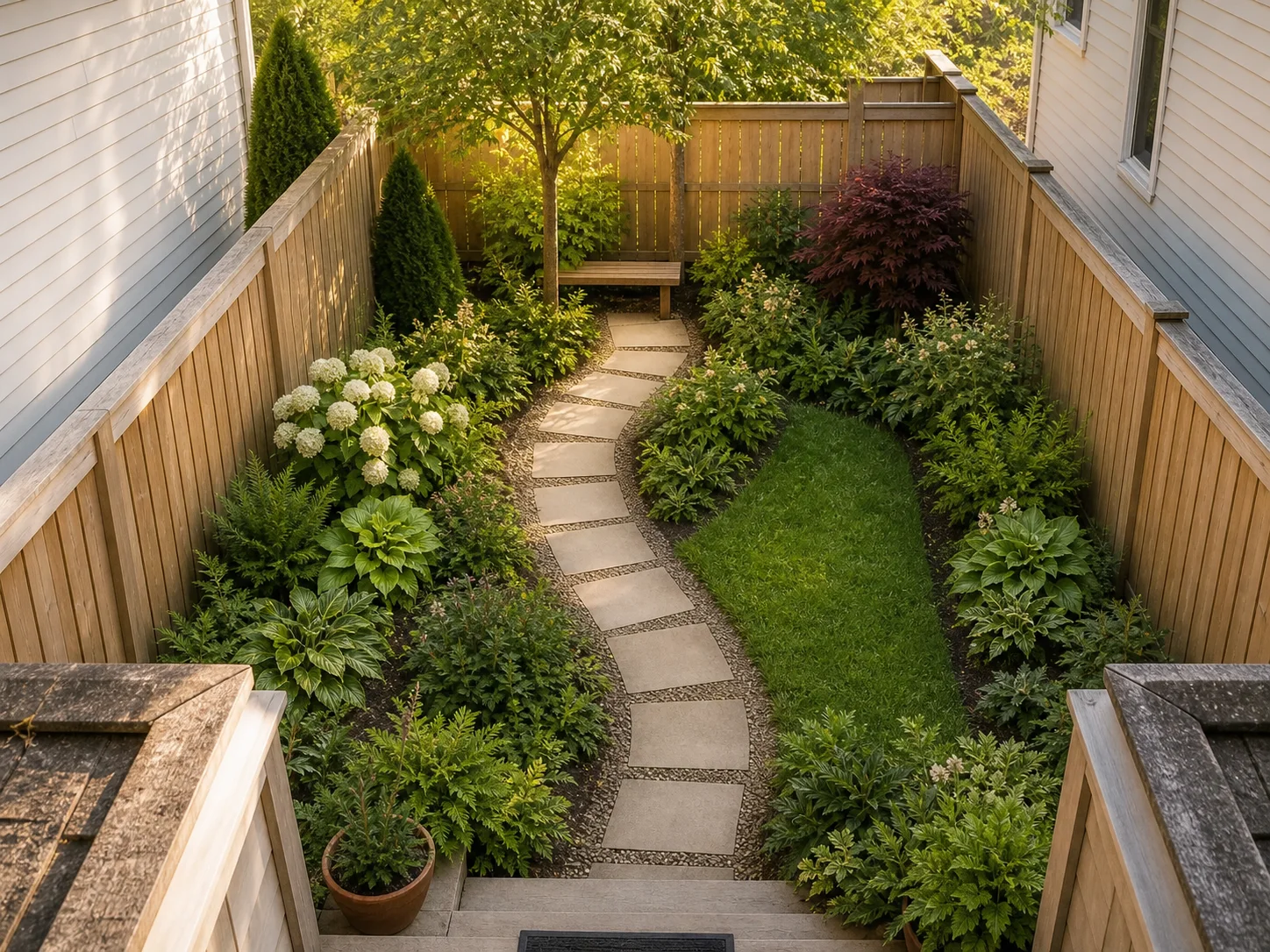
Garden journey
Best when movement is part of the experience
Let one direct or gently offset path widen at two or three planted pauses so the route doesn’t feel like a corridor.
Use a courtyard pattern when enclosure is the advantage
A small garden enclosed by walls or fences can feel intentional when you treat it as one outdoor room rather than a leftover gap.
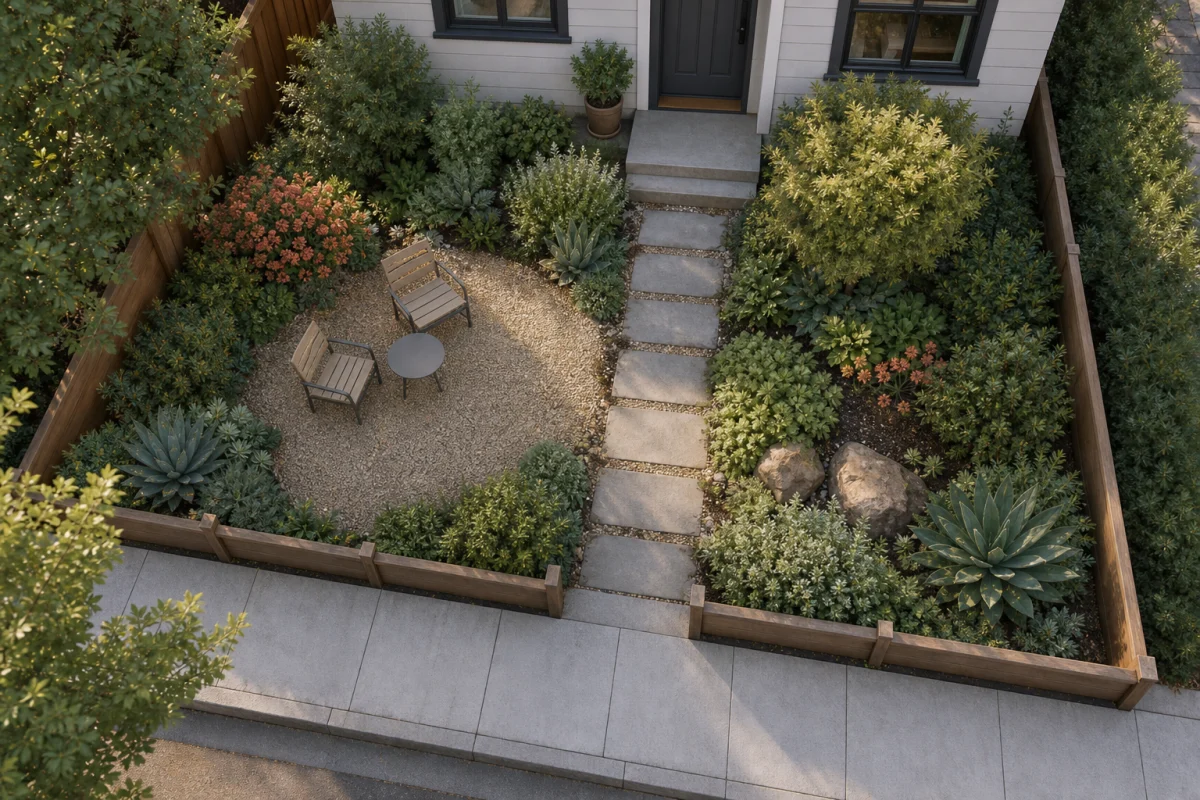
Keep one legible floor shape, aim the main view toward a seat, sculptural plant, or borrowed view, and let one boundary carry most of the vertical planting. Leaving another wall quieter preserves contrast and keeps the room from closing in.
Observe reflected heat, wind shelter, roof runoff, and shade at the base of every wall. Conditions can change sharply across a few feet, so repeat plant forms or colors even when the exact species must change.
Use proportion, repetition, and the boundaries
In a compact garden, the room you leave open is part of the design.
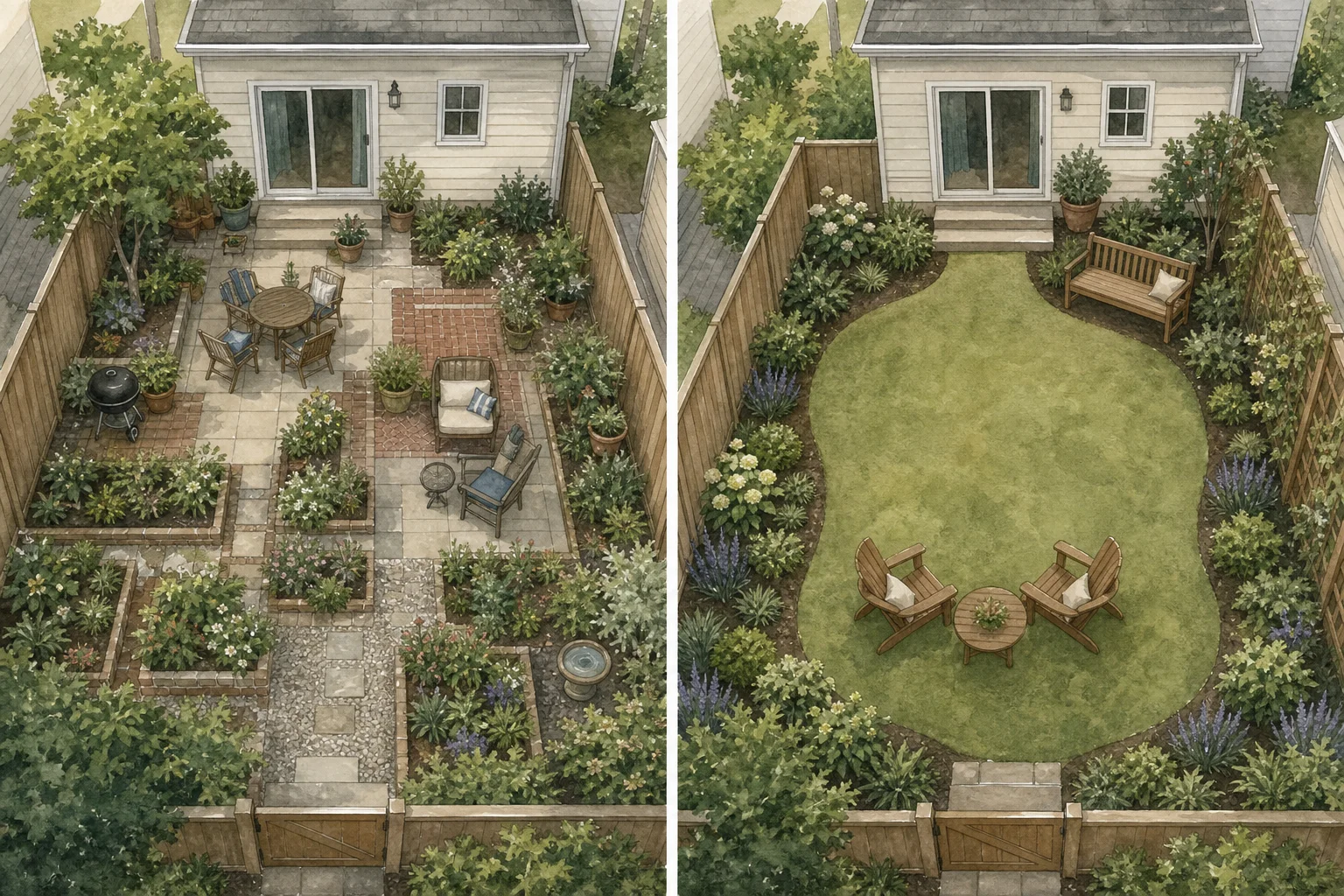
- More features, tighter routes
- Fewer features, more room
Keep one floor or open-space shape visually generous, then repeat a limited material, color, or plant form around it. Too many tiny beds and surface changes break the footprint into fragments. Repetition connects the view and makes the available space easier to read.1,2
Where the structure allows, a fence or wall can support vertical greenery while you preserve airflow, access, and room to maintain it. Choose climbers, narrow plants, containers, and small trees by mature spread and root behavior instead of nursery size.3
Make every element pass three tests
- 1It supports the main use or improves the main view.
- 2It fits with doors, chairs, bins, tools, and people in motion.
- 3It remains inside the space at mature size and can be maintained.
Plan the backyard around an evening seat
The design keeps a useful center while making the boundaries feel planted and intentional.
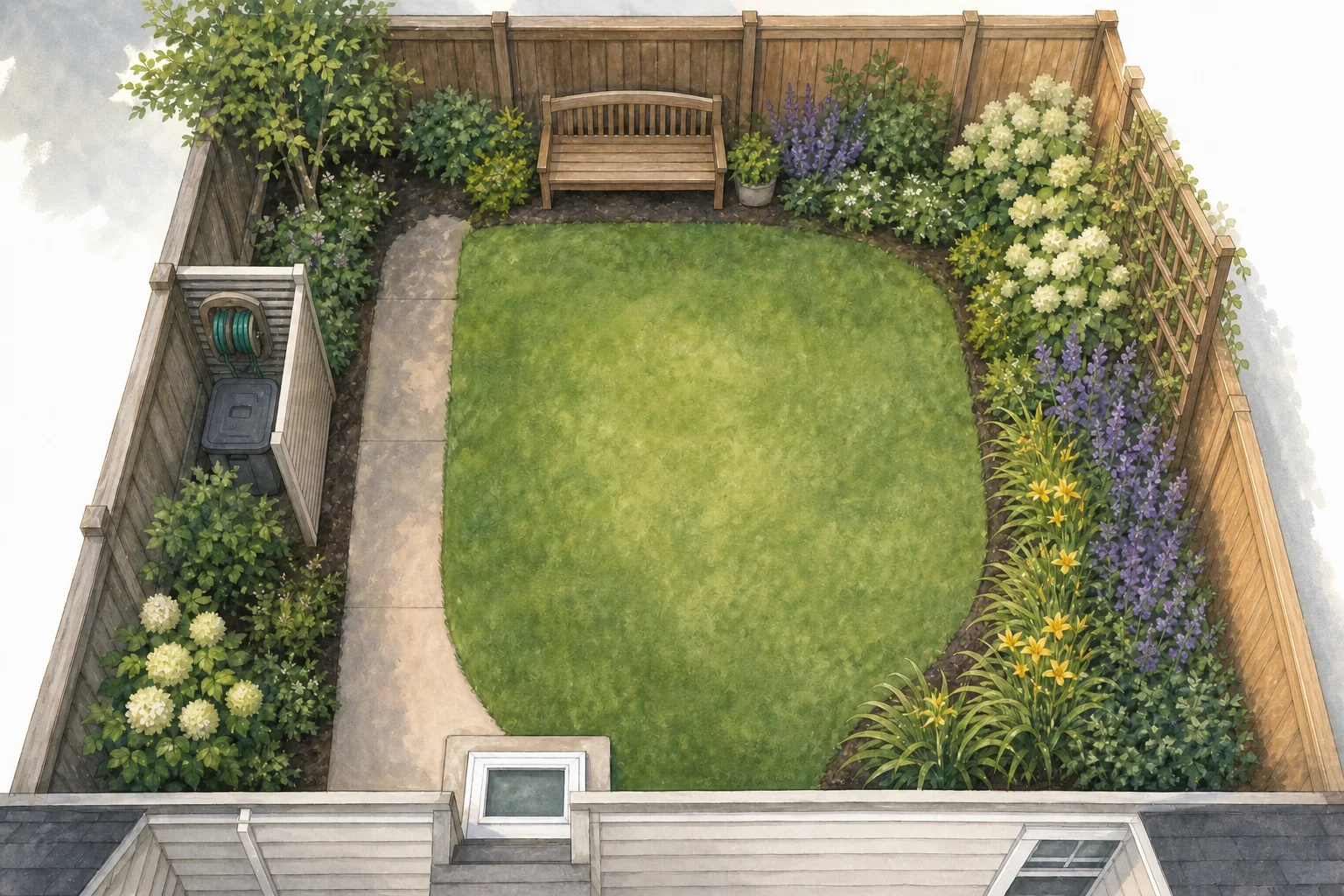
A compact backyard behind a suburban house
The garden has a back door, a sunny fence, one utility corner, and no room for separate dining and lounge zones. The owner mainly wants a place for two people to sit after work.
- 1
Place the seat on the longest view
Tuck a compact bench at the far side, facing back toward the house and the full planting frame.
- 2
Keep one simple route and floor
Run a clear path from the door into one open rectangular or gently offset surface instead of creating several tiny landings.
- 3
Plant the sunny fence in layers
Add one sturdy climber support, a narrow middle group, and a repeated low edge.
- 4
Screen the utility corner without trapping it
Keep the working clearance open behind a movable or serviceable screen.
The garden does one thing generously and still preserves access, planting depth, and a good view from indoors.
Check width, height, and overhead space
A small plan can work overhead and still fail when doors open, chairs move, plants widen, or the canopy blocks the only useful light.
Tape the footprint: Mark furniture, containers, and bed edges, then walk through with chairs pulled out.
Measure the vertical plane: Check window views, fence strength, overhead wires, neighbor sightlines, and mature plant height.
Protect storage and service: Give bins, hose, tools, drains, meters, and equipment a reachable home.
Limit the palette: Repeat a small set of materials and plants before adding decorative objects.
Confirm the site fit: Verify light, drainage, mature size, hardiness, local rules, and structural loads.
Hanging a planter or trellis from an untested fence, wall, or rail can overload it. Check the structure and use supports rated for the filled weight.
Frequently asked questions
How do I make a small garden look bigger?
Use one clear open shape, reduce surface and material changes, repeat plant forms, keep the route obvious, and direct the longest view toward one destination. Avoid crowding every edge with unrelated features.
What should I put in a very small garden?
Start with the one use you value most, then add only the route, seating or work surface, planting, storage, and utilities that support it. Choose every plant and object by its full dimensions.
Can a small garden have a tree?
Yes, when the tree’s mature canopy, roots, litter, water needs, and relationship to structures and utilities fit the site. “Small tree” is not enough information; check the exact variety with a local source.
How do I make a small garden low maintenance?
Use simple edges, accessible plants, mature-size spacing, compatible water needs, covered soil, and a limited repeated palette. Keep storage and service routes clear so routine care remains easy.
 Gardenful
Give the small garden one clear idea.
Use Gardenful to compare a compact layout on your photo, then check the plants, dimensions, supports, and service access.
Gardenful for iPhone
Download the app free and start with a photo of your yard.

Sources(4)
- [1]Basic Principles of Landscape Design
University of Florida IFAS Extensionhttps://ask.ifas.ufl.edu/publication/MG086
- [2]Landscape Design: Ten Important Things to Consider
University of Florida IFAS Extensionhttps://ask.ifas.ufl.edu/publication/EP375
- [3]Right Plant, Right Place: The Art and Science of Landscape Design
University of Florida IFAS Extensionhttps://ask.ifas.ufl.edu/publication/EP416
- [4]Fertilizing and Watering Container Plants
University of Minnesota Extensionhttps://extension.umn.edu/gardening-minnesota/fertilizing-and-watering-container-plants