Garden outbuildings
Shed landscaping ideas that keep the door and runoff clear
The short answer
A shed belongs in the garden only if it remains easy to use and maintain. Start with the working route: open the door, move the mower or wheelbarrow, mark wall and roof-water access, and keep utilities visible. Then use one repeated plant from the larger yard, one corner form, and a low ground layer to connect the shed without hiding it behind an overgrown foundation bed.
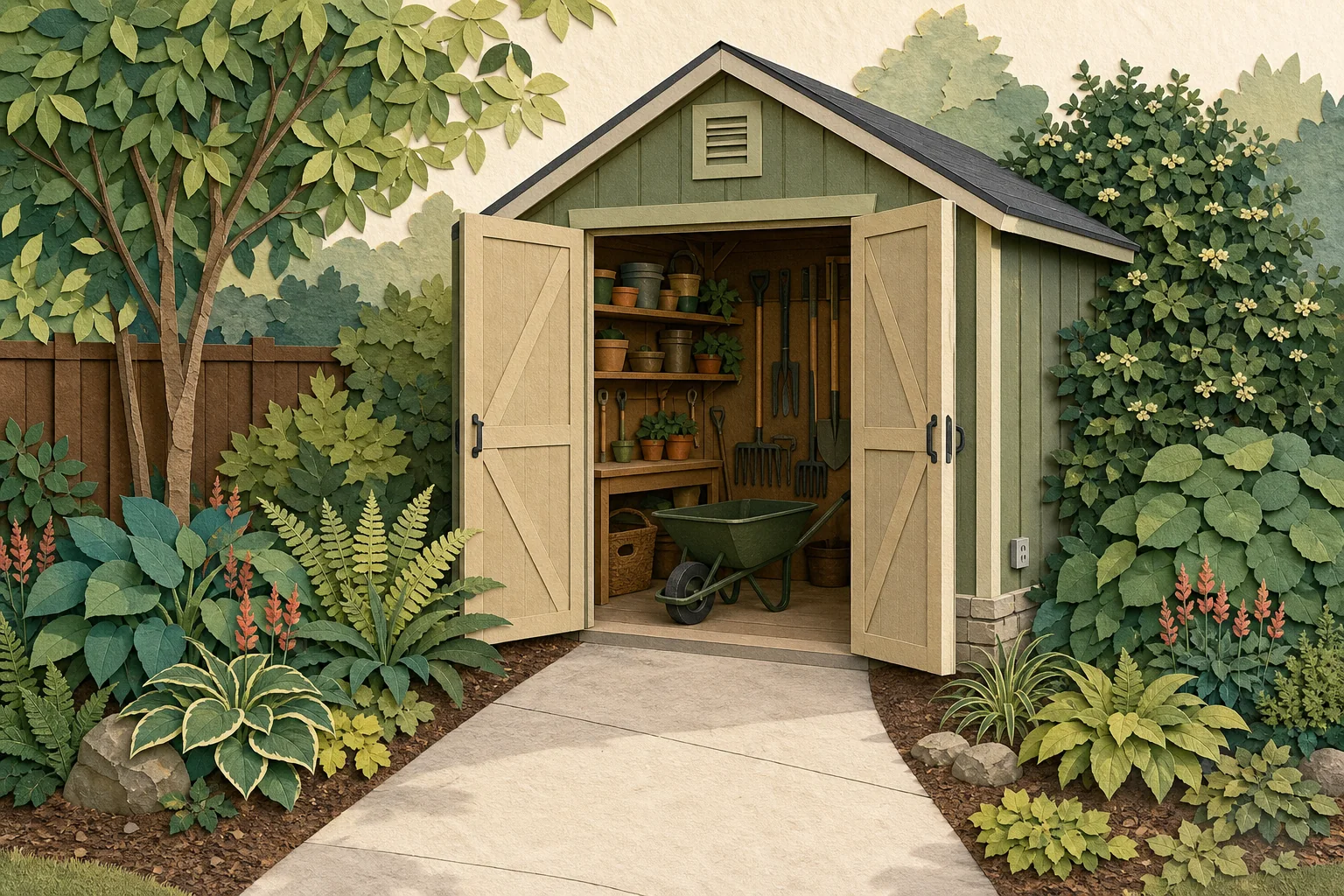
Move the largest stored item before drawing the bed
A shed is a working destination. Its landscaping fails when plants make the door, ramp, lock, or maintenance route awkward.
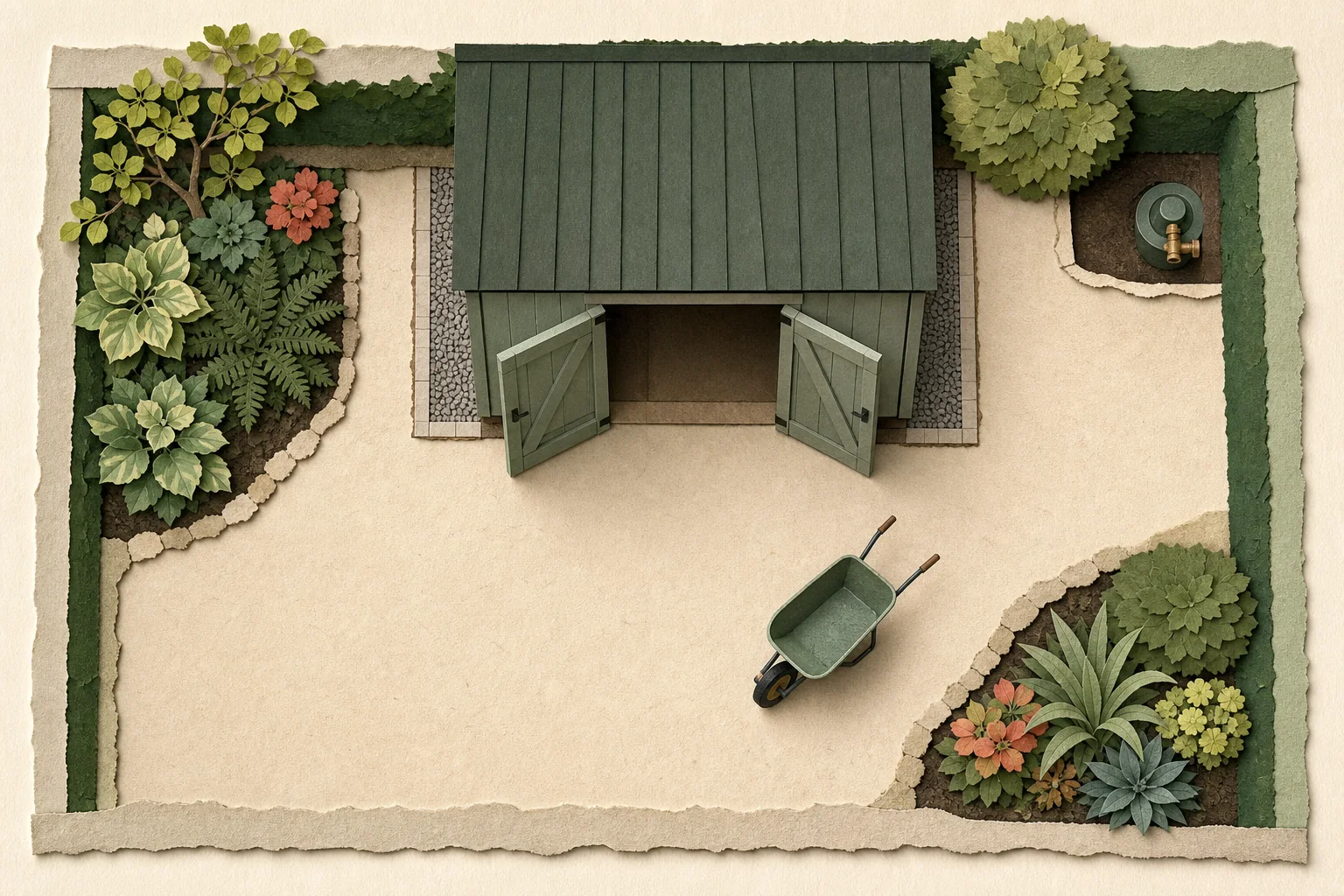
- Service route
- Inspection and water zone
- Plantable pockets
Open every door and window and move the widest regular item, such as a mower, wheelbarrow, bin, bicycle, or storage cart, between the shed and the house. Mark the full route, turning space, and the place an item is set down.
Keep enough open wall and base to inspect siding, trim, pests, moisture, and settlement. Draw exact mature plant width outside that service envelope rather than placing nursery pots against the wall.1,2
Read the shed as four exposure zones
A small roof and four walls can create concentrated runoff, sheltered dry soil, reflected heat, and shade within a few feet.
- 1
Watch an ordinary rain
Mark where water leaves the roof, splashes soil, cuts a channel, or ponds. An unguttered edge may need a stable splash surface; a gutter may need a downspout and stabilized outlet. Size and route either system with local drainage guidance before planting.
- 2
Check soil beside each wall
Structures can block rainfall and create dry shade even where the wider yard is moist. University of Minnesota names hosta, Ligularia, and Heuchera as possible dry-shade plants, but occasional deep watering may still be needed.
- 3
Photograph morning and afternoon
A small shed can cast a long seasonal shadow or reflect intense sun from a light-colored or metal wall.
- 4
Keep water away from stored materials and the base
Planting is not a fix for a leaking roof, eroding drip line, unstable base, or persistent ponding.
Choose whether to feature, frame, or soften the shed
A shed can be an attractive destination, a quiet backdrop, or a service object viewed from one side. Name that role before adding plants.
Choose one visual strategy, then repeat the larger yard's path, one plant form, and one material.
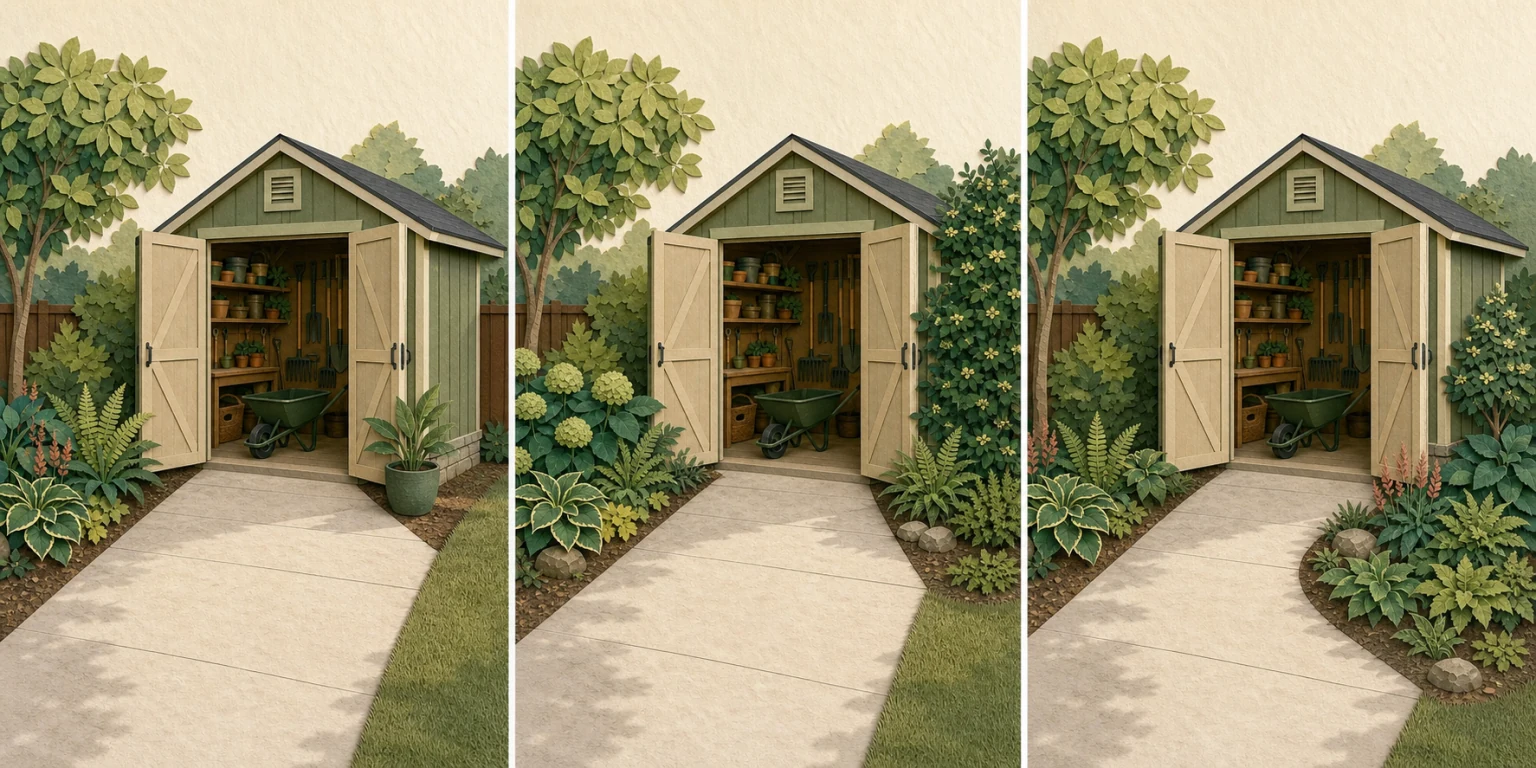
Feature the front
Best for an attractive shed at the end of a view
Use a clear path, open apron, and one deliberate destination detail when the door or facade deserves attention.
Frame two corners
Best when the whole shed should remain legible
Use mature-fit forms at the least serviced corners while leaving the door, wall base, and roof-water zones exposed.
Soften one problem view
Best when only one view needs editing
Place a targeted group between the main seat and the least attractive shed side rather than wrapping every wall.
Do not attach plant supports, irrigation, or heavy vines to the shed unless the structure and manufacturer allow it. Keep the guide focused on surrounding planting.
Sources: NC State Extension, University of Florida IFAS Extension
Plan a double-door shed at the end of a backyard
The example keeps the work route open and repeats the larger garden palette in three small pockets.
A double-door shed with no gutters
The path approaches from the left, roof water falls from both long sides, and the back-right corner receives afternoon sun.
- Keep the double-door apron open
- Extend the stable route beyond the door swing and mower turning area instead of pinching it with two matching shrubs.
- Leave both drip lines visible
- Keep plant crowns out of concentrated splash. Use a locally designed stabilized surface or add a correctly sized gutter and outlet if observation shows erosion or ponding.
- Place one corner anchor in the sunny pocket
- Choose a mature form that stays below the roof and clear of the wall, roof edge, and neighboring property.
- Repeat two low groups along the route
- Use the same foliage form found near the patio so the path feels connected from house to shed.
The open apron and drip zones make the small planting groups look intentional because every part has a clear job.
Check the shed in working condition
Review the plan with doors open, tools moving, and water flowing.
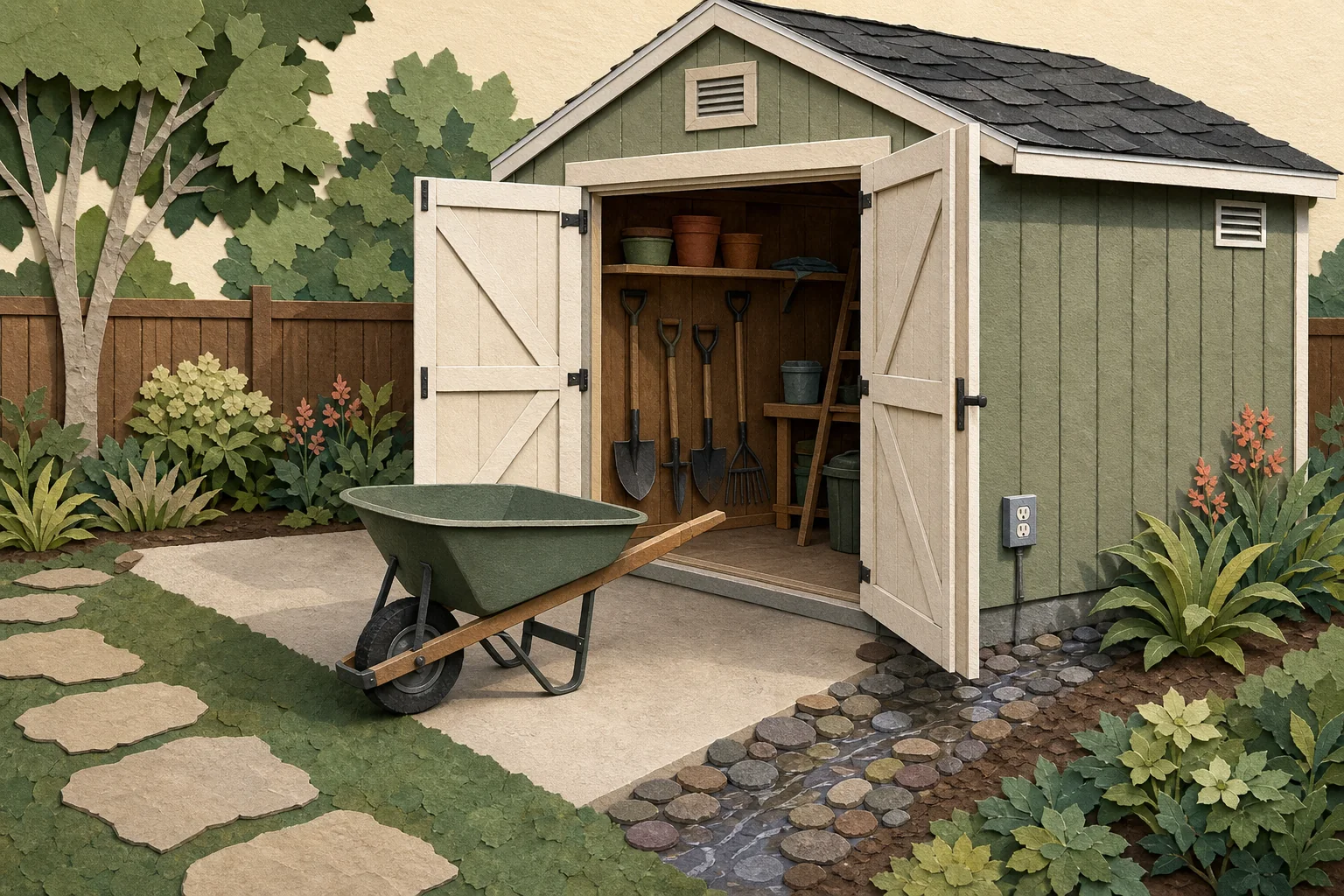
The widest item can turn: Door, ramp, path, and set-down space remain clear at mature plant size.
The base and walls can be inspected: Dense foliage and mulch do not conceal moisture, pests, trim, vents, or settlement.
Roof water has a safe destination: Drip, downspout, snow, and overflow do not erode the bed, pond at the base, or flatten plant crowns.
Utilities and hazards stay open: Outlets, fuel, equipment exhaust, locks, and buried lines remain accessible under applicable guidance.
The planting repeats the larger yard: One line, material, or plant form connects the shed without adding a separate theme.
Frequently asked questions
What should I plant around a garden shed?
Use one mature-fit corner form, a few repeated low groups from the larger yard, and plants matched separately to dry shade, reflected sun, and ordinary garden zones. For a sheltered dry-shade pocket, University of Minnesota names hosta, Ligularia, and Heuchera as examples, with site and watering checks still required.
Should shrubs hide the bottom of a shed?
They can soften a corner, but do not conceal the base, siding, vents, trim, pests, moisture, or settlement. Leave enough room for inspection and repair.
What can grow under a shed roof overhang?
The soil may be both shaded and sheltered from rain. Observe light and moisture, then choose locally suitable dry-shade plants only where roof drip, wall access, and the shed base remain clear.
Should I hide a shed with tall plants?
Usually not on every side. Feature an attractive shed, frame selected corners, or soften only the problem view. Dense tall planting can hide the door, roof-water path, wall base, pests, moisture, and repair needs.
 Gardenful
Keep the shed working.
Move the largest item, watch the roof water, preserve the walls, then connect the shed with one repeated plant rhythm and one corner form.
Gardenful for iPhone
Download the app free and start with a photo of your yard.

How this guide was built
The guide treats a shed as a small working structure, not as a decorative backdrop.
Institutional sources support mature-size planning, dry shade beside structures, and roof-runoff observation.
The diagrams are not foundation, drainage, electrical, fire, or building-code plans. Shed construction and manufacturer requirements control those decisions.
Sources(7)
- [1]
- [2]Landscape Design: Drawing a Planting Plan
University of Florida IFAS Extensionhttps://ask.ifas.ufl.edu/publication/EP456
- [3]Landscape Design: Arranging Plants in the Landscape
University of Florida IFAS Extensionhttps://ask.ifas.ufl.edu/publication/EP449
- [4]Gardening in the Shade
University of Minnesota Extensionhttps://extension.umn.edu/gardening-minnesota/gardening-shade
- [5]
- [6]Roof Runoff Structures
Penn State Extensionhttps://extension.psu.edu/roof-runoff-structures
- [7]811 Before You Dig
Common Ground Alliancehttps://811beforeyoudig.com/Before-You-Dig/