Start a new planting bed
How to turn a small patch of lawn into a flower bed
The short answer
A small flower bed can make an empty stretch of lawn feel like part of the garden. Mark out a bed you can plant and care for, then identify the grass and weeds growing there. You can lift the turf with a spade or cover it to block the light and let it die. Check for regrowth and prepare the soil before buying plants.
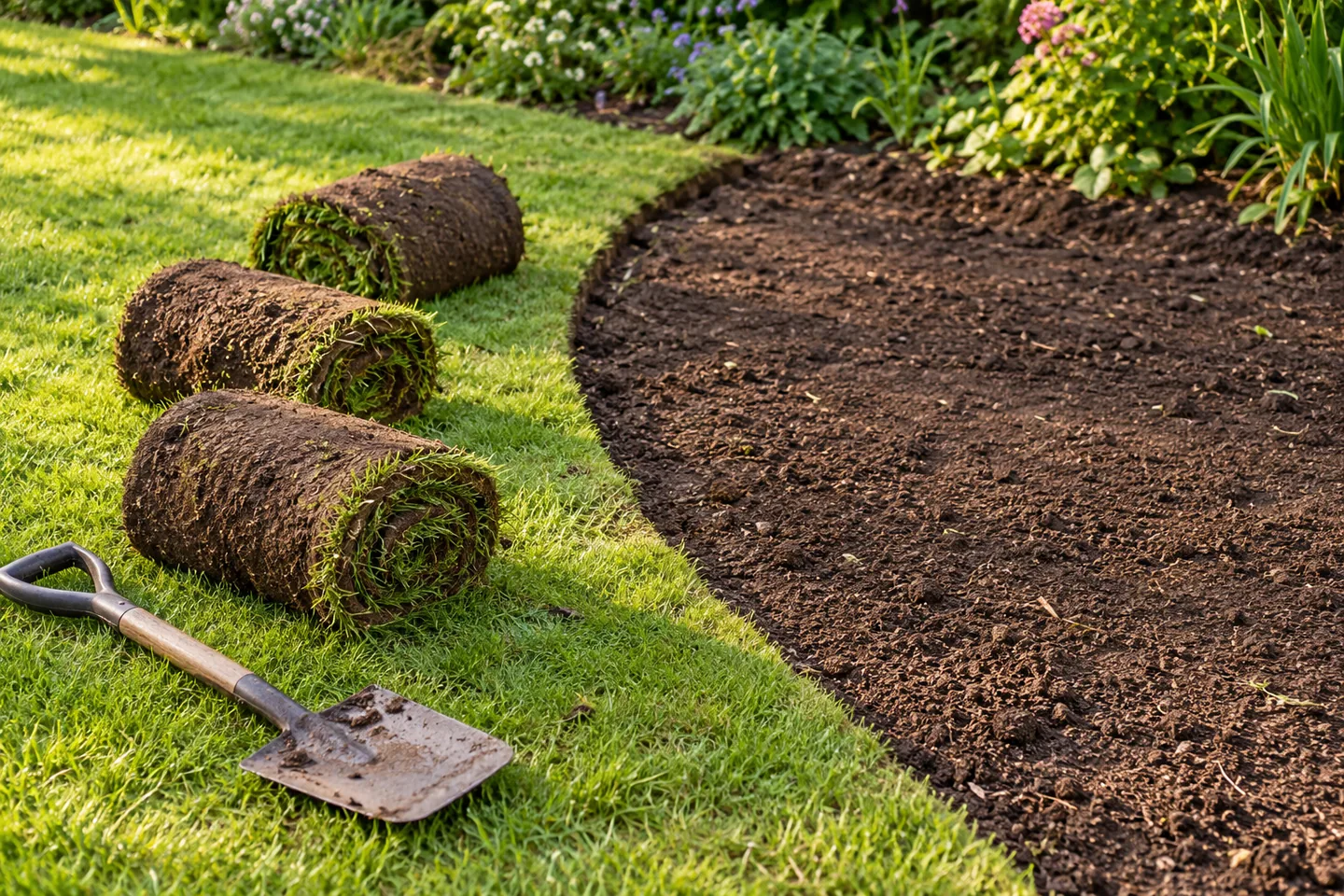
Lay out the bed before you remove the grass
Use a hose or rope to try the edge. Look at it from the house and the route you use every day, then walk around it with the mower you plan to keep using.
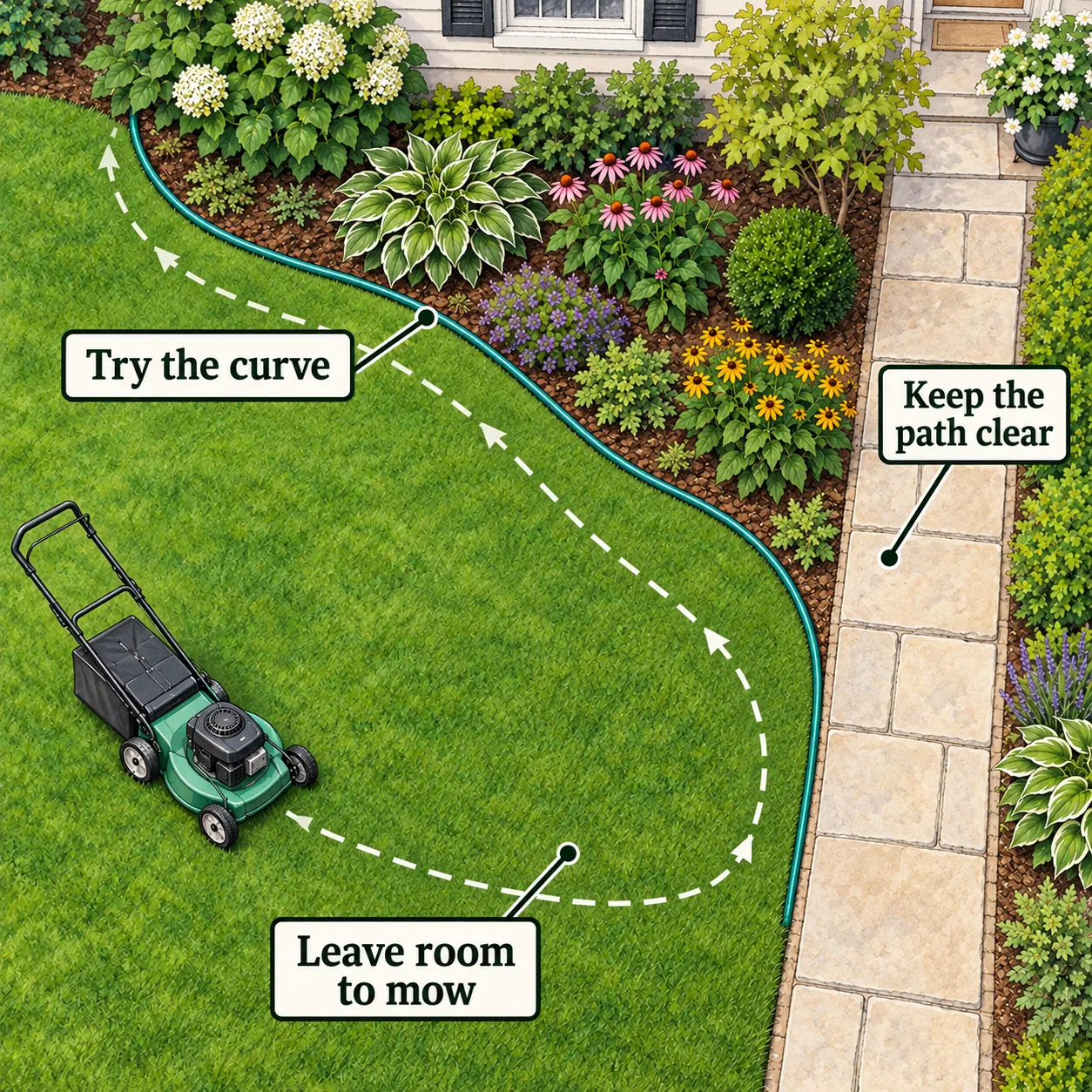
Start with the part you can finish. A border beside the front walk can feel intentional before the rest of the yard changes; a large stripped area needs plants, mulch and watering all at once. Leave room for the plants at their full size, as well as the route beside them.
Before digging, arrange utility locating through 811 and check for privately owned irrigation or other lines that the service may not mark. If the area has large tree roots, persistent standing water or a slope you intend to change, settle that problem before treating it as an ordinary flower bed.4,3
Choose the preparation method before choosing planting day
Lifting sod takes more physical work up front. Smothering trades some of that work for waiting. First identify persistent spreading grass or weeds; a surviving root or runner can grow through the new bed.
| Method | Useful when | Plan for |
|---|---|---|
| MethodLift the sod | Useful whenA small area you can handle with a spade | Plan forPhysical work, displaced soil and follow-up weed checks |
| MethodUse a removable opaque cover | Useful whenYou can leave the area covered while the grass dies | Plan forSecure edges, an untidy waiting period and inspection before removal |
| MethodSheet mulch with paper or cardboard | Useful whenA level bed where you can wait and check beneath the covering | Plan forMoisture checks below the sheet and control of weeds at gaps |
How to lift sod with a spade
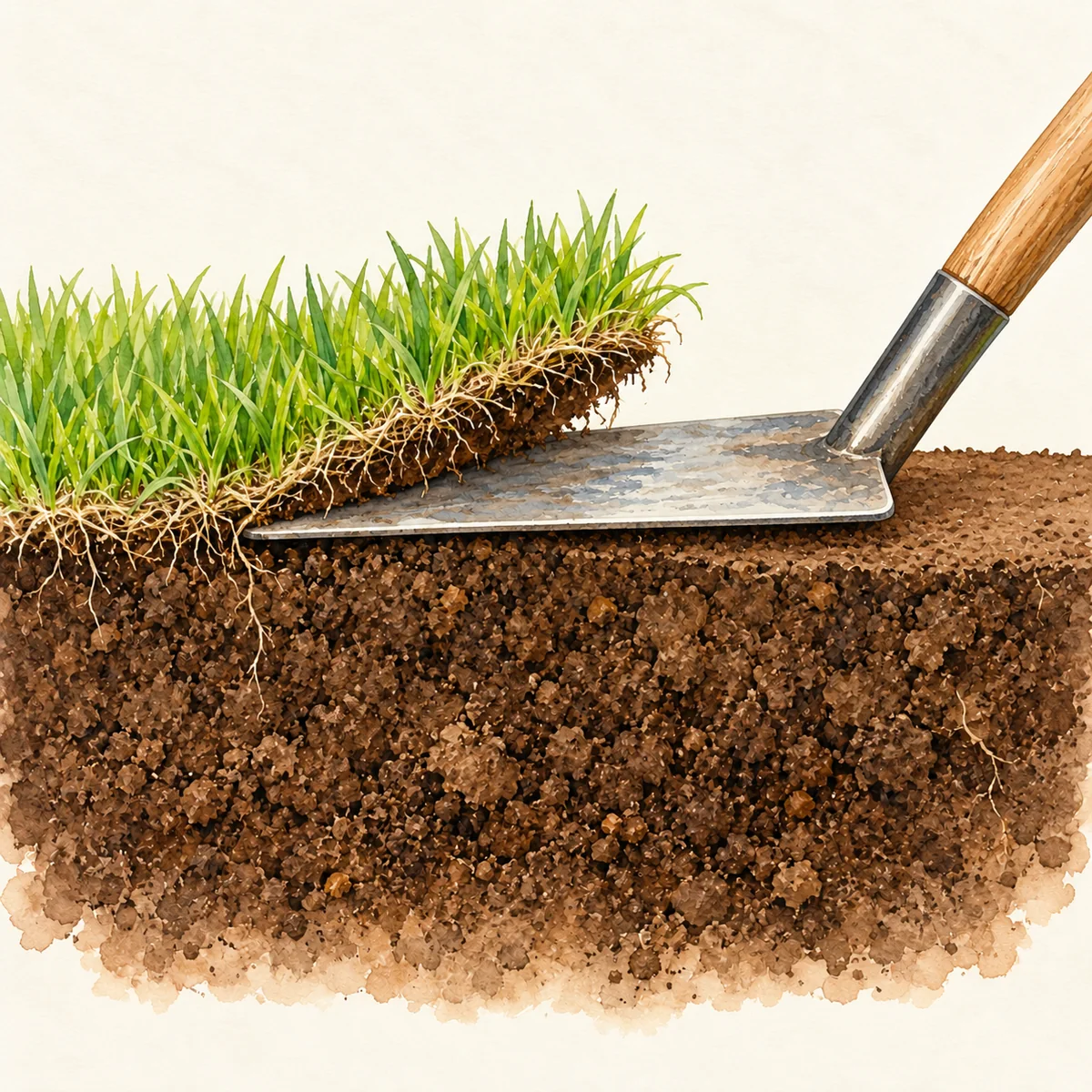
For a small bed, Maryland Extension describes a slice-and-loosen method using a flat garden spade. Check utilities first, and choose another preparation method if digging would disturb large tree roots.
- 1
Slide the blade beneath the turf
Hold the spade nearly parallel to the ground and slice through the top 1–2 inches of sod and soil. Lift manageable pieces, keeping as much useful soil as possible.
- 2
Let the removed turf die
Turn the pieces grass-side down beside the bed to dry. Wait until they are completely brown before returning dead material to the soil; don't bury living runners in the new bed.
- 3
Loosen and prepare the exposed ground
Insert a garden fork and gently rock it to loosen the soil. Follow soil-test advice for amendments, then rake the bed ready for planting. Mulch after planting and keep watching for regrowth.
Sources: University of Maryland Extension, 811
Check the soil underneath a sheet-mulched bed
A tidy surface can hide dry soil. Lift an accessible edge and check underneath after watering or rain instead of judging moisture from the mulch on top.
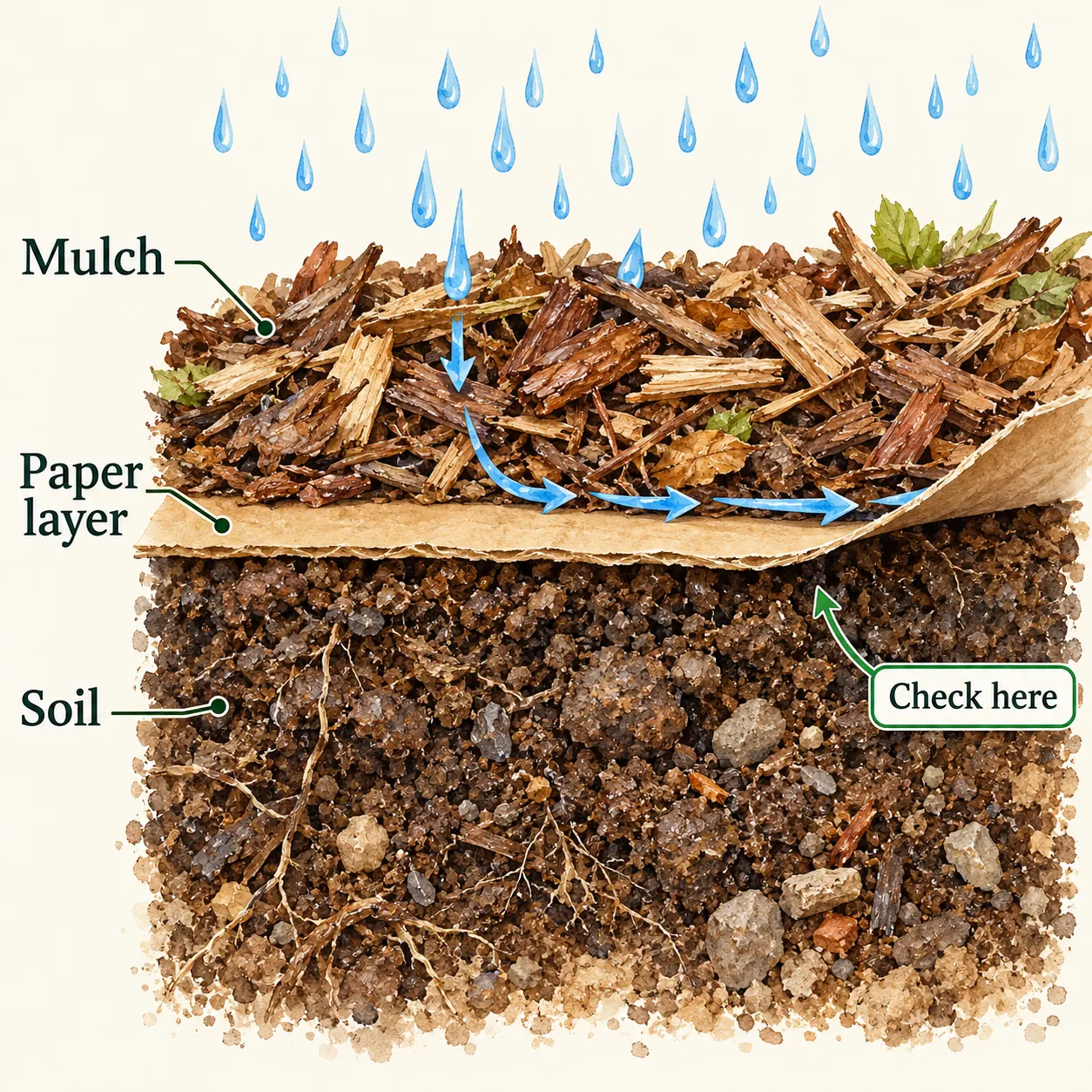
UC IPM notes that paper can restrict air and water movement, shed rainfall toward edges and make soil moisture harder to judge. That matters if you plant through it: a wet-looking surface does not prove that water reached the roots. Plan watering access before covering the bed.2
Avoid burying a grass problem under attractive mulch and assuming it is finished. Inspect gaps and edges for new shoots. If the grass keeps returning, identify it and ask your local Extension service for an appropriate control method before adding plants that will make the work harder.
Work through a first bed beside a front walk
Suppose you want a planted entrance, but you still need the lawn for play and don't want a whole-yard project. The first decision is how much bare ground you can comfortably finish.
An entry border, with the lawn retained
The bed is on level ground beside an existing walk, away from large tree roots. Utilities have been checked, and the grass has no identified persistent weed problem.
Before removal
Try the edge, measure the area and price enough plants and surface mulch to finish it. If the total is too much, reduce the bed now while the lawn is still intact.
During preparation
Choose sod lifting if the small area and physical work suit you, or leave time for a locally appropriate covering method. Keep the walk usable while the ground is being prepared.
Before buying
Inspect for regrowth, check soil moisture and confirm the planting conditions. Order plants once the bed and the local planting window are ready together.
Make the planting fit the bed you prepared
Observe the light, check drainage and choose plants for the actual conditions. Work out their mature spacing before bringing home a cart of small pots.
A soil test can guide soil amendments; don't add products simply because the lawn is gone. Keep the new bed from changing drainage toward the house or spilling material onto the path.3
Frequently asked questions
Can I put a flower bed directly over grass?
You need a way to control the living grass first. A thin layer of soil or mulch can leave it growing through the bed. Remove it or use a locally suitable smothering method, then inspect for regrowth before planting.
How long does it take to smother lawn?
Allow weeks to months, depending on grass, cover, temperature and moisture. Maryland Extension gives different waiting periods for layered cardboard and removable covers. Lift an edge and inspect; keep treating persistent growth rather than planting to a fixed deadline.
Do I need to remove my entire lawn?
No. Start with a border that improves a view or frames a route, while keeping the lawn you use. Leave a shape that remains easy to mow.
 Gardenful
See the border before you lift the lawn.
Use your yard photo to explore a Gardenful planting design, then use the suggested plants to plan the bed you want to make.
Gardenful for iPhone
Download the app free and start with a photo of your yard.

Sources(4)
- [1]Lawn (Turfgrass) Removal Methods
University of Maryland Extensionhttps://www.extension.umd.edu/resource/lawn-turfgrass-removal-methods
- [2]
- [3]Planting a Tree or Shrub
University of Maryland Extensionhttps://www.extension.umd.edu/resource/planting-tree-or-shrub
- [4]