A planting plan for your part of California
California front yard plants for coastal and inland gardens
The short answer
California gardens range from cool coastal yards to hot inland borders, so the same planting can thrive in one place and struggle in another. A front yard that looks good through the dry summer starts with plants suited to your summer heat and available water. Coastal and inland examples below show how to combine shrubs, flowers and lasting foliage, with room for seedheads to add texture after the blooms fade.
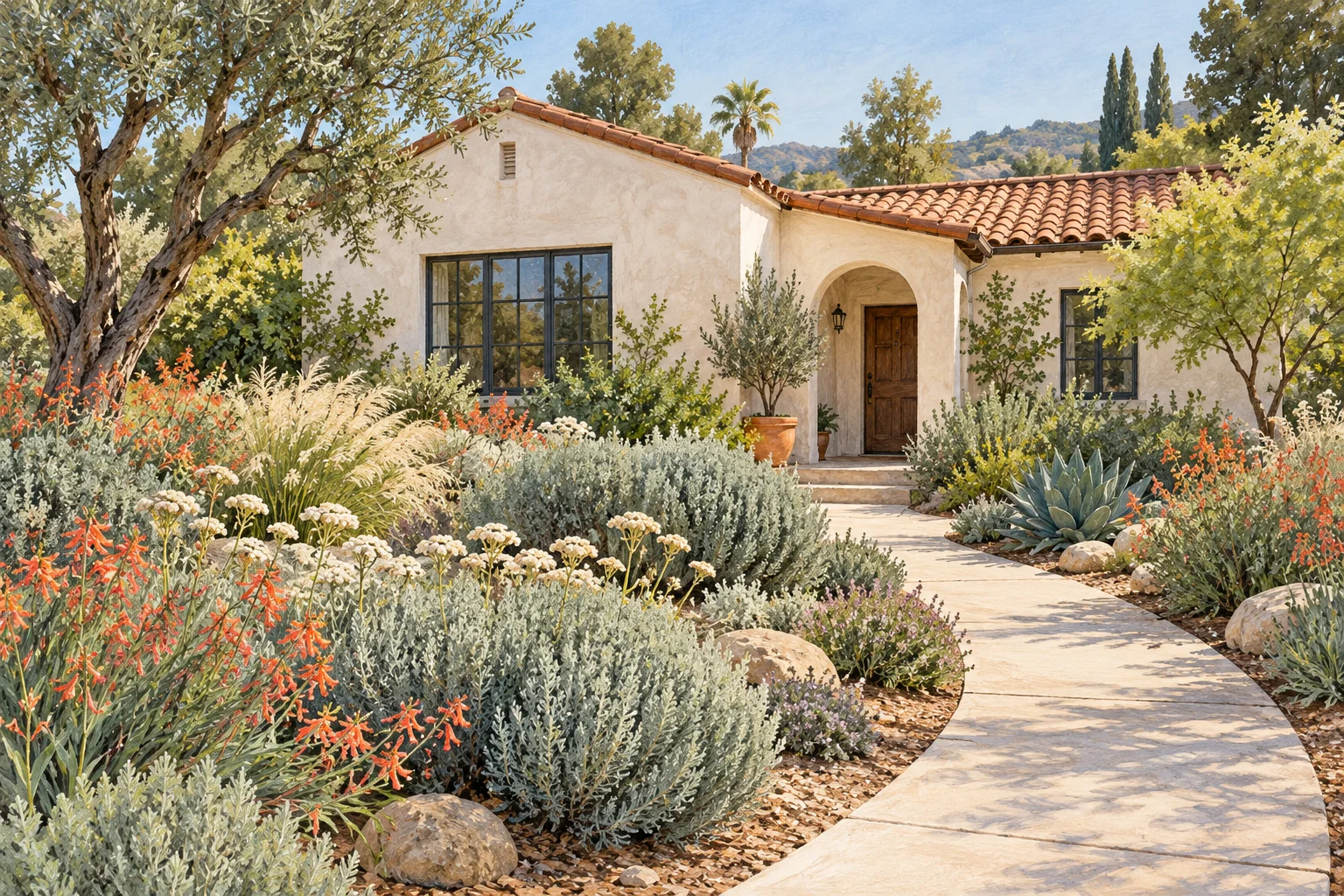
Two ways to make a California front garden feel full
A cooler coastal border can have a soft edge of low flowers around evergreen shrubs. A hotter inland bed can lean on grey-green foliage, drying flower heads and later color. Start with the view you like, then use your summer conditions to choose the plants that can carry it. These examples suit lowland coastal and inland gardens; high mountains and the low desert need their own local plant choices.
A cool coastal border with flowers near the path
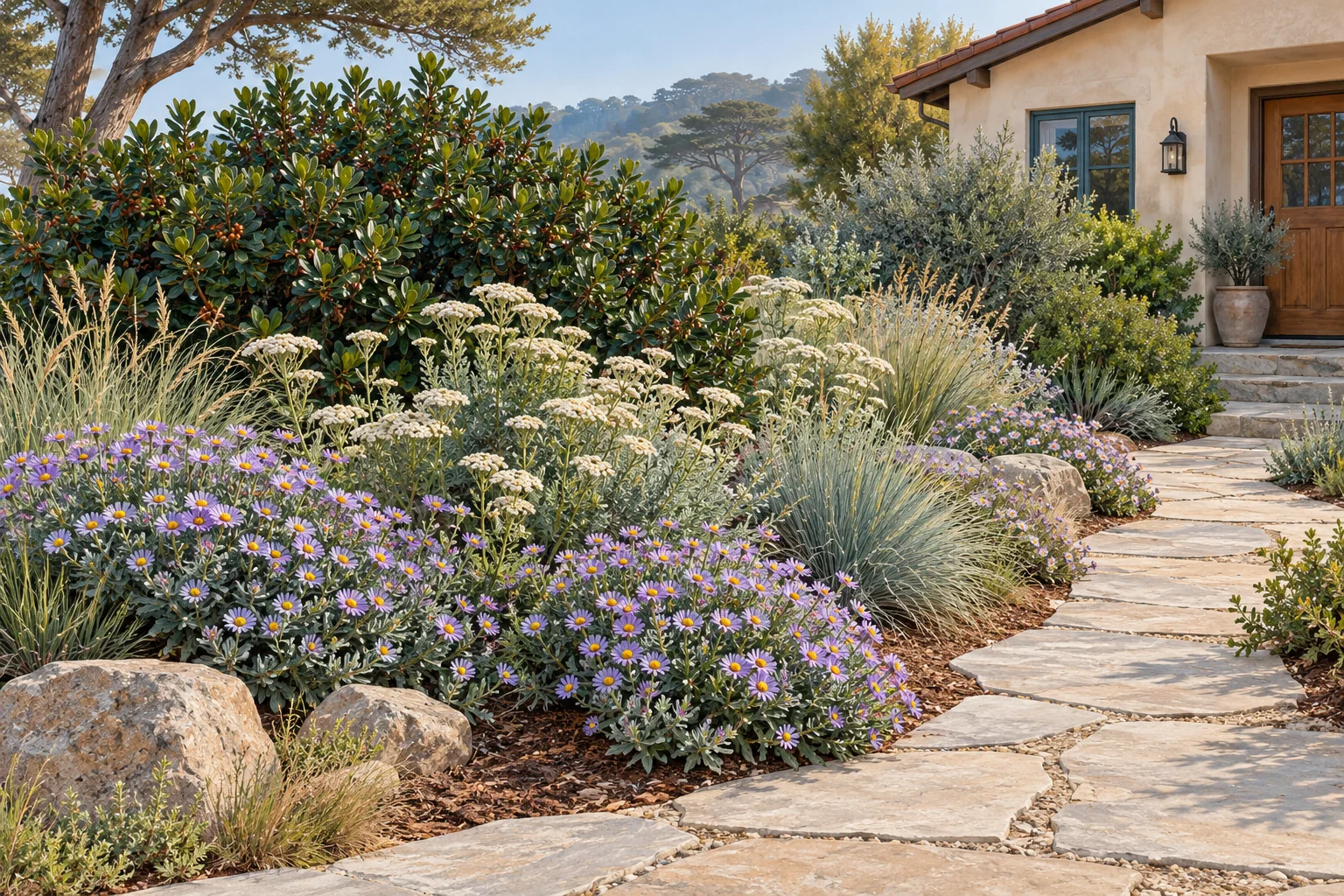
For a mild northern or central California coastal garden, try a compact coffeeberry (Frangula californica) variety behind seaside daisy and yarrow (Achillea millefolium). The evergreen shrub gives the bed a lasting shape, the daisy keeps the front low, and yarrow adds a finer flower texture. Choose the coffeeberry variety before laying out the bed: its mature size can change how much space is left for everything else.
The site needs sun, drainage and enough room for the plants to spread without swallowing the walk. Seaside daisy (Erigeron glaucus) is a coastal plant; in hotter inland gardens it benefits from shade and additional water. That makes it a poor automatic substitute for a plant in a much drier, hotter bed.10,12
See how the coastal planting fits around a path
Keep the route and healthy established plants, then arrange the planting around the space they leave.
One coastal border, three planting layers
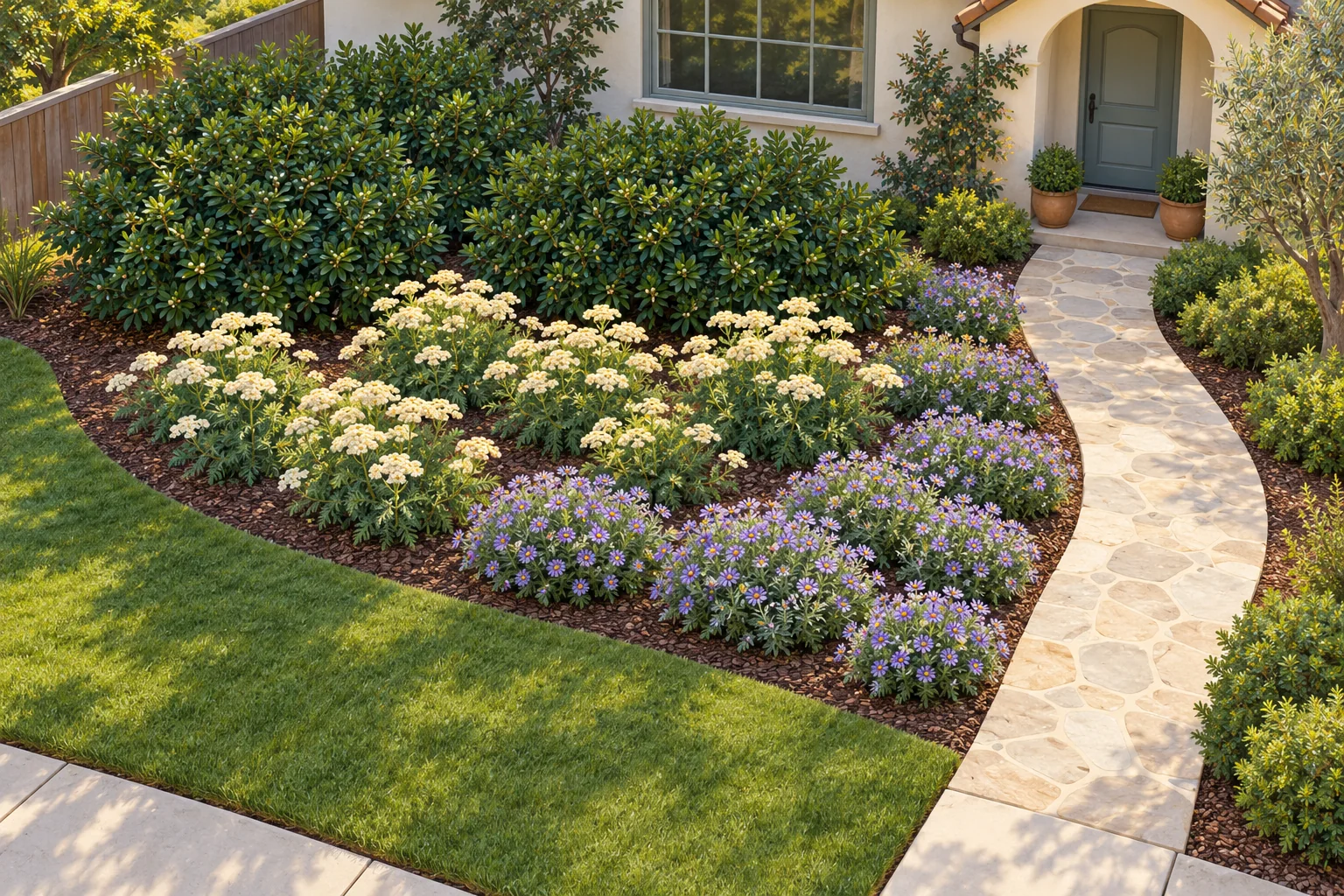
For the cool coastal example, choose the compact coffeeberry variety first. Its mature width determines how much room remains for yarrow and seaside daisy.
- 1
Evergreen shape at the back
Place compact coffeeberry in the deeper part of the bed, leaving windows, meters and access clear. If its mature outline does not fit, put the shrub elsewhere instead of planning to clip it indefinitely.
- 2
Lighter flowers through the middle
Repeat yarrow in the space beside the shrub’s eventual outline. A few connected patches make the planting easier to read than a row of unrelated specimens.
- 3
Low flowers beside the walk
Use seaside daisy along the front where its mature spread leaves the full path usable. Let this low layer connect the bed without hiding the larger shapes.
An inland front garden with color beyond spring
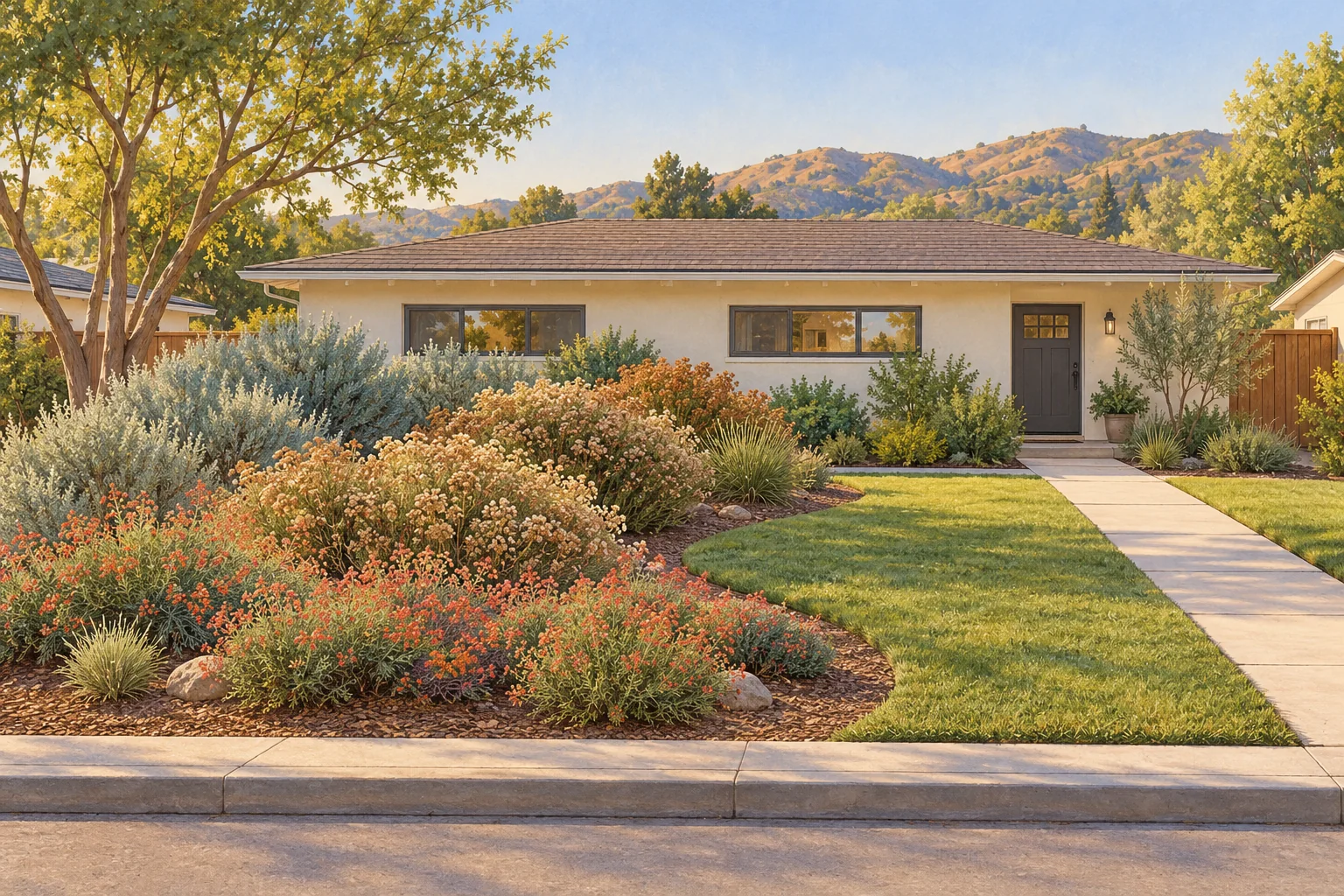
For a warm inland Southern California bed with full sun and good drainage, consider Cleveland sage (Salvia clevelandii), California buckwheat and California fuchsia (Epilobium canum). Keep the larger sage toward the back, repeat buckwheat through the middle, and choose a lower fuchsia variety for the front. The sage flowers earlier in the season; fuchsia brings color later, while buckwheat flower heads remain part of the view.1,2,11
A sunny inland border that still looks good after flowering
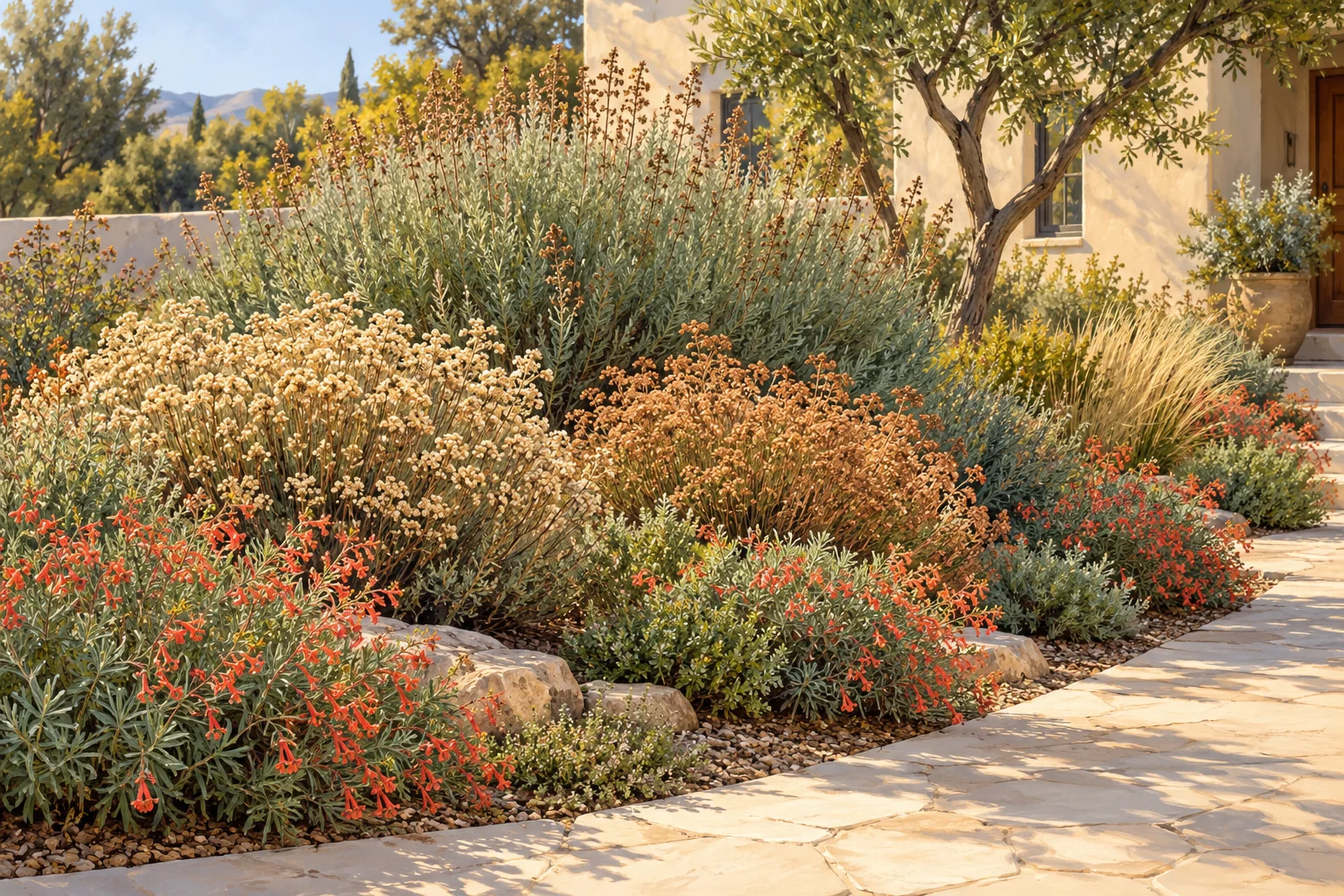
California buckwheat (Eriogonum fasciculatum) brings pale flowers that age to tan or rusty brown. Leaving those heads can give the bed texture instead of treating every faded flower as something to remove. Its spreading habit also means a small nursery plant can occupy much more of the bed later.11
Check the selected varieties' mature widths and winter tolerance locally. A bed that stays wet after winter rain needs a different choice from a fast-draining slope. Adding drought-tolerant plants doesn't solve slow drainage, and established dry-summer shrubs shouldn't share frequent watering with nearby lawn.8,12
Six California plants to build your shortlist
Explore low flowers for a coastal edge, evergreen shrubs for lasting shape, and sage, buckwheat or fuchsia for sunnier, drier beds. These are options for different conditions: choose a few that share your site and watering needs.
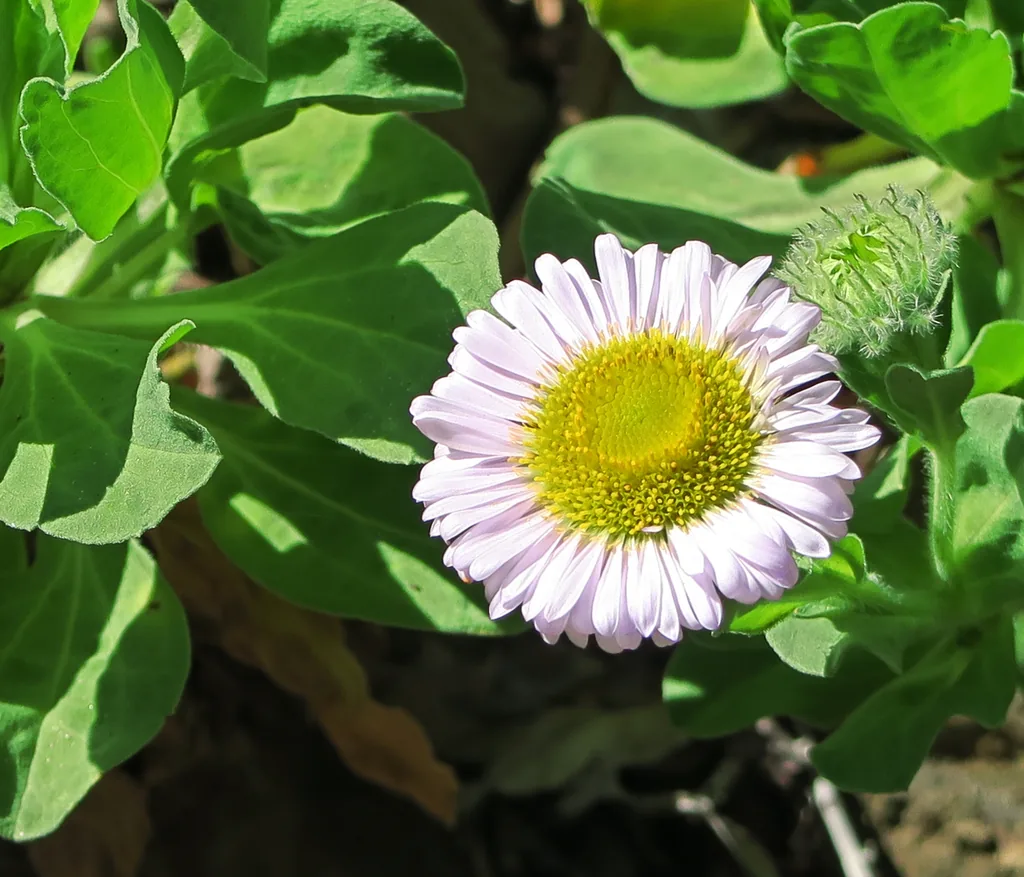
Seaside daisy
Erigeron glaucus
Low lavender flowers soften a cool coastal edge; inland heat can mean more shade and water.
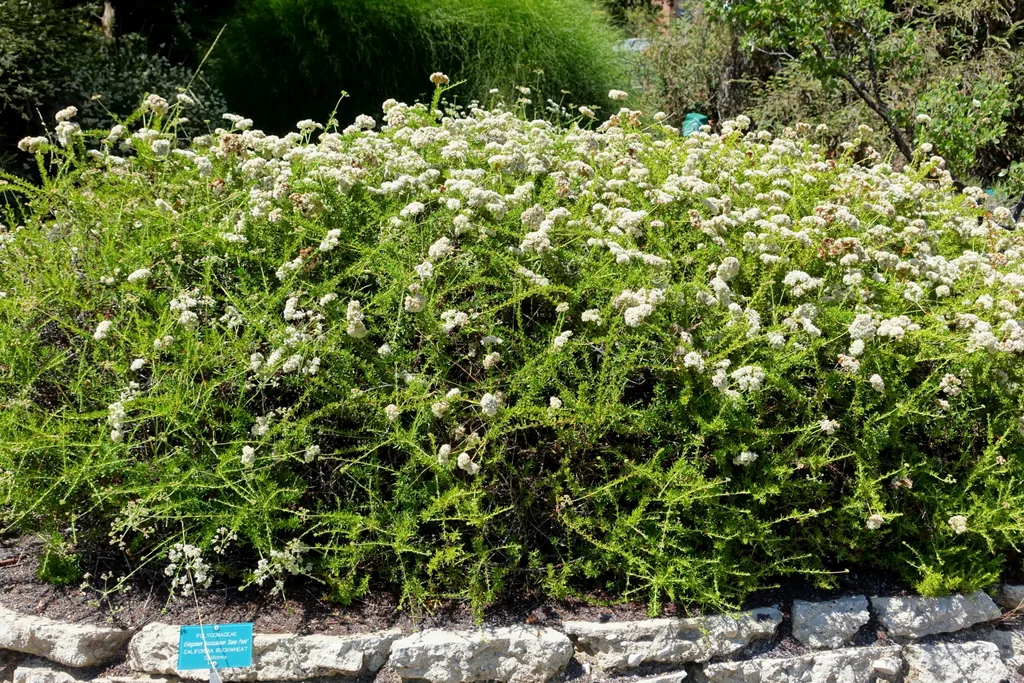
California buckwheat
Eriogonum fasciculatum
A broad mound and lasting flower heads give a sunny, well-drained bed structure; ‘Dana Point’ is pictured.
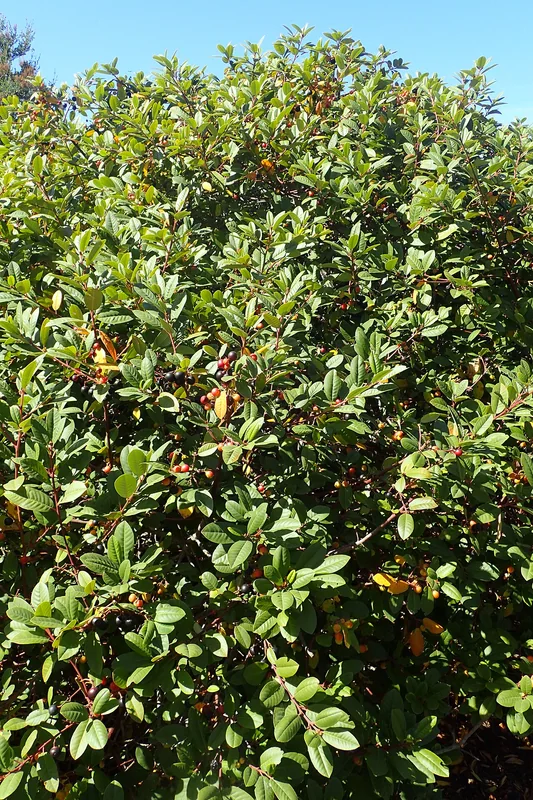
Compact coffeeberry
Frangula californica ‘Eve Case’
Dense evergreen foliage anchors a sunny or partly shaded bed; even a compact variety needs room to become a substantial shrub.
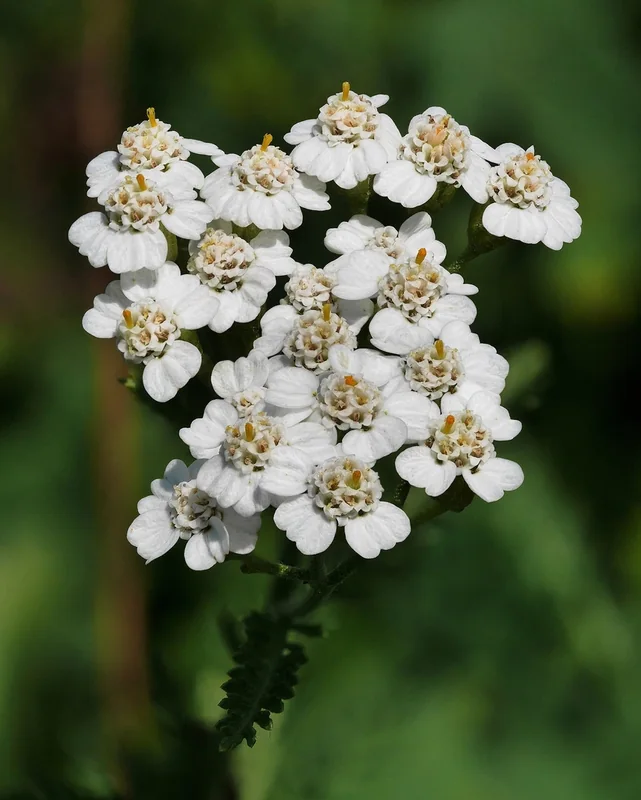
Yarrow
Achillea millefolium
Flat flower clusters brighten sunny, well-drained ground; give spreading clumps room or divide them to keep the planting in bounds.
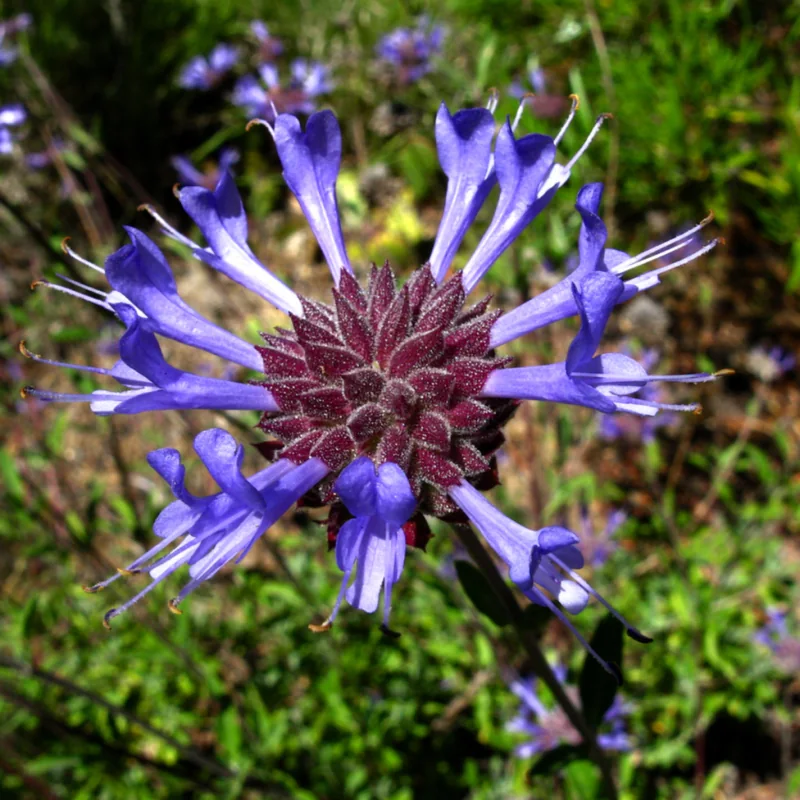
Cleveland sage
Salvia clevelandii
Rings of blue-violet flowers rise above fragrant foliage in a sunny bed with good drainage.
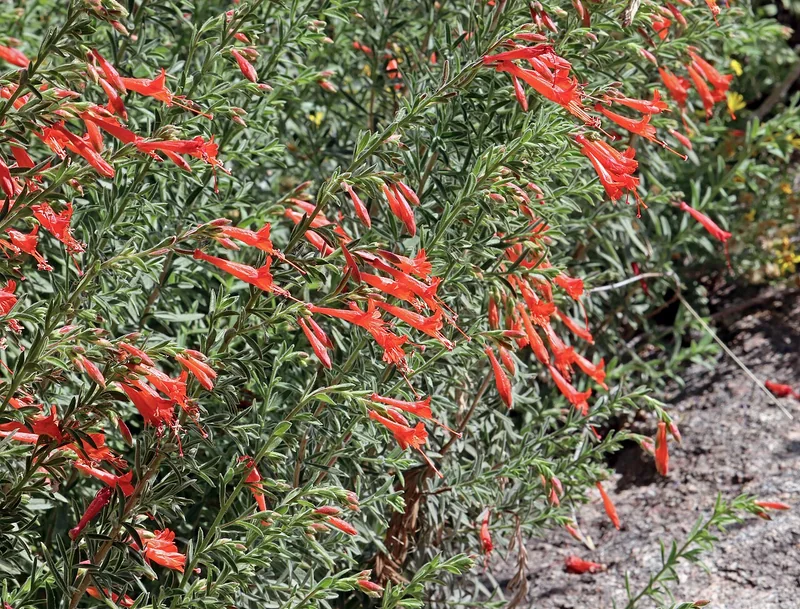
California fuchsia
Epilobium canum
Red tubular flowers carry a sunny border into late summer and autumn, after many spring flowers fade.
Sources: UC Master Gardeners of Sonoma County, UC Master Gardeners of Tulare and Kings County, California Native Plant Society, USDA Natural Resources Conservation Service, UC Master Gardeners of Santa Clara County, NC State Extension, National Audubon Society, UC Agriculture and Natural Resources
Which part of your yard gets the hardest summer?
Look at the bed in the afternoon, not just at your growing-zone number. Even within the same town, pavement, shade and irrigation can change which plants make sense.
Cool coastal exposure
What matters most: Milder summer temperatures, wind and possible salt exposure.
How to adjust the plan: Use locally suited coastal plants; check salt tolerance separately on an exposed seafront.
Hot inland sun
What matters most: Heat from walls and paving, long dry periods and winter minimums.
How to adjust the plan: Choose a heat-suited palette and keep thirsty accents on a separate watering schedule.
Shade beside trees or a house
What matters most: How dry the soil becomes, and whether tree roots limit planting.
How to adjust the plan: Choose shade plants for the actual moisture; don't copy a sunny native border under a tree.
Sources: UC Center for Landscape and Urban Horticulture, UC Agriculture and Natural Resources
Keep plants with different summer water needs apart
California natives come from coast, woodland, streamside, desert and other habitats. Some need summer moisture; others are adapted to dry summer soil. ‘Native’ on a label doesn't tell you whether two plants belong on the same irrigation schedule. Ask about the particular plants, especially where warm, wet soil can cause root problems.8,9
If you want a lush flowering pot by the door and a low-water border beside it, you can have both. Water the pot separately. The useful boundary is where the water goes, not where a decorative edge happens to sit.
New planting still needs establishment care. Check moisture in the root ball and surrounding soil rather than applying one calendar schedule to every plant. Keep existing trees' water needs in the plan when replacing lawn; a new dry border should not accidentally remove the tree's summer water supply.8,3
Frequently asked questions
What are good low-water front yard plants in California?
For a sunny, well-drained inland Southern California bed, California buckwheat, Cleveland sage and California fuchsia are options to investigate. A cooler coastal or shaded site needs a different mix. Choose locally suited varieties, group similar summer water needs and allow for establishment watering.
Can I use the same plants on the California coast and inland?
Some plants adapt to both, but exposure and irrigation can change. Seaside daisy, for example, benefits from shade and more water in hotter inland gardens. Check the actual plant and site rather than assuming a California-native label means it fits every part of the state.
Does a native California garden need no watering?
No. Young plants need help establishing, and some native habitats have summer moisture. The amount of water depends on the species, soil, heat and root development. Keep plants with different water needs on separate schedules.
 Gardenful
See a California planting idea beside your own home.
Give Gardenful a yard photo and your preferences. Explore a design that keeps the features you value, with suggested plants and quantities for your next nursery visit.
Gardenful for iPhone
Download the app free and start with a photo of your yard.

Sources(21)
- [1]Cleveland Sage
National Audubon Societyhttps://www.audubon.org/native-plants/species/cleveland-sage
- [2]What plants bloom during the hot summer?
UC Agriculture and Natural Resourceshttps://ucanr.edu/node/115360/printable/print
- [3]Irrigation Methods
UC Integrated Pest Managementhttps://ipm.ucanr.edu/home-and-landscape/irrigation-methods/
- [4]Seaside daisy photograph
John Rusk from Berkeley, CA, United States of Americahttps://commons.wikimedia.org/wiki/File:J20150625-0022%E2%80%94Erigeron_glaucus%E2%80%94RPBG_(19121113138).jpg
CC BY 2.0. Converted to WebP. Flower detail.
- [5]California buckwheat photograph
CC0. Converted to WebP. Cultivar pictured: 'Dana Point'.
- [6]
- [7]
- [8]Summer Care for California Native Plants
UC Agriculture and Natural Resourceshttps://ucanr.edu/blog/garden-notes/article/summer-care-california-native-plants
- [9]Questions and Answers About Drought and Water Conservation
UC Center for Landscape and Urban Horticulturehttps://www.ucanr.edu/site/center-landscape-urban-horticulture/questions-answers-about-drought-water-conservation
- [10]Natives for the Garden
UC Master Gardeners of Sonoma Countyhttps://ucanr.edu/node/124921/printable/print
- [11]California Buckwheat
UC Master Gardeners of Tulare and Kings Countyhttps://www.ucanr.edu/site/tulare-kings-master-gardeners/article/california-buckwheat
- [12]California Native Plants for Your Landscape
UC Master Gardeners of Santa Clara Countyhttps://mgsantaclara.ucanr.edu/files/291204.pdf
- [13]California Coffeeberry
California Native Plant Societyhttps://www.cnps.org/life-with-native-plants/california-coffeeberry/
- [14]California Coffeeberry Plant Guide
USDA Natural Resources Conservation Servicehttps://plants.sc.egov.usda.gov/DocumentLibrary/plantguide/pdf/pg_frca12.pdf
- [15]Achillea millefolium
NC State Extensionhttps://plants.ces.ncsu.edu/plants/achillea-millefolium/
CC BY-SA 4.0. Resized and converted to WebP.
- [16]Compact coffeeberry photograph
Krzysztof Ziarnek, Kenraizhttps://commons.wikimedia.org/wiki/File:Frangula_californica_%27Eve_Case%27_kz4.jpg
CC BY-SA 4.0. Resized and converted to WebP.
- [17]Cleveland sage photograph
John Ruskhttps://www.flickr.com/photos/john_d_rusk/8656124419/
CC BY 2.0. Resized and converted to WebP.
- [18]California fuchsia photograph
Don McCulleyhttps://commons.wikimedia.org/wiki/File:California_fuchsia,_Epilobium_canum_IMG_5116.jpg
CC BY-SA 4.0. Resized and converted to WebP.
- [19]
- [20]
- [21]